Blog
-
Who Will Rise as This Week’s Champion on the MDR Battle Of The Bands? 08/02/26 – 08/07/26 – @thebeast
🔥 Who Will Rise as This Week’s Champion on the MDR Battle Of The Bands? 🔥
And who will dominate next month as Band of the Month on Metal Devastation Radio?
Last month’s winners, TRIVAN , crushed the competition with a staggering 10,525,129 VOTES , claiming the title of Band of the Month on Metal Devastation Radio! You can check them out HERE !
This is the weekly championship edition of the Band Of The Month – Battle Of The Bands that we host every month on MDR!
How does it work?
Every Monday, we launch a new poll featuring bands that submit music each week on metaldevastationradio.com. Voting runs until Friday at 9PM EST .
Each Friday night , at the start of The Zach Moonshine Show , I’ll be spinning the Top Six weekly winners , and announcing the #1 band of the week live on air — getting thousands of listens on Mixcloud !
At the end of the month , all weekly votes are added up, and the band with the highest total votes becomes our Band of the Month !
Winning Band of the Month gets:
A featured post on our Facebook page, reaching thousands of fans
A front-page spotlight on metaldevastationradio.com , which pulls in hundreds of thousands of views every month
A free PR email blast from Metal Devastation PR, hitting 40,000+ contacts including labels, zines, stations, and more
Airplay every hour during general rotation
Tons of social media shares and exposure across our network
If you want the world to know who your band is, this is the easiest way to make it happen!
💥 Want in on the next battle?
Comment below with your band name and we’ll add you to next week’s poll — or email me at zach@metaldevastationradio.com with “Battle Submission” in the subject line.
Bands can compete as many times as they want , and if you enter multiple weeks in the same month, your votes combine toward the Band of the Month title!
👇 Click on the bands below to vote as many times as you like, or add your own! Poll closes Friday, August 7th at 9PM EST!
Who Will Rise as This Week’s Champion on the MDR Battle Of The Bands? 08/02/26 – 08/07/26
-
TRIVAN CROWNED AUGUST 2026 BAND OF THE MONTH AFTER MASSIVE 10,525,129 VOTE VICTORY – @thebeast
FOR IMMEDIATE RELEASE
TRIVAN CROWNED AUGUST 2026 BAND OF THE MONTH AFTER MASSIVE 10,525,129 VOTE VICTORY
Croatian extreme metal force TRIVAN have officially been crowned Battle of the Bands Champions and Band of the Month for August 2026 after dominating the competition with an incredible 10,525,129 votes , securing one of the most commanding victories in Battle of the Bands history.
The overwhelming support from metal fans across the globe propelled the band to a decisive win throughout July, further cementing TRIVAN as one of the underground’s fastest rising extreme metal acts.
Originally formed in 2018 by guitarist and songwriter Vanja Šantak and bassist Ivan Bertović , the band’s momentum was temporarily halted by the COVID-19 pandemic. Following the shutdown, Šantak rebuilt the lineup by recruiting vocalist Tomislav Žiljak and drummer Robert Vlašić , both from Darkendome. In 2025, rhythm guitarist Marin Buljan joined the fold, adding another layer of depth and aggression to the band’s ever-evolving sound.
Their latest single, “Abyss of Crawling Shadows,” stands as one of the band’s most emotionally powerful and musically devastating compositions to date. Released on April 24, 2026 , the song explores the crushing weight of grief, despair, and ultimately resilience through a relentless wall of crushing riffs, thunderous drums, and haunting melodies.
The inspiration behind the track is deeply personal. After nearly thirteen years, Vanja Šantak lost his beloved Cane Corso, Amon , an experience that left an immeasurable void. Rather than simply writing about loss, “Abyss of Crawling Shadows” transforms that grief into a journey through darkness toward strength. The song captures the silence left behind after losing a lifelong companion before culminating in a defiant declaration of survival.
What begins as a descent into sorrow becomes a triumphant refusal to surrender, embodied in the closing lyric:
“While demons laugh, I rise unbound, defiant in abyss.”
Musically, TRIVAN blend crushing extreme metal with dark atmosphere, memorable songwriting, and emotionally charged lyrical themes that resonate far beyond traditional genre boundaries. Their ability to combine brutality with genuine human emotion has quickly earned them a growing international following.
“Abyss of Crawling Shadows” was recorded, produced, and mixed by Dave Kaminsky at Studio Wormwood , with mastering handled by Ryan Williams , delivering a massive production that perfectly captures the band’s crushing intensity and cinematic scope.
Receiving 10,525,129 votes in the July Battle of the Bands competition is a remarkable achievement and reflects the incredible dedication of TRIVAN’s rapidly expanding fanbase. Their overwhelming victory demonstrates that the band’s music is connecting with listeners worldwide through authenticity, passion, and uncompromising heaviness.
As August 2026 Band of the Month , TRIVAN now join an elite group of Battle of the Bands champions whose music has captured the attention of metal fans across the globe.
Congratulations to TRIVAN on an unforgettable victory and a well-earned place in Battle of the Bands history.
Abyss Of Crawling Shadows by Trivan
-
Storm Force drop new single “Saviour”
Storm .
The post Storm Force drop new single “Saviour” first appeared on Sleaze Roxx.
-
Geoff Downes And Chris Braide Break The Trend
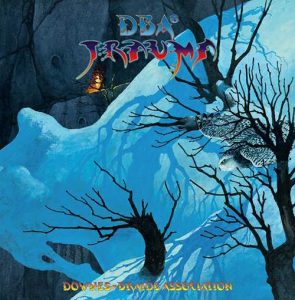
and Chris Braide, collectively known as DOWNES-BRAIDE ASSOCIATION love to play with their listener’s mind, so at least three of the duo’s albums – from 2017, 2021’s and from 2023 – had at least one thing in common, apart from … Continue reading
The post Geoff Downes And Chris Braide Break The Trend appeared first on DMME.net.
-
Our 10 Favorite Tom Waits Albums

Our 10 Favorite Tom Waits Albums list looks back at the career of one of America’s most original songwriters and recording artists. For more than five decades, Waits has moved through folk, jazz, blues, rock, theater music, gospel, cabaret, experimental percussion, and sounds that seem to belong entirely to him. Few artists have resisted convention and commercial expectation as stubbornly as Tom Waits. Waits has often been discussed alongside Leonard Cohen, Lou Reed, Bruce Springsteen, and Bob Dylan. Yet the comparisons only go so far. His narrators inhabit diners, cheap hotels, bars, freight yards, back roads, theaters, prisons, and imagined
The post Our 10 Favorite Tom Waits Albums appeared first on ClassicRockHistory.com.
-
Sleep Theory Brings a Soulful Rock Show to a Sold-Out Admiral
PAM WHISENHUNT | Go Venue Magazine
Sleep Theory packed The Admiral Theatre in Omaha front to back on August 1, 2026, and the sold-out crowd made sure everyone in the building knew it. The merch line ran long all night, and by the time the band hit the stage, there was no room left to move.
Silly Goose opened the night and brought nothing but energy. Lead singer Jackson Foster never stopped pacing the stage and working the crowd. By what felt like the first song, he was already crowd surfing. At one point he had the entire floor move up fifty feet toward the stage, packing in tighter so there’d be enough hands to catch a stage diver, only to reveal he wasn’t the one taking the plunge.
He asked who in the crowd had the most energy. A guy in a Where’s Waldo shirt and hat threw his hand up. The singer called him up to the stage, asking what to call him. He said “Waldo,” and the room lost it. Jackson made sure he understood he had to do whatever he was told, then told him to dive into the crowd. The gap between the stage and the rail was pretty big and Waldo struggled to complete the challenge. Jackson gave him credit anyway, saying he did his best.
That energy carried through the rest of the set. Jackson had the whole floor drop to the ground, then jump up together on a three-count, something he ran back several times in different forms, sit, crouch, jump. Everyone played along. Before wrapping, he thanked Sleep Theory for having them out on the tour, then dove back into the crowd one more time. Security looked like they lost track of him for a minute. On the closer, he told the crowd it was their last chance to move, and it showed.
Sleep Theory came out blazing with “Fallout,” “Enough,” and “Parasite,” then eased into a run of “Hourglass,” “Just a Mistake,” and “Gone or Staying.” From there they pivoted into cover territory, opening with a soulful take on Boyz II Men’s “Can You Stand the Rain.” Frontman Cullen Moore told anyone unfamiliar with the group to look them up on the way home.
The covers kept coming. *NSYNC’s “Bye Bye Bye” and Taylor Swift’s “Cruel Summer” both landed well with a crowd that was already loud and only got louder.
When they played “Afterglow,” Moore explained the song is about heartbreak, and that he usually dedicates it to the women in the room. Tonight, he said, it was for the guys who’ve been the sucker for too long. The guys took to that one.
Moore then made an announcement: it was bassist Paolo Vergara‘s birthday, and he got the whole room to sing Happy Birthday. That led into the story of how the two met, back in 2021 at a birthday party, where Moore first saw Vergara playing guitar. That meeting became the basis for their cover of Paramore’s “My Heart,” which they played right after.
The 20-song set closed out with three of the band’s biggest tracks, “Numb,” “Stuck in My Head,” and “Static.” Nobody left early. The room stayed locked in until the last note, not ready for the night to end.
Sleep Theory
[See image gallery at www.govenuemagazine.com]Silly Goose
[See image gallery at www.govenuemagazine.com] All images © Pam Whisenhunt
Follow our socials, only take a second and is free by finding us on:
Facebook | Twitter | Instagram | BlueSkyThe post Sleep Theory Brings a Soulful Rock Show to a Sold-Out Admiral appeared first on Go Venue Magazine.
-
PARKWAY DRIVE, BLUSH, OCEANS & OMENS: Metro City, Perth, 01/08/2026
 Words by Riah Hill Photos by Joshua Stroud Special thanks to Live Nation 21 years of Killing With A Smile. 21 years of memories attached to that album, andlast night I got to add one more. Parkway Drive have become a force over the last 20+ years and their West Aus’fanbase have grown and followed […]
 -
10 Desert Island Van Morrison Songs

It took us a long time to get to a Top 10 Van Morrison Songs list because the man has released so much music throughout his career. By 2026, Van Morrison had released forty-eight studio albums, not counting compilations and live records. His most recent studio album, Somebody Tried to Sell Me a Bridge, arrived in January 2026. Van Morrison has consistently released incredible music throughout his entire career. There have never been any down periods. Even when he was going through his enlightenment phase, he was releasing jaw-dropping material. It is difficult to compile Top 10 lists for artists
The post 10 Desert Island Van Morrison Songs appeared first on ClassicRockHistory.com.
-
Gig review: MAID OF STONE FESTIVAL- Mote Park, Maidstone, Kent, 17-19 July 2026
 Now in its fourth year, Maid of Stone has in a short space of time established itself as one of the very best festivals, ranking alongside the longer running Steelhouse and Stonedead for mid-sized events catering for a classic rock … Continue reading
 The post Gig review: MAID OF STONE FESTIVAL- Mote Park, Maidstone, Kent, 17-19 July 2026 appeared first on Get Ready to ROCK!.
-
Ariana Grande to Step Away From Public Life After Tour Concludes
Grande “will be taking a step back from visibility” after her Eternal Sunshine Tour concludes next month, a spokeswoman for the singer said on Sunday.