Adrian .
The post Adrian Vandenberg rescheduling upcoming US tour due to bacterial infection that has invaded his body first appeared on Sleaze Roxx.
Once all the papers get signed
We lift you up on discount price
You just have to make this sacrifice
Every false prophet and messiah begins by telling the frightened that they have been chosen. The voice offers clarity, belonging, and the promise of a perfected self; only later come the contract, the price, and the surrender of everything that made the convert difficult to own. On Sacrifice, Southeast London industrial post-punk project The Pixel Rain sends that transaction through the age of algorithmic gurus, where charisma can pass for truth and transformation becomes a product.
Sacrifice is the second single and opening track from The Pixel Rain’s forthcoming debut album, A Sense of Danger, currently scheduled for release in late October. Following Last, the song introduces the album’s post-apocalyptic frame through a society governed by power, authority, consumerism, and technological control.
Sacrifice moves through a cyberpunk dream of deep bass, Kraftwerkian retro-computer pulses, and synth leads glowing with the sterile polish of a showroom terminal. Áron Siegler’s dusky voice maintains a close, controlled pressure throughout the verses, then surges through the chorus’s “So trust me,” landing somewhere between Brian Molko, Trent Reznor, and Paul Banks. Driving rhythms and industrial textures keep the track pushing ahead as the promise at its center grows steadily more predatory.
The lyrics borrow the soothing vocabulary of cults, motivational seminars, and influencer culture. The prophet addresses his followers as “children,” while the parenthetical responses—“We’ll hold you” and “You know we leave no one behind”—resemble scripted affirmations designed to smother suspicion. A promise to remove self-doubt soon becomes permission to remove the self, with salvation reduced to paperwork, discount pricing, and the command, “You have to sell yourself tonight.”
The final verse reveals what this digital saviour has wanted all along. “I prey on the void inside” turns an apparent confession of faith into an admission of appetite, before the closing line—“So we can eat you alive”—strips the sales pitch of its remaining benevolence.
Siegler describes the false prophet behind the song:
“‘Sacrifice’ started with the idea of modern-day false messiahs and how easily charisma can be mistaken for truth. As online platforms continue to blur the line between genuine guidance and performance, I found myself drawn to the psychology behind people who build influence by promising transformation. That idea felt like the perfect companion to the track’s cold, mechanical, electronic atmosphere.”
The song’s science-fiction setting preceded its arrangement:
“Like many of my songs, ‘Sacrifice’ started with a visual idea rather than a musical one. I was inspired by the worlds of Neuromancer and Cyberpunk 2077, and that atmosphere naturally led to a synth-heavy sound. From there, I mixed melodic influences from bands like Depeche Mode and Muse with the industrial pulse and textures of Nine Inch Nails and Ministry.”
Created by Ádám Molnár, the accompanying lyric visualizer treats the viewer’s screen as the target of a computer virus. A digitized version of Siegler’s head becomes the infection’s persuasive face, addressing the viewer as the virtual machinery draws them further into its illusion. The polished interface connects the song’s false promises to the screens through which those promises now spread.
Watch the visualizer for Sacrifice below:
Sacrifice by The Pixel Rain is out via Bandcamp, Spotify, and all major digital platforms. A Sense of Danger is currently scheduled for release in late October.
Listen to Sacrifice below, and order the single here.
Founded by Hungarian-born vocalist and multi-instrumentalist Áron Siegler, The Pixel Rain took shape within Southeast London’s underground and released a self-titled debut EP in 2023. Drawing from industrial rock, post-punk, synth-pop, and electronic music, Siegler balances guitar-led songwriting with layered production, dark atmospheres, and sharply defined melodies. A Sense of Danger extends that approach across songs concerned with power, authority, consumerism, and social unease, viewed through post-apocalyptic imagery and cold electronic machinery.
Follow The Pixel Rain:

The post “I Prey on the Void Inside” — The Pixel Rain Confronts False Prophets and Messiahs in Cyberpunk Single “Sacrifice” appeared first on Post-Punk.com.
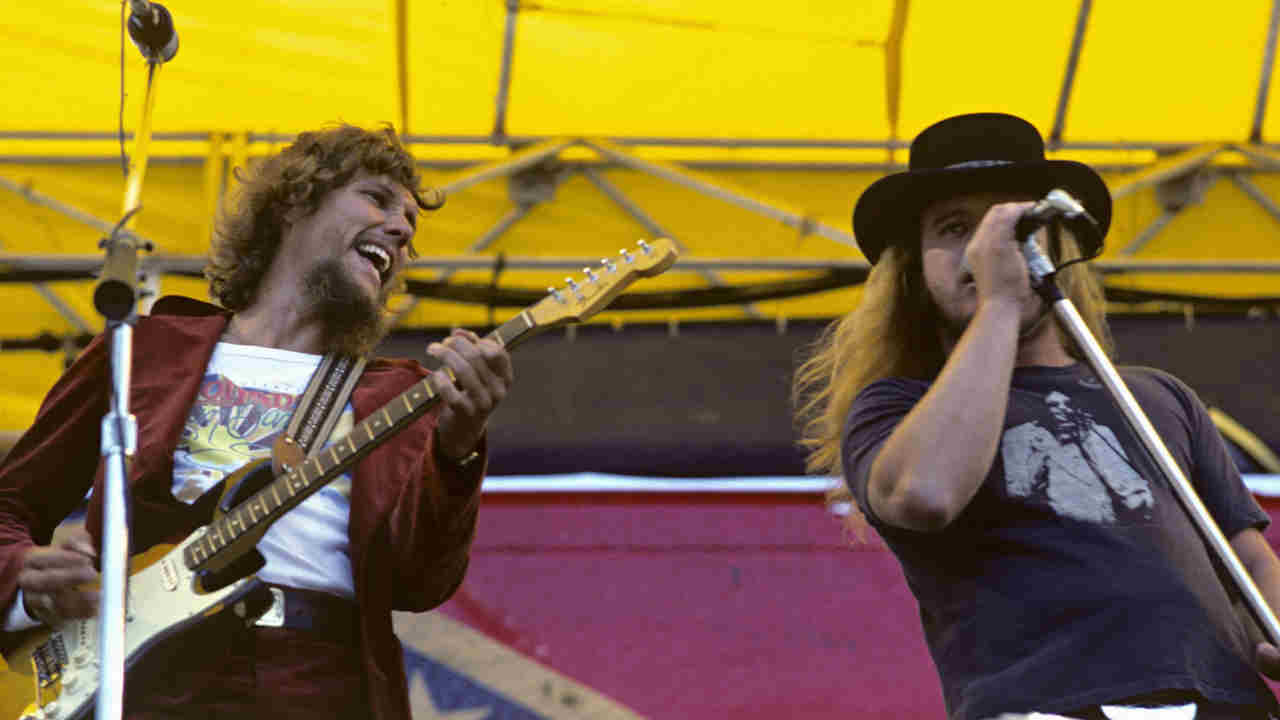
“I had a creepy feeling things were going against us,” said Lynyrd Skynyrd singer Ronnie Van Zant in the summer of 1977. Street Survivors, the album released just three days before the plane crash in October that year, always seems irreversibly bound up in that tragedy. But while there may have been strange vibes and bad juju brewing, the band had been rejuvenated.
Lynyrd Skynyrd’s newest recruit, 28-year-old Oklahoman guitarist and songwriter Steve Gaines, was an inspired choice, and ended up co-writing the lion’s share of the album. But making Street Survivors was anything but easy.
The band started work with producer Tom Dowd at Miami’s Criteria Studios in December ’76, only to be told by management that the recordings weren’t good enough. After the inevitable bust-up, Ronnie agreed. A second version was cut at Studio One in Doraville, Georgia, the following summer, the final album pieced together from both sessions.
Van Zant’s “creepy feeling” stemmed from a run of dangerous mishaps prior to recording. Ronnie had just become a father, and was trying to curb his excessive lifestyle. In the meantime, Gary Rossington, drunkenly passed out at the wheel of his car, ploughed into an oak tree and a telegraph pole and wound up in hospital.
When fellow guitarist Allen Collins and keyboard player Billy Powell were involved in similar car accidents, Van Zant came up with That Smell: a warning message to his hell-raising bandmates – ‘Too much smoke and too much coke… The smell of death surrounds you’. It was an omen of worse to co
Joining That Smell were two more instantly defining Skynyrd tracks: What’s Your Name and You Got That Right were brawny Southern rockers in the grand tradition of Saturday Night Special. What’s Your Name was a risqué tale of a one-night stand and barroom punch-up, played out to blaring horns; You Got That Right included another prophetic lyric (‘You won’t find me in an old folks home’) and Steve Gaines serving up one of the album’s sweetest solos.
Despite its bad omens, Street Survivors is also an album full of upbeat moments that hint at what Skynyrd might have done next. There’s a cover of Van Zant’s favourite songwriter Merle Haggard’s Honky Tonk Night Time Man, which shows off Skynyrd’s country rock credentials. (Ronnie also cut an alternative version, titled Jacksonville Kid, featured on the album’s 2008 reissue.) Gaines’ I Know A Little was the kind of spicy jazz-blues you could imagine Stevie Ray Vaughan covering.
The original cover infamously showed the group enveloped in flames, quickly reissued with an alternative cover shot. But on both you can still relish Leon Wilkeson’s majestic top hat and ‘My Grass Is Blue’ T-shirt, and the band looking like the last gang in town. Inside, the music is prime Skynyrd: raw, sweet, angry and fun. Separated from the terrible circumstances that surrounded it, Street Survivors sounds like a band reborn.
Originally published in Classic Rock Presents Lynyrd Skynyrd
Asomvel .
The post Asomvel launch video for new single “Lone Wolf” first appeared on Sleaze Roxx.
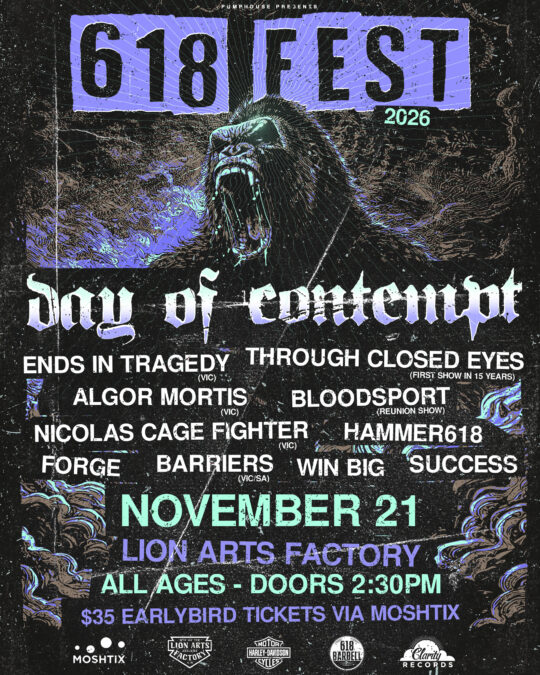 South Australia’s heavy music community is gearing up for another massive day of riffs, breakdowns and circle pits, with 618 Fest returning to Lion Arts Factory on Saturday, November 21. Following a hugely successful debut, the independently run festival is raising the bar with its biggest lineup to date, bringing together some of Australia’s most […]
Don’t wanna talk about it
Just wanna scream about it
Sun Spoiler locked himself in a room on the Fourth of July, which is either the beginning of a personal reckoning or the opening scene of a low-budget horror film where the fireworks outside are celebrating everybody except the poor bastard holding the guitar. Out of that sealed chamber came Reek, a 101-second nervous breakdown with a hook sharp enough to puncture the glowing rectangle that ruined his week.
“Every line in Reek is the truth.”
Andreas Emmanuel, the Greek-American guitarist behind the Los Angeles project, takes three weeks of romantic acceleration, digital humiliation, sexual memory, and spectacular self-disgust and crams them into a song that moves with the reckless efficiency of somebody fleeing a burning apartment while still checking whether she viewed his story. Lovebombing, breadcrumbing, ghosting: modern romance now arrives with the vocabulary of psychological warfare and the customer-service experience of a budget airline.
The arrangement is lean, rude, and ridiculously catchy. Guitar, bass, drums, synths, cello, upright bass, baglama, otamatone—Emmanuel can apparently play everything except emotionally unavailable, though “Reek” suggests he has recently received a brutal lesson from somebody else. None of those instruments get to grandstand. They pile into the getaway car, slam the doors, and race through a jagged little collision of garage rock, post-punk, mutant pop, and the kind of college-radio lunacy that once made the mid-’90s feel dangerous after midnight.
There is some Iggy Pop in the exposed nerve, some Pixies in the compact violence, and enough Garden-style mischief to keep the misery from turning into a wet blanket. The Bauhaus-meets-LMFAO comparison sounds deranged until the song starts grinding forward with funeral-club cheek, at which point it becomes alarmingly reasonable. You can picture a goth basement full of people dancing while one guy near the speaker mouths every word with the ruined concentration of a man composing a curse he promised never to cast.
Emmanuel has worked as a session guitarist with Yves Tumor, Cullen Omori, Fatal Jamz, Georgi, and others, yet “Reek” feels proudly unbeholden to professional polish. Its appeal lies in compression: the romance, the flowers, the vanished woman, the preserved strand of hair, the party he cannot face, the phone he wants to destroy, all rushing past before dignity can intervene.
At 1:41, Reek contains zero filler because heartbreak has already wasted enough of his time. It is funny, sick, frantic, intimate, and catchy as hell…the sound of a man turning emotional roadkill into a radio hit before the smell leaves the room. For once, oversharing becomes quality control: every ugly detail earns its place, every joke lands beside a bruise, and the song exits before anyone can offer advice, closure, or a wellness podcast.
The video releases Emmanuel among crumbling stone chambers and iron cages, where he claws at the bars, writhes against the walls, and crowds the handheld camera with a succession of aggrieved close-ups. Hard sunlight, jump cuts, and shots of him thrashing on an angular guitar turn the ruins into a feral little theater for romantic humiliation.
Watch the video for Reek below:
Listen to Reek below and order the single here.
Follow Sun Spoiler:

The post “Lovebombed, Breadcrumbed, Ghosted” — LA’s Sun Spoiler lets it all out in Video for “Reek” appeared first on Post-Punk.com.
The band ran through ten songs during the show.
The post Thrice Release Professionally-Filmed Footage Of Their 2026 Long Beach, CA ‘Vans Warped Tour’ Set appeared first on Theprp.com.
Personnel:
Carol Phillips – vocals
Scott Loose – guitars, multi-instrumentals
Producer: John Mario
Release Date: July 27, 2026
Record Label: Bravemusic
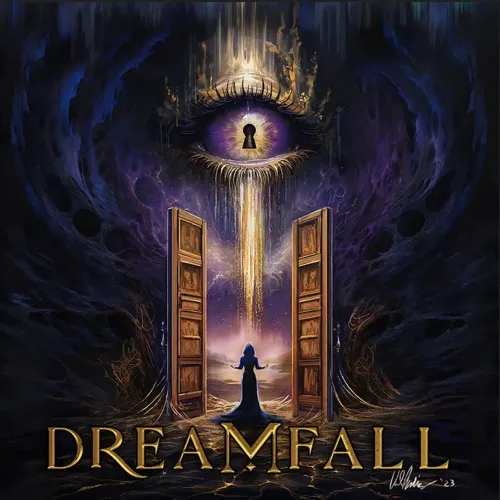
2026 has been the year of debut albums. It is not only about their quantity, but also about the remarkable quality of these new bands. One of these exciting newcomers is Element of Fate, a symphonic metal duo that just released their debut album, Dreamfall.
From the very beginning, Dreamfall impresses with its solid production and the way all the elements fit together. The album is influenced by a number of different metal styles, but it never sounds like a collection of disconnected influences. But every element feels like a natural part of the same sound, giving the album a dark, unique identity.
If you’re into any of these artists, this album should be on your radar.
“Whispering Tree” avoids huge orchestration and focuses on a darker sound where the vocals have more space to shine. It feels raw and direct, creating a modern metal track that grabs your attention from the first listen.
Dreamfall is built on heavy guitar work and a rhythm section that keeps the songs moving forward. The progressive elements add more variety to the music, as they mix powerful riffs with different textures without making the songs too complicated. The synths add another layer to the arrangements, adding more depth to the songs while keeping it real and heavy.
Even though Carol Phillips does not use the usual operatic approach often associated with symphonic metal, her vocals perfectly match the heavy music of the album, alternating between powerful clean melodies and darker, more aggressive vocals. Her performance gives the album a strong identity and adds a lot of character to the overall sound.
Dreamfall is about the journey from darkness to the light, and the problems that come with that journey. The lyrics mix personal struggles with darker fantasy elements that suit the mood of the music well. These themes are brilliantly presented in a dark cinematic envelope that ensures the message is delivered and enjoyed.
A strong first release from Element of Fate, Dreamfall delivers a powerful introduction to the band’s sound.
%
%
%
%
%
%
%
%
 |
 |
 |
 |
Night walks – great background music for the creatures of the night
Sitting in Nature – great themes to sit with in nature
Thinking in bed – Provides companionship after a long day
Working at office – especially when you want to silence your dumb co-worker
The post Album Review | Element of Fate – “Dreamfall” first appeared on FemMetal – Goddesses of Metal.
The song begins with the sounds of the ocean and gentle waves alongside atmospheric keyboard tones. This serene introduction transitions into an energetic and intense guitar riff that propels the song forward. The artist’s distinctive voice enters, demonstrating a remarkable emotional range that has become a defining feature of his music. The overall sound has an 80s pop vibe, while simultaneously veiling profound messages beneath its upbeat exterior. The background vocals provide an exciting interplay that enhances the song’s overall energy.

“LIGHT OF BLUE ‘sugar ocean girl’” is more than just a romantic beach tune. Through bright summer, ocean, and pop-rock imagery, it conveys a deeper spiritual and political message. The phrase “Light of Blue” signifies what the artist, Ziggy, refers to as “God’s ozone frequency.” This concept embodies divine energy, positivity, truth, and the purity that individuals should strive to maintain within themselves.
The song promotes a resistant attitude towards fear, negativity, and manipulation, as well as what Ziggy perceives as destructive forces in contemporary society. On the surface, its lyrics present a commercial, summery ocean atmosphere. However, beneath this surface, they reflect Ziggy’s Christian perspective and environmental concerns. His stance opposes mainstream narratives about climate change and suggests a belief in hidden truths regarding chemtrails.
At a deeper level, the song emphasizes the importance of maintaining spiritual positivity and awakening the “Christ within.” It implores listeners to protect the Earth and the innocent while harnessing good energy—the “Light of Blue”—as a means to resist malevolence and deception. This duality in the song illustrates how music can be both entertaining and thought-provoking.
The instrumentation further enhances the lyrics, with each note carefully placed to draw listeners into the tale being told. The vibrant energy of the song carries an underlying urgency, urging listeners to reflect and act. The interplay between the instrumental sections and the lyrical content creates an engaging listening experience.
Ziggy’s music often features a mixture of light and dark themes, and this single is no exception. It successfully intertwines a fun, summery vibe with a clear call to awareness and action.
The background harmonies offer an uplifting touch, reinforcing the message of hope and positivity. Listeners will likely find themselves emotionally lifted, feeling a sense of empowerment as they engage with the song.
“LIGHT OF BLUE ‘sugar ocean girl’” presents a multifaceted experience that goes beyond a simple pop song. It blends energetic instrumentation with meaningful lyrics, encouraging deep reflection on personal and societal issues. Ziggy’s commitment to conveying complex messages through accessible music underscores his artistry and intention.
As listeners dive into this musical journey, they may find a renewed sense of purpose and an invigorated spirit in response to its dynamic and thought-provoking content.
Inspiring
 If you love this music: Discover More
The post The Mess:Age LIGHT OF BLUE ” Sugar Ocean Girl ” Review appeared first on Edgar Allan Poets – Noir Rock Band.