Blog

  • “They liked the Butthole Surfers, they liked Iggy Pop, they liked us… we were keeping good company.” How Beavis and Butt-head’s approval of Thunder Kiss ’65 turned White Zombie into a million-selling band

    Over the course of three albums, White Zombie gradually left behind their noise rock leanings to become that metal band you could dance to at your local rock club. According to J. Yuenger – their fifth guitarist by 1989 – this evolution wasn’t by accident, either.

    “The change in sound and attitude began well before I joined,” Yuenger told Revolver. “When I met them, they were adamant about becoming a ‘real’ metal band. They didn’t want to become more normal, but they did want to be more accessible, to play to a wider audience.”

    “I was never happy with just playing at CBGBs in front of 300 people for the rest of our lives,” band co-founder and vocalist Rob Zombie told Metal Hammer. “I had bigger aspirations. I thought, ‘This scene has limitations. We like heavy metal, we look like a metal band, we’ll just beef up our sound and start playing metal shows.'”

    That beefed-up sound was fully realised on 1992’s La Sexorcisto: Devil Music Volume One, their third album and first for Geffen. It was recorded in New York City’s 321 Studios with producer Andy Wallace (Slayer, Nirvana) over the course of a month. But with three years between their God of Thunder EP and their major label debut, the band were fully prepared once they entered the Midtown Manhattan recording facility.

    “Riffs and riffs and riffs,” remembers bassist Sean Yseult in an interview with VWMusic. “A ton of hard work in Ivan’s [de Prume, drummer] basement non-stop. Suffice it to say, after many years, we had honed our sound and ideas. With Thunder Kiss ’65, J. was over at me and Rob’s apartment, playing the opening rhythm over and over, then after a while, adding those classic descending thirds… it was an ‘aha!’ moment.”

    “It was our most normal song. A song that a normal person might enjoy,” Zombie would later tell Rolling Stone. But whether a normal person would appreciate a song featuring a sample of Russ Meyer’s, sexploitation film Faster, Pussycat! Kill! Kill! is anyone’s guess. However, the deceptively simple groove of the four-minute song, coupled with Zombie’s half-snarled, half-grunted B-movie, “motor-psycho nightmare” lyrics, would invoke chaos in whatever venue they played.

    “Playing it for the first time, writing as we went along, made it one of the easiest songs we ever worked on together,” Yseult told Gut Feeling‘s Gregory Adams. “Rob had the beat, J. wrote the main riff over it, and I wrote the breakdown in the middle. Seeing audiences react was just incredible. J. would start quietly with the single note, the rhythm, and people would yell, then wait with anticipation. When the drums and bass would kick in at the end of the opening riff, it would be total mayhem! Mosh pit insanity. It was really exciting to watch every night.”
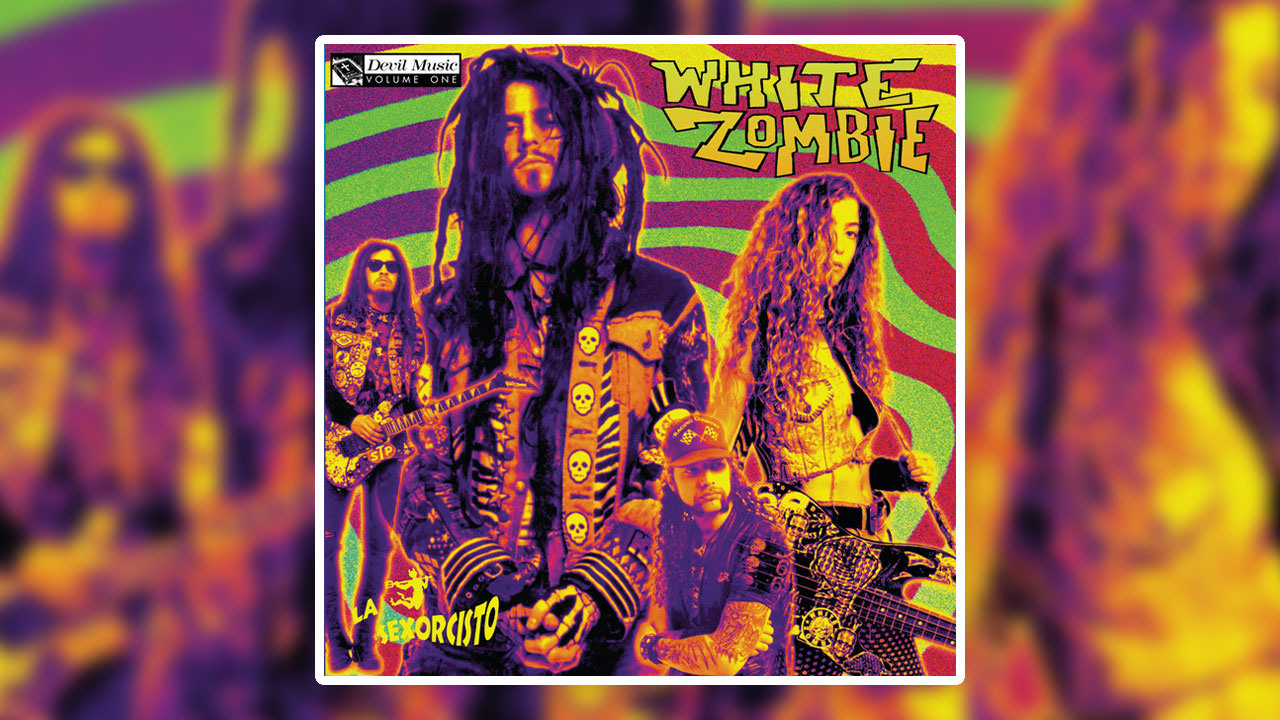
    White Zombie album artwork for La Sexorcisto Devil Music Volume One

    The artwork for White Zombie’s 1992 album, La Sexorcisto: Devil Music Volume One (Image credit: Geffen)

    The single was released on March 23, 1992, one week before La Sexorcisto: Devil Music Volume One. Even for a major label signing, it seems that the label had reservations about ploughing even a modest amount of money into a band of metal misfits obsessed with cheaply made horror and science fiction.

    “Geffen didn’t even have a budget for us to make a video, while other bands that barely sold a record were getting outrageous sums of money to shoot videos,” Yseult told Adams. “We finally talked them into giving us $15,000 to make the Thunderkiss ‘65 video, which was barely enough to cover the price of the film. Nobody got paid, not even the director.”

    Beavis and Butt-head is what kicked it over into the psycho, million-selling thing.

    J. Yuenger reflects on La Sexorcisto’s significant bump in album sales

    This is not a story where a single catapults the band into fame overnight. White Zombie basically lived in their van, toured the club circuit and sold a very respectable amount of albums the hard way. But thanks to two teenage metal critics in Highland, Texas, the band blew up like that dude’s head on the film Scanners.

    “Before Beavis and Butt-head ever put us on their show, we’d sold a quarter of a million records and were doing really well by ourselves,” Yuenger told The Virginian-Pilot in 1995. “Beavis and Butt-head is what kicked it over into the psycho, million-selling thing.”

    “Thanks to MTV, thanks to Mike Judge and Beavis And Butt-Head and [Headbangers Ball presenter] Riki Rachtman, we got on heavy rotation,” remembers Yseult. “A lot of people say, ‘Oh my god, you owe your fame to two cartoon characters!’ But they liked the Butthole Surfers, they liked Iggy Pop, they liked us… we were keeping good company, I didn’t mind!”

    The single’s success pushed La Sexorcisto: Devil Music Volume One up to number 26 on the US Billboard 200, and remains the band’s most popular song on Spotify with over 173 million plays.

  • Review THE LIMIT “Another Drop”

    Do doom metal roots and a punk rock attitude really go together? That was the question many people asked in 2021 when The Limit released their new album. At the time, Billy Liebling (Pentagram), Sonny Vincent (Testors), Jimmy Recca (The Stooges), Hugo Conim (Dawnrider), and João Simmons (Dawnrider) delivered Caveman Logic. Now the band returns with Another… Continue Reading →
  • Slipknot Fire Sid Wilson After 28 Years, Leaving Only Four Of The Original Nine, And Nobody Has Said Why

    Sid Wilson of Slipknot

    Sid Wilson, the turntablist known as #0, has reportedly been fired from Slipknot. TMZ broke the story Friday, July 31, citing a source close to the band with direct knowledge who said Wilson was notified late Friday afternoon that he had been permanently removed. No reason has been given. As of publication, neither Slipknot nor Wilson has commented publicly, and the band’s representatives have not responded to requests for comment. Wilson had been with Slipknot since 1998. His exit would leave only four members of the classic nine-piece lineup still in the band: Corey Taylor, Shawn “Clown” Crahan, Mick Thomson and Jim Root.

    🎧 STREAM THE METAL BREAKDOWN DAILY NOW:

    On Monday’s Metal Breakdown Daily, Scott Penfold breaks down what a Sid Wilson exit actually means for Slipknot — what he brought that nobody else in that band does, why the silence from both sides is the loudest part of this story, and what’s left of the nine. Download the free Loaded Radio App on Apple iOS and Google Play and take the show with you.

    What We Actually Know

    Not much. And that’s worth saying up front.

    TMZ reported Friday evening that Wilson had been told that afternoon he was out of Slipknot permanently. Their sourcing is one person close to the band with direct knowledge, unnamed. That’s it. That’s the entire foundation of a story that’s currently everywhere.

    No reason has been given. Not by the source, not by the band, not by Wilson.

    Slipknot haven’t posted. Wilson hasn’t posted. Reps didn’t respond to requests for comment before the story went out.

    So here’s the honest state of play: a tabloid with a decent track record on this specific kind of story — they broke the Jay Weinberg firing too — has one anonymous source saying a founding-era member of the biggest masked band on earth just got cut loose after 28 years. Every metal outlet on the planet ran it within two hours, including this one.

    It’s probably true. It is not confirmed. We’ll update the second either side says anything.

    🤘 LIVE & LOUD: Stream the World’s Hardest Radio Station 24/7

    What Sid Wilson Actually Did In That Band

    This is the part that’s going to get lost in the noise, so let’s do it properly.

    Wilson joined in 1998, becoming #0 and completing the nine-member lineup that recorded the self-titled debut in 1999. He was the DJ in a band that, on paper, had no business having a DJ.

    And he’s the reason a lot of early Slipknot sounds the way it does. The scratching, the sirens, the horror-movie texture bleeding underneath the riffs — that’s Wilson. Listen to “Eyeless” and try to pull his work out of it. The song collapses. He gave that record its industrial, unsettling edge, the thing that made Slipknot sound like a malfunctioning machine instead of just a heavy band.

    Live, he was the chaos engine. While Mick and Jim stood like pillars and Corey worked the front, Sid was the one climbing things, launching himself off risers, generally behaving like a man with no functioning survival instinct.

    In 2008, on the All Hope Is Gone tour, he dove off the stage in Washington and shattered both his heels.

    He finished the show.

    That’s the guy. That’s the résumé.

    He also toured on and off as DJ Starscream, named after the Transformers character, which tells you roughly everything about his sense of humour.

    If you want the deeper dive on his role in the visual identity of the band, our breakdown of Slipknot’s masks covers how his evolved further than almost anyone’s — from the gas mask to the increasingly strange, robotic thing he’s worn in recent years.

    We Also Recommend – Slipknot Members 2026: Current Lineup And Who’s In The Band Now

    sidwilsonslipknot

    Four Of Nine

    Here’s the number that stops you.

    The lineup that made Slipknot in 1999 was Sid Wilson (0), Joey Jordison (1), Paul Gray (2), Chris Fehn (3), Jim Root (4), Craig Jones (5), Shawn Crahan (6), Mick Thomson (7) and Corey Taylor (8).

    Paul Gray died in 2010. Joey Jordison left in 2013 and died in 2021. Chris Fehn was out in 2019 and it ended in a lawsuit. Craig Jones quietly disappeared in 2023 and the band has never really explained it — they just put an unidentified musician behind the samples rig and carried on. Jay Weinberg, who replaced Joey, was fired in 2024 and replaced by Eloy Casagrande.

    Now Sid.

    That leaves Crahan, Thomson, Taylor and Root from the original nine. Four.

    Crahan is the last founding member standing, and he’s been the one holding the visual and conceptual thread of this band together since 1995. Whether four out of nine is still Slipknot is the argument that’s going to eat the internet this weekend, and honestly — Slipknot were always designed as a concept more than a lineup. Nine numbered slots, masks, the individual erased into the collective. That was the whole architecture.

    But there’s a difference between the concept surviving and the thing that made it special surviving. Losing the guy who invented what #0 sounds like is not a like-for-like swap.

    We’ve got every Slipknot album ranked worst to best if you want to go back and hear how much of that early sound was Sid.

    The Personal Context — And What It Doesn’t Tell Us

    Wilson’s private life has been unusually public over the last few years, so it’s going to get dragged into this. Here’s the factual record, and here’s where it stops.

    He and Kelly Osbourne began dating in 2022 after years of friendship. Their son was born in November 2022. In July 2025 they got engaged at Black Sabbath’s farewell show in Birmingham — weeks before Ozzy Osbourne’s death. This past March, it was reported that the engagement had quietly ended.

    TMZ mentioned the split in their report on the firing.

    They did not claim the two are connected. Neither has anyone else. No source has linked them, no reason for the dismissal has been offered by anybody, and there is nothing on the record tying a personal relationship to a professional decision.

    So we’re leaving it there. The speculation is going to run wild in the next 48 hours and most of it will be people inventing a story because the actual story has a hole in the middle of it. We’d rather have the hole.

    Check This Out – The 13 Most Brutal Slipknot Songs Ever Recorded (Ranked)

    slipknot-members

    What Happens Now

    Slipknot have a new album in progress — Eloy Casagrande has talked publicly about the writing being intense — and Clown has been promising the long-buried Look Outside Your Window sessions would finally see daylight in 2026.

    Whether Wilson’s parts survive whatever comes next, whether #0 gets filled or retired, whether anybody explains this — all of it is unknown tonight.

    What we’d expect: silence for a few days, then a carefully worded band statement, then eventually Sid saying something on his own terms. That’s the usual shape of these.

    Our current Slipknot lineup page will be updated as this develops.

    Twenty-eight years. Whatever happened, that deserves more than an anonymous source and a Friday afternoon phone call.

    TL;DR

    • What happened: TMZ reports Sid Wilson was told Friday, July 31, 2026 that he’s been permanently removed from Slipknot
    • Sourcing: one unnamed source close to the band with direct knowledge — no independent confirmation
    • Reason given: none, by anyone
    • Official comment: none from Slipknot, none from Wilson, no response from the band’s reps
    • Time served: with Slipknot since 1998, as #0 on turntables, samples and keyboards
    • Signature contributions: the scratching and industrial texture on the 1999 debut, and one of the most physically reckless live presences in metal
    • Who’s left from the original nine: Corey Taylor, Shawn “Clown” Crahan, Mick Thomson, Jim Root — four
    • Also known as: DJ Starscream, his solo turntablist project since the 2000s

    FAQ

    Was Sid Wilson fired from Slipknot?

    That’s what TMZ reported on July 31, 2026, citing a source close to the band. Wilson was said to have been notified late Friday afternoon that his removal was permanent. Neither Slipknot nor Wilson has confirmed or denied it.

    Why was Sid Wilson fired from Slipknot?

    No reason has been given. Not by the band, not by Wilson, and not by the source who spoke to TMZ. Anyone telling you otherwise right now is guessing.

    How long was Sid Wilson in Slipknot?

    Since 1998 — 28 years. He was the ninth and final piece of the lineup that recorded the 1999 self-titled debut.

    What did Sid Wilson do in Slipknot?

    He was #0, handling turntables, samples, sound effects and keyboards. His scratching and industrial textures are a defining part of the band’s early sound, particularly on the self-titled album.

    Who is left from Slipknot’s original lineup?

    Four members: Corey Taylor, Shawn “Clown” Crahan, Mick Thomson and Jim Root. Paul Gray died in 2010, Joey Jordison left in 2013 and died in 2021, Chris Fehn departed in 2019, and Craig Jones left in 2023.

    Twenty-eight years and a Friday afternoon phone call. However this shakes out, Sid Wilson helped build what Slipknot sounds like. What’s your favourite moment of his? Let us know in the comments.

    Follow Loaded Radio for daily rock and metal news

    The post Slipknot Fire Sid Wilson After 28 Years, Leaving Only Four Of The Original Nine, And Nobody Has Said Why appeared first on Loaded Radio.

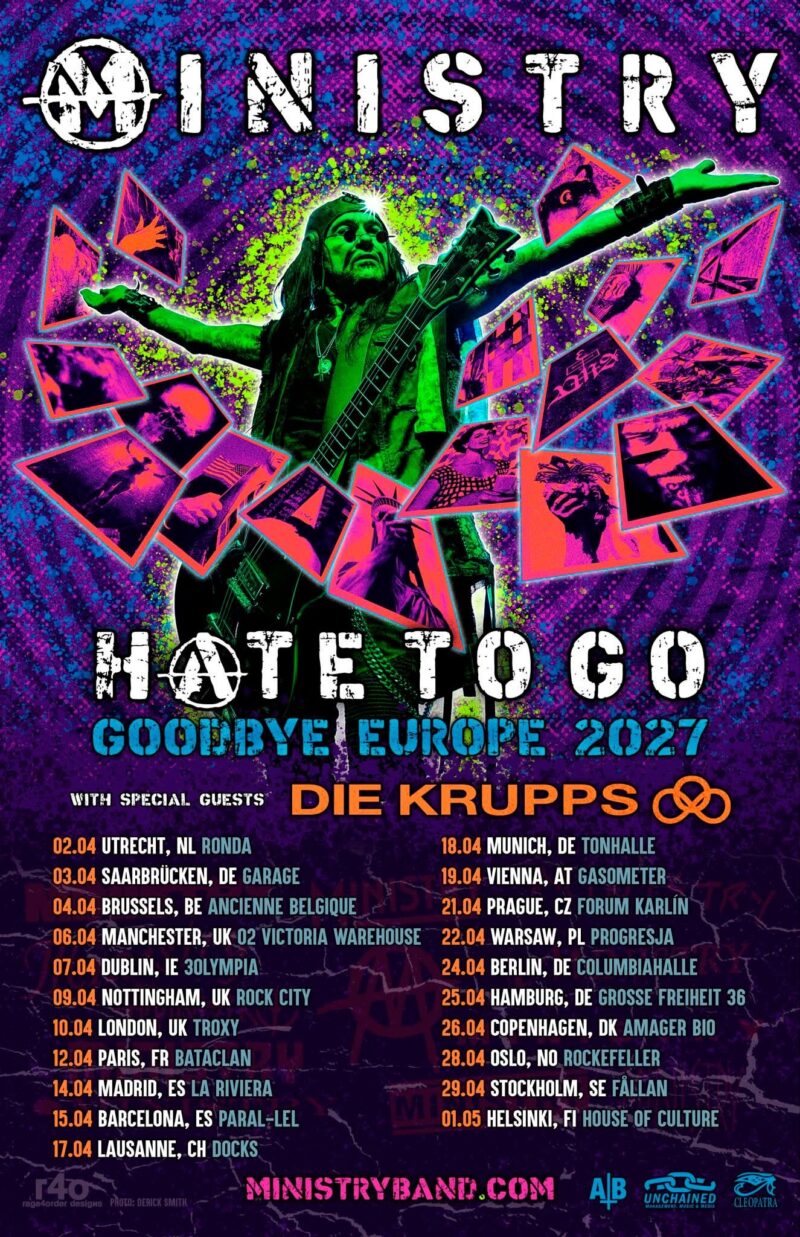
  • Ministry Shares Video for “Burned Out” — Announces Final Album “Hate To Go (Take Out Or Delivery)” and Farewell European Tour

    I’M NOT SURE IF THIS WORLD SURVIVES

    I CAN’T TELL YOU WHAT’S TRUTH OR LIES

    IT DOESN’T MATTER IF YOU’RE LEFT OR RIGHT

    WE’RE ALL DEAD UNLESS WE ALL UNITE 

    After more than four decades spent turning political disgust, technological dread, and distorted guitars into blunt-force industrial rock, Ministry is preparing to shut down the machinery. Al Jourgensen has announced that the band’s forthcoming album, Hate To Go (Take Out Or Delivery), will be its last, bringing one of heavy music’s loudest and most unruly careers to a close on October 30 through Cleopatra Records.

    The first preview comes with Burned Out, a new single accompanied by a video directed by Joshua Bradford, formerly of Revolting Cocks. The title sounds like both a diagnosis and a resignation letter, which feels appropriate for a band that has spent decades staring directly at American power, institutional rot, religious hypocrisy, corporate greed, and the people who profit from keeping everyone exhausted and furious.

    Jourgensen has rarely been shy about announcing exactly what he thinks of the world, and Hate To Go (Take Out Or Delivery) gives him one final album-sized opportunity to unload. The record finds Ministry taking stock of those in charge, the damage they have caused, and whatever possibility remains for people trying to move forward together without surrendering their minds in the process.

    Jourgensen is equally direct about his decision to end the band.

    “I’m fucking done,” he says. “I’m proud of what I’ve accomplished. I’m amazed at the path that it’s taken, from With Sympathy to where we’re at today, and all points in between. It’s been quite a ride, but I’m completely at peace with the fact that it’s done. It’s time to herd goats.”

    It is a characteristically Jourgensen farewell. Ministry’s history has never followed a clean route, moving from the synth-pop framework of With Sympathy toward increasingly abrasive combinations of industrial electronics, metal, punk, samples, drum machines, and political invective. Along the way, the group built a catalogue whose influence spread through alternative rock, industrial metal, electronic music, and nearly every basement club willing to risk its speaker system.

    Burned Out surveys a planet apparently being administered by arsonists, war profiteers, algorithmic creeps, petty tyrants, and terminally online lunatics, while everybody else stares into the smoke wondering which official lie they are supposed to swallow today. Wars multiply, humanitarian disasters become background noise, the climate cooks, repression spreads, and domestic extremism crawls out of the basement wearing a flag. Beneath all that wreckage sits one stubborn plea: stand together before fear, division, and authoritarian power finish carving us into manageable pieces. The video turns the crisis into a parade of deranged animation, with Uncle Al planted at its center like the last sane man at the end of civilization, coat practically on, ready to abandon the madhouse before somebody asks him to save it.

    Watch below:

    Since beginning in 1981, Ministry has released 17 studio albums, 8 live releases, 8 side projects, tours across 5 continents, an autobiography, 2 documentaries, and at least 3 occasions on which Jourgensen received last rites. The survival stories became inseparable from the music, turning the band’s continued existence into a running argument against medical probability and professional caution.

    Hate To Go (Take Out Or Delivery) also closes part of the Ministry story by reconnecting Jourgensen with longtime member Paul Barker. Barker appears on the album’s final track, We’re Still Here, marking one last collaboration between two musicians whose work together helped define Ministry’s most widely celebrated period.

    The album also features Ministry’s current lineup, including guitarists Monte Pittman and Cesar Soto, bassist Paul D’Amour, sampler and synthesizer player John Bechdel, and drummer Pepe Clarke Magaña. Together, they provide the final formation behind a band that has spent 45 years treating complacency as an enemy and volume as a public service.

    Ministry’s final album, Hate To Go (Take Out Or Delivery), is out October 30 through Cleopatra Records.

    Hate To Go (Take Out Or Delivery) will be available in several formats including vinyl, CD, cassettes and digital, also including several vinyl variants and box sets:

    • Green & Black Splatter LP
    • Silver & Black Splatter LP
    • Coke Bottle Green LP
    • Box Set: Green Splatter LP, Picture LP, 7-inch, CD
    • Box Set: Purple Marble LP, Picture LP, 7-inch, CD

    Fans can pre-save the digital album HERE and pre-order digital copies HERE, and find a new Ministry merch line HERE.

    Ministry will bring tracks from Hate To Go (Take Out Or Delivery) and other classic hits on the road in 2027 with an international goodbye tour. The Goodbye Europe Tour, featuring special guest Die Krupps, begins in April 2027. It will be followed by a full U.S. run, to be announced. European tour dates will include exclusive meet-and-greet opportunities with Al Jourgensen, featuring a photo op, a souvenir laminate pass, a silk-screen poster, and a final European tour coin.

    Fans can purchase meet-and-greets here.

    In the meantime, Ministry has a few final U.S. tour dates for 2026, including Chicago’s Salt Shed, the historic Red Rocks in Colorado and appearances at Louder Than Life and Sick New World Texas. Find more info and tickets at MinistryBand.com.

    MINISTRY U.S. 2026 DATES

    • September 15 Morrison, CO @ Red Rocks
    • September 20 Louisville, KY @ Louder Than Life
    • October 3 Chicago, IL @ Salt Shed
    • October 24 Fort Worth, TX @ Sick New World Texas

    MINISTRY GOODBYE EUROPE 2027 TOUR

    • April 2 Utrecht, NL @ Ronda
    • April 3 Saarbrücken, DE @ Garage
    • April 4 Brussels, BE @ Ancienne Belgique
    • April 6 Manchester, UK @ O2 Victoria Warehouse
    • April 7 Dublin, IE @ 3Olympia
    • April 9 Nottingham, UK @ Rock City
    • April 10 London, UK @ Troxy
    • April 12 Paris, FR @ Bataclan
    • April 14 Madrid, ES @ La Riviera
    • April 15 Barcelona, ES @ Paral-lel
    • April 17 Lausanne, CH @ Docks
    • April 18 Munich, DE @ Tonhalle
    • April 19 Vienna, AT @ Gasometer
    • April 21 Prague, CZ @ Forum Karlín
    • April 22 Warsaw, PL @ Progresja
    • April 24 Berlin, DE @ Columbiahalle
    • April 25 Hamburg, DE @ Grosse Freiheit 36
    • April 26 Copenhagen, DK @ Amager Bio
    • April 27 Oslo, NO @ Rockefeller
    • April 29 Stockholm, SE @ Fållan
    • May 1 Helsinki, FI @ House of Culture

    Follow Ministry:

    The post Ministry Shares Video for “Burned Out” — Announces Final Album “Hate To Go (Take Out Or Delivery)” and Farewell European Tour appeared first on Post-Punk.com.

  • “If he felt the bass parts while he was singing, it could only be a matter of time before it crept down from his head into his fingers”: How Boz Burrell saved King Crimson when Robert Fripp had lost hope

    In 1970 Robert Fripp was on the verge of quitting what was left of King Crimson. It looked like third album Lizard had been their last, until vocalist Boz Burrell was hired – and then, by a twist of fate, became their bassist too, as Prog explored in 2021.

    Raymond ‘Boz’ Burrell had already made the front page of Melody Maker when he entered the world of King Crimson. The singer had been rumoured to be replacing Roger Daltrey in The Who while the band had been in temporary disarray in 1965.

    When Burrell was invited to join Robert Fripp’s band, he found another organisation in disarray. The line-up who’d made 1970’s Lizard was disintegrating, and Fripp – who’d already had to rebuild the band once before – was close to giving up.

    “It was so traumatic that at one point Robert couldn’t handle it any more,” saxophonist Mel Collins recalled in 2021. “He told me that if I wanted to carry on with Crimson, I should do the auditioning. All I can remember is Robert giving up completely, saying, ‘There’s no hope.’

    “So there I am in this little rehearsal room, auditioning bass players and drummers on my own. As a green saxophone player who didn’t really know the tunes that well, it was unbelievable to be thrown into this situation – but I was hungry to do it. When I think about it now, I can’t imagine how I did it.”

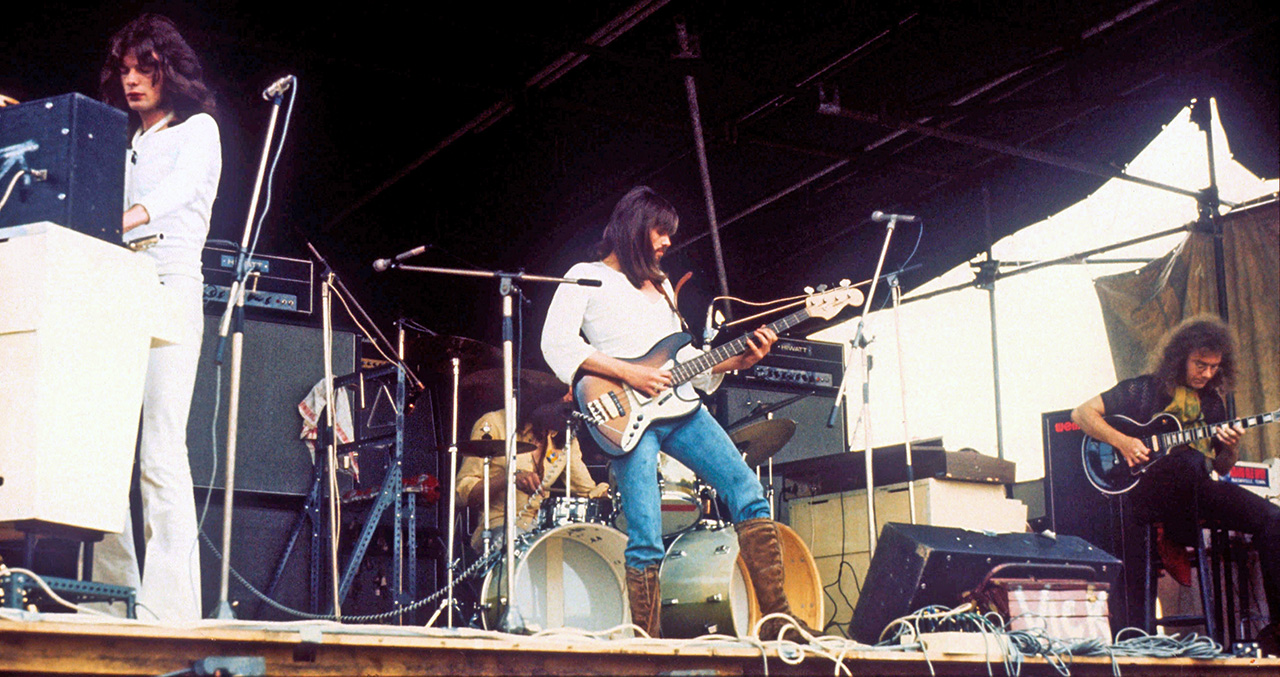
    King Crimson perform live on stage at the Hyde Park Free Concert in London on 4th September 1971. L-R: Mel Collins, Boz Burrell, Robert Fripp. (Photo by Michael Putland/Getty Images)

    (Image credit: Getty Images)

    Once Collins found drummer Ian Wallace, Fripp and lyricist Pete Sinfield saw light at the end of the tunnel. Future Roxy Music vocalist Brian Ferry was tried out but they passed on him, and instead selected Burrell, feeling an instant connection with his performance and character.

    He’s come on board as vocalist; but, like his immediate predecessor Gordon Haskell, he’d wind up playing bass too – something he’d never done before. The plan had been for future Steeleye Span member Rick Kemp to be bassist, and early rehearsals went well. The spirit in their underground studio was said to be much more positive and fun than it had earlier been. But after three days Kemp dropped out, feeling the music wasn’t for him.

    “That was the lowest point,” Wallace said. “When we got that message, we were all sitting in the basement, and it was pretty much that Crimson wasn’t going to happen. That was it, really; the band was all but finished.”

    If one of the bassists who auditioned to replace Kemp hadn’t left his instrument behind, the next stage of development might never have taken place. Burrell picked it up, played a few notes, and that was enough for Fripp to decide they’d found their new low-end provider.

    “We had had plenty of competent professional musicians audition, but they didn’t have the feel,” Fripp told NME at the time. “Boz felt the bass parts while he was singing, whereas the musicians could play it but couldn’t feel it. And if he could feel it, it could only be a matter of time before it crept down from his head through his hand and into his fingers.”

    After a week of trying it out, King Crimson were go again. They performed a four-day residency in Germany in April 1971, replete with expansive improvisations, then a UK tour the following month where the material was tightened up. Then, as the members felt the need to express themselves with their own music, they began to write what would become fourth album Islands.

    It was a key turning point for Crimson, steering the music and vision towards a future that even Fripp doubted they’d had. Yes, he found himself as last man standing when the grouping came to an end with just one album to their name, and there were more mountains to climb in the times ahead. But Burrell’s contribution to the band seemed to provide a lasting source of energy, even if it took Fripp a while to be able to face it.

    They really loved Boz. They said he had an amazing groove and an amazing vibe – that he really made those things sing

    Jakko Jakszyk

    21st-century Crimson lead vocalist Jakko Jakszyk saw Burrell’s line-up perform on that 1971 UK tour. “I love Boz’s voice,” he told Prog. “I know it’s maligned by some of the Crimson aficionados, but I don’t really get that. Both Mel and Ian were incredibly defensive about that; they really loved Boz. They loved his bass playing too, even though it wasn’t overly technical. They said he had an amazing groove and an amazing vibe – that he really made those things sing.”

    Jakszyk was delighted when Fripp decided to include material from the Burrell era in the new reincarnation. “I think finally he could hear the music in those pieces. He’d avoided them not so much because he dismissed the value of the material or the content, but because of the hellish memories he has of trying to bring that particular music to life.

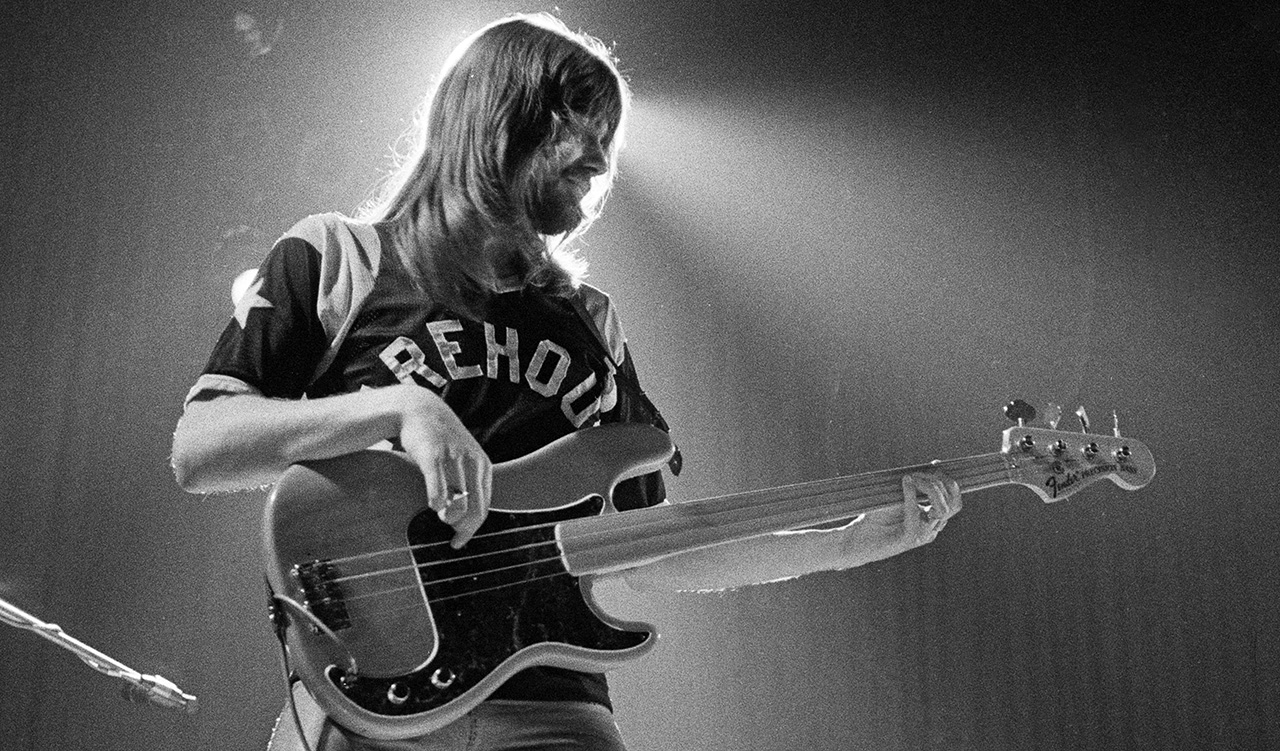
    Bassist Boz Burrell (1946 - 2006)

    (Image credit: Getty Images)

    “I think he hated that period for so long because, in his head, it represented this torturous process that he didn’t want to revisit. Obviously remixing it has helped him come to terms with it all; and certainly playing this stuff again has made him re-evaluate it – which is why it was such a joy to do it.”

    Burrell, Wallace and Collins joined Alexis Korner’s blues band Snape, before Burrell became a founding member of Bad Company in 1973. He later performed with Alvin Lee and Family’s Roger Chapman, then with Tam White. The Scottish singer was with Burrell in 2006 when he collapsed and died of a heart attack in his Marbella home at the age of 60.

  • Report – Sid Wilson No Longer a Member of Slipknot

    TMZ is reporting the band notified Wilson that he would no longer be a member moving forward. Continue reading…
  • Report: Sid Wilson out of Slipknot

    The band and Wilson have not publicly addressed the report as of this writing.

    Source

  • LA Industrial-Punk Trio Purest Form Explores the Horror of Surveillance Tech in Video for “Animal”

    PUREST FORM’s latest single, ANIMAL, opens with electronic menace. A blunt industrial beat stomps into view, guitar slashes scrape across the machinery, and Story Beeson’s voice carries the command of somebody who has already located the emergency exit. The Los Angeles trio wanted “White Zombie meets Underworld,” which sounds on paper like a backstage argument at a 1997 festival, yet the combination proves remarkably natural.

    Beeson, guitarist and programmer Madi Woodward, and bassist Riley Oikawa-Dahlson bring hardcore discipline to music designed for bodies in motion. ANIMAL pivots between serrated riffs, fractured breakbeats, low-end pressure, and sudden structural swerves, but every turn feels purposeful. The track has muscle, sex, and a mean little grin. Its aggression never becomes gray sludge; there is too much rhythmic wit in the programming, too much snap in the bass, and too much pleasure in the collision between metal weight and acid-house momentum.

    There is also a refreshing lack of genre etiquette here; stylistic boundaries are treated as petty municipal ordinances, useful mainly for telling dull people where to stand, then barrel through them with the cheerful confidence of repeat offenders. Beeson’s performance supplies the volatile center. She delivers each line as though language has become a physical object requiring immediate disposal, shouting near the edge of collapse while retaining enough control to sharpen every phrase. Around her, Woodward’s guitar behaves less like decoration than a damaged power tool, while Oikawa-Dahlson keeps the track planted firmly enough for the electronics to lunge, buck, and misbehave.

    The video, directed by Beeson, extends the song’s argument into the realm of surveillance horror. “The video takes on the horror of surveillance,” says Beeson. “While using a lot of throwback technology, mostly to pay homage to its influence – Peter Christopherson’s video for Ministry’s Over The Shoulder, it very much intends to communicate how more modern technology is being used for violence against our communities and humanity as a whole. It fits with the concept of ANIMAL: whether the nature is sexual or simply a desire to exist, we deserve to have freedom and we must take that freedom back.”

    Watch the video for Animal below:

    That conviction also drives RESISTANCE, the six-track EP arriving September 4 through Dais Records. Written amid fires, displacement, ICE raids, and the grinding obscenity of late-stage capitalism, the record channels anger toward collective action rather than private despair. “Resistance, less of an idea, more of an absolute action that has to be taken,” asserts Beeson.

    ANIMAL makes that action feel immediate, physical, and dangerously enjoyable. Revolution may remain poorly organized, but PUREST FORM have at least supplied it with a better bassline.

    Listen to ANIMAL below and order the single here.

    Catch PUREST FORM live on the following dates:

    • Sep 11: Los Angeles, CA – The Globe Theater w/ Fiddlehead, Pity Sex + more 
    • Sep 18: Austin, TX – Cold Waves Festival
    • Sep 25: Chicago, IL – Cold Waves Festival
    • Oct 22: New York, NY – TBA
    • Nov 14: Orange County, CA – Darker Waves Festival 

    Follow Purest Form:

    The post LA Industrial-Punk Trio Purest Form Explores the Horror of Surveillance Tech in Video for “Animal” appeared first on Post-Punk.com.

  • Sid Wilson Reportedly Fired From Slipknot

    It would appear the original 9 are now down to 4.

    The post Sid Wilson Reportedly Fired From Slipknot appeared first on Theprp.com.

  • The Vaqueros from Rochester “Echo” / “Desert Wind” on Audition

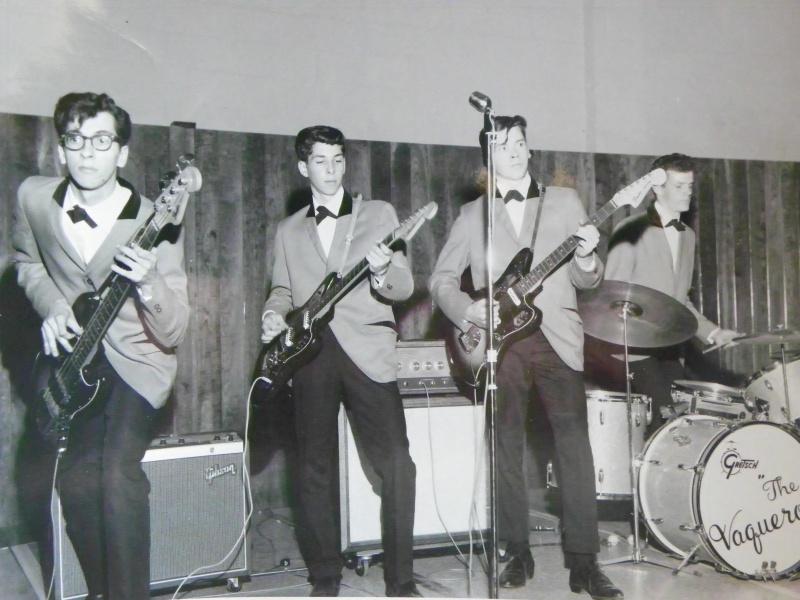
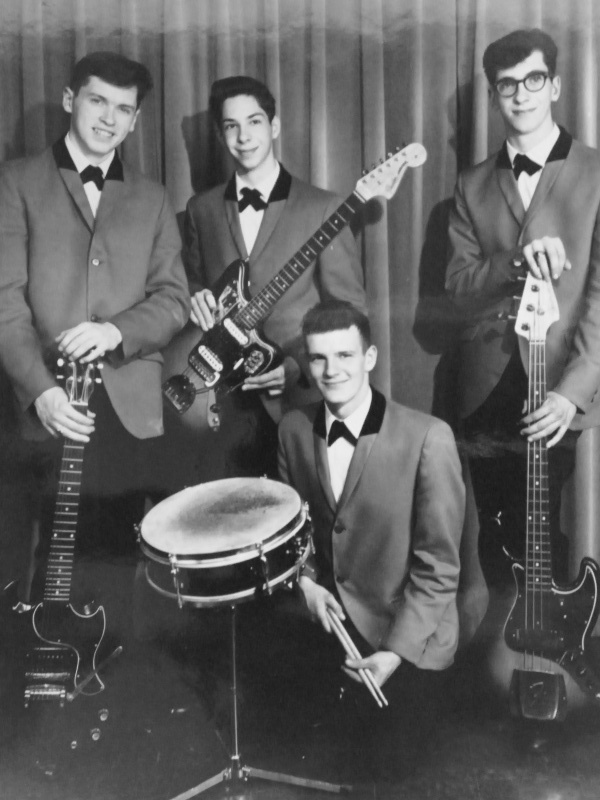
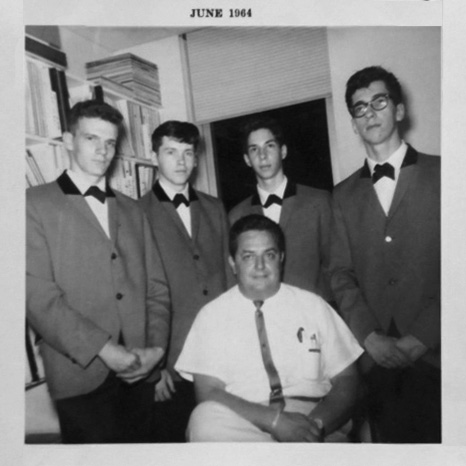
    The Vaqueros, from left: Steve Corona, Tom Corona, Larry Weld and David Heath

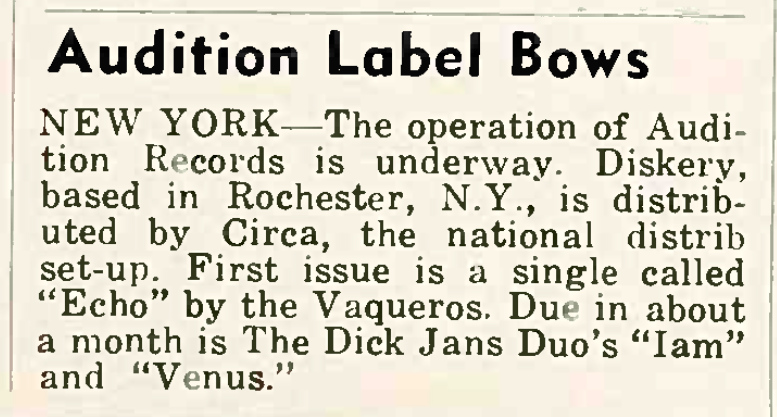
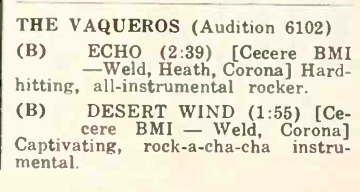
    The Vaqueros had the first release on the Audition Recording label out of Rochester, New York, “Echo” / “Desert Wind”. It hit local charts in early June, 1964 and received a review in Cash Box on June 13, 1964.

    Audition Label Bows with “Echo” by the Vaqueros, Cash Box, June 27, 1964

    The group registered copyright for “Echo” on June 15, 1964, music by Larry Weld (Laurence R. Weld), David Heath & Tom Corona (Thomas J. Corona). I haven’t yet found a copyright registration for “Desert Wind”.

    Band members were:

    Larry Weld – lead guitar
    Tom Corona – rhythm guitar
    Steve Corona – bass
    David Heath – drums

    The Vaqueros, from left: Larry Weld, Tom Corona, David Heath kneeling with drum sticks and Steve Corona with bass
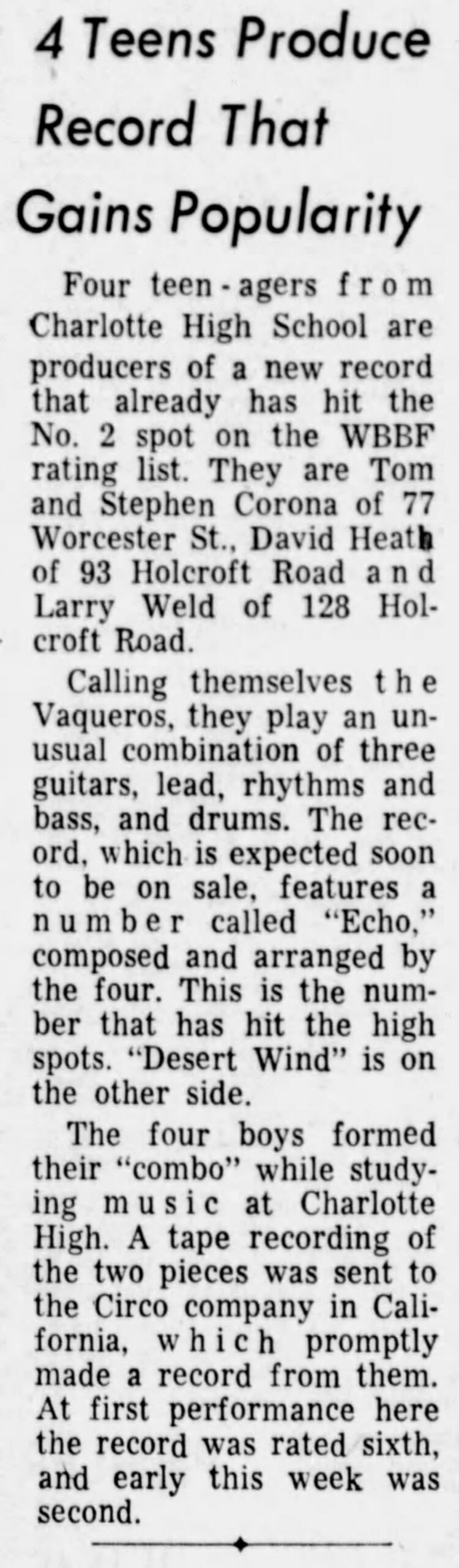
    Vaqueros in the Democrat And Chronicle, June 8, 1964

    David Heath wrote a history of the band and provided the photos seen here.

    In 1963 two 16 year old boys found an old guitar in the house attic in Rochester NY. Larry Weld, the older of the two, decided he would put strings on it and learn how to play. The other boy David Heath said he had a small pair of bongos, round metal tray mounted on a wood stand and a pair of drum sticks. Together they spent many hours trying to play songs they had heard on the radio.

    One month later Larry had purchased his first electric guitar and Dave had purchased his first drum set and by this time both had learned several songs and were starting to make new songs of their own. Knowing they needed a rhythm background Dave and Larry asked another Charlotte High school student Tom Corona to join the group and decided on the name “The Vaqueros” for the band. About a month later we composed the song “Echo”. At this point we were starting to play at many parties and events.

    Record review in Cash Box, June 13, 1964
    Vaqueros with Al Cecere at WBBF Studio, June 25, 1964

    Around 10 months after we first started playing we were asked to play for a Rochester business event and that was the first time we met Al Cecere who was just starting Audition Records. Al said he liked our band sound and said he would like us to make a record with his new company. We said we would and set up a date to record but we had two major problems to overcome.

    1: We had no bass player in the band

    2: We had no second side for the record

    The first problem was resolved by asking Tom’s older brother Steve Corona to play bass. He agreed and he purchased a bass guitar. Then Tom and Larry showed him what notes to play so we could make the record. The second problem was resolved by rapidly (in one day) composing the song “Desert Wind”.

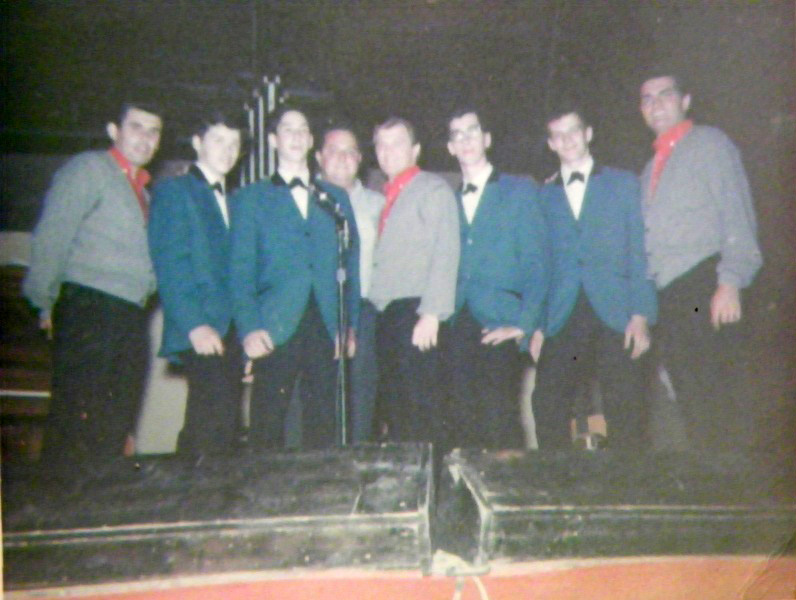
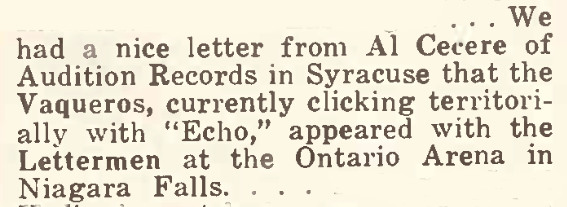
    The Vaqueros (and Al Cecere in back) with the Letterman, Niagara
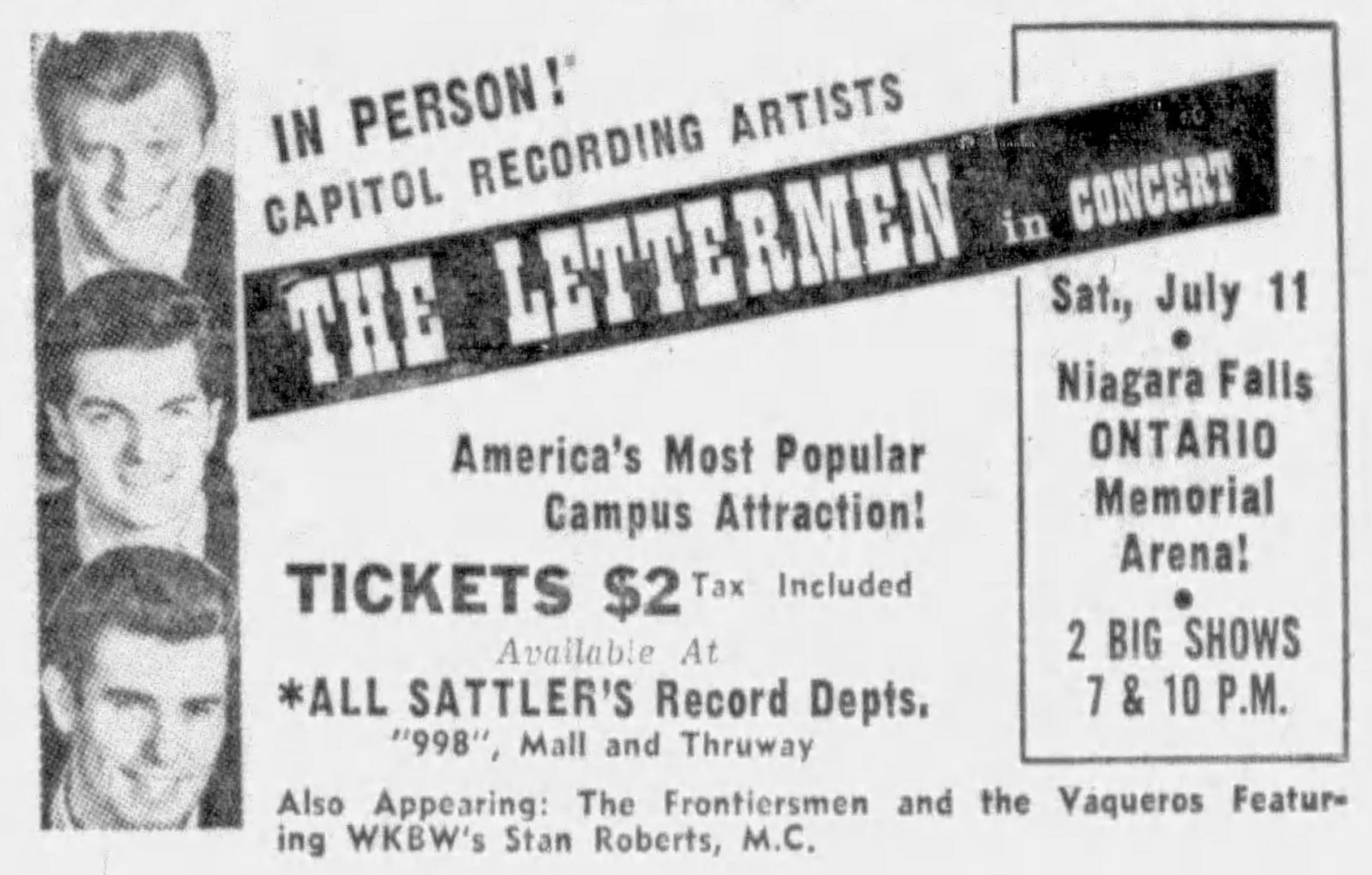
    The Vaqueros opened for the Lettermen at Niagara Falls Memorial Arena, July 11, 1964

    The Vaqueros in Cash Box, July 18, 1964
    After the song was released and hit #1 on the Rochester and surrounding radio stations we had steady play dates in many venues. We had interviews on radio stations, band picture signing dates, photos and release info in Cashbox, and we were the opening act for The Lettermen in Niagara Falls Canada.Within the next month we wrote and (on acetate demo record) recorded our next two songs to be released “Whiplash” and “Our Lost Love”. Al Cecere was setting up for us to open for The Beach Boys.

    Just as things were going very well for the Vaqueros the dark side of this business began to show its face. Al Cecere never informed the band of any record sales and stopped supporting us. He had moved on.

    With communication with Al Cecere heading downhill, everything slowed and we were all around 18 years old at this point. Life took over and the band started to split. Larry, Dave and Steve went on to other Rochester bands and Tommy married and started a family. We never played together again but do remain friends. Tommy passed away in 2025.

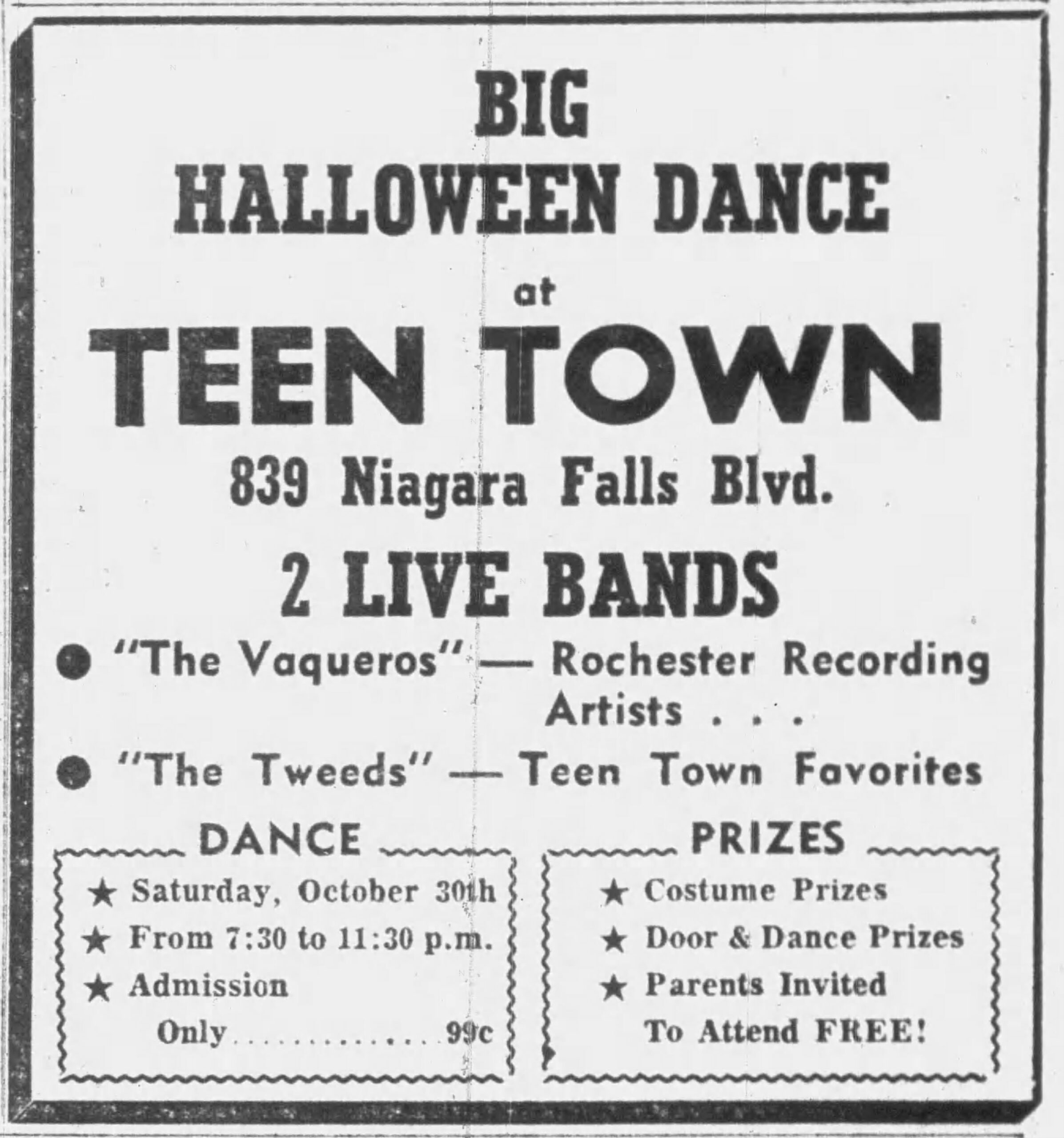
    The Vaqueros and the Tweeds at Teen Town, Kenmore, NY, October 1965

    The Vaqueros recorded other songs that went unreleased at the time that now exist on lacquer “acetate” or second-generation tape; a few very effective instrumentals that were ready for release and others that were in progress.

    “Whiplash” has an excellent ‘wet’ surf sound I did not find a copyright registration for this one.

    “Daybreak” is a spirited vamp with excellent lead guitar from Larry Weld and agile drum fills from David Heath. The group registered it as “Daybreaks” on February 25, 1965, with copyright to the full band including Steve Corona.

    “Our Lost Love” is a slower ballad, registered on July 1, 1965 to the four members of the group.

    Thank you to Dave Heath for his help with this article and for letting me hear the unreleased songs.