Black Sabbath guitarist Tony Iommi says that the band’s earliest recordings, dating back to when they were known as Earth, will be released “at some point”.
Last year it was announced that an album’s worth of material from Earth has been unearthed and would be released as The Legendary Lost Tapes. At the time, the group’s former manager Jim Simpson stated, “These recordings clearly demonstrate what fine music they produced right from the very beginning. We recorded these tracks at Zella Studio in Birmingham in 1969, but held back from releasing them as their style was evolving so quickly.
“Now, some 57 years later, the recordings assume a greater importance, illustrating how these four young men from Birmingham, barely out of their teens, were excellent musicians and a fine band, fully deserving of all the success that was to come their way.”
However, the album release was blocked after Sharon Osbourne wrote to Simpson insisting that the four members of Black Sabbath were against the release.
“The Band do not want these tapes released, not least as they haven’t heard them despite you saying you would provide copies long ago,” Osbourne wrote. “You know that, as a band, Black Sabbath don’t take things lying down and you can be assured that if you go ahead with this against the Band’s wishes we will take any action we can where their rights are infringed, both here and in America.”
In April this year, Osbourne announced that the 1969 recordings had been returned to the group, saying, “All of that stuff should be theirs. So it all ended well.”
In a new exclusive interview with Rolling Stone, Tony Iommi says that the demos “will come out at some point”.
“It’s weird when you hear stuff from so long ago, and all these things crop up that you forgot about,” the guitarist admits. “But it was fun to hear them, actually. I sat listening to them all, and it was good because there’s some jazzy stuff and bluesy stuff we done on them where we just used to jam. On a lot of the jams, it was all guitar, and I forgot about half of that. I can’t play that now.”
FOR IMMEDIATE RELEASE
Maris Anguis Unveils Cinematic Dark Ambient Masterpiece “Oblivion Code” – A Journey Beyond Genre and Into the Unknown
Released June 21, 2027 Artist: Maris Anguis (Ryo Utasato) Release Title: Oblivion Code Genre: Dark Ambient / Dark Music
Maris Anguis, the cinematic dark ambient project from award-winning composer Ryo Utasato, has released the breathtaking new full-length album “Oblivion Code” on June 21, 2027. Blending dark music, cinematic composition, and the atmosphere of science fiction, the album delivers an immersive experience that transports listeners beyond traditional genre boundaries and into a vast universe of sound, mystery, and imagination.
Unlike anything else in the dark ambient landscape, Maris Anguis creates music that exists somewhere between soundtrack, storytelling, and sonic world-building. Each release serves as a carefully crafted journey, with compositions designed to evoke distant worlds, forgotten civilizations, and unexplored dimensions.
With nine releases now in the Maris Anguis catalog, Ryo Utasato has established a dedicated following within the dark music community, earning recognition for creating deeply atmospheric works that challenge expectations and invite listeners into fully realized musical realms.
“ Oblivion Code marks the beginning of a new musical journey for Maris Anguis,” explains the project. “A unique blending of dark music, soundtrack and the world of sci-fi. As with all of Maris Anguis albums, Oblivion Code is built around a theme, a story told in musical composition.”
The album unfolds as an epic science fiction tale set on a distant planet at the edge of the galaxy. A crimson wasteland stretches beneath the shadow of a colossal city filled with towering black spires, remnants of an ancient mechanical civilization. Buried beneath the sands are forgotten truths and a mysterious “Code” hidden among the stars.
As an empire plots to overthrow the throne of the gods, a lone hunter emerges with the power to awaken the “Code of Oblivion” and change the fate of worlds forever.
Entirely composed, produced, and performed by Ryo Utasato, “Oblivion Code” showcases the artist’s ability to transform sound into cinematic storytelling. Additional vocals, production, artwork, and design were also created by Utasato, creating a fully immersive artistic vision from beginning to end.
Recorded, mixed, and mastered at DarkSkys Studio, Illinois USA (2026) by Ryo Utasato, “Oblivion Code” stands as another ambitious chapter in the evolving universe of Maris Anguis.
For fans of dark atmospheres, cinematic soundscapes, science fiction, and music that exists outside traditional boundaries, Maris Anguis offers a gateway into a world where imagination and sound become one.
“Oblivion Code” was released June 21, 2027 and is available now.
Credits:
All music composed by Maris Anguis (aka Ryo Utasato) Production by Ryo Utasato Additional vocals by Ryo Utasato Recorded, mixed & mastered at DarkSkys Studio, Illinois USA Artwork and design by Ryo Utasato
Follow Maris Anguis: Bandcamp: marisanguis.bandcamp.com Facebook: https://www.facebook.com/profile.php?id=61552942407393
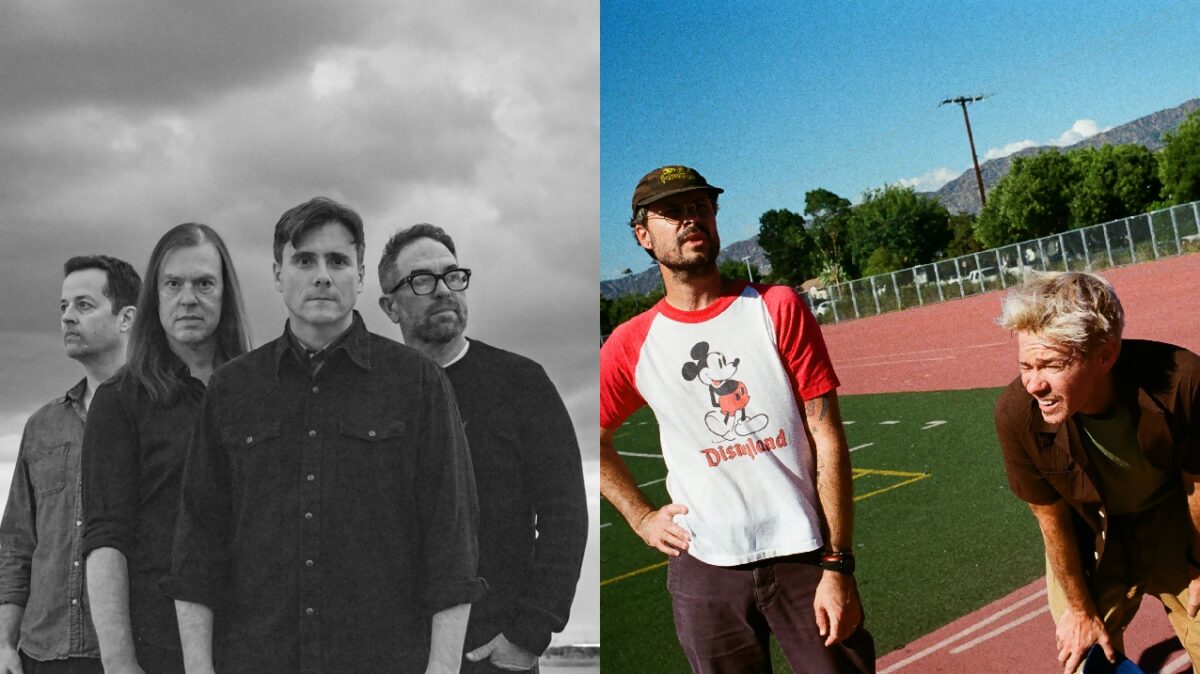
Jimmy Eat World and The Format are teaming up for a huge show in Los Angeles, in celebration of two iconic albums.
Taking place on November 07, at the iconic Hollywood Bowl, Jimmy Eat World will be playing ‘Bleed American’, which is 25 this year, whilst The Format will be playing ‘Dog Problems’, which turns 20.
So, lots to celebrate.
And the Hollywood Bowl holds no less than 17,500 people, so it’s going to be really special.
Tickets will be going on general sale from July 31 at 10 a.m. PST.
We recently chatted to Jimmy Eat World’s Jim Adkins all about the album’s anniversary and so much more. You can check that out below.
War Bastard talk to us at Offal Fest about their opening set.
They talk about their participation in ‘Battle of the Slams’, the history of the band, the slam scene and getting people involved, writing new music and a whole lot more.
You can listen to the interview below, or jump over to any of the usual streaming services!
After reaching crushing new peaks and delving into the deepest, darkest and most personal depths of their storied career during its opening chapters, the Norwegian prog bards GreenCarnation are ending their critically-acclaimed album trilogy with a bold and uncompromising exclamation.
“A Dark Poem is by far our biggest achievement since Light of Day, Day of Darkness”, GreenCarnation vocalist Kjetil Nordhus commented. “Our new album trilogy returns to the epic storytelling that put us on the map back in 2001. While the reception to Part I and Part II has been overwhelmingly positive for us, we do believe that Part III saves the best for last”.
Today, Green Carnation is releasing the title track as the second advanced single from A Dark Poem, Part III: The Messiah Complex. By performing a prog miracle, trilogy highlight “The Messiah Complex” reveals a dark truth about human nature.
“The title track from Part III of A Dark Poem is about our need to find external excuses for our behavior”, Green Carnation bassist and primary lyricist Stein Roger Sordal says. “This is nothing new, but with our uncritical way of working with our increasingly digital world, we seem unable to cope with the consequences of our actions”.
“‘The Messiah Complex’ is a standout song in the trilogy”, Nordhus adds. “The vibe to this song is quite unique for us, but it doesn’t take long to recognize that it is still very much a GreenCarnation song. Bjørn’s guitar work lifts the song up, together with Jonathan’s drumming and, of course, Stein Roger’s bass and vocals during the bridge”.
The album is available in the following formats:
CD Digipack
12” Vinyl Gatefold (Black)
12” Vinyl Deluxe Gatefold (Silver and green marbled)
12” Vinyl Deluxe Gatefold (Transparent red and black marbled)
12” Vinyl Deluxe Gatefold (White with black splatters)
12” Vinyl Deluxe Gatefold (Turquoise and black marbled)
12” Vinyl Deluxe Gatefold (Transparent orange and black marbled)
Limited-edition A Dark Poem, Part I-III Colored LP Box Set (includes demos and outtakes)
Green Carnation left fans and critics more than satisfied after the first two parts of A Dark Poem, but Part III arrives as the trilogy’s missing key. All of its secrets won’t be revealed until the album’s 16-minute orchestral suite finally sees the light of day, but “The Messiah Complex” ties together the band’s ode to Arthur Rimbaud’s Ophelia with masterful strokes of prog. The title track doesn’t wander so much as it’s left to wonder amidst an existential desert, where rock-solid riffs magically transform into an oasis of swirling synth.
“Look, there it is / Can you believe it?”, Nordhus sings with aching conviction.
While inspired by a Shakespearean tragedy, A Dark Poem addresses the rapidly failing relationship between our inner lives and the outside world. The collective anxiety over encroaching technology, power-hungry leaders, and social division that stirred below the surface of The Shores of Melancholia and Sanguis surges to a raging head on “The Messiah Complex”. The title track traces the evil root of these modern plagues back to biblical times. Fiery double bass drum invokes the wrath of King Herod, leaving no choice but to submit to the song’s sublime final melody.
“Would you guide my way if I believe?” Nordhus cries out. Our impulse might be misguided, but with “The Messiah Complex”, Green Carnation continues to reap endless rewards.
Catch Green Carnation during their upcoming hometown shows and European summer festival dates.
During their headlining show in September at the Kilden Performing Arts Centre, the band will perform A Dark Poem in its entirety for the first and final time. Already, fans from 18 different countries have purchased tickets for this once-in-a-lifetime event.
A Dark Poem, Part III: The Messiah Complex is available for pre-order here.
Last year, nine women came forward to accuse Jared Leto of sexual misconduct. An Air Mail report included stories of assault and harassment from the alleged victims, who said that they were as young as 16 when the Oscar-winning actor and Thirty Seconds To Mars frontman subjected them to his advances. Leto denied the allegations. Now, the BBC has published an investigative report that builds out that story, detailing specific alleged crimes.
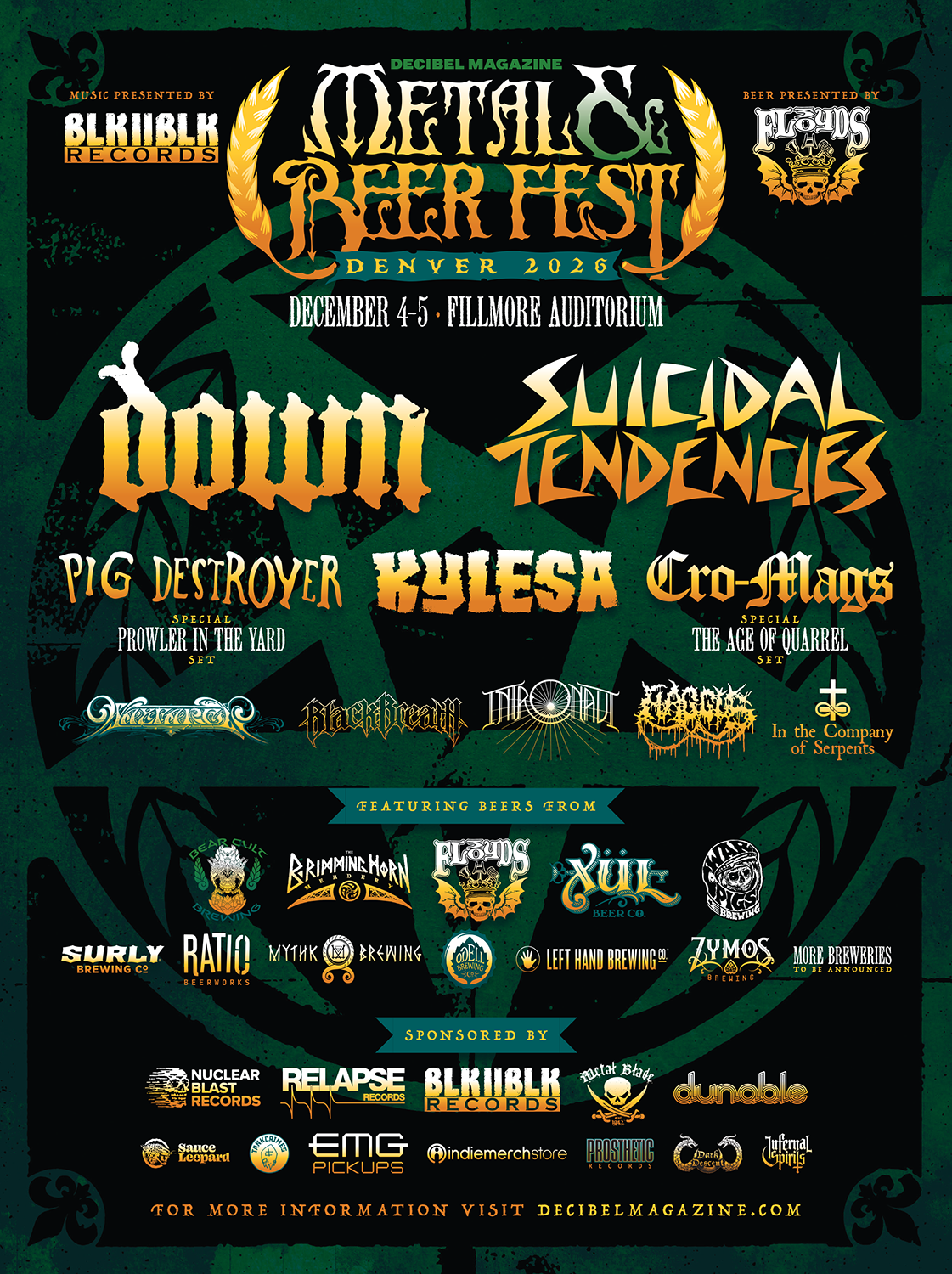
Decibel Magazine Metal & Beer Fest: Denver returns to Denver for its fifth round, tapping the Fillmore Auditorium as home of the world’s loudest, heaviest, most extreme craft beer festival on Friday and Saturday, December 4-5, 2026. And now the full can-crushing band and brewery lineup can finally be revealed!
Southern doom supergroup Down make their first Denver appearance in over 12 years to headline Saturday night (December 5), while crossover thrash metal legends Suicidal Tendencies will unleash their first Denver headline performance in over eight years on Friday night (December 4).
The already stacked artist bill, presented by BLKIIBLK Records, is rounded out by: legendary DMV grind force Pig Destroyer (performing a special 25th anniversaryProwler in the Yardset); reunited progressive psych sludge institution Kylesa; New York hardcore legends Cro-Mags (performing a special 40th anniversaryThe Age of Quarrelset); Denver’s own Americana gunslingers Wayfarer; freshly resurrected death/thrash/crust killers Black Breath; progressive sludge crew Intronaut (performing for the first time in over four years); masked mincecore marauders Haggus and Denver doom lords In the Company of Serpents.
But that’s just the (sober) half of it! America’s most metal breweries and meaderies will descend upon the beer capital of America to provide essential suds to the soundtrack of crushing metallic thuds! Presented by American craft beer vanguard 3Floyds Brewing (IN), the murderous maelstrom of malts includes Featured Breweries—and Meadery—WarPigs Brewing (IN), XUL Beer Company (TN), Brimming Horn Meadery (DE), Bear Cult Brewing Co. (DE), Odell Brewing Co (CO), Zymos Brewing (CO), Mythk Brewing (FL), Surly Brewing Co (MN), Left Hand Brewing (CO), plus pours from RatioBeerworks (CO).
Daily lineups can be found below. All ticket options for Metal & Beer Fest: Denver 2026, including single-day tickets, go on sale on Friday, July 31 at 10am MT.
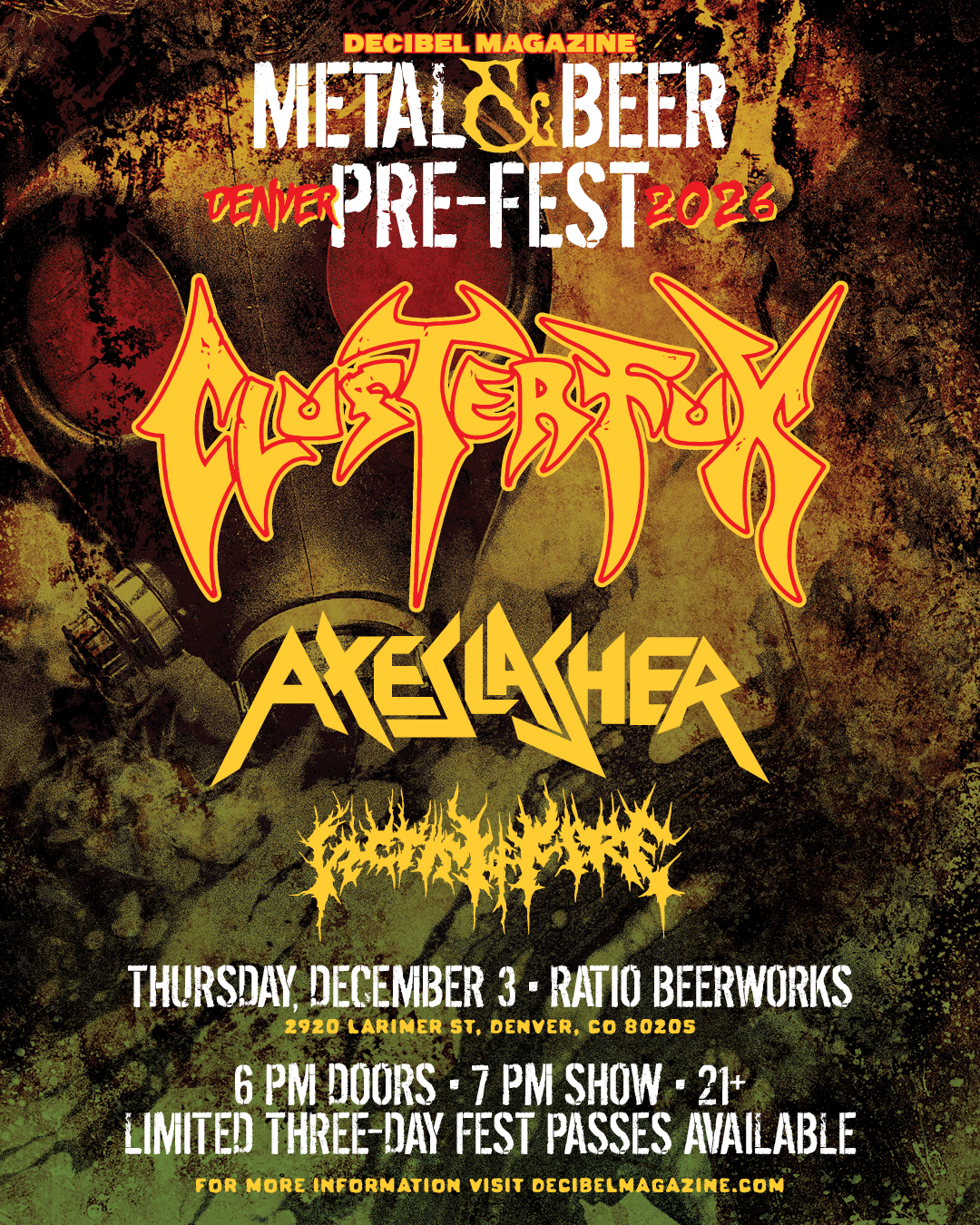
IMPORTANT: We’re already down to an extremely limited number of three-day passes that include tickets to the official Metal & Beer PRE-Fest at Ratio Beerworks (Larimer Street location) on December 3 with Clusterfux, Axeslasher and Victim of Fire. Full daily lineups below.
DECEMBER 3 (Pre-fest at Ratio Beerworks) Clusterfux
Axeslasher
Victim of Fire
DECEMBER 4 (at Fillmore Auditorium) Suicidal Tendencies
Pig Destroyer (special Prowler in the Yard set)
Cro-Mags (special The Age of Quarrel set) Black Breath Haggus
DECEMBER 5 (at Fillmore Auditorium) Down
Kylesa
Wayfarer
Intronaut
In the Company of Serpents
“Just Metal” Ticket (21+)
Admittance to the day’s event, but as the name suggests, you just get to see the show—no beer samples.
“Metal & Beer” Ticket (21+)
Admittance to the day’s event plus unlimited* sampling from our diverse lineup of national breweries presented by 3 Floyds. Decibel Magazine Metal & Beer Fest: Denver 2026 sampling cups provided. Limited tickets available per day.
*Please note: In extremely extreme cases, certain high-ABV pours will be ticketed, with attendees receiving a limited number of tickets available to redeem for each offering.
A woman steps from the shadows beneath a flickering streetlamp. Her black dress catches the light for a brief moment before she disappears into the darkness. Across the street, a detective adjusts his trench coat and watches silently. The scene lasts only seconds, yet its visual language remains instantly recognizable nearly a century later.
Film noir gave popular culture some of its most enduring images. Cigarette smoke drifting through dimly lit rooms. Sharp silhouettes framed by darkness. Fedora hats, tailored suits, satin gloves, and enigmatic figures whose motives remain hidden. These elements did more than define a cinematic genre. They helped create a fashion aesthetic that continues influencing designers, photographers, musicians, and alternative subcultures today.
The profound historical connection between noir cinema dark fashion extends beyond clothing. Both rely on atmosphere, ambiguity, and suggestion. Neither reveals everything at once. Instead, they invite curiosity by allowing mystery to remain visible.
Long after the golden age of noir ended, its visual codes survived. They evolved through Gothic fashion, punk culture, avant-garde design, and contemporary luxury brands. The shadows never left. They simply changed their form.
Film noir transformed shadows, elegance, and mystery into a visual language that continues influencing dark fashion today.
The Birth of Noir Style
Film noir emerged during the 1940s and early 1950s, reflecting a world shaped by war, uncertainty, and social change. Unlike the optimistic glamour often associated with Hollywood, noir presented a darker vision of modern life. Cities appeared dangerous. Heroes were flawed. Morality became complicated.
The visual style developed partly from German Expressionism, a cinematic movement that used dramatic shadows, distorted perspectives, and unusual lighting to create psychological tension. Films such as The Cabinet of Dr. Caligari demonstrated how visual design could communicate emotional states without relying entirely on dialogue.
American filmmakers adapted these techniques and applied them to crime stories, detective narratives, and psychological dramas. The result was a new cinematic language built upon contrast. Light battled darkness. Truth competed with deception. Appearance concealed reality.
Fashion naturally became part of this visual system. Characters communicated identity through clothing before speaking a single word. Every garment carried narrative meaning.
The Detective’s Uniform
Few fashion images are as recognizable as the noir detective. The trench coat, fedora, dark tie, and polished shoes became visual shorthand for intelligence, secrecy, and emotional distance.
Humphrey Bogart’s Sam Spade in The Maltese Falcon helped establish this archetype. His wardrobe appears practical rather than extravagant, yet it communicates authority and mystery simultaneously. The clothes suggest a man who belongs to the city while remaining detached from it.
This understated elegance would influence generations of menswear designers. Dark tailoring, monochromatic palettes, and minimalist sophistication became central elements of what many people now recognize as noir fashion.
Unlike Gothic fashion, which often embraces ornamentation and historical references, noir style achieves its impact through restraint. Every detail serves a purpose. Nothing feels excessive.
The Femme Fatale and the Power of Elegance
If the detective represented noir’s controlled exterior, the femme fatale embodied its dangerous allure. Characters played by actresses such as Barbara Stanwyck, Rita Hayworth, and Lauren Bacall transformed fashion into a form of psychological storytelling.
Their wardrobes often featured black dresses, satin fabrics, fitted silhouettes, gloves, veils, and carefully chosen jewelry. These garments projected sophistication while maintaining an aura of uncertainty. Audiences were never entirely sure whether the character represented desire, danger, or both.
Barbara Stanwyck’s appearance in Double Indemnity remains one of the defining examples. Her fashion choices communicate confidence and control long before the story reveals her intentions. Clothing becomes part of the narrative architecture.
“The femme fatale wasn’t merely dressed in black. She transformed mystery into a form of elegance.”
This combination of beauty and ambiguity would become one of noir’s most enduring contributions to fashion. Designers repeatedly returned to these visual codes because they understood a simple truth. Mystery can be more attractive than complete revelation.
Why Darkness Looks Elegant
The popularity of noir fashion cannot be explained entirely through cinema history. Psychology also plays a role. Human beings are naturally drawn to ambiguity. What remains partially hidden often appears more intriguing than what is fully revealed.
Noir films understood this principle perfectly. Shadows conceal information while encouraging curiosity. Fashion achieves a similar effect. Monochromatic palettes, clean silhouettes, and carefully controlled details allow the imagination to participate.
This may be why black remains the dominant color within many dark fashion movements. Black suggests sophistication, mystery, authority, and independence simultaneously. It creates emotional depth without requiring elaborate decoration.
The visual language first refined by noir cinema continues influencing how darkness itself is perceived within fashion.
How Shadows Became Fashionable
One of noir cinema’s most important contributions to fashion was not a specific garment but a visual philosophy. Noir taught audiences that darkness itself could be elegant.
Classic Hollywood often illuminated its stars evenly, emphasizing glamour and visibility. Noir filmmakers pursued a different goal. They embraced contrast. Faces emerged from darkness. Streets disappeared into shadow. Characters seemed suspended between revelation and concealment.
This technique, known as chiaroscuro, originated in Renaissance painting before becoming a defining element of noir cinematography. Strong contrasts between light and dark created visual drama while reinforcing themes of uncertainty and moral ambiguity.
The effect extended beyond cinema. Fashion photographers quickly recognized that shadow could become a design element in its own right. Clothing no longer needed elaborate decoration to command attention. A striking silhouette could achieve the same result.
Noir transformed darkness from a background into a statement.
The Power of the Silhouette
Film noir frequently reduced characters to outlines. A fedora against a streetlight. A woman framed in a doorway. A figure standing beneath a neon sign while rain fell across the pavement.
These images remain memorable because the silhouette encourages imagination. Details disappear, yet personality becomes more pronounced. The audience fills the gaps.
Modern dark fashion often operates according to the same principle. Designers emphasize shape, proportion, and movement rather than relying solely on color or ornament. A dramatic coat, a sharply tailored jacket, or a flowing black dress can create an immediate emotional impact because the silhouette itself tells a story.
The connection between noir and contemporary fashion begins here. Both understand that suggestion is often more powerful than exposure.
From Film Noir to Modern Dark Fashion
The influence of noir did not end with classic Hollywood. Its visual language migrated into later fashion movements, evolving while retaining its essential characteristics. Mystery, restraint, elegance, and emotional complexity remained central themes.
Few designers embodied this connection more clearly than Alexander McQueen. Although his work frequently drew inspiration from history, nature, and Gothic imagery, many collections shared noir’s fascination with beauty and danger existing simultaneously.
McQueen understood that clothing could function as narrative. A garment could reveal vulnerability while projecting strength. It could appear elegant while carrying undertones of menace. These contradictions mirror the emotional tensions that define the best noir films.
Rather than copying noir costumes directly, McQueen translated their psychological atmosphere into contemporary fashion.
Ann Demeulemeester and the Art of Mystery
Belgian designer Ann Demeulemeester offers another fascinating example. Her work often relies on monochromatic palettes, fluid tailoring, layered textures, and an understated sense of drama.
Unlike fashion built around conspicuous luxury, Demeulemeester’s designs frequently feel introspective. The garments suggest personality rather than displaying status. This approach closely resembles noir’s treatment of character.
Many noir protagonists remain emotionally guarded. Audiences learn about them gradually through behavior, atmosphere, and implication. Demeulemeester’s clothing creates a similar experience. The wearer appears mysterious without seeming inaccessible.
The connection illustrates how noir’s influence extends beyond specific visual references. It survives as an attitude toward style itself.
Why Mystery Remains Attractive
The enduring appeal of noir fashion ultimately depends upon psychology. Human beings are naturally curious. Complete certainty often feels less compelling than partial understanding. We become fascinated by people, places, and images that leave room for interpretation.
Noir cinema repeatedly exploited this tendency. Viewers rarely knew exactly whom to trust. Motivations remained hidden. Secrets shaped every interaction. Fashion contributed to this atmosphere by emphasizing ambiguity rather than transparency.
Dark clothing operates in a similar way. It creates emotional distance while inviting attention. The wearer controls what is revealed and what remains concealed.
This balance between visibility and mystery explains why noir aesthetics continue resonating across generations. They engage the imagination rather than overwhelming it with information.
The Elegance of Ambiguity
Modern culture often encourages constant visibility. Social media rewards disclosure. Personal branding emphasizes clarity and accessibility. Noir aesthetics move in the opposite direction.
They celebrate ambiguity. Not deception, but complexity. The acknowledgment that identity cannot always be reduced to simple definitions.
This perspective helps explain why noir-inspired fashion remains relevant. The style offers an alternative to visual excess. It values atmosphere over spectacle and suggestion over certainty.
The result feels timeless because the underlying psychology has not changed. People remain fascinated by mystery.
When Cinema Became a Wardrobe
The relationship between noir cinema and dark fashion extends far beyond costume design. Noir created a visual language built on shadows, restraint, elegance, and emotional complexity. Fashion adopted that language because it communicated powerful ideas with remarkable efficiency.
A black coat could suggest independence. A tailored silhouette could imply confidence. A monochromatic palette could create an aura of mystery. These associations developed through decades of cinematic storytelling.
What began on movie screens eventually entered everyday culture. Designers adapted noir’s visual codes. Musicians embraced them. Photographers refined them. Alternative fashion communities transformed them into personal forms of expression.
The trench coats, shadows, and femme fatales of classic cinema may belong to another era, but the emotions they represented remain surprisingly modern.
That is why noir fashion never truly disappeared.
It simply stepped back into the shadows.
From Noir to Gothic Fashion
Although film noir and Gothic fashion developed from different cultural traditions, they share a surprising number of visual and psychological themes. Both are fascinated by darkness, mystery, emotional complexity, and the hidden aspects of identity.
The connection becomes obvious when comparing classic noir imagery with contemporary Gothic aesthetics. Black clothing dominates both worlds. Tailored silhouettes appear frequently. Veils, gloves, long coats, and dramatic contrasts between light and shadow remain central visual elements.
More importantly, both styles communicate a similar emotional atmosphere. They suggest introspection rather than exhibition. Characters and individuals become intriguing because they reveal only part of themselves.
Gothic fashion expanded noir’s visual language by incorporating Victorian influences, Romantic symbolism, and darker historical references. Yet the underlying fascination with mystery remained unchanged.
In many ways, Gothic fashion inherited noir’s understanding that elegance often becomes more powerful when combined with ambiguity.
The Rise of Dark Academia
The recent popularity of Dark Academia demonstrates how deeply noir aesthetics continue influencing contemporary culture. Although the movement draws inspiration from literature, universities, and classical education, many of its visual characteristics echo classic noir.
Long coats, muted color palettes, polished shoes, vintage tailoring, and atmospheric photography all reflect the same appreciation for mood and restraint that defined noir cinema decades earlier.
Dark Academia also shares noir’s fascination with intellectual mystery. Libraries replace detective offices, yet the emotional atmosphere remains surprisingly similar. Curiosity, secrecy, and melancholy continue shaping the aesthetic experience.
The setting may have changed, but the shadows remain familiar.
Neo-Noir and the Return of the Shadow
Film noir never truly disappeared. Instead, it evolved into what critics often call neo-noir. Contemporary filmmakers adapted the visual language of classic noir while exploring modern anxieties and social realities.
Among the most influential figures in this evolution is David Lynch. Works such as Blue Velvet and Mulholland Drive embrace many traditional noir elements while introducing surrealism and psychological uncertainty.
Lynch understands something fundamental about noir. Mystery is not merely a narrative device. It is an emotional experience. Viewers become fascinated because they sense hidden meanings beneath ordinary appearances.
This philosophy has influenced countless photographers, stylists, and designers. Fashion editorials frequently borrow neo-noir imagery because it instantly creates atmosphere. Shadows become expressive. Clothing acquires narrative significance. Every image feels as though it belongs to a larger story.
Why Noir Still Looks Modern
Many fashion trends become dated because they depend upon specific historical details. Noir remains relevant because its appeal is rooted in psychology rather than novelty.
People continue responding to contrast. Shadows still create drama. Mystery remains attractive. Elegance continues benefiting from restraint.
A black coat photographed beneath a streetlamp can feel contemporary despite drawing upon visual traditions that originated nearly a century ago. The emotional language remains intact because it addresses experiences that have not changed.
Human beings still wonder what exists beyond the edge of the light.
Why Noir Fashion Never Dies
Fashion constantly reinvents itself, yet certain visual ideas endure. Noir belongs to that rare category because it offers more than aesthetics. It provides a way of communicating identity, emotion, and atmosphere.
The detective’s trench coat, the femme fatale’s black dress, and the dramatic interplay between light and shadow continue resonating because they represent universal themes. Curiosity. Desire. Independence. Uncertainty. The search for truth hidden beneath appearances.
Designers continue revisiting these themes because they remain emotionally relevant. Every generation discovers new ways to interpret them, but the foundation remains remarkably consistent.
Noir fashion survives because it understands something essential about style. Clothing is never simply decoration. It is a form of storytelling.
The greatest noir images endure because they allow the story to remain unfinished. Viewers are invited to imagine what happened before the scene began and what might happen after it ends.
Like the best detective stories, the mystery never completely disappears.
The Shadow That Never Left
Film noir transformed darkness into elegance. It taught audiences that mystery could be beautiful, that shadows could reveal as much as light, and that clothing could communicate entire narratives before a character spoke a single word.
From the trench coats of classic detectives to the monochromatic designs of contemporary fashion, noir’s influence continues shaping how darkness is perceived. The visual language developed in smoke-filled streets and dimly lit offices evolved into a broader cultural aesthetic embraced by Gothic fashion, Dark Academia, avant-garde design, and countless creative movements.
The genre’s lasting power comes from its understanding of human psychology. We remain fascinated by what is partially hidden. Ambiguity invites imagination. Shadows encourage curiosity.
That is why noir continues inspiring artists nearly a century after its emergence.
The films may have ended.
The style never did.
Wear the Darkness
If noir cinema, Gothic aesthetics, and dark fashion inspire you, explore the Edgar Allan Poets store. Discover apparel and artwork created for lovers of mystery, elegance, and the beauty hidden within the shadows.
Join the Noir Newsletter
Receive Gothic culture, noir psychology, dark fashion history, Edgar Allan Poe analysis, and mysterious stories directly in your inbox.
Enter the Noir Atmosphere
Continue your journey through dark elegance, cinematic mystery, and Gothic moods with the official Edgar Allan Poets playlist.
Frequently Asked Questions
What is film noir?
Film noir is a cinematic style that emerged in the 1940s and 1950s, characterized by moral ambiguity, dramatic shadows, crime narratives, and psychologically complex characters.
How did film noir influence fashion?
Noir popularized dark tailoring, monochromatic palettes, trench coats, femme fatale elegance, and the use of mystery as a visual element in personal style.
Why is black so important in noir fashion?
Black communicates sophistication, authority, mystery, and emotional depth. Noir cinema helped establish these associations in popular culture.
What is the connection between noir and Gothic fashion?
Both aesthetics value darkness, ambiguity, atmosphere, and psychological complexity. Gothic fashion expanded many of the visual ideas first popularized by noir cinema.
Why does noir style remain popular today?
Its appeal is rooted in timeless psychological themes such as mystery, curiosity, elegance, and the attraction of what remains partially hidden.
(written by Islander) This is the tenth year of existence for Orbstruct, the death metal band founded in Kharkiv, Ukraine, and later driven by war to a new home in Poland. During that decade Orbstruct has released three albums, the most recent of which (Ostracism) dropped last year. To mark this year’s milestone anniversary, Orbstruct […]
BMG Records is pleased to announce the worldwide release of guitar legend Tony Iommi’s brand-new album. The album is titled From The Dark and will be launched on October 23rd, 2026 via BMG. The album kicks off with the first single, “World Alone,” which premiered tonight as part of a special worldwide streaming event. The event… Continue Reading →

 “Just Metal” Ticket (21+)
