For many years, Florida rap great Denzel Curry has been messing around in the hardcore world. When the teenage Curry first emerged as part of the underground Raider Klan crew, they helped introduce choatic moshpit energy to the rap world. In 2019, Curry covered Rage Against The Machine for Triple J and enlisted Fucked Up for a Bad Brains cover. Curry is a regular presence at festivals like Outbreak. He teamed up with Knocked Loose for the extremely sick collab “Hive Mind” earlier this year, and he’ll head out on tour with that band this fall. Now, he says he’s “flirting with the idea of creating a hardcore tape.”
Joni Mitchell’s journey began in Fort Macleod, Alberta, where she was born, and continued in Saskatchewan, where she spent most of her formative years. Her childhood battle with polio at the age of nine cultivated a resilience that would echo throughout her lyrics and musical ethos. This early challenge informed much of her later introspective work, manifesting in themes of perseverance and self-discovery that resonated deeply with audiences. Mitchell’s artistic instincts first blossomed through painting, an interest she nurtured before music became her primary expression. This visual artistry eventually intertwined beautifully with her musical compositions, evident not just in the
There’s always a part of me that smiles when I hear a drum beat start off a song, even more so when it’s joined by a bellowing bassline. It’s a simple, uncomplicated process that sets the standard for what is about to follow, and drummer Skylar Rowe and bassist Sam Wagster do a splendid job on opening track “Always Arriving”. The song develops further, with the guitars and vocals spiralling over the hypnotic rhythm as the band invite you into their sphere.
“Paired Sentinels” is the fifth album from Chicago’s Anatomy of Habit as they return with a winning combination of cross genre sounds including doom, noise, shoegaze and post punk. The first track has been described by vocalist Mark Solotroff as “a study of what we leave behind” and like being “caught between the weight of where we’ve been and the certainty of what’s coming”. It’s an interesting opener and leads into “Conditions For Freedom” which has further dynamic and atmospheric sounds layered over a shifting guitar presence and low-end bass.
You need to dig in on this one, as it over thirteen minutes long, but as with the other three songs, it explores “repetition, memory and identity… that shape longing and loss”. The droning adds a certain vulnerability and rawness to the composition that are exemplified by the openness of the vocals from Solotroff. There’s a dramatic shift in the middle section of the song, that makes you stop and think, as the music guides your mind to another world before it comes back to life.
The drums take the lead again on “The Importance of Risk” before the vocals pierce the stop start noise on the track. With the bass again being prominent, it allows for more experimental guitar work from Alex Latus, combined with a plethora of abrasive noises from metal percussionist Isidro Reyes. With all manner of different instruments being used, the repetitive nature of the music is there for all to hear, and it should be complimented as the band have evolved whilst sustaining their creative passion.
The final song, which bares the album title, gives off a strange, almost David Lynch feel to it, as the ambient sounds float around your head, as if you are having an out of body experience looking down upon Earth. Yet, about a quarter of the way in, the group erupt into a short fit of rage, before being scolded like a child and brought back to their sedentary pace. It’s a song full of mystery and intrigue as if it’s searching for something but maybe not fully understanding what it is searching for.
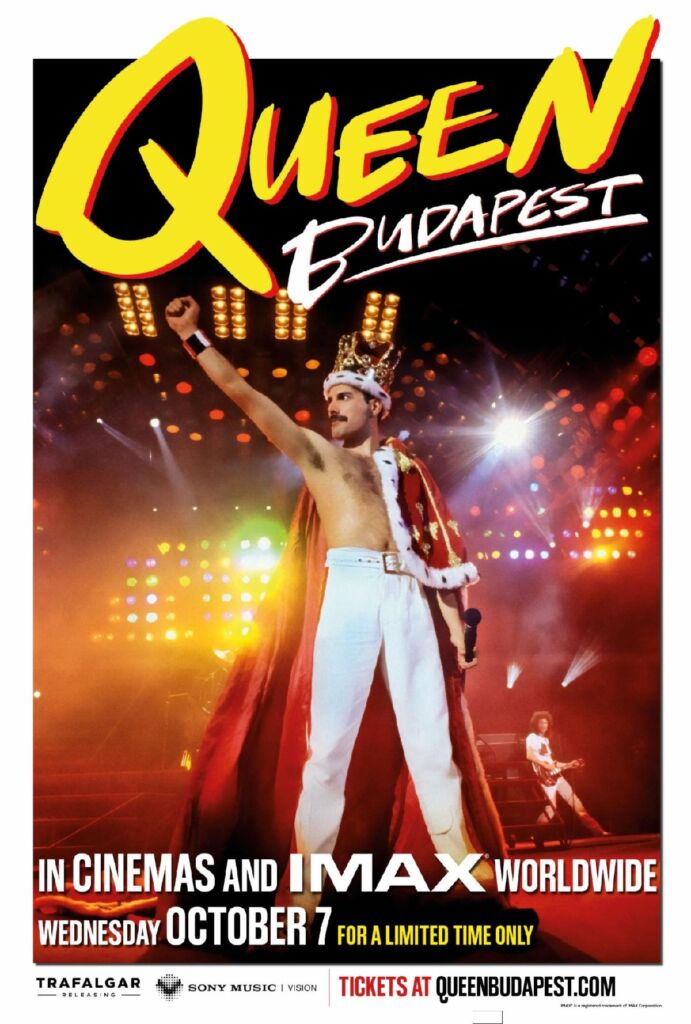
Queen fans will get the chance to revisit one of the band’s most historic performances when Queen Budapest arrives in cinemas and IMAX worldwide on October 7 through Trafalgar Releasing.
The release celebrates 40 years since Queen performed at Budapest’s Népstadion on July 27, 1986, during The Magic Tour. The concert marked the first time a Western stadium rock band played behind the Iron Curtain, making it one of the defining live events of the decade.
The film has been restored in 4K from the original 35mm negatives by Sir Peter Jackson’s Park Road Post Production facility in New Zealand. The audio has also been remixed from the original multitrack recordings, giving the performance its best presentation to date.
Around 80,000 fans packed the stadium for the show, while another estimated 45,000 gathered outside to listen. Concertgoers also traveled from countries including Russia and Poland to witness the event. The production itself was a major undertaking, with 17 Hungarian cameramen using 17 cameras and roughly 25 miles of film—reportedly all the film stock available in the country at the time. Approval from the Hungarian government made the filming another first for a Communist state.
Looking back, the Budapest performance gained even greater significance. Queen played only five more concerts after that night, wrapping up their touring career with Freddie Mercury at Knebworth Park in England on August 9, 1986.
As the final professionally filmed live performance featuring Freddie Mercury, Queen Budapest captures the band in peak form. The setlist includes classics such as “We Will Rock You,” “We Are The Champions,” “A Kind Of Magic,” “Crazy Little Thing Called Love,” “Under Pressure,” “Who Wants To Live Forever,” “Hammer To Fall” and “Bohemian Rhapsody.” The concert also features a performance of the Hungarian folk song “Tavaszi Szél Vizet Áraszt,” while newly restored footage from “Radio Ga Ga” highlights the work completed for this release.
The concert continued reaching audiences after the tour ended. An edited version aired throughout the Communist Bloc in December 1986, including broadcasts in China, Poland, Czechoslovakia, East Germany, Yugoslavia and Mongolia. It was also screened in 59 Hungarian cinemas on New Year’s Day 1987, another milestone for a Western rock act.
For guitarist Brian May and drummer Roger Taylor, the Budapest show remains one of the band’s most meaningful performances.
Brian May comments: “For years, fans behind the Iron Curtain had been able to listen to Queen music only on illegal cassettes. It was a forbidden thing to listen to rock bands like us, so to see them play in a live show would have been unthinkable. This concert, when they could finally come and see us live in person and interact with us, was a huge emotional moment for them and also for us. It felt like a very big deal — you could feel that incredible energy. There will never be an event quite like that again. Perhaps the most memorable highlight of all was performing that beautiful Hungarian folk song, which Freddie and I had learned for the occasion. Not a dry eye!”
Roger Taylor adds: “We did love to think that the music could transcend the politics, the political barriers, and that was sort of part of our ethos, to actually bring the audience into the show and make them feel part of the show. I know Freddie tried to learn this folk song, but he had the words written phonetically on the back of his hand. When the audience just started singing, we realized, wow, music really can be a great cause.”
Discussing the restoration, Brian May continues: “Peter Jackson‘s team has done a magnificent job of restoring the original film footage, at the highest resolution ever; it’s pristine and the quality is breathtaking. I think you’re going to love it. For the sound, we’ve been able to do some top-quality restoration work as well. Now, in IMAX and movie theatres, it’s going to be definitively the most real experience ever of us, Queen, in our glory days. I think people will get lost in it and even forget they’re watching a film.”
Tom Mackay, president of Sony Music Vision, said: “Queen Budapest represents a remarkable moment in both music and cultural history. The film not only documents an extraordinary performance, but also the connection between the band and an audience breaking through real barriers at the time. The restoration allows that moment to be experienced in a way that feels immediate and relevant for audiences today.”
Peter Jackson adds: “As long time fans of Queen we were thrilled when they asked Park Road Post to restore the Budapest concert footage. It has been a rare privilege to breathe new life into such an iconic moment in music history. We look forward to a whole new audience participating in the original band’s final live performance, captured on film. They will rock you!!!”
The restored film will make its world premiere at the Budapest Classics Film Marathon on September 15 before a U.K. premiere in London on September 30. The original negatives were digitized by Hungary’s National Film Institute FilmLab, while the film elements have been preserved by the NFI Film Archive since 1986.
Queen Budapest opens in cinemas and IMAX worldwide on October 7 for a limited engagement. A companion release follows on October 30 through Hollywood Records in North America and Legacy Recordings internationally. Alongside Blu-ray, DVD, CD and digital editions, the newly remixed soundtrack will also receive its first-ever release as a three-LP vinyl set.
Directed by János Zsombolyai, Queen Budapest serves as both a document of one of rock’s most important concerts and the final filmed record of Freddie Mercury leading Queen onstage.
More than five decades into their career, Queen remains one of rock’s biggest names. With worldwide album sales exceeding 300 million, enduring tracks including “Killer Queen,” “We Are The Champions,” “We Will Rock You,” “Another One Bites The Dust” and “Bohemian Rhapsody,” plus Greatest Hits standing as the U.K.’s best-selling album of all time, the band’s legacy continues to grow.
Their influence extends well beyond record sales. Landmark performances such as Live Aid and Wembley Stadium in 1986 helped define Queen as one of rock’s greatest live acts, while the 2018 film “Bohemian Rhapsody” introduced their story to another generation. Their music continues to inspire artists ranging from George Michael and Guns N’ Roses to Lady Gaga and the Foo Fighters.
Recognition from the Rock And Roll Hall Of Fame, the Brit Awards, the Grammy Awards and the Ivor Novello Awards reflects the band’s impact, but the lasting connection between Queen and their audience remains their strongest achievement. Thanks to Brian May and Roger Taylor, that legacy continues to reach new generations of rock and metal fans.
Pünktlich zum Start des 35. Wacken Open Air ist die neue Ausgabe des offiziellen Festival-Magazins The Bullhead da!
40 Seiten voll mit News rund ums W:O:A, Interviews mit Musikerinnen und Musikern, Hintergrundberichten und Acker-Geschichten. All das natürlich wieder zweisprachig und für die Leser kostenfrei.
In dieser Ausgabe… – schauen wir noch einmal zurück auf die Anfangsjahre und haben dazu mit den Gründern Holger Hübner und Thomas Jensen und ihrem Jugendkumpel Andreas „Gösy“ Schlüter gesprochen – verrät Sepultura-Frontmann Derrick Green, wie schwer es der Band fällt, für immer Abschied zu nehmen – erzählt Rob Halford von Judas Priest, was sein Geburtstag mit der Geburtsstunde des Wacken Open Air zu tun hat – bittet Castle Rat-Frontfrau Riley Pinkerton die Fans um spezielle Konzert-Outfits – gibt Nico Sallach von Electric Bassboy Einblicke in die Schaltzentrale des DJ-Zweitprojekts seiner Band Electric Callboy – erfahrt ihr, wie ihr am Publikumsvoting für die Wacken Metal Battle teilnehmen könnt.
Also: Anklicken, durchblättern, reinlesen und Spaß haben!
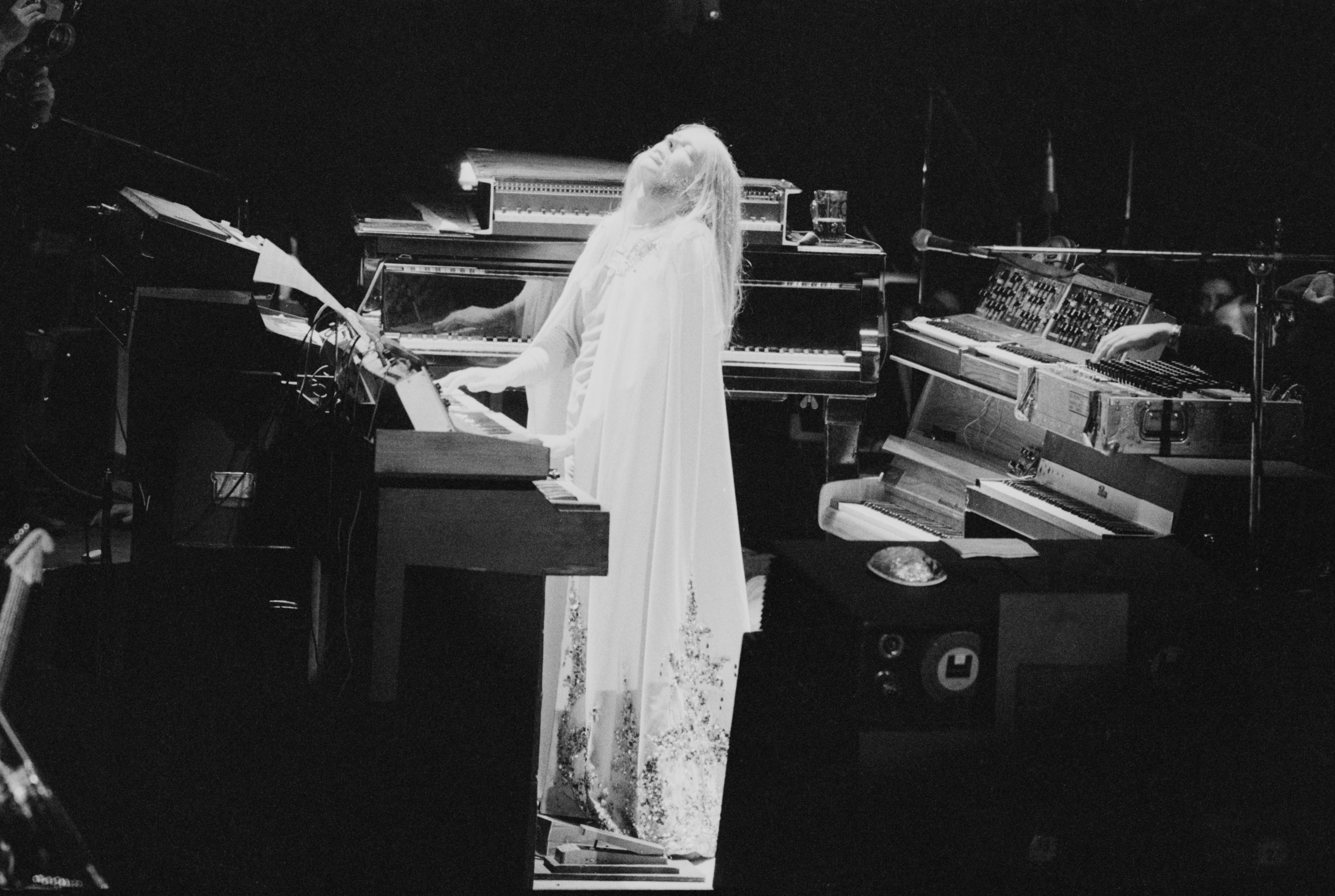
While the music of Yes has always been large-scale material, former keyboardist Rick Wakeman’s ambitions went even larger. In the 70s he began delivering massive, complex live shows based on his epic concept albums, even though doing so meant he risked his home, his health and his reputation. In 2012 he and his colleagues looked back on a decade of excess, and Wakeman insisted he had no regrets, explaining: “I never believed in short-changing people, and still don’t.”
Ask Rick Wakeman if there’s some underlying psychological reason for the opulence, the grandeur, the sheer spectacle of his infamous live shows, and he’ll offer up a blokey shrug.
“Not really, I just like grandiose. I’ve loved the idea of telling stories with music since I was about eight, when my father introduced me to Prokofiev’s Peter And The Wolf, but over the years, I got bored going to concerts. The music was great, but I came to the conclusion that a concert should be a multi-purpose entertainment.”
There have been plenty of other artists who went the extra mile: Pink Floyd and The Wall; David Bowie and the Glass Spider; AC/DC and Rosie. Still, when it comes to the multi-sensory assault-and-battery of eyes, ears and brains – not to mention a flag planted deep in your memory banks, for good or bad – nothing has comes close to Wakeman’s epics. “Dad doesn’t do things by halves,” agrees son Adam Wakeman, a note of baffled endearment in his voice.
That’s the only understatement you’ll find in this piece. The truth is, Wakeman does things by multiples: whether that’s wives, knights, ice-dancers, dinosaurs, cameramen or choirboys. To this prog rock ringmaster, the industry-standard format of four blokes in jeans plugging away on a bare stage is anathema. “How boring would that be?” he grins.
Even in the Yes years, hints of grandiosity were there if you squinted, with a caped Wakeman presiding over his paddock of synths. But it wasn’t until 1973, when his solo career left the blocks with The SixWives Of HenryVIII, that he took a first stab at the huge-time. In an unprecedented move by a British rock star, Wakeman requested to perform Henry at its spiritual home of Hampton Court Palace, and was duly turned down (“The idea of having a rock concert there was tantamount to treason,” he notes). For a less tenacious visionary, that might well have been that. Wakeman, however, was just getting started.
In retrospect, the only thing that was small about 1974’s Journey To The Centre Of The Earth was the project’s beginnings. The band for Wakeman’s second solo album had met in inauspicious circumstances, at a boozer in Buckinghamshire where a gang of mid-table session men played low-key jams on Sunday nights. “Rick just turned up one night in his white Rolls and said, ‘Can I sit in?’” recalls bassist Roger Newell. “That’s how it all started”.
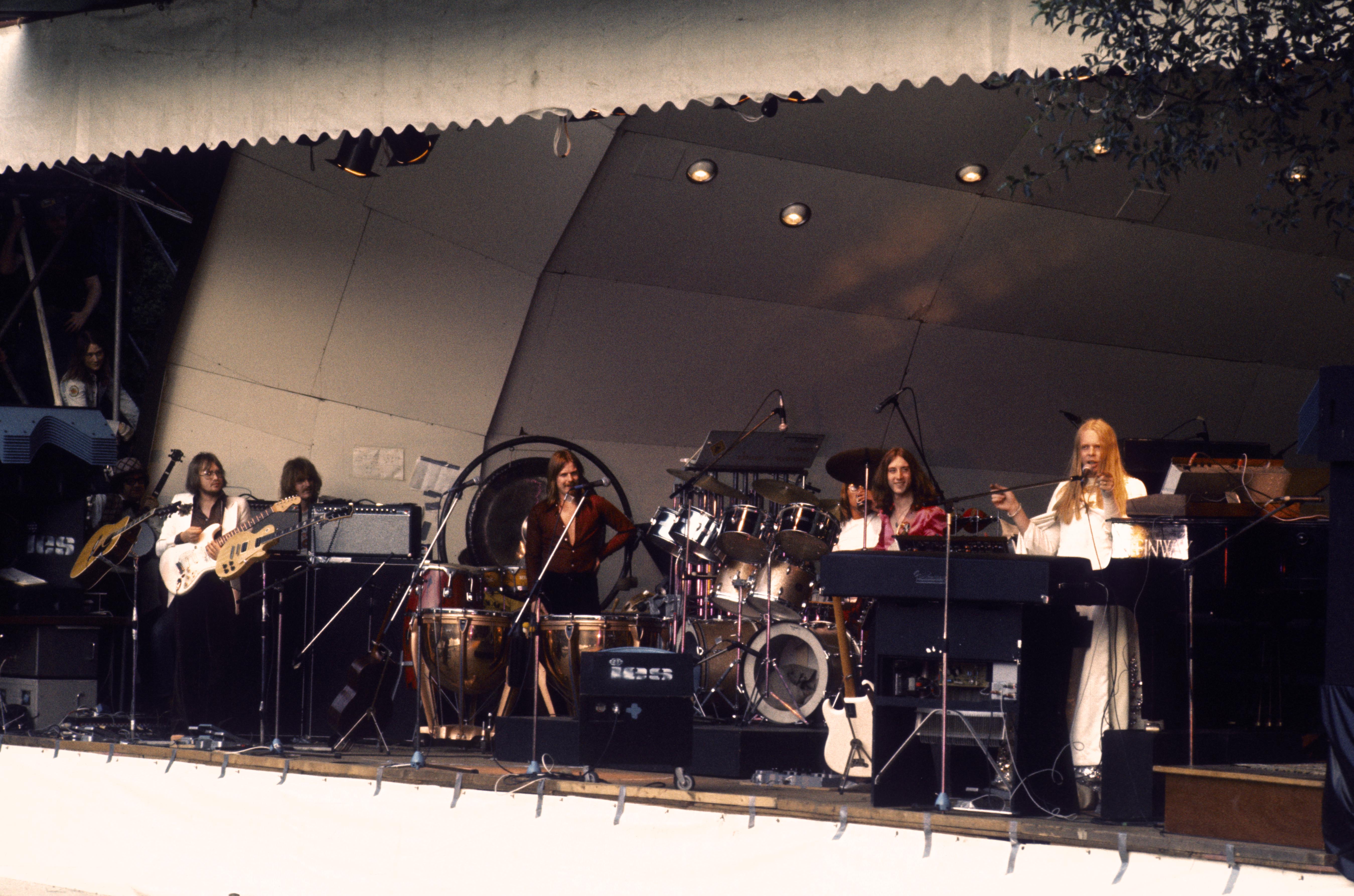
Earthbound: Wakeman takes a Journey live at the Royal Festival Hall (Image credit: Getty Images)
Wakeman’s grand entrance was a telling sign of the direction Journey was headed. With a full orchestra, choir and narrator integral to the music, the payroll was deemed too costly and sprawling to fit in a studio, so recording moved instead to the Royal Festival Hall, for twin concerts on January 18, 1974, where crowds of 3,000 watched the London Symphony Orchestra and English Chamber Choir super-size Wakeman’s musical vision. Even then, financing the spectacle required Wakeman to flog his cars and remortgage his house – soon to become a familiar theme.
“I remember Rick coming into our dressing room at the Royal Festival Hall,” says Newell. “And he was obviously nervous, bless him, because this was the first thing completely under his name. And the road crew had put up a dartboard, so we’re like, ‘Well, do you want to throw a few darts…?’”
“Despite Rick’s rather lofty abilities,” adds drummer Barney James, “there were several what you’d describe as basic, blokey factors.”
“Then we went out onstage,” continues Newell, “and there’s Steve Howe in the audience, John Lennon and Yoko Ono, Ringo, McCartney with Linda, politicians, Peter Sellers with Britt Ekland, and God knows who else. Just faces everywhere. That was when we all went, ‘Blimey, this is serious’. I think it’s only then that it really hit us.”
“I did realise then that I was into playing with the big boys, and the high budgets,” recalls James. “We all had to follow Rick into his dreams.”
The Royal Festival Hall gave Wakeman a taste for the epic, and from there, Journey rolled across the planet, choir and strings attached: a whirlwind of logistics and luxuries that fairly haemorrhaged cash. “It didn’t make me stressed at all,” Wakeman insists. “Back then, you toured to ‘advertise’ your music. You sold records off the back of these tours. I always knew that Journey as a tour would lose money, but I also believed it’d help sell the albums, which it did, and it undoubtedly sold far more than it would have if I hadn’t toured.”
He shrugs: “Journey was recorded with an orchestra and choir, so that’s what I toured with. I never believed in short-changing people, and still don’t.”
That went for the band, too. “For the Journey tour, we used to travel in Clark Gable’s Cadillac,” beams Newell, “which had been refurbished by Rolls Royce. We had a TV in there, and two bars, just for the band. Wherever we went, we were always picked up from home and chauffeur-driven. When we went to the States, the band travelled in their own plane, and the orchestra flew in the plane as well. Most of them were coke fiends. They were nuts!”
Sheer heart attack: Wakeman performing Journey at the Crystal Palace Bowl (Image credit: Getty Images)
The Journey tour reached critical mass with a show at the Crystal Palace Bowl in July 1974, complete with inflatable dinosaurs, and the grand finale of Wakeman collapsing over his synths, suffering the first of his heart attacks. Did it feel like time to pare things back, perhaps? “Not at all,” he replies.
No kidding. As vast as Journey was, it’s but a pub gig in an upstairs room next to Wakeman’s most opulent hour. Ask the average progger about 1975’s The Myths And Legends Of King Arthur And The Knights Of The Round Table, and chances are, they’ll cite the shows before the album. “My dad says that people come up to him in the street, and they remember the show on ice, because it was just so ridiculous,” says Adam. “Brilliantly ridiculous: that’s what I mean. You know, it was just such a bizarre thing to do.”
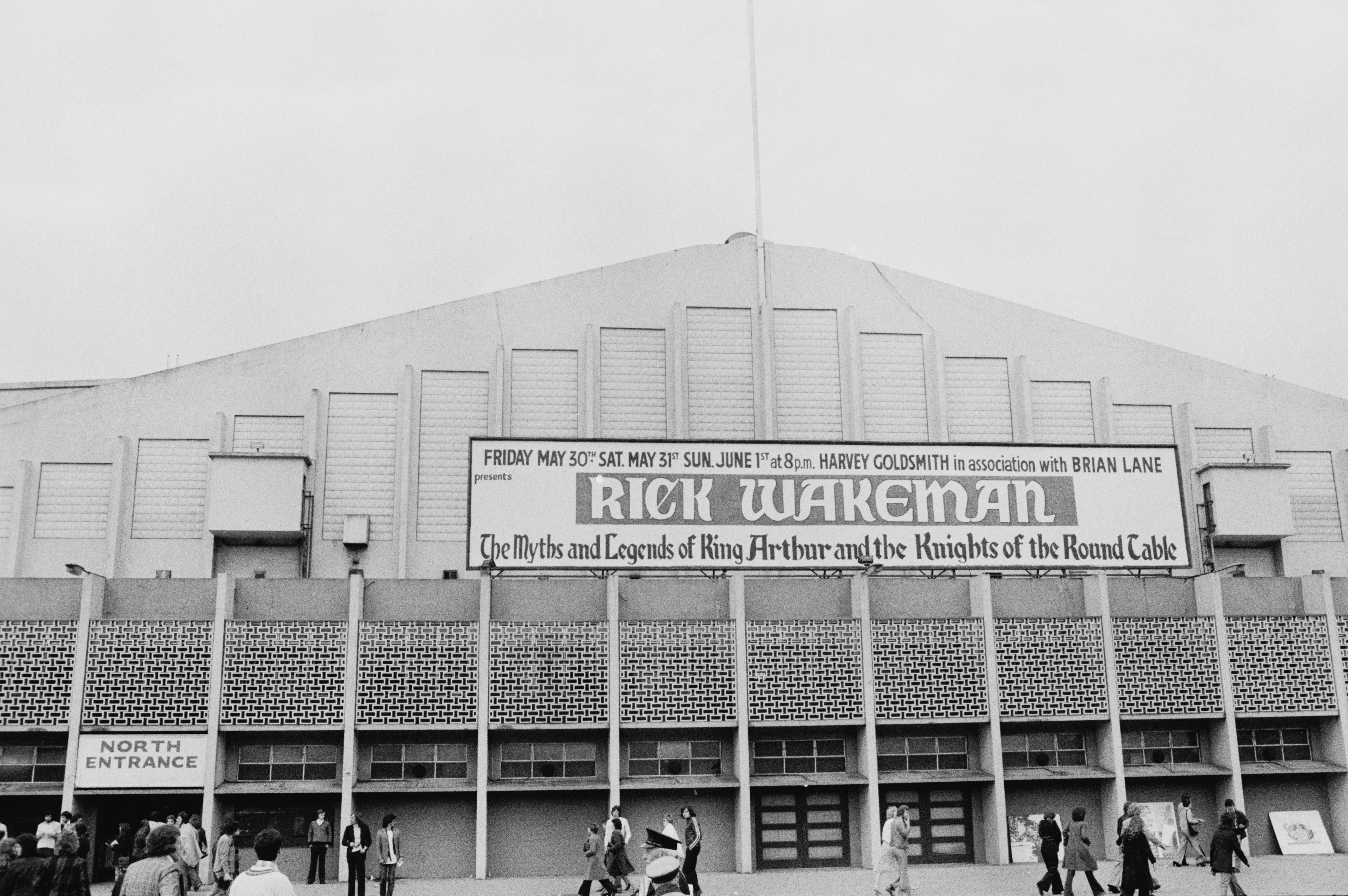
The band had been incorporating the Arthur material into concerts for some time, but by May 1975 Wakeman was eager to play a dedicated concert in Britain, on a lofty scale, putting enough bums on seats to satisfy promoter Harvey Goldsmith (“Harvey Goldmine, we used to call him,” says Newell). Wakeman’s management pushed for the Royal Albert Hall; the keyboardist insisted on three nights at Wembley Arena. There was just one minor detail.
The ice man cometh: The signs go up for Arthur at Wembley Arena (Image credit: Getty Images)
“The ice was an accident,” admits Wakeman, “because the time I wanted to do the Arthur shows was just before the Ice Follies were going to play Wembley and the ice rink was in place. I said it wouldn’t be a problem.”
“So it was this weird situation,” recalls Newell. “They said, ‘Well, look, if you’re going to do Arthur, it’s going to have to be on ice.’ So at that point, Rick just said, ‘Yeah, let’s do it!’ We were all going, ‘Well, it sounds stupid… but why not?’ I mean, it’s a giggle. Those shows were a lot of fun.”
The bean-counters at A&M, too, were surprisingly laissez-faire – no doubt because Wakeman had staked his own cash. “I don’t think they cared as long as I sold records and made them money,” he says. “A lot of the people who worked at A&M loved what I did and were tremendously supportive. My accountant thought I was completely mad, and the management did shake their heads on more than one occasion. But there were so many exciting possibilities back then, and I grabbed them with both hands. I wasn’t being told what to do by record companies and management at the time. You had freedom to do what you wanted – and so I did.”
And how. Wakeman and his six-piece band were just one cog in this son et lumière spectacular. “If I recall,” he calculates, “there were around 72 in the orchestra, 64 in the English Chamber Choir and 16 in the bass choir. I recall 60-plus ice skaters and a crew of 50. I had a tremendous choreographer who worked with the skaters, who’d come from all over the world. I learned very quickly that it was like a giant jigsaw puzzle putting these extravaganzas together, and the secret was to get the right people involved, who could visualise the finished article the same way you could.”
“Arthur was just this crazy show,” smiles Adam, “with loads of people dressed up as horses, and knights, and shit like that. Back in the 70s, putting on a show and doing it on ice wasn’t practical and wasn’t really feasible, but that wasn’t the point. The point was, he wanted to do it – so they did it.”
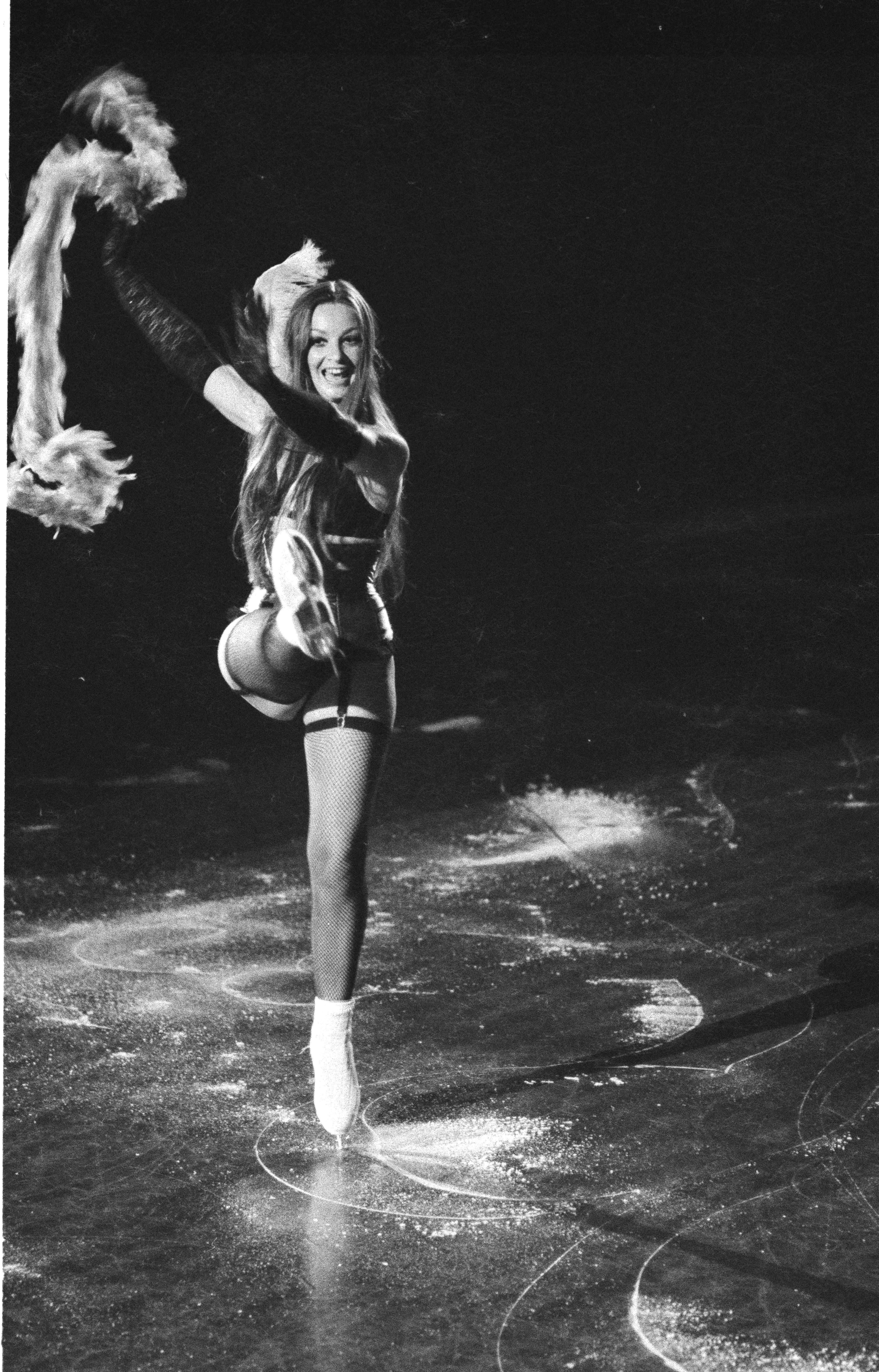
“The funniest thing,” continues Newell, “is that Rick said, ‘Look, there’s gonna be a lot of girls skating round while we’re playing: what should they wear?’ Of course, we’re young guys, so we say, ‘stockings and suspenders’. And that’s what they wore for one of the numbers! I don’t recall stockings and suspenders coming into Arthurian legend, but, hey, it does now!”
Arthur on ice, not traditional Arthurian garb… (Image credit: Getty Images)
Despite one ignominious incident when his cape got trapped in an elevated synth (“I was left hanging in mid-air!”), Wakeman admits he was surprised that such a complex show functioned at all, let alone that he enjoyed the Wembley dates. His band have their own take on it: “Absolute fucking chaos!” says James of the first night. “There were two elements that made it difficult. First, we had to condense the length of the concert. Then we had a French TV company come in, and they wanted pure, white, bright light. We had a complete white-out. All our faces were bleached, and we couldn’t see anything. I saw occasional glimpses of ice dancers crashing into each other. We got rather a bad press on that one.”
“We knew our stuff backwards and it’s just as well,” notes Newell, “because the sound was bouncing about. I wouldn’t wish that on anybody. Thank God for monitors, because without them we’d be stuffed. But the thing I remember most about the ice shows – and you see this when they show it on the BBC – is they used a lot of dry ice, and because it was so bloody cold in there, it rose. There’s one bit where you can’t see me at all. I’m in a cloud!”
Reviews were mixed. “It never worried me what the media thought,” reflects Wakeman. “It’s always nice to get good reviews, but it’s just someone’s personal opinion at the end of the day. The public seemed to enjoy it as much as I did, and that’s all that matters. The critics who call the Arthur shows my ‘grand folly’ – good for them. They remember it, though. I’d love a couple of pounds for everyone who’s claimed to have been at one of those three shows. A total of 27,000 saw the three shows… but I reckon there’s about 127,000 claiming they were there.”
True enough: the Wembley shows sold out, but it wasn’t enough to turn a profit. Tales of Wakeman’s subsequent bankruptcy are exaggerated, but only slightly. “At the end of the day,” he insists, “Arthur made a profit if you lump everything into the same pot. Financially, everything I do puts me in jeopardy, as I play the blackjack doubling-up game all the time. I invest what I earned from the previous project into the next one, and so on, until unfortunately the inevitable happens and you lose, and then you’re back to square one. I’ve had a few square-one starts in my career, but that’s life.”
“Alright, so Arthur lost money,” says Adam, “but you know, people don’t think about the fact that he was selling a lot of records at the time, which subsidised doing the show. For him, back then, it wasn’t really about making money, it was about doing the things that he wanted to do and making every show more outrageous than the last.”
Still, that was the 70s. Post-Arthur, you might suppose the lesson was learned, the itch scratched. Post-punk, you might think Wakeman wouldn’t attempt anything so grandiose again. You’d be wrong. Fast-forward to 2009 – 36 years after Hampton Court first rebuffed him – and word finally came through that Wakeman had scored the gig that got away, scheduling two performances of The Six Wives Of Henry VIII, in its entirety, that May.
It’s going to cost how much? Wakeman goes over the numbers for Arthur(Image credit: Getty Images)
“The biggest headache originally was just convincing Hampton Court to let him have it there,” explains Adam, who played second keys for both shows. “There was this constant back-and-forward, for years, of Hampton Court saying, ‘No, we’re not having that here’. Finally, they agreed. So that was the first hurdle, I think, for him. As for the logistical side, all those practical parts of putting a show on are completely do-able; it’s just down to getting the money together, getting the right people, and making sure there’s somebody you can trust with the staging, lighting, all those technical things.”
But they couldn’t control the credit crunch. “It was a tough time to do something like that,” admits Wakeman. “The recession was biting hard, and had it not been for the fact it was Henry’s anniversary, we’d definitely have postponed until the climate was better. But sometimes, timing rules.”
As it did in the 70s, Wakeman’s schoolboy-in-a-sweetshop mentality kicked in, and he began throwing personnel at a concert that took in 95 musicians (not least the English Chamber Choir and Scott Ellaway’s Orchestra Europa), eight cameramen, the Seraphim troupe of fanfare trumpeters, innumerable backroom boys, and blustery narration from Brian Blessed. “I got to see him back to how he was,” explains Adam, “in control of a really big show. It was always his dream to do those again, like in the 70s: the Journeys and Arthurs. And it was such a lovely thing to see him… I don’t want to say ‘back to glory’, but back to something that meant more than a standard show in a theatre. That’s where his strengths are, as a sort of chief in charge of people.”
Even so, Wakeman’s fantasy show was fraught with potential mishap. “At every event, there are always eleventh-hour disasters,” says Adam. “And one of the problems as well is that Rick is quite a controlling person when it comes to getting things right – which is how you need to be, otherwise things get taken out of your control. I could see the frustrations and the stress that came along with putting on a show like that.
“We actually only got the final run-through with the orchestra and the whole production on the afternoon of the first show,” he adds. “The stage had a big stairway that took Rick up to a big pipe-organ thing. He walked up the steps, and they rolled into the middle of the stage. This thing weighed about three-quarters of a ton, and when they pushed it back, it rolled over the power cables and audio cables that went to his keyboards. So when Rick got up there and went to start Jane Seymour, there was no sound. He came over to me and said, ‘If that happens tonight, you’re going to have to play Jane Seymour’. So it was like, ‘Erm, right, OK, I’ll just have a quick check on how the start of that one goes…’”
On the nights, both shows were triumphant, even if a possibly-refreshed Blessed went wildly off script, forcing Eagle Rock to cut the swear-words to avoid a ‘PG’ rating for the DVD. “I was really high up on a riser, about 10 feet above Dad,” recalls Adam, “so I had the best view looking down, and I could see everything. It was brilliant. It was such a great spot. If that show had been at the O2 or somewhere, it would still have been great, but it was so special because of the location, and I think everybody fed off it. Both days, it was such a special event.
“You know, with the Six Wives, I always loved that album as a kid, and I’ve played a few of the songs with my dad over the years when we’ve toured together. But the thing I really liked about that show was we got to play the album as it was intended. So that was a real special moment for me, getting to play the album in its entirety, and as it was written, or as close to that as possible.”
A critical success, a father-and-son bonding experience, a great night out… But perhaps more than any of these, Henry at Hampton Court was a symbolic return to live majesty for Wakeman, at a time when grandiosity was a foreign concept on the withering music scene. “It’s a great shame,” sighs Wakeman, of the age in which a half-hour set at the Camden Barfly constitutes a rock concert. “But the [big] shows are still there to be done.”
“I know that one of the things that frustrates my dad as an artist and as a musician,” picks up Adam, “is that people play things too safe nowadays, and they have done for such a long time. It’s complete role-reversal of how things were in the 70s, with people now touring just to maintain an income, so they can make records that don’t make money. Which is, unfortunately, the way things are. It’s just evolution.”
The question is: how does Wakeman evolve from here? After all, the Hampton Court dream is fulfilled, his bank balance is back on an even keel, the industry is unrecognisable… have we seen the last of his wonderful extravaganzas?
Don’t count on it. “You’re always looking to try something new,” Wakeman concludes, “and that’s always difficult, although I never really use that word – I think ‘challenging’ sums it up more. The shows will keep coming until the last nail in the coffin lid has been banged in!”
In full glory: Wakeman at home on a big stage (Image credit: Getty Images)
Eliza Carthy releases her new album ‘Frenemies’ on October 26 and it features guests including Jools Holland, Robyn Hitchcock, Miranda Richardson, Tim McInnerny and more. Focus (pictured) have a 6CD live box set bringing together all of the band’s live albums from … Continue reading →
(written by Islander) Occasionally some of us play a mind game in which we imagine how people who know almost nothing about metal would interpret words and phrases we throw around about the music on a daily basis. Like, how would they interpret “tech death”? The possible or hoped-for demise of Silicon Valley? AI reaching […]
A decade has passed since Anette Olzon last visited Finland, when she appeared on the television show Tähdet, tähdet. Before that, she had risen to […]
The experimental rock band Shearling, like Alex Kent and Sylvie Simmons’ prior outfit Sprain, have an often extreme approach to music that inspires fierce devotion and revulsion. But whether you love them or hate them, hopefully we can all agree they’re great at naming records. Shearling debuted last year with the single-track epic album Motherfucker, I Am Both: “Amen” And “Hallelujah”… This year — this week, in fact — they’ll follow it up with a new EP called Don’t Look At Me The Way A Dog Might Look At Your Leg. That’s evocative! In several ways!