Blog

  • Here’s the setlist from Hayley Williams’ headline tour

    Hayley Williams has kicked off her highly-anticipated Hayley Williams At A Bachelorette Party solo tour.

    Launching the 2026 global run at Tabernacle in Atlanta, Georgia on Friday night (March 27), the Paramore superstar performed every single song from last year’s 5/5‑rated album Ego Death At A Bachelorette Party – albeit out of order – along with a cover of Nina Simone’s Don’t Let Me Be Misunderstood. On the first night of the tour, Hayley was joined by The Chariot frontman Josh Scogin for final track Parachute, while the following night at Tabernacle saw her joined by KT of Upchuck.

    For the next two months, the Hayley Williams At A Bachelorette Party tour will travel across North America. Then in June she’ll be coming over to Europe and the UK, stopping off in London, Manchester, Glasgow and Dublin. 

    Check out the full setlist from the first night:

    1. Mirtazapine
    2. Showbiz
    3. Disappearing Man
    4. Zissou
    5. Ice In My OJ
    6. Hard
    7. Kill Me
    8. Blood Bros
    9. Ego Death At A Bachelorette Party
    10. Whim
    11. Glum
    12. Negative Self Talk
    13. True Believer
    14. Don’t Let Me Be Misunderstood (Nina Simone cover)
    15. Brotherly Hate
    16. Love Me Different
    17. Dream Girl In Shibuya
    18. Good Ol’ Days

    Encore:

    19. Discovery Channel
    20. I Won’t Quit On You
    21. Parachute (with Josh Scogin)

    Posted on March 30th 2026, 11:05a.m.

  • Sophie Lloyd: The ClassicRockHistory.com Interview

    Sophie Lloyd is a powerhouse on guitar. Her rise via social media opened doors for a new age of players, and her induction into Machine Kelly’s band amplified that. But Lloyd’s journey didn’t start like the players she grew up idolizing, like Joe Satriani or Steve Vai’s. Embarrassingly, it was SpongeBob SquarePants,” she laughs. “There’s an episode where he plays a version of ‘I Wanna Rock’ by Twisted Sister, and he’s flying through the air with a V-shaped guitar. I remember watching that and thinking, ‘That’s exactly what I want to do.’” Humorous as that is, we all have to

    The post Sophie Lloyd: The ClassicRockHistory.com Interview appeared first on ClassicRockHistory.com.

  • Gorrch – Stillamentum Review

    1.

    “Stilllllllllaaaaaaaamennnnnntum.” If you love it when a band sings the album title, you’ve hit the jackpot with “Nimbus,” the opening song of Gorrch’s second album, Stillamentum. At the very top of that first track on this six-track album, the Italian black metal duo of brothers — Chimsicrin (drums, vocals, and keyboards) and Droich (guitars, bass) — recites the album title with an ominous incantation: “Stilllllllllaaaaaaaamennnnnntum.” It’s droned with a monastic simplicity, which makes sense given the lack of set scenery: no guitars, no drums, just voice. But, jeez, is it powerful: an invocation. It feels like a deep inhale before the coming storm.

    Let’s stay with that title for a moment. Like everything else Gorrch does, Stillamentum serves a purpose beyond demonstrating that the brothers are good at Latin. Formed from the verb “stillare” (to drip) and using the suffix “mentum” (the product of an action), Stillamentum could mean something like “that which drips,” or, more artistically, the residue of that dripping.

    A related, although distinct formation is “stillicidium” — “stilla” (drop) and “cadere” (to fall). For the Romans, it had different meanings that developed in parallel. In De Architectura, Vitruvius used it to describe an architectural concept, specifically how the eaves of temples shed water and why that design feature came to be. In law, it was a doctrine governing water from one’s roofline dripping onto a neighbor’s land — the genesis of history’s earliest HOA, maybe. That said, the concept is less of a snooze than it sounds, given the broader implications the law sought to address: the effects of habitation — the noise, the shadows, the redirected raindrops — don’t end at the property line. Those drips? They don’t just disappear. They’ll travel farther than you might consider.

    Release date: January 30, 2026. Label: Avantgarde Music.
    Wouldn’t you know it? Following “Stilllllllllaaaaaaaamennnnnntum,” “Nimbus”‘s downpour begins. Appropriately, Gorrch’s tremolo riffs fall like sheets of rain, the blasting drums like the rapid-fire impact of heavy droplets striking a hard surface. Makes sense for a song titled “Nimbus.” And then Gorrch twists things. When Chimsicrin starts screaming, his raspy growl feels so much more insidious than the sounds surrounding him. It poses a question: What if the rain is carrying something corrosive? Here’s the answer: In “Nimbus”‘s middle, Gorrch pulls back on the speed and settles on a lurching, more deliberate groove. Now, it’s almost like that corrosive substance is carving its way through the earth.

    2.

    Cavaso del Tomba, the home of Gorrch, sits at the edge of the Venetian Plain and at the foot of the Dolomites, the picturesque mountain range in Italy’s northeast. Before receiving their current name in the 1700s, the Dolomites were known locally as Monti Pallidi — the Pale Mountains. In folklore, the range was transformed by the king of the Salvans dwarves, who worked for a prince to alleviate the homesickness of his moon princess. Thus, the once-dark peaks were turned into the lunar surface she’d left behind. But the Pale Mountains have color, too. The enrosadira, the Ladin name for the famed Alpenglow, is thanks to another dwarven royal, King Laurin. After the prince of Latemar spied the king’s daughter, Ladinia, in the kingdom’s rose garden and kidnapped her, King Laurin cursed the garden to be invisible by day and by night. Ah, but there was an oversight: he forgot to add twilight to the list. Therefore, at dawn and dusk, the Dolomites glow pink and red, an effect amplified by the pale carbonate rock. The connection between the two tales runs a little deeper thematically. Both myths are animated by absence: the longing for a princess to see her home and a king to see his daughter. In a sense, then, the mountains stand as monuments to loss — what you have now might not be there in the future.

    The geological record is as interesting as the legends. Two hundred and fifty million years ago, the area that would become the Dolomites was under the sea. Over the next few megaannums, coral reefs began to grow atop atolls. Then, 80 million years ago, the African and European tectonic plates collided, driving the coral reefs upward. What was once a sea floor soon scraped the sky — the Sella Group, with its precipitous cliffs, is a petrified atoll. Exposed to wind, ice, and rain, those mountains eroded into their striking shapes. And, while it will take many more millions of years, those same forces will continue carving away at the Dolomites until they are nothing. What goes up will eventually come back down.

    3.

    The top three similar artists on Gorrch’s Encyclopaedia Metallum page are Deathspell Omega, Ad Nauseam, and Thantifaxath, in that order.

    Ad Nauseam, Gorrch’s Italian compatriots and Avantgarde Music labelmates, makes sense: guitarist Andrea Petucco produced Stillamentum. Beyond that, the two also share a similar approach to wringing drama out of riffs. “Nimbus,” for example, maps pretty well onto Ad Nauseam’s “Sub Specie Aeternitatis” from 2021’s Imperative Imperceptible Impulse. While the two are plying their trades in different styles, black metal for Gorrch and clattering technical death metal for Ad Nauseam, there’s a sonic kinship when it comes to the way their respective riffs drill down while leads rend the sky. Both bands excel at a kind of metal verticality, where the macro is as important as the micro — there’s a distinct sense of an up and a down.

    In terms of song construction, Thantifaxath checks out, too. There are differences: the Canadian band is slipperier with its time signatures, while also favoring consonance over dissonance. However, it finds common ground with Gorrch in that they both write music that sounds like a sine wave on a graph. While the song flow and rhythms push steadily along the x-axis, there’s a lot of movement on the y-axis, too. It imparts a feeling that you’re reaching the crest of a wave before descending into its trough. Thantifaxath’s 2023 full-length, Hive Mind Narcosis, will almost give you motion sickness if you don’t have your Dramamine-buttressed riff legs — a sensation that is delightfully doubled in a live setting. Gorrch is definitely a relation in that respect. Even though it doesn’t have the same wave height or wave length, Stillamentum still undeniably undulates.

    The tougher comparison is Deathspell Omega. Granted, Gorrch and the indescribably influential French black metallers are not exactly opposing magnets: both play black metal with avant-garde ambitions that are more philosophical than the replacement-level blargh band. But, over the past decade, there’s been a knee-jerk reaction among listeners, particularly those without a strong grasp on music theory, to call any band that sounds sour a DsO disciple. Sure, plenty of poor imitators abound — more than many thought possible following the once-believed-to-be singular Fas – Ite, Maledicti, in Ignem Aeternum and Paracletus — which has created a DsO bubble that’s bound to burst. And boy, have critics noticed, grumbling about a buyer’s market rife with highly accomplished riff weirdos. The knock-on effect, then, is that, due to its soon-to-be ubiquity, the Deathspell Omega influence functions as a weird tag that’s both a badge of success and a scarlet letter. If it’s pinned upon you, you’re good enough to breathe the same rarified air as the gods, but few will dig into your material because the assumption for the many is that they’ve heard it all before. Therefore, the good is damned by the great; you’re stuck in the shadow of the mountain.

    4.

    In 2019, Bend Studio’s Days Gone was released for the PlayStation 4. Despite being teased at E3 2016, the video game, in which you play as a biker puttering around in a post-apocalyptic world filled with zombie-like “freakers,” experienced many delays. By the time it was on consoles, the culture was teeming with zombie properties. Roll call: The movie 28 Days Later, and the truly abysmal sequel 28 Weeks Later, were already more than a decade in the rearview mirror; the novel World War Z and its spinoffs had spent several weeks on the New York Times Best Sellers list; the TV series The Walking Dead, which debuted in 2010 and just completed its ninth season, had already spawned its sister show, Fear the Walking Dead; and perhaps most importantly, the video game The Last of Us hit the shelves in 2013 and became one of the most acclaimed games of all time.

    So, on the surface, what Days Gone was offering wasn’t exactly new. It was a third-person open-world game released in the wake of Grand Theft Auto V, Red Dead Redemption 2, and Horizon Zero Dawn. It had a storyline that an LLM with a zombie-only corpus could’ve autocompleted. It played the hits with the same old PS4-generation game mechanics: stealth combat, skill trees, and on and on. Oh, and it had a ton of ‘we’re not calling them zombies’ zombies.

    Given Days Gone‘s well-worn features, critics weren’t kind. “All of that effort feels wasted, especially in a world where Sony also publishes the brilliant The Last of Us, which took a seemingly straightforward post-apocalyptic zombie narrative in interesting new directions,” Andrew Webster wrote in The Verge. “Meanwhile, in Days Gone, the end of the world is somehow incredibly bland.” On Metacritic, the game’s initial release scored a 71, earning it a “mixed or average” aggregated appraisal. Another aggregator, OpenCritic, pinned a “fair” upon it. The world was “boring,” the narrative was “bland.” It was just another zombie game in an overflowing zombie genre. And, perhaps most damning of all, it was not The Last of Us.

    The players, though? They loved Days Gone. Its Metacritic user score is 8.5, classifying it as “generally favorable.” Ian Chainey, who is not a video game reviewer and is generally a hack, called it a “masterpiece” “…that produces so many memorable moments” in Stereogum’s The Black Market. Nearly seven years on, Days Gone is something of a cult classic, revered for its atmosphere and ability to sustain a persistent sense of dread.

    There are many theories regarding the reason for the schism between critics and players. Pacing, maybe: Days Gone opens up after its first few hours, becoming tenser once a newer mechanic is unveiled, and allows for more immersion once the lore deepens. But really, it comes down to a simpler idea: It’s difficult to recognize nuance when you’re on a deadline, and it’s similarly tough to see the vision when all of the similar properties are within eyesight. Days Gone isn’t new to this phenomenon — soulslikes likely have it far worse — but what kills these games is the same: they’re not seen for what they are, but for what they are not.

    In metal, many DsOlikes now abound. Deathspell Omega’s “similar artists” tab on Encyclopaedia Metallum runs for many mouse wheel scrolls. And while there are some predictably oddball inclusions that’ll ping anyone’s WTF radar, you can get a sense of what the masses think qualifies as shared traits. Where that gets tricky is when those traits are considered particularly DsO-coded or DsO-derived. Thus, any band that follows with those traits is just doing a DsO, even if that’s, honestly, pretty nebulous thinking to begin with, and not how musical influence tends to work in practice. It’s like an addendum to “I know it when I hear it” cataloging: If I hear it, it is DsO.

    Now, that’s not to say there aren’t conscious DsO clones: it feels like half of Iceland is on a “what if DsO but…” odyssey. And it’s probably true that DsO had a hand in opening up a new path for black metal to take. But the prevalence of a supposedly codified DsO aesthetic muddies things more than it clarifies them. It widens the net, catching not only clones but bands that bear a passing aural resemblance. Subsequently, everything gets tossed into the same bucket — a wide range of bands whose commonality is the perceived surface traits they share with a more well-known band.

    Given the breadth of bands now falling under the DsO tag, one might even say that, between DsO’s black metal and Ulcerate’s death metal, dissonance fatigue is setting in. There are *a lot* of these once-recherché acts, with more trickling in every day. From a critic’s perspective, it feels like every tenth promo has been harvested from the DsO fields. To effectively cull one’s inbox, then, especially one flooded with higher-priority releases, a delete-first-ask-later sorting system becomes advantageous. “This sounds like DsO. Next.” Even if one of these albums makes it through to a review, a deadline forces a jaded writer to find a throughline quickly. Mostly, that means putting a name to it that readers might recognize that doesn’t balloon the word count. Nevertheless, there is a consequence to that action: By putting a name to something, it’s almost like you’ve conquered it. “I know what this is now; it’s no longer a mystery. Case solved.” But…like…the actual contents of the thing? That’s still a mystery! You haven’t touched that stuff. Can you even know something if you don’t observe it for what it is, if you don’t dig into its guts and find its true essence?

    This practice of DsOlike categorization tends to erode the descriptor over time. In a way, it’s like karstic dissolution — acidic water hollowing out a formation from the inside while the exterior remains intact. Deathspell Omega rises from the sea of black metal, becoming this towering monolith. Every new comparison is another drop of acid working through the rock. Eventually, the interior collapses. The descriptor crumbles into a totally meaningless tag that is applied too often, like how any trad band with a galloping rhythm section is doing an Iron Maiden. But even if the mountain is no more, the baggage of that tag remains. And, when applied too loosely, it saps the lifeforce of anything it touches. In due course, a once great mountain becomes a bunch of dull pebbles, and, man, there sure do seem to be a lot of them around.

    The question, of course, is this: What if a thing didn’t have to be a “like,” and it could just be a thing? What if Days Gone wasn’t a zombie game, but just a game? What if Gorrch wasn’t a DsOlike, but just a band? Does that change the calculus? Can you so readily conquer it? Do you look into it deeper? Do you give it time? Do you accept that it just…is?

    5.

    There’s this analogy that I keep returning to lately. In “The Accursed Items,” a short story in J. Robert Lennon’s See You in Paradise, the author lists objects transformed by new circumstances. An excerpt ran on the 205th episode of This American Life, where J. Robert Lennon said this:

    My eyeglasses, covered with a thickening layer of dust that I never seem to notice, that I simply adjust to, until at last, I clean them out of habit, and discover a new world sharp and filled with detail, whose novelty and clarity I forget about completely within 15 minutes.

    Looking at the lyrics on Stillamentum is like cleaning my eyeglasses. Once I explored those lyrics and gained a bearing on the greater themes at play, the album became sharper, filled with detail. I could finally hear what Gorrch was trying to achieve at both the micro and macro levels. This band wasn’t a Deathspell Omega disciple. Gorrch is more purposeful than that. But I’m not sure I would’ve been able to fully conceptualize that distinction without first taking the time to look.

    That said, Gorrch gave my lenses a bit of a scrub earlier than Stillamentum. Its 2020 EP, Introvertere, was a relatively compact ripper that used swells of droning tremolos to create a sensation of free-falling. What set it apart from similar swellers was its spikiness and sense of timing, giving the band an almost mathcore immediacy. When my friends and I first found Introvertere, we were taken aback that Gorrch was Italian. Despite sharing some sonic hallmarks with Lorn, one of the other bands Chimsicrin drums in, Gorrch sounded so outside our accepted generalization of the Italian black metal idiom.

    But Gorrch is very, very Italian, in fact. Stillamentum‘s lyrics make that clear from the jump. The first full phrase in “Nimbus” contains the word “crode,” the Ladin word for the Dolomites’ steep spires. Yep, it’s the easiest GeoGuessr hint you’ll ever get. And it sets up a fascinating duality: Gorrch’s lyrics are esoteric, yet ever so intentional.

    Stillamentum has a story. As previously discussed, “Nimbus” is the storm moving across the landscape. “Vorago” traces water as it descends into the earth. “Larvæ” details how a decomposition process can still be generative. “Cryptæ” is a resurgent transformation. “Angor” is an inversion of “Larv攑s propagation. And “Phlegma” is the system consuming itself.

    Oh, but you can go so much deeper into Stillamentum if you wish, with each stratum revealing new questions. What’s up with the horde praying in secret in “Nimbus”‘s storm? How is the water transformed in “Vorago” as it drips into abyss after abyss? What is feeding upon the divine nectar, the liquid result of putrefaction, in “Larvæ”? Was the cave in “Cryptæ” sculpted by drips, or was it by the newly roused being that is now crying out? Who left the anonymous carcass in “Angor,” the one now subject to infinite decay? Where is the forest in “Phlegma” that drinks greedily of its own poisonous seed? Again, this is Gorrch’s arcaneness at work. Make of it what you want. As stated in “Larvæ”: “Il verbo è vostro,” the word is yours.

    Still, Gorrch gives you a lot. There’s an uncommon precision to Gorrch’s use of Latin that transcends the try-hard nature of black metal’s self-serious set — not look-at-us pseudo-erudite window dressing, but Latin that fits the themes. There are the song titles — Cloud, Abyss, Larvae, Crypt, Anguish, Phlegm — but also the wordplay within them, too. In Latin, “larva” can mean the literal larva or “mask,” the latter often used in relation to lemures, the spirits that the poet Ovid wrote were di manes of the underworld. And, of course, there’s the coinage of Stillamentum. If you missed it, in “Cryptæ” there resides the Italian word from which stillicidium is derived: “Con echi di stillicidio” — with echoes of dripping.

    That’s kind of the thing: Gorrch’s influences run so much deeper than just the musical. The band references folklore, geology, and, uh, Roman architectural theory. It might be easy to hear only Deathspell Omega, but that’s like mistaking the surface for the whole formation. Gorrch takes that musical influence and lets its other interests slowly carve into it. What lies below is vast, intricate, and unique.

    And for as fast as Gorrch ramps up the blasting BPMs, it does have a sense of time that is more geological. Stillamentum is about systems cycling. That theme is enforced in a lot of ways, most notably by how the riffs always seem to be circling back on themselves. Black metal isn’t a stranger to the Riff Ouroboros, but Gorrch’s application feels different. It’s like each repetition is eroding the songs from within. The band isn’t simply writing about the cyclical; it has built its own cyclical system.

    So, on the one hand, Stillamentum drips, drips, drips, using the deliberateness of water as a guiding force for where it wants its music to go. Those drips carve out more of the earth, dripping ever deeper, opening up Gorrch’s world; what was once a puddle on the surface is now a near-infinite expanse of a cave system. On the other hand, it’s also a model for listening to Stillamentum, demonstrating the quirks of time’s passage, the contradiction in how we, as humans, perceive it. Time slows as you follow the drip into a cave, the one formed over millions of years of dripping. Con echi di stillicidio. We are but a drop.

    Once “Phlegma” draws to a close, it feels like an exhale. There’s only a hint of sound remaining, like there are only pebbles left of Stillamentum. But like how mountains will fall only to rise again over many geological epochs, Gorrch isn’t done. There’s no finality to Stillamentum. If you have the album on repeat, seemingly seamlessly, there you are again at “Nimbus.” The cycle starts again. It’s an endless loop. “Stilllllllllaaaaaaaamennnnnntum.”

    6.

    De Rerum Natura, Lucretius’s attempt at poetically illustrating Epicureanism, takes on, well, everything. In six books, the reader receives not only the totality of the human experience — birth, death, love, sex, sleep, dreams, the Cleveland Browns losing — but everything else in the universe. The logline is basically this: If it can be observed, it can be interpreted down to its very atomic structure. In William Ellery Leonard’s translation, you can get a sense of the scope with two of De Rerum Natura‘s subheads. Book 1, Section 1: “Substance is Eternal.” Book 5, Section 1: “The World is Not Eternal.”

    The poem, which is also, believe it or not, thought to be unfinished, is too big to dissect fully in the space of a stupid heavy metal review — ironic, perhaps, given its importance to atomism. But Book 6 is loaded with relevant material. Around line 639, we get this: “haud igitur redit ad nihilum res ulla, sed omnes discidio redeunt in…” — therefore, nothing returns to nothing, but all things return to division. I prefer the slightly more poetic take that someone posted on Goodreads: “What once sprung from the earth sinks back into the earth.”

    The mountain rises, the mountain falls: it is not eternal, but its substance is. Accordingly, the cycle begins again: something becomes something else, and then it’s returned to division. The cycle loops over and over and over — “Nimbus” to “Phlegma” and “Phlegma” to “Nimbus.” But if you’re lucky enough to be there to observe it, it can be known. It just takes time.

    The post Gorrch – Stillamentum Review appeared first on Last Rites.

  • Watch Rush debut new live line-up with powerful rendition of Finding My Way at the Junos

    “It’s the only song we know how to play,” quips Alex Lifeson as Rush open this year’s Juno Awards in Canada with Finding My Way, the first song from their self-titled debut album
  • Watch Rush debut new live line-up with powerful rendition of Finding My Way at the Junos

    “It’s the only song we know how to play,” quips Alex Lifeson as Rush open this year’s Juno Awards in Canada with Finding My Way, the first song from their self-titled debut album
  • Muse announce The Wow! Signal North American tour

    Muse have announced a big North American tour in celebration of their forthcoming album The Wow! Signal.

    Following the release of their 10th LP on June 26, the trio will head on over to the U.S. and Canada, kicking things off at Milwaukee’s Summerfest on July 2 and wrapping up at the Hollywood Bowl in Los Angeles on August 31.

    Support comes from Bloc Party, Portugal. The Man and The Temper Trap at various dates, with tickets going on general sale this Friday, April 3 from 10am.

    Catch them live at the following:

    Muse The Wow! Signal North American tour

    July

    2 Milwaukee, WI @ Summerfest ^
    5 St. Louis, MO @ Hollywood Casino Amphitheater * ~
    7 Noblesville, IN @ Ruoff Music Center * ~
    10 Tinley Park, IL @ Credit Union 1 Amphitheatre * ~
    11 Cincinnati, OH @ Riverbend Music Center * ~
    13 Clarkston, MI @ Pine Knob Music Theatre * ~
    15 Toronto, ON @ RBC Amphitheatre * ~
    17 Québec, QC @ Festival d’été de Québec ^
    18 Mansfield, MA @ Xfinity Center * ~
    22 Holmdel, NJ @ PNC Bank Arts Center *
    24 Saratoga Springs, NY @ Albany Med Health System at SPAC * ~
    25 Wantagh, NY @ Northwell at Jones Beach Theater * ~
    28 Columbia, MD @ Merriweather Post Pavilion * ~
    29 Camden, NJ @ Freedom Mortgage Pavilion * ~

    August

    10 Charlotte, NC @ Truliant Amphitheater — ~
    12 Atlanta, GA @ Lakewood Amphitheatre — ~
    14 Dallas, TX @ Dos Equis Pavilion — ~
    15 Austin, TX @ Germania Insurance Amphitheater — ~
    18 Greenwood Village, CO — Fiddler’s Green Amphitheater — ~
    20 West Valley City, UT @ Utah First Credit Union Amphitheatre — ~
    22 Ridgefield, WA @ Cascades Amphitheater — ~
    23 Auburn, WA @ White River Amphitheatre — ~
    26 Wheatland, CA @ Toyota Amphitheatre — ~
    27 Mountain View, CA @ Shoreline Amphitheatre — ~
    29 Chula Vista, CA @ North Island Credit Union Amphitheatre — ~
    31 Los Angeles, CA @ Hollywood Bowl — ~

    ^ = festival
    * = support from Bloc Party
    – = support from Portugal. The Man
    ~ = support from The Temper Trap

    Muse The Wow Signal North American tour poster

    We last caught Muse live in summer 2025, where they made several epic European festival headline appearances. In Kerrang!’s review from Mad Cool, we said that, Muse don’t so much hit Mad Cool as a band with something to prove, but as an eye-wrecking reminder of just how confident and competent they are at closing the show. With no new record to promote, this is the definitive greatest hits set (albeit with a dystopian, militaristic narrative) spanning everything from early single Unintended to the always massive Plug In Baby to Matt Bellamy solo joint Hanging In Victory Square…”

    Read this next:

    Posted on March 30th 2026, 10:23a.m.

  • MSG Live & Ready / Michael Schenker Live Recordings Revisited

    MSG - Live & Ready: 1980 – 1984. Iconic Michael Schenker Live Recordings Revisited

    There is no argument when it comes to guitar gods. Michael Schenker is amongst the greatest for me. He sits comfortably alongside Blackmore, Page, Box, Campbell and Lifeson in my all-time favourites. And when it comes to formative years, the early albums of MSG were particularly important.

    MSG – Live & Ready: 1980 – 1984

    Release Date: 3 April 2026

    Words: Paul Hutchings

    Now, Live & Ready: 1980 – 1984, released via Chrysalis Records, is a 6-disc box set featuring a series of live albums from the group’s formative years.

    In 1982, the band put out their fantastic live album, One Night At Budokan, featuring the line-up that stars on the first two offerings here.  And the second of these releases, Nippon Budokan 1981, is the exact same show that features on One Night.

    The 1980 show at Manchester Apollo lacks the breadth of songs, as One Night (due to having only released one album at the time), and is filled with UFO tracks to pad it out. Whilst it’s always a pleasure to hear Schenker’s work on Rock Bottom and Natural Thing, Gary Barden was never going to match Phil Mogg, even on Mr Mogg’s worst day. 

    The Manchester Apollo recording has a raw charm. The recording is not brilliant, Barden’s intersong banter is awful, especially the moment when he tries to get the crowd to chant “United”. He was never a strong singer, and he is at full strain here, struggling to hit many of the notes and often sounding out of condition.

    His performance on Lost Horizons, for example, is like nails down the blackboard. Providing you can ignore that, then the music here works as well as anywhere, and Schenker’s fluid guitar work is always a joy to hear. 

    Nippon Budokan 1981 replicates One Night At Budokan, so it seems a pointless inclusion, although you do get a second chance to hear of Barden struggling with Tales Of Mystery and a Cozy Powell drum solo.

    Yes, it really does capture the band at their early peak, but hell, I have been listening to the original since it came out. Hard pass here. 

    MSG - Live & Ready: 1980 – 1984. Iconic Michael Schenker Live Recordings Revisited
    MSG – Live & Ready: 1980 – 1984. Iconic Michael Schenker Live Recordings Revisited

    Hammersmith Odeon 1983 is next, and ah yes, where have I heard this before? Rock Will Never Die, released in 1984 and recorded on the same nights at Hammersmith in October 1983.

    By now, Powell and Paul Raymond had departed, replaced by Ted McKenna and Andy Nyke and with the addition of Ted Nugent’s Derek St Holmes on rhythm guitar, who interestingly takes lead vocals on a couple of tracks.

    We get 16 songs on this release, Still Love That Little Devil being the addition from the 2009 remaster, and once again, Klaus Meine and Rudolph Schenker guest on Doctor Doctor.

    Barden is in much better form here than three years earlier, and the spread of material, including the Graham Bonnett co-written Desert Song, makes it a more comprehensive release. But it’s 99% already out there, so unless you are a purist, I cannot see why you would touch it. 

    The final show sees MSG playing Seibu Stadium, Tokyo, in August 1984, part of an extensive series of shows that they played across Japan that year. This recording does, however, vary from the others, as Ray Kennedy takes the lead vocals whilst Denis Feldman takes over bass. Neither recorded with the band, but Kennedy does a decent job replacing Barden, whilst Feldman’s bass work is solid enough.

    Once again, it is all about the German with the flying V, and his solos never let you down. The inclusion of an extended Lipstick Traces from UFO’s Phenomenon is a rarity, a short three-minute instrumental that was never played live by UFO but did feature 18 times on this run of dates in Japan.

    For that track, this recording is worth hearing, sitting as it does in an instrumental run of four tracks which includes a thoroughly splendid Into The Arena. 

    Ultimately, it is all about the tightness of the music and Schenker’s guitar and songs on the likes of Armed And Ready, Rock My Night Away, Courvoisier Concerto, On And On and Into The Arena are part of ’80s Metal fans’ heritage. The mixes are of variable quality, but there is enough here to enjoy a trip back in time.

    Having said that, Schenker is hardly a stranger to these shores, so chances are that you will have heard most of these songs live a few times before.

    So, you pay your money, you take your choice. Whether I would spend time watching the DVDs of these shows that come with the premium two-part rigid box set is hard to say.

    But if you are a huge fan, then the exclusive liner notes by Martin Popoff, a brand-new interview with Michael, offering personal insights into the era, the band, and these performances, as well as a booklet with previously unreleased photographs, may be enough to persuade you.

    MSG – Live & Ready: 1980 – 1984 is out on 3 April 2026 via Chrysalis Records. Pre-orders are available from msg.lnk.to/LiveReady.

    MSG - Live & Ready: 1980 – 1984 is out on 3 April 2026 via Chrysalis Records.
    MSG – Live & Ready: 1980 – 1984 is out on 3 April 2026 via Chrysalis Records.

    Michael Schenker – MSG – Live & Ready: 1980 – 1984 Tracklist

    CD1: Manchester Apollo, Manchester, 30th September 1980

    1. Armed & Ready
    2. Cry For The Nations
    3. Victim Of Illusion
    4. Natural Thing
    5. Feels Like A Good Thing
    6. Into The Arena
    7. Looking Out From Nowhere
    8. Rock Bottom
    9. Tales Of Mystery
    10. Lost Horizons
    11. Shoot Shoot
    12. Doctor Doctor
    13. Lights Out

    CD2: Nippon Budokan, Tokyo, 12th August 1981

    1. Introduction
    2. Armed And Ready
    3. Cry For The Nations
    4. Attack Of The Mad Axeman
    5. But I Want More
    6. Victim Of Illusion
    7. Into The Arena

    CD3: Nippon Budokan, Tokyo, 12th August 1981

    1. On And On
    2. Never Trust A Stranger
    3. Let Sleeping Dogs Lie
    4. Tales Of Mystery
    5. Cozy Powell Drum Solo
    6. Courvoisier Concerto
    7. Lost Horizons
    8. Doctor Doctor
    9. Are You Ready To Rock

    CD4: Hammersmith Odeon, London, 22nd-23rd October 1983

    1. Captain Nemo
    2. Rock My Nights Away
    3. Ready To Rock
    4. Cry For The Nations
    5. Rock You To The Ground
    6. Attack Of The Mad Axeman
    7. Into The Arena
    8. Courvoisier Concerto
    9. Rock Will Never Die
    10. Desert Song
    11. I’m Gonna Make You Mine
    12. Red Sky
    13. Looking For Love
    14. Armed And Ready
    15. Little Devil
    16. Doctor, Doctor
    17. Thank You

    CD5: Seibu Stadium, Tokyo, 12th August 1984

    1. Captain Nemo
    2. Rock My Nights Away
    3. Cry For The Nations
    4. On And On
    5. Lipstick Traces
    6. Bijou Pleasurette
    7. Into The Arena
    8. Courvoisier Concerto
    9. Lost Horizons
    10. I’m Gonna Make You Mine
    11. Armed And Ready
    12. Doctor, Doctor

    DVD: Full Visual Concerts:

    Hammersmith Odeon, London, 22nd-23rd October 1983
    Seibu Stadium, Tokyo, 12th August 1984

    The post MSG Live & Ready / Michael Schenker Live Recordings Revisited first appeared on MetalTalk – Heavy Metal News, Reviews and Interviews.
  • Review: Thundermother – Live’n’Alive

    Review: Thundermother – Live’n’Alive Napalm Records – April 17th, 2026 Reviewer – Jason Hopper I’ve been a fan of Thundermother since the release of 2022’s ‘Black and Gold‘ (review here), a fantastic album that I believed had the potential to break the band in the States. Instead, most of the band split and sole remaining member, […]

    The post Review: Thundermother – Live’n’Alive appeared first on ROCKPOSER DOT COM.

  • Album review: Masca – Love Letters

    Masca have a sound that toes a line between delirium and euphoria, which sort of sums up the human condition right now, but also their own journey as a band. Having been born out of the pandemic, and then making this debut while vocalist/guitarist Christina Maynard was pregnant and recording between throwing up, they captures chaos, family, friendship and figuring out your shit. 

    The three Bristolian musketeers have their fingers in many pies on Love Letters. There are minuscule details in every crevice: rhythms that change from sluggish to speedy, weird little instrumental quirks and fuzzed-up guitars, even vocals from Christina that range from Kate Bush wails to punky commands. 

    From opener Act My Age, it’s clear that through their weird funky rock style, they’re working their way through the overwhelm of choice and discovering who you are. Love Letters and Oxytocin feel related, as the former asks Am I running out of time?’ with the latter demanding Soothe me, soothe me’.

    Its most spritely offering is DWIW, which channels a punky spirit, honed even further when Christina stepped in to tour with IDLES as their guitarist in 2022. Thick bass provides a bed for wiry guitar as they dig into claiming back your own time from a job you hate by pulling a cheeky sickie. Relatable and hugely fun, it feels like hitting the pub rather than clocking in.

    Masca are authentic to the point where it’s quite difficult to compare or pigeonhole them, and Love Letters is like a kooky soundtrack that would play out down the rabbit hole in the world of Alice In Wonderland. This is a band with an acquired taste, but that’s what makes them quite an exciting bunch to watch bloom into something even bigger.

    Verdict: 3/5

    For fans of: YONAKA, Sløtface, Biffy Clyro

    Love Letters is released on April 3 via Cold Hard Bangers

    Posted on March 30th 2026, 9:40a.m.

  • NEWS: Alterium to open two Sonata Arctica shows in April

    In 2026, the band Sonata Arctica will return with the “30th Anniversary World Tour”, a global tour celebrating thirty years of their career with their most beloved tracks and some rare gems chosen for fans around the world, as singer and songwriter Tony Kakko explains:
    The best way to celebrate thirty years of Sonata Arctica’s music is to take to the stage with you. It will be a special tour, with a setlist that encapsulates the essence of these thirty years of music, and in the meantime we are also working on our twelfth album. It will be a tour to remember!”
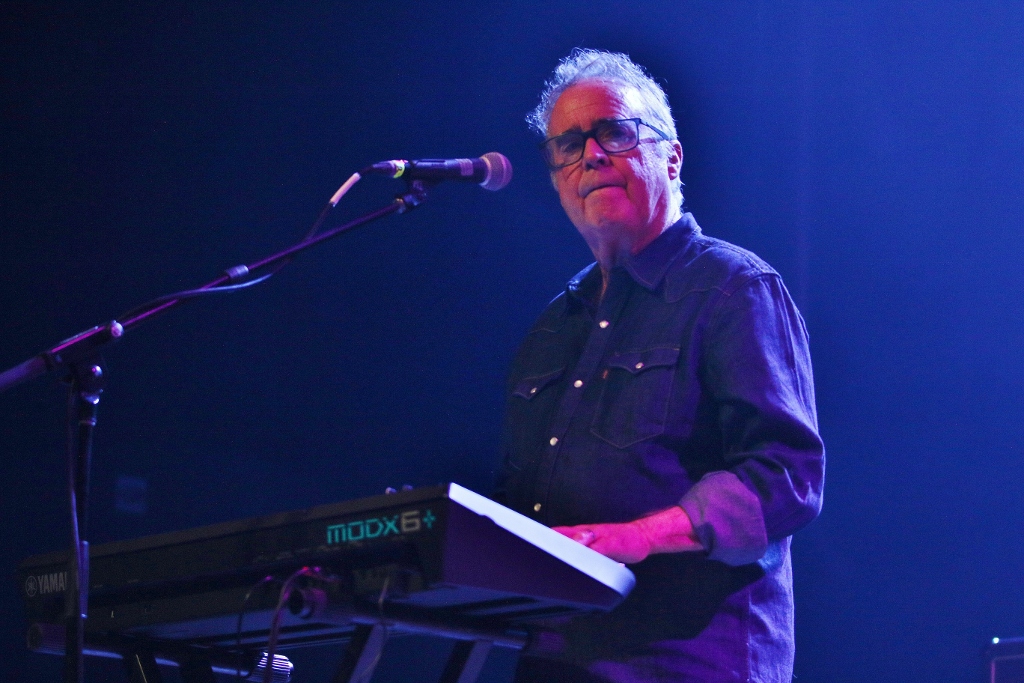
    The support act will be Alterium, a new Italian power metal band led by Nicoletta Rosellini (formerly of Kalidia and Walk in Darkness), joined by musicians from Kalidia, Draconicon and Altair. Formed in 2022, they made their debut with the album “Of War and Flames,” produced by Lars Rettkowitz (Freedom Call): a blend of epic choruses, powerful riffs and captivating melodies.
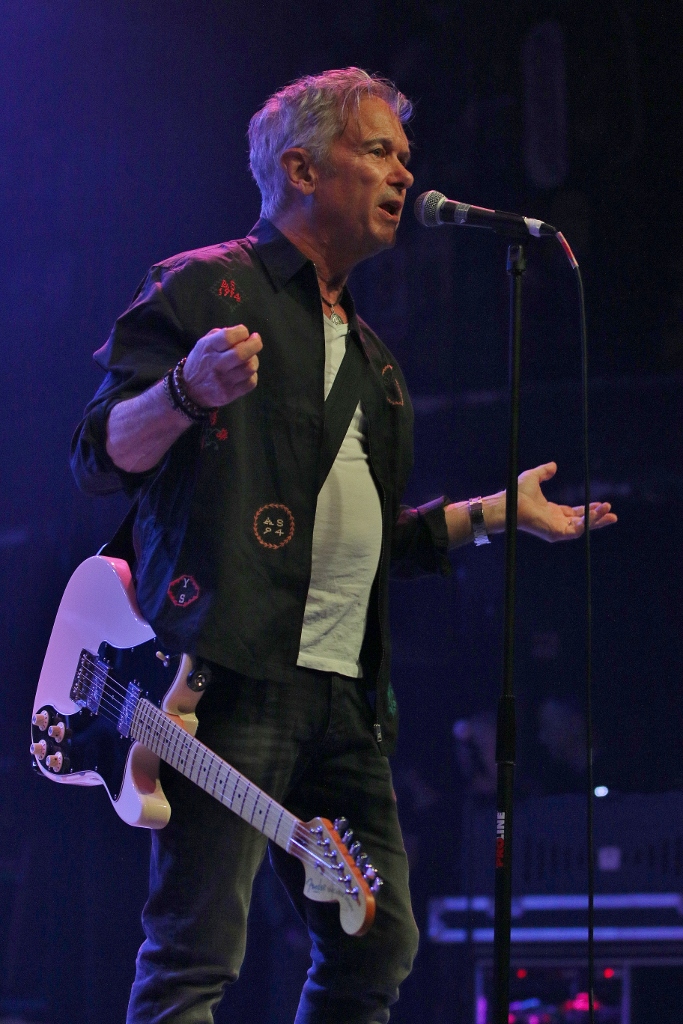
    The tour will stop in Italy for two exclusive dates:
    📍 23 April 2026 – Orion Club, Rome
    📍 24 April 2026 – Live Club, Trezzo sull’Adda (MI)

    Get your tickets by clicking here.

    The post NEWS: Alterium to open two Sonata Arctica shows in April first appeared on FemMetal – Goddesses of Metal.