Blog

  • Vigor Reconstruct: A Benefit For The Soroka Family

    Here at Metal Bandcamp we have been fans of Markov Soroka’s many projects for years. Like Drown, Aureole, Krukh, and of course the mighty Tchornobog. This, though, is not a celebration of another new release from Markov, it’s a benefit compilation with a sad background:
    Vigor Reconstruct album artwork
    Artwork by Calvin Cushman

    Here at Metal Bandcamp we have been fans of Markov Soroka’s many projects for years. Like Drown, Aureole, Krukh, and of course the mighty Tchornobog. This, though, is not a celebration of another new release from Markov, it’s a benefit compilation with a sad background:

    Markov Soroka’s father suffered a severe heart attack earlier this summer and, though he survived, was left without a job nor insurance in the wake of such tumult. Now the Soroka family faces at least $66,000 in medical bills. It is our hope that this compilation, featuring some of the very best of the metal (and beyond) underground, will help ameliorate some of the financial woes which they face.
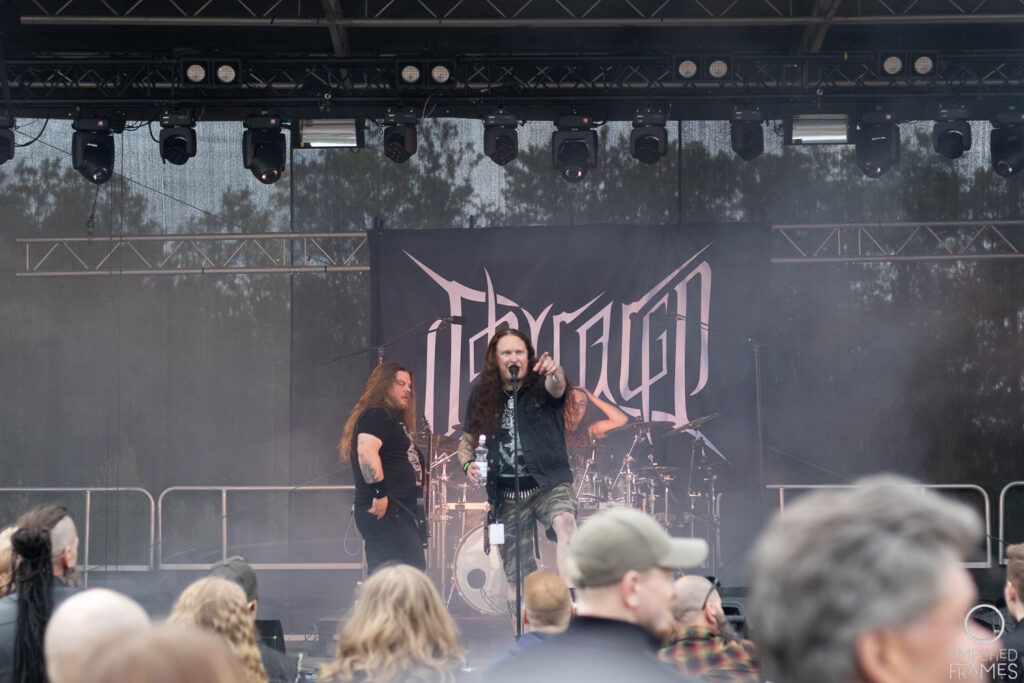
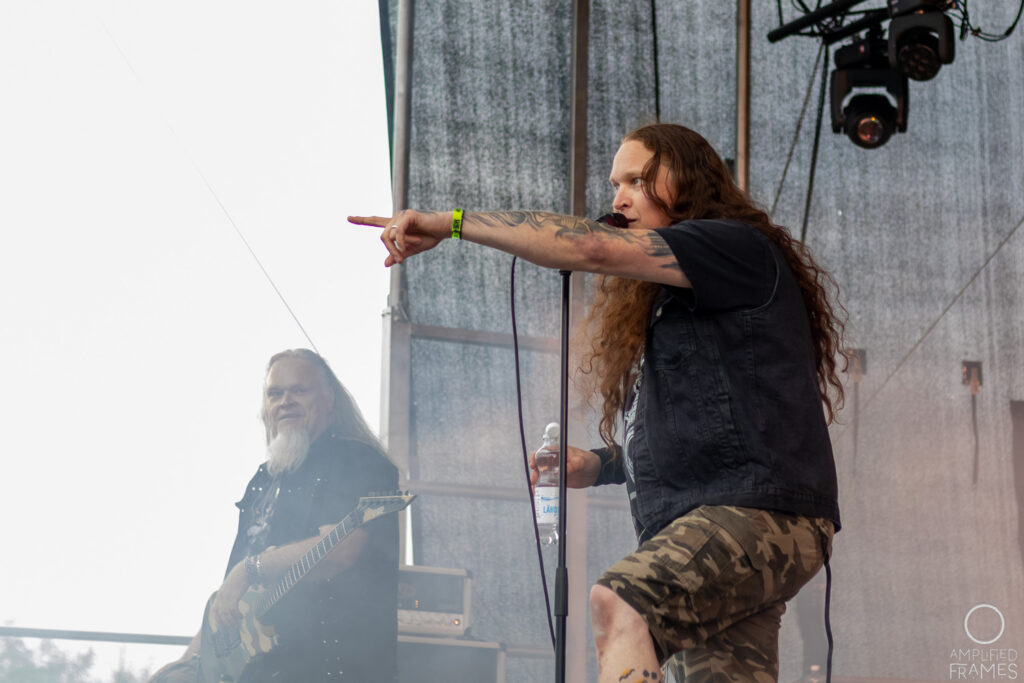
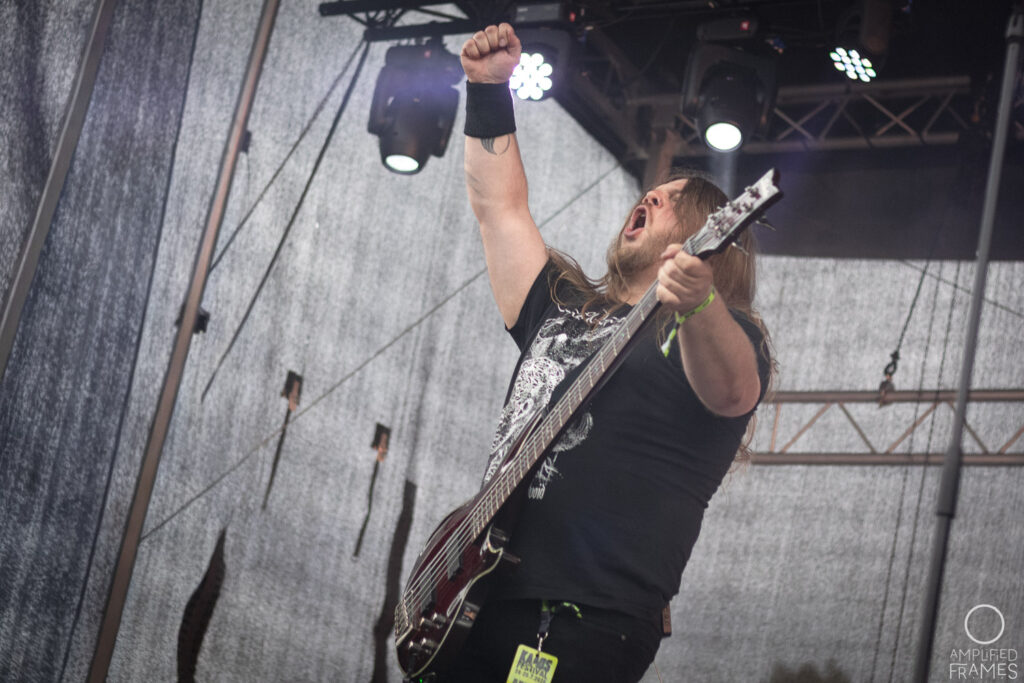
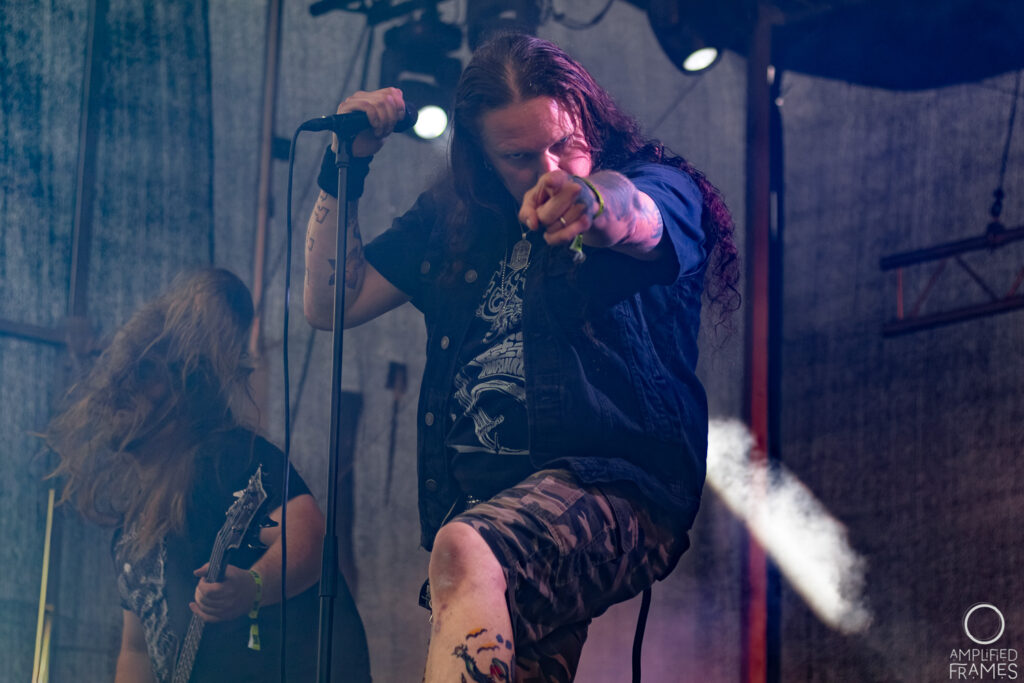
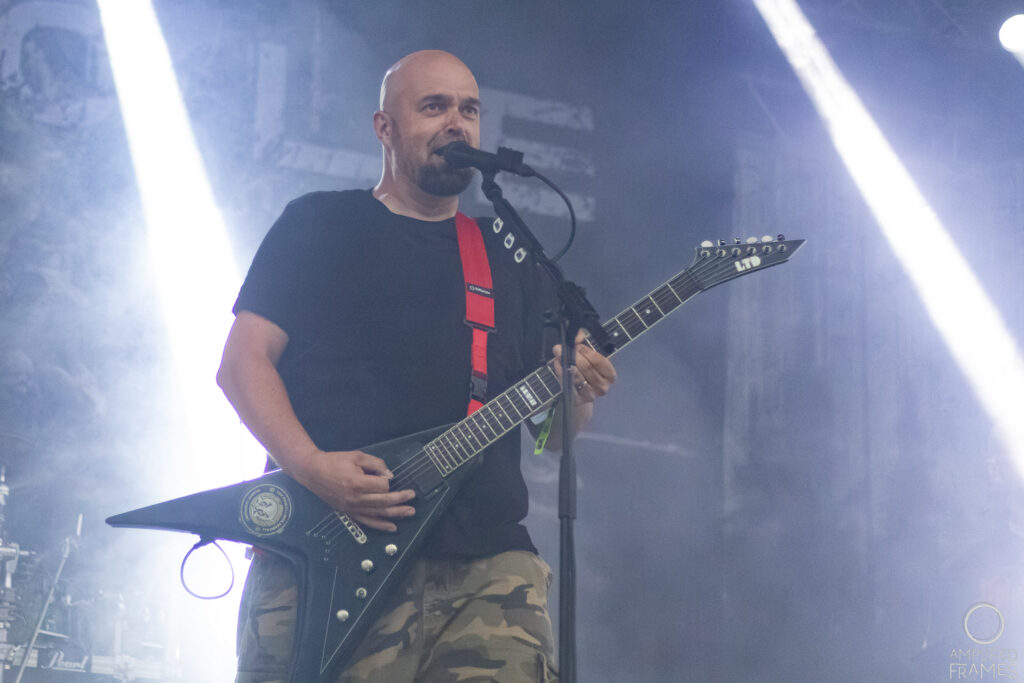
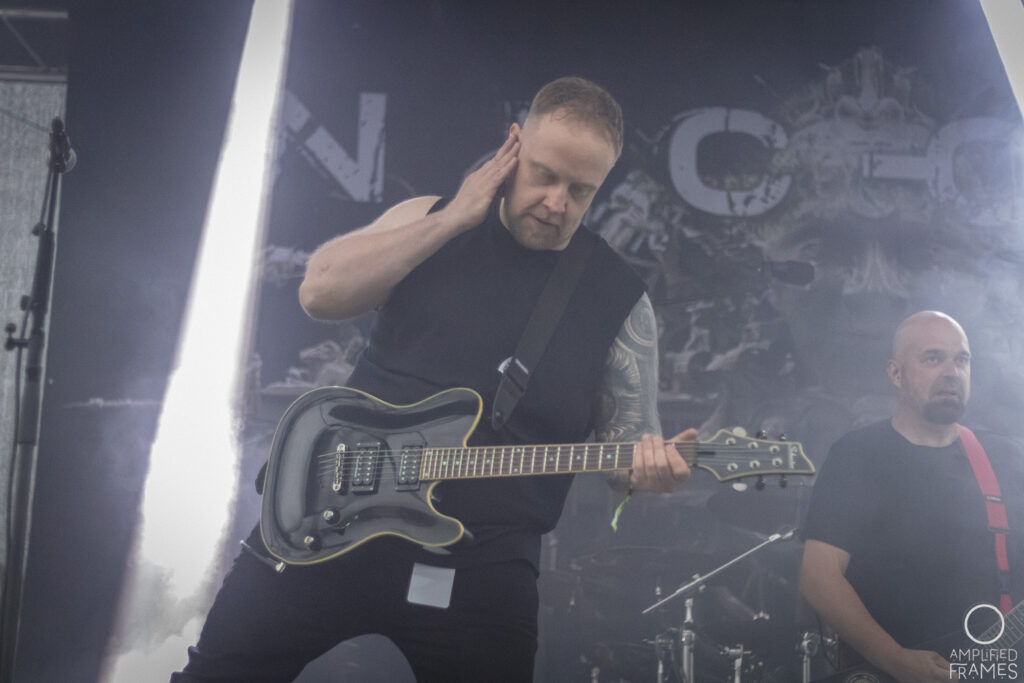
    Musically there’s much to enjoy here (Mare Cognitum tearing through “Cosmic Keys to My Creations & Times”? Yes, please). The fantastic King’s X cover by Panopticon led me to rediscover a band I had forgotten all about (I’m currently deep down a King’s X Youtube rabbit hole). For another look back at good times, here’s a couple of candid Tchernobog merch actions shots from when they played (remember live music?) Kill-Town Death Fest last year:

    Tchornobog photo from Kill-Town Death Fest Tchornobog photo from Kill-Town Death Fest
    Tchornobog merch action at Kill-Town Death Fest 2019.

    Oh, one last thing. An important message from the compilation organizers:
    We will also concurrently be running a raffle for the original hand-painted artwork by Calvin Cushman, as well as original artwork by Karmazid (Tchornobog logo et al). At $5 per ticket, you are welcome to purchase as many “tickets” as possible (Paypal the total amount as Friends and Family to sorokafamilybenefit@gmail.com) between 10/2 and 10/4 (at midnight PST), with the winners being announced 10/5. Global shipping will be covered by the artists.

  • Vigor Reconstruct: A Benefit For The Soroka Family

    Here at Metal Bandcamp we have been fans of Markov Soroka’s many projects for years. Like Drown, Aureole, Krukh, and of course the mighty Tchornobog. This, though, is not a celebration of another new release from Markov, it’s a benefit compilation with a sad background:
    Vigor Reconstruct album artwork
    Artwork by Calvin Cushman

    Here at Metal Bandcamp we have been fans of Markov Soroka’s many projects for years. Like Drown, Aureole, Krukh, and of course the mighty Tchornobog. This, though, is not a celebration of another new release from Markov, it’s a benefit compilation with a sad background:

    Markov Soroka’s father suffered a severe heart attack earlier this summer and, though he survived, was left without a job nor insurance in the wake of such tumult. Now the Soroka family faces at least $66,000 in medical bills. It is our hope that this compilation, featuring some of the very best of the metal (and beyond) underground, will help ameliorate some of the financial woes which they face.
    Musically there’s much to enjoy here (Mare Cognitum tearing through “Cosmic Keys to My Creations & Times”? Yes, please). The fantastic King’s X cover by Panopticon led me to rediscover a band I had forgotten all about (I’m currently deep down a King’s X Youtube rabbit hole). For another look back at good times, here’s a couple of candid Tchernobog merch actions shots from when they played (remember live music?) Kill-Town Death Fest last year:

    Tchornobog photo from Kill-Town Death Fest Tchornobog photo from Kill-Town Death Fest
    Tchornobog merch action at Kill-Town Death Fest 2019.

    Oh, one last thing. An important message from the compilation organizers:
    We will also concurrently be running a raffle for the original hand-painted artwork by Calvin Cushman, as well as original artwork by Karmazid (Tchornobog logo et al). At $5 per ticket, you are welcome to purchase as many “tickets” as possible (Paypal the total amount as Friends and Family to sorokafamilybenefit@gmail.com) between 10/2 and 10/4 (at midnight PST), with the winners being announced 10/5. Global shipping will be covered by the artists.

  • Toadeater – Bit to ewigen daogen

    By Justin C. While discussing this album with a friend, an obvious question came up: What the hell is a toadeater? The interwebs provided the answer: “Originally, a charlatan’s helper who ate (or pretended to eat) poisonous toads so that his employer could display his prowess in expelling the poison.”
    By Justin C.

    Toadeater - Bit to ewigen daogen cover artwork
    Artwork by Drowned Orange.

    While discussing this album with a friend, an obvious question came up: What the hell is a toadeater? The interwebs provided the answer: “Originally, a charlatan’s helper who ate (or pretended to eat) poisonous toads so that his employer could display his prowess in expelling the poison.” So, an appropriately bleak moniker for a black metal band, with bonus points because they avoided using phrases like “necro” and “goat.”

    The band’s second full length, Bit to ewigen daogen, starts off with the standard mood-setting, instrumental opener. To be honest, I’ve gotten a bit tired of this widespread pattern, but I have to give kudos to the band here for melodically tying the intro into the first track, which is much better than the usual, formless fare found in these. From there, we’re off to the races with “Conquering the Throne,” which immediately sets the band apart from a sea of melodic black metal. The song somehow manages to straddle the line between thin and frosty and a meatier, fuller sound. The driving energy reminds me of late-period Woe, with a punk-like aggression. The lyrics come barked out, syllable by syllable, directly on the beat while a guitar plays a chiming line above. It’s not long before the band breaks to a different direction, opening up to an airier sound while the drums and (audible) bass plow on. It’s a barn-burner of a track that maintains the momentum while giving space to compelling melodic lines.

    “Crows and Sparrows” covers similar territory, but adding in some far-off, clean sing-chanting that actually manages to not sound trite or cheesy. “Returning the Crown” does a similar trick–it keeps the band’s core sound and energy, but also mixes in some influences that remind me of The Cure or Depeche Mode. That gothic/new wave-y sound wouldn’t necessarily be up my alley, but the band absorbs and incorporates it in an organic way that somehow makes those sounds seem like a natural fit in with the maelstrom.

    The album comes in a little on the short side for this genre–just 36 minutes and change–but the upside is that the band doesn’t wear out their welcome. Without the lyrics, I can’t say if the band is pro- or anti-toad eating, but regardless of your own predilections, you should give this album a spin with whatever snack you prefer.

  • Toadeater – Bit to ewigen daogen

    By Justin C. While discussing this album with a friend, an obvious question came up: What the hell is a toadeater? The interwebs provided the answer: “Originally, a charlatan’s helper who ate (or pretended to eat) poisonous toads so that his employer could display his prowess in expelling the poison.”
    By Justin C.

    Toadeater - Bit to ewigen daogen cover artwork
    Artwork by Drowned Orange.

    While discussing this album with a friend, an obvious question came up: What the hell is a toadeater? The interwebs provided the answer: “Originally, a charlatan’s helper who ate (or pretended to eat) poisonous toads so that his employer could display his prowess in expelling the poison.” So, an appropriately bleak moniker for a black metal band, with bonus points because they avoided using phrases like “necro” and “goat.”

    The band’s second full length, Bit to ewigen daogen, starts off with the standard mood-setting, instrumental opener. To be honest, I’ve gotten a bit tired of this widespread pattern, but I have to give kudos to the band here for melodically tying the intro into the first track, which is much better than the usual, formless fare found in these. From there, we’re off to the races with “Conquering the Throne,” which immediately sets the band apart from a sea of melodic black metal. The song somehow manages to straddle the line between thin and frosty and a meatier, fuller sound. The driving energy reminds me of late-period Woe, with a punk-like aggression. The lyrics come barked out, syllable by syllable, directly on the beat while a guitar plays a chiming line above. It’s not long before the band breaks to a different direction, opening up to an airier sound while the drums and (audible) bass plow on. It’s a barn-burner of a track that maintains the momentum while giving space to compelling melodic lines.

    “Crows and Sparrows” covers similar territory, but adding in some far-off, clean sing-chanting that actually manages to not sound trite or cheesy. “Returning the Crown” does a similar trick–it keeps the band’s core sound and energy, but also mixes in some influences that remind me of The Cure or Depeche Mode. That gothic/new wave-y sound wouldn’t necessarily be up my alley, but the band absorbs and incorporates it in an organic way that somehow makes those sounds seem like a natural fit in with the maelstrom.

    The album comes in a little on the short side for this genre–just 36 minutes and change–but the upside is that the band doesn’t wear out their welcome. Without the lyrics, I can’t say if the band is pro- or anti-toad eating, but regardless of your own predilections, you should give this album a spin with whatever snack you prefer.

  • VAULTS: TROUBLE – “IT WAS NOT COOL TO BE POPULAR…”

    During the 30th anniversary year of ‘PSALM 9’, RICK WARTELL, ERIC WAGNER and JEFF OLSON could sit have back to revel in the album’s now-legendary status. Or they could carry on their band’s legacy with a brand new album, or even form a brand new band with one-time bassist RON HOLZNER. The four veterans of doom talked the past, present and two very different futures for TROUBLE with Sarah Kitteringham back in Issue Nine

    Thirty years after Metal Blade Records branded Trouble “White Metal” as a counterpoint to Slayer and the burgeoning wave of black metal that was percolating on the continent to the East, doom is finally standing alone, minus comparative or contradictory labeling. The past few years have seen an explosion in the genre’s popularity and notoriety, and an unapologetic fusing of the music on both heavy and lite ends of the spectrum. Finally, the progenitors who were criminally underrated in their heyday are becoming renowned. Pentagram, Pagan Altar, Candlemass and Saint Vitus have headlined festivals, toured, and released definitive albums. Chuggin along at a less visible (but no less seminal) rate is Trouble, whose opus ‘Psalm 9’ celebrates its 30th anniversary this year. We here at Iron Fist worship the album; therefore it was time to catch up with its creators to discuss its origins and continuing impact. Unfortunately, this took a whole lot of untangling, as Trouble continues on, but so too does the band that emerged after two original members and a one-time bassist left: that project is The Skull. Therefore, we had two conversations: one that involved The Skull vocalist Eric Wagner, drummer Jeff Olson, and bassist Ron Holzner. The second was with Trouble guitarist Rick Wartell, who formed the band in 1979 and anchors Trouble to this day.

    “I formed Trouble when I was still in high school with some of my buddies. We wanted to just learn to play our instruments at that point,” begins Wartell. He chuckles; “We were just doing cover songs, you know, like UFO, Black Sabbath, Judas Priest. I think it was 1981, or ‘82 maybe, that we decided to start being a little more serious about it, and thought we’d bring in a singer and another guitar player. So we brought in Bruce [Franklin] and Eric [Wagner], and that’s when we started writing most of our own material.” He continues, “That’s when we sat down and had a meeting about what we wanted to be; a Sabbath sounding band with two guitarists that can do harmony solos like Judas Priest’.”

    Rounded out by drummer Jeff Olson and bassist Tim Ian Brown, the young band hunkered down in the basement and began practicing. “We were a really hard working band. We had a real good work ethic; we rehearsed five days a week, every single week. We never missed a day,” recalls Wartell. “We wouldn’t go out and play live shows, we’d just write music and rehearse. And we did that for over a year straight, before we even began to record.” Eventually they began playing live, and recorded one of their shows to a tape. “One of the guys who was hanging around with the band – we weren’t really a working band so it’s hard to say he worked for us – but he was one of our friends, and he started passing this tape along to the underground. And next thing you know, we got offers in the mail. I had contracts sent to me from two or three different record companies. We picked Metal Blade because we liked the sound of it, we were like ‘let’s pick this label because they sound more metal!’.

    At the time, Metal Blade Records had just been founded by a music slinger at Oz Records known as Brian Slagel, former editor of ‘New Heavy Metal Revue’, one of metal’s first fanzine that lovingly placed bands like Cirith Ungol on their cover. His knowledge and penchant for selecting burgeoning bands was impressive. The label’s debut release was the infamous ‘Metal Massacre’ compilation (featuring Ratt and Metallica, among others); they continued with releases and licensing agreements with Bitch, Warlord, Slayer and Satan. As the label’s impressive roster grew, the overly prepared quintet went into the studio. They had over two-dozen tracks written, a handful of covers of Black Sabbath, Angel Witch, Accept and Cream ready, and were thrilled to start. As rabid fans of underground bands like Witchfinder Genera and Angel Witch, they were stoked to continue the tradition. “We’d never done it before. We got in a van, we drove to LA, we were just kids. We didn’t know what to expect,” explains Wartell. “When we got to the studio we met [producer] Bill Metoyer and Brian Slagel, and Bill handled us as well as you can handle a brand new band. We are still friends today, he’s just one of the best guys you’ll ever meet. What they did was just set us up and had us play the songs live, and Bill got the tones that sounded like Trouble, and we recorded it.” He continues; “Probably the most nerve-racking thing about being in the studio were the vocals and the solos. The drums, the rhythm guitar and the bass, that was all recorded live; we just played and he recorded it, so we got through that really quick. We only had five or six days to record the thing.”
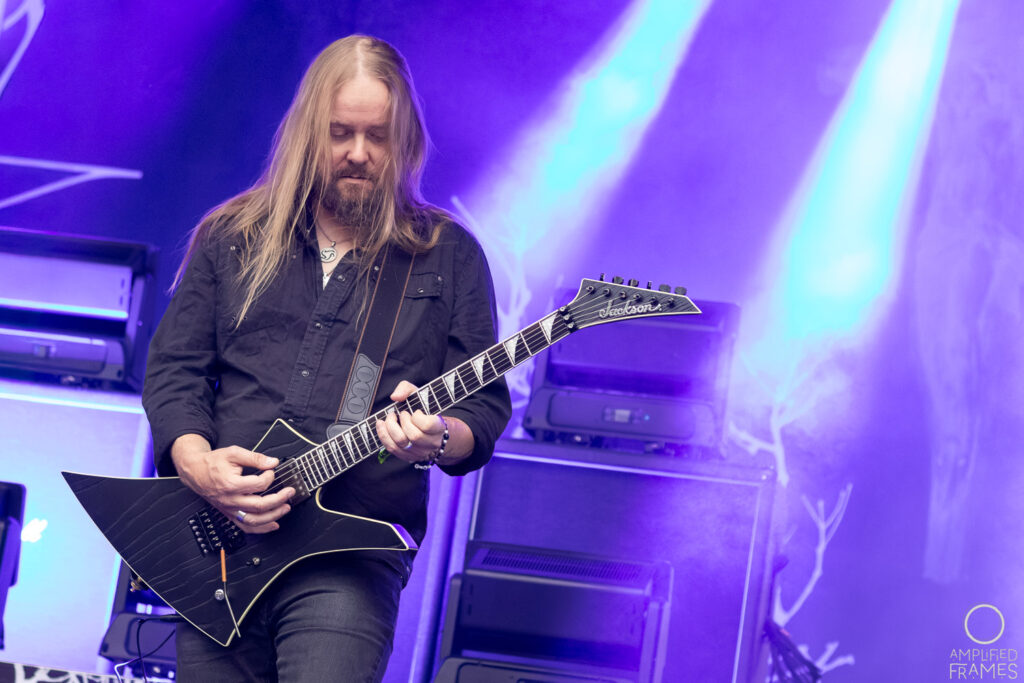
    Hence the powerhouse that is their eponymous debut, originally dubbed ‘Trouble’ before it was rebranded as ‘Psalm 9’ in 1990. Moody, introspective and irrefutably skull-crushing, the album was wholly out of place upon release in 1984. Infused with numerous biblical references, deeply embedded dramatics courtesy of the wailing, warbled vocals, an uncharacteristic (for metal) positivity, and huge sonic weight courtesy of the production, impenetrable riffs, epic wailing and rollicking drums, it’s an undisputed metal classic. Dubbed one of the most important metal albums of all time by numerous publications, it’s a fan favourite and highlight of a lengthy and strong discography. Featuring such gems as ‘The Tempter’, ‘Assassin’, ‘Bastards Will Pay’ (a beefy cover of Cream’s ‘Tales Of Brave Ulysses’, was added to later editions) the album is mint from start to the groovy, jam band finish. However, it’ the swirling opening track, with its tribal intro and atmospheric squeals, followed by that crushing riff, which Wartell remembers most fondly. “It was the very first song we did, and it’s like ‘Wow! We’re hearing it through headphones in a studio and it’s being recorded for a record!’“It just brings back those memories of [being] excited, nervous, you know? You don’t know what to expect. I remember ‘The Tempter’ a lot, because we wanted to start with the song. We said, ‘How can we make it sound like there is fire in the background?’ I remember Oly [Olson grabbing a paper bag, and he’s crumbling the paper bag, and we’re like, ‘That’s it, let’s use that,’ he laughs.

    Despite its apparent quality, Metal Blade wasn’t entirely sure how to market the album given the current state of metal. Trouble was dubbed “White Metal” and people were convinced the band was Christian; this was entirely inaccurate. Yes, ‘Psalm 9’ had a biblical focus, but that was because lyricist and vocalist Wagner was following in the cavernous footsteps of Black Sabbath, wanting to juxtapose the light with the dark.  “We were never a Christian band. Back when we first started, in the metal scene at that time a lot of the bands, like Slayer and Venom, Mercyful Fate, were writing Satanic lyrics,” the singer explains, audibly groaning at the continuing association. “I just didn’t believe in that… I probably just said as many Satans and Lucifers as anybody else, the only difference for me, was I was searching for something… I always wanted to offer a little ray of hope, a way out.” Although it set Trouble apart, Wartell states he wasn’t particularly concerned about their popularity. “As far as marketing and all that, we were just kids, it wasn’t even in the equation. We just wanted to put a band together and play,” he recalls. “We were huge fans of Angel Witch, that was one of our number one bands we’d listen to. And also Witchfinder General. I remember when I got their first album, I listened to that lot. Yeah, we were big fans of those bands, we knew they were obscure. You know, in the metal scene, or the doom scene back then, it was not cool to be popular. If you found a cool band like Angel Witch or Witchfinder General, you almost didn’t want other people to know about it! It was your band, it was really cool to be underground and it was just your little clique that knew about that band.”
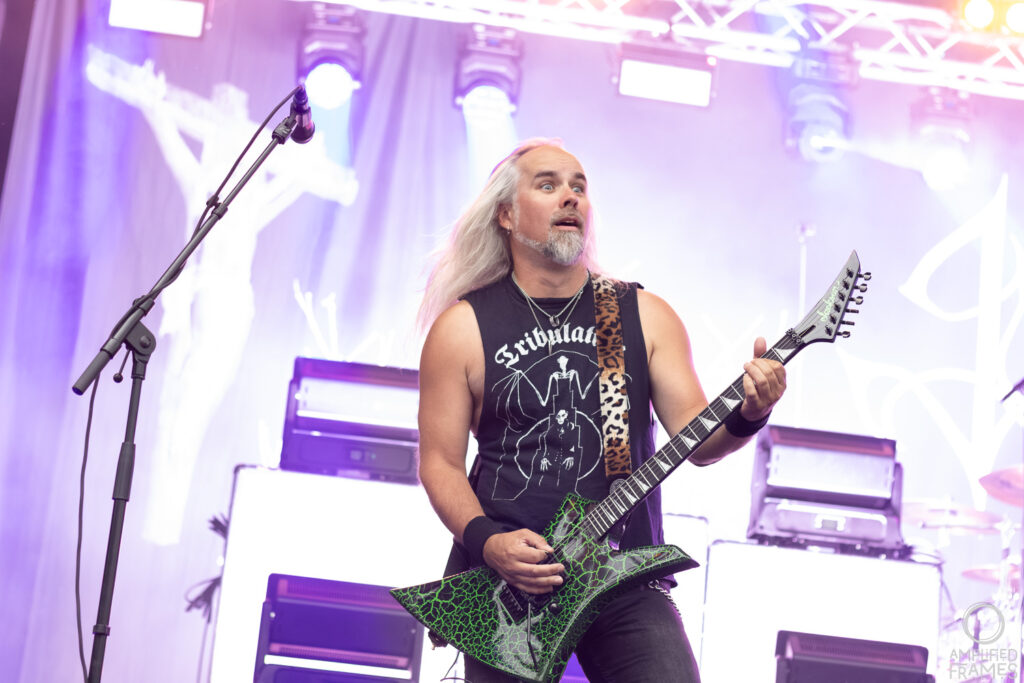
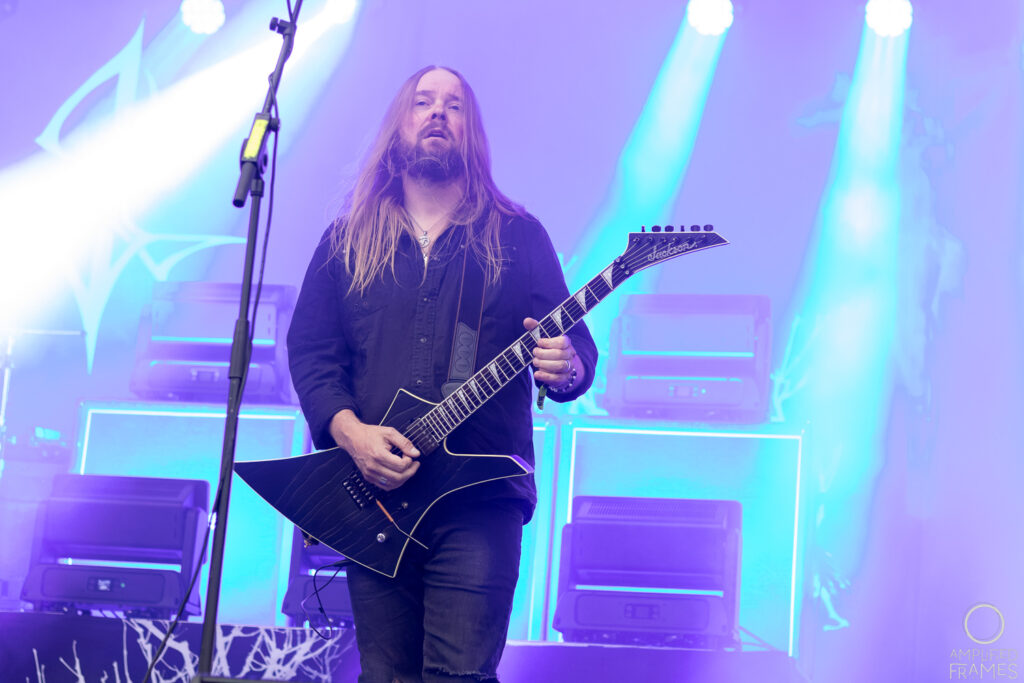
    In hindsight this seems somewhat silly, as in the early-to-mid ‘80s, the genre was spreading around the world with influential releases from Witchfinder General, Pentagram, Saint Vitus an Candlemass. Yet, these bands operated without the benefit of reasonable geographic proximity and often didn’t even know one another existed. They were often considered the epitome of uncool. Given the simultaneous dissemination of extreme metal, the commercial explosion of thrash and hair metal, these retro-regressive acts stuck out like sore thumbs. For example, when Vitus opened for Black Flag, Dave Chandler infamously recalled the brutal reception: “Pretty much 90 percent of them hated us with a passion. They were throwing whatever wasn’t nailed down and generally fucking with us.” 2014 paints a much different picture. Labels are rushing to sign bands with the Hammond organ, warbling vocals, Sabbath-esque tones and riffs, or promo pictures with ‘The Necronomicon’/candelabrum/Orange amps. The winds of change have blown, and now metal fans, who are a historically appreciative bunch, are consuming back catalogues of these titans en masse.

    “It’s amazing. All we did was buy a van and drive up to California to make our first record We were all excited, you know?” says Wagner, somewhat puzzled. “And now we’re talking about it 30 years later, it’s bizarre. To me, back then, we were behind the times, but now that album is relevant again.” Doom is relevant. The emotionality and religious themes, along with the sexy, groovy, thunderous nature of the music, have contributed to its resurgence. In the mid 2000s, technical death was reaching critical mass and many metal fans were looking for something with more feeling. Several movements were simultaneously exploding: Baroness, Kylesa, Torche, High On Fire and Isis, bands that sonically built off the template to perform what is know known as sludge or stoner metal (equally inspired by bands like Melvins, Eyehategod, Neurosis and Sleep). Another was the rise of “occult” rock, which combined diabolic – read: overtly Satanic for their time – psychedelic rockers Coven with the classic acts. The third was far more underground as classic melodic doom surged: this was a clear-cut distillation of heavy metal. Acts like Ironsword, Lamp Of Thoth, Hour Of 13, Procession, Altar Of Oblivion, Cauchemar and Funeral Circle stuck with the Sabbathian tritone, citing Trouble, among other bands, as a key influence. Like Trouble did on their debut these bands unapologetically celebrate their influences by constantly recording and releasin obscure covers. “I think they are very unpretentious. They pay homage to the bands that influenced them, an Trouble’s no different,” says Wartell. “We never pull any punches. I get asked a lot, ‘How does it feel to be a legend who started this whole trend’, and my answer is always ‘We didn’t start this; we just tried to add our thing to it’. It was there long before we started it, so I think that doom bands are a little bit more down to earth when it comes to this kind of thing, with less ego.”

    Hence the hesitation to heap credit on themselves for helping doom come into its own, both sets of interviewees were modest about their impact, although acknowledged the music continues to resonate. For that, they are extremely thankful. “When I’m out there singing those songs right now, singing the words, singing the music and everything, it just seems like it still fits today What’s going on musically and lyrically,” says Wagner. “Those people are in the bands now who have ‘Psalm 9’ as their influence, they were kids when they listened to that. Just like we were young kids when we were listening to Sabbath… I’m just some dude from Aurora, Illinois. To be considered an influence on people… that’s pretty good compliment.”

    Jeff Olson adds appreciatively; “It’s one of the main records that most doom fans mention as an influence, that’s pretty awesome. I influenced a whole new chapter, and basically it’s still strong and heavier than most of the shit that’s out there nowadays, it’s held up unbelievably.”

    Wartell is reserved about his place in the genre, although he and his former bandmates acknowledge that doom’s popularity explosion has aided both of their current projects. “It’s no different than Angel Witch and Witchfinder General, or Pentagram, I think the were called Death Row at the time. You’re just doing what you do, and it just falls in the right place. You’re able to record it; people are able to hear it. Maybe I’m just too close to it to see it at this point, but we just helped carry on the legacy,” he says. “That’s basically how I see it.”

    The Skull bassist Ron Holzner, who joined Trouble shortly before their third album ‘Run To The Light’ (1987), and played with them until 2002, concurs, and is thrilled, like his current and former bandmates, that doom is now an accepted and celebrated movement within heavy metal. “Doom is a special genre now. It actually became a specific thing, this low-tuned wonderful, I don’t know what you’d call it, trippy music. I think it’s close to home with psychedelic music, and also super heavy music,” he says. “I love that fact,” adds Olson. “I read an article in The New York Times… it was called ‘Heady Metal’. And it showed lines coming from acid rock and hard rock, splitting apart when it went to thrash, and it names groups, and it named us, next to Sabbath. They named us next to Saint Vitus and of course, Pentagram and the Obsessed, and groups that are right next to that category,” he enthuses. “I’m proud of that, itt is just incredible that that could happen… I find that it’s artistic, it’s got everything from primal screams to super quiet dynamics, [and] it’s got everything from laughter to tears.” Wagner proclaims, “It’s heavy as FUCK!”“It’s given bands like Pentagram and Saint Vitus a second chance, you know,” says Olson. “They were playing that with us way back in the day, and not that many people came out to see them, they weren’t that popular… nowadays they are more popular than ever, and it’s pretty awesome. [There’s a] big crowd out there who wants to hear it, so, we are going to deliver it for them.” Wartell sums up our conversation about ‘Psalm 9’ and its continuing legacy with a characteristic humbleness. “I think the best thing that came out of ‘Psalm 9’ was accomplishing our first recordin as a band. I think it was a big accomplishment for us, and it set us onto the direction we wanted to go as a band. And you know, five guys from the Midwest playing in a basement, to go out to LA and do an album, for us, that was huge, a huge accomplishment. To have the legacy of this particular piece of work we did, to last this long, that people are still talking about and revering, it’s an honour to be a part of that.” Of course, he won’t praise it too much. “Is it the best record we ever did? Hard to say. The quality of the recording and the production? Absolutely not. The riffs? Maybe some of the best riffs we’ve ever done, well, it’s debatable. But we are still going, and we’ll see what happens. We’re not over yet.”

  • HELLION – ALL IS WELL IN HELL

    With a new compilation album ‘TO HELLION AND BACK’ and new songs in the pipeline, it seems that the witching hour is upon us once more, with the unstoppable queen of hell ANN BOLEYN back from the depths. IAN RAVENDALE tried not to lose his head back in Issue 10.

    With a music career that stretches back to playing gigs at 14 (“I looked much older!” she says) Hellion vocalist Ann Boleyn has seen it all. Including an attempted break in of her house by a band manager, later jailed in a murder-for- hire case. “James Howard Paul Jr was charged with trying to hire someone to kill his wife,” recounts Ann. “He’d been brought in as an accountant for Hellion. I was approached by the District Attorney and asked to testify. And of course I was going to tell the truth. At that time it became a very dangerous situation for me. Very scary. After I talked to the police he attempted to break into my house when I was by myself. He ended up serving prison time.” Hellion was formed by Boleyn, at that point primarily a keyboard player, guitarist Ray Schenck, bassist Peyton Tuthill and drummer Sean Kelley in late 1981/early 1982. Unable to find singer, Schenck, Tuthill and Boleyn shared vocals with the latter eventually stepping out from behind the keyboard to become lead vocalist by default, as she explains: “I’d done some back-up singing when I was at high school, but never was a lead singer. Particularly a lead singer that isn’t attached to a musical instrument!” When they started Hellion didn’t have any sort of master plan as to the direction the music was going to take, as Boleyn relates: “All of us had come out of bands who’d been trying for a number of years to write our own music and not play cover songs. You get to a point where you’ve got great songs and try to get a record deal and time after time after time things just seem to fall apart and all the work everyone had done would be wasted. All of us decided that we just wanted to get out and play. We were so sick of trying to write the ultimate song to get us the record deal. So it was like, ‘Let’s go out and play some covers. We’ll worry about writing our own songs later. We were playing AC/DC, Krokus, Rainbow, Sabbath and Priest.”

    Hellion built up a following around Los Angeles and in 1983 put out a four original song EP on their own Bongus Loadus Records. UK rock label Music For Nations heard the EP and gave Hellion enough money to record two additional tracks so they could issue it in the UK as the ‘Hellion’ mini-LP. Recalls Boleyn: “It started to gel after we got the Music For Nations deal. We were at the point where we no longer had to fit our music into the cove tunes set. That’s when we came up with ‘Break The Spell’, ‘Up From The Depths’ and ‘Backstabber’, where we were really going on our own path.” Part of Hellion’s problem was that the niche-obsessed US record and radio industries couldn’t make up their minds where Hellion should be slotted into, as Boleyn acknowledges: “When we started out people didn’t know how to categorise Hellion, especially my singing! They weren’t used to having a female who sang with as much power and intensity. Some people were saying we were a punk band, which we obviously weren’t! We approached a number of labels, trying to get a deal like everybody else was in Los Angeles. There was such stereotyping with regard to females in music – especially singers – that the people who had the power to do anything just didn’t know what to do. “Having come up as a musician rather than a singer I wasn’t into wearing garter belts on stage to get attention. I figured if the music was good enough people would like it. It was offensive having people tell me that I had to dress in lingerie. Ed Leffler, the manager of Van Halen, had offered to put me on a retainer salary, which would have been very good considering how broke I was at that time! But it was on the condition that we fire Ray and that I get fake boobs, my teeth fixed and plastic surgery! I found it horribly insulting because that isn’t going to make the music better!”At this point, Hellion were creating more waves in the UK than they were back at home. Both Sounds and Kerrang! had latched onto the band and the Music For Nations mini-LP made #6 on the papers’ rock chart. Ronnie James Dio heard and liked Hellion and offered to produce a couple of tracks with the band – ‘Run For Your Life’ and ‘Get Ready’ – both of which appear on the new ‘To Hellion And Back’ compilation. Niji Management, run by Ronnie’s wife Wendy, took over Hellion’s management.

    Support shows with Dio, WASP and Whitesnake followed and this should have been the start of bigger and better things for Ann Boleyn and Hellion. Not the case, as she explains: “There was a lot of political things going on at the time. I was told that record companies weren’t interested in a metal band whose singer sang as heavy as me. Other people, including Ronnie, said they couldn’t believe it. I was happy to carry on and continue but in early 1985 I was called into the management office and told that my services were no longe required for the band. “At the time Hellion was friends with a lot of the bands from ‘84-85 that got major record deals. Some of those bands had a fraction of the following that Hellion did! As time passed, the guys in the band were getting very frustrated. Ronnie was doing wonderful things for us but when he went out of town he wasn’t there to make sure things went through. It was going month after month without any record deal.” Boleyn’s former bandmates drafted in vocalist Richard Parrico and re-christened themselves Burn when the tenacious Boleyn won back the Hellion name. She immediately put Hellion Mk2 together, making sure that she was in control this time round: “Initially Hellion was a band where we were all equal, with equal voting rights, which is how I ended up out of the band! Beginning with the Mk2 line-up with Alex Campbell, Chet Thompson and Greg Pecka I required the other members to sign an agreement acknowledging that they didn’t own the band name and don’t own the logo. From that point forward I said ‘I’m quality control and have a veto!’ They get songwriting royalties but when it comes to the ownership of the name and business rights they have no option on that.” A split with Niji Management followed shortly after. In 1986 Hellion’s new album ‘Screams In The Night’ was released by Music For Nations in the UK and Roadrunner Records in Europe.

    The outfit were still being ignored b the major US labels at least in part because of their uncompromising ultra-heavy musical direction and Boleyn’s interest in the occult, which was a recurring theme in Hellion’s lyrics. The lack of a deal caused the disintegration of Hellion Mk2 and most of the bands original line-up returned following the demise of Burn.In the mid-’80s bands like Heart and Starship had brought in outside mainstream songwriters like Diane Warren, Albert Hammond and Bernie Taupin to come up with the hit singles needed to give their careers a kick in the pants. Hellion never contemplated doing the same, for reasons that Boleyn is happy to reveal: “You’ve got to remember who my mentor is! Working with Ronnie he’d say; as a singer if you’re going to be worth anything you need to be writing your own lyrics and your own melodies. It was never a consideration to bring in outside songwriters!”

    To get the ‘Screams In The Night’ album a US release Boleyn decided to form New Renaissance Records, as she remembers: “The first Hellion mini LP sold very well on import and the record’s distributors wanted me to bring them more similar music. I didn’t have any money – I could barely pay my rent and half the time my electricity was off. I had this established relationship with these independent record distributors so why not press our own record and put it out? I was surrounded and supported by a number of people allowing Hellion to do things like get a video filmed tha was good enough to be on MTV. “I was literally running a record company from my living room! After that I was approached by a number of other bands that wanted help. They were in the same position. They had demos that they wanted distribution for. I tried to help them as best I could. A number of people that had bands on New Renaissance worked at the label. It was very much a co-op, people would come in from some of the better-known bands and then call radio stations and magazines to help the lesser-known bands. I’d be on the phone trying to get a magazine to do an article on Prong or Sepultura. Then those guys would come in and help with Hellion.”

    Several further Hellion albums, including ‘Postcards From The Asylum’ and ‘The Black Book’ followed along with gigs in the UK, the first ‘Monsters Of Rock’ festival in the former USSR and an Ann Boleyn solo tour of Japan. Hellion were then put on hold as Ann went to university. She graduated from law school with a degree in Germanic languages from UCLA in 2003 and a law degree in 2007. This decision to re-start her life went deeper than wanting an alternative to the music business as Boleyn reveals: “I’ve had problems with stalkers from the 1980s onwards. There were three in particular. There was one who was much more of a threat. He was a Middle Eastern gentleman from Egypt who hired private investigators to follow me to the point where I was having to live in a high security apartment building. He was very concerning and I realised I had to alter my lifestyle.” Boleyn knew she had to evaluate her options very carefully. Did she consider relocating? “I didn’t, because I figured that with the type of investigators that this very wealthy guy had hired they would find me anyway. S I went to law school and surrounded myself all the time with people that knew about the problem and were supportive. I ran marathons and a lot of the people I ran with were police officers. I had a person that I car pooled wit who was married to a police officer also. S from the time I left my house I felt pretty safe. It was made clear to me by some people that worked for the police department that if I was going to hang out in Hollywood and did what I usually did with regard to rehearsals and shows they didn’t think my outcome would be very good. “I haven’t heard anything from the guy in a very long time. I’ve always had a pretty good sense of when people are following me. [Hellion drummer] Simon Wright is my boyfriend and I think when people realise I’m not just this lonely person that’s out there, that’s made a difference. There’s been not one peep from anybody for years.”Following on from her studies, in addition to playing with Hellion, Boleyn practices law. “I’m a civil rights attorney. I run my own practice and take on my own cases. I work out of my home, which has an office attache to it. I represent individuals – workers usually – against major corporations where they’ve been done wrong. I’ve represented a number of female clients, a couple of whom were sexually assaulted by their bosses then reported it to Human Resources and got fired! I lov representing individuals in those kinds of cases. I don’t generally represent corporations. I can set my own hours and sometimes I’ll work 20 hours a day on a case.”

    It all sounds very Erin Brockovic, as Boleyn agrees: “It is! To be honest I hate most attorneys. Can’t stand them! I had to do something for a few years because my life was in danger. I figured the option where I could work on my own without having to have an 8 to 5 job was law. But if I’m going to do it, I’m not going to represent some horrible insurance company trying to cheat somebody. I take my own cases and decide which ones I want and which ones I don’t. I can go on tour for a couple of months and another attorney will take my cases.” Being Ann Boleyn from Hellion is a plus with many of the clients she represents: “A lot of the people I know don’t trust attorneys. And rightfully so! They can talk to me about situations that they may not be comfortable talking to a typical attorney. I’ve got a number of cases from people who are peripherally involved in the music or entertainment businesses. They can come to me and tell me anything and I’m not going to be surprised!”

    Hellion had recorded some demos in the 1980s with legendary producer/engineer Ken Scott who had worked with David Bowie, The Beatles and Elton John. The new line-up of the band with Ann, Simon Wright, guitarist Maxxxwell Carlisle and keyboard player Scott Warren are planning to release ‘Karma’s A Bitch’, a mini LP produced by Ken Scott later in the year with the taster track ‘Hell Hath No Fury’ appearing on the new ‘To Hellion And Back’ compilation. Says Boleyn: “Ken Scott is a wonderful, wonderful man! And an incredibly talented engineer and producer. I can’t emphasise that enough. We had worked with him early on after the demos we’d done with Ronnie. We went in with three days rehearsal and musicians who had never played together and somehow it came together! It was pretty surprising to me! Ken’s experience really showed!”

    Ann Boleyn has always stuck to her principles and followed her own course. But she’s under no illusions about how the music business works: “It’s always been very male dominated. And with heavy metal videos in the 1980s you almost couldn’t not have a female model in a swimsuit crawling over a car! “Even now there’s still a lot of undue focus of image over substance. I’ve learned that on Facebook. If I put a picture of the guys in the band up we’ll get a certain number of ‘Likes’. Put a picture of me in my leather pants and we’ll get four or five times the amount I’ve always been appreciative of the fans but ultimately it’s about the music.”Hellion tour Europe and the UK later this year and are expected to play several major festivals‘

    www.Hellion.us

  • WYTCH HAZEL – FREEDOM FIGHTERS

    With ‘Prelude’ WYTCH HAZEL released one of the most excited NWOBHM-inspired debuts of 2016. IRON FIST’s LOUISE BROWN gets to got with its creation and the band’s white metal leanings in Issue 18

    It’s midday on the third day of a festival. Most of the attendees are still stewing in their tents, regretting that last case of Koppaberg, but a few fans have dragged themselves out of bed and are heading to church. Church? At a music festival?It could only be the work of the UK’s own heavy metal minstrels, Wytch Hazel.“I messaged Jacob [Hector, Muskerock’s promoter] to say we’ve got this album coming out and would you fancy putting us on? He said ‘I’m not sure, I might have a slot’ and then the guy from our label sent him the album and he was like ‘Oh, I really love it, I want you to do two gigs. I want you to fill the shoes of Ashbury and do the gig in the church.”If you know Wytch Hazel you’ll know two things. They love Ashbury – just listen to their debut full-length ‘Prelude’ for proof – and that Colin Hendra, Wytch Hazel founder and lyricist is a committed Christian who isn’t afraid to fl in the face of confrontation and put his faith at the centre of his compositions. This was a dream offer.“I messaged the guy at the church, he said he wanted it to be part of their liturgy, and because a lot of the songs on the album are biblically-based, I said to feel free to use those readings. Our firs song was ‘Surrender’, which was like surrendering to God, so he was incorporating that.”This is not the usual subject matter for Iron Fist, but it’s refreshing. Wytch Hazel are a breath of fresh air for the UK heavy metal community.

    They formed in 2011 and quickly caught the attention of the then-burgeoning underground scene with their accurately NWOBHM-looking single ‘Surrender’. Go-to traditional metal stable High Roller picked them up for a split with Detroit’s Borrowed Time a year later and quickly followed it with a collection of their demos and singles to date. Touring and line-up changes followed, as is the rite for most young bands, and in April this year they released their firs full-length on Bad Omen Records. Dressed like medieval peasants and playing a distinctly lilting, progressive, harmonious strain of classic heavy metal Wytch Hazel stand out for the best of reasons. Their lyrics are just one small part of their appeal. And Colin believes he stands shoulder to shoulder with the likes of Behemoth and Watain both in rebellion and belief.“When I started the band it was really an undertone,” he says of the religious aspect to the songs he writes. “At first people didnt realise that there was a Christian in the band, because if you listen to songs like ‘Surrender’ you don’t immediately think that. So when the EP came out people were like, ‘Oh, there’s this white metal band’, and I was thinking ‘Oh no, here we go’, but mum brought me up on soft rock, but listening to Iron Maiden, there was distinctly an era there. It sounded old, very different, quite heavy but still listenable. People had shown me Slipknot but it was over the top, and this guy leant me Iron Maiden and it was heavy, melodic, so much to listen to. It got me and it was probably around that time that I started to play guitar. Not long after I started a band, we got a small following and then because you like Iron Maiden you end up finding other bands who also d, and we discovered Eliminator from Lancaster. A guy from Eliminator showed me the more obscure side of the things. By that point I was already listening to Judas Priest and Saxon,but he said ‘What about Witchfinder General Dark Star, Virtue?’ and we went in deep. We covered the whole spectrum from early Priest right up to W.A.S.P.”Colin went on to play drums for Eliminator, who have fast become another of Iron Fist’s favourite young British heavy metal bands. It just goes to show what a family is growing here in the UK, especially of those in their 20s, who like Colin turned their back on the ‘90s nu-metal dirge to find comfort in the organic early heavy metal sound. Wytch Hazel and their peers are keeping old school heavy metal alive and in the process unearthing bands that would otherwise be left in the dark ages, like Ashbury and Virtue.

    “When I was in university I was always trying to get into the most obscure thing I could find” he agrees, recalling their Virtue-ous take on their first singles artwork. “But I don’t do that as much now. Some people are just so militant, they just know so much stuff and I’m just not like that at all. I know more about the ‘70s bands now, I went backwards a little bit.”We can tell, their new album is stuffed with hard rock flair and bluesy heat and it’s opened them up to a whole new audience. The band will be touring as soon as they can and in the meantime are invited back to the family hearth, when they play Live Evil Festival in London again.“That community is great really,” Colin gushes of the invite to return to The Dome in October. “The moment we met the Live Evil and the Amulet guys we knew we’d get along. I heard someone say recently that heavy metal is a synonym for freedom and that’s a really god way of putting it. When we ended up mates with Ascalon from Preston, or we ended up mates with Seven Sisters, you found that everyone has the same laid-back views and you just have so much in common, not just the music but the guys are all really sound. So, it’s nice when they say they liked your new album because if they say they like your music you’re doing something right.”


    wytchhazel.bandcamp.com

  • YOB – The Sight Of The Other Shore

    Forced to undergo intestinal surgery after a life threatening medical emergency last year, it’s no small miracle that YOB’s MIKE SCHEIDT has not only survived, but persisted to bring us one the band’s best albums to date in the shape of ‘Our Raw Heart’. KEZ WHELAN caught up with the frontman in ISSUE 22 to reflect on the experience and the band’s past, present and future…

    It’s been a tough year for Yob guitarist/vocalist Mike Scheidt, to say the least. After enjoying widespread acclaim and some of their biggest and most successful tours yet in the wake of 2014’s ‘Clearing The Path To Ascend’, a record already considered classic in certain quarters, disaster struck in November 2016 when Mike was diagnosed with acute diverticulitis, a permanent and potentially fatal intestinal disease, and was rushed into emergency surgery in January 2017 following a major flare up.
    “The future of the band was uncertain,” Mike recalls. “If I had ended up with a permanent colostomy, touring would have been done. I hadn’t sung in five months, and in the healing from my abdominal surgeries, we didn’t know how my voice would fair. Plus I had to survive both surgeries, and a MRSA infection I acquired in the hospital which had attached to a shingles outbreak due to my immune system being compromised. Life was more groundless than it had ever been.”After nine gruelling days in hospital, Mike was discharged and, thankfully, made a fairly miraculous recovery, but coming this close to the brink of death is an experience that has shifted his perspective in many ways.

    “Some are small shifts and some are huge ones. One big shift is time is not a given. I know for certain this form will pass as all forms do, and I want to make the most of the time I have left – cliché and obvious maybe, but all the same very real to me. While working on the album, we felt lucky to be recording new music, with an increased sense of joy in doing it. We’ve always had that feeling to some degree, but this time had more current, and a different flavour to it. Words aren’t adequate.”
    A testament to both music’s great healing power and Mike’s sheer determination, Yob wasted no time in resuming work on their seventh album, ‘Our Raw Heart’, even before the frontman was fully back on his feet.

    “We had small pieces of new music written, and one full song before I became ill. Everything I had musically came into clear focus post my first surgery, and the rest of the album unfolded in short order. While working on it, each day I had a mindset that wherever I was in the process, there were no guarantees I was going to survive long enough to finish the album, record etc. So each writing session had to be an arrival in itself, playing guitar seated, often by myself, feeling both lucky and grateful in each moment for the fact of just playing, no certain future. That situation has never not been the truth, really, but at the time the truth of that reality was acute.”

    This willingness to live in the moment has had a powerful impact on ‘Our Raw Heart’, manifesting itself not only in pensive, starkly beautiful moments like ‘Beauty In Falling Leaves’ and the title track, but also some of the band’s most triumphant, direct and visceral material to date, like ‘Original Face’ and the burly, impossibly heavy chug of ‘The Screen’. Taken as a whole, the result is a powerful, life-affirming opus that’s arguably even more diverse, well-realised and emotionally affecting than its lauded predecessor.
    “The album more or less shaped itself,” Mike says with trademark humility. “I would say my hope towards the new album is that it emits a sense of exploration and freedom that has its roots in some new perspective, and miracles, really. The support and love that was shared with me when I fell ill is nothing short of astonishing. I hope this album’s music emotes the gratitude I feel for the gift I received, it couldn’t have happened otherwise. Aaron [Rieseberg, bass], Travis [Foster, drums] and I had a great time working on these songs together, and we pushed each other to try new things.”

    Mike has returned his role as frontman with renewed vigour and passion for his craft, explaining how he’s been hunkering down on his music theory and trying to expand his vocal range.

    “I’ve been taking voice lessons from Wolf Carr – who’s currently located in Seattle and offers Skype lessons as well as in person lessons – off and on since 2012, and I can’t recommend him highly enough. As I was building my voice back up, I found myself exploring new resonant places within my head and chest because I couldn’t bear down too much on my diaphragm out of fear of risking a hernia at the incision sites. As I became stronger, those new resonant places merged with my previous style and have become something new for me. As for studying music theory, for the most part I’ve been adding some new scales and chord progressions as well as studying bouzouki. I’ve been learning scales that fit GDAD tuning so I can morph in the moment and change keys and flavours as it strikes me. It’s been a blast.”
    Whilst Mike was always something of a powerhouse vocalist, you can really hear the benefits of the extra work he’s put in, with his voice soaring to ever more expressive peaks on songs like ‘In Reverie’ and the aforementioned ‘Beauty In Falling Leaves’, a song that seems to have been born from a similar place to ‘Clearing The Path To Ascend’s much beloved final track, ‘Marrow’, with the original idea germinating from Mike’s acoustic solo work.
    “I’d say ‘Beauty…’, ‘Our Raw Heart’, and even songs like ‘The Great Cessation’ are informed by acoustic work. I tend to avoid talking about what certain songs mean to me, in print,” he continues. “If I talk about them, my take in that moment may get frozen in time for the person reading the interview. Talking about what songs ‘mean’ for me is like dissecting a frog. We can get to its guts and understand it better (maybe), but the creature doesn’t survive. I want a listener to have their own original experience with a tune, therefore I don’t want to colour it with rhetoric. One on one talking with someone about a particular song is different, and in that case sometimes I get to hear how the music strikes them independent of my story around it. That I love.
    “I know what they mean to me, and in a way my lyrics are looking into a mirror, revealing both my strengths and my blind spots,” he continues. “What they mean to me changes over time. They’re very personal, but I don’t need to ‘own’ their ‘meaning’. Another’s take on what they mean to them is best served without my commentary. I will say I have changed in some significant ways in the last year, and I have a different outlook on how I want to spend the rest of my time and attention in this form. It’s a largely joyous feeling. My depression is still there, sometimes louder than other times, but I see it from a different place than before.”

    It’s interesting that Mike brings up ‘The Great Cessation’; originally released back in 2009 on Profound Lore, the album was reissued via Relapse on CD and vinyl last year, leading to Yob officially signing a deal with the label for ‘Our Raw Heart’. The impact this classic record has had since its arrival almost a decade ago has only escalated with time, and with the band recently casting their minds back to the past with this reissue, it’s tempting to wax lyrical about the album’s influence on their future too, though Mike isn’t so sure.
    “It’s hard for me to be objective about previous albums,” he admits. “When I listen to them (which is not often), I’m reminded each album was the best we had in us at the time. We’ve kept those songs from ‘The Great Cessation’ in rotation, and they’ve grown with us as we have grown as a band. The music from ‘The Great Cessation’ still feels very good to play live. That album was our first album after having taken a three [or] four year break from being a band, it was our first album with Aaron Rieseberg, and it came when doors were opening for bands like ours. It was a very exciting time. We like change, and change our surroundings often, change labels, etc. We also roll with what’s happening and feels right. That is how this reissue and new art came to be.”

    Mike seems very pleased with this particular change too, brimming with enthusiasm for his new label home.
    “I’ve been listening to Relapse albums since, I don’t know, ’91? The Suffocation ‘Human Waste’ EP, Disrupt, Macabre, Morgion, Human Remains, Neurosis, High On Fire, Nile, Today Is The Day, Benümb, and many more have been of influence and enjoyment. I don’t know how many Relapse albums I own, but it’s not a modest number. Relapse has been great to us, and we’re excited for the future.”

    And it’s a future that’s looking much brighter now than it did this time last year, with Relapse’s backing, one of their finest records to date and (most importantly) Mike’s improving health being huge causes for celebration in the Yob camp. The trio are looking forward to getting back on the road too, with Mike recalling the rush of emotion he felt when stepping out on stage after successfully overcoming his surgery.

    “Words fail,” he beams. “It was a true joy, and also a bit scary as we didn’t know how my body would do. The first show we played, which was at Northwest Terror Fest, we played a solid set. I then hit the wall hard and had to sit in the van and lay down, honestly worried I’d just hurt myself and not sure how badly. Luckily I was ok and just needed rest, but I’ve found my body has some new limits. Over time I’ve gotten much stronger, but limits are still there. However, I get to work, so I’m very grateful. We’ll do a US tour and a European tour this year, along with some scattered dates here and there. Next year we’ll likely do the same, and also branch out to hit some places we have yet to play. The future is writing itself as we go, and we’re glad for it.”

    We are too, Mike, we are too.

    ‘Our Raw Heart is out now on Relapse
    www.YobIsLove.Bandcamp.com


    Photos by Jimmy Hubbard