There was a lot riding on Genesis’ first show with Phil Collins fronting the band in place of Peter Gabriel. In 2012, 36 years later, the people involved looked back with Prog on the first time Collins took the stage as lead vocalist.
After a stellar, record-breaking career, Phil Collins still vividly remembers his first show as lead singer for Genesis.
Canada – “because it was always strong for us” – had been chosen as the location: London, Ontario first, then Kitchener. A thousand thoughts were rushing through his head on March 26, 1976. “What do I wear? What do I do? I had big shoes to fill. I could sing, but could I talk? I had the goodwill of the audience, but not the security blanket of my drums. Once we’d got a couple of songs out of the way, though, I felt: I can do this.”
Genesis fans were onside: they wanted the band to survive original vocalist Peter Gabriel’s exit. Prematurely written off by the press as a backing band without a leader, they now had underdog appeal. “A Trick Of The Tail was a bright light,” says Collins, “and they preferred that we’d made things work within ourselves.”
Mike Rutherford recalls in the memoir Genesis: Chapter & Verse that in the first break between songs, “I saw Phil go up front with a piece of paper in his hand, shaking, so nervous. But it worked great. Phil had experience from his [acting school] youth of being on stage: he was comfortable there, and the audience wanted to like him. As some of our songs were slightly distant, atmospheric, dark, Phil’s more down-to-earth presence on stage counteracted the heavier parts of the set. He reduced the tension and allowed people to relax between the songs.”
The 1976 tour then swept across the States before arriving in England in June and continuing through Europe. It was an unqualified success, with the band honing a set list that accommodated their new, more accessible material alongside highlights of the earlier, Peter Gabriel era. Yet it nearly hadn’t happened – with Gabriel’s departure, the remaining members had wondered if they had any future as a unit. How would they replace their charismatic frontman? Could they come up with songs? Where would they find a new singer? And if they did, would he be given a fair crack of the whip?
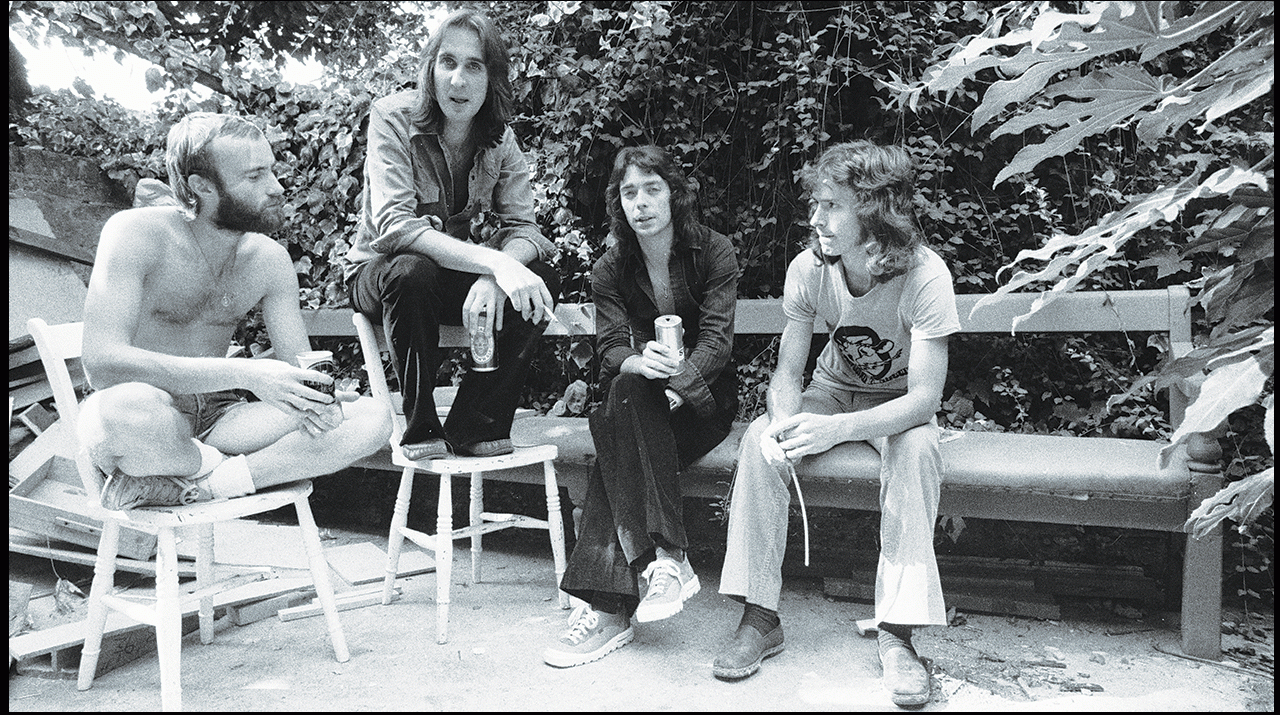
Most of the answers were, as decades of commercial triumph were to prove, closer to home than they initially realised. Collins, simultaneously playing with experimental outfit Brand X, at first assumed Genesis would carry on as an instrumental quartet. That notion, he laughs, lasted “about a day”.
Tony Banks and Rutherford pointed out that they were and had always been songwriters, and needed a singer. Many luckless souls auditioned before the band realised the perfect solution was right under their noses. Steve Hackett, along with Yes vocalist Jon Anderson, went to Collins’ first wedding and urged Collins to consider the role.
Phil’s vocal contribution to the 1975 Hackett solo album Voyage Of The Acolyte had been much admired by the guitarist. Collins says he’s also “read somewhere” that his wife encouraged him to do it, “which is quite possible”. In the end, he says, he showed up at a rehearsal and said, “Well, I guess I’m going to have to do it. As long as I can find a drummer I like.” Because of course by ‘promoting’ Collins to vocals, Genesis were, to some extent, sacrificing another asset: the fact that they had one of the world’s best and most in-demand drummers.
Collins’ friend from Brand X, Bill Bruford, formerly of Yes and King Crimson, came in to bridge the gap for this tour. With his pedigree, he was, to the fans, “friendly fire”, reckons Collins. The new situation also lent Genesis the possibility of using two drummers at times.
“When they were playing together on The Cinema Show [from Selling England By The Pound],” Banks has said, “that became one of the strongest moments in the show.” Hackett’s memory of Bruford’s impact is even more specific: “Bill was a star in his own right. He helped our confidence on stage no end. I even shaved off my moustache. At last I was without facial hair!”
The most radical change, though, was upfront, centre stage, on the microphone. Banks says he knew Phil had a lovely voice, but wasn’t sure that he’d “want” to do it. At the time, he ponders, “He didn’t seem to have… the gravitas.” Yet as the auditions had revealed, he “sounded great” and was the right, if not the most obvious, choice.
Producer David Hentschel has said, “Phil really half-nominated himself… the timbre of his voice was not dissimilar to Peter’s… but there needed to be a push to convince the other guys.” Collins, though, denies that he was “ambitious”. “I’d got myself a nice little reputation as a drummer, and I was happy with that. This was the last thing on my mind. I had no affinity with the idea of walking out from behind the drums and becoming a band’s singer: the guy who wiggled his bum, who people looked at. Over the years there have been people claiming I nudged Peter out. That’s complete rubbish.”
Behind the scenes, the writing had been on the wall for the Gabriel-Genesis line-up for some time. Although Gabriel, Banks and Rutherford had grown up together at Charterhouse School and formed the band, their close friendship had become strained by the pressures and rigours of touring and recording.
Gabriel, frustrated by the democratic band format, was embarking on parenthood and, after quitting, took some time out to “grow vegetables” and recharge his batteries before getting his solo career motoring. During the recording of their 1974 double album The Lamb Lies Down On Broadway, he’d often be writing lyrics in one room while the others wrote music in another. “So,” muses Collins now, “you can look back and see where the trip wires were.”
Gabriel had informed the band of his decision before The Lamb… was finished and just before the subsequent exhaustive tour, on which the band played this lengthy concept album, as yet unreleased, in full, to often bewildered audiences blasted with innovative lighting and laser stabs.
He honoured his commitments, and Hackett recalled that, “more and more shows were put in because nobody wanted to say goodbye to him. Nobody’s departure from a band is without rancour, but it was as gentlemanly as it could be.” Banks hints that there was some begrudging of the press-led notion that Gabriel was the main man and the others just his backing band fleshing out his ideas.
Perhaps Gabriel at first had more faith in the others’ ability to succeed than they did. “It was difficult,” he said in Genesis: Chapter & Verse, “because they didn’t understand why I’d want to go when we were about to achieve something we’d worked so hard for. They perhaps felt I was sabotaging what was possibly their one big chance. I believe to this day that I had much more confidence in the band’s ability to transcend my departure than they did themselves.”

Collins remembers exactly where he was when Gabriel told him he was leaving. “I was in his hotel room in Manchester. I love Peter dearly, but I just assumed we’d carry on. Then as I’d been Peter’s stooge onstage, singing all the back-up vocals and more, the job of teaching the songs to the guys coming in to audition fell to me.”
Rutherford, Banks, Collins and Hackett were delighted with the new material they’d come up with for A Trick Of The Tail, the likes of Squonk, Dance On A Volcano, Ripples… and Entangled convincing them they’d been right to carry on. Squonk played a major part in deciding the course of the transition.
None of the singers auditioning had hit a home run, but one was in pole position. They got him in to record Squonk, but the key was too high and the results disappointing. Collins chuckles, with hindsight, that the band never took the courtesy of asking the singer what key suited him, adding that they never gave him that courtesy either in later years: “I had to make do,” he says.
So, having been pencilled in to perhaps sing one or two of the softer songs, Collins sang Squonk (inspired by the drum sound on Led Zeppelin’s Kashmir), confirming that he could handle tougher, heavier tracks too. The album was completed, everyone was getting along famously, and somehow, more by accident than design, Phil was the new Genesis singer. The tour that could have been an epitaph became a celebration, and the dawn of a new phase in the band’s remarkable career.
Of course, had A Trick Of The Tail tanked, the reinvention would have fallen flat. “But the album came out and it was a sudden turnaround,” says Rutherford. “We’d been dismissed: ‘Gabriel leaves, it’s all over’. Then it came out and people liked it and the reviews were very good.” Banks emphasises that the reception for The Lamb… had been, for all its subsequent acclaim, “very mixed. The fans weren’t ecstatic about it in the way they were about Foxtrot or Selling England…. So this gave Trick… a chance: people who found Peter a bit difficult perhaps preferred it being a little less dense.”
Released in February 1976, it went top three in the UK (and hung around, voted album of the year by the readers of Melody Maker), and went gold in the States. According to Banks, it doubled the band’s previous album sales, and helped to solve another issue: at the time of Gabriel’s leaving, Genesis were almost half a million dollars in debt.
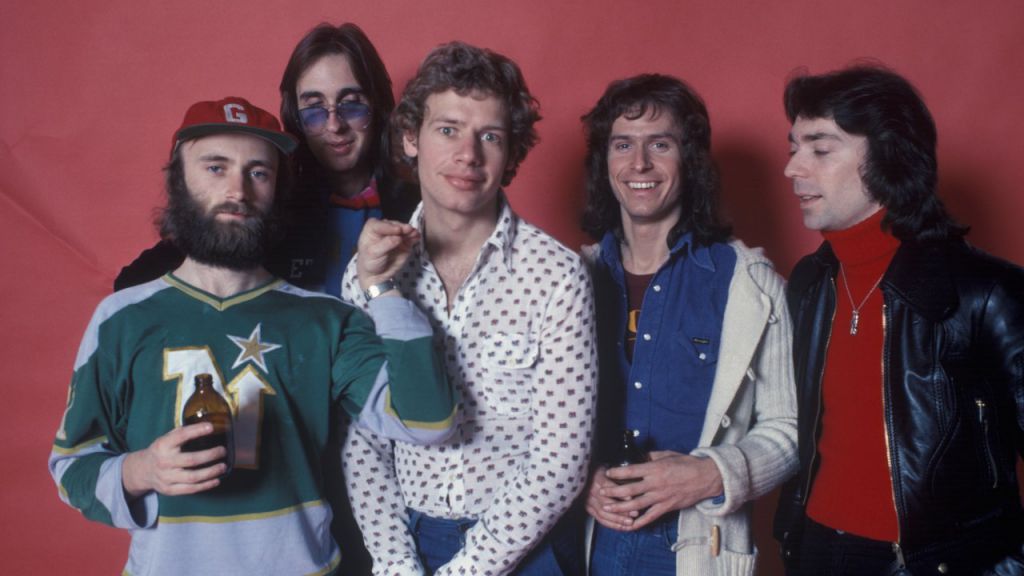
Gabriel was happy for his former colleagues. “That assuaged any guilt I might have felt,” he’s said. “Clearly they were off and away after a wobbly period. When I’d been the centre of the band everyone assumed that like Pete Townshend in The Who I’d been the main writer of everything, whereas I’d been just one of the main writers. When the band had more success without me, I suddenly felt that people were re-evaluating the old work, thinking, ‘Oh, maybe Peter was just the guy who wore the masks’, and that did piss me off! When I did write seriously agaim, I tried to come up with songs that sounded as different from Genesis as possible.”
There were no masks for Collins, who didn’t try to compete with Gabriel’s on-stage theatricality, simply playing up his unpretentious guy-next-door persona. “Not a conscious decision,” he says now. “I just didn’t feel I could pull off the things Peter did. I said: ‘Okay, I’ll give it a go, but don’t expect me to wear all those costumes!’” So he “just stood there and sang”, afraid even to take the microphone off its stand at first. “Taking the microphone off its stand was what ‘singers’ did, I wasn’t ready for that yet.”
Yet as that night in Canada and many future nights (even during and after his phenomenal solo success) testified, he had a connection with Genesis’ music and fans that was invaluable. “He was quite a character, but to the audience he was one of us, and, therefore, one of them,” says Mike Rutherford now. “We knew after half an hour that night in Canada – this is going to work.”
Eyewitness report by Jim Fisk
“It was a once-in-a-lifetime event!” says the then-teenage snapper of the very first show with Phil as singer in London, Ontario.
“The London Arena [since demolished] could hold a few thousand at the most and is more used to roller-skates than rockers. Before the show, I wandered in with my Dark Side Of The Moon stickered briefcase (was I a roadie?) and watched the band set up. Everyone was ejected for the sound check. Come show time we dashed up to third-ish row on the hard concrete floor.
“When the lights dimmed, the place, small as it is, was packed. Phil perhaps a little tentative at first, but the crowd responds and so does Phil. Bill Bruford, in his Boston Bruins T-Shirt was Mr Perfection, as usual. I’d missed the Lamb… tour in Toronto for a physics exam (poor choice) and my buds were concerned Phil couldn’t cut it. He cut it good. Robbery, Assault And Battery and Phil is dressed the part. “A Flower?” he says as the huge green and yellow tulip explodes into view.
“I’m snapping pictures and I’d swear Phil and Mike are posing for me. Over 35 years later, and as I look at them now they still amaze me. Mike’s double-necking is masterful. But the Phil and Bill percussion duel was incredible. Speed, technical excellence, and musical too. Tony perched on the edge of the small stage, quiet, just doing his job and doing it well. Steve, all in white, soars to heights unreachable by mortal man. In the small hall, the sound seemed to wrap around us. Bass pedals grabbed my guts and shook them like there’s no tomorrow.
“Encore? Encore! Sure, I regret like hell not seeing Gabriel do Lamb… (although he did a bit in his first solo tour), but when the house lights came up I knew we’d witnessed a once-in-a-lifetime event.”