Blog

  • Marvel Studios “Avengers: Doomsday” Official Trailer

    Fans of the Marvel Studios run of films have been chomping at the bit for the full-on trailer ever since they dropped teaser 1, 2, 3 and 4 some months … Continue reading Marvel Studios “Avengers: Doomsday” Official Trailer →
  • Monday Morning Video – Austin Plaine

    Some songs meet you exactly where you are — and then lift you somewhere better. Austin Plaine has a gift for that kind of winsome, quietly uplifting songwriting, and “Rise Above It” is a perfect example. It sits with the weight of hard-won experience before arriving at something that feels like grace. “Looking at the […]
  • “Any band that reaches into the darkness to push boundaries are by definition progressive. That certainly applies”: They were regarded as synth-pop or new wave, but we say they’re prog. So do members of Marillion, Porcupine Tree and No-Man

    They were the New Romantic group who spurned their pop audience to create bleak, beautiful music that inspired Marillion, Porcupine Tree, White Willow and many others. In 2012 we asked the question: how prog were Talk Talk?

    “There were three bands in the 80s who, for me, just defined how music could be arranged: The Blue Nile, Japan and Talk Talk,” says Marillion vocalist Steve Hogarth. “I’d first heard Talk Talk on the radio with [1984’s] It’s My Life and the other hits, and I thought they were a cut above the usual chart stuff. But it was with [1986’s] The Colour Of Spring that they came well and truly onto my radar.”

    Teetering in from the fringes of the new wave and New Romantic movements, London band Talk Talk supported Duran Duran in 1981, and released their debut album The Party’s Over a year later. The band – late vocalist Mark Hollis, drummer Lee Harris, bassist Paul Webb and keyboard player Simon Brenner – played sleek synth-pop. The single Talk Talk was a belated Top 30 hit, earning the group an appearance on Top Of The Pops.

    However, admitting to any influences from the progressive rock era in the 1980s was terminally un-hip. So the fact that Hollis used to carry around a set of King Crimson’s 70s LPs for inspiration, or that Can’s Tago Mago was a source for rhythmic sustenance, went unreported. After Simon Brenner’s departure, the band made their second album, 1984’s It’s My Life, as a trio with producer Tim Friese-Greene becoming George Martin to their Beatles.

    While It’s My Life retained many familiar 80s signifiers, such as glistening synths and sliding bass, the seeds of change were sown. Guest musicians such as trumpeter Henry Lowther and pianist Phil Ramocon help evoke a glacial cool that wouldn’t have sounded out of place on the German jazz label ECM.

    But the changing sound that so appealed to Steve Hogarth was more evident on 1986’s The Colour Of Spring. Talk Talk’s growing experimentation was assisted by former Pentangle bassist Danny Thompson’s vamping on Happiness Is Easy, ex-Traffic man Steve Winwood’s vibrant Hammond organ and the searing guitar work of ex-Random Hold member and Peter Gabriel associate David Rhodes on the single Life’s What You Make It.

    “I went in for one evening, taking my pedals and guitar,” recalls Rhodes. Having played the backing track, Mark Hollis asked him to make the guitar sound “poxy.” “I pressed some pedals and asked if that’s that they meant, and he said ‘yes’. The other thing Mark asked me – which was very funny – was if I knew of Acker Bilk, the clarinetist who’d had a hit with Stranger On The Shore; and if so, could I play the riff like that?!”

    Life’s What You Make It went to Number 16, with The Colour Of Spring reaching Number 8. Just when Talk Talk might be expected to make another record bristling with hits, they confounded all expectations. In February 1987, along with Tim Friese-Greene and engineer Phill Brown, the band went into Wessex Studios, the converted church in Islington where King Crimson recorded their first three albums, to begin work on Spirit Of Eden. There they would stay for more than a year, in a secluded, womb-like environment, bedecked with 60s-style psychedelic oil lamps, strobe lights and incense, embarking on a remarkable journey that would lead far away from their pop origins.

    “I loved The Colour Of Spring but in retrospect it seems like the link between the pop/commercial era and the darker, more intense and beautiful two albums that followed,” says Porcupine Tree’s Richard Barbieri. “1988’s Spirit Of Eden and its 1991 follow-up, Laughing Stock, are quite simply works of art. Such fragile beauty and use of space in music is rarely found; and however long and hard the journey was in creating these, the overall feeling I get is one of spirituality and intuition. My desert island discs, for sure.”

    Spirit Of Eden and Laughing Stock were seen as a significant departure. Brilliantly unpredictable, the handful of pieces on each album transcend the usual notions of song structure, becoming one amorphous, dream-like suite. The ingredients include echo-drenched bluesy licks bleeding into Messiaen-like chamber music interludes of viola, clarinet and bassoon; squalls of distorted harmonica merging with ghostly choirs; jagged guitar chords and teeth-rattling percussion; sonorous organ and icy piano.

    But having abandoned the trademark synthesizers used on their previous records, there was nothing that could be described as a radio-friendly hook. In making this decisive break with their past, it’s no coincidence that almost three minutes and 30 seconds – the optimum running time of a single – elapse before Mark Hollis starts singing on Spirit Of Eden’s opening track The Rainbow.

    Jacob Holm-Lupo, guitarist with the Norwegian art-rock band White Willow, believes the two albums – and Spirit in particular – represented a liberating force that went against the prevailing mood of the times. “The 80s were a time of rigidity in music,” he says. “Rhythms were being sequenced and time-locked, the harmonic vocabulary was solidifying into a set of effective but predictable clichés. Talk Talk loosened everything up. Time stretched and slowed, harmony was disassembled and reassembled. I was 15 when Spirit Of Eden came out. I had already discovered 70s prog, but this was the first time I found that similar sense of freedom, and that rainbow of possibilities, in contemporary pop.”
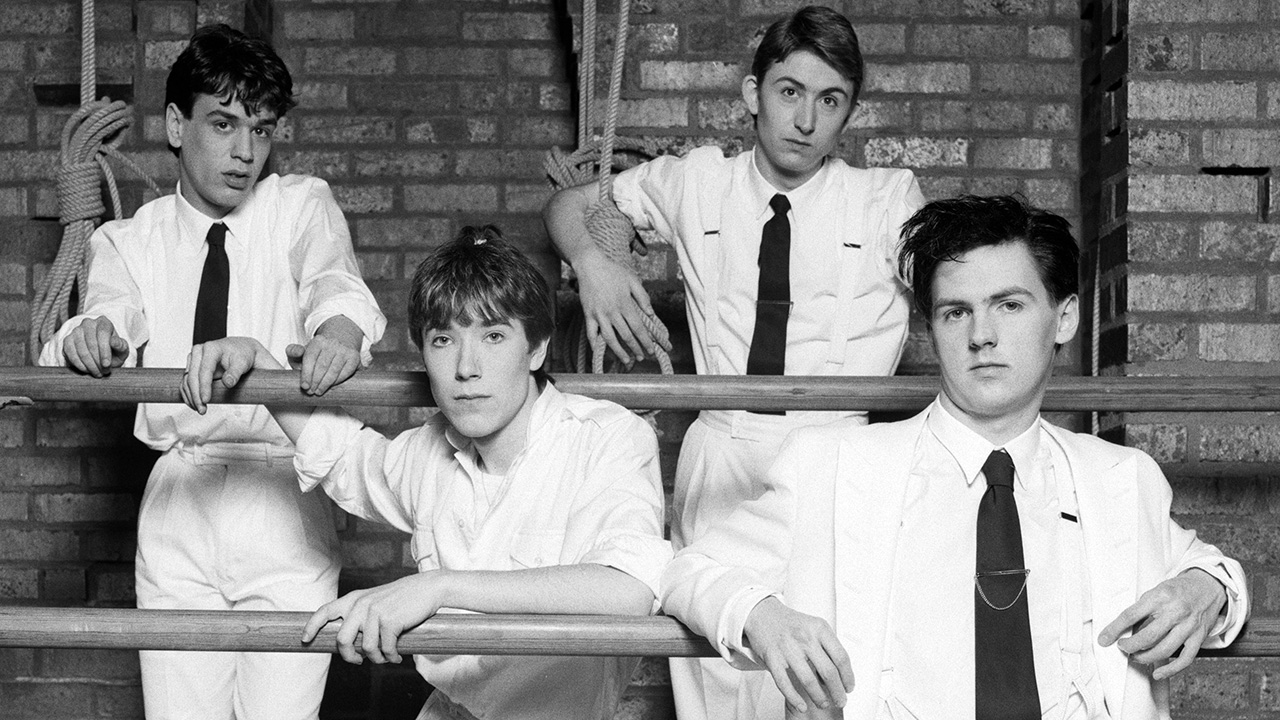
    Talk Talk

    Early Talk Talk keyboardist Simon Brenner with singer Mark Hollis, drummer Lee Harris and bassist Paul Webb (Image credit: Getty Images)

    In a 1988 interview Hollis shone some light on the record’s progressive sound: “Well, it’s certainly a reaction to the music that’s around at the moment, ’cos most of that is shit. It’s only radical in the modern context. It’s not radical compared to 20 years ago. If we’d have delivered this album to the record company 20 years ago they wouldn’t have batted an eyelid.”

    Theo Travis, sax player with Soft Machine Legacy and Steven Wilson’s current live band, is an admirer. “There are very few who’ve managed that trajectory from pop into… I don’t know what. Spirit Of Eden isn’t pop people playing at something jazzy or experimental. It’s a very mature album in itself and, musically, beautifully successful.

    “On Laughing Stock there’s an absolutely classic drum sound which was recorded by a single microphone 30 feet away from the whole kit. That technique which Phill [Brown] brought to Talk Talk and on Mark Hollis’s self-titled solo album was extremely important and really quite unique.”

    Their fusion of sophisticated classical and jazz-derived chords had something in common with Traffic, Procol Harum and early Genesis

    Tim Bowness

    “Minute by minute, Spirit Of Eden and Laughing Stock are beautiful, sumptuous records,” says Radio Massacre International’s Steve Dinsdale, “a colourful tapestry of timbres blended to perfection, surrounded by hallowed silences and spaces. I didn’t know what to make of it as there weren’t many precedents.”

    Spurred on by the momentum of expectant fans hoping for ‘The Colour Of Spring Part Two,’ Spirit Of Eden was by no means a commercial disaster, reaching Number 19. However, with no obvious hit single, and without a tour to promote the album, Talk Talk were no longer a viable chart act. Moving labels to Polydor, final album Laughing Stock was even more uncompromisingly stark and obscure. “They were just growing up and challenging themselves and taking things into a more esoteric area,” suggests David Rhodes.

    But could they be considered a prog band? Theo Travis thinks so. “You could call them progressive in a non-generic way. Where ‘progressive music’ means a music that’s very ambitious to move forward, then Talk Talk absolutely fit the bill.”

    In 1992 No-Man vocalist Tim Bowness was under the wing of Talk Talk manager Keith Aspden. “Steven [Wilson] and I definitely heard a kinship with progressive artists in the band’s eclectic influences,” says Bowness. “With each successive release, Talk Talk sounded purer and more focused than on their previous one. I could hear late-1960s Miles Davis in Laughing Stock and Spirit Of Eden, especially in the production and the restless and insistent drum patterns.

    “I think the band’s fusion of sophisticated classical and jazz-derived chords with Mark Hollis’ soulful voice had something in common with similar approaches in the music of Traffic, Procol Harum and early Genesis.”

    “I think ‘prog’ is such a strange word,” says Steve Hogarth. “It’s generally used to define a kind of music that was progressive in 1977. Bearing in mind we’re 30 years-plus on from there, it must mean it’s regressive by definition. If you stretch the word ‘prog’ back out to progressive again then any band that tries to reach out into the darkness and push their boundaries are by definition progressive – and that certainly applies to Talk Talk.”

    By no means the first artists to make the journey from brightly-lit pop to rarified, sepulchral introspection, Talk Talk followed their muse no matter where it led. After 1998’s sparse, Zen-like acoustic solo album, Mark Hollis left the music industry. Since then, there’s been no hint of a Talk Talk comeback or reunion; only a profound silence.

    Harold Pinter, whose plays are as famous for their dramatic pauses as the actual content, said: “When true silence falls, we are still left with echo but are nearer nakedness.” Pinter understood that when the words stop, truth can resonate more clearly. The same could be argued of Talk Talk and Mark Hollis, whose mysterious allure remains untarnished.

  • Meg Lui Announces Debut Album Instant Validation Produced By Sufjan Stevens: Hear “Elvis Queen”

    Back in February, Northern California-born, Hudson Valley-based singer-songwriter Meg Lui was announced as the latest artist to join Sufjan Stevens’ Asthmatic Kitty Records. That news came packaged with her debut single “Gone Girl.” Today, she’s released a new single “Elvis Queen,” which announces her forthcoming debut album Instant Validation.

    The post Meg Lui Announces Debut Album <em>Instant Validation</em> Produced By Sufjan Stevens: Hear “Elvis Queen” appeared first on Stereogum.

  • North Sea Echoes – How to Cast a Shadow (Album Review)

    by Dave Campbell

    It’s not uncommon for established musicians to seek out solo/partner ventures outside of the bands where they spend most of their time with. These ventures can provide a different outlet for them to express themselves in ways that can contrast with the music their fans are used to. They can also provide a creative freedom for them to write what they want to write, free from the confines of their ‘regular’ bands. Ray Alder and Jim Matheos are the vocal and guitar soul of FATES WARNING, credited as one of the very first Progressive Metal bands. Although FATES WARNING never reached commercial heights of fellow 80’s Prog Metal bands QUEENSRYCHE and DREAM THEATER, their work was still monumental and inspirational in shaping the early sound of the genre. While I still very much enjoy the music of all three bands, these days, I welcome something fresh and new, and that’s where NORTH SEA ECHOES come in. With their second album presented here, they also added a drummer, expanding their sound even more.

    FATES WARNING may have been put to rest. Alder stated in an interview that Matheos has no interest in writing new material, but did not rule out any future tours. “That could change, I don’t know, you’d have to talk to him. It’s not to say there won’t be any more live shows. The band didn’t break up. It’s just that there won’t be any more new music. And I need an outlet; music has been my life for over thirty years.” The debut from NORTH SEA ECHOES made waves across the Progressive music industry, due to Alder’s emotional vocals and Matheo’s creative guitar playing. The new album reflects some more growth between these two longtime partners. Matheos comments, “this record is a bit heavier, with several more songs featuring real drums, played by Dennis Leeflang. It wasn’t necessarily intentional or planned, just the way things shaped up and how they emerged this time.”

    The first song is titled ‘A Time for Innocence and Purpose.’ It eases in, with a simple riff pattern that is soon backed with electronic drum notes, and it begins to climb. Tension. I get a visual of the smoky haze clearing from a battlefield that rocked with artillery just hours before. Vocals don’t appear until close to halfway through the song, and just when tension becomes firm, it drops as he says, “I look at you and see nothing…I know you used to feel something.” These lines are delivered with conviction and offer a hint of some of the darkness that is to come. ‘Enjoy the View’ continues a grey, pensive feeling in the verses but the chorus springs to life with Alder’s emotional vocals. “I close my eyes” he sings confidently and holds the notes until you have goosebumps. I have to say the drums on the album have a noticeable presence, and they might be responsible for the heavier feeling on the album that Alder talked about. However, it’s not heaviness in the simple definition of the term…it’s more like an emotional weight that is placed firmly on your back.

    ‘Good Enough’ has sentimental tones, almost like someone thinking back to a time when you may have had a chance to do something differently. “Would it be enough if…” That kind of thing. We all have regrets, and some of them are worth revising, while others should have just been put to bed. That’s what makes us human. The song also carries a lot of weight with it…the kind that makes you long for something you lost long ago…love, perhaps? In many ways, this song is the heart of the band’s sound on the album, and I had to replay it a few times so I wouldn’t lose the melody. It’s amazing how much emotion can come from just vocals and guitars. ‘I’ll Leave a Light On’ swings with sultry tones and grooves. It’s a slow mover, another emotional offering, and it’s almost as if he had made peace with the fact that she isn’t coming home. “I’ll leave a light on in case you come back,” he says, half-heartedly and without much conviction. Every night he completes the ritual, sometimes without even thinking, with the little pinch of hope he still has left. ‘All Fall Away’ has an electronic drum beat that sounds like a resting heart…slow, and steady…in the verses. The chorus is a different story however. When distorted guitars break the gentleness and Alder belts “let it all fall away, let it all turn to grey,” it’s as if he is just done with it and doesn’t care what happens.

    ‘Revenge’ has darker and more sinister tones, and that crunchy guitar riff is quite catchy. Although the first half of the album was on the pensive side, the second half leads in with more vigor. In both styles, what remains a constant is the heavy message that the music carries. The sound is simple, but catchy, and as a consumer it serves to remind you that music doesn’t have to be overly complicated to be enjoyable. Indeed, sometimes less is more, as the adage goes. ‘Villains or Saints’ swings the album back to melancholy tones once more. “When did we lose the fire,” he asks, adding “how did we fall from the sky?” The questions are rhetorical, yet compelling, and the music burns deep in your stomach. During the final chorus, he turns the questions around, pleading “can we re-light the fire,” and “can we return to the sky?” The differing positions of the questions seems to mirror the title. Should we be villains, or should we be saints? For most of us, it’s a simple question, and we would choose the latter. However, who hasn’t been tempted to live life like a villain to see what it’s like, if only for a day?

    ‘What Is And What Was’ is the shortest song on the album, and compares two seemingly opposite things put to music. It may also be the song that carries the strongest emotional burden. It has a sentimental, even nostalgic sound that might just let you off the hook from deciding between the two…what was, and what is. Alder talks about how the weight of the world isn’t yours to carry alone. Some things are OK to just let go of, because they constantly weigh us down. It’s an invitation to remove negativity from your life, and/or things that you just can’t change. “All That Comes After” advances with a soulful blues riff that will get you off your feet, and the energy is rocking here. It’s a faster-moving song with another catchy chorus, and that riff is both powerful and effective. The song speaks to me, “who cares what comes after…live in the now.” Indeed. That’s exactly the message that some of us need to hear. It many ways, it’s reinforcement that some of the choices we have to make every day are difficult, but we still are given the grace to make these decisions.

    The title track is last, and also the longest. In true fashion, it returns the album back to its melancholy and thoughtful roots. It has a dreamy sound to it, like that time in the morning when you are just waking up, still sleepy, or maybe the time in the evening when you are drifting off. The music seems to live in this ethereal landscape as long as the song lasts, and no matter how many times I play it, I never want it to end. In the wide variety of Progressive bands that are out there, this album capitalizes on the simplicity and honesty of music in one of its most organic forms: pure, raw emotion. People often talk about the term “chemistry” in the industry, and it is indeed that chemistry that acts as oil and greases the band’s movement on the album. It’s also oil that makes the album as smoothly grey as it is. ‘How To Cast A Shadow’ is proof that you don’t need overly complex songs for you to feel the music. There’s a shade of melancholy that permeates the album and provides glue that holds the songs together. When it comes to feeling music, the question of “how” doesn’t factor as much as “why.” Explore the “why.”

    Released on July 24, 2026 on Metal Blade Records
    Order here:https://northseaechoes.bandcamp.com/album/how-to-cast-a-shadow

    Tracklist:

    1. A Time of Innocence and Purpose
    2. Enjoy the View
    3. Good Enough
    4. I’ll Leave a Light On
    5. All Fall Away
    6. Revenge
    7. Villains or Saints
    8. What Is and What Was
    9. All That Comes After
    10. How to Cast a Shadow

    Lineup:

    Ray Alder – Vocals
    Jim Matheos – Guitars/Programming
    Dennis Leeflang – Drums

    The post North Sea Echoes – How to Cast a Shadow (Album Review) appeared first on The Prog Report.

  • The World Cup Finals Halftime Show Was Absurd

    It was only the beginning of one of the weirdest and most uneven spectacles FIFA has ever put on.

    The post The World Cup Finals Halftime Show Was Absurd appeared first on Stereogum.

  • High-Stakes Thrills: Heavy Metal’s Wildest Tour Bus Gambling Stories

    tour-bus-activities

    Heavy metal icons living on the road rely on pure adrenaline to survive relentless tour schedules. Between explosive festival sets and endless highway miles, musicians constantly hunt for high-stakes thrills to match the rush of performing live. From backstage card games to instant-action online platforms, artists keep their edge sharp during downtime. Catch the full breakdown of tour bus antics on The Metal Breakdown Daily podcast, or check out top online platforms offering non-stop excitement like JeetCity Australia to experience your own rush.

    Living for the Rush On and Off the Stage

    When a band steps off a stadium stage in front of tens of thousands of screaming fans, dropping back down to zero energy is almost impossible. Tour buses are notorious for late-night poker matches, dice rolling on amplifier cases, and high-stakes games where thousands of dollars—and serious bragging rights—change hands before the next state line.

    In recent years, the shift toward digital entertainment has taken over backstage lounges. Modern touring crews and musicians crave fast-paced, high-voltage action that matches their music style. Whether waiting out a delayed flight or chilling during a post-show cooldown, quick gaming sessions offer the instant high artists need to keep the momentum going.

    High Stakes and Heavy Riffs

    The overlap between metal culture and high-stakes gaming isn’t new. Lemmy Kilmister famously immortalized the thrill of the gamble with Motorhead’s signature anthem, proving that the love for risk is baked right into the DNA of hard rock.

    Today’s rockstars demand seamless, top-tier experiences when they look for action online. Fast payouts, massive game selections, and sleek interfaces are essential for anyone living a fast-lane lifestyle. High-intensity platforms deliver the exact level of excitement required to fill those quiet hours between soundcheck and showtime.

    TL;DR

    Musicians require fast-paced entertainment to stay sharp during long road trips. Off-stage gaming provides the perfect high-stakes adrenaline fix for artists on the move.

    The post High-Stakes Thrills: Heavy Metal’s Wildest Tour Bus Gambling Stories appeared first on Loaded Radio.

  • Kalt Vindur – Releasing Fourth Studio Record In November

    The Polish pagan black metal force Kalt Vindur returns this November through The Circle Music with their fourth long player dubbed The Void Of Time. The 8-piece outing was mixed and mastered by Krzysztof Kokosiński. Alongside disclosed details you can also give a listen to the first single-title track.
    Read more…
  • Marilyn Manson – ‘Front Toward Enemy’ Song Unveiled

    Marilyn Manson has released “Front Toward Enemy”, the second advance single off his oncoming studio album One Assassination Under God – Chapter 2, which comes out on August 14th.
    Read more…
  • Harrell “Young Rell” Davenport: Young Rell Review

    Raised in Vicksburg, Mississippi, Harrell “Young Rell” Davenport began playing guitar and harmonica at age seven. He immersed himself in the rich history of the blues, studying everyone from Delta legends to Chicago blues icons on YouTube. At just 17, he made his Chicago debut, performing solo by singing and playing harmonica and guitar to a packed 500-seat theater at The University of Chicago’s Logan Center for the Arts. By the time he finished high school, he had written more than 150 original songs and built a global following through social media posts that showcased his musicianship and deep knowledge of blues history.

    That passion shines throughout this 12-song debut, which feels less like the work of a promising newcomer and more like that of an artist with a well-established voice. Rather than simply mimicking the past, Davenport embraces tradition while seasoning it with personality and fresh songwriting to keep the album vibrant and authentic. Billy Branch, who has mentored Davenport since he was 15, puts it plainly: “In my 46 years of teaching Blues in Schools, never have I encountered anyone as young as Harrell Davenport with such a laser-focused drive and ability to play the Blues as it was played in the bygone golden era of the masters.”

    Young Rell producer Matthew Skoller assembled a cohesive supporting cast. Kid Andersen handles co-production, engineering, mixing, mastering, and contributes guitar work, while keyboard legend Jim Pugh, bassists Daquantae “Q” Johnson and Endre Tarczy, drummer June Core, and horn arrangers Larry Batiste, Aaron Lington, and Niel Levonius create a rich musical atmosphere that perfectly complements the young frontman. Together, they give Davenport the space to showcase his impressive skills as a guitarist, harmonica player, vocalist, and songwriter.

    The album opens with “Tomorrow,” a lighthearted, classic Chicago blues-style tale about dealing with the opposite sex as a young artist: “come back tomorrow when I’m grown.” It’s an infectious song that displays both polish and humor. The next track, “Fatherless Child,” serves as the emotional centerpiece, offering a personal exposé of loss and resilience with remarkable honesty. His vocals carry genuine weight without wallowing in drama and are framed by expressive guitar and keyboards that allow the song’s soul to unfold naturally.

    “Spinning” shifts the mood entirely, blending soul-infused grooves with crisp horn arrangements that recall classic Southern soul. A personal favorite, “I Be Tryin’” is a catchy teen blues shuffle about keeping your “P’s & Q’s real close” and “stay inside the line.” “Giving Me The Blues” takes the opposite view, expressing frustration with unsolicited advice despite minding those “P’s & Q’s.” It features a prominent electric guitar lead and is currently featured on Joe Bonamassa’s Cutting Edge Blues playlist on Spotify. “Richland Swing” is a dance-worthy instrumental full of swinging electric blues. Another instrumental, “Nite Creepin’,” is a harmonica-infused boogie designed for the dance floor.

    Throughout the record, Davenport’s harmonica playing consistently commands attention, often becoming another voice in the music. On “Hurt People, Hurt People,” his harp delivers aching phrases that complement the song’s poignant lyrics. Jim Pugh’s piano work adds another layer of sophistication, resulting in one of the album’s most compelling performances. The album also shines through its cover selections. Davenport’s version of Bob Dylan’s “Masters of War” applies classic blues to the timeless folk message. Meanwhile, his take on Fenton Robinson’s “I Hear Some Blues Downstairs” shows not only impeccable taste but also a deep respect for blues history. Davenport makes the song feel like a natural extension of his own musical identity.

    Elsewhere, “I’ll Keep It Hot for You” showcases Davenport’s playful, sharp guitar work. Closing track “The World Don’t Deserve Your Smile” provides a fitting finale with a twangy lead, leaving listeners with one last reminder of the maturity that defines the album.

    One of the most exciting aspects of today’s blues-rock landscape is the number of young artists gaining visibility. Taj Farrant, Grace Bowers, and Mathias Lattin have all impressed before their 21st birthdays. A champion of Harrell’s talents, Christone “Kingfish” Ingram was himself a teen phenom. When talent this young crosses our path, age unfairly becomes part of the conversation. At just 19 years old, Harrell “Young Rell” Davenport is one of those artists. The remarkable thing about his debut album, however, is how quickly you stop thinking about his age. Young Rell isn’t impressive because it was made by a teenager. It stands on its own as one of the strongest traditional blues releases of the year.

    The Review: 9/10

    Can’t Miss Tracks

    – Fatherless Child
    – Givin’ Me the Blues
    – I Be Tryin’
    – Hurt People, Hurt People
    – Nite Creepin’
    – I Hear Some Blues Downstairs

    The Big Hit

    – Fatherless Child

    The post Harrell “Young Rell” Davenport: Young Rell Review appeared first on Blues Rock Review.