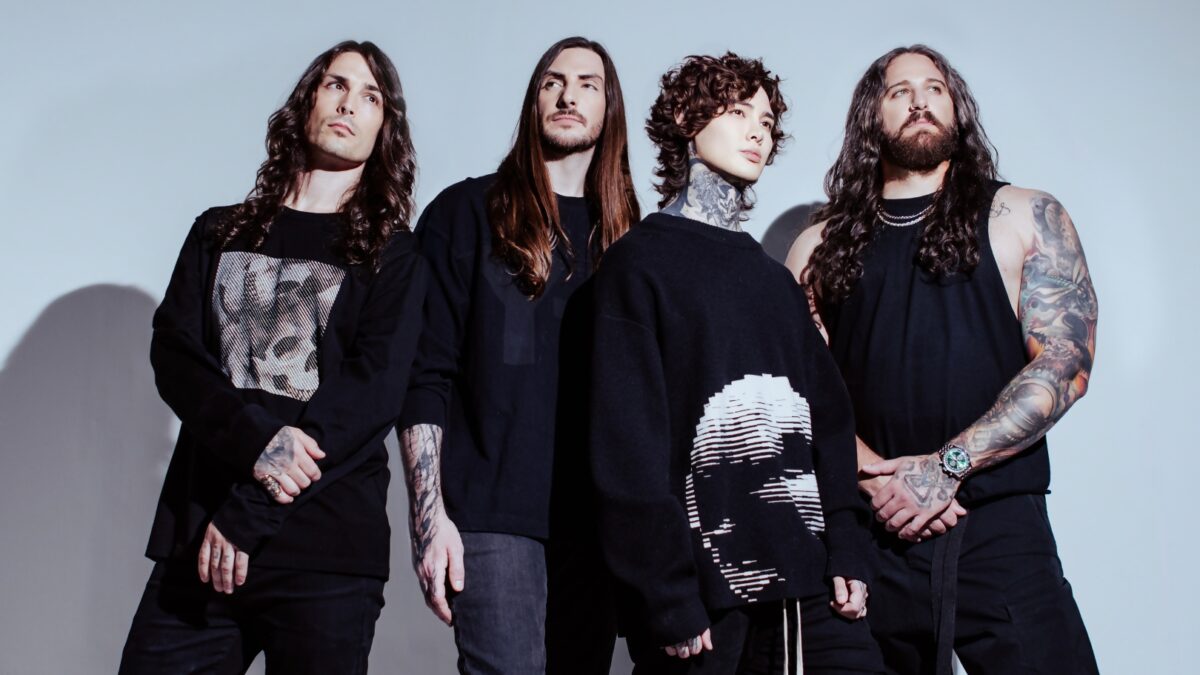
The new studio album from technical death metal masters Psycroptic was released today.
The Pulse of Annihilation is the band’s ninth album, and the first to feature songwriting contributions from Origin’s Jason Keyser, studio collaborator and occasional live vocalist.
A clip for opening track “Ashes of A New Dawn” has also just been released.
Psycroptic is launching the album with a special Q&A session on Reddit on July 18 at 11am AEST.
The Dome in Tufnell Park may not be as recognised as The Underworld, or have the financial backing of the 02 Academies, but metal fans will attest that it's a venue headbangers in London have to keep an eye on. There have been some certified legends taking the stage here, from Raven to Eyehategod and so many more, not to mention a former home base … Read More/Discuss on Metal Underground.com
Santa Fe death metallers STREET TOMBS will unleash their second full-length studio album, Existence Is Corruption, on August 21st via Carbonized Records!
STREET TOMBS was forged in the flames of the legendary underground venue, The Cave, in 2017, where the band hosted numerous shows for the DIY punk/metal community of Santa Fe and surrounding cities. Combining the death metal grit of early Sepultura and Bolt Thrower, with the rabid d-beat/street punk of Discharge and G.B.H., the collective released three demos before dropping their Reclusive Decay full-length (2023).
The critically lauded offering presented a unified vision for all that is dark, heavy, and fast. Several US tours would follow including the Reborn Dead Tour supporting Left To Die.
Metal Injection championed a record that “feels like a cross between early thrash and punk rock mixed with some serious Bolt Thrower vibes for an experience that’ll put you right into the ground. Reclusive Decay also earned the #38 spot on Decibel Magazine’s Top 40 Albums Of 2023.
2024 saw the release of a compilation LP, RIP The Abyss, which contained recordings the band had previously produced at the beginning of the COVID-19 pandemic. The album was released in conjunction with the start of their North American Tour supporting Necrot across the US and Canada that June.
STREET TOMBS spent much of 2025 finalizing the writing portion of Existence Is Corruption. By December, the band entered Santa Fe, New Mexico’s Engine 70 Studios with Grammy Award winning producer and engineer, Greg Wilkinson, at the helm.
Existence Is Corruption delivers an unapologetically vitriolic and sickening take on modern society, complacency, corruption, and destruction. As greedy poisonous minds mutilate today’s world, STREET TOMBS continues to upset the grave with crusty blackened d-beats and deadly driving riffs straight from the gutter.
Existence Is Corruption digs more into STREET TOMBS’ roots and expands on its punk ethos and first wave black metal origins from influences like Hellhammer, Celtic Frost, Bathory, and Amebix, while keeping an uncompromising pissed-off attitude.
Comments vocalist/guitarist Damian Jacoby on the record’s first single: “Systematic Suffering, like many of our songs on this release, echoes themes of corruption, abuse, and discrimination. Entrenched in servitude losing all desire to deny the corruption infused in our society.”
Existence Is Corruption was recorded, mixed, and mastered by Greg Wilkinson at Engine 70 Studios in Santa Fe, New Mexico and Earhammer Studio in Oakland, California with additional recording by STREET TOMBS bassist Galen Baudhuin. The record features artwork by Shane Donaldson and logo by Ben Brodsky.
Existence Is Corruption will be released on CD, LP, cassette, and digital formats.
Find North American preorders HERE, European preorders HERE, all other international orders HERE, and digital orders HERE.
Existence Is Corruption – Track Listing:
Pestilent Storm
Deceptor
Septic Values
Upset The Grave
Systematic Suffering
Mental Mutilation
Braindead
Parasitic Feast
STREET TOMBS Live: 9/01/2026 Tumbleroot – Santa Fe, NM 9/04/2026 Seventh Circle – Denver, CO 9/05/2026 Aces High – Salt Lake City, UT 9/06/2026 TBA – Boise, ID 9/07/2026 The Kraken – Seattle, WA 9/08/2026 High Water Mark – Portland, OR 9/10/2026 TBA – Sacramento, CA 9/11/2026 Great American Music Hall – San Francisco, CA 9/12/2026 Knucklehead – Los Angeles, CA 9/13/2026 TBA – Phoenix, AZ
STREET TOMBS: Damian Jacoby – vocals, guitar David McMaster – guitar, backing vocals Ben Brodsky – drums Galen Baudhuin – bass
The journey into the world of ‘Draconia‘ continues with the release of two new behind-the-scenes EPK videos, this time focusing on two of the project’s most important characters: Göran Edman, who takes on the pivotal role of the Storyteller, and Stefan Nykvist, who portrays Mohdrai, the ruthless reptilian overlord and the opera’s main antagonist. Created […]
Today, alternative Australian band Stand Atlantic share news of their fifth studio album GODBREATH, to be released on Friday, October 23 via Virgin Music Group. Out now, the new single LUCID provides the next glimpse into the psyche of an act that knows exactly who they are and where they want to go. The last […]
The song begins with a pastoral introduction, featuring birds that create an atmosphere almost suspended in time. This serenity is soon broken by a the guitar strumming, heralding the entry of the artist’s voice. The artist’s refined and slightly retro timbre evokes strong emotions. Listeners may find echoes of David Bowie, with hints reminiscent of Cat Stevens. This track is nostalgic, sophisticated, and intense, capable of transporting one to a parallel limbo.
The song’s narrative draws inspiration from an old book that offers an autobiographical account of World War I. The book’s main theme reveals the dawning awareness of war’s harsh realities. Within this context, the song presents a ‘fictional’ letter home. It embodies a young soldier’s strained hope for survival and deep yearning for home.
There is a powerful sensation of hope woven with the pain of distance. The soldier finds himself trapped in an uncontrollable situation. The song delicately invites the listener into a unique atmosphere filled with emotion and engagement. This experience reminded me of films like “Life is Beautiful,” which portrays a similar harmonious elegance and strong message.
Love To You All – Sound and Atmosphere
The concluding section of the song is peculiar. It ends abruptly, akin to a guillotine, with the sound of a bomb dropping. In an instant, everything is extinguished. This dramatic finale accentuates the intensity of the track’s overarching themes.
The music carries a gentle complexity. Its melodic structure enhances the overall emotional resonance, allowing the listener to focus on the blend of hope and despair. This balance is what makes the song stand out. Each element in the composition builds towards conveying the weight of the subject matter.
The lyrics resonate as if echoing the sentiments of countless young soldiers. The longing for home is palpable and relatable. There is a sense of universality in the themes explored. Every listener might connect with this yearning in different ways, depending on their own experiences.
Love To You All – Performance and Production
The artistic choices made in this piece are solid. The artist has put thought into creating an immersive listening experience. This attention to detail emphasizes the song’s emotional core.
The artist’s performance is heartfelt. Each note feels loaded with emotion, resonating deeply with anyone who listens. This authenticity is crucial for connecting with the audience. The delivery captures the essence of vulnerability and strength simultaneously.
Listeners may find themselves transported to a different time, experiencing the hopes and fears associated with war. The song invokes a sense of reflection on human resilience. The artist has successfully tapped into universal emotions, leaving a lasting impression on the listener.
REVIEW BY DAVID TAYLOR AND PHOTOS BY PAM WHISENHUNT | Go Venue Magazine
Ever since I’ve known the Summer Slaughter Tour, a tour featuring some of the best extreme metal acts, I’ve always wished Omaha would be one of the tour dates. And that finally happened on Wednesday, July 15, when the tour rolled into Omaha to perform at the Admiral. What was great about this night was no band sounded the same.
We had a double punch of locals with Setback (Omaha) and Iced Wrist (Lincoln). Setback, more on the hardcore side and Iced Wrist, more on the death metal side. Both bands got the energy going, with the audience causing a ruckus at the barricade. Really impressed by both and glad they were selected for this bill of established acts.
Face Yourself was up next, they have members all over the world, including their French lead vocalist, Yasmine Liverneaux. Other than Hatebreed, this was the best set of the night. Liverneaux is a force on stage, such an incredible vocalist. It was fast and loud and very technical, you couldn’t ask for a better band. The pit was going crazy during their set. The have an EP titled, Fury, that came out last year. Check these guys out because you won’t be disappointed.
The Last Ten Seconds of Life from Pennsylvania were next. There metal bands from Pennsylvania that have popped up in the 21st century and this one was another good one. They packed a heavy punch that got the pit going. What a voice Tyler Beam has. They even got the audience two stepping. They have a new album that came out in April titled, The Dead Ones.
Snuffed on Sight from the Bay Area was next. The Bay Area also has a heavy music presence, so it was cool seeing another band from there succed. Seven Kane, lead vocalist, was making sounds that were inhumanly (complimentary). The pit was going until a drunkenly gentleman fell backwards and hit the floor so hard and blacked out, they had to stop the show with him having to be lifted up by emergency personnel. He was able to walk with a little help. Regardless, solid set from Snuffed on Sight. You can check out their album from 2023, Smoke, right now.
Legendary death metal band, Devourment, from Texas was the direct support. Initially a four piece, they played as a three piece on stage. And a powerful three piece they were because they know how to shred. Unfortunately the pit was starting to become unruly and there were multiple fights during their set and Hatebreed’s, where they had to stop the show. I’m always a fan when the lead vocalist says what they are going to play next and it’s one of the most messed up song titles, like “Molesting the Decapitated” and that’s what Ruben Rosas did. They have a new EP that came out last month titled, Pious Impiety.
Finally, the crowd was ready for the almighty Hatebreed. I have seen Hatebreed live now five times and it is the best thing to break a sweat for. Their lyrics are so meaningful and it helps that they are very easy to learn and yell to. Jamey Jasta is nearing fifty years old and the guy still knows to get a crowd pumped. Hatebreed and the Admiral/Sokol have a strong connection, having played their countless times and it was one for the record books. Highlight of the set was the Ball of Death they threw out into the crowd. I was a little worried about the lights, but it was still a fun time.They even teased us with some new music. And of course they ended their set with “Destroy Everything”. I want Hatebreed to continue playing the Admiral because they feel so at home. I can tell you I was never bored with the seven bands that played on the Omaha stop of the Summer Slaughter tour. Hope they can still continue bringing bands like these to cities across the country.
Fuming Mouth – The Ringing Bell > Death metal > Massachusetts, US > Releasing July 17 > Triple B Records
If you’ve been following Fuming Mouth over the years, you know their journey has been a long one to this point. Started by Mark Whelan all the way back in 2013, most people first noticed them in 2019 when The Grand Descent—and its Mariusz Lewandowski cover art—started drawing attention. You might remember that the success of it landed them a Nuclear Blast deal, and you might also remember that, not long after that deal was announced, Whelan was diagnosed with leukemia. That’s a damn devastating circumstance, news no one wants to hear. But if you remember all that then you also probably know that, crucially, he’s still very much alive and kicking. Declared cancer-free following a bone marrow transplant, he and the band channeled their emotions into 2023’s warmly received Last Day of Sun, then went relatively quiet.
If you’ll indulge my honesty here for a second: I didn’t like Last Day of Sun all that much, especially compared to The Grand Descent. I thought it was a bit too long, a bit too samey, thought it felt more processed and that the musical aesthetic was too “nice,” whatever that means (too many clean vocals, at least in part). Nonetheless I found myself looking forward to seeing what Fuming Mouth had to offer this time around, hoping it would be a return to form. Luckily, The Ringing Bell feels like its own strong statement, and it’s a pretty good one. While the overall idea of what Fuming Mouth is hasn’t changed—brash death metal with crust and NE hardcore mixed liberally in, natch—this album seems like it’s introducing a new era for the band.
So what exactly is The Ringing Bell saying? To me, while Last Day of Sun was a collection of anger and frustration tempered with a bit of something somber and reflective, it sounds like Fuming Mouth has entered an era of triumph now. Even the slower-paced tracks have energy for days and burst with life, ever song brash and full of the kind of brazen aggression that feels like a natural extension of Whelan’s lived experience. The rollicking rhythms of opener “Cheat Death”, its solo wild with abandon, and its stank face-inducing pinches are a perfect introduction to the album’s almost jubilant vibes. At one point in “Self-Exhumed”, the rest of the band drops away as Whelan offers up a full-throated scream of the words “I’m alive!” and it just feels perfect. The breakdown in “Finally Fearless” is one of the most crushing things this band has ever written, just a immense monster of a thing, an invitation for every fan to share physically in a celebration of overcoming—even if the song does beat it to death over its slightly-too-long runtime.
You see, Fuming Mouth are at their best when it’s just big riffs and big fun; for me, at least, they stumble when the songs (and albums) start to lengthen or the songwriting starts loses its focus. Their strengths are absolutely on display for the most part here on The Ringing Bell: tight songwriting, massive tone, thick riffs, heavy grooves, thumping rhythms, monster breakdowns. The tone is front and center and makes a star of those big riffs, especially in spots like the mournful melodic parts of “Hidden in the Moor” and the rolling spiky groove in the back half of 1:17-long grinder “Flourishing Flesh”. Recording engineer Kurt Ballou really got the best possible sounds out of a band that already had a damn good handle on them, and as such the record sounds particularly fantastic.
It’s also for the best that The Ringing Bell sits at 34 minutes in length. It feels correct in every way for a band with so much hardcore in its veins to not stick around too long, and indeed, one of the biggest flaws of Last Day of Sun was its overwrought length. The Ringing Bell also chooses the wise path of mostly avoiding the clean vocals that were more prevalent in Last Day, restricting them judiciously here to the title track, which a) makes them much more effective and b) makes them feel much more special. Honestly, outside of a few riffs that feel a bit too closely related to one another (“A Blaze of Nihilism” and “After Oblivion” sound remarkably alike to my ears, for example) and the aforementioned repetition misstep on “Finally Fearless”, there’s not much to complain about here.
And on the other hand, there are plenty of moments that make the listen a memorable one. Whelan’s deep growls over those HM-2 waves in “Vivid Revelations” are worth the price of admission, as is the breakdown near its middle and the following solo. The descending harmonized guitars that open “The Ringing Bell” are a forlorn cascade in slow motion. The gang vocal shouts in “Respect Mortality” are a nice reminder of the hardcore spirit Fuming Mouth rep. And the rhythm section, now with Jay Weinberg on drums, is a hard-hitting force throughout the runtime. Those fuzzed out solo bass grooves from Chris Berg are killer.
THE BOTTOM LINE
As far as I’m concerned, The Ringing Bell is a step beyond a return to form. It’s a coming out party for a band that’s locked down its identity and is ready to punch the whole world in the teeth. Fuming Mouth would like your attention, and they’re prepared to take it by force.
Ratt were there at the birth of the Sunset Strip glam metal scene, notching up a string of platinum albums throughout the 80s. But grunge nearly sank their career – though it was hardly as damaging as the ongoing bickering between the former band members. In 2005, singer Stephen Pearcy, drummer Bobby Blotzer, guitarist Warren DeMartini and bassist Juan Croucier looked back over the epic highs, tragic lows and ongoing soap opera that was their career.
Ratt’s world is a turbulent one – in 2005 it’s unclear who exactly is entitled to the ‘Ratt’ name. Is it singer Stephen Pearcy (who tours as Stephen Pearcy & The Rat Bastards), or guitarist Warren DeMartini and drummer Bobby Blotzer (who tour as Ratt, with replacement, non-original members)? Add to that the fact that one of their most identifiable members, guitarist Robbin Crosby, died in 2002, while bassist Juan Croucier is out of the picture entirely, and it’s a miniseries waiting to happen.
But in the heady days of the 1980s, it was a different story. Hollywood’s Sunset Strip had been a punk rock haven, but by the time 1982 rolled around, one-time Strip regulars Van Halen had inspired a legion of bands. “It was crazy, anything went,” remembers Pearcy today. “People were fucking and pissing and partying and drinking. It was like that Doors movie, but it was in the early 80s.”
The soundtrack to this hedonism was supplied by bands that would go on to spearhead the glam/pop metal scene: Mötley Crüe, Quiet Riot, WASP, Stryper and Great White. And one called Mickey Ratt.
San Diego native Pearcy recalls stumbling upon a then-unknown band, which changed his life. “I used to travel up [to LA], and got to meet Van Halen before they got signed. I used to sit on the stage at the Whiskey A Go‑Go when Van Halen played in front of 18 people. I’d be shitting my pants, thinking: ‘This is crazy, I have to tell my friends.’ But nobody believed me that there was a new thing. I said: ‘I’m going to LA.’” Soon after, Mickey Ratt were born.
But Mickey Ratt’s initial members failed to match Pearcy’s desire to – as Kiss would have it – rock’n’roll all nite and party every day, as bandmates came and went, including guitarist Jake E Lee. “Jake was in the band for nearly a year; he was getting noticed as we were getting noticed. Dio auditioned him, then Ozzy auditioned him.”
Ratt in 1983: (clockwise from left) Robbin Crosby, Bobby Blotzer, Warren DeMartini, Juan Croucier, Stephen Pearcy (Image credit: Randy Bachman/Getty Images)
Knowing that he needed a six-string hero to launch the group, Pearcy tracked down another San Diego musician, Warren DeMartini. Soon after, mutual friend Robbin Crosby joined as second guitarist, and through the local musicians’ grapevine the line-up was completed with bassist Juan Croucier and drummer Bobby Blotzer. Mickey Ratt were now simply known as Ratt.
Blotzer recalls “hunger, lack of food, fire in our veins – a lot of fun and good times” and “a lot of camaraderie going on” with other bands. But one particular group stuck out among all the party animals: Metallica. Blotzer not-so-fondly remembers sharing a stage with Lars Ulrich and friends.
“I remember Metallica opening for us in some church in Pasadena,” he says. “It wasn’t an active church any more; they were using it for shows. Metallica always had an attitude like they were better than everybody else. I didn’t get their trip then. We were trying to write catchy ‘airplay’ songs that still had a rough edge. They were playing the shit that we wouldn’t want to play – over-riffing and not catchy. But who’s got the last laugh?”
With their peers getting signed, Ratt felt left out in the cold. Quickly, they devised a plan – record an indie EP in hopes of attracting the labels. But friction was never far away. DeMartini: “When you rehearse all week, you get up on stage and someone is wasted on Jack Daniel’s, it’s easy to blame ‘that guy’.” DeMartini exited briefly, before Crosby convinced him to reconsider.
This also proved to be a tricky time for Croucier, who was under contract with Q Prime Management to play bass in Dokken. “[Q Prime] had me on small salary – I was a starving musician. It came down to deep soul-searching. I’d rather be happy and be in Ratt than be miserable and have a deal with Dokken. I chose Ratt.”
Recorded in two days, Ratt’s self-titled EP created a buzz when a local LA radio station picked it up. “KLOS had a show called Local Licks and they played You Think You’re Tough,” says DeMartini. “That led to Atlantic coming down.”
With a showcase set for July 27, 1983 at the Beverly Theater, Ratt delivered. Blotzer: “It was like one of those stories that you hear about where all these labels are backstage, and they’re all jockeying to get into the dressing room. Doug Morris, the president of Atlantic, made it in. We got the deal that night.”
With a label now in place, Ratt got to work on their full-length debut album with producer Beau Hill. Pearcy: “All I remember is having a great time – fucking chicks in the lobby.” While the resulting record, 1984’s Out Of The Cellar, contained several subsequent Ratt staples – Wanted Man, Back For More – there was one song in particular that would break the band.
“When Beau heard Round & Round he said: ‘What’s this?’ We’re like: ‘I don’t know, it’s not really tight.’ Beau’s like: ‘We’re going to make it tight.’ The next thing you know, it’s the single,” recalls Pearcy.
DeMartini: “We did all the things to assemble [the album], then there was this calm before the storm. For six or eight months… nothing. Out of the blue, we got a call that we were going to make a video. It just exploded. We were doing our own club tour, and then we got on a national tour.”
Pop metal was all the rage during the summer of 1984, as Van Halen, Mötley Crüe, Quiet Riot and Twisted Sister were all over MTV. Ratt thrived under this rock-friendly climate, as the Don Letts-directed Round & Round video and a tour supporting Ozzy Osbourne catapulted Out Of The Cellar into the US Top 10.
In addition to all the attention they were getting at home, Ratt were massive in Japan. “It was just like the films you see of The Beatles,” says Blotzer. “We couldn’t get out of the hotel. It was true rock stardom.”
While the others were enjoying the wave of success, Pearcy looked beyond. “We wanted big parties, big money, big everything.” As a result, the singer developed his own philosophy. “The Three Ps – pussy, party, paycheck. I live by that motto to this day.”
After the tour ended, Ratt regrouped in Maui to write their second album. But the good vibes quickly turned sour for Robbin Crosby. Music writer Mitch Lafon spoke to Crosby in the early 2000s. “Everybody got their own little room, or condo, but that was the beginning of the end,” Crosby said. “Everybody took their girlfriends, wives and kids, but in my opinion it was a time to work.
“Everybody was doing their own thing. We were supposed to write together but Warren had his wife and a new baby that he hadn’t seen in months. It was the same for Juan. Stephen had his own place. I just remember feeling really alone. Nobody ever came over to my place. We all wanted to get some time off but if we went surfing or fucked around, the manager was saying: ‘When are you guys going to get together and write?’”
Ratt’s Robbin Crosby and Warren DeMartini in 1984 (Image credit: Jeffrey Mayer/WireImage)
Released in 1985, Ratt’s second album Invasion Of Your Privacy was another American Top 10 hit on the strength of tracks such as Lay It Down and You’re In Love. But the group’s musical approach was changing, and they were beginning to favour pop gloss over their early raw-and-rocking approach.
Invasion Of Your Privacy established Ratt as a major US concert draw (especially when teamed with a pre-Slippery When WetBon Jovi). Blotzer, for one, enjoyed the lifestyle: “Sold out, a lot of money, hot chicks. Young and fucking rich was a good way to be. After Out Of The Cellar, I bought a new car and house. After Invasion Of Your Privacy, I bought everybody in my family cars and my mom a house.” Like most successful 80s groups, Ratt weren’t immune to the trappings of stardom. “You had big everything. Big drugs, big money, big parties. And it’s all free, the more the merrier. Heroin, booze, blow – it was everywhere,” recalls Pearcy. “Me, I always went towards the pussy and the paycheck.”
Blotzer remembers that drugs weren’t really a problem. “The problem was getting them, like when were in places like Montana!” he laughs. “We snorted blow and drank, smoked weed. But then, everybody snorted blow – you’d snort blow so you could drink longer.”
DeMartini admits not learning from others’ mistakes: “Everybody ignored what happened to our heroes in the 60s. It was a free-for-all.”
While the other Ratt members appeared to be able to handle their vices, Robbin Crosby went off the rails. “I met my wife [Playboy model Laurie Carr] at the very end of the Invasion Of Your Privacy tour,” he said. “When I got home I was really burned out, so I started smoking heroin. That became a ritual. I was doing a couple of hundred bucks a day. I just liked the way it made me feel better and I didn’t get all drunk and hungover. I thought it was great. I went through the whole ‘it’s not going to happen to me’ and ‘I can handle it’ thing.”
Ratt were rapidly becoming part of the pop metal elite but the band blundered while preparing 1986’s Dancing Undercover. “We weren’t even ready,” remembers Blotzer. “Our manager supposedly put down some deposit on a studio that we’d lose if we didn’t go ahead. We were in rehearsal with just a handful of ideas – Pearcy never showed up. It ended up being okay and it sold well, but for me, side two I can’t even hear because of Stephen’s lyrics.”
Still, MTV backed Dancing Undercover – especially Dance, Body Talk and Slip Of The Lip. And the resulting tour was pretty successful, as power pop veterans Cheap Trick and a fast-rising Poison opened for Ratt, resulting in strong ticket sales.
On Ratt’s next release, 1988’s Reach For The Sky, a union with ex-Queen producer Mike Stone seemed promising. However, Stone was fired before the sessions wrapped and Beau Hill was reinstated.
“It fell short again,” shrugs DeMartini. “I liked working with Mike Stone but that record started out one way and finished another.” Pearcy agrees that the album marked “a weird time – everybody was into their own worlds”.
Crosby recalled that even the tour rehearsals were stressful. “For live shows, [Stephen] rarely sang in rehearsals. He’d show up a week before and maybe make it through a set and then that was that.” And it didn’t get any better for Crosby once the tour began. “I’d never use on tour. I’d just go cold turkey and the first weeks were kind of a drag, but the Reach For The Sky tour was difficult for me ’cause I got strung out from all that time off.”
Despite the album not being up to scratch, the Aerosmith-esque Way Cool Jr enjoyed significant radio airplay, and a career highpoint occurred – a gig at Japan’s Tokyo Dome. “We played New Year’s Eve with Bon Jovi,” remembers Pearcy. “It was the craziest show ever – like 80,000 people indoors. You’re looking at dots and the stage is like 50-feet high.” Blotzer remembers it for other reasons: “We did five dates, and got paid like a million dollars.”
For 1990’s Detonator, Ratt had some songwriting help from Desmond Child and Diane Warren. However, changing musical tastes couldn’t be ignored. DeMartini: “If we had done [Detonator] when Dancing Undercover or Reach For The Sky came out, it would have fared better. The genre had changed so much – as good as Detonator was, it was kind of an anachronism.”
Ratt with Little Richard in 1991 (Image credit: Jeffrey Mayer/WireImage)
Croucier had other ideas for the album. “I wanted to go back to the spirit of the indie EP we did at the beginning of our career. Lose the big production, and get right back in your face. Someone said to our manager: ‘How about if we get someone like… Desmond Child?’ Which was the last thing I wanted to do.”
Blotzer remains unimpressed with the genre that caused Ratt’s career to stutter to a halt. “By and large, I didn’t really like grunge,” he admits. “I thought Nirvana had a handful of good songs, but to this day, I hear Nevermind, and after four or five songs, I’ve had enough. I didn’t think grunge had anywhere near the staying power that our genre – hard rock/metal – had. But it definitely put us all out of business.”
As if changing musical tastes weren’t detrimental enough to Ratt, Crosby’s addiction was getting worse. “I didn’t know Robbin was taking heroin,” claims Blotzer. “He went to rehab, came out, we toured Japan, then he relapsed. He was really out of it. Going on tour was not going to help his plight. He couldn’t be around that atmosphere and stay clean.”
It was obvious to Croucier that his friend was quickly becoming a drug casualty. “What was affected the most was his creativity,” Croucier recalls. “He started withdrawing from the band and isolating himself. There became an issue between Warren and Robbin about the guitar work – Warren wanted to play more lead. Robbin’s feelings were really hurt by that. It launched him into a depression and more drug abuse.”
With Michael Schenker taking Crosby’s spot, the tension increased. “We weren’t selling tickets like normal,” states Blotzer. “We’d be at a 12,000-seater with 5,000 people there – it was wearing on everybody’s nerves. We were fighting within the band – it was a shitty tour.” Shortly after the 1991 collection, Ratt & Roll81-91, Pearcy exited, spelling Ratt’s first break-up.
From a business standpoint, it was the worst time to split. “It put us in a world of shit, because we had already taken an advance from Atlantic on a record that never got made,” Blotzer fumes. “We owed a lot of money from a merchandise advance we took for the Detonator tour. Only a quarter of that was paid back, and we took a million bucks. We were all on the hook for about $150,000 we had to pay back. Typical Pearcy move – doesn’t care about anybody but himself.” Soon, lawsuits were flying.
While the others were able to fend for themselves, Crosby was the worst off. Croucier: “He got the old ‘one-two rock’n’roll punch’. He loses the band, and out the door goes the old wife. She files for divorce, and they held his feet over the fire. His bankruptcy had to do with his personal thing following his divorce. I’m sure the Ratt problems didn’t help.”
Later in the 90s, reunion talk began. But the others soon realised Crosby was in no shape to tour, as he had contracted AIDS from intravenous drug use, gained weight from a thyroid condition and was bedridden for extended periods. Crosby broke his silence shortly before his death. “I have fullblown AIDS. Basically, it’s killing me,” he revealed. “I’ve got a terminal disease. Recently, I went in for surgery ’cause my back hurt so bad, and they got all this infectious fluid out. Then they found that my bones were not getting oxygen under the infectious fluid [a condition known as osteomyelitis]. I’ve been in the hospital for eight straight months and in and out for over seven years.”
Without Crosby present and with Croucier opting out (“Nothing had changed with Stephen – he was still drinking heavily, very stubborn, just a tense situation”), Pearcy, DeMartini and Blotzer relaunched Ratt. The trio compiled an album of unused tunes, 1997’s Collage, and hit the road – eventually releasing a 1999 selftitled album on the Portrait label. “Bobby, Stephen and Warren decided [Robbin] wasn’t going to be in the band,” recalls Croucier. “But they didn’t so much as call him to tell him. So Robbin was really upset about that. His disease became worse – eventually they put him in a hospice.”
On June 6, 2002, Crosby died at the age of 41. “All of his friends abandoned him,” says Croucier. “The truth is that he was furious with the guys from Ratt, because they hadn’t shown any interest until the last maybe six months of his life. That’s what he told me. Which is really sad because he loved those guys.”
But before Crosby died, Pearcy was no longer seeing eye to eye with the others. “I told the other guys: ‘Stop. We have to take a step back. People aren’t showing up. There’s no single, no video, no development – it’s a brick wall.’ They wanted to go to Japan. I said: ‘I ain’t payin’ for my own trip. I’m going to take a break.’ They said: ‘We’re going to grab a new singer.’ I went: ‘Well, don’t forget that I have major interests in both entities.’ Long story short – went to court, they sued, I tried to get them back, and they got away with making the courts believe [otherwise].”
Stephen Pearcy in 2007 (Image credit: Jeff Kravitz/FilmMagic)
DeMartini’s account of what happened differs. “The final leg of the tour was booked. Then we had a falling-out and Stephen decided to leave the band, start a solo band and go on the road with that. We learned through the testimony in this trial he was already working on the solo thing when he assembled the tour. We could have just taken a break. I never understood why he insisted that we book a Ratt tour, and then at the same time start working on a solo thing. Anyway, he quit the band and the tour had to be cancelled. He went on the road with a solo band, so we got a new singer and continued.”
Continue they did. DeMartini and Blotzer toured in the summer of 2005 with ex-Love/ Hate singer Jizzy Pearl on the Rock Never Stops tour alongside Cinderella, Quiet Riot and Firehouse. Pearcy was also busy this summer, touring as part of American Metal Blast 2005 with WASP, LA Guns and Metal Church. Additionally, Pearcy recently released several albums, including Fueler and Rat (sic) Attack, and Croucier, at the time of writing, was readying Demos From The Ratt Years.
Despite all the lawsuits, there was an attempt to unite Pearcy, DeMartini, Blotzer and Croucier. “[Pearcy] tried to get this thing back together, but his terms were asinine beyond belief,” says Blotzer. “He sent some nutty email stating he wants half the merchandise, he wants to manage, produce, call all the shots. It was a joke. Stephen badly needs counselling in my opinion.”
Pearcy offers a different take. “I made a proposal to them. ‘These are mostly my songs, it’s my band down to the logo. I propose an album and a tour.’ DeMartini shot it down, and I said: ‘Okay, I can see you’re staying true to your destruction of this band.’ It would have given the fans a 20-year anniversary record and a tour, like Mötley Crüe, actually before the Mötley thing was exposed. So they dropped the ball on that, and actually put an end to Ratt.”
Croucier, on the other hand, doesn’t agree with either side. “I’m embarrassed by Bobby and Warren calling themselves Ratt. It’s not Ratt. Three-fifths of the guys are gone; the guys who did most of the writing are no longer in the band. I can understand they need to make money, but to take the name and abuse it doesn’t seem like a respectful and intelligent thing to do. Ironically, I know if Stephen had the chance, he’d be out there doing it too. The damage is done at this point.”
Looking back before his death, Crosby offered an honest assessment. “I ate, slept and drank rock’n’roll since I was 10 years old, and my dreams have all come true. And then some have been dashed against the rocks, by some people that I didn’t even really respect at times.”
Originally published in Classic Rock issue 83 (summer 1985). Since then, the surviving members of Ratt reunited in 2007 (initially minus Juan Croucier), split in 2014, only to re-emerge as two different versions of the band in 2015, featuring Blotzer and Croucier, respectively but not Pearcy or DeMartini. In 2016, Pearcy, DeMartini and Croucier reunited to tour as Ratt. Pearcy has sporadically reformed Ratt with different line-ups since then. We think that covers it.
Transcendent Faroese artist Eivør has unveiled the next phase of her remarkable artistic journey. On October 16 this year, Eivør will release her new studio album, Tungl, the Faroese word meaning ‘moon’. Eivør has offered a deeper glimpse into her newest musical vision with the release of her new song Drekafljóð/Dragon Maiden, accompanied by a […]