Blog

  • Arabs In Aspic – Sorgens Kapittel Review

    [Cover Artwork by Julia Proszowska]

    Something about the internet that only occurred to me recently is that it’s changed the way we think about death. Like just about everything else, the very notion of death has lost so much of its affective power as it has become another thing crowding the headlines bobbing in a clickbait sea. All day every day, notifications of the passing of beloved celebrities and folk heroes next to real stories about real people losing their real lives in heartbreaking ways. We click, share, lament, x out, and click something else. Consider how we process the deluge of news alerts pertaining to natural disaster, war and genocide, school shootings for fuck’s sake. Ubiquity inures.

    I think that’s why I appreciate so very much how Norway’s Arabs In Aspic chose to handle the sad and unexpected passing in 2025 of their good friend Stig Arve Kvam-Jørgensen, whom the band called their “fantastic wizard of keys, vocals, composition, inspiration, improvisation and good vibes.” Aside from a brief announcement expressing shock and grief, there’s been virtually nothing from the band about it. Just some sadness and quiet respect for family. And then their 9th album (allowing for the debut EP and rerecording of Syndenes Magi), scheduled to release on what would have been Stig’s 50th birthday.

    Release date: October 21st, 2026. Karisma Records.

    Sorgens Kapittel is a tribute to Stig, for sure, and feels like it must be a part of the grieving, as well. For one, he was active in the creation of the album just before his death, so this music is of him as much as it is for him. The cover art, by longtime collaborator Julia Proszowska, is dark and foreboding and depicts Stig(?) being tormented by demons in the hallowed halls of Fru Lundgreen, a rock and roll club in Trondheim where Arabs In Aspic played many shows over the years. There’s a lot happening in the art, including little Easter eggs that surely suggest some inside scoop on the lives of Stig and his pals in the band. The album title translates to “The Chapter Of Grief,” and the song titles suggest stories and characters and observations that must reflect intimate knowledge of Stig and his relationships. Sorgens Kapittel is the band’s farewell to their friend and celebration of his life.

    At first blush, it’s tempting to call Sorgens Kapittel a return to roots for Arabs In Aspic, both because of its role as a memorial and because it’s very dark and heavy. Arabs began as a Sabbath tribute band so of course their earliest albums were heavy and loaded with stonerisms, but they also showed just that little bit of weirdness and restlessness that opens the door to prog and, sure enough, they’ve folded more and more progressive rock into their sound with each release. It’s remarkable, then, that Sorgens Kapittel is the heaviest thing they’ve done since the 2003 debut EP, Progeria.

    And yet, this is not a mere return to roots, because these songs are absolutely progressive, reflecting all that growth as brightly as they rumble with that early inspiration. Like all great bands, there’s an undeniable celebration of the greats of the subgenre, especially those that thrived in the intersection of Heavy Metal and Progressive Rock before those terms were being capitalized. Black Sabbath, Deep Purple, Uriah Heep, Frank Zappa, Genesis, King Crimson, Pink Floyd, Gentle Giant. Arabs In Aspic first and foremost, loudest and proudest, because they’ve never forgotten who they are. This is probably more important to them than ever on the album remembering their good friend.

    Knowing this, Stig’s contributions take on deeper meaning, but so too do several recording and production decisions that might not make much sense otherwise. The lone single, for example, titled, “Siste Dans” (“The Last Dance”) is warm and nostalgic, clearly a fond remembrance and farewell.

    But the full version of “Siste Dans” included on the album is over four minutes longer than the single cut shared above. The extra time is rehearsal sounds capturing the essence of Arabs In Aspic, the band, with Stig’s place among them preserved forever.

    What a wonderful way to share their love and grief with fans of the band and the man, and a perfect encapsulation of the energy coursing through this record.

    So fittingly, the album begins with Stig breaking the silence, burly Hammond tones shaking the air. “Avgrunnen Kaller” (“The Abyss Calls”) opens with darkness and anger but courses through an emotional maelstrom, so there’s joy and sadness and some ambiguity, too. This is a story about remembering their friend, who features prominently and makes his presence felt throughout the Sorgens Kapittel. The opening track runs a full range of sounds from heavy metal to lively Scandinavian prog across its nine-and-a-half minutes. Both the contrast and smoothness of transitions between those vibes is facilitated so nicely by the presence of both a standard rock and roll drummer and more broadly defined percussionist, the presence of which are felt consistently, contributing without dominating.

    The songs following are similar in their structure except that they are presented as briefer components rather than an assembled whole, even as they play that way, smooth and integrated. Tracks two through five, for example, essentially function as a song with all the eclectic energy and fun of the opener running across tracks rather than within one: wistful melody and mariachi in “Local Legends and Mutiny,” sludgy doom in “The Satanist,” FM radio rock smiles on “The Buddy,” and certified zaniness à la Zappa on “The Nudist,” because of course. It’s a strange way to go about it, generally speaking, but consistent with this band’s proclivity for just being a little bit (or a lot) weird about things.

    To the point: it works. One of prog rock’s more persistent foibles is its tendency to include everything at the expense of cohesive songwriting. Sorgens Kapittel excels in this regard as it flows smoothly in and out of countless twists and turns through time and tempo changes, shuttling between styles, moods, and intensities, and holding true to its thematic core as songs recall various motifs through assorted morphs and modulations. Even if there’s no mention of a concept per se, it is surely safe to say that this story is so convincingly told because the unifying theme is the band’s love for Stig.

    Faced with the loss of their friend and musical companion, the human beings in Arabs In Aspic focused inward, channeling grief and all its intersecting emotions through their creative energies, much the same way they would have channeled life’s more mundane energies if he were still in the room. In the process, they made a wonderful dark and heavy progressive rock album that remembers the band as it was with him in it and turned out as great on its own as it is special in its memorial love. There may not be a better way to honor the life of a loved one lost.


    The post Arabs In Aspic – Sorgens Kapittel Review appeared first on Last Rites.
  • Complete List Of Jon Pardi Songs From A to Z

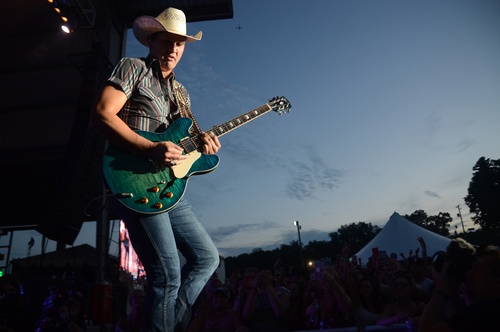
    Jon Pardi songs

    Jon Pardi emerged as one of the most recognizable voices in modern traditional country music by keeping fiddles, steel guitar, and honky-tonk energy at the center of his recordings. Born in Dixon, California, in 1985, he developed his musical interests through country music and performed long before his records became country radio staples. He moved to Nashville as a young adult and signed with Capitol Nashville, making his early singles the starting point for a career that brought the sound of California dance halls to a national audience. His first full-length album, Write You a Song, appeared in 2014, following

    The post Complete List Of Jon Pardi Songs From A to Z appeared first on ClassicRockHistory.com.

  • Bachratten – Rockmusik LP (La Pochette Surprise Records)

    Let’s be real for a second: we all need some good alternative rock music every once in a
  • FORBIDDEN – Forbidden (Album Review)

    A rebirth is born of bold new ambition.

    Contrary to the opinions of some, thrash has always been a subgenre of heavy metal focused on innovation and progression since it came roaring out of the San Francisco Bay Area, New York, and several other areas inside and outside the United States. Of the former contingent, the late 80s would bring an impressive array of late-comers that stretched the very meaning of thrash metal, culminating in what would be the turn of the decade vanguard.

    Alongside the likes of Heathen and Testament, Hayward natives Forbidden brought a more nuanced and forward-looking take on the marriage of metal and hardcore, exploring an eclectic blend of influences that could be construed as progressive, though still firmly rooted in the stylistic template originally established by Metallica, Megadeth, Exodus and other forefathers of the Bay Area sound. Now following over a decade of silence in the studio, this former powerhouse has struck back with a titanic eponymous LP and new lineup that proves a classic never dies nor does it settle for living in the past.

    Of the original membership that comprised this mighty quintet, only the songwriting and riffing chops of guitarist/founder Craig Locicero and the steady foundation of bassist Matt Camacho remain, but one would not know it based on the sonic results. The acquisition of former Attitude Adjustment drummer Chris Kontos, also known for his past work with Bay Area heavy-hitters Machine Head and Testament, establishes an immediate level of gravitas to the rhythm section that translates into a pummeling yet also adaptive framework that plays perfectly to Forbidden’s signature blend of contrasting stylistic elements.

    San Jose native and guitarist Jeremy Von Epp also proves a valuable pick up despite packing a resume of lesser known bands, working well alongside Locicero in formulating a merciless riffing attack and playing equally competently off of his elder axe-wielding compatriot in trading technical lead segments. Yet the most consequential change is the introduction of former Imagika vocalist Norman Skinner, whom seamlessly fills the shoes of former singer Russ Anderson and effectively navigates the eclectic blend of vocalizations required of this outfit’s signature style and adding his own unique USPM flair on top.

    In relation to their rich yet now distant past accomplishments in the studio, Forbidden has effectively crossed into the modernity of the mid-2020s with a balance of traditional and newer auditory tricks that is comparable to how Testament has navigated the changing times since the beginning of the previous decade. The production work of Zack Ohren (Immolation, Machine Head) serves the blend of neck-destroying aggression and haunting atmospheric go-betweens well with a colossal wall of sound that is as dynamic as it is forceful.

    Pummeling thrash entries like “Single Point Failure”, “Burning The Lungs Of Earth” and “Divided By Zero” are case studies in how infusing a multifaceted blend of raw thrashing fury and a consonant melodic edge can be amplified to a state of sheer glory with present-day studio magic, to speak nothing of managing to be pure earworm fodder despite all of the mad technical high-jinks and sectional twists and turns. Pile on top a similar mold of calculated ferocity in “The Burden”, as well as more long-winded and involved cousins like “Mutually Assured Dysfunction” and slow-growing technical showcase “Sol Grave”, and roughly half of this album’s 62-minute duration is spent bringing the kinetic vintage sound of 1990s Twisted In Form into the 2020s.

    Naturally, all that occurs under the sun with the Forbidden moniker stamped on it is not focused on high octane thrashing with a technical twist, and the eponymous addition to their discography is no exception. Among the less conventional fair to emerge from pool of Bay Area rage is a slower paced, almost doom-like creep in “DCLXVI” that is the first to incorporate a haunting foil to all of the carnage, emerging both in a generally dense atmosphere and a more pronounced level of clean vocalizations out of Skinner, forming a sort of ghostly choir around this usual blend of rage-filled shouts and growls.

    “Jisei” takes things even further into left field by going head first into full on balladry, yet amid what is generally a meditative affair of clean singing and guitars is a looming sense of sorrow and dread that blends well with the album’s overall tone of discontent. The bass heavy and mid-paced grooving stomp of “Psyclops” and the rapid fire yet static and industrial-toned “Sycophantasy”, also featuring a prominent guest voice slot by Mastodon’s own Brann Dailor, land a little closer to something that Machine Head might have done but pull no punches in the technical department. Topping it all off is a near 10 minute epic slough that throws everything in Forbidden’s arsenal but the kitchen sink and somehow comes out coherent at the other end in “Flower Of Life”, arguably the most original concoction in this quintet’s more than 40 year career.

    If at first they were regarded as one of the most unconventional players in the 80s Bay Area explosion, Forbidden has definitely maintained that identity all but to a fault on the album that also carries their name. It’s often stipulated that an album that comes late in any band’s career with an eponymous title arises from having something to prove, and whether that was the mentality that Craig Locicero and the rest of the gang carried into the studio with them or not, the result speaks to a band that is bent on re-conquering former heights and establishing a lasting presence in a scene that has definitely not stood still in their absence. It is yet to be seen if they will ever match the insane level of greatness that they achieved early on with their adrenaline packed 1988 debut Forbidden Evil or its progressive juggernaut of a follow up Twisted Into Form, but in a scene that has become heavily saturated with bands looking to recapture the 80s, Forbidden is one that is firmly rooted in the present and well poised to meet the future with a closed fist.

    Release Date: October 23, 2026
    Record Label: BLKIIBLK Records
    Genre: Thrash Metal

    Musicians:

    • Craig Locicero / Guitars
    • Matt Camacho / Bass
    • Chris Kontos / Drums
    • Norman Skinner / Vocals
    • Jeremy Von Epp / Guitars

    Forbidden Tracklist:

    1. Single Point Failure
    2. Burning the Lungs of Earth
    3. Divided by Zero
    4. DCLXVI
    5. Psyclops
    6. Jisei
    7. Mutually Assured Dysfunction
    8. Sycophantasy
    9. The Burden
    10. Sol Grave
    11. Flower of Life (Chaos by Design)

    Order the album here.

    The post FORBIDDEN – Forbidden (Album Review) appeared first on Sonic Perspectives.

  • MELBOURNE DETHFEST Returns In 2027

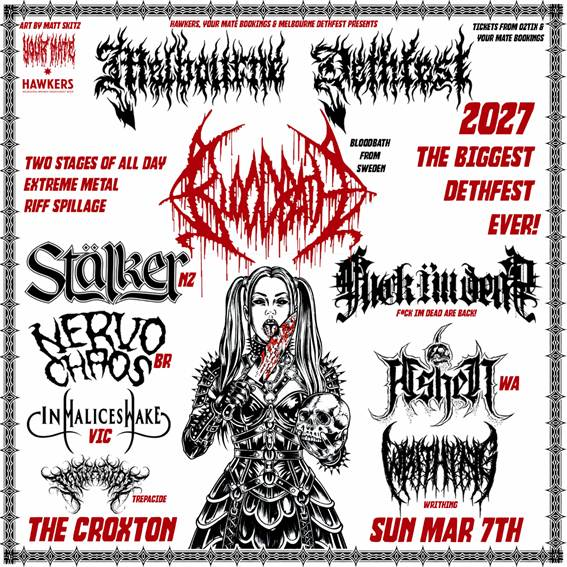
    After five straight years of sold-out devastation, MELBOURNE DETHFEST returns in 2027 with its most colossal edition yet. Australia’s premier extreme metal festival will descend upon The Croxton, Thornbury for the first time, transforming the venue into a two-stage, all-day celebration of everything heavy, brutal and uncompromising. Leading the charge are none other than Swedish […]
  • Heating Things Up At HOLLOWFEST With PYREFLY

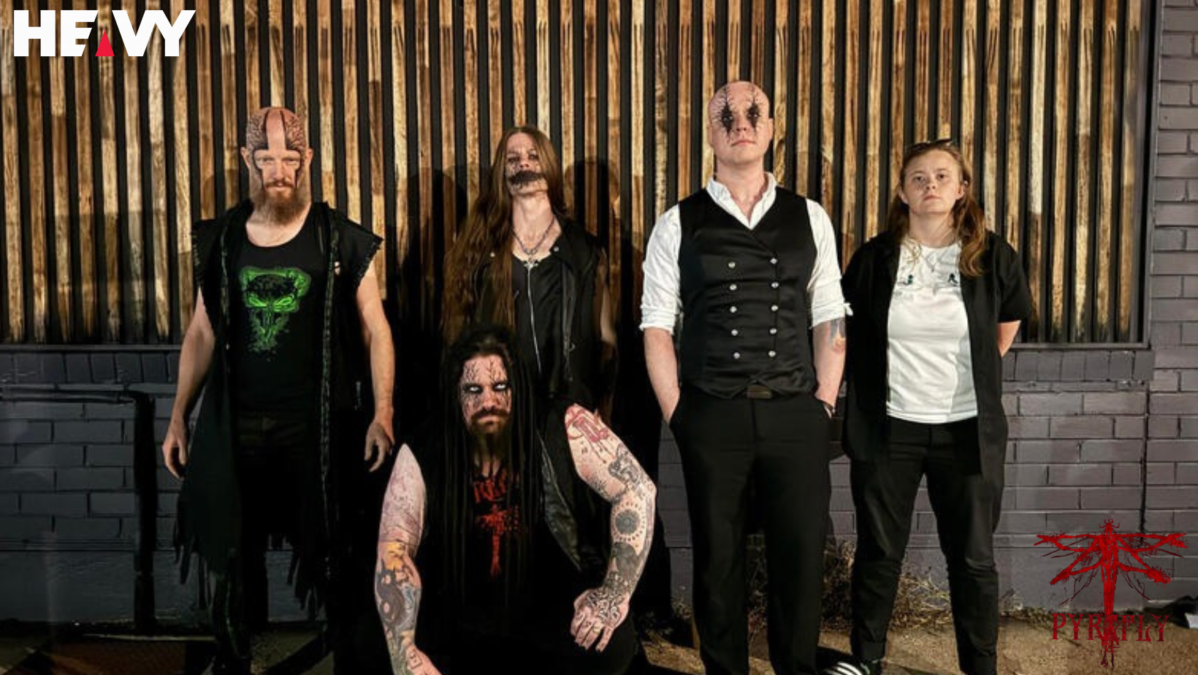
    If – like HEAVY – you like your tunes dark, theatrical, and packed with an absolute mountain of sonic intensity, then you have no doubt heard of Pyrefly. HEAVY had the pleasure of sitting down with the band, one of the most mesmerizing and devastating acts currently tearing up the Australian underground scene. If you […]
  • Northlane Share New Track ‘Deathwish’, Move New Album Release Date

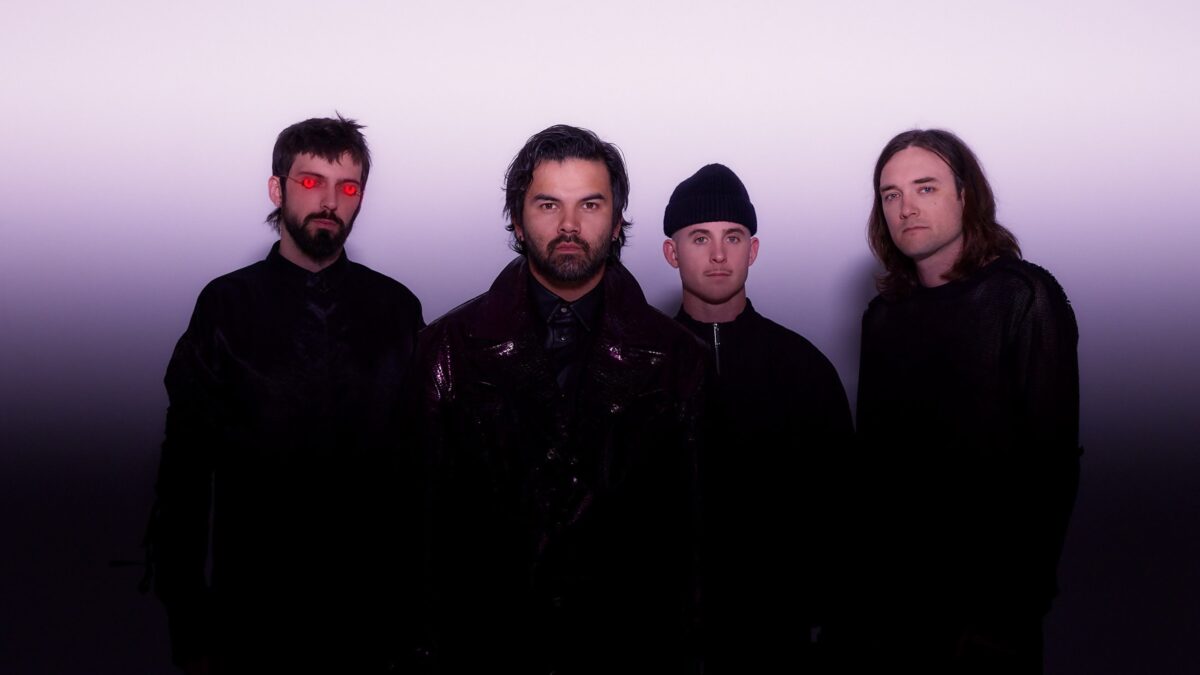
    Northlane have announced that the release date of their new album ‘Anemoia’ is being changed, but have shared a new track as a treat for everyone being so understanding.

    Originally due to drop on October 30, the record will now be released on November 27. This is due to production delays.

    But it does mean that we have ‘Deathwish’ to enjoy now, a track that the band see as a companion to their previous single ‘Crucified’. A woozy, breathless, euphorically compelling blend of drum and bass battery and caustic metal thrills, it is the peak of the band’s attempt to build bridges that have defined this cycle so colourfully.

    Vocalist Marcus Bridge had this to say about it:

    ‘Deathwish’, is “a companion song to ‘Crucified,’ but where that song surveys the landscape, ‘Deathwish’ zooms in on the individual. It’s written from the first-person perspective of someone who is entirely unwilling to listen – convinced of their own reality, blind to anyone else’s. I’m the centre of the universe / I’m blind to what you need. The lyrics aren’t self-referential, but it communicates an understanding of the psychology well enough to inhabit it, and the chorus turns the lens slightly inward: am I the one that’s cursed? I know it’s all I’ve come to be.”


    And here is ‘Crucified’, so you get the whole vision:


    Northlane have also announced that their upcoming tour of Australia and New Zealand is being rescheduled to May 2027 due to the need for guitarist Josh Smith to receive immediate care for this “worsening chronic health”.

    The band are still due to head over to the UK and Europe to support Dayseeker later this year. Here are all of the dates:

    NOVEMBER

    28 – WOLVERHAMPTON KK’s Steel Mill
    29 – WOLVERHAMPTON KK’s Steel Mill

    DECEMBER

    01 – LEEDS Project House
    02 – MANCHESTER Academy 1
    03 – BRISTOL Prospect
    05 – GLASGOW O2 Academy Glasgow
    06 – LONDON O2 Academy Brixton
    08 – PARIS Élysée Montmartre
    09 – OBERHAUSEN Turbinenhalle 1
    10 – HANNOVER Capitol
    12 – WARSAW Proxima
    13 – BERLIN Huxley’s Neue Welt
    15 – PRAGUE Lucerna Music Bar
    16 – MUNICH Tonhalle
    18 – AMSTERDAM Melkweg

    The post Northlane Share New Track ‘Deathwish’, Move New Album Release Date appeared first on Rock Sound.

  • 10 Lives Studios’ music documentaries about Peter Frampton and supergroup Hollywood Vampires

    If your idea of a good festival weekend involves guitars, band stories and a few familiar names doing something unexpected,…
  • DS Book Club: Z2 Comic’s adaptation of the film, “…And Out Comes The Wolf”

    In punk rock’s history, a lot of albums haven’t hit as hard as Rancid’s … And Out Come The Wolves. Its effects are still being felt today. A lot of bands took inspiration from Rancid’s ska punk sound, but for filmmaker Danny Peykoff he used the record as the basis of his directorial debut. The aptly titled, …And Out Comes The Wolf. Z2 Comics has taken the reins on the official comic adaptation of the film.

    The story follows Willy, a young punk rocker and drug dealer, who is counting on his best friend Brixton and his baseball skills to get out of Berkeley. Things go awry when Max, a drug dealer that Willy ratted on, is released from prison and forces him to sell his new product. Little bags of cocaine that have Val Kilmer’s hat and moustache ala his 1993 turn as Doc Holiday in Tombstone. After getting dumped by his girlfriend, Willy and Brixton meet two girls on the bus. It all goes downhill from there. While it’s not a difficult or unfamiliar web to untangle it is an interesting story nonetheless. The characters that inhabit the world are niche to fans of Rancid and East Bay punk or punk rock in general, but are unique enough.

    Willy is our narrator and guide through his punk rock world. He rides this weird line of being this drug dealer punk rocker teenager who’s tough life seems to intersect and even ruin the others in it. This typically comes off with statements on what is or what’s not, but not here. It’s not too preachy. I think it can be hard to make a punk rock story without doing so. In general. I remember multiple people saying that about SLC Punk!, and I’d like to think time has been much kinder to it. What is and isn’t punk has evolved since it’s inception. This story doesn’t really focus on this rather than the plot itself which is a bit refreshing in a punk rock story.  

    Kevin Mellon is a force to be reckoned with while pulling double duty as writer and artist. I’m not able to review if this is a good adaptation, as I’ve yet to see the movie. The comic Mellon has written based on Danny Peykoff, Jamie Neese, and Jason Neese’s script works well. The art almost has an Archie and the gang style to it, if Archie and Jughead sold drugs and jumped into pits. I loved Gab Contreras’s colors on Z2’s Blues Brothers comic and I think her game has definitely stepped up here. Given that Z2 does mostly music related comics, Contreras pivoting to a different genre does not seem to have any bearing on her quality. Tom Williams’s letters are the perfect amount of chaos for this story.

    While there are a ton of Rancid easter eggs, a term I use loosely because some of them are glaring obvious, they don’t detract from the story. There are characters named after songs along with direct references to the band themselves. Willy has an unhealthy fixation on OG Rancid drummer, Brett Reed, while a female character named Ruby has been burned by a bass player named Matt. 

    Despite being a drummer, we never actually see Willy play drums. He does show up to the Ivy Room to watch a band play and jump in the pit. While the scenes at the Ivy Room establish a lot more tone, characters and essentially the catalyst of the story. In general, I’m usually disappointed in comic book adaptations of movies. Sometimes things are left out. I remember a Shaun of the Dead comic adaptation that missed the best parts from the movie, but time makes that determination. 

    …And Out Comes the Wolf functions well as a story, it’s a fun ride and has nods to the East Bay, Rancid, along with the landmark record this film/comic took its title from. If you’re chomping at the bit to see what this story is about and can’t find a theater to see the film, this could hold you over. On the other hand this may also be a great companion piece to what may be your next favorite punk rock movie.

    …And Out Comes The Wolf is available through the Z2 website in a few different editiions.

  • The Human League’s Dare is a prog album hiding in plain sight

    When affordable synthesisers arrived just as punk ran out of its initial puff, the new machinery offered an alternative to picking up a guitar and learning three chords.

    Thus, tens of thousands of converts plugged in a keyboard and learned three notes – which, of course, is all you need if you have something to say.

    The Human League were there at the vanguard. Mainly hailing from post-industrial Sheffield, they always believed in the DIY ethic of punk, even if they expressed it through MIDI pop. And therein lay the prog, especially with the arrival of former Rezillos guitarist Jo Callis in time for 1981’s Dare.

    The pop-culture-obsessed ex-art student had delivered a number of hit singles with an approach heavily powered by David Bowie and Mick Ronson; and so it would prove here. (Callis’s 21st-century band FingerHalo gave a convincing live adaptation of The Width Of A Circle, one of Bowie’s proggiest tracks.)

    Dare will always be remembered for the smash hit Don’t You Want Me, so ubiquitous that it’s still earning co-writers Callis, singer Phil Oakey and keyboardist Adrian Wright royalities to this day. It’s irrefutably pop – until you listen to the chord structure leading to the chorus and in the chorus itself.

    A technical expert will have to explain what’s going on, but it plays on the notion of straightforward construction by presenting alternative inversions of chords near the ones you think you’re hearing. Prog or what?

    Don’t You Want Me is the last track on Dare because no one thought it would do anything. Earlier on, though, we have Seconds – and, at this point Callis, Oakey and Wright have transplanted themselves to the world of krautrock, complete with motorik beats, droning backing notes and minimalist leads.

    Meanwhile Oakey delivers his lyrics – addressing how the world changed with the assassination of JFK in 1963 – with an almost wilful dismissal of verse-chorus structure.

    Such dark, subversive alternative influences are all over what’s regarded as a genre-defining pop record. That’s partly down to producer Martin Rushent, whose proggy credentials by then included Gentle Giant, The Sensational Alex Harvey Band, Groundhogs, Curved Air and The Stranglers.

    The you-can-do-it-too influence of Dare contributed to the Musicians’ Union’s attempt to ban synths in the mid-80s; meanwhile, Rushent helped invent the notion of the remix album, helming 1982’s Love And Dancing under the banner of The League Unlimited Orchestra. It contains a seven-minute version of Don’t You Want Me where you can really hear those weird chords in action.

    Seconds remains a massively drawn-out, theatrical part of The Human League’s performances, offering audiences a shamelessly prog moment amid the electronic, not-quite- new-romance. It’s evidence that Dare is a secret prog album hidden in plain sight – which is pretty daring by any measure.