FOR IMMEDIATE RELEASE
RHINO PROOF ANNOUNCE NEW STUDIO ALBUM “LIGHT, DARK, THE END” AND RELEASE NEW SINGLE “PLAY BY THE RULES”
Finnish Hard & Heavy Force Unleash First Single and Official Music Video Ahead of November Album Release via Astral Haven Records
Joensuu, Finland | Finnish hard and heavy outfit Rhino Proof have officially announced their new studio album, Light, Dark, The End , set for release on November 6, 2026 , via Astral Haven Records .
To celebrate the announcement, the band has unleashed the album’s first single, “Play by the Rules,” accompanied by an official music video. The track offers a hard-hitting introduction to the new album while showcasing the band’s blend of muscular hard rock, heavy metal, memorable melodies, and commanding vocals.
Listen to “Play by the Rules”:
https://distrokid.com/hyperfollow/rhinoproof/play-by-the-rules
Watch the official music video:
Guitarist Rane Riikonen explains the personal inspiration behind “Play by the Rules”:
“When I was writing the song ‘Play by the Rules’, I thought back to my youth and the fact that I used to drink heavily. I often woke up on the floor and generally behaved badly. Fortunately, I realized how foolish I was being and started living sensibly.”
Vocalist Jukka Nummi adds:
“The song ‘Play by the Rules’ is one of my favorites; I use my voice a little rougher on it—or actually, the guys kind of pushed me to do that—and I’m glad they did, because it fits the song’s vibe.”
Light, Dark, The End represents a significant new chapter for Rhino Proof. The album takes shape as a conceptual release built around a four-part storyline , bringing together nine tracks that move through different moods and styles while maintaining a cohesive identity.
Riikonen reflects on the lengthy and sometimes difficult process behind the album:
“Making the new album was a difficult and lengthy process. At times, the work progressed well, but then difficulties began to pile up. Certain things also came to an end, and processing them took time. This entire experience ultimately became the album’s title.”
For Nummi, the finished record represents a diverse but unified collection of songs:
“The new album is truly fantastic overall, and while all the songs are distinct from one another, they still come together to form a cohesive whole. It ranges from heavy, pounding tracks to ballad-like interpretations. I’m proud of this album.”
The vocal recording process also proved to be an especially creative period for the band. Nummi recalls beginning the lead vocal sessions in August of the previous year, with some songs still taking shape:
“A year ago in August, we started recording the lead vocals. Even though half of the songs were completely new to me and we didn’t even have demo versions for all of them, we managed to record everything incredibly quickly, in two days! Creativity was at its peak, and the vocal melodies evolved as we recorded them.”
The album will be released as a Digipak CD and digital release , with pre-orders and pre-saves available now through Astral Haven Records.
Pre-order / Pre-save “Light, Dark, The End”:
https://astralhavenrecords.com/cds/rhino-proof-light-dark-the-end-cd/
Light, Dark, The End Tracklist:
Play by the Rules
Deeper Form of Love
Alone With My Sin
Even Closer
My Life is Fine
Fashion Nonsense (CD Bonus Track)
Strong Enough
Shadows in the Rain
Safe Cracker
All songs were written by Rane Riikonen, with arrangements by Rhino Proof. The album was recorded and mixed by Erkko Joronen and produced by Riikonen and Joronen. Mastering was handled by Jone Väänänen.
The visual identity of the album comes together through cover artwork by V-V Markkanen , CD and booklet artwork by NobotX , and photography by Markus Sotikov .
Light, Dark, The End follows Rhino Proof’s previously released singles “My Life is Fine” and “Deeper Form of Love,” both of which have helped introduce the band’s latest chapter to listeners ahead of the full album.
The release also builds on a growing run of international exposure for Rhino Proof. The band was recently featured in Decibel Magazine Issue #263 as part of a Metal Devastation Radio feature highlighting Rhino Proof alongside Hubris, Abaddon Incarnate, Haze Mage, Binary Order, Far From Refuge, Broken Trinity, and Choke Me.
Check out the Decibel feature:
https://metaldevastationradio.com/thebeast/blog/29292/rhino-proof-hubris-abaddon-incarnate-haze-mage-binary-order-far-from-refuge-broken-trinity-choke-me-featured-in-decibel
Rhino Proof originally formed in Joensuu, Finland, in 2016 and quickly established themselves within the European hard rock and metal underground. Their self-titled 2018 debut album earned critical attention across Europe and placed in the Top 5 of Hard Rock Highlights lists in both Italy and Portugal .
Following several lineup changes, Rhino Proof now returns with a solidified lineup and a new album designed to capture the band’s evolution. With Light, Dark, The End , the Finnish outfit delivers a narrative-driven record that moves between crushing heavy tracks, melodic passages, and ballad-like moments while maintaining the raw energy at the heart of their sound.
The band is now preparing to bring Light, Dark, The End to listeners around the world through their partnership with Astral Haven Records.
Riikonen states:
“We are very excited to be working with Astral Haven Records. This partnership will give us the opportunity to reach more listeners from all over the world.”
Rhino Proof
Jukka Nummi – Vocals
Rane Riikonen – Guitar
Erkko Joronen – Guitar
Pasi Nousiainen – Bass
Sami Ratilainen – Drums
Album Credits
All songs written by Rane Riikonen
Arrangements by Rhino Proof
Recorded & mixed by Erkko Joronen
Produced by Rane Riikonen & Erkko Joronen
Mastered by Jone Väänänen
Cover artwork by V-V Markkanen
CD & booklet artwork by NobotX
Band photo by Markus Sotikov
Connect With Rhino Proof
rhinoproof.com
www.facebook.com/rhinoproof
“Play by the Rules” is out now.
Rhino Proof’s new album, Light, Dark, The End , arrives November 6, 2026 via Astral Haven Records.
Blog
-
Strand Of Oaks’ Timothy Showalter Cast In Prison Break Spinoff Following Sons Of Anarchy Spinoff
Timothy Showalter makes soulfully scraggly indie rock as Strand Of Oaks, and he seems to have a nice little side hustle adding his own soulfully scraggly presence to various television spinoffs. Back in 2022, Showalter was cast in a recurring role as a character named Hoosier on the Sons Of Anarchy spinoff Mayans M.C. (Showalter really is from Indiana, so the name fit.) Showalter was on 10 episodes of that show. I didn’t watch that show, but I was not surprised to learn, looking it up just now, that his character got murdered. (Sorry not sorry for spoiling the fate of a minor character on Mayans.) Now, he’s doing it again.
The post Strand Of Oaks’ Timothy Showalter Cast In <em>Prison Break</em> Spinoff Following <em>Sons Of Anarchy</em> Spinoff appeared first on Stereogum.
-
The Flower Kings launch new single ‘The Gods Of Rome, Pt. 2’ Second track taken from forthcoming new album ‘HOPE’
After more than three decades of pushing the boundaries of progressive rock, The Flower Kings return with the new album, HOPE, due out on the 23rd October, 2026 on InsideOutMusic. The follow-up to 2025’s LOVE, stands as both a celebration of their legacy and a bold artistic statement. The album also finds the band returning to the side-long epic, with tracks clocking in at 18 and 28 minutes.
Now the band are pleased to preview one of those mammoth new tracks, with the release of ‘The Gods of Rome, Part 2’. Listen to the track now here:
Roine Stolt comments: “This is one of several parts of an epic piece of music that has been swirling around for some years. I reworked bits and wrote some new lyrics that now have the backdrop of ancient Rome – but act more as a metaphor for modern day powerplay. Every nation and every leader/president want to shine and be remembered as the greatest – expansive dreams often tend to implode however.”
Rather than chasing trends or revisiting past glories, the band has crafted a work that comfortably exists between refined musicianship and fearless ambition.
Founding member Roine Stolt explains, “At a certain point in life – you arrive at a place where outside opinions matter less – and the process gravitates towards making an album that YOU yourself would LOVE but would perhaps normally not be viewed as a commercial attempt at all. We, the band – trust YOU, the audience – to be curious and to trust us that we want to bring you a grand glowing adventure.”Pre-order & stream the single here: https://theflowerkings.lnk.to/HOPE-Album
HOPE serves as a timely meditation on a turbulent time in the modern world. Without venturing into overt political commentary, its songs reflect on an era often marked by division and diminishing empathy while ultimately offering a message rooted in hope, acting as a roadmap, how to get there and re-ignite love in our hearts and our society.
The album’s compositions come from Stolt and keyboardist Lalle Larsson, with its centerpiece being the nearly 30-minute epic “The Gods of Rome.” Originally conceived from orchestral ideas developed more than a decade ago, the piece took an unexpected creative journey, at one point nearly becoming the musical foundation for another Anderson & Stolt project before ultimately finding its true home with The Flower Kings. Reimagined for the full band, it has evolved into a powerful reflection on contemporary life, using the imagery of ancient Rome to explore enduring themes of power, conflict, and the human cost of ambition.
Joining Stolt and Larsson once again are Hans Fröberg on vocals, Michael Stolt on bass, and Mirko DeMaio on drums. Supported by heartfelt performances from every member of the band, along with a number of special guests, the resulting album unfolds as a rewarding listening experience that reveals new details with each return. Stolt explains, “Like I said 37 years ago – ‘This is the band I will be in for the rest of my days’ – but I wouldn’t dream of us making one of our finest albums ever in 2026!”
HOPE will be available as Ltd.CD + Blu-Ray Digipak, featuring Dolby Atmos & 5.1 Surround Sound mixes by Rich Mouser, a first for the band. The album will also be available as Standard CD Jewelcase, Gatefold 2LP & Digitally.
Tracklisting:
1.World Spinning – The Final Curtain (18:45)
2.In a World of Fools (5:35)
3.Mars & Minerva (4:40)
4.The Gods Of Rome (28:15)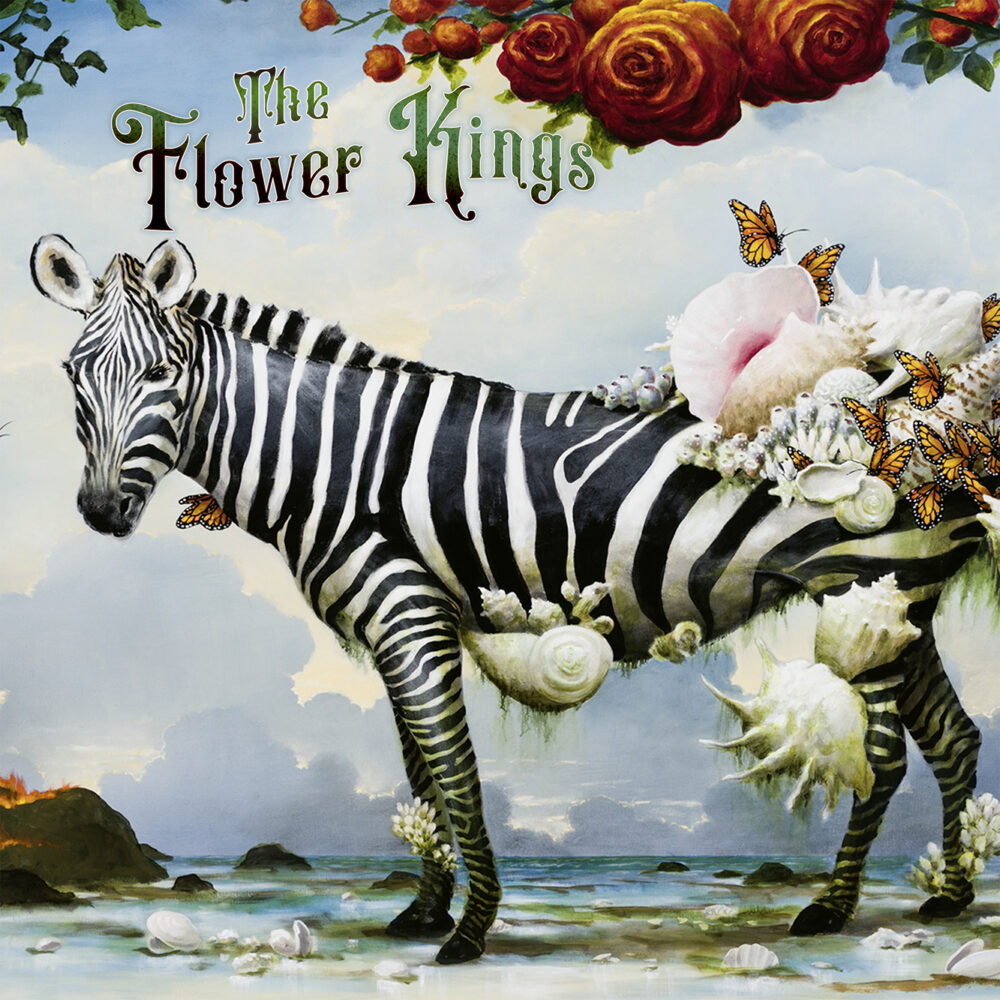
The post The Flower Kings launch new single ‘The Gods Of Rome, Pt. 2’ Second track taken from forthcoming new album ‘HOPE’ appeared first on The Prog Report.
-
Track Premiere: Semuta – “Thoughtless/Dreamless”
“To sleep: perchance to dream,” Shakespeare famously wrote in Hamlet. Easier said than done for some, however. Portland’s proggy post-metal duo Semuta are grappling with this very topic—insomnia and the active mind—on new full-length, their second, Thoughtless/Dreamless. We’re premiering the sprawling, nearly 10-minute title track here, unfurling its sonic beauty, via a lyric video. The album, crafted by Benjamin Caragol (guitar/bass//vocals) and Ben Stoller (drums/synth), follows up 2024’s Glacial Erratic and is an entrancing collection of dense, diverse tracks filled with quiet-loud dynamics and effortless playing.
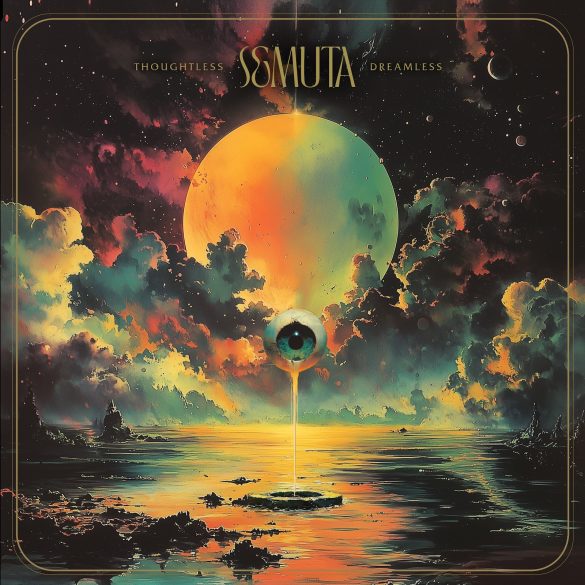
Thoughtless/Dreamless was recorded and mixed by Scott Evans (Neurosis, Kowloon Walled City) and mastered by Brad Boatright (Portrayal of Guilt, Torche). It’s set for release on vinyl, cassette and digitally via Accident Prone Records on October 9. Place your preorder here.
Caragol described the origin of the track:
“This song is about insomnia. I often wake up in the middle of the night with my mind racing, and am unable to find my way back to sleep. In those moments all I want is to be thoughtless and dreamless, without all the worries about my little life and the world at large.
“‘Thoughtless/Dreamless’ has the most range of anything we’ve written. It begins with swelling atmosphere, trudges through several mid-tempo moody parts, blasts through a passage of odd times and death metal vocals, and ends in some sludgey and triumphant major chords. The song requires some patience, but it encompasses everything we have done while covering new ground as well.”
The post Track Premiere: Semuta – “Thoughtless/Dreamless” appeared first on Decibel Magazine.
-
BLIND ILLUSION TO CELEBRATE NEW LIVE ALBUM WITH SAN FRANCISCO RECORD RELEASE SHOW – @thebeast
FOR IMMEDIATE RELEASE
BLIND ILLUSION TO CELEBRATE NEW LIVE ALBUM WITH SAN FRANCISCO RECORD RELEASE SHOW
Progressive Thrash Metal Pioneers Bring STAGE FLIGHT: Live At The UC Theatre Home to the Bay Area on October 16
SAN FRANCISCO, CA — Nearly five decades after forming in the Bay Area, progressive thrash metal pioneers Blind Illusion will celebrate the release of their new live album, STAGE FLIGHT: Live At The UC Theatre , with a special record release show on Friday, October 16, 2026 , at Neck of the Woods in San Francisco, California .
The release-day lineup will feature Blind Illusion, Hemotoxin, and Parabellum , bringing together three bands for an evening of Bay Area metal on the exact day STAGE FLIGHT: Live At The UC Theatre officially arrives through Hectic Records / Bleeding Priest Records .
Fans attending the show will have the opportunity to pick up a copy of the new record directly from Blind Illusion , while those outside the San Francisco Bay Area can pre-order their copy through Hectic Records.
Pre-order:
www.hectic.com/product/blind-illusion-live
A LIVE SNAPSHOT OF BLIND ILLUSION’S HISTORY
STAGE FLIGHT: Live At The UC Theatre captures Blind Illusion’s historic 2025 performance at the UC Theatre in Berkeley , featuring the return of original vocalist David White .
The performance took place during a special Bay Area celebration surrounding Exodus’ 40th anniversary of Bonded By Blood and the birthday of late Exodus frontman Paul Baloff , with Blind Illusion sharing the stage with Exodus, Death Angel, and Nukem . The performance ultimately became the foundation for the new live album.
White’s return gives the recording an especially significant connection to Blind Illusion’s early history. During a recent appearance on The Zach Moonshine Show , guitarist and band mastermind Mark Biedermann discussed how White’s return came about and how the band revisited material from its early years for the reunion performance.
But STAGE FLIGHT isn’t a studio reconstruction of an old performance.
According to Biedermann, the album is a completely live recording with no studio overdubs , captured at the UC Theatre by engineer Ivan Garcia and subsequently mixed by Biedermann with the band’s rhythm section.
As Biedermann put it:
“This, I guarantee you, is 100% live.”
That old-school approach makes STAGE FLIGHT: Live At The UC Theatre a document of the band exactly where it belongs: onstage.
NEARLY FIVE DECADES OF BLIND ILLUSION
Formed in 1978 , Blind Illusion has spent nearly five decades developing one of the most distinctive sounds in the Bay Area metal underground.
Led by Mark Biedermann , the band’s history is deeply connected to the development of progressive and technical thrash metal. The band’s landmark 1988 debut, The Sane Asylum , featured Biedermann alongside Larry Lalonde, Les Claypool, and Mike Miner , producing a record that would become an important part of the progressive thrash canon.
Biedermann’s musical history extends well beyond Blind Illusion. His work has intersected with figures including Les Claypool, Kirk Hammett, Cliff Burton, Sandy Pearlman, Joe Satriani, and Robbie Krieger , among many others.
During his recent appearance on The Zach Moonshine Show , Biedermann looked back across that history, discussing everything from the formation of Blind Illusion and the making of The Sane Asylum to his early relationship with Les Claypool, his work connected to Blue Öyster Cult’s Imaginos , and an unforgettable story involving his longtime friend Cliff Burton.
The conversation also made clear that Blind Illusion isn’t simply revisiting its past.
The band’s next studio album, Crushing the Universe , has already been recorded, with former Blind Illusion bassist Tom Gears producing, engineering, and mixing the record.
That makes STAGE FLIGHT both a look back at a remarkable chapter of Blind Illusion’s history and a bridge toward whatever comes next.
FROM THE UC THEATRE TO THE RECORD STORE
The timing of the October 16 release is particularly fitting.
STAGE FLIGHT: Live At The UC Theatre was born from a performance celebrating the Bay Area metal community and Blind Illusion’s own history. Now the finished record returns home to the Bay Area for its official release.
Friday, October 16, 2026
Neck of the Woods
San Francisco, California
BLIND ILLUSION
HEMOTOXIN
PARABELLUM
Come out, celebrate the release with the band, and get your copy of STAGE FLIGHT: Live At The UC Theatre directly from Blind Illusion .
For fans who can’t make it to San Francisco, pre-orders are available through Hectic Records:
www.hectic.com/product/blind-illusion-live
RECENT BLIND ILLUSION HIGHLIGHTS
The anticipation surrounding STAGE FLIGHT: Live At The UC Theatre has continued to build in the weeks leading up to its release.
Blabbermouth recently featured Blind Illusion’s upcoming live album, highlighting the historic 2025 performance, David White’s return, and the band’s continuing evolution nearly five decades after its formation.
BraveWords has also featured Blind Illusion ahead of the release, spotlighting STAGE FLIGHT: Live At The UC Theatre and the band’s unique place within progressive thrash metal.
Biedermann also recently joined The Zach Moonshine Show for an extensive conversation covering Blind Illusion’s history, The Sane Asylum , David White, Les Claypool, Kirk Hammett, Cliff Burton, Sandy Pearlman, Blue Öyster Cult, Hectic Records, the new STAGE FLIGHT live album, and the band’s upcoming Crushing the Universe studio record.
STAGE FLIGHT: LIVE AT THE UC THEATRE
Artist: Blind Illusion
Title: STAGE FLIGHT: Live At The UC Theatre
Release Type: Live Album
Genre: Progressive Thrash Metal
Release Date: October 16, 2026
Label: Hectic Records / Bleeding Priest Records
Catalog Number: Hectic 009
Format: 12″ Vinyl LP, 33 RPM
Limited To: 500 Copies
UPC: 810213561508
CURRENT LINEUP
Mark Biedermann – Lead Guitar / Vocals
Martin Lacour – Lead Guitar
Avery Thurman – Bass
Phil Cosentini – Drums
Blind Illusion
Established 1978
Progressive Thrash Metal
For Fans Of: Coroner, Watchtower, Exodus, Heathen
Check them out on YouTube:
Connect:
https://blindillusion.bandcamp.com/album/stage-flight-live-at-the-uc-theatre
https://www.instagram.com/blindillusionofficial
https://www.facebook.com/officialblindillusion
https://ffm.to/bclink1
https://www.hectic.com/product/blind-illusion-live
Contact:
David Hecht
Hectic Records
david@hectic.com -
How Tom Morello Took Control of His Legacy
He tells UCR how he's bringing the impact of all of the work he's done, from Rage Against the Machine to Bruce Springsteen, together for the first time. Continue reading… -
ELEMENT OF FATE RELEASES DEBUT ALBUM “DREAMFALL” OUT NOW – @thebeast
FOR IMMEDIATE RELEASE
ELEMENT OF FATE RELEASES DEBUT ALBUM “DREAMFALL” OUT NOW
Melodic Heavy Metal Duo Unleash a Cinematic Journey of Fantasy, Emotion, and Immersive Storytelling
Washington, DC / Portland, OR — Melodic heavy metal duo Element of Fate have officially released their highly anticipated debut full-length album, Dreamfall , available now worldwide.
Stream and purchase Dreamfall here:
https://linktr.ee/element.of.fate
Released on July 27, 2026 , Dreamfall invites listeners into a cinematic world where heavy metal, fantasy, and storytelling collide. Featuring soaring vocals, intricate instrumentation, and a powerful blend of gothic, symphonic, and progressive metal influences, the album delivers an emotional and immersive listening experience that showcases Element of Fate’s dedication to crafting music that feels both timeless and cinematic.
The entire album is also now available to experience as a full-length video stream on YouTube , giving listeners the opportunity to hear Dreamfall from beginning to end while stepping further into the world Element of Fate have created.
Full Album Video:
The album’s release follows the unveiling of the “Fire Bird” lyric video and the dark, captivating visualizer for “Warhorse,” offering fans a deeper look into the world Element of Fate have carefully built around Dreamfall .
Watch “Fire Bird” here:
At its core, Dreamfall is more than an album. It is a complete artistic vision combining heavy metal, fantasy, visual storytelling, and a deeply personal creative journey.
“Dreamfall is the most personal and ambitious project I’ve ever created as an artist.”
— Madame Crol
“This project is about transformation, finding light even in darker places.”
— Element of Fate
“We wanted to create something that feels epic, emotional, and real.”
— Element of Fate
The creation of Dreamfall has been fueled by a passion for independent artistry and craftsmanship, including a cinematic music video produced entirely in-house by vocalist and visual artist Carol Phillips through her studio, Inlumined Arts .
Supporters of the project have also helped bring this vision to life through exclusive rewards and handcrafted collectibles inspired by the album’s mythic themes, including limited bronze key and coin pieces created as collector-grade works of art.
Formed between Washington, DC and Portland, Oregon , Element of Fate are carving out a unique space within modern metal by combining classic heavy metal foundations with cinematic arrangements, powerful vocals, and a striking visual identity.
With Dreamfall , Element of Fate invite listeners to step into a world created not only to be heard, but experienced.
The journey has begun.
Dreamfall is out now.
Stream Dreamfall , watch the full album on YouTube, follow Element of Fate, and experience the complete artistic vision:
https://linktr.ee/element.of.fate
Connect with the band:
https://linktr.ee/element.of.fate
Contact: element.of.fate@gmail.com -
Ben Poole: Post Midnight Behaviour Review
Ben Poole returns with Post-Midnight Behaviour, his first studio album of new material in eight years. Released after 2018’s Anytime You Need Me, the album finds the British guitarist, singer and songwriter revisiting his blues rock roots while exploring a broader range of influences.
Poole has spent much of his career building a name within the blues rock scene developing an extensive international touring career. With more than a decade of albums and live releases behind him, he has also performed extensively across Europe and beyond, establishing himself as a seasoned live performer as well as a respected guitarist.
Post-Midnight Behaviour establishes its broader approach from the opening moments of “No Second Chances.” Built around rugged riffs, the song settles into softer verses where Poole’s voice takes on an almost alternative rock character, giving the track a different kind of catchiness before the heavier chorus arrives. It is a good opener, further elevated by some tasteful lead guitar.
“Empty” follows with a breezier alternative-rock feel and subtle country touches, while another melodic guitar solo adds plenty of character. On the other hand, “Time Has No Mercy” brings back a more traditional blues rock approach, albeit with a pop-punk edge, while its strong chorus gives the song plenty of melodic appeal. The track also features another excellent solo, this time favoring attack over melody.
“Runaway Souls,” featuring Elles Bailey and Oli Brown, is the album’s standout. Its spirited blues rock arrangement combines a great riff, a countrified touch, and stellar vocals. The chorus is particularly effective, and the guitar solo strikes a fine balance between melodic phrasing and sheer fireworks.
“Searching” takes things down a notch with a soulful, late-night atmosphere, sultry vocals, and an elegant, almost jazzy guitar break. It fits the album’s nocturnal character particularly well. “Start Of The End” closes the record with another rocker that has a ballad-like quality, providing a strong finish.
From a technical standpoint, the production is clear and well balanced, retaining plenty of punch without sounding overly polished. Poole and the band deliver confident performances throughout, and the mix does a good job of preserving the character and dynamics of the playing.
Overall, Post-Midnight Behaviour remains firmly rooted in blues rock while moving comfortably between alternative rock, soul, funk and pop, giving the album a varied and engaging character. There is a relaxed confidence to the record that suits its late-night atmosphere, with Poole’s guitar never needing to dominate the mix to make its presence felt. It is a strong return that rewards repeated listens without ever sounding overdone.
The Review 8/10
Can’t Miss Tracks
– No Second Chances
– Empty
– Time Has No Mercy
– Searching
– Runaway SoulsThe Big Hit
– Runaway Souls
The post Ben Poole: Post Midnight Behaviour Review appeared first on Blues Rock Review.
-
A View From The Back Of The Room: Electric Wizard (Joe Guatieri)
Electric Wizard & Magick Potion, The Prospect Building, Bristol, 16.09.26 “I hope this fucking world fucking burns away and I’d kill you all if I’d had my way!”. I don’t think that I’ve ever related to lyrics more in my adult life than these. The slog of working a job that you hate, surrounded by customers who don’t have respect for themselves or anyone else, all for a faceless company that doesn’t know you exist. There is music out there made for moments like this that portray the feeling of utter dread and constant anxiety, better than a conversation ever could. The prospect of seeing THEM again makes all this stress worth it.
Wednesday 16th September was a day like any other, just thinking about that night. Taking a walk from where I work to the venue, that being The Prospect Building felt nice for once, a relief. The roads are usually full of traffic but on this night, everything seemed to float by with a lack of disturbance and the excitement filled the air minute by minute.
Arriving at The Prospect Building, it felt surprisingly empty to begin with, no queue despite a sold out show, this was completely different for when I saw Sunn O))) there back in June where there was a big queue, I went in without breaking a sweat. I then went in-line for merch, afterwards getting myself a pint and then leisurely strolled into the main room, found my place and waited.
Magick Potion (7) opened the proceedings, entering the stage with their long hair and decorative fashion from another era. Looking at their socials and music platform presence previously, it was all about channeling heavy Psychedelic Rock from the 60s and 70s. It was then a mission in my mind, these guys walked the walk but can they talk the talk.
They then started playing, beginning with some cuts that opened the opportunity for the band to jam out and show off their shredding. With their tone that was welcoming in its warmth and fuzzy nature, it felt less like “Look at what I’m doing” and more like “Come take my hand, we’re going on a journey”. This resonated with the crowd who were grooving and enjoying the band, banging their heads and dancing to it.
I thought to myself, yeah their decent, then they introduced songs with more hooky elements and showcased more dynamics, that’s the point that drew me in. They show a big influence of Cream, Hawkwind, Led Zeppelin and The Jimi Hendrix Experience on their sleeves but they aren’t trying to copy and paste what the legends before them did.
This was fun and it didn’t feel forced, many bands in this ilk and tributes especially try to reinterpret a gig from back in the day where as this was more present and in the now, these guys were up on stage just enjoying themselves. Magick Potion didn’t try and reinvent the wheel or do anything like that, they just came out on stage, had a good time and raised people’s spirits up, it was a good time!
Next we had the main event, the wait wasn’t too long for Electric Wizard (9) … The band gathered on stage through a storm of smoke and cleared, Jus Oborn bellowed “Come my fanatics!” as they launched into space with Return Trip. Played at a different tempo compared to the original recording, it felt more hitting, dare I say satisfying in the way that it was played. My fate was sealed when Jus spat out the first few words of the song, those lyrics being what I mentioned when I started this review. I hadn’t screamed that loudly in a while!
Then the notes from Dopethrone ripped out from the bowels of hell and into my soul. I had never heard Electric Wizard play it live before and this was a moment that I’ll never forget. Again like with the previous song I was hitting my fist in the air, it’s a national anthem for the misfits.
Speaking in both terms of seeing the band play it live and the studio version, it plays with your expectations, the repeated mantra of the word “Rise” just brings everything together as the poetry paints a picture of glamourising the excess in both drugs and the volume in sound. Then suddenly the puzzle pieces come together as god says “Dopethrone” and the riff is just sluggish enough to make devils dance.
Funnily enough it’s a technique like this where I will make a connection between Elton John and Electric Wizard. The fact that the song teases and teases to the chorus with Tiny Dancer, everyone always sings it at the same time and Dopethrone does the same thing! It’s a thing of beauty, pure song-writing genius.
I want to point this out, their bassist, South West native Haz Wheaton was the only one on our right who wasn’t covered in smoke, it made me think, he’s one of us, he’s human and you could see it as the man was hammering away on his instrument, screaming every lyric, his energy was infectious, it was as if his soul was released from the sacrifice from the wizard and given to the people, he’s a fan.
The fourth song they played was another epic in Satanic Rites Of Drugula. That introduction was fierce and harrowing, the fact that Jus played it in the style that I love so much when he hits that forbidden note, echoing what he did at Brutal Assault at Fortress Josefov, in the Czech Republic back in 2017. It’s the most evil thing that the wizard is capable of doing and the song encapsulates its title completely, “So high, so dead”!
An unexpected treat was Electric Wizard performing Son Of Nothing from Come My Fanatics, it was the first time they played that song live in well over 10 years. It displayed the band at their most raw and loose, they could have played it for hours and the crowd would have still gone home happy, it truly puts repetition into submission.Nearing the close of their set, it could have only ended on one thing, Funeralopolis. Nothing on earth beats hearing the introductory section, it brought everyone to a different planet. Then when the time struck, a heavy trance fell onto The Prospect Building, the jet engine of that legendary riff is a jet engine that blows everything away in its path. Electric Wizard then fled the stage, they came, killed and left!
Comparing the first occasion, seeing the band at ArcTanGent in 2024 and comparing it to The Prospect Building in 2026 is a difficult one. The first time I saw the band, I was stone cold sober for their set and everything felt like a dream, while this gig in Bristol was real and in the moment. At a festival there’s always much going on, you’ve got little time to breathe, whether with a gig, you spend the majority of your time waiting.I guess that from seeing Electric Wizard before, it sub-consciously felt like just seeing any other band at gigs because regardless if it’s at a bigger venue, the routine is pretty similar. Now that I’ve had a chance to reflect on this, I’ve realised that I preferred this set list at the gig, whereas at the festival, I thought that they played better.
Don’t get me wrong, the solos and riffs still came across with gigantic presence but a bit of the mystique was lost. I am growing older and beginning to learn that these are just people but in an incredible band, still nasty and intense and that will never change. I loved it and I would go to see them and I do recommend the live experience. Just one more cry, just please god, release another album, I can’t polish my fangs forever!