It’s fair to say that Booker T. & The M.G.’s changed the course of Mick Ralphs’s life. The Herefordshire electrician was 18 when he first heard Green Onions on Radio Luxembourg in 1962.
“I loved the nasty guitar of it and the groove,” he told Classic Rock in 2016. “I’d never heard anything like it before, and that inspired me to want to play guitar like that. It basically got me into blues and soul music and people like Howlin’ Wolf and Chuck Berry. That was the trigger.”
Ralphs wasted little time, and passed through a number of local acts prior to making an album with the Doc Thomas Group in 1967. After a brief spell as lead guitarist in Jimmy Cliff’s backing band, he hooked up with Verden Allen, Dale Griffin, Pete Overend Watts and Stan Tippins to record demos as Silence. A name change and a personnel tweak later – out went Tippins, in came natural frontman Ian Hunter – and Mott The Hoople were born.
Mott’s early status as underground cult favourites, nourished by a fiercely devoted fan base, was due in no small part to Ralphs’s versatility. Powerhouse riff-rock, heaving sound textures, country blues, acoustic delicacy, he was across it all.
Between them, he and Hunter carried the bulk of the songwriting load. Among his finest contributions were 1969 debut single Rock And Roll Queen, Thunderback Ram (with Ralphs on lead vocals), Whiskey Women, Ready For Love and One Of The Boys.
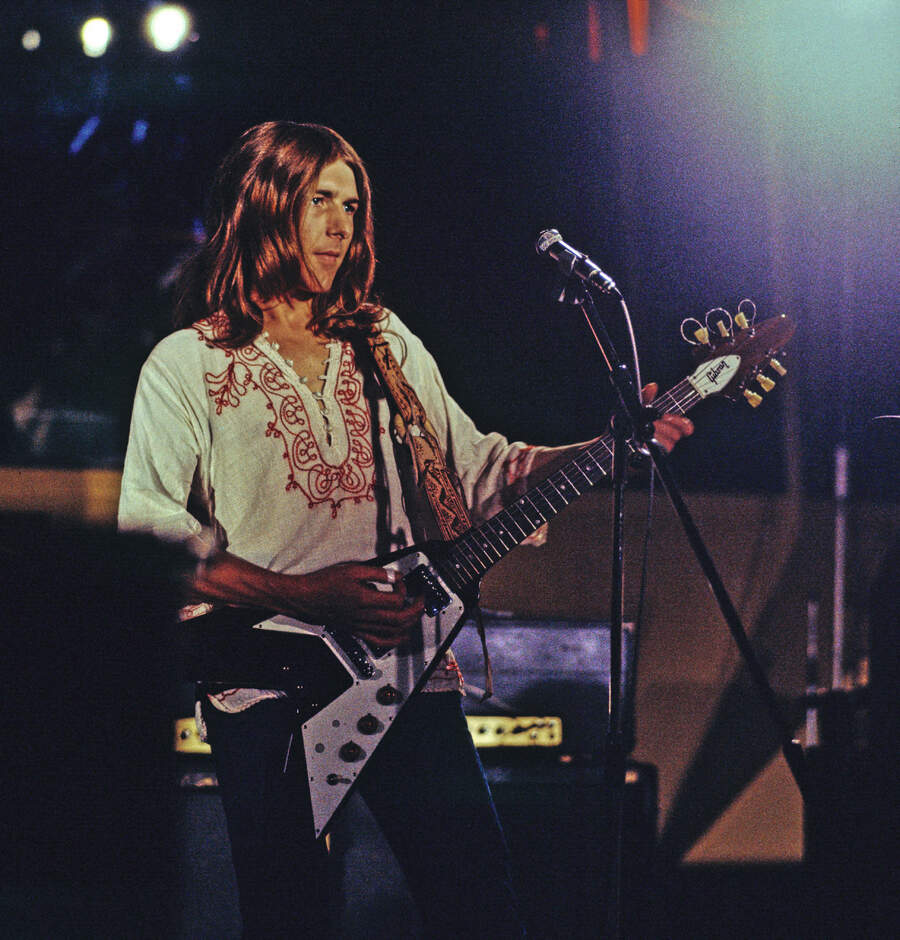
Ralphs stayed until 1973, when Mott were six albums in and at the peak of their glam phase. Leaving was a tough call, but, as he explained to Classic Rock in 2012: “I felt we’d lost some of our wildness and simplicity. It was tough to leave my dear friends, but I had to move on.”
By the time of his final Mott gig, in Washington DC that August, he’d already hatched a plan with ex-Free singer Paul Rodgers, “something more bluesy and basic”.
Teaming up with Rodgers, former Free drummer Simon Kirke and sometime King Crimson bassist Boz Burrell as Bad Company, Ralphs became master of the heavy groove. He also ensured they hit the ground running with his song Can’t Get Enough, a ringing, open-tuned gem that went top five in the States. Its parent album Bad Company went multi-platinum.
Propelled by further monster-selling albums like Straight Shooter, Run With The Pack and Desolation Angels, Bad Company sold out stadiums throughout the rest of the 70s. Ralphs’ input, both as protean guitarist and co-songwriter, was crucial. Good Lovin’ Gone Bad epitomised the barrelling rocker; Feel Like Makin’ Love summed up his ability to switch between folk-country balladry and a thumping chorus.
By the time Bad Company split in 1982, there wasn’t much left for the band to achieve. Ralphs went on to make three solo albums, tour with David Gilmour and form his own ensemble, the typically unstarry Mick Ralphs Blues Band. But both Mott The Hoople and Bad Company stayed close to his heart. He oversaw different iterations of the latter during the late 80s and deep into the 90s.
2009 was a particularly eventful year for Ralphs. Not only did he rejoin Rodgers and Kirke for a Bad Company tour of the US (Burrell had died three years earlier), he also helped revive the classic Mott line-up for five celebratory gigs at London’s Hammersmith Apollo.
More reunion tours beckoned. Shortly after a Bad Co. date at London’s O2 Arena in October 2016, however, Ralphs suffered a stroke that he never quite recovered from.
His considerable legacy was already long secured by then. Further proof, were it needed, arrived in the spring of 2025, with the announcement that Bad Company would be inducted into the Rock And Roll Hall Of Fame. Ralphs was ecstatic on hearing the news.

Ian Hunter
“My first encounter with Mick was in Bill Farley’s Regent Sound studio on Denmark Street in London. It was an audition [for Mott The Hoople]. I played Like A Rolling Stone and Laugh At Me, and I was sort of in.
“They were a bunch of hairy people, and initially I didn’t know who was who. They were all quiet at first. Stan Tippins was the only one who really chatted to me, and I was replacing him. It turned out that Mick had travelled up to London a couple of times from Hereford and ‘raided’ Island Records. He eventually found [mentor/ producer] Guy Stevens, who liked his hair. Guy asked Mick to bring the band up to London, telling them to nod their heads violently to any music that Guy played. The band nodded violently and Guy was suitably impressed.
“I guess at that point Mick was leading the band ambition-wise, but really there was no particular day-to-day leader, they just left it to him. Mick was not that much of a talker. He was more of a thinker. But the humour was there. His playing, his ideas and his songwriting were of quiet intelligence.
“He and Phally [Verden Allen, Mott The Hoople keyboard player] combined for that mighty Mott wall you hear on Brain Capers [1971]. He often hung back on stage working with Buff [Dale Griffin, drummer] and Pete [Overend Watts, bassist]. He loved those big heavy chords, and only played lead when he thought it was necessary. He didn’t whizz up and down the frets at a hundred miles an hour like so many guitarists do to invite adulation. He simply played for the song.
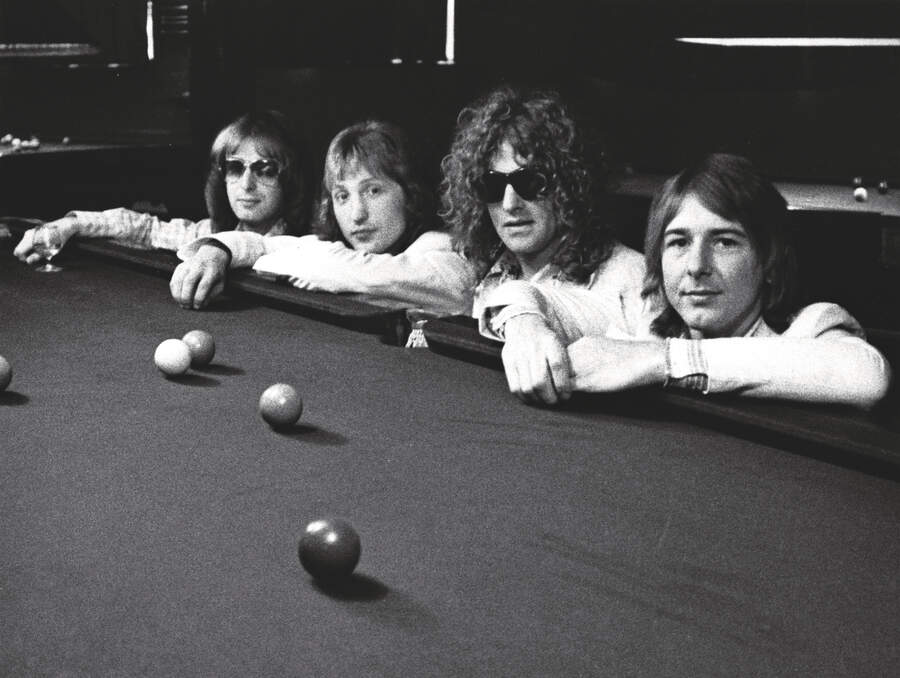
“We were playing Houston in Texas, opening for Traffic and Mountain [in June 1970], when I saw Mick tearing up as he watched [Mountain guitarist] Leslie West. I asked him if he was okay, and he said: “That’s it – that’s where I want to be – and he’s already doing it!”
“Greatest moments? There were so many. I remember listening to the backing track of Whizz Kid on the Mott album [1973] and thinking it had to be orchestral. There was no other way. In comes ‘Ralpher’ – problem solved! I was astonished at what he did on that track – and on many others.
“He was torn when he left the band, but thought it was the right thing to do. He and Paul Rodgers were made for each other. Oddly enough, perhaps because of the Hereford guilt thing, we saw more of him after he left than when he was in the band. He’d played us Bad Company demos before Bad Company became a thing. Mick and Luther Grosvenor had played together in phone booths when they were kids because they couldn’t afford amps. So Luther [aka Ariel Bender] replaced Mick in Mott. And that’s for some other story.
“Now, when I look back, the word ‘respect’ comes to mind. I know we argued, rowed, slagged each other off – especially me, the dreaded frontman! – but later on, the Taking The Mick tours and the Mott reunion shows amplified the respect and love there was in that band. I hold Mick in my heart, as I do Pete, Buff and Phally.”
Paul Rodgers
“I used to see Mick at the offices of Island Records on Basing Street, because Mott The Hoople were also on the label. He was a really nice and very funny guy, the kind of person you like immediately. We found ourselves on the same tour after Free imploded. I formed a three-piece band called Peace, with Stewart McDonald on bass and Mick Underwood on drums. Mick Ralphs was on the same bill [October/November 1971] with Mott. We’d get together in the tuning room and start playing songs to each other, and we just clicked.
“The idea of Bad Company came about when Mick used to visit me at my country cottage and we began songwriting as a team. We already had a few songs. He had Can’t Get Enough, I had Feel Like Makin’ Love and Rock Steady, and we began working on Seagull. I wanted to sing Ready For Love, which had been previously recorded by Mott. It’s his masterpiece, just so moving. Simple Man is another perfect song by Mick. I loved singing it, there’s so much depth there.
“Mick was always supportive of my songs, as I was of his. I remember playing him Feel Like Makin’ Love and saying it just needs something. Mick said: ‘I know what it needs’, and played those big power chords. He was right. On Can’t Get Enough, he showed me the harmony part and suggested we play that. Once again he was right – another brilliant idea, compliments of Mick Ralphs.
“When he and I were first getting together to write, that’s all it was. But in my experience, original songs are the lifeblood of any band, so it was inevitable that a new band would emerge from the songs we were writing. Mick recently told me that he thought he and I would be a duo, like the Everly Brothers, which was news to me. But as fate would have it, we went the full band route, which we both agreed was the right move.
“We were looking for a name for the band when I started to write the song Bad Company, and Mick liked it. Simon [Kirke] wasn’t keen on the name at first, and neither was our manager, Peter Grant of Led Zeppelin fame. But Mick and I stood firm, so Bad Company it was.
“Mick got more varied sounds out of his Gibson guitar than anyone I know. Listen to Burnin’ Sky, Electricland and Shooting Star – the diversity of sound between just those three songs is vast. His playing was always unique, always had character and always inspired me as a singer and songwriter. His sound made the band what it was, no question. Always different, but always recognisably Mick Ralphs.
“His tone is a whole other story – rich, solid and full. I’ll miss hearing him play. It’s a gift that there are so many recordings of him, so his legacy will live on and inspire guitarists for an eternity. I’ve always felt Mick was underrated. He wasn’t recognised as the phenomenal guitarist that he was.
“I’m fortunate to have so many great memories of Mick. He was a tower of strength and a rock-solid band member who was calm and cool. He had the best sense of humour and quick wit. With Mick on board, bus rides were never boring. That man was the greatest storyteller; he was so funny. I remember we once went into a French restaurant, and he took one look at the menu and said: ‘I’m not eating horses’ doofers!’ Of course, he meant hors d’oeuvres.
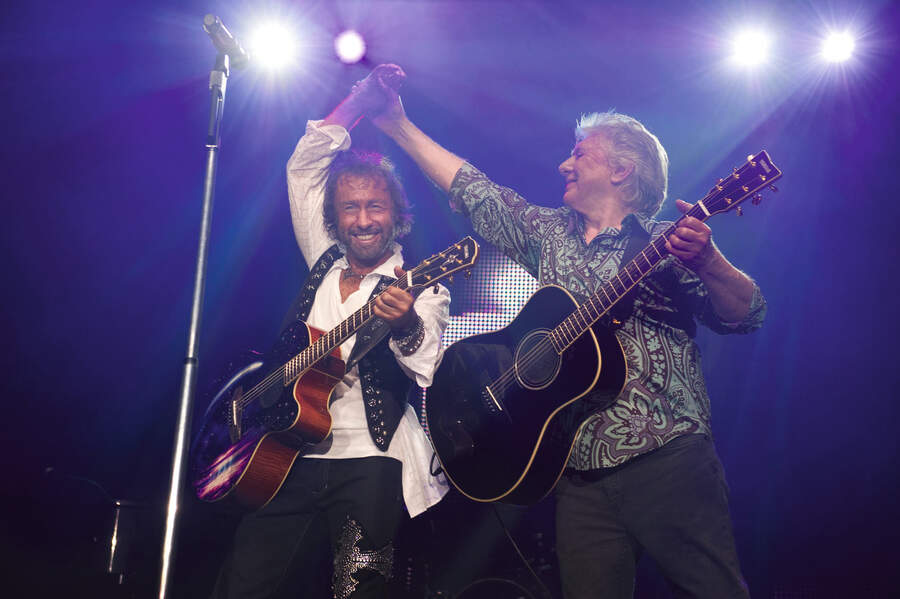
“That dry humour endeared him to so many and inspired him to keep living. When I called Mick to tell him about the Rock And Roll Hall Of Fame induction, I said: ‘Remember when we were trying to come up with band names, and I called you and said Bad Company and you dropped the phone? Well hang onto the phone, Mick. We’re going to be inducted into the Rock And Roll Hall Of Fame’. He went: ‘I’m elated! That’s fantastic!’
“It’s quite incredible, considering this was the first time that Bad Company have ever been nominated. I’m glad that he passed knowing that we together – Mick, Simon, Boz and I – had achieved this. That’s fabulous. An enlightened friend told me that when I think of Mick, know that his hand is on your shoulder and he is with you. That’s a comforting thought.”


 Brisbane’s premier heavy music and dark arts event, the Dead of Winter Festival, is officially rising from the ashes. Dubbed The Resurrection, the festival is locked in for Saturday, 27 June 2026, marking its first return since 2019. Originally launched in 2009, the iconic gathering was forced into a multi-year hiatus following the pandemic. For […]
