The song opens with a delightful crunchy guitar arpeggio that brings a sense of nostalgia. Kylie Krick’s voice enters, reminiscent of Dolores O’Riordan from the Cranberries. Her soft and ethereal vocals add a magical undertone to this ballad. The song gradually unfolds, supported by a drum pattern that takes its time to evolve. The composition and chord progression evoke a feeling similar to that of R.E.M.
Hallaballoo
Around one minute in, the song begins to build, as Krick’s voice is complemented by a deep male voice. This pairing creates an almost ritualistic effect that enhances the emotional weight of the piece. Following this moment, there is a brief guitar interlude featuring a solo with long, plucked notes. These notes repeat to foster a pastoral atmosphere that feels nostalgic and reflective.
The vocal timbre is fantastic. The song manages to transport listeners away from reality, allowing them to journey into their imaginations. It evokes a dreamlike state, akin to opening a drawer and discovering yellowed Polaroids that bring memories to the forefront.
You Will Break – Sound and Atmosphere
The lyrical themes focus on the acceptance of loss. It illustrates the sorrow of witnessing a loved one emotionally drift away. This aspect elevates the lyrical narrative, allowing for deeper emotional engagement. The song encapsulates a delicate blend of melancholy and beauty.
Krick’s delivery is filled with emotion, making the listener connect intimately. Her voice glides over the instrumentation. The gradual progression keeps listeners invested throughout the experience. Moments of silence punctuate the melody, adding depth and allowing the audience to absorb the emotional weight.
The production quality is polished yet retains a raw essence, making the execution feel sincere. Elements like the drum rhythm create a spacious vibe that contrasts well with the intricate guitar work. Each instrument complements the other, resulting in a coherent overall sound that resonates deeply.
Kylie Krick
You Will Break – Performance and Production
The build-up towards the climax of the song is handled skillfully. Just when you think the song has reached its peak, it surprises you with layered harmonies that deepen the emotional intensity. The use of male and female vocals allows for a rich dynamic that enhances the thematic content.
As the song draws to a close, it feels as though the listener is gently guided back to reality. The last guitar chord lingers in the air, allowing those poignant reflections to settle in the mind. They leave the audience with a bittersweet emotional hangover.
This single is an emotional journey. It encourages introspection and is a reminder of the transient nature of relationships. “You Will Break” is a song that deserves a wide audience. I highly recommend this song to everyone looking for a moment of emotional release through music.
It’s better to burn out than fade away, as the old saying goes. While countless bands from the Rolling Stones down would argue with that, there’s something to be said about releasing one brilliant album and then vanishing.
Rock’n’roll has served up its share of one-album wonders over the decades, from psychedelic mavericks to hard rock hotshots. Some have imploded due to intra-band bust-ups, some butted up against the brick walls of record industry apathy and public disinterest, while others met a more tragic end. But they all had something in common: namely, a legacy that amounts to one perfect record.
We’ve rounded up the very best of rock’s one-album wonders here. There are rules, naturally. We’re talking bands who made just one studio album during their lifetimes – posthumous records, remixes, compilations and live albums don’t count. But we are including one-off solo albums by established musicians, and albums by supergroups.
So here they are. Rock’s greatest one-album wonders.
Mother Love Bone – Apple (1990)
It was the perfect album. At the perfect time. Not just for music, but also for me. Apple, which I picked up on its day of release, remains one of a handful of records of which I genuinely wore out the grooves. And what grooves.
Led by the flamboyant Andy Wood – his voice the bastard larynx of Axl Rose and Steven Tyler – alongside future Pearl Jam men Stone Gossard and Jeff Ament, Seattle’s Mother Love Bone combined the wham, glam, thank you, ma’am of the hairsprayed LA set (who had been my music of choice) with the nascent, rain-sodden doom merchants of grunge (who would capture my heart from here).
From the kaleidoscopic This Is Shangri-La to the gentle Stargazer, the delicate Crown Of Thorns and the scorching Holy Roller, Apple had something for everyone.
Sadly, Andy Wood never saw his album released, a heroin overdose taking his life weeks before it hit the shelves. His death would inspire Temple Of The Dog, but that, as they say, is another story.
Siân Llewellyn
Lift To Experience – The Texas-Jerusalem Crossroads
Come the turn of the millennium, anyone fortunate enough to have seen Lift To Experience live will have witnessed a fearsome roar of shuddering intensity, delivered by three scary-looking Texans with beards as long as their songs. That apocalyptic power was duly loaded into 2001’s The Texas-Jerusalem Crossroads, a shattering concept album in which the Lone Star State was an end-of-days Promised Land crawling with Biblical visions; a place where the sustained drone of My Bloody Valentine met free-form noise-rock in an epic sheet-wave of sound.
What’s more, it was a very real piece of psycho-geography, at least for those who made it. Both frontman Josh ‘Buck’ Pearson and drummer Andy ‘The Boy’ Young were sons of southern preachers, raised in deeply religious households in which God was a dual symbol of beauty and terror, lending the album a visceral charge that served as the band’s proof of existence. You can hear this conflict all over tracks like Down With The Prophets and the 10-minute With Crippled Wings, pieces that feel like titanic struggles of faith as much as like conventional tunes.
The band blew apart – undone by drugs, booze and familial grief – shortly after the release of The Texas-Jerusalem Crossroads, relegating Lift To Experience to the province of one-album wonders.
Rob Hughes
Blind Faith – Blind Faith (1969)
Even taking into account everything else the three main protagonists (bassist Ric Grech was, really, an Economy passenger flying Upper Class) have in their back catalogues, Blind Faith is an album Eric Clapton, Ginger Baker and Steve Winwood could be proud of. “It was pretty good and stands up well,” said Winwood. “In retrospect, people even think it has a few classics on there.”
More soulful than Cream, heavier and bluesier than Traffic, it features terrific performances. On its three standout tracks – Had To Cry Today, Sea Of Joy and Presence Of The Lord – Clapton’s playing is focused, crafted and wonderfully melodic; Winwood’s Hammond adds colourful washes, his at times on-the-limit vocal delivery recalling his R&B belter days with The Spencer Davis Group.
While the band was never going to live up to expectations for those who had it on equal billing with the Second Coming, the album did offer a tantalising glimpse of what might have been had Clapton’s plan to reshape Cream with the addition of Winwood come to fruition. But even with this line-up, none of them expected it to hold their interest for more than just the one album.
Critically acclaimed and derided in equal measure – often for the same things – in the US it had staggering advance orders of 250,000, although conversion to sales stalled when half the stores there refused to stock it because of its controversial cover. And still it was a UK and US No.1.
Paul Henderson
Sea Hags – Sea Hags (1989)
If ever there was a band that had it all and then blew it, it was the Sea Hags. After getting Metallica’s Kirk Hammett to produce their demo, the San Francisco quartet roped in the hottest producer around for their debut album: Mike Clink, fresh from working on Appetite For Destruction. “We’ll be the new Guns N’ Roses if anyone wants to point that at us,” said frontman Ron Yocom, acknowledging the expectations.
The album came out at the height of hair metal, but the band’s “musicality” and “70s vibe” (Yocom’s descriptions) translated into the kind of dirty, funky rock that Aerosmith made in the 70s. It was loaded with great songs, from the charged Half The Way Valley to the menacing finale Under The Night Stars.
But the Sea Hags screwed up, big time. When they played London’s Marquee club, Yocom was so drunk he fell head-first into a flight case. He was also addicted to heroin, as was bassist Chris Schlosshardt. And after the album stalled at No.150 on the US chart the band split up.
Yocom planned to re-form the Sea Hags, but Schlosshardt died in February 1991. This one great album became his, and the band’s, epitaph.
Paul Elliott
Hughes/Thrall – Hughes/Thrall (1982)
By the end of the decade it wasn’t easy being a 70s supergroup refugee. Exhibit A: Deep Purple’s singing bassist Glenn Hughes. His first solo album, 1977’s Play Me Out, sounded too much like Stevie Wonder for the denim brigade, and it bombed. Then, in 1981, he met Pat Thrall, guitarist for Canadian rocker Pat Travers.
Within months the pair had signed a deal and were recording in a Malibu studio with Eric Clapton’s old producer Rob Fraboni. So far, so good. Soon, though, Free/Stones engineer Andy Johns replaced Fraboni, and session drummers came and went in H/T’s irresolvable quest for perfection. “Cocaine was consumed nightly,” Hughes admitted.
The duo’s only album was released in August that year. Its futuristic sound encompassed the blue-eyed soul with which Toto were raiding the US charts (The Look In Your Eye), new wave-ish pop (Beg, Borrow Or Steal) and priapic hard rock (Muscle And Blood). Yes, those overwrought lyrics and jingling guitar-synths are pure 1982, but the spooked-sounding power ballad First Step Of Love and Thrall’s idiosyncratic guitar playing on Hold Out Your Life are still laughably brilliant, while the whole record thrums with nervous energy.
Sadly, Hughes/Thrall tanked. The Class As didn’t help, but its USP was also its biggest drawback. Most rock fans preferred the simpler charms of fellow Deep Purple offshoots Whitesnake or Rainbow, while American pop audiences opted for that first Asia album instead. Since then, H/T has been hailed as a lost AOR classic, but it’s too heavy – and peculiar – to fit neatly into any category.
Apparently, a second album was started but remains unfinished. It couldn’t possibly be better than this.
Mark Blake
Jeff Buckley – Grace (1994)
In 1991, the son of a dead folk singer sat down to jam with an ex-Beefheart guitarist in a West Village apartment. And whenJeff Buckley sang the first line of Grace’s title track, Gary Lucas knew they had something.
“My jaw dropped,” he recalls. “I said: ‘Man, you’re a phenomenon.’”
That octave-straddling swoop of a voice may be Grace’s calling card, from the operatics of Mojo Pin to the shimmering cover of Leonard Cohen’s Hallelujah, but equally impressive is its eclecticism. Buckley’s influences pinballed between Led Zeppelin, The Smiths, Bad Brains and Sufi singer Nusrat Fateh Ali Khan. Accordingly, Grace knows no boundaries, visiting smoky jazz on Lilac Wine, sprouting chest-hair on the bombastic Eternal Life and carving a buzzsaw riff through So Real. You sense a writer having creative differences with himself – and thriving on it.
Released in the wilderness between grunge and Britpop, Grace was a commercial slow-burner, despite plaudits from Jimmy Page and Thom Yorke. But Buckley’s promise was curtailed when, in June 1997, his body was dredged from the Mississippi. The vaults would be swept for 1998’s Sketches For My Sweetheart The Drunk, but Grace remains his spellbinding last goodbye.
Henry Yates
Toy Matinee – Toy Matinee (1990)
It begins with some radio dial roulette; an orchestral crescendo… a blast of vocal harmony… a speedy flamenco guitar riff… Back in angsty-grungy 1990, this opening salvo was music to my ears. As I dug in I marvelled at their Foxtrot-era-Genesis-meets-Beatles balancing act. Virtuoso noodling looped through tight pop structures, huge hooks wrapped in hyper-literate, humorous lyrics about the apocalypse, surrealist art and Elvis impersonators. “I wanted to write songs you could sink your teeth into,” said singer/multi-instrumentalist Kevin Gilbert.
Gilbert formed Toy Matinee with Pat Leonard after a ‘battle of the bands’ contest. Leonard was a judge. Gilbert’s band Giraffe won. The two bonded over a love of Jethro Tull and Steely Dan. Leonard, who had produced and written hits for Madonna, supplied studio time and an ace band. “No strings, no expectations,” was how he described the sessions. “We made it without pressures to create a hit.”
While the single Last Plane Out generated radio buzz, the album never transcended cult status. Leonard, unwilling to tour, soon returned to his lucrative life as a producer. Gilbert, after helping then-girlfriend Sheryl Crow create Tuesday Night Music Club, and making a fine solo album, took his own life in 1996.
Having gone in and out of print three times, Toy Matinee’s heady charm still enthralls. “As bizarre as either of us could get,” Leonard said, “the other could keep up.”
Bill DeMain
The La’s – The La’s (1990)
Lazily pegged as a proto-Britpop band, the self-titled album from The La’s has more in common with 60s British pop than with the self-important strutting of Oasis et al: ringing guitars, fierce strumming and elliptical lyrics, sugar-coated with effortless melodies.
Opener Son Of A Gun sets the scene: short, sharp and sweet, with singer/songwriter Lee Mavers asserting his vocal presence amid tight harmonies, though the peak is the incandescent There She Goes with its chiming guitars and Scouse romanticism. Only the final introspective Looking Glass breaks the three-minute barrier, opening up new vistas to explore.
The perfectionist Mavers hated the production and disowned the album. His issues ran so deep that, all these years on, he hasn’t come even close to following it up.
Hugh Fielder
Burning Tree – Burning Tree (1990)
‘Coulda, shoulda, woulda’ sums up many one-album wonders, but in the case of Burning Tree, fronted by future Black Crowes guitarist Marc Ford, it holds particularly true. Their sole record might have been a hit in another era. Instead it sank, thanks to bad timing, bad judgement and bad luck.
While they took their cue from Jimi Hendrix and Cream, what separated them from many others was an exquisite pop ear, noticeable on the hook-heavy chorus of Mistreated Lover and the harmonised outro to Crush, one of the great unheralded songs about being in a band.
Sadly, someone at their label decided to unbung the schedules by releasing nine albums on the same day, under the banner ‘Epic Rock’. Eight of the nine disappeared; Burning Tree glowed briefly and beautifully for the few who got to hear it. It remains a classic awaiting rediscovery.
Jon Hotten
Pride Tiger – The Lucky Ones (2007)
It was a CD plonked on my desk by James Gill, a writer on Classic Rock’s sister magazine, Metal Hammer: a plain white disc with the words ‘Pride Tiger’ scrawled on it in red marker. “I think you’ll like it,” he said. It wasn’t promising: three of the band had been in underachieving hellions 3 Inches Of Blood before leaving to scratch a more melodic itch. (“After a while,” singing drummer Matt Wood explained, “metal just becomes the same thing over and over.”) Out went Iron Maiden dual guitars, in came, er, Thin Lizzy dual guitars.
I did like it. I didn’t stop listening to it for months. Fill Me In became the ‘Most Played’ song on my iTunes – an irresistible Boys Are Back In Town knock-off that could stand with Lynott’s best. I bought the video of the title track from iTunes – it remains the only music video I have paid money for. Full of cool dudes and hot girls (but not in the usual leery way), it was a seductive vision of a future where the soundtrack to the best party in town had big riffs and swaggering choruses.
So good was The Lucky Ones – and so frustrated were we by the fact that no UK label would sign bands like this – that we set up Powerage Records and signed them ourselves. The band played a triumphant set at Hard Rock Hell, winning over a hungover Saturday-morning audience, and stumbling around for the rest of the weekend, stoned and raving about being at a festival that featured Budgie and Thin Lizzy.
And then? The album sold 850 copies on Powerage. Rock’s future did not look like The Lucky Ones vid. It looked like Hard Rock Hell, like lots of hard work peppered with small victories and little financial return.
The band split in the summer of 2009. Powerage shut up shop not long after. We’re not embarrassed. For a moment there, Pride Tiger renewed our faith in new rock music, and The Lucky Ones stands as a lost classic. Someone should send a copy to Scott Gorham and Ricky Warwick asap.
Scott Rowley
Sex Pistols – Never Mind The Bollocks (1977)
The Sex Pistols’ only proper studio album was just 39 minutes long, included four of their previous singles, and pre-dated the end of the band by a mere three months. Yet it remains one of the most influential and controversial records in history.
With Johnny Rotten’s abrasive vocals and provocative lyrics splayed across a wall of thrillingly direct guitars, Bollocks is a barrage of both gratuitous angst and elemental purity. While many punk ‘classics’ survive as nostalgia or well-meaning polemic, these compelling tirades against British society, hypocrisy and intellectual torpor still send rushes down your spine. Problems, Liar, Bodies and EMI (‘and you thought that we were faking’) were miniature sonic snuff-movies, a dive into the previously unsayable. “My words are my bullets,” said Rotten/Lydon in 2008. “They meant a lot to my generation.”
As 1978 dawned, he was growling: “Ever get the feeling you’ve been cheated?” and the Pistols were shot. But they’d hit the bullseye. Job done.
Chris Roberts
David + David – Boomtown (1986)
Studio musicians and sometime producers David Baerwald and David Ricketts would find real, if fleeting, fame in 1993 as part of Sheryl Crow’s Tuesday Night Music Club band. But that was a world away from the pair’s collaboration Boomtown, released six years earlier.
A bleak reading of America’s underclass in the depths of the Reagan era, this was a collection of vignettes of lives full of wrong turnings, of dead-end jobs, of drink and drugs. First single Welcome To The Boomtown began with the desperate howl of Ricketts’ guitar, before Baerwald dispatched his bitterly ironic lyric about a high-living drug addict and her lowlife dealer: ‘Pick a habit, we got plenty to go around,’ he sang over a thrumming pop-rock hook that date-stamped it to the mid-80s. Both unnerving and eminently hummable, it gave the duo a US Top 40 hit. The album followed it to No.39.
The success was short-lived. Ricketts was apparently put off the hard rock fans they were attacting, and they disbanded before the album caught its second wind. Sheryl Crow beckoned, ensuring neither David would get this bloody again.
Philip Wilding
GTOs – Permanent Damage (1969)
No one was ever sure what GTO actually stood for. Girls Together Occasionally? Girls Together Often? Girls Together Only, Outrageously, Orally, or Orgasmically? Essentially the GTO’s were a crew of enterprising Hollywood rock groupies led by Pamela Ann Miller (later Pamela Des Barres) and Linda Sue Parker, who used the stage names Miss Pamela and Miss Sparky.
With four other like-minded young women from the Sunset Strip they formed a performance group known as the Laurel Canyon Ballet Company, switching to The GTOs as they approached the orbit of Frank Zappa.
Back in ’69 Zappa was augmenting the Mothers Of Invention with pet projects on his Straight and Bizarre labels, such as Alice Cooper and Wild Man Fischer.
The GTOs became another of these endeavours. Lowell George, Russ Titelman and Ry Cooder were brought in to supply the music, and contributions also came from Jeff Beck, Davy Jones, Rod Stewart and Cynthia Plaster Caster. (Who wouldn’t want to work with an ensemble of wild and sexually adept young women?)
Sadly, somewhere along the line Zappa lost interest or ran out of budget. Permanent Damage was released as an unfinished social document, with potential songs staying as synchronised recitation, padded with anecdotes and snatches of conversation. Which is unfortunate, since the finished tracks – not least Do Me In Once And I’ll Be Sad, Do Me in Twice And I’ll Know Better (Circular Circulation) – suggests the GTOs deserved better.
Mick Farren
Coverdale Page – Coverdale Page (1993)
In 1993 Jimmy Page was a guitarist in desperate need of a singer. I know because his manager had asked me to help find him one. I wish I could say teaming up with David Coverdale was my suggestion, but that brainwave was Geffen executive John Kalodner’s.
The result was exactly what everybody secretly wanted: a Zeppelin album from the band’s earliest, sexed-up days. Opening with blues rock colossus Shake My Tree, it was sheer bombastic bliss, from the mystic blues of Don’t Leave Me This Way to grand finale Whisper A Prayer For The Dying – where Stairway To Heaven met Kashmir, no kidding.
They played a few shows in Japan, before Page put in a call to Robert Plant, leaving this as one of rock’s great ‘What if?’s.
Mick Wall
Derek And The Dominos – Layla And Other Assorted Love Songs (1970)
If great music comes out of tragedy, then it’s little wonder Derek And The Dominos’ sole album is a masterpiece. It was recorded amid drink and drug abuse and undiagnosed schizophrenia. But for all the travails surrounding it, the five musicians involved – Eric Clapton, Duane Allman, Jim Gordon, Carl Radle and Bobby Whitlock – created something passionate and timeless that would stand as arguably the finest album of their respective careers.
Layla itself is the most high-profile track, but the likes of Bell Bottom Blues and Tell The Truth are just as beautifully realised, combining pin-sharp musicianship with earthy spirituality and a true sense of joy. The overall impact is diverse, devastating.
They attempted to record a second studio album, but the project was sunk by drugs and paranoia. Layla remains a stellar legacy. “It touched people where they needed to be touched,” Bobby Whitlock says. “In their soul.”
Malcolm Dome
Temple Of The Dog – Temple Of The Dog (1991)
Chuckles were hardly high on the grunge agenda at the best of times, but this one-off tribute to late Mother Love Bone singer Andrew Wood – a collaboration between Soundgarden singer/Wood’s flatmate Chris Cornell and the surviving members of MLB – had fewer laughs than your average BBC3 sitcom.
Astonishingly, what could have been a turd in the swimming pool turned out to be the greatest album of the era. Cornell dialled down the wailing, imbuing Say Hello 2 Heaven and the Eddie Vedder-assisted Hunger Strike with a nobility that was alien to the plaid-shirted hordes, while Reach Down was a glorious exercise in rocking-out-as-catharism. Grunge had never been so moving, and it would never be again.
Dave Everley
Lowcraft – Manticore (1999)
By the turn of the millennium, glam rock had been hijacked by the goth-spattered bumps and grinds of Manson, and Bowie-era grand gestures were in short supply. With the gilding on the Suede lily dulled by five years of familiarity, Portland, Oregon’s Lowcraft crash-landed in post-Britpop London as the very exemplar of a band out of time.
Fronted by Nathan Khyber – a statuesque fop who punctuated studied Bryan Ferry ennui with the androgynous allure of a Ziggy made flesh – Lowcraft dealt in emotive anthems, perpetually teetering on the brink of delicious desperation.
Listening to the album now it’s almost inconceivable that it should have been allowed to fall between the cracks: the hook-heavy crescendos of One Of Us, the narcotic dreamscape of Transcendental Meltdown, the pulsating prurience of Pornstar. It’s glam’s last hurrah, its lost masterpiece.
A dispiriting toilet tour followed, but without adulation and stardom Lowcraft lost their mojo and duly split.
“It’s naiveté that allows you to create grand gestures,” says Nathan, now making music both in a solo capacity and with Manticore producer Clark Stiles as The Good Listeners. “When you’re writing in the void you have an enormous voice, but once you see the wall you become diminished again. There was a lot of passion in our writing because we thought we could conquer the world.”
Ian Fortnam
Sledgehammer – Blood On Their Hands (1983)
John Betjeman might have wanted it bombed out of existence, but the unremarkable Berkshire town of Slough survived the poet’s brickbats to spawn one of the NWOBHM’s most remarkable bands: power trio Sledgehammer.
They’d had a self-titled song on 1980’s Metal For Muthas compilation but they failed to capitalise on it. When their one and only album, Blood On Their Hands, came out in 1983, the NWOBHM had long-since peaked and it sank without trace.
Guitarist/singer Mike Cooke was a serious-minded individual with strong religious beliefs, and Blood has an eccentric, off-kilter undercurrent that gives it an unusual edge. Over The Top 1914 is a bitter anti-war anthem, the Who-like 1984 offers a dose of Townshend-style cynicism, and the trippy Perfumed Garden sounds like an undiscovered 60s proto-metal anthem. Sledgehammer itself isn’t about having your skull caved in at all, it’s actually about God: ‘It struck me like a sledgehammer that faith can move every mountain’.
It’s almost impossible to find out what happened to the band. Google their name and you get Peter Gabriel. However, we did discover that drummer Ken Revell still lives in Slough. In an air-raid shelter, probably.
Geoff Barton
Shadow King – Shadow King (1991)
It was fitting that the band formed by former Foreigner singer Lou Gramm and ex-Dio/Whitesnake guitarist Vivian Campbell played their only live show on Friday 13th in London, if only because their luck was lousy. Within six months of their self-titled debut album, Campbell had quit for Def Leppard and Shadow King’s initial promise had withered on the vine.
Poor timing aside, there’s no doubting the quality of the music they made during their frustratingly brief existence. The 10 songs that made up the album were consistently classy hard rock. Campbell displayed his full arsenal of tricks, showboating his way through Once Upon A Time and displaying more restraint on the fragile Russia, but the defining moment came with Don’t Even Know I’m Alive, a slice of top-drawer, lighter-waving wimp-hem – which is ironic, since Gramm had cited ballad overload as his reason for leaving Foreigner.
The singer blamed the group’s fate on a lack of label attention, although the changing musical climate didn’t help. Whatever the reason, Shadow King remains an underground classic.
Dave Ling
Skip Spence – Oar (1969)
I chanced upon this wonderful thing while wading through the import racks at Harlequin Records in Soho circa 1971. John behind the counter smiled: “Never heard it? Lucky bastard.”
The platter that hit my Bush turntable sounded like someone enveloped in demons but laughing at his plight. Oar? Or? Awe. The stoner on the cover was 23 yet appeared to have accumulated decades of experience, not all agreeable. Come along for the ride – at your own risk.
Canadian-born, California-raised Alexander ‘Skip’ Spence ran with the West Coast San Francisco elite. He played guitar with Quicksilver Messenger Service in 1965, before Jefferson Airplane poached him to play drums on their debut album Takes Off.
More maverick than team player, his wanderlust lead him to form Moby Grape, who sacked him when he tried to axe his way into one of his bandmates’ rooms in 1968. Deranged from LSD abuse and believing he was the antichrist, he was committed to a psychiatric ward and diagnosed with schizophrenia.
On his release, he took himself to Nashville where he recorded an album of Old Testament intensity laced with moments of lucid self-realisation. The 12 songs that became Oar were made in virtual solitude, except for engineer Mike Figlio, in producer David Rubinson’s Nashville studio on a primitive tape machine. He’d only intended to demo, but Rubinson was so enthralled that he released the album naked – every stick played by the Skipper himself.
This one-man psychedelic masterpiece dealt with childhood (Little Hands), the warp of fame (Lawrence Of Euphoria) and acknowledgements of madness (Weighted Down (The Prison Song), delivered in a vocal that sounded like a man living at the bottom of a mine shaft. Even so, that’s a lovely, lovely voice, and the album’s combination of cranky time signatures, labyrinthine lyrics, acid-drenched electric and acoustic guitars, and epic percussion (not least on closing track Grey/Afro, a masterclass in drumming) are the products of true artistry.
Alt-minimalism taken to the nth degree, Oar made zero chart impression when it was released in 1969 – in fact it was Columbia’s worst-ever-selling LP at the time. It was subsequently hailed as a masterpiece by the likes of Robert Plant and Tom Waits. Sadly, Spence never benefitted from their plaudits. He died of lung cancer in 1999, aged 52. Oar is a great, if occasionally troubling, testament.
Desecration of Souls
The Making of Acheron’s Rites of the Black Mass
If it were released today—in an age where countless bands adopt the “dungeon synth” qualifier—Rites of the Black Mass would not only blow up, but perhaps even spawn a new microgenre. Séance metal, maybe? More likely, the demo-turned-album would remain an anomaly among a crowd of dabblers and straight-up larpers.
Now as ever, the unserious steer clear of Acheron’s 1992 debut. For this dark artifact possesses both horripilating sincerity and undeniably heavy death/black riffs. Rites of the Black Mass is an essential addition to any modern heavy metal fan/occultist’s collection, as it has been since it was first issued—hence its many forms over the years.
Even temporally, the creation of Rites of the Black Mass is a strange tale. This story takes place from roughly 1990 through 1992, beginning in Pittsburgh. Enter Floridian transplant Vincent Crowley, who recorded the demo version of Rites at Alternative Studios in Penn Hills, just outside the Steel City. At the time, Crowley didn’t realize it, but he was a few steps closer to achieving his goal of creating the most “authentically sincere” satanic death/black metal album ever. However, this story does not end in Pittsburgh, but in Tampa.
After the demo was recorded, Acheron would move to Florida—in the sense that Acheron was always Vincent Crowley. The other two members listed on the record, drummer Jim Strauss and lead guitarist Peter Slate, only met for the first time years after the album’s release. Despite numerous setbacks, Rites of the Black Mass remains a haunting work of raw blackened death metal. As its origin story reveals, it was nothing short of fate that this album was spawned and unleashed upon the world.
Need more classic Acheron? To read the entire seven-page story, featuring interviews with all three members who performed on Rites of the Black Mass purchase the print issue from our store, or digitally via our app for iPhone/iPad or Android.
Rock’n’roll bands don’t come much bigger than Bon Jovi. In a career spanning nearly 40 years, they have sold 130 million albums and played to an estimated 34 million fans in more than 2,700 shows.
At the heart of this classically all-American success story is the man born John Francis Bongiovi, Jr, in Sayreville, New Jersey in 1962. Blessed with movie-star good looks and driven by a ferocious work ethic and an unshakable will to succeed, he was the kid who had the Superman logo tattooed on his arm and believed it. And after renaming himself Jon Bon Jovi – less “ethnic”, more “rock star” – he found the path to glory.
Having served a lengthy apprenticeship in various bar bands and working at his cousin Tony Bongiovi’s recording studio, The Power Station, Jon got his first break in 1982 when his song Runaway became a radio hit in the Jersey area. A contract with the Mercury label followed, and a band was formed under the name of Johnny Electric, hastily changed to Bon Jovi.
The band’s original guitarist was Dave ‘Snake’ Sabo, a childhood buddy of Jon’s who went on to form Skid Row. But in 1983 Jon settled on the line-up with which he would conquer the world: guitarist Richie Sambora, keyboard player David Bryan, bassist Alec John Such and drummer Tico ‘The Hit Man’ Torres.
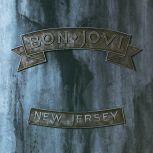
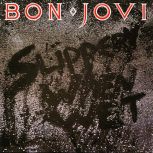
It was in 1986, with their third album, Slippery When Wet, that Bon Jovi became one of the biggest bands in the world, and Jon Bon Jovi, with his fluffy hair and million-dollar smile, was transformed into rock’s leading sex symbol. The follow-up album, 1988’s New Jersey, was another multi-million seller. But arguably, Bon Jovi’s greatest success has been their longevity.
While many big 80s acts were killed by grunge, Bon Jovi rode out the storm with 1992’s Keep The Faith, but the last few years haven’t been easy. Sambora left the band more than a decade ago and shows no sign of returning, while Bon Jovi himself underwent reconstructive surgery of his vocal cords after their 2022 tour. But next month, they’re back again, with nine shows scheduled at New York’s Madison Square Garden, and five UK and Ireland Stadium shows booked for August and September.
Thank You, Goodnight: The Bon Jovi Story, the band’s well-received 2024 docu-series, explored decades of stadium-level success, but it also confirmed something else: that the 80s saw Bon Jovi at their big-haired, hard-rocking best, when Jon sang without a trace of irony or embarrassment: “I’ve seen a million faces, and I’ve rocked them all!”
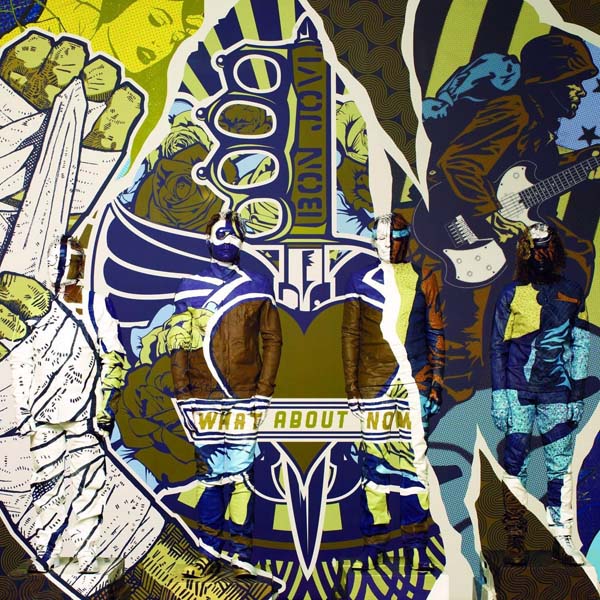
“The record is sounding great,” Richie Sambora told Classic Rock ahead of the release of What About Now. He also promised: “We’ll be at a stadium near you very soon!” But as it turned out, the album was a long way off being great, and – more significantly – Sambora quit the band before the first stadium show of their 2013 world tour.
Jon Bon Jovi promptly installed Phil X as his new guitarist, and for Sambora, after the best part of 30 years’ service, What About Now proved a sadly underwhelming swan song. From lame self-help anthems Because We Can and Army Of One to the Springsteen-lite of The Fighter and What’s Left Of Me, it’s surely the worst album Bon Jovi have ever made.
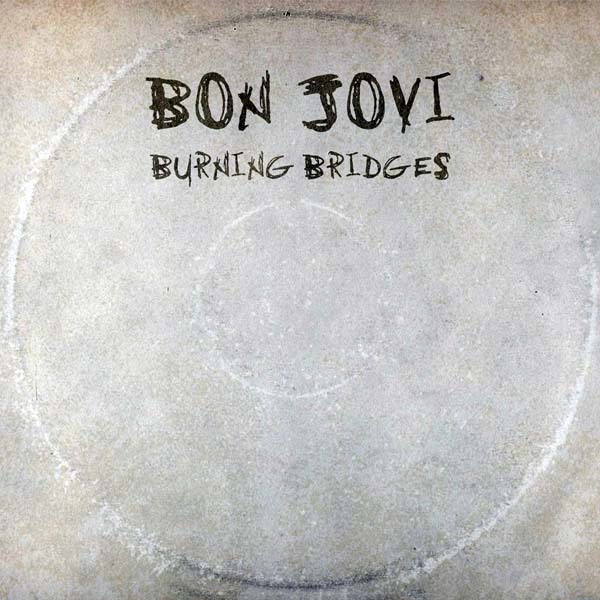
Bon Jovi’s first album without Richie Sambora was also their last for Mercury Records. The best track, Saturday Night Gave Me Sunday Morning, is actually a Sambora co-write, possibly included as a warm send-off to the guitarist.
There is nothing warm, however, about the album’s title track, a parting shot at Mercury’s powers that be, in which JBJ spits. “Here’s a last song you can sell/Let’s call it Burning Bridges/It’s a singalong as well/Ciao, adieu, goodnight, guten abend/Play it for your friends in hell.” Such piss and vinegar would be more admirable were it not for the fact that this album reeks of contractual obligation. JBJ described its contents as “songs that weren’t finished, that were finished, a couple of new ones…” In short, a dumping ground, which he had the chutzpah to call a “fan record”.
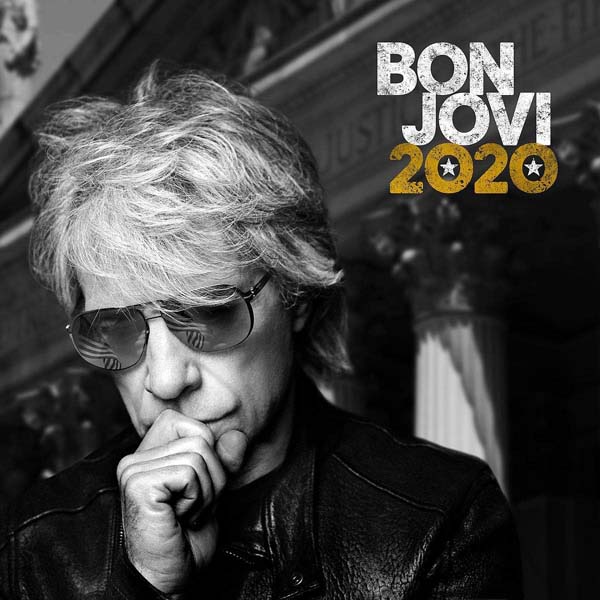
The release of Bon Jovi’s 15th album was delayed for five months by the global pandemic. As a result, two late additions were made to the track listing, including a song named American Reckoning, a meditation on the death of George Floyd and the birth of the Black Lives Matter movement.
Musically and lyrically, American Reckoning is very much influenced by Springsteen. What the song lacks is vocal power – a weakness that runs through the whole of this album. There is no hiding that. However, even at his youthful peak, JBJ would have struggled to get anything out of songs as flimsy as the bland opening track Limitless and the hokey ballad Story Of Love.
In the wake of 9/11, Bon Jovi’s response was an album with a life-affirming message. This much is set out in the lead single, Everyday, of which Richie Sambora said: “Time is the most precious thing that you have, so you should try to live every moment to the fullest.”
The album’s title track is built along similar lines, with a defiant positivity in the lyrics and a dense guitar sound. For all the good intentions, however, it’s an album lacking in both depth and finesse. Amid a bunch of formulaic songs co-written with Swedish pop producer Andreas Carlsson is a ballad, You Had Me From Hello, that Westlife might have considered too cheesy.
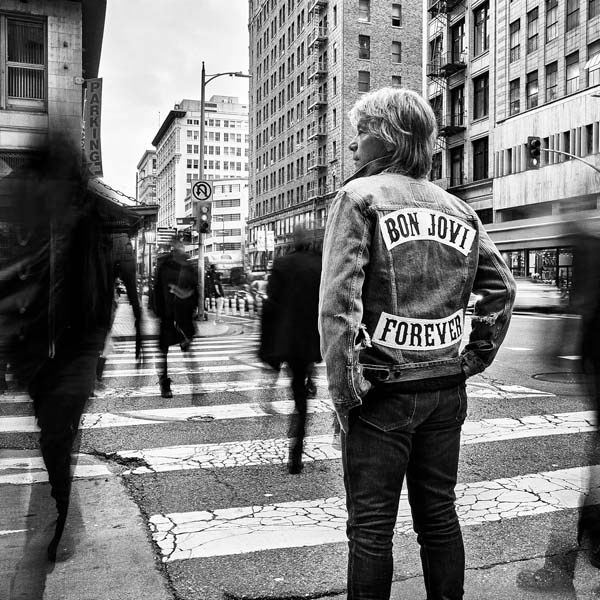
First there was Forever. Then, a year later, there was the Legendary Edition, featuring re-records with a host of guest stars. The original album marked the debut of a seven-piece line-up recognising guitarist/producer John Shanks and percussionist Everett Bradley as official band members. More importantly, it was the first new recording since Jon Bon Jovi had vocal cord surgery.
For all that, it’s another humdrum album from a band that has been sleepwalking for years now. The whoah-oh hook in Legendary, the lead single, is a faint echo of past glories. The Legendary Edition includes a new song, Red, White And Jersey, which is as corny as its title suggests, and among the various duets (with Robbie Williams, Avril Lavigne and others), there’s a dream come true for JBJ – singing with his hero Springsteen on the sombre Hollow Man, the best song on the album.
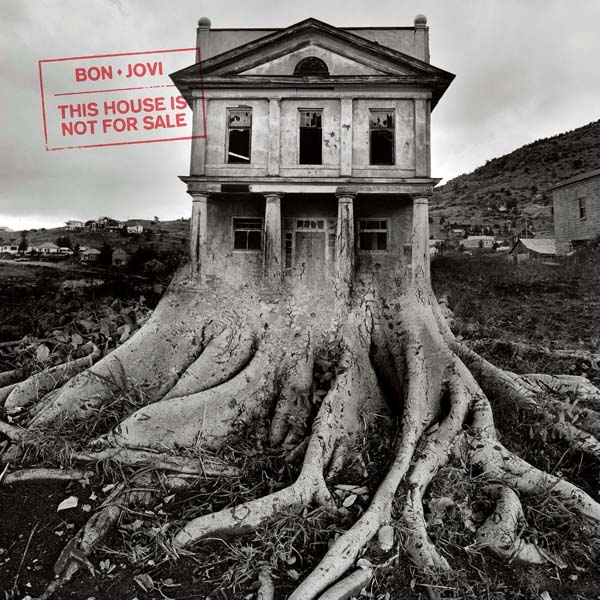
In Richie Sambora’s absence, John Shanks handled the guitars as well as production on 2015’s Burning Bridges. A year later, the band’s 14th studio album saw both lead guitarist Phil X and long-serving bassist Hugh McDonald elevated to full band member status. This House Is Not For Sale was also the first album for new label Island Records, and it arrived with JBJ boldly proclaiming: “This record is about our integrity. Integrity matters and we’re at a stage of our career where we don’t have anything left to prove.”
Classic Rock reviewer Emma Johnston concurred: “At this stage in their career, these old dogs don’t need new tricks.” But she added, with unerring accuracy: “This House Is Not For Sale is no masterpiece, and while the punchy title track sonically nods to their heyday, most of it is made up of by-numbers pop.”
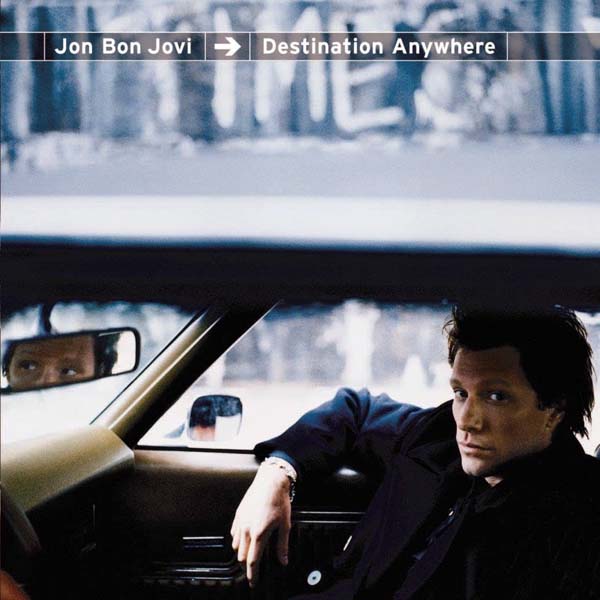
Jon’s second solo album saw him venturing a long way from Blaze Of Glory territory. Destination Anywhere is a mature mainstream pop-rock album with none of the hard rock swagger of his band in its prime. The mood is generally low-key, and it’s the subtler songs that work best – Staring At Your Window With A Suitcase In My Hand, It’s Just Me and Every Word Was A Piece Of My Heart, the latter with shades of U2’s With Or Without You.
Oddly, it’s the songs picked as singles that have aged less well – Queen Of New Orleans, with a stagy drawled vocal, and Midnight In Chelsea, with a prominent bass riff and “sha-la-la” chorus like a parody of Walk On The Wild Side.
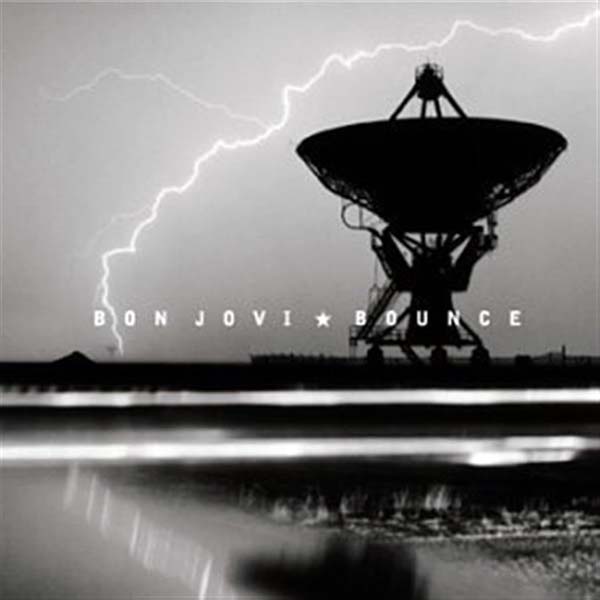
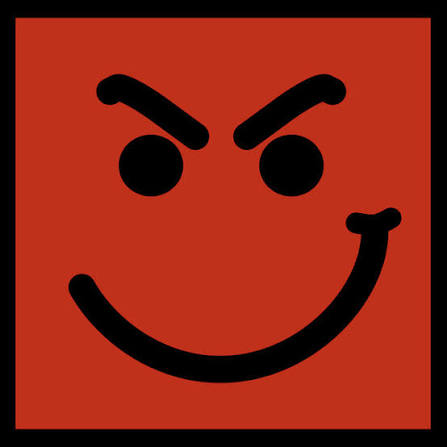
In the three years between Bon Jovi’s eighth studio album, Bounce, and their ninth, Have A Nice Day, there were two major releases from the band: the hits remix collection This Left Feels Right and the rarities box set 100,000,000 Bon Jovi Fans Can’t Be Wrong.
Overall, Have A Nice Day wasn’t much different to Bounce, although the songwriting was marginally stronger – as illustrated by the title track, Who Says You Can’t Go Home and Bells Of Freedom. There’s also a little of the old rowdiness in Last Man Standing, a strangely bitter song about the music business from a man who’s made millions out of it. Also, in an alternative version of Who Says You Can’t Go Home, with Jon in a duet with country singer Jennifer Nettles, there’s a taste of what was to come on the 2007 album Lost Highway.
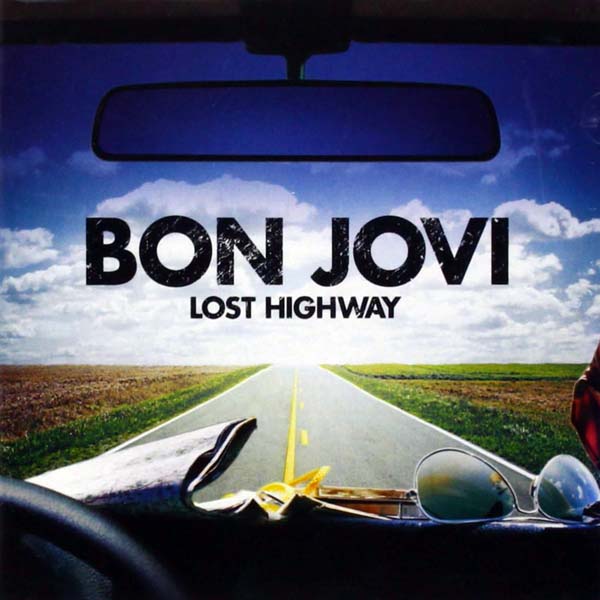
JBJ described Lost Highway as “a Bon Jovi record influenced by Nashville” – in other words, not strictly a country record. But it’s not far off. Production is split 50/50 between John Shanks (promoted in 2024 to rhythm guitarist for the band) and Dann Huff, the former leader of cult AOR band Giant who has since become a leading figure in modern country music.
In addition, two tracks are duets with country artists – Till We Ain’t Strangers Anymore with LeAnn Rimes, We Got It Going On with the duo Big & Rich. The album’s title has echoes of late-‘80s John Cougar Mellencamp, but the standouts are Whole Lot Of Leavin’ and Any Other Day, expertly crafted songs with a perfect balance of country flavour and rock drive.
Richie Sambora got a little carried away when he said of The Circle: “It rocks hard!” In reality, Bon Jovi’s eleventh studio album and fourth US Number 1 didn’t punch with the same weight as the band’s 80s classics. But it was a marked improvement on 2007’s cheesy country-crossover Lost Highway.
Its first single, We Weren’t Born To Follow, is a vintage Bon Jovi anthem. Brokenpromiseland is U2 on steroids. And although Work For The Working Man didn’t ring as true as Livin’ On A Prayer now that Jon Bon Jovi is worth over $400m, the song was cited as an inspiration by Barack Obama’s chief advisor David Axelrod. At least it wasn’t Dick Cheney.
When Jon Bon Jovi’s debut solo single Blaze Of Glory hit Number 1 in the US, it appeared that the band might be finished. But in the end, all Jon needed was a break from a gruelling album/tour cycle. Blaze Of Glory – a mythic cowboy song like Wanted Dead Or Alive – was the theme to the Western Young Guns II.
Featuring heavyweight guests (Jeff Beck, Elton John, Little Richard) and several fine songs (notably Justice In The Barrel), the album was certainly more successful than Jon’s bit part in the film (gunned down in seconds). Better, too, than his other solo album, 1997’s pop-rock turkey Destination Anywhere.
Eight years after Keep The Faith updated Bon Jovi’s sound for the 90s, another monster hit, It’s My Life, repeated the trick in the next decade. In a controversial move, Jon and Richie wrote It’s My Life with Swedish hitmaker Max Martin, whose previous clients included Britney Spears.
But not only is this song one of the heaviest Bon Jovi have ever recorded, it’s also a throwback to their 80s pomp, with a classic fist-in-the-air chorus, talk-box guitar from Sambora echoing Livin’ On A Prayer, and lyrics referencing that song’s lead characters Tommy and Gina. The remainder of Crush is at best solid, but no matter: It’s My Life did all the hard work.
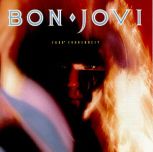
Although the title of Bon Jovi’s second album recorded the temperature of volcanic lava, the reaction from press and public alike was at best lukewarm. 7800 ̊ Fahrenheit was only a minor hit (US 37, UK 28), and left Bon Jovi lagging far behind their rivals. But while it’s no Slippery When Wet, this album is due a reappraisal.
There are some great songs here. In And Out Of Love is prime mid-80s cock rock and best of all is Tokyo Road, a propulsive hard rocker with Jon’s most risqué lyric (“Snortin’ whiskey, drinkin’ coke…”). Fahrenheit is Bon Jovi’s most underrated record.
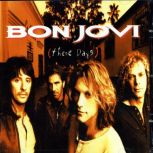
Four of the five band members who recorded the debut album stayed in Bon Jovi for 30 years. But the fifth, Alec John Such, was ‘let go’ before this, the sixth album, his exit attributed to that great rock‘n’roll misnomer, “substance abuse”. With old friend Hugh McDonald replacing Such (albeit not as an official member) the Bon Jovi machine kept rolling on. In the UK, These Days hit Number 1.
Hey God was a powerful modern rock anthem, and on the title track Jon came as close as he ever would to emulating his hero, Bruce Springsteen. For many, this was Bon Jovi’s last great record.
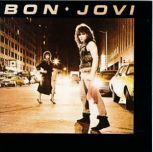
In the first UK review of Bon Jovi’s debut album, veteran critic Paul Suter stated: “Jon Bon Jovi has assembled a band of classic finesse… blessed with a commerciality that should ensure plentiful sales and success.” He wasn’t wrong.
Bon Jovi’s debut didn’t “do a Boston”, but it reached 43 on the US chart. Runaway was the standout track, a supercharged hard-rock anthem, recorded in ’82 before the band existed, with Jon using session musicians. But other brilliant songs, such as Roulette, proved that Jon’s new boys had something special. This album, for all its naivety, is the Jovi connoisseur’s choice.
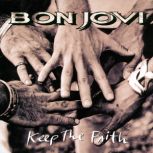
In the year when Nirvana’s Nevermindtopped the US chart, Bon Jovi survived the great hair metal bloodbath by playing it very smart. Jon made headlines by having a haircut, and the band released the symbolically titled Keep The Faith.
The album redefined Bon Jovi as a stadium rock act for a new era. Its title track and flagship single delivered the band’s trademark radio-friendly hooks in a more modern style. The nine-minute Dry County showcased a growing maturity. And the cheesy Bed Of Roses kept the soft rock fans happy. If Slippery… made Bon Jovi’s career, Keep The Faith saved it.
After the phenomenal success of Slippery When Wet, Bon Jovi didn’t mess with a winning formula on the next record, retaining producer Bruce Fairbairn and Child, who co-wrote this album’s juggernaut of a hit single, Bad Medicine.
Having planned on using another innuendo – “68 And I Owe You One” – for the album’s title, they chose instead to honour their roots with New Jersey. And the influence of Jersey’s favourite son, Bruce Springsteen, was evident in Blood On Blood. New Jersey topped the charts in 10 countries and yielded five top 10 US hits, the biggest ever haul for a hard rock album at that point.
Currently ranked as the 34th biggest-selling studio album of all time, with 28 million copies sold worldwide, Slippery When Wet is an 80s arena-rock classic. Moreover, it rescued Bon Jovi’s career after their second album, 7800 ̊ Fahrenheit, flopped.
Their saviour was songwriter Desmond Child, who, with Jon and Richie, wrote the two breakthrough hits You Give Love A Bad Name and Livin’ On A Prayer. However, the singer and guitarist also wrote some great stuff without Child: the rock-star-as-outlaw anthem Wanted Dead Or Alive, and crowd-pleaser Raise Your Hands. By some distance, Bon Jovi’s best album.
It’s been over a decade since Passion Pit paid a visit to Kansas City, and it was long overdue. The band made their grand return to the city and their debut at The Truman on June 20. Alternative pop artist Arden Jones opened for them.
Passion Pit has not released an album since 2017’s Tremendous Sea of Love. Now, the band is on the road for their Pretty Penny tour, promoting their upcoming EP, “Pretty Penny.”
Passion Pit is the solo project of frontman and keyboardist Michael Angelakos. However, as a touring group, the band consists of Giuliano Pizzulo, Eric Scullin, Ben Barter and Denzel Cox.
Arden Jones performed a quick, lively set before Passion Pit took the stage. He played a variety of his original music and also included a cover of “1901” by Phoenix.
Jones’ performance was nothing short of entertaining. He was the perfect opener for Passion Pit, with a synthy, upbeat sound that matched Passion Pit’s sound. Jones said the last song he performed, “someone new,” changed his life. The song went viral on TikTok following its release.
Passion Pit took the stage after Jones performed and kicked off their set with “The Reeling.” “The Reeling” was the perfect song to open the night, with its long instrumental buildup and nostalgic feel. The song is from the band’s debut album, “Manners.”
Unfortunately, about halfway through “The Reeling,” Angelakos’s voice gave out. Angelakos struggled to hit some of the higher notes in the song, leading him to sing an octave lower. Angelakos apologized after the song, since it happened unexpectedly. The audience offered their support, and one fan held out a cough drop to help soothe Angelakos’s voice. A crewmember brought out a cup of tea for Angelakos, which helped him, but throughout the set, there were moments where his voice seemed to give out again.
Despite Angelakos’ vocal challenges, the band’s synth-heavy arrangements carried the energy throughout the rest of their performance. It only made sense for there to be numerous keyboards across the stage to channel the amount of synth in Passion Pit’s music. The stage’s setup perfectly matched their instruments. Angelakos and Pizzulo took center stage, with their keyboards back-to-back, and behind them were more keyboardists and a drummer.
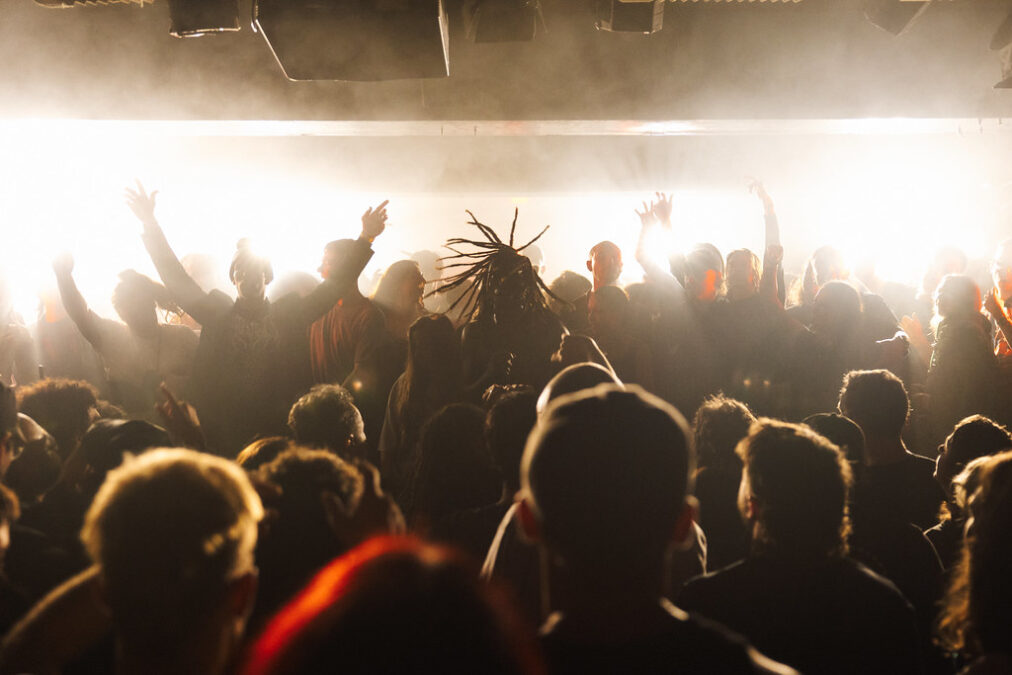
Passion Pit performed indie classics like “Sleepyhead,” “Take A Walk” and “Carried Away.” The entire audience danced and sang along, and each song garnered loud cheers at its beginning and end.
Overall, Passion Pit’s performance was incredibly nostalgic and felt as though the attendees were transported back to the 2010s. Passion Pit will be on tour until August 19, and their upcoming show dates can be found on their website.
Thousands of courageous souls marked the end of this year’s Dark Mofo by stripping off and plunging into the River Derwent at dawn for the Nude Solstice Swim, a cleansing ritual to follow the longest night of the year. With 3000 participants braving the icy waters, the Swim is the closing event for the midwinter […]
ADDAC System proudly announces a ‘string revolution‘ for Eurorack synthesis: The Four String Series. Consisting of an entirely new family of tactile modules, the Four String Series has been designed as an open canvas that inspires users to explore and engage with physical strings from various perspectives, promoting creative experimentation. The Four Strings Series will […]


 If you love this music: Discover More


 Thousands of courageous souls marked the end of this year’s Dark Mofo by stripping off and plunging into the River Derwent at dawn for the Nude Solstice Swim, a cleansing ritual to follow the longest night of the year. With 3000 participants braving the icy waters, the Swim is the closing event for the midwinter […]
 ADDAC System proudly announces a ‘string revolution‘ for Eurorack synthesis: The Four String Series. Consisting of an entirely new family of tactile modules, the Four String Series has been designed as an open canvas that inspires users to explore and engage with physical strings from various perspectives, promoting creative experimentation. The Four Strings Series will […]