Website [Release date 30.10.26] Bird in the Belly comprises Laura Ward and Adam Ronchetti of duo Hickory Signals together with Ben ‘Jinnwoo’ Webb and multi-instrumentalist Tom Pryor. As the press releases states, ff the members of Bird in the Belly … Continue reading →
Coinciding with the release of his new studio album From The Dark, the legendary Tony Iommi has revealed a lyric video for “Over The Violent Sun” track. Read more…
Saxon have announced the death of their former drummer Nigel Durham at the age of 61. Durham played for Saxon in 1987 and 1988. He was subsequently a member of Oliver/Dawson Saxon from 2000 to 2010. Read more…
On March 12, 2027, Finnish melodic death ensemble Dead End Finland will put out their sixth long player dubbed Carbon. Alongside unveiled details you can also give a spin to the first single, “Mercy Of Fools”. Read more…
Kansas City alternative rock outfit ENDRID has burst onto the scene with their compelling new lead single and title track, “Viridian.” Known for blending dreamlike ambience, nu-gaze textures, and crushing alt-metal intensity, the band uses their sound as a raw, atmospheric exploration of dissociation, depression, and self-reclamation. Their upcoming EP-turned-album concept takes inspiration from the Latin mystical poem The Dark Night of the Soul, delivering a surreal journey through identity, transformation, and the cycles of light and dark.
Built around heavy, melodic alternative rock and an urgent, punchy chorus, “Viridian” tackles the painful tension of wanting something to stay the same while watching it inevitably shift. The band relies on vivid imagery of fading pigment and changing seasons to ask whether preserving something truly protects it or merely stops it from evolving. The track shines through its dynamic shifts, relaxed, introspective verses against explosive peaks and features a standout middle section highlighted by a melodic break and a distinct, peculiar guitar solo.
Supported by crisp, powerful production and a commanding band performance, “Viridian” offers a deeply personal and accessible taste of the immersive, high-impact storytelling ENDRID is bringing to modern alternative rock.
Give it a go by clicking on the Spotify player below and follow the band if you like what you hear.
Hamburg and the Vikings have a history that stretches back centuries, with plenty of twists and turns along the way. Thankfully, the days of Viking raids are long gone. These days, it’s Viking metal making its way into the Hanseatic city. Amon Amarth are back on the road for another European run, stopping at Alsterdorfer… Continue Reading →
Serving as the explosive centerpiece of HAERDSMAELTA‘s debut album HAERDROCK, “Guilt Machine” is a crushing, non-stop fusion of metal, hardcore, and post-punk. Tackling the suffocating weight of anxiety, guilt, and distorted self-perception, the track packs the unhinged swagger of Viagra Boys alongside the band’s own dark, cathartic intensity into a punchy, relentless assault that takes zero prisoners.
Channeling a fiery, heavy-hitting vibe sitting right in the sweet spot between angry Faith No More and classic Judas Priest, the song delivers relentless, fantastic-sounding guitar riffs supported by a rock-solid, driving rhythm section and top-tier production. With its massive, unyielding chorus that refuses to let go, it’s a high-octane banger that grips you tight and never backs down.
Give it a go by clicking on the Spotify player below and follow HAERDSMAELTA if you like what you hear.
July 11 this year was a red-letter day for Ricky Warwick. Not only did he get to play in front of tens of thousands of rock fans with The Almighty at Iron Maiden’s spectacular Eddfest at Knebworth, it was also his 60th birthday. Few 60-year-olds in rock’n’roll look so good – “It’s wonderful what a bit of hair dye and beard dye can do,” he jokes – and few have retained their passion for music to the extent that the County Downborn singer/songwriter/guitarist has, 46 years after first picking up a guitar.
Over the course of his travels with The Almighty, Circus Diablo, Thin Lizzy, Black Star Riders and his various solo bands, Warwick has met plenty of famous faces, and as long as they’re able to hold a conversation about football, he’s never been shy about saying hello. Most recently, he’s released a new solo album, Fire & Vengeance.
Lemmy
Motörhead were a massive influence on The Almighty, and when we started coming to London we’d bump into Lemmy in places where he hung out, like the St. Moritz club. He was brilliant with me straight off the bat, very friendly, very funny, and he always offered loads of advice. Then in 1991 we got offered the 1916 album tour, which was huge for us.
Before that started, we got asked to go out to Los Angeles to play a music conference called the Foundations Forum, that Motörhead were playing too, and Lemmy said: “Whenever you come out, give me a shout and we’ll get together.”
So we arrived at the hotel, and Lemmy had left a note for me, saying: “I’m in room blah blah blah, come up.” It’s, like, three in the afternoon, and I’m jet-lagged to fuck, but I knock on this door, and there’s a full-on party going on. Through the smoke I see Lemmy in his denim cut-off, his tight denim shorts and a cowboy hat. They’d just finished mixing 1916, so he sat me down, racked me out the biggest fucking tramline of whatever the fuck it was, poured me a pint of Jack Daniel’s and Coke, put headphones on me, and goes: “Listen to this.”
I’m buzzing, I’ve got the new Motörhead blasting, and Lemmy keeps topping up my glass. I’m trying to be cool, but as it’s coming to the end of the album the room is spinning, and I’m thinking: “Fuck, I’m in a bad way here, this isn’t good.” So I get up to tell Lemmy what I think of the album, and my legs just go, I fall flat on my face on the floor, the pint glass shatters and cuts my fucking eyebrow when I land on it, and I throw up at the same time.
“So I’m lying there in a pool of blood and vomit and glass and snot, and then I feel this acrid breath close to my face, and it’s Lemmy going: “Warwick, you’re a fucking lightweight, you’ll never make it.”
So then we did the 1916 tour, and we couldn’t have been treated better. Lemmy and all the guys in Motörhead were just fantastic. I miss them a lot.
David Bowie
My second gig ever with New Model Army was opening for David Bowie in West Berlin, in front of eighty-five thousand people outside the Reichstag. It was 1987, so the Berlin Wall was still there, and there were maybe another fifty thousand people listening on the other side of the wall. My mind was already blown, and then Bowie walked into the dressing room to say: “Hello. Thanks for doing the show, hope you enjoy it.” That was just probably the first moment where I thought: “Fuck me, this is mental, this person is real, he’s not an alien.”
Years later, Bowie was rehearsing in a place called The Factory in Dublin for two or three months around the time of his Earthling [1997] album, and I was practising in the same place with my band, and Bowie put on a special gig for people who worked at The Factory, and that was the first night I met Joe Elliott from Def Leppard, who’s now one of my best friends.
Joe Elliott
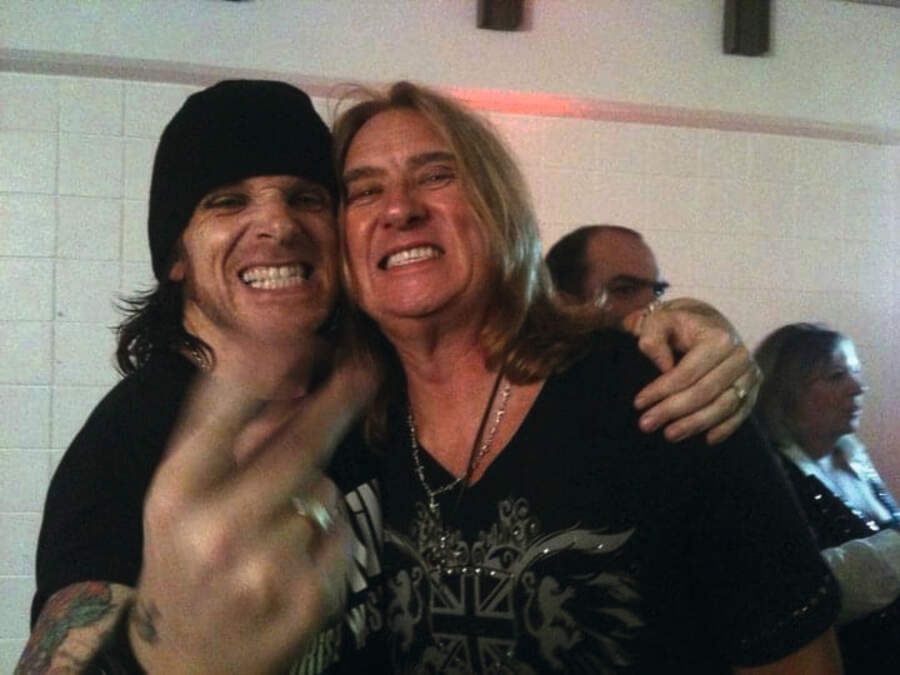
Joe actually walked up to me that night at The Factory and said: “I really like your band.” I was like, fuck me, Joe Elliott, you’ve not done too bad yourself! As usual we started talking about music and football, and he said: “There’s a game on Friday night if you fancy coming over to the house to watch it. Give me your number and I’ll give you a shout.” I went away sorta thinking: “As if Joe Elliott is going to call me. I’ll never hear from him again.”
But, sure enough, he called the next day and said: “Here’s my address, come up about seven. And what Chinese food do you like?” Joe has never forgotten being a working-class boy from Sheffield, and he’s just the most down-to-earth and brilliant company. Def Leppard were in Belfast a few weeks ago, so I popped in to see them. You couldn’t meet a nicer bunch of guys, and I love hanging out with them.
(Image credit: Ricky Warwick)
Steve Harris
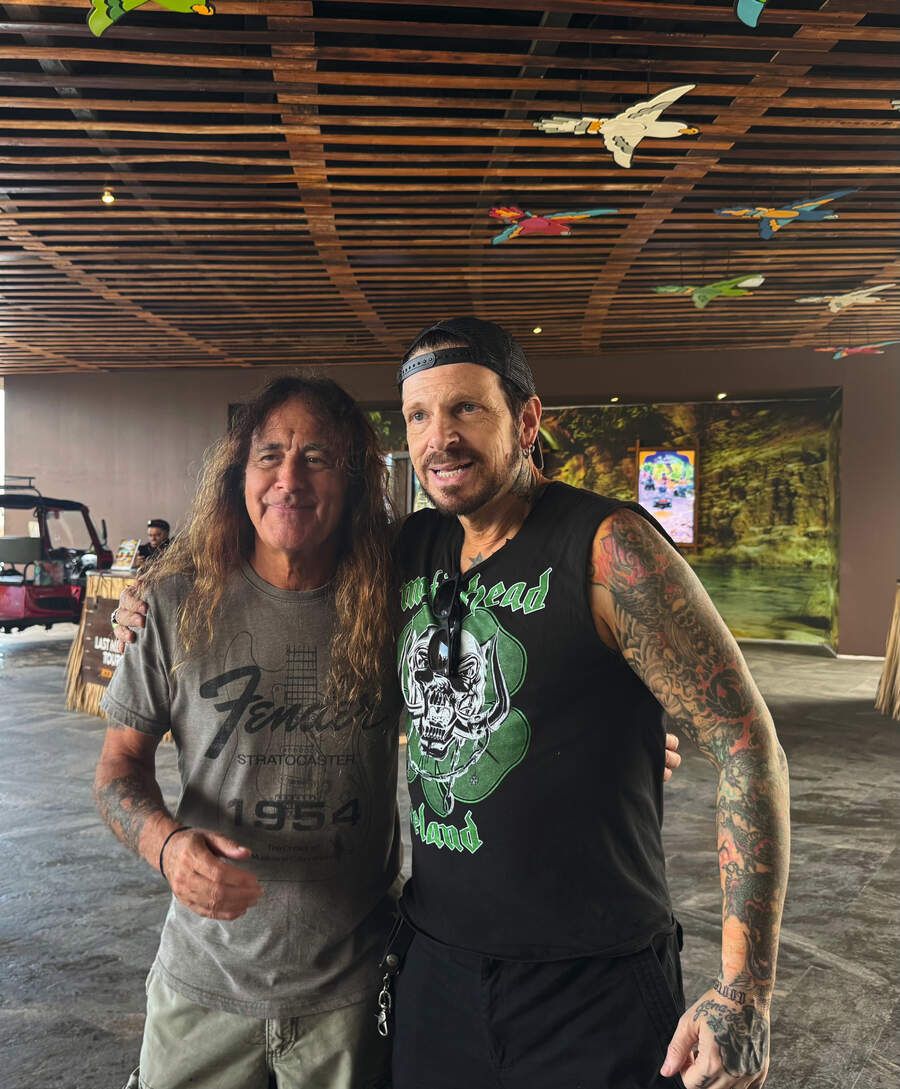
Steve was a fan of The Almighty. He used to come down to the Marquee to see us play, and we just got on really well. I think we connected initially talking about football, and then he started offering us shows with Maiden. I remember one night we were in Marseille in France, and Steve said: “We’re going out for a drink tonight, meet me in the lobby.” I came down, and Steve’s there on his own. I said: “Where’s everybody else?” And he goes: “It’s just me and you.”
We went to this bar, drank beer, and had the best night. Nobody recognised Steve, and we were left alone to have a really good natter for three hours. It was a brilliant night, and there were definitely moments where I was thinking: “Fuck me, I’m drinking with Steve Harris!”
(Image credit: Ricky Warwick)
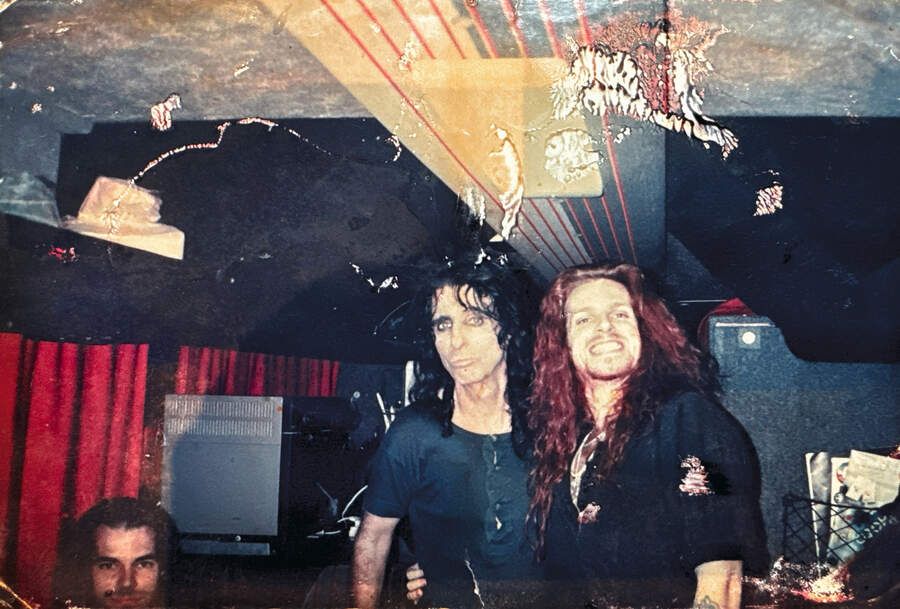
Alice Cooper
When The Almighty toured with Coop, we’d play our set and then we’d go into catering and have our dinner. Alice would have to walk through catering to get to the stage, and every night as he walked by to go on stage he’d hit me in the back of the head with his whip and go: “Alright Ricky?”
We were treated brilliantly, and he was super friendly. I’ve met him a few times since, and I’ve had to apologise for stealing his guitar players, as I’ve stolen two. He’s the real deal. When he’s not Alice Cooper he’s Vincent Furnier, just really down-to-earth and a lovely guy.
(Image credit: Ricky Warwick)
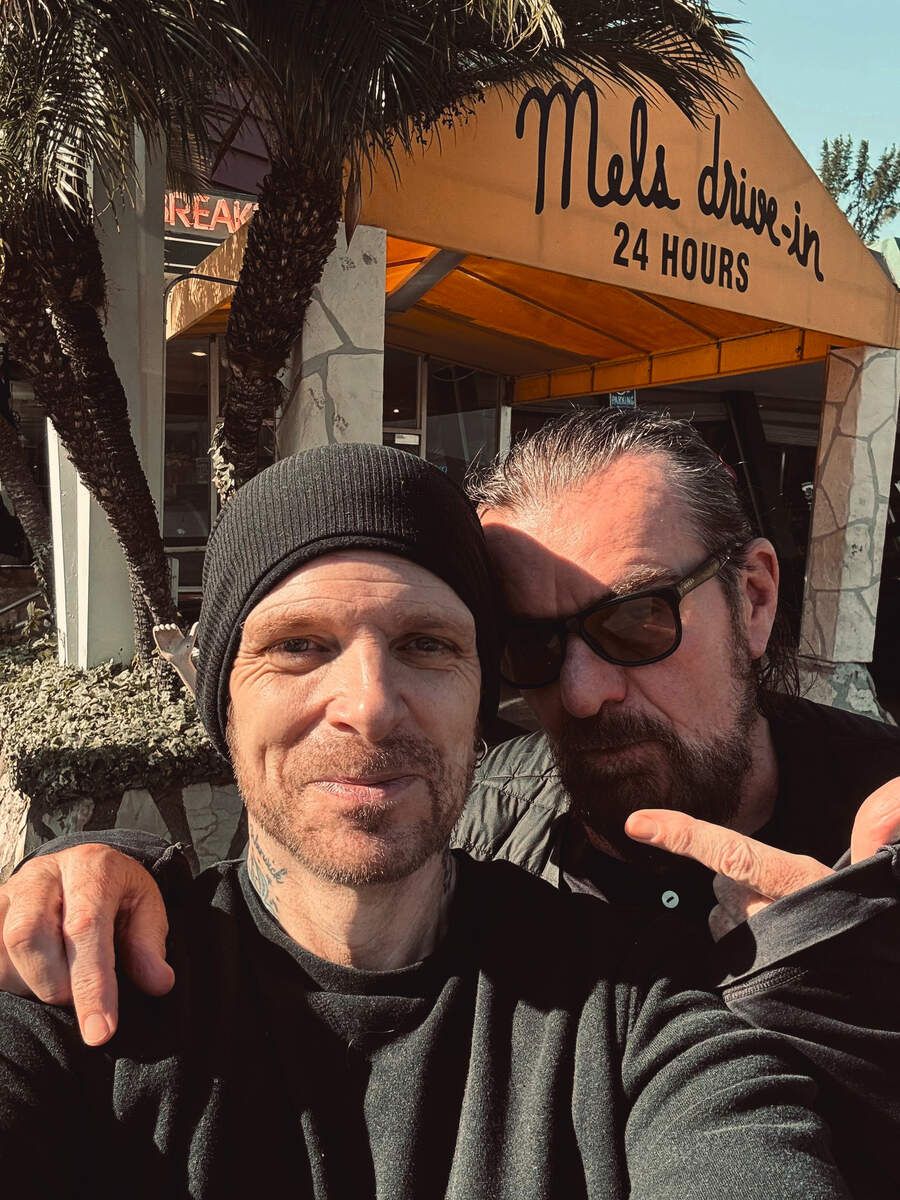
Billy Duffy
Billy and Ian [Astbury] from The Cult came down to check out The Almighty early on at the Marquee, around ’89, when we were first starting to get a bit of a buzz, and again we just hit it off. We stayed in touch, and when I moved to LA in 2005 Billy and Billy Morrison took me under their wings. To this day I’ll meet up with Billy for breakfast at Mel’s on Sunset, and we’ll have a chat. Being in Circus Diablo with Billy was huge for me. I’d be like: “Fuck me, I’m on stage in LA with Billy Duffy!”
(Image credit: Ricky Warwick)
Scott Gorham
It’s funny, my sisters were in love with Scott back in the day, and I remember them going all gaga over him when Thin Lizzy were on Top Of The Pops. I first got to know Scott because my ex-wife, Vanessa, worked with Scott’s wife Christine at MTV Europe in the early days. One day she came home and said: “You know I work with Christine Gorham? Well her husband plays in a band too.” I said: “Not Scott, by any chance?” She said: “Yeah, Scott Gorham.” I was like, I have to meet him! This was maybe ten or eleven years before he ever asked me to be in Thin Lizzy.
Guns N’ Roses
Thin Lizzy supported Guns N’ Roses in the UK and Ireland in 2012, but as much as I’d like to tell you about wild nights out with Axl it wasn’t that kind of tour. Tommy Stinson and Richard Fortus were in the band then, and Richard had played in Lizzy the previous year after Viv Campbell went back to Def Leppard, so that gave us an immediate connection, and we’re still good friends now. Later I met Duff McKagan through Del James, who’s been with Guns from day one, and was tour managing them at the time.
Metallica
The Almighty played with Metallica at Milton Keynes in 1993, and those guys were cool. We hung out that night, then again when they did a secret show in London at the Astoria II before they headlined Donington in ’95. Later, when we were touring in the States and had a day off, Kirk [Hammett] invited us over to his house in the Bay Area. I used to be quite friendly with Lars too in the nineties, but I haven’t heard from him in a while. Lars was probably friendly with a lot of people in the nineties, to be fair.
Midge Ure
I was a massive Ultravox fan as a kid, so meeting Midge was another ‘pinch me’ moment. I met him first in 2016 when Scott Gorham and I did the Rock Meets Classic tour, which Joey Tempest, Doro Pesch and Midge were also on. Obviously we had the Scottish connection, and the Thin Lizzy connection, with Midge sitting in with the band in 1979, and we just hit it off. Obviously when you meet someone who meant something to you growing up it’s a very cool thing, and while you still want to relate in a face-to-face way there’s always still a part of you that’s an excited fanboy.
Dave Grohl
The guy who looks after Dave’s studio 606 is a mate of mine, and one day he said to me: “Dave is hiring a bus to go to see Heaven And Hell, and you’re invited.” To be honest, I’m not sure if we saw much of the gig, we spent most of the night in the parking lot getting hammered. I ended up going back to a little dive bar in Northridge, where Dave was living, with him and my mate Scott, and the three of us were there till four or five in the morning.
Then in 2019 I was doing the Rock For Ronnie [Dio] charity thing, and Dave came down and played drums. We did Bomber by Motörhead and Jailbreak by Lizzy, and it was fucking amazing. I’ve ended up recording at 606 myself a couple of times, and Dave’s brilliant, a great guy to hang out with.
Ricky Warwick’s Fire & Vengeance is out now via Earache. Warwick tours the UK and Ireland from November 5 to 26. For dates and tickets, visit the Ricky Warwick website.
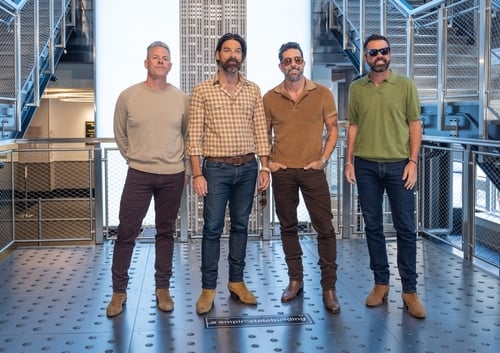
Old Dominion became one of the leading country groups of the 2010s by combining a relaxed, melodic sound with the skills of five seasoned musicians and songwriters. Formed in Nashville, Tennessee, the band brought together lead singer Matthew Ramsey, multi-instrumentalist Trevor Rosen, guitarist Brad Tursi, bassist Geoff Sprung, and drummer Whit Sellers. Long before their first major radio hit, individual members had helped write songs for established country stars. That Nashville songwriting background became central to the band’s own recordings. The group independently released the five-song It Was Always Yours EP in 2012 and followed it with a self-titled six-track
A Saturday night concert. What more could you ask for? The Summon The Beast Tour 2026 rolled into The Opera House, Toronto, for a night of mystical Heavy Metal with Castle Rat.
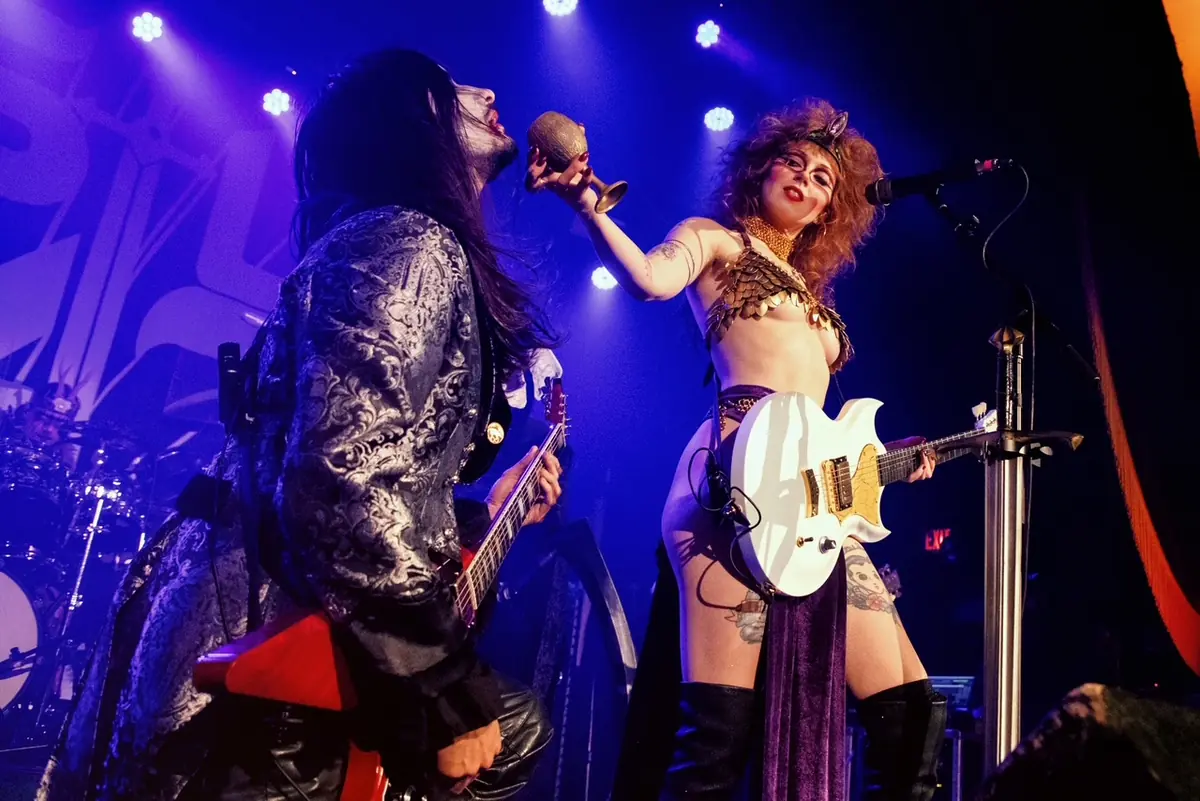
The Opera House transformed into a magical realm of wizards, vampires and the Rat Queen herself. This was Heavy Metal meets fantasy, creating a world of their own. With backstories and character lore, Castle Rat bring more than just music to the stage. They bring a production that will have you completely captivated.
Castle Rat – The Opera House, Toronto – 17 October 2026. Photo: Taylor Cameron
There was not an empty spot left within the walls of The Opera House, as Toronto’s music fans showed up with enthusiasm and excitement for the Doom Metal band that hails from Brooklyn, New York.
From mosh pits to roaring cheers, the crowd made sure there was no shortage of love and appreciation for the theatrics and showmanship of the band’s powerful show.
Castle Rat – The Opera House, Toronto – 17 October 2026. Photo: Taylor Cameron
Although dealing with a sickness she deemed “the plague,” The Rat Queen [Riley Pinkerton] did not let it slow her down. Delivering mighty vocals and ruling the realm, she did not allow this to stop her from giving a performance that was any less than 100%.
Her storytelling blended perfectly with the heavy riffs and mythical themes of their hard-hitting tracks. The crowd chanted for more with each song that passed.
Castle Rat – The Opera House, Toronto – 17 October 2026. Photo: Taylor Cameron
As the narrative of the show progressed and reached the end of their set, it was time for The Rat Queen to engage in battle with her enemy, the Rat Reaperess.
Although it was to be believed she had been struck down, The Rat Queen can seemingly not be defeated as she returned to the land of the living with a bloody twist. Blood poured from her mouth as she raised her sword high in the air before they finished off the song and left the stage.
Castle Rat – The Opera House, Toronto – 17 October 2026. Photo: Taylor Cameron
The venue stayed dark as the crowd cheered, wanting more. A Castle Rat chant began, getting louder by the second before the band reemerged from the darkness and closed out the show with their hit Siren.
It was clear the audience did not want the story to end.
Castle Rat – The Opera House, Toronto – 17 October 2026. Photo: Taylor Cameron
Although not my typical genre of live shows, Castle Rat put on an unforgettable show worth watching every second of, and Toronto was lucky to experience a trip to the realm with these incredibly talented musicians.
Castle Rat are certainly on a mission to conquer new realms and have announced their biggest London headline show to date at Camden’s Electric Ballroom on 27 May 2027. Tickets are on sale now here.
Electric Ballroom, Camden184 Camden High St, Camden Town, London NW1 8QP
Castle Rat are certainly on a mission to conquer new realms and have announced their biggest London headline show to date at Camden’s Electric Ballroom on 27
Event Details
Castle Rat are certainly on a mission to conquer new realms and have announced their biggest London headline show to date at Camden’s Electric Ballroom on 27 May 2027. Tickets are on sale now here.
Castle Rat – The Opera House, Toronto – 17 October 2026. Photo: Taylor Cameron
Wraith Knight
Starting off the evening was Wraith Knight. Heavy synths and ominous lighting kept things in theme for the night. With a medieval tone to the tracks, it felt as though we were in an adventure film filled with knights and dragons, kicking things off strong for the night.
Wraith Knight – The Opera House, Toronto – 17 October 2026. Photo: Taylor Cameron
Unto Others
Next up were Oregon’s gothic rock/Heavy Metal band, Unto Others. With a sound that blends heavy and melodic perfectly, they immediately caught everyone’s attention, including mine.
Unto Others – The Opera House, Toronto – 17 October 2026. Photo: Taylor Cameron
Having heard of the band but never listened, my expectations were exceeded. Gabriel Franco handled vocal duties with ease. His voice filled with power as he commanded the stage.
Guitar slinger Sebastian Silva was completely captivating. His essence oozed the guitar heroes of the ’80s as his fingers danced across the fretboard.
Unto Others – The Opera House, Toronto – 17 October 2026. Photo: Taylor Cameron
Chunky riffs and melodic solos were paired with thunderous drums and heavy bass lines that had fans headbanging and holding their horns high in the air.
The Opera House was packed from front to back, everyone making sure not to miss the opening acts.
Unto Others – The Opera House, Toronto – 17 October 2026. Photo: Taylor Cameron
Unto Others – The Opera House, Toronto – 17 October 2026. Photo: Taylor Cameron
 Website [Release date 30.10.26] Bird in the Belly comprises Laura Ward and Adam Ronchetti of duo Hickory Signals together with Ben ‘Jinnwoo’ Webb and multi-instrumentalist Tom Pryor. As the press releases states, ff the members of Bird in the Belly … Continue reading