Repent or rejoice?
The post Bring Me The Horizon Debut New Version Of “Black & Blue” From Their Upcoming Re-Recorded Version Of “Count Your Blessings” appeared first on Theprp.com.
Repent or rejoice?
The post Bring Me The Horizon Debut New Version Of “Black & Blue” From Their Upcoming Re-Recorded Version Of “Count Your Blessings” appeared first on Theprp.com.
Olivia Rodrigo is a pop act, but her mom is a big Korn fan and even decided to skip seeing her daughter to instead see the nu-metal band.
The post Olivia Rodrigo Shares Surprising Detail About Her Mom’s Love for Korn appeared first on Audio Ink Radio.
Co-produced by Manson and Tyler Bates.
The post Marilyn Manson Debuts “Exit Wound”, New Album “One Assassination Under God – Chapter 2” Due In August appeared first on Theprp.com.
Yes are back with Aurora, their third album on the InsideOut label, following The Quest and Mirror To The Sky. Along with a busy touring schedule, Yes stay “consistently creative” according to bassist Billy Sherwood. Who can argue with a band that continually records and releases new music while playing their classics in concert? It’s as if Yes, in their quest to stay relevant, is chasing the present with distancing themselves from the past. Once that idea settles in, it’s easier to assess a new record without comparing it to what happened before, with different lineups over different eras. Such is an evolution, rather than a devolution that often occurs after an artist reaches the peak of their success.
Getting down to it, Aurora is rife with harmony and melody, Steve Howe’s inimitable guitar work, some of Geoff Downes’ finest keyboard moments, and a worthy rhythm section thanks to Sherwood and drummer Jay Schellen. The cinematic title track lifts the record up and away for a journey that, thanks to the companion video, is straight out of Disney. Without the visuals, it emerges as an orchestrated showcase for the modern Yes of today. Howe’s approach is lighter, yet articulate as ever, gliding alongside singer Jon Davison’s highflying tenor, as Downes’ keys sneak around the verses, gaping bridges and mapping out strategies. The cherry on top is Schellen’s drumming, bolstered with broader definition and open leeway after being somewhat buried on Mirror To The Sky.
Davison asserts his songwriting prowess on pensive pieces like “Turnaround Situation” and “Emotional Intelligence.” Overall, his voice figures into its proper place without sounding reminiscent of the band’s previous vocalists. This a distinguishable trait for a collection that feasibly stands on its own without the burden of comparison. At over 13 minutes with an exquisitely “proggy” opening, “Countermovement” is easily the album’s crowning epic. The multi-part suite, with the writing credit going to all the members, could be a noble attempt to align with other famous longform songs by the band. Significantly on this number and the record’s riffy heavyweight, “All Hands On Deck,” Howe steps up for more lead singing than usual. When Davison and Sherwood joins him on the choruses, there’s a whole new layer of Yes harmonies to take in.
“Outside The Box” interweaves other elements of wordless harmonies with Downes’ synths over a lively, revolving tempo with a similar feel to what the band was doing in the 80s, albeit with a completely different lineup. By the time you land on the bubbly, playful bonus hip-shaker “Jambustin’,” you begin to feel this is the album this version of Yes has been striving to make. Even with a few familiar nods here and there, including the subtle slip of “Don’t kill the whale,” Aurora delivers a magnificent new chapter of the Yes saga as it endures without any immediate end in sight.
~ Shawn Perry
 Burning Bridges is the explosive debut single from Brisbane, Australia-based band, TRACE. Having formed back in 2019, TRACE, through a few line changes, have worked tirelessly on their craft, gained momentum through their live shows, and now it’s time to show audiences and listeners that their live sound translates to the airwaves. TRACE have created […]
Rain falls from your eyes
and shapes me like a sculpture
Some bands chase the moment; Ghost Fetish sounds like they are scoring something far more enduring: a timeless soundtrack for melancholy, desire, and the strange ache of being seen too clearly. The Seattle trio has certainly caught our interest as one of the most intriguing post-punk, goth, and dream-pop acts in North America right now, especially because their music feels governed by emotion rather than calculation. It does not reach for darkness as decoration. It lets the feeling lead: romantic, wounded, atmospheric, and beautiful in the way certain songs seem to glow longer than the night that made them.
On their sophomore album, Sculpture, Ghost Fetish turns longing into a material force. The record circles the desire to be witnessed, touched, remembered, and transformed, but it also understands the danger inside that desire. Across these songs, intimacy becomes performance, romance becomes superstition, and identity becomes something unstable: carved by attention, softened by fantasy, eroded by memory, and remade under the pressure of another person’s gaze.
That tension gives Sculpture its emotional pull. The album moves through icy synths, buoyant melodic bass, drum-machine pulse, whispered vocals, and dream-smeared atmospheres without ever sounding like it is chasing a trend or trying to flatter the present tense. Ghost Fetish are making the kind of beautiful, haunted, emotionally resonant music they want to make, and that conviction gives the album its private weather: sensual, bruised, nocturnal, and hard to shake.
“Show and Tell” opens Sculpture with a deep, dreamy bassline and a chill that feels both intimate and evasive. The song turns confession into something unstable: a push-pull between wanting to be seen and fearing what exposure might cost. Its synthline has an icy bounce, moving with a sleek mechanical charge while Kevin Fenwick’s shuddering vocal drifts through reverb like a figure half-lit in fog. Ghostly echoes of the vocal return around the edges, repeating fragments back into the mix and deepening the song’s wounded pull. What begins as an invitation becomes something closer to a ceremony of vulnerability, setting up the album’s central tension between desire, performance, and the fear of being fully known.
“Someone” softens that tension into a more idyllic, daydreaming pulse. Deep synth sighs, crisp snare, and a gently driving rhythm give the track a suspended romantic glow, while the vocals carry the wounded poise of mid-’80s Cure. Musically, there is a clear kinship with New Order’s Power, Corruption & Lies era: bright but unsettled, melodic but emotionally uneasy. The lyric frames identity as something unstable and aspirational, circling the hope of becoming “someone” through rain, strangers, risk, and reinvention. Its romance arrives through blur and uncertainty, as though transformation can only happen after stepping into the wrong light. The result is less a straightforward love song than a dark pop invocation for self-invention.
“Fate” begins with a deep, hollow, metallic knell, an intriguing synth tone that immediately gives the song a subterranean charge. From there, it settles into a dreamy underground atmosphere, like water dripping somewhere in a cavern, with the rhythm pressing forward beneath layers of cold echo. Fenwick’s vocal takes on a more punk-inflected edge here, but it remains languid and dream-smeared, delivering its lines with a drawl that feels both numb and possessed. The lyrics treat fate not as an abstraction but as something physical: poisonous, buried, compulsive, and in need of excavation. In the sequence of Sculpture, “Fate” feels like a descent, pulling the album further below street level into colder, more chemical light.
“Big Talk” slows the album into a sleek post-punk sway, trading confrontation for a cooler, more unhurried kind of tension. Its buoyant, high bassline carries a Peter Hook-like melodicism, hovering with the mournful lift of Joy Division’s “Atmosphere” while still moving through Ghost Fetish’s own dreamier palette. The vocals are clipped and almost whispered, giving the song a guarded intimacy rather than an outright sneer. Lyrically, “big talk” becomes a phrase for emotional performance: the things people say to fill the room, to keep from giving too much, or to mistake motion for meaning. There is a hint of Lowlife at their dreamiest in the song’s patient drift, with the arrangement letting space, bass, and understatement do most of the emotional work.
“Waterfall” stretches into one of the album’s most immersive pieces, opening with a buzzing synth figure and a tapping beat before a melodic bassline, almost guitar-like in its contour, begins to pull the song forward. Fenwick’s vocal is tender and dream-worn, nearly seductive in its softness, while Riley Jakubowski’s backing-vocal sighs gather around it like mist. The effect is less a burst of drama than a slow deluge on the senses, with each texture adding to the feeling of being submerged in something beautiful and difficult to resist. The song’s imagery of rain, bodies, icons, posters, and sculpture gives the album title one of its clearest emotional shapes: the self as something eroded, polished, and remade by longing. For all its darkness, “Waterfall” feels almost cleansing in its soft embrace.
“I Like You” takes one of the simplest possible declarations and makes it feel exposed, strange, and slightly dangerous. The drums and synths move in an interesting shuffle, giving the song a subtle sway beneath its heavy-lidded pace. Fenwick’s vocal lands in a tender, wounded ’80s pop register, the kind of delivery that many modern avant-pop and post-punk groups have returned to for its mix of directness and theatrical ache. Riley Jakubowski’s backing vocals add a soft answering presence, while understated electronic burbling moves in the background without crowding the song’s emotional center. It moves slowly and heavily, but never harshly; its softness is what makes it vulnerable. “I Like You” understands that even the plainest confession can leave the speaker defenseless.
“So Lucky” brings a more immediate pulse to the back half of Sculpture, opening with a faster up-and-down synth figure that becomes the song’s backbone. Around it, dreamy sustained flourishes and wounded, somber vocals create a contrast between momentum and ache. Fenwick sings with a seductive bedroom charm, intimate without losing the album’s familiar sense of distance, while Riley Jakubowski’s backing vocals echo certain lines with an almost call-and-response effect. As the song progresses, its textures become more adorned and enchanting, with economical guitar flourishes adding flashes of magic rather than crowding the arrangement. The lyric moves through apartments, streets, brownstones, Brooklyn darkness, and windows, turning luck into a romantic superstition: the hope that timing might mean something, even when longing remains on the other side of the glass.
“Look at Me” closes Sculpture with an enchanting synth buzz melody that almost resembles a melodica, its volume decaying with a touch of reverb as it drifts into view. A deep, somber bass melody soon enters, grounded by a rapid beat that gives the song a quiet urgency. The vocals return to a hushed, almost whispered mode, but they occasionally rise into subdued, soaring moments that heighten the lyric rather than overpower it. As a closer, the song circles back to the album’s central demand: to be witnessed, desired, remembered, and changed by attention. Its repetitions feel like longing trying to summon the past back into the present, asking to be looked at again with the same intensity as before. Sculpture ends not with resolution, but with an afterimage: the self shaped by desire, still glowing faintly after the song disappears.
Listen to Sculpture below, and order the album here.
Ghost Fetish celebrates sculpture with an album release show on Friday, June 12th, at Seattle’s Clock-Out Lounge with The Fabulous Downey Brothers and Bijoux. Doors are at 8:30 PM, with the show at 9 PM. They are also scheduled to appear at West Seattle Summer Fest on Friday, July 10th, at 4 PM.
Upcoming Ghost Fetish Live Dates:
Follow Ghost Fetish:
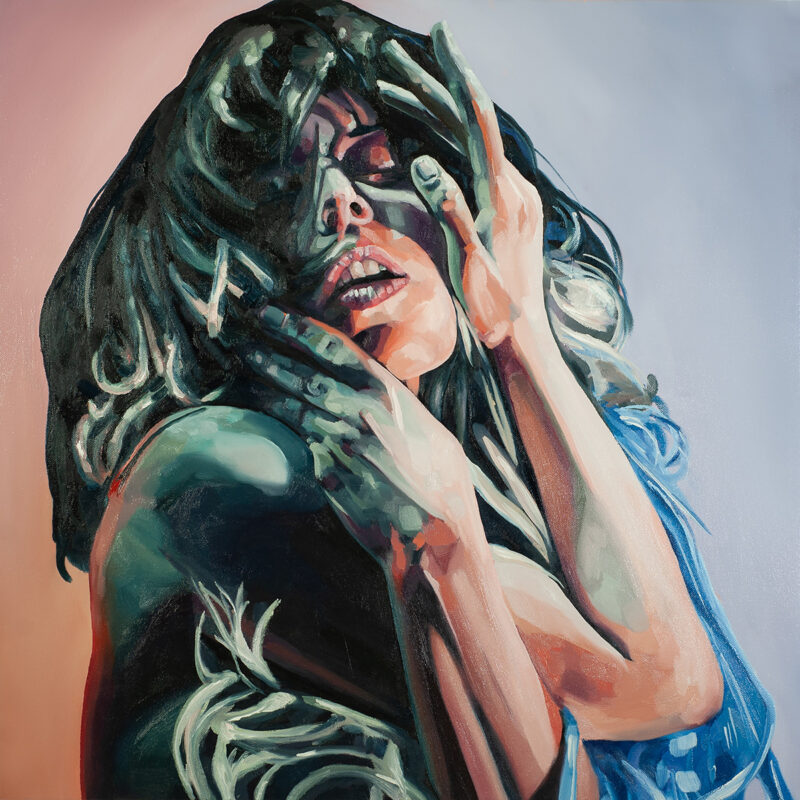
The post “Rain Falls From Your Eyes” — Seattle’s Ghost Fetish Shapes a Dreamy Soundtrack for Melancholy on “Sculpture” appeared first on Post-Punk.com.
 With Forsaker, Doomcrusher unleash a relentless Metalcore assault that cuts straight to the core of betrayal, self-destruction, and personal rebirth. The latest single from the German heavy music supergroup is an uncompromising statement of resilience, transforming inner turmoil and emotional scars into a devastating display of modern Metalcore aggression. Featuring members of renowned German acts […]
A great guitar riff opens this song, reminiscent of bands like Foo Fighters. The backbeat of the drums showcases how the band pays attention to detail. The track quickly intensifies with a driving rhythm and an atmosphere blending alternative rock and punk influences. The vocals are direct and intense; at times, they evoke the spirit of artists like Liam Gallagher.

The band has spent many hours in the rehearsal room to achieve this chemistry. Countless hours of practicing on the guitar have been invested, and it shows. The bass and drums lock together effectively while the guitars push forward, creating a cohesive sound. The vocal energy typical of British rock is present, offering a fresh yet irreverent take.
This group of young musicians seems to possess clarity and a mature vision for their musical project. They know what direction they want to take, and it resonates throughout the song. The track is an embodiment of youthful exuberance combined with the wisdom gained from experience.
“Let’s Party Like It’s The 90s” captures the spirit of nostalgia while also establishing a unique identity. The lyrics convey a carefree attitude reminiscent of a time when music was a form of liberation. The chorus is infectious, inviting listeners to join in and celebrate the joyous life of the 90s, making it an anthem for those who long for that era.
The band’s arrangement choices effectively blend different musical elements. The guitars are catchy and drive the energy higher, while the rhythm section provides a steady foundation. This balance keeps listeners engaged, drawing them into the track’s infectious groove.
The verses build up nicely, leading the audience into the chorus. This structure is effective in promoting their vibrant energy while retaining a sense of nostalgia throughout.
The band displays significant growth potential just in this one song. Their ability to blend various influences while maintaining their identity speaks volumes about their future in the music industry. They have laid a solid foundation with this release, setting themselves apart in a crowded field.
The message of the song, paired with its energetic execution, makes it a definite crowd-pleaser. It taps into a universal longing for carefree times and the nostalgia associated with them. The infectious rhythms will encourage listeners to hit the replay button multiple times. This is precisely the kind of track that fills dance floors and gets audiences moving.
“Let’s Party Like It’s The 90s” is highly recommended to anyone looking for a dose of youthful energy.
Energetic
 If you love this music: Discover More
For fans of:
Foo Fighters • Oasis
The post The Radio Addicts Let’s Party Like It’s The 90s Review appeared first on Edgar Allan Poets – Noir Rock Band.