Rising from the ashes of the death metal bands Ripping Corpse and Dim Mak, New Jersey-based Temple Of Bones are ready to unleash debut full-length dubbed Walk The Winds. Set to land in stores on November 13th, 2026 via Relapse Records, it was recorded by Joe DeMaio at Shorefire Recording Studios. Mixed by Bob Pantella at Freakshop Studios and mastered by John McBain at JPM Mastering Studios. For a preview, give a listen to the first single and opening track “Black Horizon”. Read more…
Mastodon, Deafheaven & Alcest, Hard Rock Live, Orlando, FL 16.09.26
The opening night of the Mastodon tour! If you don’t count the secret Atlanta warm up show that is, which got everyone even more excited for the tour given that Baroness’s main man John Baizley would be joining Mastodon during the tail end of their set to play some of the older, classic material. How was it? In a word, amazing. Mastodon blew me away. I know everyone misses Brent, and I do too, but this band, in this form, is on an entirely other plain.
Let’s start with the French black/shoegaze band, Alcest (8), who went on first. I was super excited to see them for the first time and they did not disappoint. You get blasted by a wall of sound of guitars for 40 minutes, except for the minimal, very polite, interaction. The music filled up the whole room, heavy and beautiful, even if I don’t speak a lick of French. I think they gained some new fans on this day and I would love to see a headlining Alcest set.
Deafheaven (7) was up next. I had seen them before at Welcome To Rockville but they got more time in the second slot on this night. I am stealing this from someone, but I love the “Warped Tour Black Metal” description of the band. The lead singer has a ton of passion, almost too much and a bit too “how you doin’ Orlando???” for my taste, but they were fun, energetic, heavy as hell, and the crowd was down for it, given the pits and the crowdsurfing. I preferred their Joy Division clone era, but that is me. I am never going to sit and listen to a Deafheaven record, but I would watch them on any bill they were on.
Now, Mastodon (10). I got to see them playing a short festival set, but this was the first time in a long time as headliner. This was easily in the top 5 shows I have seen this decade. The energy, the crowd, the imagery on the screen, the stacked setlist, all of this. The band seemed like they were genuinely having a great time, and the crowd ate it up. Nick Johnston is not Brent, but he is a super talented, next level player who fits in perfectly with the other guys in the band. He is a super nice dude too, as I got to chat with him for a couple of minutes. He did everything he should, stepping into a tough role, and he nailed it. Troy sounded great, and the band was super tight.
They played a nice mix of their discography, including a few from the new record, Marrow Deep (it rules). and the fans not only enjoyed it but sang along. Not gonna lie, I fanboyed out when Baizley mosied onto the stage mid song during the live debut of Snakes For Dinner. He got a proper intro from Troy and promptly broke into the classic Curl Of The Burl. The last half of the show was epic, with Baizley adding his guitar and vocals to some of the band’s biggest songs, like Oblivion and The Czar, closing the set with a gigantic pit-generating Blood And Thunder.
Go see Mastodon. They are in their prime, the new material is great, they are playing an amazing, wide ranging set, the guys are having fun, and John Baizley. A great night with possibly the world’s best metal band.
Elliot Minor will celebrate their 20th anniversary with a seven-date UK headline tour in March 2027, joined by special guests Madina Lake and The Red Jumpsuit Apparatus. The run begins at the O2 Institute Birmingham on 19 March and ends at London’s O2 Forum Kentish Town on 26 March. It will be the band’s biggest headline tour since their 2025 return.
O2 and artist presales begin at 10am BST on 23 September 2026. General sale opens at 10am BST on 25 September. For tickets, visit elliotminor.com.
“Coming back together for the reunion tour in 2025 was such an amazing and nostalgic experience for all of us,” vocalist Alex Davies said. “We genuinely didn’t know what to expect after so many years away, and it was unbelievably surreal to walk out each night and see so many people there, singing every word back at us.
“The response to the shows reminded us just how much our band and songs still mean to people. Some of these songs were actually written back in our school and college days before 2007, which is pretty crazy to think about, especially seeing people that age now discovering the band for the first time.
“We’ve also been spending time together writing and recording new music, and we’re incredibly excited to get that out there as part of our 20th anniversary alongside all the 2000s nostalgia.”
Madina Lake are also preparing a new EP to celebrate the 20th anniversary of their debut album, From Them, Through Us, To You, in 2027. The Red Jumpsuit Apparatus guitarist Randy Winter has also confirmed that new music is on the way.
Elliot Minor 20th Anniversary UK Tour
March
O2 Institute, Birmingham78 Digbeth, Birmingham B5 6DY
Elliot Minor will celebrate their 20th anniversary with a seven-date UK headline tour in March 2027, joined by special guests Madina Lake and The Red Jumpsuit Apparatus. The run begins
Event Details
Elliot Minor will celebrate their 20th anniversary with a seven-date UK headline tour in March 2027, joined by special guests Madina Lake and The Red Jumpsuit Apparatus. The run begins at the O2 Institute Birmingham on 19 March and ends at London’s O2 Forum Kentish Town on 26 March. It will be the band’s biggest headline tour since their 2025 return.
Elliot Minor will celebrate their 20th anniversary with a seven-date UK headline tour in March 2027, joined by special guests Madina Lake and The Red Jumpsuit Apparatus. The run begins
Event Details
Elliot Minor will celebrate their 20th anniversary with a seven-date UK headline tour in March 2027, joined by special guests Madina Lake and The Red Jumpsuit Apparatus. The run begins at the O2 Institute Birmingham on 19 March and ends at London’s O2 Forum Kentish Town on 26 March. It will be the band’s biggest headline tour since their 2025 return.
Elliot Minor will celebrate their 20th anniversary with a seven-date UK headline tour in March 2027, joined by special guests Madina Lake and The Red Jumpsuit Apparatus. The run begins
Event Details
Elliot Minor will celebrate their 20th anniversary with a seven-date UK headline tour in March 2027, joined by special guests Madina Lake and The Red Jumpsuit Apparatus. The run begins at the O2 Institute Birmingham on 19 March and ends at London’s O2 Forum Kentish Town on 26 March. It will be the band’s biggest headline tour since their 2025 return.
Elliot Minor will celebrate their 20th anniversary with a seven-date UK headline tour in March 2027, joined by special guests Madina Lake and The Red Jumpsuit Apparatus. The run begins
Event Details
Elliot Minor will celebrate their 20th anniversary with a seven-date UK headline tour in March 2027, joined by special guests Madina Lake and The Red Jumpsuit Apparatus. The run begins at the O2 Institute Birmingham on 19 March and ends at London’s O2 Forum Kentish Town on 26 March. It will be the band’s biggest headline tour since their 2025 return.
Elliot Minor will celebrate their 20th anniversary with a seven-date UK headline tour in March 2027, joined by special guests Madina Lake and The Red Jumpsuit Apparatus. The run begins
Event Details
Elliot Minor will celebrate their 20th anniversary with a seven-date UK headline tour in March 2027, joined by special guests Madina Lake and The Red Jumpsuit Apparatus. The run begins at the O2 Institute Birmingham on 19 March and ends at London’s O2 Forum Kentish Town on 26 March. It will be the band’s biggest headline tour since their 2025 return.
Elliot Minor will celebrate their 20th anniversary with a seven-date UK headline tour in March 2027, joined by special guests Madina Lake and The Red Jumpsuit Apparatus. The run begins
Event Details
Elliot Minor will celebrate their 20th anniversary with a seven-date UK headline tour in March 2027, joined by special guests Madina Lake and The Red Jumpsuit Apparatus. The run begins at the O2 Institute Birmingham on 19 March and ends at London’s O2 Forum Kentish Town on 26 March. It will be the band’s biggest headline tour since their 2025 return.
Elliot Minor will celebrate their 20th anniversary with a seven-date UK headline tour in March 2027, joined by special guests Madina Lake and The Red Jumpsuit Apparatus. The run begins
Event Details
Elliot Minor will celebrate their 20th anniversary with a seven-date UK headline tour in March 2027, joined by special guests Madina Lake and The Red Jumpsuit Apparatus. The run begins at the O2 Institute Birmingham on 19 March and ends at London’s O2 Forum Kentish Town on 26 March. It will be the band’s biggest headline tour since their 2025 return.
Elliot Minor formed in 2007 and broke through with debut single Parallel Worlds, which reached No. 1 on the UK Independent Singles Chart. Their self-titled debut album reached No. 6 on the UK Albums Chart in 2008, followed by Solaris in 2009.
After going on hiatus in 2011, the band returned for special shows in 2014 and reunited again in 2025 for the sold-out Once In A Decade tour. They subsequently released How Does It Feel, their first new song in more than a decade, and appeared at Download Festival.
Let’s just blow the lid right off this review from the start. When you absolutely, positively have to rip everything to shreds, only a band like Sweden’s Mutation will do. Debut Esoteric Order of Debauchery is one of the rudest, rippinest, downright ill-tempered records put to tape in recent memory, and it’s so loaded with killer riffs, irate vocals, and outright destruction as to be largely irresistible. Come for the violence, stay for the sneakily smart songwriting and delightfully audible bass guitar.
Release date: October 9, 2026. Label: Hells Headbangers Records.
Stepping back just a second… Mutation plays death metal of the 80s variety, but with a bit of a black metal mindset. However, unlike much of the “black/death metal” of the world, Esoteric Order of Debauchery doesn’t seem to take itself too seriously, instead really leaning into what makes this stuff so damned fun: riffs, nasty vocals, maniacal solos, and drums that never, ever stop hammering away. Imagine much of the riff style of Altars of Madness meeting the mentality of Under the Sign of the Black Mark, the debut album confidence of Kill ‘em All, and the all-out annihilating fire of Scream Bloody Gore and you’ll get a pretty good idea of what Mutation is doing across these brisk 34 minutes. It’s raw, it’s rude, and it’s rollicking.
After a mood-setting intro, “Occultation of the Ephemeral Light” kicks things off while basically putting every one of Mutation’s tools right on the table: it’s death metal, sure, but it has that 80s black metal aesthetic to it a little; the drumming is downright bananas, blasting and hammering all over the place with the kind of cling and clang that sounds like it could fly apart at any given second; the bass is, yes, extremely audible, and complements the 6-string riffs wonderfully; and the vocals are a sort of mid-ranged half-screech that just exudes malevolent belligerence. Oh, and that floating, chorus-drenched riff that kicks in at about 1:30? So indebted to early Morbid Angel – and that evil vibe – that it would be plagiarism if everything else around it didn’t push the zonk dial to the max.
It’s a killer combination of influences and results in an overall vibe that feels fresh despite being indebted to music that is mostly decades old. The freshness is achieved both through the band’s obvious chemistry as a unit, but also through their ability to write really memorable passages and hot licks all over the place. For example, “Pestilent Whore” smartly features two solos, one more melodic and the other all chaotic Slayer action; the riffs of “Stygian Spheres” are blazing, only held in place by the foundation of the rhythm section; and “Metamorphosis” features a nice diversion into slower, Autopsy-influenced terrain, showing that Mutation can be mean at any tempo. And that’s the real kicker here: this stuff is mean. It’s a fun type of mean, sure, but it’s still designed to terrify the little old ladies at the church picnic.
And that about sums it up, really. This is one seriously rude slab of death metal made by a band that is already 100 percent confident in their abilities and personality as a unit. Esoteric Order of Debauchery isn’t just an album with a great title, it’s a statement of murderous intent. Get ripped.
Copenhagen quartet LADY returns with “Down to the Water,” an electrifying power single that puts their refined, high-energy take on modern rock ’n’ roll front and center. Driven by a punk-fueled momentum, a locked-in rhythm section, and an irresistible cowbell groove that pays homage to classic rock tradition, the four-piece delivers a hook that sticks with you long after the final chord. Standing in striking contrast to the track’s explosive sonic energy, the lyrics dive into introspective themes of addiction and the sheer willpower needed to reinvent yourself, crafting a dark, compelling rock anthem that hits hard both musically and emotionally.
The band commented on the song: “Down to the Water is about the internal struggles that people face — such as addiction and the battle with one’s inner demons. It is about rediscovering yourself and letting go of the weight that has drained you. Who are you without the things that have both defined and damaged you?”
The song features infectuous guitar riffs and an explosive chorus, very catchy and energetic (love the vibes). I find the song very dynamic and very enjoyable from start to finish, with a great sound and a fantastic solo section as well. Give it a go by clicking on the Spotify player below and follow LADY if you like what you hear.
Chrysalis Records continue with the rolling series of UFO albums in the remastered and expanded format with a live show. The latest being the band’s 1982 album Mechanix. The release date is 4 December 2026. There’ll be double CD and a triple vinyl versions. Here’s the media release blurb which I received with the detail. […]
The six-piece Italian Metal veterans Frozen Crown return with their sixth album, and the clue is in the title, The Legend Of The Six Kings. That’s six band members, sixth album, and ‘six’ in the title. Six six six, and we all know what that means. Who says Heavy Metal is not deep?
Frozen Crown – The Legend Of The Six Kings. This is Metal with a definite European slant, and is all the better because of it.
The album kicks off with Lightning In The Sky, and a turbocharged symphony of drums and guitars announces the album’s start, accompanied by Giada Etro’s insistent vocal attack. This song is fast and relentless, not stopping for a microsecond, with super-shred guitaring and perpetual drumming overlaid with orchestral-like singing. This is Metal with a definite European slant, and is all the better because of it.
Variety then kicks in with Who Wants To Burn In Heaven, which is a much deeper, doomier song than the first. It has slower, chugging riffs. Giada’s voice soars above the chanting backing vocals, and the rhythm section keeps everything galloping along.
If you imagine Nightwish without any of the symphonic accompaniment and with a darker, more sinister feel, you are there with Frozen Crown. Three guitarists in this band really adds something, giving everything a really full, addictive sound.
Reborn has a softer, more melodic feel to it, with full-throated chorusing and a relentless, unstoppable energy. It confirms a conversation I was having earlier this week, that Heavy Metal does not need to be heavy to still be, well, heavy. This song absolutely is not the loudest, fastest or heaviest on the album, but it still pushes all of the right buttons. It it just good, addictive, foot-tapping Heavy Metal.
Hard on the heels of Reborn is The One, a definite chest beating anthem, turning the speed right up and all about tub-thumping loyalty to the kings of darkness. It is in no way an original theme, either in Heavy Metal or storytelling, but Frozen Crown make it work through their sheer energy and slick production. You have heard this before, but it still feels like you are tuning in for the first time.
And within Frozen Crown’s tightly controlled mission statement, Iris is probably as close you will ever get to a ballad. Well, it is not even a power ballad, but definitely a Power Metal ballad. The lyrics are heart-breakingly tragic, the soul crying out for understanding. You will never hear a love song sung with drums like this anywhere else.
The band take an absolutely different and individual take on a musical form within Metal that, for me, has never really sat too well with the rest of it. But yeah, Frozen Crown’s take on the ballad really works.
It does not take long at all, less than four minutes actually, for things to speed up with Winter Hearts, treble-laced gallop riffs and supersonic drumming, anthemic singing, and for the first time on the album, some growling backing vocals.
As with all of the songs on this album, there just is not time to breathe when you are listening to Frozen Crown. It is full throttle all the way, and then some more again. You simply cannot imagine this band taking it easy for a single second. Everything is done at warp speed.
The dilithium crystal warp speed continues with River Of Time, complete with melodic Speed Metal and Himalayan vocals. Strip away the nitro drumming and chugging guitars, and you are left with a soulful love song, screaming out its words of profound discovery. Nothing replaces that one single moment of chemistry, a moment celebrated in this three and a half minutes of urgent, insistent Heavy Metal.
Next up is Through The Fire, a song that is only just three minutes long. The last time you had songs that were in and out this quickly, there were mop-top scousers topping the charts, but a lot has changed since then, namely Italian Power Metal. There are more mystical lyrics and afterburning guitaring that simply leaves you unable to pause for frightened breath.
Melodic Metal makes a return with To The Stars, a slower, or maybe less fast song occupying much more traditional Metal territory. This song lends a more diverse tone to the album, or maybe the band are simply utterly exhausted by this point from the shattering pace of the earlier songs.
Either way, this is a great song, sedate and ambitious. The production throughout this album is slick and polished, which makes it a lot more accessible than you might otherwise think. And in terms of spreading the Metal word among the masses, that is definitely a good thing.
The Legend Of The Six Kings ends with the title track, and the only one that goes beyond four minutes. This one mixes Giada’s chiming vocals with Frederico’s growling, threatening presence, and all mixed in with lots of melodic metal chorusing. This song has also got a nice, sedate verse-type guitar solo, with lots of tempo changes throughout. This is a roiling, mystical, anthemic song.
Listening to this album makes you feel like you have done a forty-minute workout with an Olympic sprinter. The pace is so frenetic throughout. With the exception of the final, title track, none of these songs goes beyond four minutes.
This band do not mess around. They get in fast, deliver their message, then leave your mind frazzled and then storm on to the next. The Legend Of The Six Kings comes at you like a V8 interceptor on nitrous oxide, rampages over your senses and then leaves you stunned and breathless on the dust-track tarmac.
And if you like your Power Metal, then you will love Frozen Crown.
The Legend Of The Six Kings is due for release on 2 October 2026 via Napalm Records. For more details and pre-orders, visit lnk.to/FC-TheLegendoftheSixKings/napalmrecords. Catch the band with Beast In Black at O2 Forum Kentish Town on26 October 2026.
Beast In Black have released Fear The Beast, the title track from their forthcoming fourth album, alongside a cinematic new video. The Finnish Heavy
Event Details
Beast In Black have released Fear The Beast, the title track from their forthcoming fourth album, alongside a cinematic new video. The Finnish Heavy Metal force return with new music after a festival summer and a North American tour with Helloween. The single arrives before the band heads to Asia for shows in Tokyo, Taipei, Shanghai and Beijing, followed by its extensive Resurrection Tour across Europe.
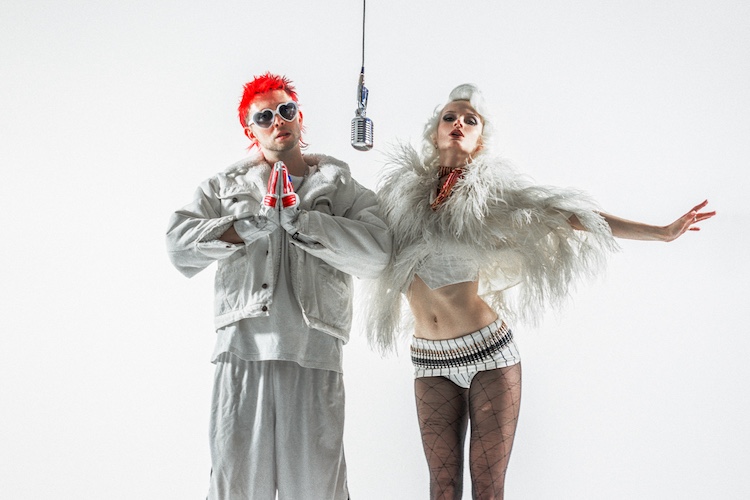
WARGASM have unveiled another explosive single via their new label home at Hopeless Records.
After announcing their signing to the legendary label with the pulsating swagger of ‘Get Down’, the duo’s latest single ‘Swallow’ is another bold and boisterous introduction to their latest era.
Clocking in at just over three minutes, it’s an intensely unapologetic blitz of gritty electronics, blistering riffs and snarling attitude. Basically, it’s got a little bit of everything that makes WARGASM so great.
Speaking about ‘Swallow’, the band have shared:
“From the immortal teaches of Peaches: ‘fuck the pain away’. This is our soundtrack to mistakes and love in this hell of a century. You can feel good when you’re being bad. Human touch just to feel something. This is Spit.’s hot cousin. This is Swallow.”
The band are currently playing shows across the US as support for Scene Queen.
Here are all the dates you can still catch them:
SEPTEMBER
23 – LAWRENCE Granada Theatre 25 – HOUSTON Scout Bar 26 – SAN ANTONIO Paper Tiger 27 – DALLAS The Echo Lounge & Music Hall 29 – MESA The Nile Theater
OCTOBER
01 – SAN DIEGO House of Blues 03 – LOS ANGELES The Regent Theater 04 – LAS VEGAS 24 Oxford 07 – ENGLEWOOD Gothic Theatre 09 – CHICAGO House of Blues 10 – INDIANAPOLIS Deluxe at Old National Centre 11 – GRAND RAPIDS The Intersection 13 – CUDAHY X-Ray Arcade 14 – DETROIT Saint Andrew’s Hall 16 – NEW YORK Racket NYC 17 – PHILADELPHIA Brooklyn Bowl 18 – WORCESTER Palladium Upstairs 20 – CHARLOTTE Music Farm 23 – ST. PETERSBURG Jannus Live 24 – FORT LAUDERDALE Revolution Live 25 – ORLANDO House of Blues