Rock and Roll Hall of Famer Glenn Hughes undergoes open-heart surgery, plus a trailer has been released for an upcoming Bobby Rush documentary, and new music from Cardinal Black.
Ever since Anthony Phillips left Genesis in 1970, he’s been viewed by some as an also-ran in prog history – but that view is wrong. After facing illness, heartbreak and stage fright, all of which contributed to his departure, he rebuilt his musical career and became the creator of many cross-genre albums, along with gaining a reputation as a leading light in production music. In 2024 he looked back with Prog. Here we take up his story just as Anon, his band with Mike Rutherford, had played a riotous gig at Charterhouse school alongside The Garden Wall, featuring fellow pupils Peter Gabriel and Tony Banks.
Everything changed after that – the two groups eventually coalesced and the genesis of Genesis was in the air.
We made a demo where I wrote all the crap songs and Pete and Tony wrote the good ones. Pete only came along at Tony’s insistence. I didn’t know Pete could sing – he’d just lent us his drums at the time. We ended up signing to Decca!
And that didn’t particularly work out…
It’s a good thing it wasn’t successful, or we’d have never developed our distinctive style. One day, I heard this golden sound of a 12-string coming from the glade at Charterhouse. That was it – I had to get a 12-string, and I started writing in a different way.
On the one hand, we were writing unoriginal blues stuff like Going Out To Get You, and on the other we had this experimentation that we didn’t really recognise; we were just mucking around thinking it was rather lovely.
It’s only in retrospect I realised we weren’t really influenced by anybody else. I suppose the closest thing was the interplay between Simon Nicol and Richard Thompson in Fairport, but they were very much six-string, a little bit more folky. Whereas we were into weird chords.
The summer of 1969 was tumultuous for you, was it not?
I’d been dumped by Lucy Burge, the love of my life. We’d recorded From Genesis To Revelation, and Jonathan King had mixed the backing track to mono and added the strings. It was released in March – and the whole thing sounded limp. It seemed my whole world had come to an end.
Being run down causes illness, and I contracted glandular fever quite badly, but I managed to work hard and get decent A-Levels. Genesis didn’t really know what to do; whether to go on.
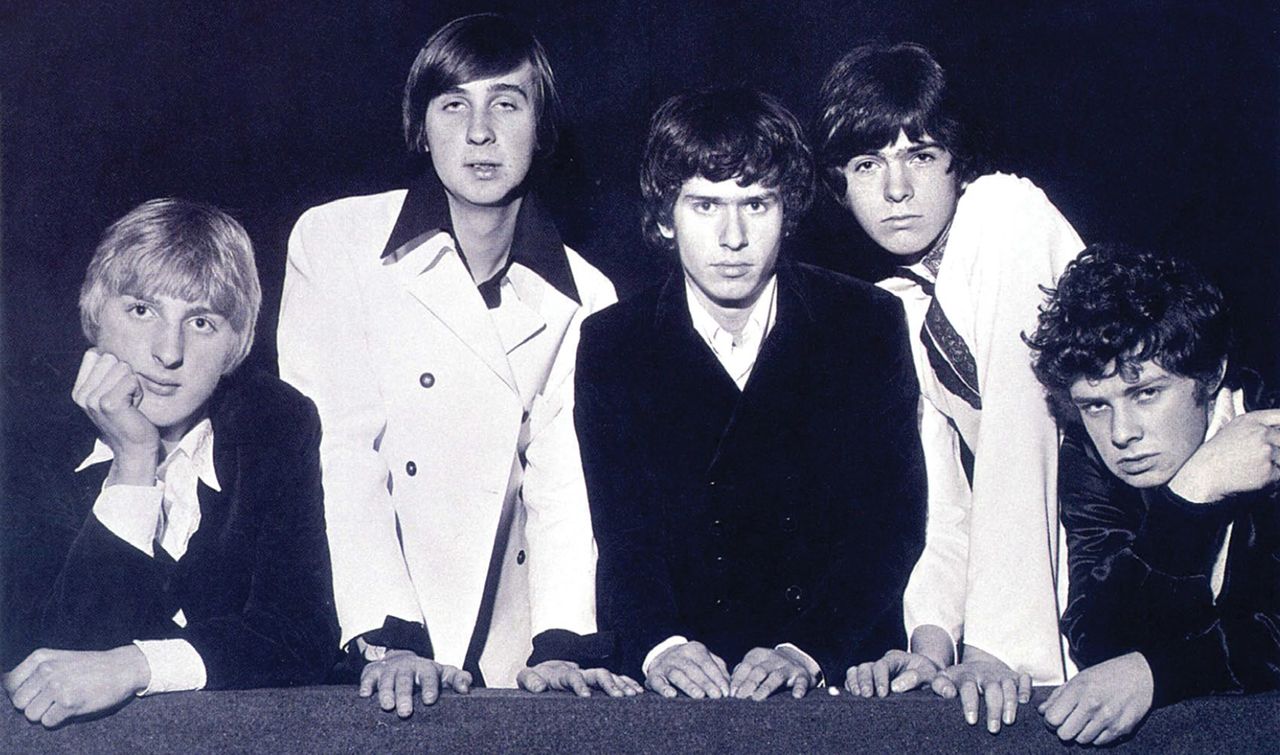
(Image credit: Anthony Phillips Archives / Decca / Philip Gotlop)
You then decamped to Christmas Cottage in Dorking and spent the rest of 1969 rehearsing and writing.
We worked so hard and it paid off – but we sort of frayed at the edges.
The impact of Crimson, especially on us, was huge in terms of sonics and how it was planned out. I later worked with Mike Giles, and he told me how the music was all planned before they recorded it. They went to America too soon, and that was it. We were rehearsing the day of their Hyde Park concert and missed it.
Peter Gabriel often seemed isolated during rehearsals, didn’t he?
I always felt a bit sorry for Pete; we would gang up on him. He would have this incredible perception all the time. It was almost too much – one in three ideas would be really good, but they wouldn’t stop coming. When we were ganging up against Pete, Tony was at the forefront.
If we’d not had two 12-strings, would Peter ever have started telling all those stories?
That pecking order was a famous thing in Genesis, wasn’t it?
Tony was always friendly with me. But in a competitive situation, it was the only time I’d ever seen him anything other than friendly. He’s terribly competitive. Mike told me once they were playing tennis, and said the vibes coming from the other side of the net were so bad that he just gave the game away.
They say Paul McCartney was replaced with Billy Shears – I sometimes think that Peter was replaced as well. He used to sit there like an old woman, and then explode into this psychedelic thing. Because of two 12-strings trying to keep retuning that took forever onstage, Pete was forced to do something, and so he started slipping into this persona, which wasn’t the shy, sweet, slightly inarticulate Pete – he switched into this messianic character looking into the far distance. If we’d not had two 12-strings, would he ever have started telling all those stories? We’ll never know…
You played with some incredible people in your short time on tour with Genesis.
I would love to be able to tell you about meeting Nick Drake or David Bowie… we just passed backstage at best. Mott The Hoople were incredibly supportive, though. Ginger Baker wasn’t very pleasant.
Your departure was a momentous time for the group – the only time they truly came close to throwing in the towel.
I asked for a poster in a music shop. They put ‘Ex-Genesis’ and people thought it said ‘Ex-Genius’
Glandular fever had been awful. I was incredibly ill. But we were young and kept driving forward. I then got bronchial pneumonia, took a couple of weeks off, came back and recorded Trespass, and went back on the road. When it came to solos, I was turning down – I’d just lost my nerve. I was basically, fundamentally scared. I was also being advised by medical people to leave. We were dossing down on floors. Glandular fever can affect your nervous system. I can’t be sure, but I think the two were linked.
What happened during the seven years when nothing was officially released?
I was a lost soul after I left the group. I had a place at Kent University to read philosophy. I remember they sent me a Bertrand Russell book – my idea of philosophy was sitting smoking joints and discussing life; then suddenly there’s all this scientific stuff. I’m a stranger to science. I panicked and switched to history.
My nervous system had taken such a caning, in a sense, I was having a quasi-nervous breakdown. The idea of going to university seemed completely terrifying.
You went back to music school?
I deferred university for a year, and then I heard Sibelius for the first time, and that opened a new world for me. I knew that I had to read music. I had to catch up on stuff that other people would have done at the age of 13. I studied part-time at Guildhall [School Of Music And Drama in London], studying harmony, counterpoint and orchestration.
And teaching followed?
I started teaching classical guitar from 1972 onwards. I asked for a poster to be put up in a music shop, and they put ‘Ex-Genesis’ and people thought it said ‘Ex-Genius’! I taught at Peper Harow [a therapeutic community for troubled adolescents in Godalming] from 1975.
I was also teaching at Reed’s School in Cobham. I was still teaching one day a week at Peper Harow as late as the recording of Sides [in 1979]. I was teaching the day Ray Cooper came in and did his overdubs. I’ve still never met him!
From the day in 1978 that he released his debut album For You, on which he wrote and produced every song, played every instrument, and sang every melody and harmony, it was evident that Prince was a special, singular talent. But ZZ Top’s Billy Gibbons has a crystal clear memory of the moment that he realised that the multi-talented Minneapolis-born superstar was also a guitar hero for a new generation.
That epiphany came on the evening of March 15, 2004, when Prince joined Tom Petty, Steve Winwood, Jeff Lynne, Dhani Harrison and more to honour Harrison’s father George at the Rock and Roll Hall of Fame induction ceremony at the Waldorf Astoria Hotel in New York. Three-and-a-half minutes into the all-star band’s tribute performance of The Beatles‘ While My Guitar Gently Weeps, Prince stepped up to play a guitar solo: three minutes later, when he finished playing, jaws were on the floor.
“He just burned it up,” Tom Petty later recalled. “You could feel the electricity of, Something really big’s going down here.”
Petty wasn’t the only one blown away by Prince’s performance.
Recalling that night in an archive interview with legendary broadcaster Dan Rather on AXS TV, Billy Gibbons said, “I had become a fan of Prince. I admired his showmanship, I considered him a world class entertainer. It was only until he appeared with the Rock and Roll Hall of Fame closing jam session, when he picked up a guitar and tore it up, lit the stage on fire with his technical dexterity [that I recognised] Prince to be that accomplished as a guitarist. A great dancer, a great singer, a great composer [and] I knew he held a guitar, but I didn’t really see him play it much.
“And that one appearance at the close of the Rock and Roll Hall of Fame induction awards really caught me off guard,” the Houston-born guitarist continued, “and I I started listening intently.”
Not long after that memorable night, Gibbons was in New York himself, seeking out a post-show meal in Manhattan after discovering that his usual late night haunt in the Meatpacking District was closed for renovations. After arriving at the shuttered restaurant, the guitarist noticed that a bar across the street was loud and lively, and decided that he’d call in there instead.
“No sooner had I crossed the threshold,” he told Rather, “than a large guy came up and tapped me on the shoulder. He said, ‘Somebody wants to speak to you.’ And I said, Okay. And he pointed, and sitting in this little horseshoe banquette all alone, there sat Prince.
“I took a seat,” Gibbons continues, “and he said, ‘Yeah, sit down.’ He said, ‘I just would like to talk guitar.’ And I said, Well, you’ve come to the right place. And I said, Now knowing you as a guitarist, which I had not known before, let’s peel the onion. And we sat for a good two hours talking about how to do this,and how to do that.”
Gibbons recalls that his conversation with Prince carried on until around 5am, and at its conclusion, he asked the younger musician if he would teach him how to play the guitar intro to his classic 1984 single When Doves Cry.
He said, ‘I fell into it by accident’,” Gibbons says. “He said, ‘I haven’t been able to play it like that ever since… Let’s go learn it.”
I can’t decide if reviewing a cover song is the easiest thing I’ve ever done on this blog — or the hardest. It would be simple enough to say, “Hayley and The Crushers have covered one of the greatest pop songs ever written and made it their own,” direct you to the music video, and point in myself in the mirror in appreciation of a job well done. But what fun would that be? We’re talking about Hayley and the freaking Crushers — who are on my Mt. Rushmore of present-day bands. I can’t phone this one in!
So let’s start with the obvious: covering the utter perfection that is The Primitives’ 1988 single “Crash” is a gutsy move, but would you expect anything less from a band that has previously had at The Ramones’ “Teenage Lobotomy” and X’s “Los Angeles”? There is no fear in the Crusherverse. You can acknowledge a song is unfuckwithable and still put your signature on it. The band points out that it has always loved “songs that feel like candy with a switchblade tucked inside,” so “Crash” was a perfect candidate to be properly Crusher-ized. This cover has the original’s spirit, but it’s a little louder, a little punchier, a little more glittery, and a lot punkier. Of course you’re starting with majestic material. But the band’s own DNA is all over this track. This is music that energizes and uplifts, music that has you shouting “Yeah!” as soon as the song starts. In a world full of “meh” music, we need a lot more “Yeah!” And the music video has me in stitches. I can’t say much more without spoiling it, but man, I just about choked on my Cheerios. You want bands with humor and personality? Well here you go. Dr. Cain deserves an Oscar!
With a new album releasing on Kitten Robot Records in 2027, Hayley and The Crushers have been nice enough to give us a little taste of what’s to come with the singles “Jewel Case” and “Cringeworthy,” both of which are gold-certified bangers. And now “Crash” amps up the excitement even more. I’ve made so much about how great this year has been for new music, but who says next year can’t be even better? Drive safely, kids!
Bands like Wisconsin Anger Team are the reason why I never lose the fire for writing about music. In a world where (perhaps by necessity) many bands have to put as much effort into self-promotion and a social media presence as they put into their music, Wisconsin Anger Team lets its music speak for itself. It doesn’t do social media. It’s not all over the streaming sites. In very old school fashion, the band communicates with fans and friends via email. The focus is on making really great albums and releasing them without fanfare via Bandcamp.
True Spleen is the band’s sixth full-length album in six years. Like the previous five, it’s extraordinary. It contains 14 powerful tracks in a style reminiscent of the melodic punk, pop-punk, and louder indie rock of the ’80s and ’90s. Yet this is not just punk rock — this is art. Every song is essentially a poem, short story, or the first page of a novel you’d never want to put down. I’m blown away by the amount of time and effort that must have been invested into bringing every one of these songs to life. And the fact that the band includes the lyrics on Bandcamp tells you how much they mean. Every word was carefully considered. Every song title was an artistic decision. But those lyrics aren’t there to overshadow the music. They’re part of the music. You push play, and you can feel the energy, heart, and guts of what Wisconsin Anger Team has captured on tape. And then you start reading the lyrics and get the deeper meaning of each song. At a time in which so much music being released into the ether is just “content” meant to go in one ear and out the other, this band is making records that demand your time and attention. This is music, visual art, and literature all in one package. This is an album that you ought to experience the way you’d experience a movie or a book. How can you not appreciate a band that oil-paints a digital album cover on a canvas board? Yet there’s nothing even slightly pretentious about this album. As smart and literate as it is, above all else, this is music full of feeling and life.
In some better, alternate version of the universe, True Spleen would be a vinyl release and be selling like hotcakes. It almost seems too good to be true: How is music this good available for a free download? But if you feel that guilty about getting it for free, you can pay whatever you like. Most importantly, Wisconsin Anger Team has puts its heart and soul into making a record, and it deserves to be heard. We live in an odd time where the “cost” of listening to new music is often just the opportunity cost of not doing something else. You have podcasts to listen to and Reels to watch and reality shows to stream. I get it. So here I am, week after week, year after year, pounding the table for bands I think are more than worth your time. If you are a regular viewer of this blog, you most likely gravitate to a certain type of music. Wisconsin Anger Team plays that certain type of music at an exceptionally high level of quality. Again I pound the table. One of these days I might make my knuckles bleed. It will be a reasonable sacrifice for the cause.
Iconic rock band Bad Company drops new single and accompanying music video for ‘Bad Company‘, off their upcoming album ‘Live in London‘. Set for release on November 13th, ‘Live In London‘ – which is being released for the first time! – is available now to pre-order and will be available on blue-colored vinyl, CD, and […]