ON THE HORIZON…
Boston’s own Gozu has got a new song, with the full album to be released on May 15
You can pre-order here if you are so inclined!
ON THE HORIZON…
Boston’s own Gozu has got a new song, with the full album to be released on May 15
You can pre-order here if you are so inclined!
Step into the shadowy corners of the Victorian Era, where beauty intertwined with death and obsession painted a haunting portrait of love and loss. This was a time when mourning rituals were as elaborate as the lives of the departed, revealing an intimate relationship between the living and the dead that continues to resonate today.

In the quietude of a Victorian home, silence veils the air as families gather, not to celebrate life but to mourn death. The curtains drawn tightly, the atmosphere is laden with sorrow, where the presence of loss lingers like a ghost. The high mortality rates of the time, particularly among children, shaped a culture deeply intertwined with grief. The dead weren’t simply removed; they were lovingly remembered and kept close. A poignant reminder of love entangled with tragic obsession.
Post-mortem photography became a haunting Victorian ritual, capturing the deceased in their final repose. Families posed their loved ones, attempting to freeze fleeting memories, often resulting in the only portrait taken in life. These images blurred the line between memory and illusion, creating an unsettling yet beautiful legacy of the departed. They invite us to confront the fragility of existence and the lengths one might go to hold onto those they love.
In the Victorian era, this fear was real. Safety coffins were designed with bells and escape mechanisms. Victorian death culture shaped how society viewed grief, memory, and the afterlife.
Mourning was an intricate art form during the Victorian Era, especially for women bound by strict societal rules. Attired in flowing black garments, widows donned the color of grief, marking them as embodiments of sorrow for years. Jewelry, crafted from the hair of deceased loved ones, accentuated this intimate connection, serving as both a token of love and a reminder of the inevitable decay. This practice revealed a deep discomfort with death, yet finding beauty in such melancholy became an unsettling norm.
As Spiritualism emerged, the Victorians sought solace in communicating with spirits beyond the veil. Séances, held in dimly lit rooms, brought together the living and the dead, fostering a belief that love transcended mortality. Mourning lockets, intricately designed to preserve the tresses of the departed, became cherished keepsakes, encapsulating memories in their delicate confines. Writing letters to lost loved ones further bridged the gap, as if reaching out to the beyond was a way to keep love alive.
In the Victorian era, post-mortem photography became a powerful way to preserve the memory of the dead. Families often posed their loved ones as if they were still alive, creating haunting images that blurred the line between life and death…
Yet, this preoccupation with death birthed beauty in decay, an aesthetic celebrated by many. The darkness of the Victorian Era resonates within modern gothic culture, where stories of obsession and mortality find new life in art, fashion, and literature. This fascination persists, influencing contemporary gothic movements and the allure of dark storytelling. Just as Edgar Allan Poe illuminated the beauty of the macabre, today’s artists continue to explore these shadows. Today’s artists grapple with themes of loss, longing, and the eternal.
In today’s world, the revival of dark fashion reflects a culture captivated by the Victorian ethos. Individuals express their identity through aesthetics that echo the shadows of the past. Inspiring a deeper connection to mortality, this resurgence of interest in darkness echoes the Victorian fascination, reminding us that love doesn’t end with death; it morphs into something eternal yet unsettling.
By revisiting these themes, we unearth the roots of our obsessions: a yearning for connection that defies the finality of life. The interplay of beauty and death invites us to explore our own narratives, shaping our identities amidst the echoes of those who have come before. The Victorian Era’s legacy lives on, encouraging us to confront our mortality while finding grace in the transient nature of love.
The post The Dark Side of the Victorian Era: Beauty, Death, and Obsession appeared first on Edgar Allan Poets – Noir Rock Band.
Blacken Open Air has declared its intent to return in May of 2027.
Australia’s most remote and unique boutique festival has called out to fans and supporters through Instagram for suggestions on the next event.
The call comes a little over the organisers’ announcement in late March that the future of the festival’s HQ, an entertainment venue, record label and youth safe space called The Black Wreath, is in doubt.
The Black Wreath’s statement, posted on socials, explained that the building has been listed for sale, with rewards-based crowd funding and a tax-deductible fundraiser being organised to save the operation. The post ended with the hope that victory would be celebrated at Blacken Open Air next year.
Blacken Open Air began in 2013 as a festival called Blacken the Earth at Alice Springs RSL, with King Parrot headlining a mostly-local line-up. In the years since, the festival has expanded to a three-day outdoor event featuring a carefully-curated collection of national, international and Territorian metal, punk and rock acts that have included Amyl and the Sniffers, Revocation, Frenzal Rhomb, Earthless, Psycroptic, Cosmic Psychos, Blood Duster and more. The Black Wreath has served as the event’s organiser as well as a label and distro service for Territorian artists such as Southeast Desert Metal, Snakes, Miazma and Jeremy Whiskey.

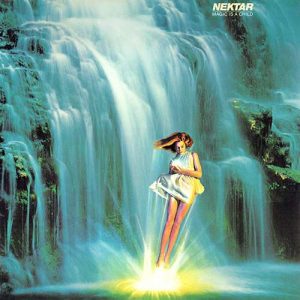
1977 seemed to be a strange year for NEKTAR, who had parted with one of the ensemble’s founders, singing guitarist Roye Albrighton, and had, for the first time ever, to deliver a record with a line-up different to the one … Continue reading
The post NEKTAR Prepare “Magic Is A Child” For Expanded Reissue appeared first on DMME.net.
Steady for your arms embrace
But it’s Sunday gloomy Sunday
America likes to call itself civilized while selling the machinery of ruin with a glossy, toothy smile. We bless ourselves in daylight, then bomb strangers by night, and act wounded when the smoke blows back under our own door. We speak of freedom the way a womanizer (or televangelist) speaks of fidelity: loudly, tearfully, and with lipstick staining the collar. Our children learn that killing is wicked unless the flag is draped over it and the bookkeeping is tidy. That is the old swindle: grief exported, conscience contracted out, and every corpse abroad explained as an unfortunate necessity in the upkeep of our spotless self-regard.
Johnny Dynamite has a gift for slipping bad news into your bloodstream beneath something sweet enough to slow-dance to, and Sunday Gloomy Sunday does exactly that. Its soft-focus doo-wop lilt feels borrowed from a sock-hop in some cleaner, simpler America that likely never existed anywhere but in reruns of Hazel and jukebox mythology. Listen a little closer, though, and the song begins to split at the seams, letting dread and disgust bleed through. Yet, as with Pandora’s Box, one bruised scrap of hope remains: the possibility that people might still choose decency over barbarism.
The arrangement is a sly piece of business. Drum machines keep the heart ticking with cool precision while those 80s guitar lines cut across the song. The synths glow with a gauzy, retro radiance that might almost make you forget the heaviness the song is carrying, until that saxophone steps in and tears a ragged hole for us to stare straight at American hypocrisy. We’re weary of the mental gymnastics that make suffering acceptable so long as it comes stamped with official language, televised solemnity, and the proper flag in the background. Dynamite circles the psychic torment of living in an age where every fresh outrage reaches your pocket in seconds, where every citizen is drafted into a permanent parade of witness, and where helplessness can start to feel like the chief civic duty. Sunday Gloomy Sunday knows how rotten things are, but also keeps one eye on the possibility that people, against all evidence and habit, may still decide to be better than the systems built in their name.
The video for “Sunday Gloomy Sunday” follows Johnny Dynamite through a bruised cityscape of back alleys, viaducts, chain-link lots, stop signs, puddled curbs, and cold riverbanks, letting the song’s unease gather in plain sight. Shot in soft, slightly smeared daylight and bruised blue shadow, it finds him wandering beneath iron beams and past brick corridors as though moving through the afterimage of a country that has misplaced its soul. Those solitary street scenes are cut with nocturnal footage of a saxophonist, Claire Wardlaw, by the water, her figure half-swallowed by darkness as lights tremble across the surface behind her, giving the song’s ache a second body. Together, the images make a fitting counterpoint to the track’s bittersweet spell: part urban reverie, part moral hangover, and part lonely vigil for whatever shred of grace might still be left flickering at the edge of the wreckage.
Watch the video for “Sunday Gloomy Sunday” below:
Listen to Sunday Gloomy Sunday below and order the single here.
Follow Johnny Dynamite:
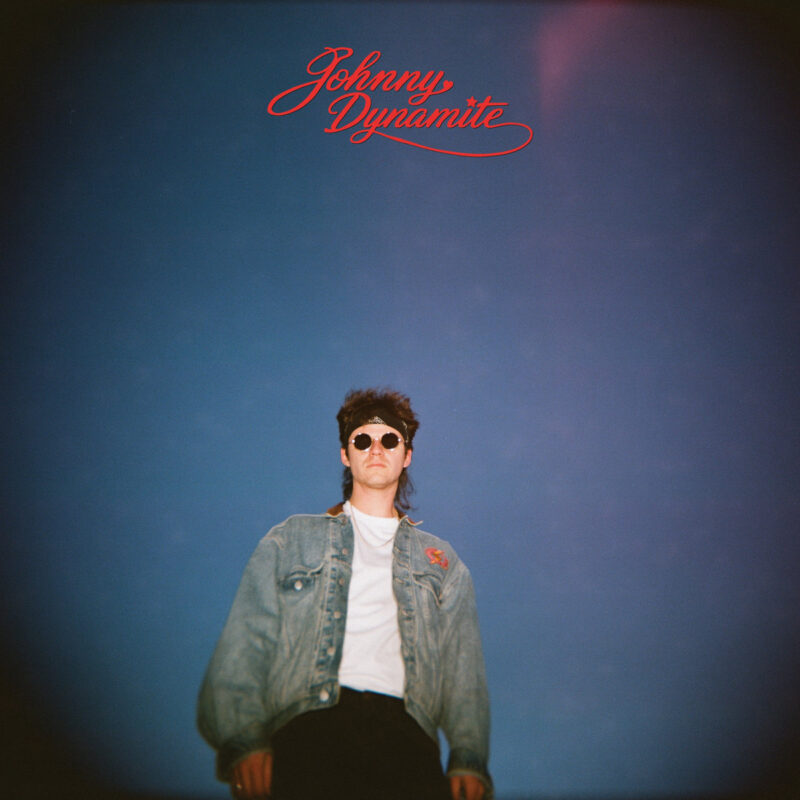
The post “Losing Humans for an Arms Race” — Johnny Dynamite Shares Video for Melancholic New Wave Track “Sunday Gloomy Sunday” appeared first on Post-Punk.com.
Something shifts beneath the surface—Ghost Fetish’s “Fate ” pulls you into a space where tension and emotion collide. “Fate” resonates with a sound that pulls from the rich tapestry of the ’80s. The influence of Depeche Mode lingers in the air, along with echoes of The Cure.

Dynamics in “Fate” flow like tides under a full moon. Intensity rises and falls, keeping listeners on edge. Each chorus crashes like waves against jagged rocks, while verses pull you under, mesmerizing and unsettling simultaneously. The arrangement fosters a tension that is both inviting and foreboding. It’s the kind of track that propels the body into motion, demanding attendance on the dance floor.
Production values shine with a polished yet raw aesthetic. David Kelly’s touch adds a vintage quality, reminiscent of iconic studios from the past. Synths sparkle while the bass thrums, holding firm in the underground ambience. The reverb on the snare echoes through the darkened alleyways of the mind, recreating that signature eighties feel. It’s a brilliant balancing act, avoiding excess while maximizing impact.
As you reach the final moments of “Fate,” the urgency never fades. Listeners find themselves drawn into a world of grit and glamour. The track leaves you craving more, eager to relive the experience. Images of industrial Berlin dance in the imagination, as shadows dip and sway in time with the music. Ghost Fetish crafts an anthem for the lost souls and lovers wandering through the rain-soaked streets.
Ghost Fetish’s “Fate” is an experience. It boldly takes you on a journey through time and emotion. This release finds its place beside legends while carving out its own identity. It’s a revelation, a siren call leading you to dark corners of the dance floor. This is a band that knows its vision, and it demands your attention.
Gothic
 If you love dark music like this:
Discover More Bands Here
For fans of:
Depeche Mode • Nine Inch Nails • The Cure
The post Ghost Fetish Fate Review appeared first on Edgar Allan Poets – Noir Rock Band.
Inherited Time released “Mount of Empty Hopes,” the second single from their upcoming debut album. The track follows a character’s struggle between life and death in a comatose dream, climbing a mountain toward a light of salvation. Musically, it pits aggressive riffs and extreme growls against operatic vocals and symphonic layers.
The Finnish outfit plays modern symphonic metal with a sci-fi atmosphere. Their sound blends traditional melodic metal with power metal elements, featuring majestic orchestral melodies and a vocal range that shifts between clean singing and intense growls. The band features Alesia Savolainen on vocals, Jani Härkönen on bass, Tero Rannila on drums, Olli Pölkki on keyboards, and Ville Pölkki on guitars.
The post Inherited Time Release Second Single “Mount of Empty Hopes” from Upcoming Debut Album first appeared on FemMetal – Goddesses of Metal.

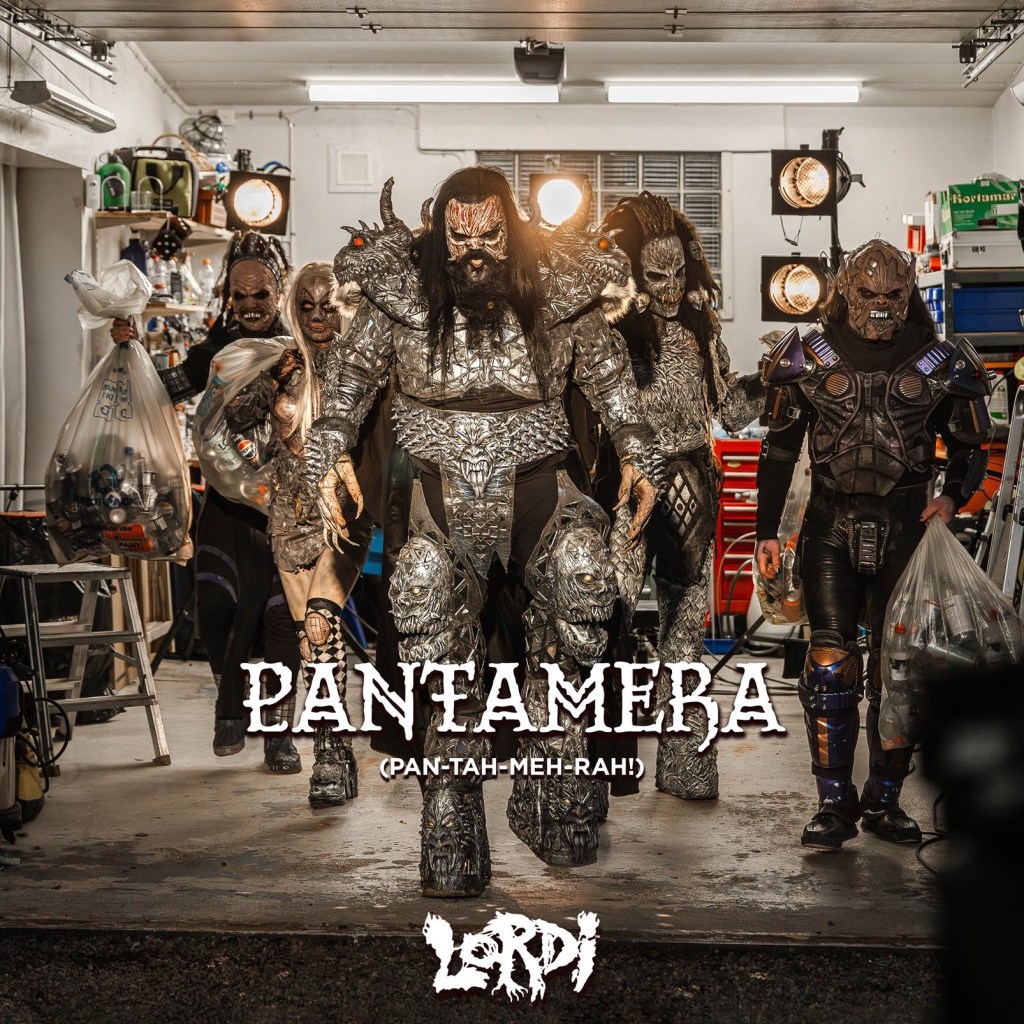
New Single And Video “Pantamera (PAN-TAH-MEH-RAH!)” Out Now
Stream the song here: https://lordi.rpm.link/pantamera
Sweden’s leading recycling initiative Pantamera proudly announces Finnish hard rock legends LORDI as the official spokesband for its 2026 national recycling campaign. Launching on April 2, 2026, the campaign arrives alongside a brand-new LORDI single and video titled “Pantamera (PAN-TAH-MEH-RAH!)”.
Famous for their monster personas, theatrical stagecraft, and Eurovision-winning legacy, LORDI now turn their attention to sustainability, bringing their signature shock rock energy to one of Sweden’s most impactful environmental initiatives.
At the heart of the campaign is LORDI’s unique interpretation of the classic song “Guantanamera”, reimagined in their signature hard rock style. As with every Pantamera campaign, the chosen artist reshapes the familiar melody into their own sonic identity; this time transformed into a powerful, riff-driven anthem designed to resonate with rock audiences.
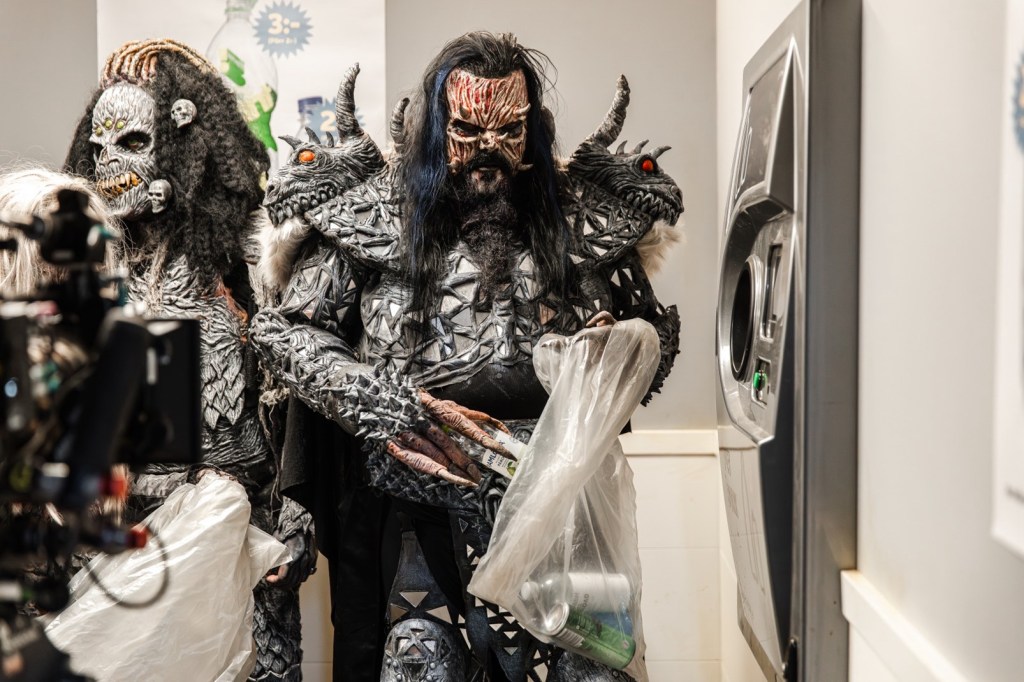
The band’s creative vision draws a striking parallel between horror and sustainability. As Mr. Lordi explains:
“The LORDI version of Pantamera is exploring the similarities between recycling and horror genre in general. For example, Frankenstein’s monster and Zombies are recycled flesh and bones.”
Stream the song here: https://lordi.rpm.link/pantamera
Watch the video: https://www.youtube.com/watch?v=NKlgExcgupI
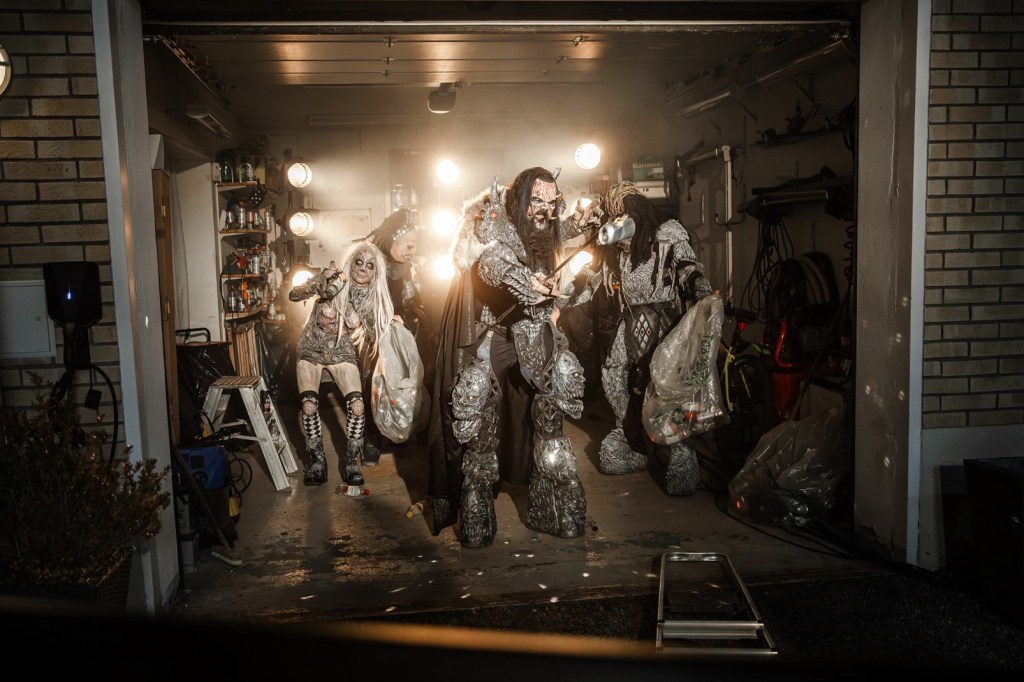
Beyond the stage, LORDI have long demonstrated a commitment to environmental and ethical causes. The band are supporters of PETA and have previously participated in a vegan fashion photoshoot for Vogue, promoting cruelty-free and sustainable materials. Their involvement in Pantamera reflects a natural extension of these values: respect for the planet and awareness of the challenges it faces.
Describing the band’s relentless creative output and packed schedule, one phrase fits perfectly: monsters never rest. Between new music, major live appearances, and now a nationwide environmental campaign, LORDI continue to prove that their momentum is unstoppable.
Alongside the Pantamera campaign, LORDI are gearing up for two special moments on stage:
• 22 April: A unique orchestral collaboration at Forged in Sound: Heavy Metal Orchestrated, presented by the Philharmonia Orchestra
• 26 May: A special appearance at the Eurovision Song Contest 2026 Final in Vienna
More on RPM:
reigningphoenixmusic.com | Facebook | Instagram | X | TikTok | YouTube
Source: C Squared Music
