So who’s the best pop-punk band of the last ten years? Jagger Holly has to be in the conversation — if not dominating it. On its fifth album, Wet Hot European Summer, Jagger Holly is back doing Jagger Holly things. Jay Dee is a hall-of-fame caliber singer/songwriter in this genre, and he’s in prime form on this release. Matt DeeCrack contributes a few ace tunes as he can always be counted on to do, and I wouldn’t argue with anyone who says that this is as good as any album in the band’s catalog. So yeah, if you want to hear pop-punk done the way pop-punk ought to be done, Wet Hot European Summer will hit the spot. These songs balance just the right amount of pop with just the right amount of punk. Some tracks lean a little more to the former (“Wish I Could See It,” “It’s Summer Somewhere,” “This Kinda Love”), and others lean a little more to the latter (“Everything From You,” “Already In Love”). But all in all, this is pop-punk by the book executed to perfection. Jay Dee has a rare talent for writing three-chord punk songs that are impossibly catchy and also hit you straight in the heart. This isn’t rocket science, but there’s a real science to it. And whatever magic is required to write songs this simple that don’t just sound like bad copies of a million songs you’ve already heard, Jay Dee and Matt sure do possess it. Unlike some pop-punk bands that make their influences ultra-obvious, what we can say about a Jagger Holly record is that it just sounds like Jagger Holly. How perfect of a song is “Anybody Out There”? Who wasn’t stoked about the co-ed duet “Won’t Catch Me Crying”?
Getting to its fifth album, Jagger Holly could have gone in a lot of different directions. This could have been a more “mature” Jagger Holly record or an attempted expansion of the band’s sound. But if you can stick to what works and still make albums this great, why mess with a winning recipe? While this vintage summer album did not arrive in time for your summer enjoyment this year, you can put it on now and let summer live a little longer in your heart. Get it now from Monster Zero Records in Europe and OUTLOUD and Hey Pizza! Records here in the States!
Welcome to this weeks edition of Devil’s Island! Every week we maroon a band or artist on the island and see what they get up to, how they cope with being all alone on a small island in the middle of the ocean. It’s not your average desert island and we’ll see just how each person copes with the extreme conditions.
This week when we arrived at Devil’s Island we find Lost Velvet sat on the beach. The island is far from their home, so how did they end up here and how did they cope with life on Devil’s Island?
Find out now…
Welcome to The Razors’e Edge and our somewhat lovely, warm desert island. Don’t worry about it’s name I’m sure it’s not as bad as that would suggest.
You’re marooned here on this island, but before you ended up shipwrecked you chose one album that you couldn’t live without. Which album did you each chose and why?
Rob: Rachmaninoff – Preludes (Complete) – performed by Alexis Weissenberg. Perfection. These interpretations were originally released in 1970 and have still not been surpassed in my opinion. It was between his or Chopin’s 24 preludes for the piano. Rachmaninoff wins out through the variety between the pieces. I feel I would tire of any one of my favourite rock albums, but I can’t see myself tiring of Rach’s preludes.
Melissa: A Perfect Circle – Thirteenth Step Difficult to choose between APC and Tool but the variety and melodic journey found on this album have fulfilled me for so many years I definitely couldn’t be without it! I can’t fault it. I am a massive fan of Billy Howerdel’s guitars, and Maynard’s voice is the right balance where too much listening doesn’t grate on me! There is space in the music to breathe and so much to explore with each listen.
Just behind that palm tree is a shack for each of you to sleep in, with enough space for you to put up a poster on the wall of one album cover. What album cover do you each chose and why?
Rob: Ok computer, for the Stanley Donwood artwork. It’s my favourite album cover of all time. The album itself isn’t bad either!
Melissa: Tool: Lateralus – big fan of Alex Grey’s work, I devoted a whole project during my fine art studies at college to his work! Massively into spiritual anatomy so this poster would be a good reminder for self discovery on a desert island.
There’s also a bar on this here island. But alas each of you only get to choose one drink for the entirety of your stay. What’s your tipple of choice?
Rob: Beer. Easiest question ever.
Melissa: Some blend of fresh coconut and rum
Your suitcases were lost when your ship sank, but you each managed to salvage one item of band merch. What’s the merch and for what band?
Rob: Do any bands make sleeping bags? Or tents? That’s given me an idea for some Lost Velvet merch… Probably just my Aphex Twin t-shirt but I’m sure there must be something more practical for a desert island…
Melissa: I would grab my ‘Dark Cells’ sweater as I just love it. It’s warm, super soft and cosy for cold evenings. If the question rules out our own production, I will take my Fleetwood Mac cap for added shade.
You’re sat on the island thinking “I’m stuck here on this island with my bandmates for eternity”… who would you rather have been shipwrecked with?
Rob: Bear Grylls. Not exactly a fan of his but I’m sure he’d come in handy.
Melissa: Brian Cox. Rob and Bear Grylls can worry about keeping us alive. I’ll be on the other side of the island having the universe explained whilst waiting to be rescued.
There’s a walkman in your pocket, on the tape inside is the recording of the one live show that stands out for you. It could be any show, from any band, anywhere in the world. What show is on that walkman?
Rob: Radiohead at Glastonbury (1997) Or (guilty pleasure) An Evening of Fourplay (1994)
Melissa: Family Values Tour, 1998. That entire era of music all in one show.
You’re getting desperate, you decide the only course of action is to put a message in a bottle and hope someone finds it. Your message could be to any member of any band, but should be the most suitable for a rescue attempt. Who is it?
Rob: Maybe Taylor Swift, she’d be able to utilise the budget of a small country to launch a rescue attempt. I’ll just leave my thoughts on her music out of the message…
Melissa: Well she won’t rescue you now will she Rob lol! I think Keanu Reeves as I believe he has done some incredible rescue missions in film, I reckon he has a kind heart so would care enough to rescue us, and he is a musician too isn’t he.
You’ve been stuck here a while and food supplies are running low. There’s only one thing for it… which fellow band member gets sacrificed to help the others survive?
Rob: Well, there’s only two of us so that would be a battle to the death! My money’s on me (Rob) being sacrificed.
Melissa: Rob hasn’t got that much meat on him so not sure it’s worth the sacrifice – although I survive on very little food to be fair so…
Finally, when the ship sank you each managed to save one person from the wreckage. That person is the one musician that has influenced your career the most, shaped your way of thinking and your outlook on life. Who did you save?
Rob: My good friend and long-time collaborator Sean Gallagher. Without his tutelage, I wouldn’t be a songwriter at all. His music is not famous but can be found under the projects: Waxwork Figurine, Gonol, The Snarks and Sean E Gallagher.
Melissa: Mikee Goodman. A great friend who encouraged me to try again with music at a point when I’d pretty much given up on it. He has had a huge influence on where I am now in many aspects of my life so I owe him the rescue! He also makes me laugh, so island life would instantly become a lot more interesting.
Thanks for your time. We hope you get back to dry land before you’re next due out on tour!
Cheers, hopefully Taytay organises that rescue mission soon.
Why do people willingly listen to sad songs, read tragic novels, and return to stories filled with grief and loss? At first glance, the behavior seems contradictory. Most people naturally avoid sadness in everyday life, yet countless readers, listeners, and viewers actively seek it through art. Some of humanity’s most beloved artistic works are also among its saddest.
Readers return to The Raven. Audiences cry during tragic films. Listeners replay melancholic music long after happier songs have faded from memory. The attraction is not accidental. Psychologists, philosophers, and artists have spent centuries trying to understand why sorrow can sometimes feel beautiful rather than painful.
This phenomenon is often described as beautiful sadness: the transformation of grief, longing, melancholy, and loss into meaningful aesthetic experiences. Far from being a contradiction, it may reveal something essential about how human beings process emotion, memory, and meaning.
The Psychology of Beautiful Sadness
When Sadness Becomes Beautiful
The sadness experienced through art differs fundamentally from sadness encountered in everyday life.
Real grief can be overwhelming because it directly affects our lives. Artistic sadness creates emotional distance while preserving emotional truth. Readers may mourn fictional characters, listeners may feel moved by songs about heartbreak, and audiences may cry during tragic films, yet they remain protected from the real-world consequences of those experiences.
This distance changes the way sadness is perceived. Art provides structure, meaning, and perspective, transforming emotions that might otherwise feel unbearable into opportunities for reflection and understanding.
As a result, grief becomes contemplation, longing becomes beauty, and melancholy becomes a source of emotional insight. The sadness remains genuine, but it exists within a framework that encourages reflection rather than despair.
This transformation lies at the heart of beautiful sadness and helps explain why audiences repeatedly return to works that evoke sorrow.
The Gothic Origins of Beautiful Sadness
The modern fascination with beautiful sadness owes much to Gothic literature.
During the eighteenth and nineteenth centuries, Gothic writers challenged the idea that art should focus primarily on happiness, virtue, or moral instruction. Instead, they explored grief, obsession, isolation, memory, longing, and mortality.
The Gothic imagination discovered that sadness possessed a unique emotional richness. Loss could deepen appreciation. Longing could intensify beauty. Melancholy could reveal aspects of human experience that joy often concealed.
Rather than treating sorrow as a weakness, Gothic writers transformed it into a source of emotional depth. Their haunted castles, tragic romances, ruined landscapes, and grieving protagonists demonstrated that sadness could possess artistic power equal to happiness.
This perspective would later influence Romantic poetry, Symbolism, noir fiction, Gothic music, and countless artistic movements that followed. Beautiful sadness became one of the Gothic tradition’s most enduring contributions to modern culture.
Edgar Allan Poe and the Aesthetics of Grief
No writer explored beautiful sadness more consciously than Edgar Allan Poe.
Throughout his poetry and fiction, Poe transformed grief into an artistic experience capable of producing beauty, longing, and emotional resonance. In The Raven, the narrator’s sorrow becomes inseparable from the poem’s haunting atmosphere. The repeated word “Nevermore” is devastating because it captures a universal reality: some losses cannot be reversed.
Similarly, Annabel Lee transforms mourning into something lyrical and timeless. The poem is not simply about death. It is about memory, devotion, and the persistence of love beyond loss.
“The death, then, of a beautiful woman is, unquestionably, the most poetical topic in the world.”
— Edgar Allan Poe, The Philosophy of Composition
Modern readers may disagree with Poe’s specific conclusion, but his broader insight remains influential. He understood that grief could create emotional intensity unlike any other feeling.
His goal was not to glorify suffering. Instead, he sought to transform painful emotions into meaningful aesthetic experiences capable of moving audiences long after the original loss had occurred.
Through Poe, beautiful sadness became one of the defining elements of Gothic literature.
Romantic Melancholy and Emotional Depth
The Romantic movement expanded many of the ideas already present within Gothic literature.
Romantic writers often viewed melancholy not as a negative condition but as evidence of emotional depth and self-awareness. Poets such as Lord Byron and Percy Bysshe Shelley explored longing, memory, loss, and unattainable ideals, suggesting that some of life’s most meaningful experiences derive their significance precisely because they cannot last forever.
Love becomes precious because it is fragile. Memory becomes powerful because the past cannot be recovered. Beauty becomes moving because it is temporary.
This perspective helped establish one of the central principles behind beautiful sadness. Certain emotions become meaningful not despite their pain, but because of it.
Through this lens, sadness becomes more than suffering. It becomes a way of understanding what matters most.
Why Sad Art Feels Good
The central paradox of beautiful sadness has a clearer explanation than it might seem.
Why do people willingly seek emotions they would normally avoid?
Modern psychology suggests that art creates a unique emotional environment. It allows individuals to experience sadness without facing the real-world consequences that usually accompany it.
A tragic novel can evoke grief. A melancholic song can awaken memories. A sorrowful film can bring viewers to tears. Yet throughout the experience, audiences remain aware that they are safe.
This combination of emotional intensity and psychological security helps explain why sadness often becomes pleasurable when experienced through art. The emotion remains genuine, but the threat disappears. People are free to explore difficult feelings without becoming overwhelmed by them.
What emerges is a rare emotional experience in which sorrow becomes meaningful rather than destructive. The sadness is real, but it exists within a framework that encourages reflection rather than despair.
Freud and the Meaning of Melancholy
Sigmund Freud explored sadness extensively in his essay Mourning and Melancholia.
Freud distinguished between mourning, which follows a recognizable loss, and melancholia, which often involves a more complex and enduring relationship with absence, longing, and identity.
Although aspects of Freud’s theories remain debated today, his work introduced an important idea: painful emotions often contain hidden psychological significance.
Sadness is rarely just sadness. It frequently reflects attachment, memory, desire, regret, or unresolved emotional experiences.
Beautiful sadness resonates because it gives form to these emotions. Art allows people to confront feelings that may otherwise remain difficult to understand or express.
In this sense, melancholic art becomes a bridge between conscious awareness and deeper emotional realities. The sadness portrayed in literature, music, and film often feels powerful because it touches emotions audiences already recognize within themselves.
Carl Jung and the Shadow
Carl Jung approached sadness from a different perspective.
According to Jung, every individual possesses aspects of the self that remain hidden, ignored, or suppressed. He referred to this dimension as the Shadow.
The Shadow contains emotions, fears, desires, and experiences that people often struggle to acknowledge openly. These hidden aspects of personality do not disappear simply because they are ignored. Instead, they continue influencing behavior from beneath conscious awareness.
Art provides a safe way to encounter these hidden dimensions of the self. Melancholic literature, music, and visual art allow audiences to engage with emotional experiences that might otherwise remain buried beneath everyday routines.
For Jung, confronting difficult emotions contributed to a more complete understanding of human identity. This may help explain why beautiful sadness often feels strangely comforting despite its subject matter.
Catharsis and Emotional Release
Another explanation comes from the ancient concept of catharsis.
Originally developed by Aristotle, catharsis describes the emotional release that occurs when audiences engage deeply with tragedy.
A powerful story can provoke tears. A song can unlock buried memories. A poem can articulate feelings that have remained unspoken for years.
The result is often relief rather than distress.
Instead of intensifying suffering, art can help individuals process and release emotions. This helps explain why people frequently return to works that evoke sadness.
The experience is not simply about pain. It is about emotional movement, understanding, and renewal. Through catharsis, difficult emotions become manageable because they are acknowledged rather than avoided.
The Feeling of Being Moved
Recent psychological research suggests that people are often drawn not to sadness itself but to a related emotional state sometimes described as being moved.
This feeling combines sorrow with appreciation, empathy, tenderness, gratitude, and connection.
A tragic story may bring tears while simultaneously creating feelings of beauty and meaning. A melancholic song may evoke loss while strengthening a sense of connection to memories, relationships, and personal experiences.
This mixture helps explain why beautiful sadness feels fundamentally different from ordinary despair.
The experience contains pain, but it also contains value. People do not seek sadness because they enjoy suffering. They seek emotional experiences that deepen their understanding of themselves, their memories, and the people around them.
Why Melancholy Creates Meaning
The deepest appeal of beautiful sadness may lie in its relationship to meaning.
Many of life’s most significant experiences involve impermanence. Love becomes precious because it can end. Friendships matter because they are fragile. Memories become valuable because they cannot be relived exactly as they occurred.
Melancholy draws attention to these realities.
Rather than diminishing beauty, sadness often intensifies it by reminding us that nothing lasts forever.
This helps explain why melancholic art continues resonating across centuries and cultures. Beautiful sadness transforms painful truths into emotional insight, revealing that sorrow and beauty are not always opposites.
Sometimes they deepen one another, creating experiences that feel more meaningful than either could alone.
Beautiful Sadness in Modern Music
The appeal of beautiful sadness did not disappear with Gothic literature or Romantic poetry.
It continues to shape contemporary music, where melancholy often serves as a source of emotional depth rather than despair.
Few modern artists explore this territory more effectively than Nick Cave. Throughout his career, Cave has written about grief, love, spiritual uncertainty, and loss with unusual honesty. What makes his work particularly powerful is that sadness is rarely presented as an ending. Albums such as Skeleton Tree and Ghosteen transform personal tragedy into a search for meaning, connection, and even moments of transcendence.
A similar dynamic appears in the work of Lana Del Rey. Her music often blends nostalgia, memory, romance, and melancholy into a cinematic aesthetic. Rather than focusing on grief alone, she frequently explores the tension between idealized memories and reality, creating songs that feel both beautiful and emotionally fragile.
These artists demonstrate how beautiful sadness continues evolving while preserving the emotional qualities that first attracted Gothic and Romantic writers centuries ago.
Why Audiences Keep Returning to Melancholy
The enduring popularity of melancholic art suggests that beautiful sadness fulfills an important psychological function.
People often seek experiences that help them understand themselves. Joy can be uplifting, but melancholy frequently encourages reflection. It invites audiences to slow down, remember, contemplate, and connect with aspects of life that are easily overlooked.
Loss, memory, longing, change, and mortality are universal experiences. Art that explores these themes often feels deeply personal because it reflects realities that nearly everyone encounters.
Melancholic art also creates a sense of shared humanity. It reminds people that sadness is not an isolated experience. Others have felt similar emotions, expressed them creatively, and transformed them into something meaningful.
This helps explain why audiences continue returning to works that evoke sorrow generation after generation.
Why Beautiful Sadness Endures
Beautiful sadness endures because it transforms painful emotions into meaningful experiences.
From Gothic literature and Romantic poetry to contemporary music and modern psychology, artists and thinkers have repeatedly recognized that sorrow possesses a unique emotional power. When filtered through art, sadness becomes more than suffering. It becomes reflection, empathy, understanding, and emotional insight.
The attraction of beautiful sadness does not come from a desire for pain. It comes from a desire for meaning. People seek these experiences because they reveal truths about love, memory, loss, and human connection that happiness alone cannot always express.
This may be why melancholic art continues resonating across centuries. It reminds us that some of life’s most meaningful experiences contain both beauty and sadness at the same time. Rather than diminishing one another, these emotions often deepen each other, creating the emotional complexity that makes great art unforgettable.
Wear the Darkness
If The Psychology of Beautiful Sadness resonates with your fascination for Gothic literature, melancholy, memory, and emotional depth, explore the Edgar Allan Poets store. Our designs celebrate Poe, dark aesthetics, and the beauty that emerges from shadow.
Join the Noir Newsletter
Receive more essays exploring Gothic literature, noir psychology, melancholy, symbolism, dark aesthetics, and the emotional forces that continue shaping art and culture.
Frequently Asked Questions
What is beautiful sadness?
Beautiful sadness is an aesthetic experience in which grief, melancholy, longing, or loss are transformed into something emotionally meaningful through art.
Why do people enjoy sad music and stories?
Art allows people to experience difficult emotions safely, creating opportunities for reflection, empathy, catharsis, and emotional understanding.
How did Edgar Allan Poe contribute to the idea of beautiful sadness?
Poe transformed grief and loss into powerful artistic experiences, particularly in works such as The Raven and Annabel Lee, helping establish melancholy as a source of aesthetic beauty.
Why does melancholic art feel comforting?
Melancholic art allows people to explore difficult emotions in a safe environment, transforming sadness into reflection, meaning, and emotional connection.
Why is melancholy important in Gothic culture?
Gothic culture frequently explores memory, loss, longing, mortality, and emotional complexity, making melancholy one of its defining themes.
In 2020 Prog took a track- by-track look at Kate Bush’s 1980 album Never For Ever – her first No.1 LP – and the motivations behind her creation.
Much as Kate Bush’s 1979 Tour Of Life remains legendary in the collective memory and imagination – partly because she avoided live events until Before The Dawn 35 years later – she’d been uncomfortable with EMI’s visual emphasis on her sexuality, and felt she’d been rushed on her 1979 album, Lionheart.
So after her Christmas 1979 TV special she began to ease away from promotion and became an auteur in the studio. The success of her third record, Never For Ever, was therefore a crucial confidence boost, lighting the pathway for her subsequent transcendent work.
It was the first album by a British female solo artist to top the UK album chart – straight in at No.1 – and the first by any female solo artist that wasn’t a compilation.
She had a lot more up her skirt than the cats, bats and butterflies pictured on the sleeve, but here was where her swans truly took flight.
Babooshka
A more bitter than sweet love story, coming from somewhere between Edmond Rostand’s Cyrano de Bergerac and Rupert Holmes’ Escape (The Pina Colada Song). Bush told Australian TV that the wife of this tale tests her husband’s loyalty by sending him “scented letters” from a young temptress, but he becomes so besotted with the fictitious creature she’s dreamed up that their relationship is ruined.
The traditional English folk song Sovay, involving a woman in disguise, was another inspiration, having fascinated Bush since childhood. In the video, she played the wife, while the double bass symbolised the man (John Giblin’s fretless bass was a key element of the track).
The sound of glass breaking at the end – she smashed up crockery at Abbey Road, later apologising with chocolates to the studio’s kitchen staff – was an early use of the Fairlight CMI synth’s sampling abilities, to which Peter Gabriel had introduced her; here were only three in the UK at the time.
The song became a UK top five hit, and thus her biggest since Wuthering Heights. Bush admitted she hadn’t known that ‘babushka’ is the Russian word for grandmother, and many shared her misapprehension that the word signified a series of dolls of decreasing size placed one inside another. ‘Matryoshka’, the technically correct phrase for that, wouldn’t have been half as catchy.
Delius (Song Of Summer)
Inspired by a viewing of Ken Russell’s 1968 TV movie Song Of Summer, exploring the final years of composer Frederick Delius, who – sick, blind and paralysed – he suffered and bemoaned Christianity. Russell claimed it was his best work, and reviews used words not commonly associated with him, like ‘subtle’ and ‘sensitive.’ The film examined the dichotomy between Delius’ monstrous ego and the delicacy of his music.
“It stayed in my head,” Bush told Russell Harty on his TV show, as she guested alongside Delius’ confidante Eric Fenby. “It was responsible for me getting into his music as well. I can’t understand why I didn’t listen before – it’s so beautiful.”
Pushed on whether Delius would’ve approved of Kate’s song, Fenby said, “Well, he was a great individualist. He would have accepted that as a very gracious tribute.”
“Art is pure emotion,” Bush added.
Blow Away
Subtitled For Bill, it was dedicated to the memory of Bill Duffield, the lighting director tragically killed in an accident on The Tour Of Life. Stars who’d passed away in recent years were also named in the song: Marc Bolan, Minnie Riperton, Keith Moon, Sid Vicious and Sandy Denny, as well as Buddy Holly. ‘Bolan and Moony are heading the show tonight’, she sings, picturing a kind of celestial great gig in the sky.
There’s a quote from Shakespeare’s Othello, too, in ‘put out the light, then put out the light.’ Bush said in her fan club newsletter: “It’s a comfort for the fear of dying,” adding, “It’s tongue-in-cheek, but it’s a great thought that if a musician dies, his soul will join all the other musicians; or a poet will join all the Dylan Thomases…”
Poignantly, Bill Duffield was honoured again – ‘can you turn the lights up?’ – at the end of Moments Of Pleasure from The Red Shoes.
All We Ever Look For
That new toy, the Fairlight, gets a healthy workout here, with samples ranging from chanting Hare Krishna followers to birdsong – which would come back big time on Aerial. With allusions to the pressures placed on children by their parents, Bush told her fan club, the song was “about how we seek something, but in the wrong way or at wrong times – so it is never found.”
We all quest for our own elusive butterflies, but the lyrics include references to ‘another womb’ and ‘our own tomb’ as well as ‘a drug’ and ‘a great big hug.’ “It’s not about me,” Bush told the Sunday Times. “It’s about family relationships generally. Our parents got beaten physically – we get beaten psychologically. You do get faced sometimes with futile situations. But the answer’s not to kill yourself. You have to accept it; you have to cope.”
It’s possibly the only track where a performer’s brother gets mentioned in the song and plays the koto on it.
Egypt
As premiered, rather startlingly, on that Christmas 1979 TV special, Egypt is a naïve but effusive love letter to the idea of a place, rather than an accurate travelogue. Bush saw it as “an attempted audial animation of the romantic and realistic visions of a country.”
With its by rote, hacky mentions of the pyramids, the Nile and feline gods (‘my pussy queen knows all my secrets’), it’s a classic example of the way Bush’s unapologetic, wide-eyed sense of wonder can sometimes elevate what would be cheese in a less gifted artist’s hands into a piece of no little power. “Each song has a very different personality,” she mused.
The Wedding List
In François Truffaut’s 1968 film The Bride Wore Black, Jeanne Moreau played a widow who hunts down the five men who killed her husband on her wedding day. Critics panned it at first, and even Truffaut said they were right. Bush begged to differ. ‘I’ll get him and I will not miss!’ she shrieks, almost gleefully, relishing the thrill of gun-toting vengeance.
“It’s about the powerful force of revenge,” she said. “An unhealthy energy, which in this song proves to be a ‘killer.’” The listener can, given her committed performance, totally believe in her hitting ‘headlines’ with a ‘passion crime’. In the TV special, Kate’s crazed, blood-stained performance, in a wedding dress, was half bonkers ballet, half Hammer Horror.
Violin
Often cited as her “punk” track, though in truth its raunch is rather mild, akin perhaps to Don’t Push Your Foot On The Heartbrake from Lionheart.
Its theatrical rock elements were portrayed during the TV special, with Bush wearing bat wings and a headdress, accompanied by two backing dancers dressed as, um, cellos. It was, like most of this album’s songs, the last time she performed it.
She said it was “for all the mad fiddlers from Paganini to Old Nick himself,” taking the tactile instrument love of The Saxophone Song from The Kick Insideeven further. As if gripped by synaesthesia, she’s carried away by the violin, which fills her up ‘with the shivers and quivers’. She enjoys the bow screaming to her, so much so that she asks old Nicky (Satan) to ‘whack that devil into my fiddlestick!’ You didn’t get that kind of sauce with Vera Lynn. Irish master fiddler Kevin Burke guests.
The Infant Kiss
Another clinch with gothic horror brought on by late night movie viewing, this was inspired by 1961 spooky classic The Innocents, starring Deborah Kerr and based on Henry James’ 1898 novella The Turn Of The Screw.
Therein, a governess comes to suspect the two children she’s watching over, in a potentially haunted house, are possessed. “The governess,” she penned in a 1980 newsletter, “is torn between the love of an adult man and child who are within the same body.” It’s creepy in so many ways. She recorded a French version, Un Baiser D’Enfant, two years later.
Night Scented Stock
Named after an ornamental plant, this is a sub-minute interlude created entirely from layered vocals, serving as a prelude to Army Dreamers. A then-novel experiment that others would run with, it was sampled in 1990 by German DJ Loopzone on Les Enfants Du Paradis.
Army Dreamers
This insistent waltz decries the effects of war, centring on a mother rattled by guilt as she grieves for her son after he’s killed on military duty. She wonders if he could have been a rock star or a politician – if she’d been able to afford him a guitar or ‘a proper education.’
Weirdly, the single was longer than the album track, which fades out; and insanely, it was banned by the BBC during the 1991 Gulf War. The song has been covered in numerous languages, from Hebrew to Finnish.
“I wanted the mother to be a very simple woman who’s obviously got a lot of work to do,” she told Flexipop! at the time. “She’s full of remorse but has to carry on, living in a dream. Most of us live in a dream.” She also told interviewers that it wasn’t “specifically” about Ireland. “I’m not slagging off the Army,” she told ZigZag. “It’s just so sad that there are kids who have no O-levels and nothing to do but become soldiers, and it’s not really what they want. That’s what frightens me.”
Breathing
An eerie, thoroughly prog trip back to the womb was a curious choice as the first single and teaser for a new project (it stalled at No.16) – but it confirmed that Bush was taking a firmer hand in decision making.
Again her telly-watching played a part as she cited a documentary she’d seen on the perils of nuclear fallout; the track includes fragments of spoken word describing the flash from a nuclear bomb. It’s interwoven with fears that the mother’s smoking may damage the foetus. No wonder Bush, in the video, wants to get out of that rather low-budget plastic bubble. ‘We’re all going to die!’ cries a background voice.
She called it “a warning and plea from a future spirit to try and save mankind and his planet from irretrievable destruction.” She told ZigZag it was “the best thing I’ve ever written, the best thing I’ve ever produced – my little symphony,” while Smash Hits elicited the quote: “We’re all innocent. None of us deserve to be blown up.”
Roy Harper had a backing vocals creditl Bush told Melody Maker: “When I heard Pink Floyd’s The Wall I thought there was no point in writing songs any more because they had said it all. When something really gets you, hits your creative centre, it stops you creating… After a couple of weeks I realised they hadn’t done everything.
“Breathing was definitely inspired by the whole vibe I got from hearing that album, especially the third side. There’s something about Floyd that’s pretty atomic anyway.”
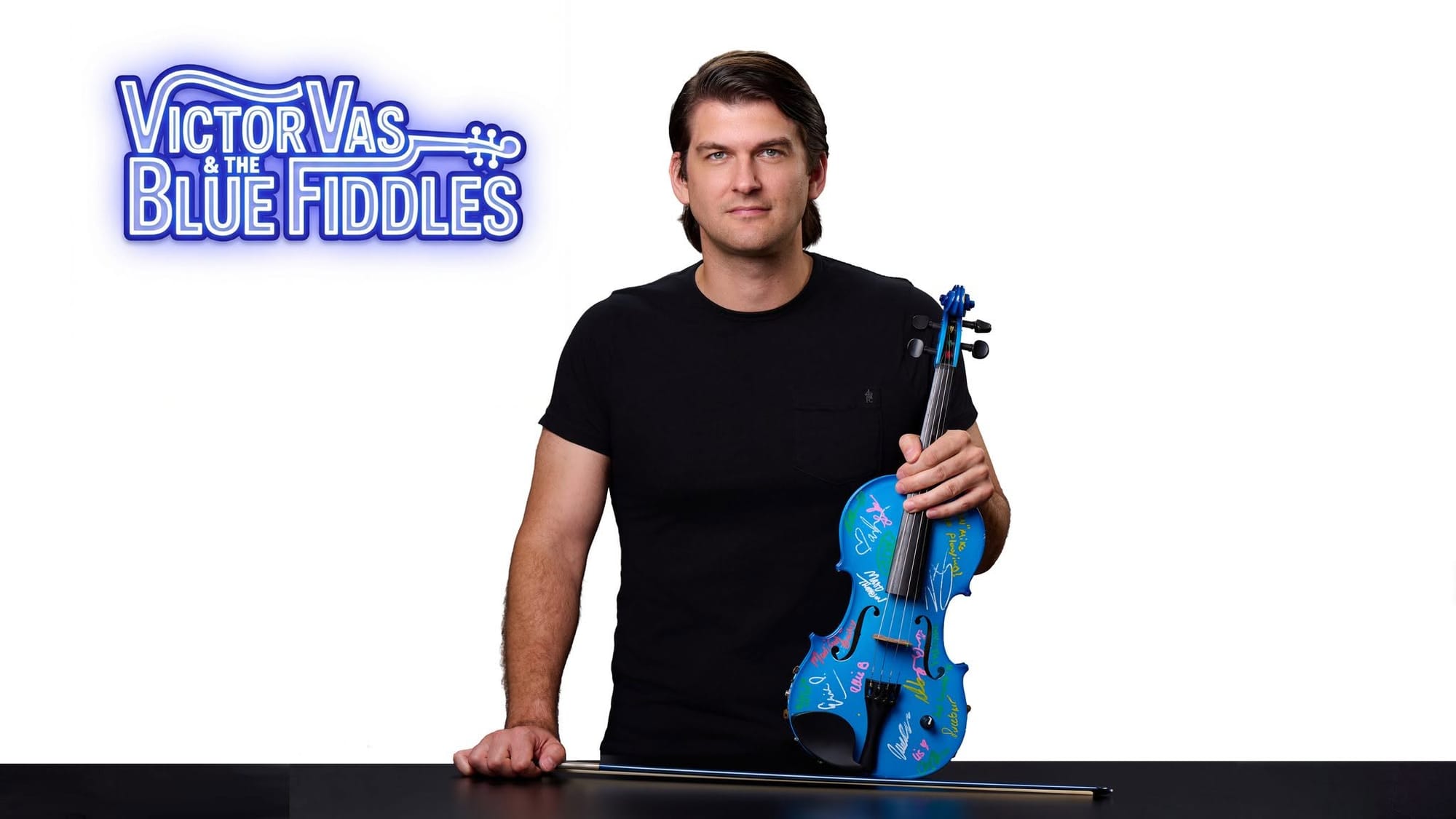
Formed in Texas, Blue Fiddles is a rock and blues project helmed by Dallas multi-instrumentalist Victor Vas. The project aims to create a distinct genre called "Texas Rock Fiddle," which blends the grit of southern rock with technical violin playing and Americana lyricism.
The Blue Fiddles songwriter, Victor Vas, even performs live using a looping setup as he layers electric fiddle, bass, keyboard, and guitar in real time. Vas is a classically trained soloist and created The Blue Fiddles after years of touring in support of major acts. As Victor toured, show after show, he heard one resounding request from the crowd: "we want more fiddle!". Inspired by the audience's enjoyment of the stringed instrument and ignited by the idea of making the fiddle a more prominent lead in a rock setting, The Blue Fiddles was born.
The Blue Fiddles have released their latest song "Boundless Desire" with lyrics inspired by George MacDonald's "Diary of an Old Soul" following their 2 single releases in 2025 and debut self-titled EP in 2022.
From the first moment of listening to The Blue Fiddles, there is a classic southern rock nostalgia feeling that is captured excellently through the use of acoustic and electric guitar with bluesy riffs setting the tone quickly. Vas's energetic vocals have a hint of country twang and eccentricity to them that feels distinct, creating a vocal style that is unique. While guitar and bass hold down the backbone of the rhythm section, the electric fiddle contributes a major sense of contrast as it weaves in and out of the song, whether it's adding gentle string melodies or a racing solo showing Victor Vas's virtuosic fiddle talent.
"Ever Really Up To Us" and "Boundless Desire" take on a slower, building sound that creates a gentler feel as clean guitar and fiddle compose a deeply melodic atmosphere. Meanwhile, tracks like "Long Memory" go for more of a classic rock/blues sound as more aggressive rock guitar and upbeat vocals build a more energetic vibe. The Blue Fiddles have a clear and polished production that strikes an expert balance between modern clarity and the slight grit that adds a nostalgic, old-school Southern rock flair to the music.
You can watch Victor's recent performance of "Bitterk!ll live from The Kennedy Center below to see how he utilizes a looping system to create a song with multiple instruments as he goes.
Fans of southern rock, blues, country, and fiddle driven music, will love The Blue Fiddles. You can find them on all platforms below!
Songs abandoned over poor recording quality are finally getting the treatment FORESHADOW intended. The returning Quebec band have re-recorded material from their 1991 demo for Here Down On Earth, a five-track EP arriving October 2, 2026, and introduced it with a lyric video for “This Harvest That You’ve Sown.” Originally written in the late 1980s, […]
In May, NYC-based musician Grant Chapman, who’s the percussionist for Chris Taylor’s Body Meat, released the self-titled debut for his sample-based project Torture Methods. Torture Methods is a gothic, glitch-ridden nightmare — but one of those fun ones that plays out in the mind like a surrealist arthouse film. On Friday Sept. 18, Chapman returned with a new single “RIPPER, REAPER.”
ALETHEYA turn towards their heavier, ’80s-inspired influences on “Stealer,” the new single accompanying the release of their debut album, Chance To Reborn. Out since September 18, 2026, through Rockshots Records, the record combines melodic power metal with symphonic, neoclassical and progressive elements. The Italian band describe “Stealer” as: “The heaviest and most ’80s-inspired track on […]