Blog

  • U.D.O. – new song, new video, album details and tour date

    2027 marks a unique triple anniversary for Udo Dirkschneider and U.D.O.: Udo turns 75, U.D.O. celebrate 40 years as a band, and Voodoo Ranger marks the release of the German heavy metal institution’s 20th studio album. This very special record release will be celebrated on January 8, 2027 via powerhouse label Reigning Phoenix Music. Today, U.D.O. open… Continue Reading →
  • Stryper / Throne Of Thorns Is A Divine Metal Revelation

    Stryper / Throne Of Thorns Is A Divine Metal Revelation

    I vividly remember seeing the video for the Stryper track Calling On You on the Kerrang! Video compilation back in 1986 and feeling unsure whether I liked them or not. I mean, it was a catchy tune, but the image? The stripes, the big hair, the fireworks. It was the antithesis of my Metal path at the time. I was a fully signed-up Thrasher, but I did like Calling On You. 

    Stryper – Throne Of Thorns

    Release Date: 25 September 2026

    Words: Kenny Kendrick

    Due to my indifference, I never went any further on my Stryper journey, but after hearing their latest LP, I am already digging further into the Stryper back catalogue. 

    Stryper enjoyed huge success in the ’80s and never wavered from their Christian message. Apparently, the band would throw out Bibles to the audience at the end of their shows. I am sure the Christian element was a genuine statement and not just a gimmick. 

    Stryper - Throne Of Thorns, a slick, polished Metal record that is dripping with quality songs, musicianship and crystal-clear production.
    Stryper – Throne Of Thorns, a slick, polished Metal record that is dripping with quality songs, musicianship and crystal-clear production.

    Stryper’s latest effort, Throne Of Thorns, is their 18th studio album. It is a slick, polished Metal record that is dripping with quality songs, musicianship and crystal-clear production. I am pleasantly surprised by how much I enjoyed listening to this album. 

    The album opens with the title track, wielding a bombastic chorus highlighted by sublime vocal melodies. Vocalist Michael Sweet has this to say about the title track, “Throne of Thorns is a powerful message. Christ is on the throne, and we are redeemed because of the crown of thorns that He endured. This song is a perfect representation of our 43 years and who we were, and who we are. Heavy yet melodic, classic yet modern, and 100% Stryper.”

    Here In Your Heart kicks off with a mid-paced chugging riff before it dives into a huge chorus complete with classical strings. There is some blistering guitar work on display from Oz Fox. Falling is another superb track. The vocal melodies are off the scale. Drummer Robert Sweet plays a blinder throughout the album, rock solid. 

    The album is jam-packed with massive arrangements and sing-along choruses. Carry The Flame is my favourite track on the album. A chunky riff is carried along by more lush vocal arrangements. Absolute quality.

    Hollywood soars with its angelic chorus. Michael Sweet is on fire throughout the record. He really does sound amazing, and his songwriting abilities are evident throughout the record.

    The final track Shadowbreaker closes the album with flair, as guitarist Oz Fox shreds like a beast, while Robert Sweet showcases some tasty double bass flurries. 

    Stryper has delivered a record to be proud of. Throne Of Thorns is a banger.

    Stryper release Throne Of Thorns on 25 September 2026 via Frontiers Music Srl. Pre-orders are available from ffm.bio/stryper-throneofthornsalbum.

    The post Stryper / Throne Of Thorns Is A Divine Metal Revelation first appeared on MetalTalk – Heavy Metal News, Reviews and Interviews.
  • Is Audrey Hobert the Most Honest Voice in Pop?

    The rising pop star talks songwriting with her BFF Gracie Abrams, knowing when to log off and the difference between being weird (yes!) and awkward (no way).
  • How Audrey Hobert Went From Rookie Screenwriter to Your Pop BFF

    Watch the full “Popcast” conversation with Audrey Hobert here. Edited excerpts from the interview are below.
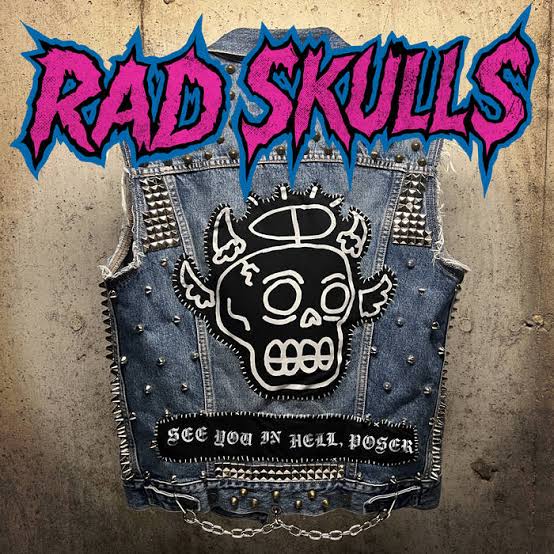
  • DS Interviews: Andy and Matt From The Rad Skulls Talk “See You In Hell, Poser!”

    One of the first bands I reviewed when I got to Dying Scene was the Rad Skulls. Andy, their guitar player, cold-emailed me their demo. I was immediately blown away by the four songs and wanted more. A year later, they would send a copy of their EP Seeing Rad, containing one new song and a cover of Minor Threat’s “Seeing Red.” Progressing as many bands do, the next logical step was to release a full-length LP.

    See You In Hell, Poser! is ten songs of punk rock that sounds familiar on the surface but stands on its own two feet as you dig into it more. Andy and Matt talk about the road to their first full-length record and how they balance punk rock and their families.

    Dying Scene (Forrest Gaddis):  How did the Rad Skulls come to be?

    Andy: Pat (drums) had put a Craigslist ad up basically saying, “I’m a middle-aged punk rock dad that plays drums, looking for other middle-aged punk rock dads to make middle-aged punk rock music with.” So, I emailed him, and we kind of went back and forth a little bit, and it almost didn’t work out. We found out we lived about an hour away. He shared some of the other bands he’d been in and some touring. It was like Latterman playing The Fest as a reunion band and some other stuff. I was like, “Hold on, I’ll make it work; I’ll come to you.”

    I called Matt and said, “Dude, I’m talking to the drummer from Latterman who wants to start a punk band. We’re making dinner plans to see if it’s a good fit. We get along if somebody’s weird or whatever.” We went to a small town in the middle of nowhere that was about a 45-minute drive for each of us. I didn’t realize Pat was a vegetarian, and we ended up meeting at a barbecue place. We got together, and it was like we all had the same influences and similar musical backgrounds. Obviously, he had more musical success than Matt and I have had, but it was like we were on the same page in our lives personally and musically. It’s been a little bit of a revolving door of other characters, I suppose. For the most part, it was the three of us starting, and I think we have a pretty good lineup now.

    Dying Scene: Did you two play together in a band before The Rad Skulls?

    Matt: Andy and I have been playing together for seventeen or eighteen years, something like that. We crossed paths twenty-plus years ago without knowing it; both of our bands played the same house show, but we didn’t really meet then. I responded to an ad he had posted on Craigslist about forming a band. We started talking and realized we knew a ton of the same people and had been in bands with similar people. We had a band called Fortune & Glory about 15 years ago, and we released one record and an EP, playing in the area a bunch.

    Find some fortune and Glory

    Andy: Got to Minnesota a couple of times.

    Matt: It didn’t really catch on; we put a lot into that band. We used to practice maybe thirty hours a week. It just didn’t catch; it just didn’t stick.

    Dying Scene: What kind of music was it? Same type? 

    Matt: It was like hardcore-influenced pop-punk. We were a little closer to easycore, although that word gets kind of used and abused, I think. We were a little more the New Found Glory type. We had breakdowns, but we were super fast. Definitely hardcore-influenced. Our frontman had fronted hardcore bands, so it was a lot of that kind of perseverance-type stuff.

    Andy: Tough guy lyrics over New Found Glory breakdowns.

    Matt: There were a bunch of little projects here and there. Andy and I stuck together. We’ve been best friends the whole time. We tried to get a bunch of different ideas off the ground in between building our lives, raising our kids, and trying to advance our careers. This is the first thing since Fortune & Glory that has kind of taken off a little bit. It has just been awesome.

    Dying Scene: The lineup is: It’s Pat from Latterman and you two from Fortune & Glory. Who else rounds out the lineup?

    Andy: We had Joe. He was our singer, that we’ve recorded everything with. He had some personal things going on. As soon as the record was done, he bowed out; we were able to bring in Bryce on vocals, and we have Sean on bass. 

    Matt: Bryce is also from a post-hardcore band called Collapse Create. Sean is just a bass player who has been around; he has been around the block in a lot of metal bands because, as a bass player, you always got a gig, right? 

    Dying Scene: Is he the Wisconsin-Illinois bass player that’s like, “I’ll do it, sure.”

    Andy: Pretty much; if you need a four-stringer, he’s your guy.

    Matt: He rips, though; you can hear it on the record. 

    Dying Scene: When you brought the new vocalist in, did anything change on those songs, or have you just kept them as close to the originals as possible?

    Andy: We’ve just kept them as is to get him up to speed. We’re always trying to write and come up with new ideas. There were a couple of things that we just didn’t have fleshed out before the record was done, so we’ve been working a little bit as we ramp him up, get him caught up with the album, and make him familiar with our writing style. Once the dust settles, we’ll be able to create new songs that incorporate his style.

    Dying Scene: Do you guys feel like you’ve clicked with him creatively yet, or are you still feeling him out a bit?

    Matt: Bryce is great. He has a serious set of pipes. Secondly, he has the experience and the stage presence. We already have some demos cooking for new material. I can’t wait to start doing pre-production with him to hear him put his stamp on it because he is doing an awesome job of stepping in and singing the record as is. He just says the record is a record; it was recorded that way, and it is a record of the songs, so we will just do them like that.

    Moving forward, he’s going to have his stamp on everything, and it’s going to be, I’m stoked. I can’t wait to hear what he brings to the table. And we’ve already got some demos done, and it’s, yeah, I’m hoping to get probably this winter. We’ll start, pre-production for stuff I’m thinking and we’ll do that ourselves.

    Dying Scene: Has he been able to match Joe’s vocals pretty well? 

    Andy: Yeah, I would say he, he’s probably got more of, probably a little more grit. He’s got a little more gravel to his voice, or maybe rasp. 

    Matt: He’s got all the range.

    Andy: You know, talking in sports terms, it feels a little bit like we went from Joe Montana to Steve Young. Like we went from one Hall of Fame quarterback to another Hall of Fame quarterback. 

    Matt: You mean Brett Favre to Aaron Rodgers, I believe. 

    Andy: Well, you know, there’s, I feel like you alienate or invite a certain set of audiences, and you start dropping those two names. So I was avoiding them. 

    Matt: Spoken like a true Bears fan. 

    Dying Scene: How collaborative is the band when it comes to songwriting?

    Andy: I think it really depends on where we’re at in our lives. We’re all an hour away from each other. We don’t get an opportunity to get together in a basement and write for four hours. We’re doing a lot of our own work and sharing ideas virtually. We’ve got a Google Drive. Matt or I will have an idea like, “Hey, this is 90% of where I hear the song. What do you guys think? I kind of hear this as a verse. Do you have a part that you think would come after that?”

    “Dotted Lines” is a song that we’ve been sitting on for probably two years. Pat wrote the drums and structure. He sent the drums. We’re trying to put guitars to a drum beat. I’ve never tried to put a puzzle together like that before. I think there’s a lot of self-critique when something gets presented to the group. 


    Matt: What generally winds up happening is Andy and I will write all the songs at home in our offices. We’ll program the drums how we hear them in our heads, but we’re not drummers. We’ll polish them, show them to the guys. They might be like, “That’s cool, but the bridge sucks.” You rewrite the bridge or whatever.

    Once we’re rounding third on them, we’ll take them to band practice, learn them together, and then flesh out anything that’s not there yet. When Pat wrote “Dotted Lines’ drums first, it was a wild thing to do. It’s always whatever’s best for the song. If there’s something that needs to change for the betterment of the song, anybody can bring it to the table.

    Andy: Poor Sean, he’s had a couple of bass lines that got cut. The joke is always, ” Let’s take it for a walk and then it’ll go crazy, but not that. You tried a little lead lick, or you put a little sizzle on the steak, and everyone’s like, “nah, that, that ain’t quite it.” Something that you hear in your head, you get together in a room, and it transitions a little rough or doesn’t quite sound as cool. 

    Matt: I’ve written some stuff that I thought was pretty cool, but I’ll show it to the guys. Sometimes we’re not doing that.

    Dying Scene: Is there a way to tell who wrote what song, or does everything just kind of go through the Rad Skulls’ voice and end up being an everybody type of thing?

    Matt: It’s pretty easy as far as this record goes; Andy wrote like 95% of it. He was on a heater, and we went with the hot hand. He was just cranking out song after song. I added my own parts over it. Sean added his parts his way as well, but the basic concepts of the songs and most of the guitars and arrangements and stuff that you hear are Andy’s. Joe wrote the lyrics and the melodies. 

    Andy: I want to say there was a lot of group effort. Between Matt and I, Matt is the more technical and skilled guitarist. There were times where I would try to come up with a little lead lick. I’m like, “Do you want to play it since you’re better than me? He would say, you wrote it, you play it. I still think even for Matt to say, I wrote 95%, I’ll argue that day and night. This was a Rad Skulls effort through and through. I just happened to have a few ideas that everybody liked, and we ran with them at the time.

    Matt: Stuff went through a ton of iterations. Some stuff we pretty much did almost verbatim, like how Andy cooked it up in his beat lab. “They Seem Cool” is one of my favorite tracks on the record. It was brutal coming together. We could not figure it out. We couldn’t play it for the longest time; something didn’t click. I don’t know what it was. It just felt clunky the whole time. When we finished it, it’s actually one of my favorite songs now. I thought we were going to cut it.


    Andy: I will say, when I was writing “Bronko,” I kind of got in the zone and was like, “Oh man, this is going to be a really good song.” Then as I kept going, it was like 11:30 at night, and it was a weekday. I was supposed to get up and go to work. I’m fired up. I sent that out to the guys and went to bed. My wife, Lacey, asked if I was alright. I told her, I think I just wrote one of the best songs I’ve written in a really long time. I was on high for a minute.

    Dying Scene: Between the release of the demo and the LP, were there any new influences that influenced the new record?

    Matt: That’s when we got a solid lineup. This all happened because we found the right guys. It took a while to find Sean. We did not have a solid bass player right away. That period of time you’re talking about is when Sean came in and clicked. That piece of the puzzle was settled. We’re locked in there. 

    Finding a good frontman is not easy. We got really lucky. The transition happened after the record, but I think it’s more the sum of the parts. For a long time, it was mostly just Pat, Andy, and I trying to make it work. Then all of a sudden we had five dudes in the room bringing all their stuff to the table. There were a lot of different influences coming in as far as melody and stuff.  If Andy and I had written all of the melodies and lyrics for the record, they would have been different. It would have been considerably different. I don’t know exactly what they would have been. What you’re hearing is a lot of different influences coming to the table and mixing on the record. Sean’s had different backgrounds too. He’s a big thrash guy too.

    Andy: Joe was about ten years younger than us. He knew some of the bands that we grew up listening to. In a historical sense, he was more of a pop-punk, kind of emo sort of guy. So a lot of the melodies that he wrote came out of left field for me. As a hardcore punk, a lot of the songs that we have recorded up to that point, the demo and the Seeing Rad EP, some of those songs were either completely written or were at varying degrees of finish before Joe was even in the band. We were trying to write for a singer. By the time we got to recording and writing for the album, we had an idea of who Joe was as a vocalist and what his strengths were.  We had a singer that was so good and a bass player that could fill the space, that maybe we didn’t need to try to do as much with guitar, and we could let those other things kind of take over and shine.

    Matt: That’s a good point. We’re kind of starting to understand what’s getting brought to the table vocally here. We can cater to that a little bit. We can write to instead of just writing. You know, Matt and Pat and Andy back and forth in a triangle. We can write to Joe’s strengths, and now we’re going to be able to write to Bryce’s strengths. Sean is there as a backbone for it all.

    Andy: I think a guitarist’s best friend is a good bass player because you’re just like, I’m going to let this note ring, and you do something cool on the bass.

    Dying Scene: What do you feel is the emotional center of the record for you guys?

    Matt: For me, I don’t know. As far as the theme of the lyrics, that was in Joe’s mind. Making this record, the emotional connection with us, for sure, is that we tackled it. We’re all a little older, and we all got jobs and families and stuff. We set kind of a ridiculous goal for ourselves to put out a full-length. We did not give ourselves a lot of time once we solidified the lineup. Once we solidified the lineup, it was like five months. 

    Personally, the connection is just that we climbed that mountain, and we did it with everything else that we all have going on in our lives. That’s what it’s always going to sound like to me: the mad dash to the finish line. We actually pulled it off together is definitely my takeaway personally. As far as lyrical content, you’d have to crawl deep inside Joe’s mind for that one. A lot of it is just relationship stuff. 

    Andy: Joe would come back from tour, and he would take some of those lived experiences, and they would find their way into rad cool songs. Like in “123 Kid,” he talks about a girl at Subway getting cussed out by a customer. He came back from being on a tour with his other band and told us that story. I think he had a lot of personal stuff going on in his life. He was in a newer relationship. He was around guys who were a little bit older and at different points in their lives. He had a little bit of a window into just what other people had going on.

    To echo Matt, I think this record is going to be a little bit of defiance. In the words of Jerry Reid, “We got a long way to go and a short time to get there.” I think maybe part of being a dad is doing this stuff now in our life. We have kids that are older and may be able to recognize our dads have hobbies and they’re passionate about something. Like, my girls think it’s cool that I’m in a band.

    The hope is maybe when they get older to reflect and be like, “My dad was in a band and still raising a family and going to work. He was able to hold on to what made him, him” a little bit. So, and then, so I’m going to flip this on you for us. When you listen to it, what are you getting out of it?

    Dying Scene: I liked that it has those pop-punk melodies to it, but it’s a rocking record. It’s tough. Like you kind of were saying with Fortune and Glory. You guys are kind of doing the opposite. It’s good, fast punk rock in the background. It’s not 100% pop-punk-y lyrics, but there’s that influence of pop-punk on it. You can definitely hear it. It’s a good balance.

    Andy: I was talking with Joe about this when we were recording, and I said, “I don’t know if this is just because it’s our project and I’m biased, and I think we’re good. Or are we good?” We’re able to draw on a lot of different influences, to where what we listen to and what we like maybe isn’t as obvious. You and I talk a lot about music, and you’re like, “If you like this band, you’ll like the band that they came from.” I like Saves the Day; then you’ll like Lifetime. Cause there’s very obvious direct lineages. I hope when people listen to us, they just know the sound, what we’re doing, but it’s a little bit different than maybe what’s out there. I don’t know if that’s just personal bias and pushing on stars.

    Dying Scene: It works out well. So you mentioned that you guys in the band are in two different states, mostly. Wisconsin and Illinois. What are the logistics of that?

    Matt:  Andy and I live in Madison, Wisconsin. We practice at Pat’s house in Rockford. Shout-out to Pat’s wife for letting us practice in the basement. Thanks, Erica. Andy and I carpool down there once a week. Sean also lives in the DeKalb area. So, he’s like an hour in another direction. If he plays shows in Madison, it’s like a two-hour drive for him. Bryce is in the area. He’s in Rockford. So he’s only 15 minutes from Pat’s house. 

    That’s why we do a lot of writing at home and share online because we just don’t have the time to do it the old way. Where we lock ourselves in a room and just throw out riffs until a song comes out. To be honest, it’s probably more productive doing it this way, where we have the bones of a song done before we even step in the room together.

    Andy: I would say it’s been tough too. Within the band, Sean went back to school. So he’s got night school that he’s doing on top of a day job. Matt, you took a new position at work and traveling sometimes. We all have kids. There are times where we’re trying to scramble. 

    “Can we practice on Wednesday night this week?” Or, at the last minute, “I lost my babysitter. I can’t make it.” You’ve got to coach basketball. I think we’ve all done our best, to the degree that we can, to make this a priority and something that we try to do.

    Dying Scene: Does it ever feel like it’s fragile? Like if something happens to one member, it can kind of like collapse, not because of in-band tension, but because of outside circumstances.

    Matt: Not anymore. I think we’re in a good spot. We’re in a real good spot right now. Like I said, the Matt, Pat, and Andy tripod started this thing like three years ago now. It’s been a walk. It was a long, long, hard road to get to the lineup we have now, but we’ve been locked in. We played one show with Bryce so far; he’s newer to the pool, but he’s, he’s our guy. When Joel bowed out of the band, he recommended Bryce for the role because Joe fronts his own band called Clementine. He’s the brains behind it; he plays, he’s the main songwriter, he plays guitar in it, and fronts the band. That’s his baby. They were going on like a long tour, and I didn’t have time for both, but he recommended Bryce for the gig.

    He is so enthusiastic and brought a great amount of energy to the band. I can’t wait to start just demoing stuff with him. We got like one demo with him on it. It’s a shorter, more hardcore song that may or may not ever see the light of day, but he just ripped on it. I think we’re more poised to take over the world than we have ever been; that’s for sure.

    Andy: I’m trying to, trying to do the math in my head. Sixteen months ago my wife was diagnosed with breast cancer. With her understanding and our safety net of friends and family, I was still able to meet, practice, and write songs. From a personal perspective, if we can survive that, I think we’ll be okay. 

    Matt: Pat blew his knee out at one point. We’re like, “Well, you don’t need a closed hi-hat anyway; you’re in a punk band, you’ll be fine.” If the drummer from Def Leppard can do it with one arm, you can do it with a bum knee.

    Dying Scene: Punk Rock feels like it’s being played more and more by people our age, give or take five to ten years either way. It feels a little more limited now because of responsibilities and geography, and members not being able to tour as much. That has to be a hurdle when you are trying to build a fan base.

    Matt: That’s our one big drawback because we can’t hit the road and live out of a van. It’s logistically impossible for us to do that, raise our kids, and provide for our families. We will do as much as we can for shows, and get out there as much as we can. Hopefully, some good opportunities come by that we can say yes to, but we’re not at that point in our lives where we can be road dogs anymore.

    Dying Scene: How many members of the band are experiencing some of these things for the first time, like making a music video or recording?

    Matt: Andy and I have had some studio experience before. We made, I would say, one proper record. I’ve made one proper record before, and a bunch of dude has a studio in his basement EPs. I got a mess of those, but nobody ever heard them. I think this might have been the most proper recording experience that Sean ever had. Joe had; his stuff was DIY. 

    Andy: I think most of us, never made a music video. We just DIY’d the hell out of that. We got one Saturday afternoon to bang the sucker out; let’s just figure it out. You’re gonna have to look through this through the lens of six dads that got four hours of free time on a Saturday.  It was definitely my first time recording a full-length album, doing a music video, getting something pressed, released, type of thing. For me, there’s a little bit of some bucket list things. I’ll send the group text every once, a screenshot of the pre-order being up online on the Sell the Heart website, and I was like, “Oh, hey guys, just check this out.” I’m taking a minute to reflect, and I kind of have a moment, and subjecting them to it. But I would say for the most part, we’re all kind of experiencing this stuff for the first time together. 

    Pat’s obviously had a ton more experience writing, recording, and touring. We’re all just trying to play catch-up to Pat, and he’s, like, the one who’s really driving the band. He was the one who was like We need to record a full-length. We’re booking this date.  He’s kind of the guy behind the runaway train. He’s the conductor here a little bit.

    Dying Scene: Do you guys have a guiding philosophy or rule that you guys follow when you guys make decisions?

    Matt: Family first, pretty much. As far as opportunities that come by, we’ve got to consider that first. Otherwise, it’s punk rock DIY ethics, right? We’ve mostly just been doing it all ourselves. So it’s approved by us by nature. I don’t know; that’s a good question. I guess we’ll see. Hopefully, a lot more stuff comes up that we have to make decisions on. 

    Andy: This whole thing just sort of feels like it snowballed a little bit. When we got together, it was like, “Oh, it’d be cool to hang out with your friends and make music.” Then it was Let’s record a demo. Then it was “Let’s show people the demo.” Then, “Let’s record more songs. Let’s tell more people about our band; let’s book shows.” Now here we are, being interviewed by you for a full-length album that we recorded.

    Dying Scene: “See You In Hell, Poser!” Is being released on Sell The Heart Records; you’re in a good group of bands to be lumped in with. They put out a lot of great records.

    Andy: Just a quick shout-out to Sell the Heart Records, Engineer Records, High End Denim, Scene Police out of Germany, and Waterslide Records out of Japan. They’re the ones that came together and made all this happen. It was originally Engineer Records that we reached out to. They liked the record and wanted to work with us and were able to bring in the other four people. We got really lucky. I feel like we’re really lucky there. We’ll see where the world takes us next.

    Dying Scene You said you were working on other demos. Are you guys going to start working on those in the wintertime?

    Matt: There’s no definitive timeline, but we have a good start on whatever we do next. There’s been talk of themed EPs, but there’s been talk of another full-length as well. Who knows what we’re going to cook up. We have a handful of demos that are done, and we’re starting to work on the songs together as soon as we have them down. We don’t want to jump the gun. As the record sounds, that’s us playing. It is as close to a live record as you can get nowadays without actually recording a live record in some huge library or whatever. Minimal takes, minimal editing. Jeff Dean was like, “I make records that just sound like you guys playing in a room together.” 

    So, we only have, like, computer-sounding demos. Once we learn the song together, we’ll do the pre-production ourselves, and they’ll sound raw, like they should. Then Bryce will be on those, and it’ll be really sick. I can’t wait for that. I would think we’d be tackling that in a few months, probably.

    Dying Scene: You mentioned earlier in the interview that you guys had one that was kind of a hardcore-type song that you weren’t sure was going to make it out of the studio. Is it one of those “we’re not sure if that’s what a Rad Skulls song should sound like type of things?

    Matt: A little, yeah. But I mean, Rad Skulls can do whatever Rad Skulls wants to do.

    Dying Scene: You guys do a fantastic “Seeing Red” (Minor Threat) cover.


    Matt: At this point in time, I don’t see why we would put any limitations on what we can do.

    Andy: “Loud As Shit” is a hardcore song.

    Matt: We have other stuff like that because we have a few different personalities as far as shades or whatever. Sometimes we’re Kid Dynamite leaning. We all love Kid Dynamite. Being adjacent to that is cool. At the same time, there’s a Strung Out influence. I was always a big New Found Glory fan.  A little bit of that sneaks in there at times. Andy loves Terror. I also love Terror, but Andy really loves Terror.

    We have some stuff that’s got flavors, essence, a little bit more of that stuff. We’ve kicked around the idea of maybe doing like a self-produced DIY EP that would be a little more hardcore-leaning or short songs even. We have no formal plans. Maybe I’m spilling the beans here a little bit. We don’t know what direction we’re going to go, but we’re throwing seven different kinds of smoke right now.

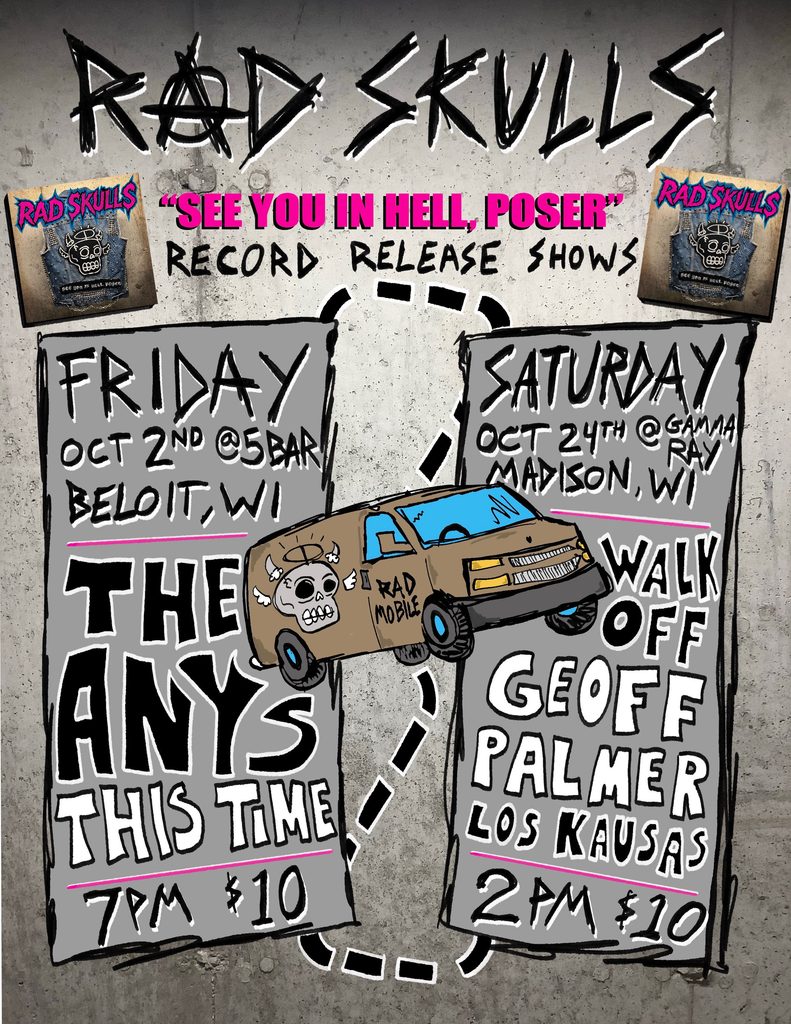
    See You In Hell, Poser is out now on Sell The Heart Records. You can catch The Rad Skulls at a pair of record release shows:

    10/2 – 5 Bar – Beloit, Wi

    10/25 – Gamma Ray Bar – Madison, Wi

  • “I got beat up by the cops for being a metalhead. I bled for this.” Five Finger Death Punch’s Zoltan Bathory grew up in communist Hungary, but he always dreamed of stardom

    Born in 1978 in communist Hungary, Five Finger Death Punch architect and guitarist Zoltan Bathory was a furious kid who had no regard for the rules of his country and dreamed about escaping to the West. His discovery of metal only fanned the flames of rebellion, while his judo lessons gave him the mindset that any problem was something to be solved.

    “You have to fight a guy twice your size, and at first that’s scary,” Zoltan explains. “But then you go, ‘Well, I think I can take him’, and suddenly the impossible starts to feel like, ‘I think I can do that.’ Every war can be won some way, I’m just going to figure out the way to win it.”

    By the late 90s, he’d moved to New York and embarked on a career in design. In 2000, he relocated to LA, and although he played in bands in his spare time, he realised he wanted to be the leader of his own band, and Five Finger Death Punch were born. Their debut album, 2007’s The Way Of The First, catapulted them to the forefront of the scene, landing them tours with the likes of Korn and Disturbed.

    Today, Five Finger Death Punch are a multi-platinum act celebrating their 20th anniversary, and are about to release their 10th album, Legacy. Whether driving monster trucks, playing gigs for veterans or creating the band’s visuals, Zoltan remains their fearless and irrepressible leader, his humble beginnings behind the Iron Curtain and struggle to the top never forgotten.

    “When I look at my walls filled with platinum records, it’s not about the platinum records,” he says. “It’s about how much work it took to get them.”

    A divider for Metal Hammer

    You were born in Hungary in the 70s, under communist rule. What was it like growing up in that environment?

    “I was a pretty angry kid. And the reason I was angry – even though I was seven or eight years old – is that at that age, it’s not like I could put on my backpack and head to America. You can’t do that. But the fact that I couldn’t, if I wanted to, just enraged me.

    “We had access to Western society – we understood the culture, because things kind of seeped through. We had only one TV channel – it started at noon, finished at midnight, and there was no TV on Monday. As a kid I didn’t really feel oppressed, but we were oppressed – we couldn’t do certain things. I always thought, ‘Man, I can’t be a cog in this machine, I’ve got to break out of this.’”

    How did you go about planning your escape route?

    “I educated myself by going to extra schools. I was doing judo. I became a martial artist pretty quickly; I started at nine, and I competed. I attained that whole mindset that later became the foundation of my life. In extra school, anything I could study, I studied. I had this idea: I have to be faster, stronger, smarter than anyone around me if I want to break out of here.”

    How did judo affect your mindset?

    “Judo is the art of the samurai, tamed down, but with the same mentality. I know that if I get into a fight, I can do some damage – but that’s not what it’s about. The important part is the person you become. Obstacles are no longer obstacles; they’re challenges. That’s a massive distinction. The world is not happening to me – I am happening to the world. I was born into this world, and I’m going to impact it.”

    How did you get introduced to metal?

    “OK, so this is England’s fault. I was a little rebel at seven, eight, nine years old. I was already like, ‘When we grow up, we’re going to take down this system.’ My parents were scared shitless – ‘Kid, you’re going to get us arrested.’ And I was always like, ‘No, we’re not going to take this communist bullshit.’ So I started listening to British punk: Manufactured Romance, Cockney Rejects, The Exploited, GBH, UK Subs. That was my world. So imagine, I’m eight years old, a miniature punk in a country where you get your ass beat just for being a punk. I had a British-flag pin – I got my ass kicked by the cops, because that was Western society. It was crazy.

    Metal wasn’t just music – it was the voice of rebellion.

    Zoltan Bathory

    “Eventually, I heard of this band – Iron Maiden. Paul Di’Anno was the singer, and he’s kind of a punk guy. So the cassette was handed to me, like, ‘Check this out, bro, this is a punk band.’ At that age, I didn’t know what a guitar solo was – that was the first one. So I switched from punk to metal.”

    What did you like about metal?

    “In a way, it wasn’t just music – it was the voice of rebellion. All of us kids had long hair, and we got our asses beat for it. Any motherfucker who says, ‘Oh you guys are fake metal’ – fuck you. I got beat up by the cops for being a metalhead. I bled for this shit. We’d go to the park with these little gangs, cranking music – somebody had a mobile tape recorder, a boombox. When a cop showed up, we’d start running. All the metal shows were in burned-out, shitty places, usually broken up by the cops.”

    We want to hear about some of those DIY shows, because they sound wild!

    “Literally nobody had equipment. It was like, ‘Oh, this guy has a drum set, that’s pretty decent’, and then every band would play on that drum set. ‘Oh, this guy has an amplifier, that’s decent.’ Everybody would use that amplifier. If you don’t have resources, you have to be resourceful.

    “I actually went to a special high school – the first in my country with a computer faculty. So, I wasn’t just getting a high school diploma, I was also getting a microelectronic engineering degree at the same time. So I could design and build amplifiers, distortion pedals, all that.”

    What about instruments?

    “I couldn’t afford a guitar – I was 12 or 13. A family makes a hundred dollars a month – that’s it. I saw a B.C. Rich in the hands of W.A.S.P. – Randy Piper’s guitar, with the skull on it. I’m like, ‘Oh my God, fucking hell, this is what I need!’ So I took a jigsaw to my parents’ coffee table and cut out a B.C. Rich Warlock shape from it. I got a second-hand guitar that had a decent neck, and I put together a guitar. It was an unplayable piece of shit, but it was metal. Fast-forward decades: I found Randy Piper’s actual guitar in the hands of a collector, and I bought it.”

    Let’s talk about that first journey to the US – that’s a big leap. What was that like for you?

    “I was 21 or 22 when I arrived in New York, but I didn’t speak English. Imagine: I show up in New York with a guitar, a bag of clothes, and a Hungarian-English dictionary. No safety net. I had to teach myself English. I stayed in a hotel that was $10 a night. There were cockroaches you could put a saddle on and ride. It was basically a crack house meets a hotel.

    I had the only room with its own bathroom; everybody else shared. Questionable characters came in and out. But that’s what I could afford, and you know what? I was happy, because I was looking toward a life I could live in America without restriction, on my own terms. I was excited, regardless of the shitty circumstances.”

    How did you learn English?

    “Somebody had left a book there – The Shawshank Redemption. I started translating it with the Hungarian dictionary, without understanding grammar or anything. I kept reading it. I had a tiny black-and-white TV, about the size of my laptop, and it had closed captioning. I’d watch shows with the captions on, so I could hear how words were pronounced. Once I spoke English, I’d go to Barnes & Noble – I couldn’t afford books. I could afford a tea, so I’d come in and read, four or five hours a day, every day.”

    Did you ever consider a career in something other than music?

    “After high school, I ended up going to art school. I got a degree and built a design studio, at the same time as playing guitar. There was a moment when I was on tour – maybe 19, 20 – with a big Hungarian band that played arenas. We were the opening act. The reason we got the slot was that I was designing their stage, their album covers, all of it. We played a place that would be like spring break in America, called Lake Balaton [130km south west of Budapest].

    Ivan is the middle finger of this generation – a hand grenade with a loose spring.

    Zoltan Bathory

    We played there around August 30, the last day of summer before everyone goes back to school. We stayed, and I walked out of my hotel [the day after the shows], and the town that had hundreds of thousands of people partying yesterday was empty. Completely empty. And I thought, ‘I never want to see this again.’ I said: ‘If I’m a touring musician, I’ll never see the after-party again. I am the party. I’m the travelling circus. I’m bringing the fun. That’s the life I want to live.’”

    How long were you a designer for?

    “Until the band took off, design work supported everything. I was a consultant for the private space industry between 2004 and 2008 or ’09 – I was an interface designer, designing all kinds of crazy shit like space suits. Not the mechanical side, but the look and the vibe. I got to design a suit that went up to the space station. Once the band were big enough, I left the design world behind – but I still do album covers, plus the overall vibe, stage design, merchandise, all that.”

    Five Finger Death Punch really took off fast. What’s the secret sauce that made you take off, when hundreds of other bands started in LA the same year and didn’t?

    “It’s that whole judo mindset. Everything to me is tactical, everything is a chess game. I look at who’s doing what, and why, and how. And we knew we had a record that was something special. Ivan and I even had a moment when it was done – we were thrashing around in my house, kicking over couches, like, ‘Yeah, this is going to be something.’”

    Through the years, there’s been some turbulence. Did you ever consider disbanding Five Finger Death Punch, or parting ways with Ivan? (He has stormed offstage on more than one occasion.)

    “Never. Because I always respected that Ivan is the middle finger of this generation – a hand grenade with a loose spring. That’s who he is. I always looked at that as amazing: he’s uncorruptible. I could tell him, ‘Ivan, you’ll lose a million dollars if you don’t feel like doing these shows’, and he’d say, ‘Fuck off, I don’t care. I don’t give a shit.’ So he’s hard to manage, but I could, because I respected that he’s as punk rock as punk rock can get.

    “Sometimes I want to kill him. Sometimes I’m making plans, thinking about what supplies I need, where I hide the body. But then I’m like, ‘Man, then I don’t have a singer who can do all these things.’ So you stay with the fantasy. And I’m pretty sure he’s plotting, too – ‘If I could just tie some dynamite to his backpack…’ We’re brothers, but we understand who we are and how to work together, and what’s worth fighting about and what isn’t.”
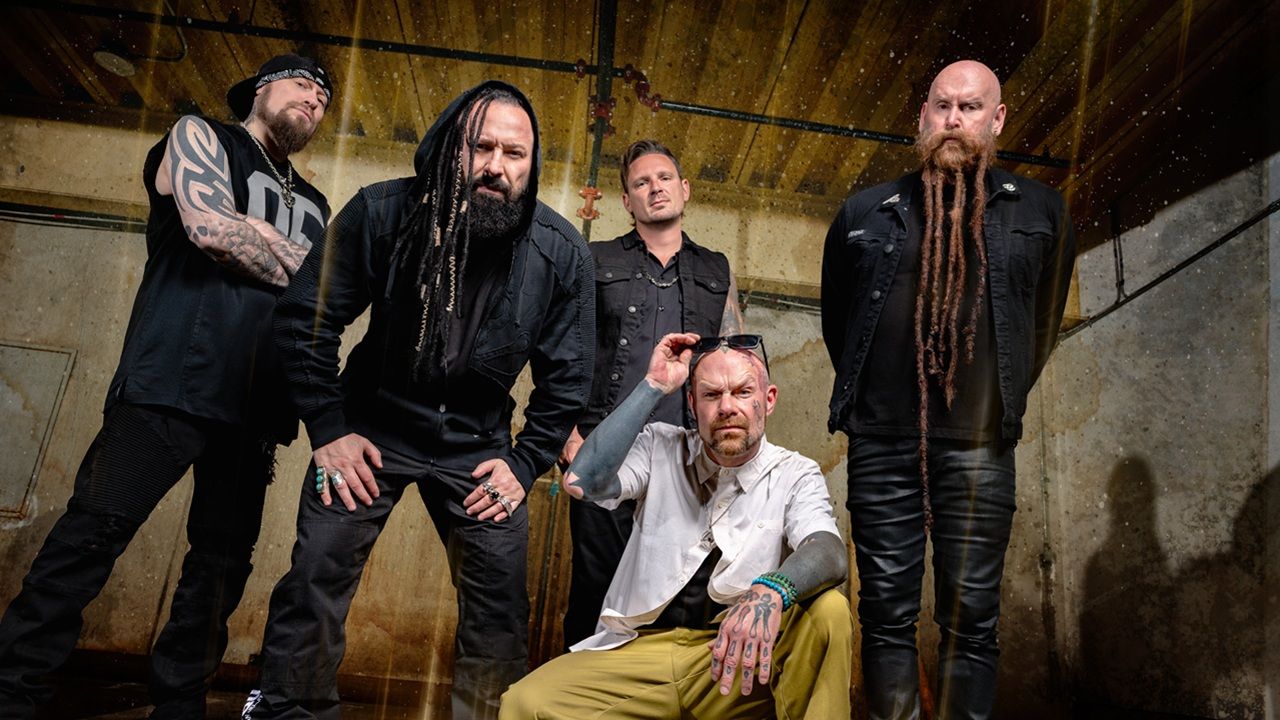
    Five Finger Death Punch press image 2026

    (Image credit: Copyright Stephen Jensen – F3 Studio)

    Your new album’s called Legacy. What do you want your legacy to be?

    “A legacy is something you cultivate and build – something that actually affected the world in a way that’s permanent. So that means, 50 years from now, somebody writes a history of heavy metal, and they can’t leave us out of the book. Only a nuclear bomb can erase our legacy at this point.

    “And the other part of the legacy is that we built this with the fans. It always was, and is, the people’s band. I can give you stories about how many times people come up and go, ‘Man, you guys saved my life.’ And for us – because we have so many military guys, so many people with PTSD in the fanbase – it’s more real than it is for others.”

    Have you had any particularly memorable fan encounters?

    “We had a meet-and-greet, and a kid comes in and brings a red ballpoint pen, and he goes, ‘Listen, I’m going to give you guys this pen, because I wrote my suicide note with it.’ This kid obviously had problems – he was, like, 15 – and a friend sent him the music video that had just come out, Coming Down, which was about that very topic, and said, ‘Hey, man, I’m just reaching out, hope you’re doing good.’ So he told us, ‘I’m giving you this pen, because I wrote my suicide note with it, and because of your music, because of your video, I didn’t do it.’ And he gave us the pen. That’s the moment where it’s like, ‘OK, our existence is justified.’

    “Now, years later, a man comes into our meet-and-greet and goes, ‘Hey guys, you remember me? I was the kid who gave you a pen that I’d written my suicide note with – the red pen.’ Ivan goes, ‘Holy shit! Hold on a second!’ Ivan runs off, comes back – because to this day, even right now, that pen is in his road case, he carries it everywhere he goes – and he brought it back to the guy. The guy almost had a heart attack – ‘Are you kidding me?’ So that’s one form of the legacy: that we meant something.”

    Do you have any regrets, in your life or career?

    “Maybe the stress of it. I always worked 150%. People imagine a rock band is stripper poles and disco balls and mountains of whatever drug is your choice. I like the business aspect, because it’s all strategy. But at the same time, it takes time. If I hadn’t stressed, maybe it would’ve worked out anyway. But then again, it’s a butterfly effect. Would I change anything? Absolutely not. I wouldn’t be me; I wouldn’t be here.”

    What do you think that 21-year-old who landed in New York would think of the man you are today?

    “I purposely try to take myself back there. It’s really important to find a way to ground yourself and not let magical things become the status quo. So if I could go back and give myself a flashback, it would be more like confirmation of my beliefs. It would be exciting – because I was going to go get it anyway, but it would’ve given me extra fuel: here’s a moment of the future, you’re actually doing it.”

    Legacy is out now via Better Noise. Five Finger Death Punch tour the UK from January 16, 2027.

  • Listening Now : Mute Therapy – Raindance (Radio Edit)

    Mute Therapy’s Raindance builds its impact through contrast, starting with atmospheric synths and a restrained electronic pulse before gradually pushing the tension higher. Ethereal vocals float through the arrangement, adding a human warmth to the colder production, while the rising chords create a sense of anticipation that eventually gives way to a much heavier beat. Once the rhythm drops, the track shifts into a tougher techno territory, driven by pounding percussion and a darker club energy. The North of England trio move comfortably between house, techno and breaks, and that genre fluidity gives the track plenty of movement without making it feel scattered. There is a strong sense of space in the production too, allowing each layer to build before the rhythm takes over. Raindance is built for the moment when atmosphere turns into pure physical momentum.

    Let the tension build. Then let the floor move.

    Connect:

    Instagram

  • Listening Now : Milk St. – Toyota Corolla

    Milk St. hit Toyota Corolla with the kind of restless energy that makes alternative rock feel alive again. Guitars start relatively loose before the track opens into bigger riffs, while the drums keep everything pushing forward with a scrappy, almost reckless momentum. There is a strong melodic instinct underneath the noise, giving the song plenty of hooks without sanding away its rough edges. Jonah Wakefield’s vocals add another layer of nervous energy, balancing vulnerability with a slightly crooked sense of humor. The result sits comfortably between indie rock, emo and folk punk, but Milk St. never sound overly concerned with staying inside any of those boxes. Toyota Corolla feels like a snapshot of a band that has spent years playing together, touring hard and letting the songs grow naturally through performance. Raw, catchy and gloriously restless.

    Big riffs for small disasters.

    Connect:

    Spotify

  • Girish And The Chronicles – ‘A New Spark’ Track Premieres

    As part of their next full-length release Disintegrate, India’s Girish And The Chronicles present a music video for the second advance single “A New Spark”.
    Read more…
  • Listening Now : Thomas Azier – Room Of Love

    Thomas Azier’s Room of Love moves through a shadowy, sensual kind of electronic pop, where atmosphere carries as much weight as the melody. Soft textures and carefully placed electronic details create a feeling of intimacy, while the production keeps a darker tension running underneath. Azier’s voice sits naturally inside that contrast, bringing warmth and vulnerability without turning the song overly dramatic. There is something cinematic in the way the track unfolds, shifting between stillness and movement as if caught between a private moment and a much larger dream. After years of shaping his own space within European pop, Azier continues to explore the meeting point between electronic music, art pop and more experimental territory. Room of Love feels less like a conventional pop song and more like stepping into an atmosphere where tenderness and unease exist side by side.

    Softness can still burn.

    Connect:

    Instagram