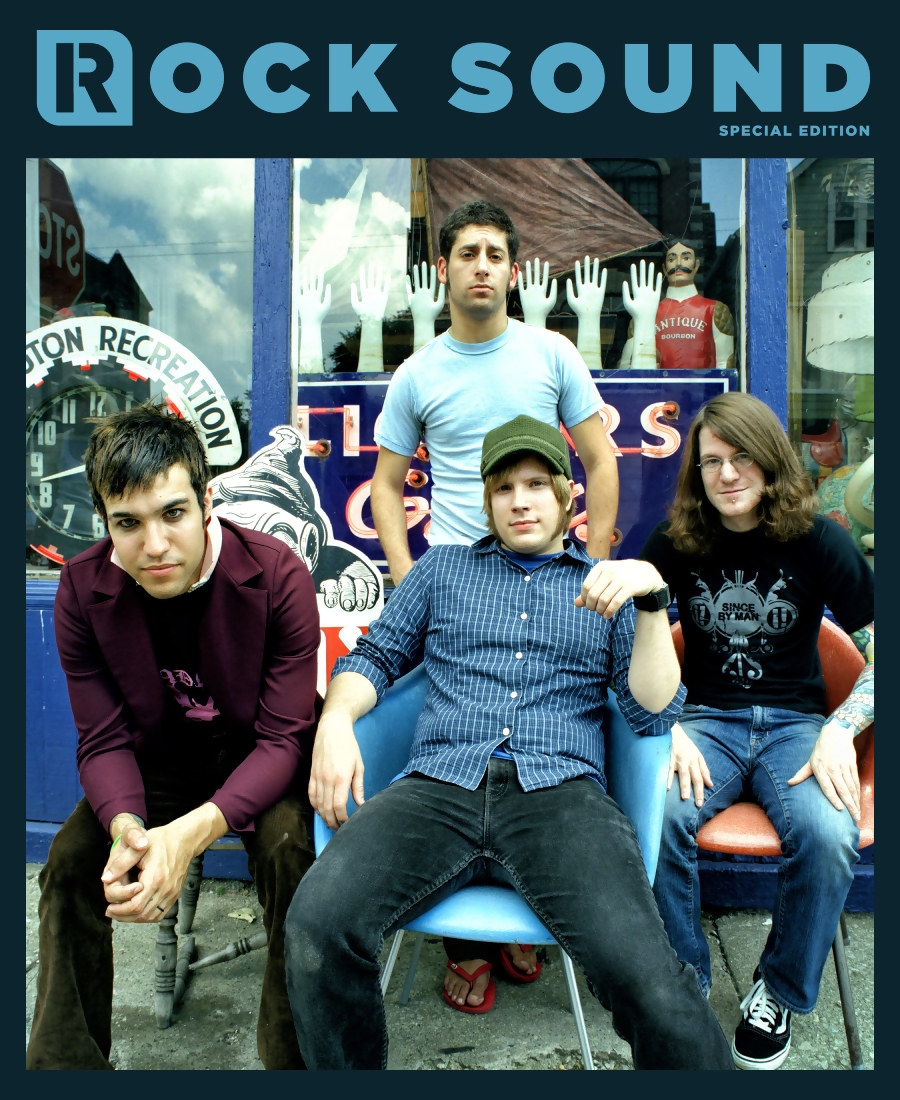
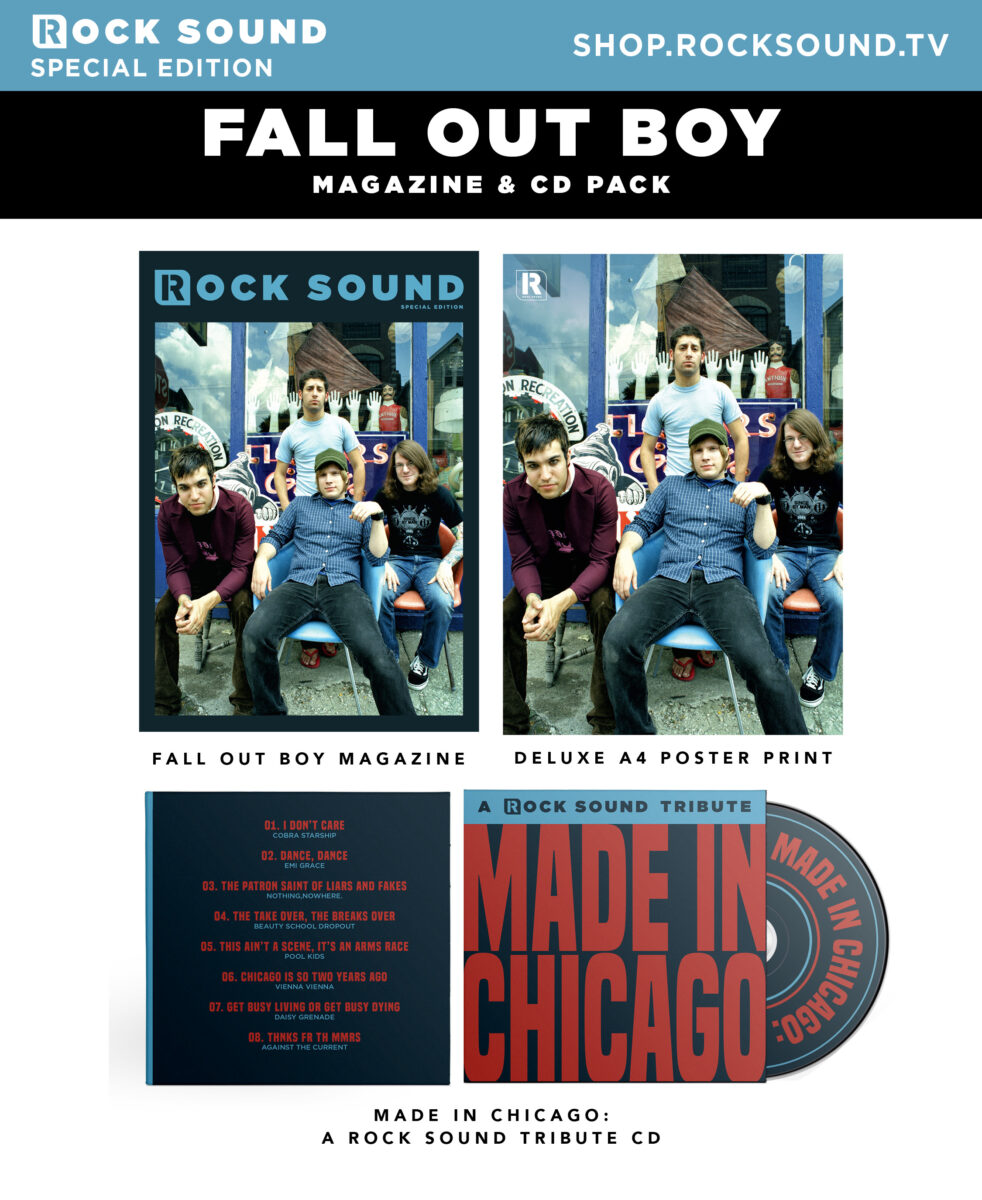
In celebration of the band’s 25th anniversary, we have teamed up with Fall Out Boy to deliver a special edition magazine, merch collection and CD tribute album.
Inside the magazine, read four new career-spanning solo interviews with Patrick Stump, Pete Wentz, Andy Hurley and Joe Trohman alongside never before seen archive photos from their earliest days together.
Plus, the accompanying CD features cover versions performed by their contemporaries, friends and bands they inspired, available only alongside the magazine.
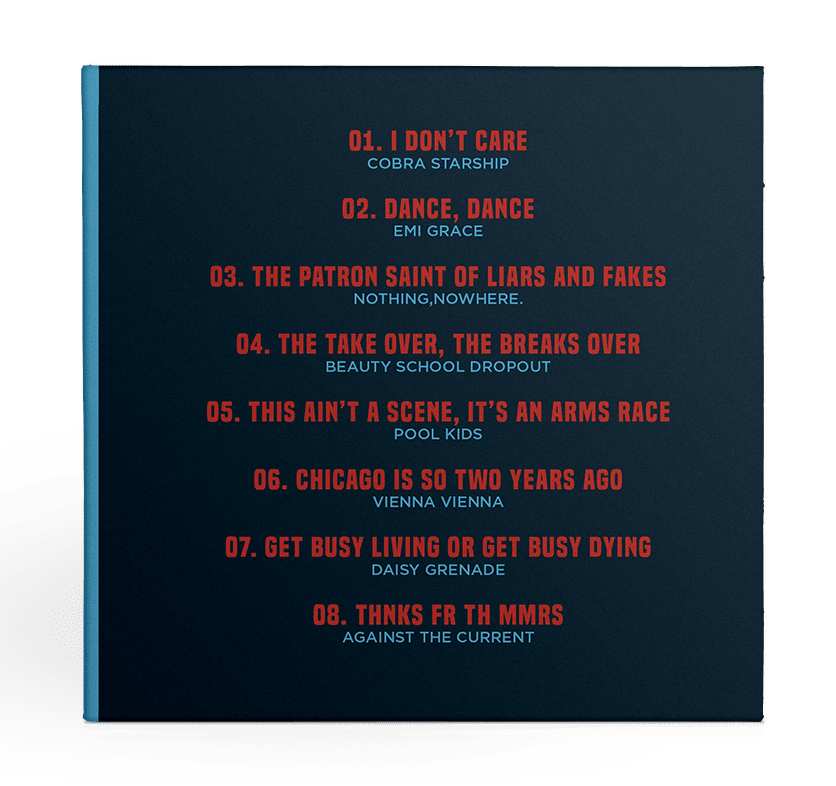
Have a look at the full tracklisting below:
1. Cobra Starship – I Don’t Care 2. Emi Grace – Dance Dance 3. nothing,nowhere. – The Patron Saint Of Liars And Fakes 4. Beauty School Dropout – The Takeover, The Break’s Over 5. Pool Kids – This Ain’t A Scene, It’s An Armss Race 6. Vienna Vienna – Chicago Is So Two Years Ago 7. Daisy Grenade – Get Busy Living Or Get Busy Dying 8. Against The Current – Thnks Fr Th Mmrs
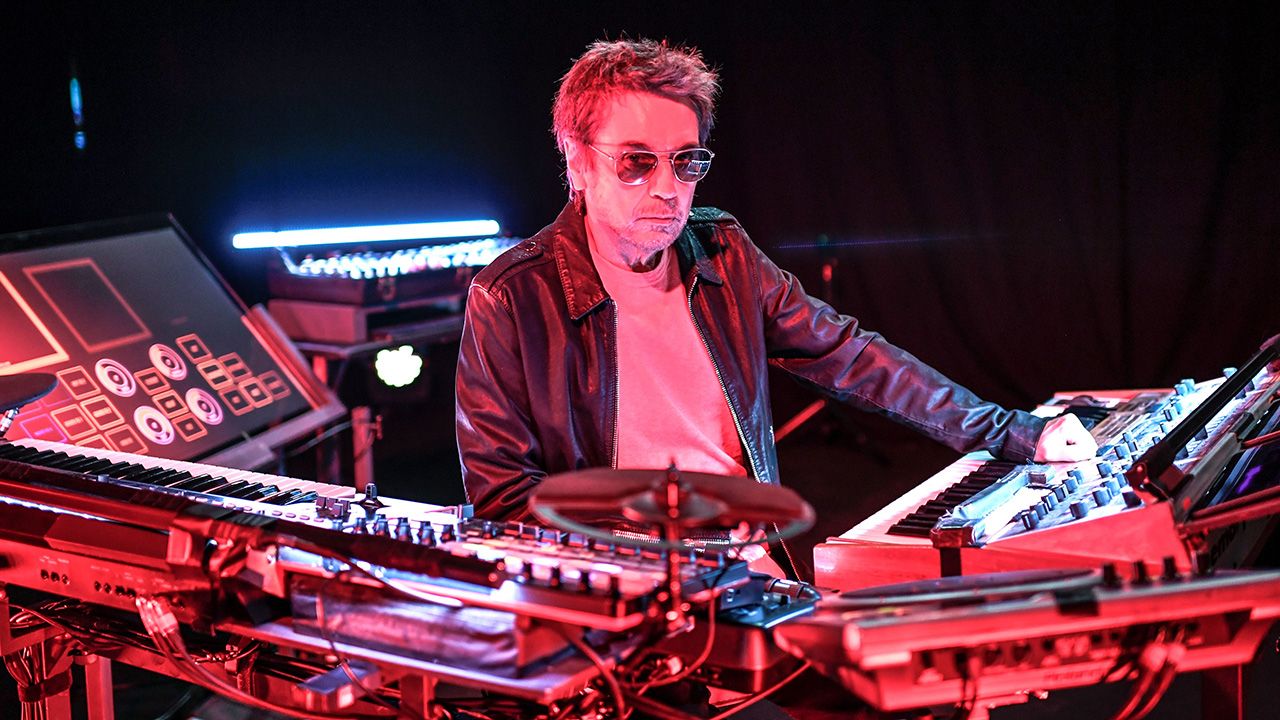
In 2016 Jean-Michel Jarre released Oxygène 3, marking the end of a journey that had begun with his 1976 debut Oxygène. Regardless of the technological advances that had expanded musical horizons to an almost limitless extent, Jarre told Prog why his first album remained important to him.
Their combined success led to an extensive tour of the continent this autumn, packing out arenas from Cardiff to Copenhagen, Brussels to Budapest. At 68 years of age, and bearing in mind this is a man who’s shifted 80 million albums over his career, Jarre’s commercial and artistic clout is arguably at its peak – or at least on a similar level to 1976, when Oxygène took him from jobbing composer of library music to full-blown international superstar.
Given this evaluative symmetry, it’s entirely fitting that Jarre has now chosen to release a third volume of Oxygène. Not that he deliberately planned it that way. “During the Electronica project, I did a track that wasn’t sitting at all with the other songs,” he tells Prog. “I kept that idea in the back of my mind. When the record company mentioned that they’d like to do something special for the 40th anniversary of Oxygène, I thought it might be good to use it as a deadline pretext.”
Nominally, of course, the new album is a sequel to 1997’s Oxygène 7-13, but Jarre was more interested in following the original as a working model. “I did the first album in six weeks with very limited tools,” he explains, “so I thought it would be fun to go back into the studio with the same minimalist approach, especially after the massive Electronica project, which involved a lot of planning, travelling and heavy production.
“I didn’t go back and listen to the previous work at all. The plan wasn’t to revisit the original Oxygène, or use the same kind of instruments. That would have been pointless. But I kept the same dogma. Oxygène is not so much a series of songs with separate titles – it’s more of an overall concept, like a movie or a series of short stories. I thought, ‘Okay, I’m going to stay with a limited number of elements here, and sometimes just have parts that use only two or three instruments.’ So I did it all in one go, keeping it rough like that, then went on tour and left it behind me.”
A further parallel is provided by artist Michel Granger, whose famous earth-skull design became Oxygène’s visual signifier. Oxygène 3 essentially takes the same image, this time in profile, and deepens its tone in a way that suggests something altogether more ominous.
“I made the first album back in the days of vinyl, when we were always thinking about sides one and two. The other characteristic of Oxygène is that it has sunny melodies but it’s also quite dark, like the cover artwork. I decided it would be fun to take this idea but do it slightly differently. I asked Michel to twist the cover to a certain degree on Oxygène 3. Then I thought, ‘Why not make side one dark, then side two brighter or more melodic?’ It really started from there.”
It should come as no surprise, then, to discover that Oxygène 3 forgoes the thumping techno and dense beats that gave Electronica a pulse. Instead, it’s a thoroughly modish return to the kind of cosmic fantasia that defined the original Oxygène – all radiant melodies and artful layers of synthetic sound.
“I’d already been working on electronic music for 10 years by the time I recorded Oxygène,” says Jarre, reflecting on the genesis of the album, recorded in a makeshift studio at his Paris home. “I was earning a living by doing other things and producing French rock singers. But I was obsessed with this idea of creating a bridge between experimentation and pop melody. I liked this kind of challenge, playing around with sound design and integrating melodies.
“I had no idea that it would be successful. It was rejected by all the record companies I sent it to. In the end, a small label [Les Disques Motors] took it. Then Radio One played the album in its entirety the first week it came out. They did that very rarely.”
The notion of combining experimental music with more accessible textures can be traced back to his teenage years with avant-rockers The Dustbins. By 1968, he’d dispensed with conventional instruments almost completely, playing around with tape loops and other electronic gear.
“The main difference with electronic music is that you create music in terms of sound, not just notes,” he says. “It’s something else entirely. When I was a teenager I always liked processing my guitar or organ or whatever, playing the tape backwards and changing the speed. Then the drummer in my band said, ‘You should meet with these crazy guys who are working in French public radio. They’re doing the same kinds of things as you, and they have labs.’”
We weren’t doing electronic music with synthesisers per se, but with oscillators we stole from radio stations
Intrigued, in 1969 the 21-year-old Jarre joined the Groupe de Recherches Musicales, led by noted composer and musicologist Pierre Schaeffer. Originally founded at the French Radio Institution, GRM had been active since around the early 50s. Schaeffer invented the phrase ‘musique concrète’ and, among other things, helped to pioneer sampling.
“I was immediately seduced by what they were doing,” Jarre recalls. “Electronic music owes a lot to public radio stations – the BBC radiophonic laboratory, the German lab where Stockhausen was working and, of course, the one in Paris. I stayed for three years with Pierre Schaeffer and I also went to Cologne to work with Stockhausen. He was totally crazy, but a real genius. He considered himself to be made of sound, biologically, so he had a kind of surrealistic approach. Crazy, but realistic at the same time. It was very interesting.”
As the 70s dawned, the advent of new technology opened up an index of possibilities for Jarre and other electronic composers. The Moog synth was starting to gain traction in the States, but its hefty price tag meant only a select few could afford one.
(Image credit: Getty Images)
“I started with a British-made VCS3 from EMS [Electronic Music Studios, based in London], created by a genius called Peter Zinovieff. It was a kind of poor European version of the Moog. In those days Europe was not as rich as the States, so the sound was drier. In a sense, it was a kind of punk synthesiser – there was something very harsh and rough about it. I loved it; I still take one on stage with me today.
“I started making music at a time when we weren’t doing electronic music with synthesisers per se, but more with a bank of oscillators that we stole from radio station studios. We’d use all the technical filters that they would use to set up their broadcast system, hijacking that equipment to make music. It meant you could create, in a sense, your own instruments. The trick for anyone starting out is to create your own limitations. Then you’ll be better able to express what you have in mind.”
Imposing his own set of restrictions fed directly into the creation of Oxygène. It’s a record on which he’s since built a remarkable legacy, be it through big-selling albums like Equinoxe and Magnetic Fields or enormous spectacles in Moscow, Egypt and – as the first Westerner to play there – China.
Much like Mike Oldfield and Tubular Bells, Oxygène occupies a special place in the Jarre mythology. “When you’ve been lucky enough to have some kind of success with your first project, it will always be part of your DNA, no matter what you do afterwards,” he says. “It’s like the first movie for Tarantino or Kubrick. For me, it’s the same – I love many other things that I’ve done and I’m very proud of them all, but Oxygène is something unique.”
There remains one very obvious question: is Oxygène 3 the final instalment? “I think so. I used to be quite close to Arthur C Clarke and he’d tell me: ‘You know, you should finish Oxygène one day.’ For him it was like a journey into space, except that you could come back to a different earth. He wrote about that kind of thing, so that idea was quite a common one for him. I thought a lot about that when it came to do the final song on the new album.
“Oxygène 20 is a long piece that’s quite harmonious, but with a kind of screaming state that’s not necessarily scary, but very poignant. When you enter the atmosphere of a planet, everything burns and turns to ashes. This was something I wanted to express at the end of Oxygène 3. I think it’s a pretty good way to end it.”
Blues rock guitarist Alastair Greene is revisiting his 2014 album Trouble at Your Door with a newly remastered deluxe edition on Ruf Records. The expanded release features two previously unreleased recordings from the original sessions.
Originally released through Delta Groove/Eclecto Groove Productions, Trouble at Your Door was recorded in 2013 at Coyote Road Studios in Santa Barbara, California. The album was engineered by Sean McCue, who also handled the remastering for the deluxe edition.
Greene says the new version brings the album closer to the sound he originally envisioned.
“I had always felt this record needed to be remastered. I wanted to get back to what the original mixes sounded like, which was much more organic. It sounded good before, but I LOVE how this record sounds now.”
The deluxe edition includes an acoustic recording of “Drunk Again,” a song that originally appeared on Greene’s 2009 album Walking in Circles, and a previously unreleased studio version of “3 Bullets” featuring Erik Norlander on Hammond organ. The latter song first appeared on Greene’s 2002 debut album A Little Wiser and was later featured on Live From the 805.
The album features Greene alongside drummer Austin Beede and bassist Jim Rankin, with Norlander contributing organ to select recordings.
The first single from the deluxe edition is “People,” which features a slide guitar riff inspired by Rory Gallagher.
“The song ‘People’ is one of my favorite songs that I’ve written, and definitely one of the highlights from the album ‘Trouble at Your Door’. It started with a slide guitar riff that was inspired by the late great Rory Gallagher. It turned into a song about trying to encourage people to try to stay positive despite how difficult life can get.”
The reissue also holds personal significance for Greene. The original album was released with the support of the late Randy Chortkoff, founder of Delta Groove Records, who helped Greene secure his first record deal with an established blues label.
The deluxe edition continues Greene’s relationship with Ruf Records, which released his 2024 studio album Standing Out Loud and his 2025 live EP Live in Sin City.
Looking back on his recording career, Greene considers Trouble at Your Door among his strongest releases.
“As I look back at the records I’ve put out (7 studio, 4 live, and 1 compilation) TROUBLE AT YOUR DOOR is most definitely a contender for my favorite record I’ve ever made. It feels incredibly focused and full of energy and feeling.”
TRACK LISTING
01 People 02 Trouble At Your Door 03 Back Where I Belong 04 Red Wine Woman 05 First Born Son 06 Love You So Bad 07 Last Train Around The Sun 08 Calling For You 09 Make The Devil’s Day 10 Strange Feeling 11 Pretty Price To Pay 12 The Sweetest Honey
Bonus Tracks:
13 Drunk Again (2014 Acoustic Version) 14 3 Bullets (2014 Studio Version)
New York singer-songwriter Sari Schorr reveals the music video for her latest single, the seductive and electrifying ‘Cool Hand Rider‘, to celebrate the release of her hotly anticipated new album, ‘Running Wild‘ (review here), which is out via Provogue Records / Artone Label Group today in Europe and on October 30th in the U.S.A. She is currently […]
Sweden’s Ram have been at the classic heavy metal thing since 2003, crafting six albums with a sound somewhere between classic Judas Priest and Tarot mixed with the grit and grease of Motörhead. I could have sworn I had reviewed their 2009 platter Lightbringer, but it turns out it dropped prior to me joining AMG. That album hit a nerve with me back in the day, and I still spin it fairly often. Follow-ups like Svbversvm and the awesomely titled Rod1 had that 80s magic running free with an extra layer of rough-and-tough aggression laid over the top. They’ve never quite broken through to bigger audiences, but they keep on putting the balls to the wall and screaming for vengeance nonetheless. That brings us to 7th album, Against. It’s the same Ram as before with their usual penchant for big 80s metal hooks, and when they hit their groove, you will be rocked hard and put away sore. Ram indeed!
After the throwaway instrumental opener, Ram headbutt you in the nards good and hard with “Ghost Emperor.” This is the Ram sound congealed in goat tallow and military-grade meth. You get beefy, punchy riffs, thunderous drums, and the acid-drenched vocals of Oscar Carlquist. It’s classic heavy metal through and through, but it has a mean streak and wants to bully you around the block and back. The best part is how damn sticky it all is. You hear it once, and it plants in your head like a slug from a .45. Follow-up “One vs. All” is the kind of rough-and-tumble battle anthem that goes from the promo sump right to the lifting playlist ov Steel in a heartbeat. More burly riffs and rough vocals tell tales of fighting hordes and standing atop piles of vanquished foes. This is what is best in life, and that chorus will make you punch a poodle. The big stuff keeps coming on “Abattoir,” which sounds like a lost cut from Priest’s Painkiller, fortified with early 80s Enforcer and Wolf before being turned loose on the public. It’s MOAR fun than a barrel full of gorillas.
Much to my delight, Against is loaded with badass metal anthems that take names and kick ass. “Out of Control” lives up to its moniker, and the title track features the same raw, punky energy as Iron Maiden’s debut. Even the big mood-piece power ballad “Leaving” hits hard, creating real feelz with a tale of departing life. The chorus is surprisingly poignant and fragile, and it sticks like bubble gum in non-public hair. I could argue that “Night Blade” is somewhat one-note and clunky, but it’s still good fun. Against winds out impressively with 3 killer tracks sure to add more unwanted hair to strange places, and when all is said and done, the album’s tight 42:58 burns by in a flash of chrome and steel. No song runs too long, and nothing feels like filler.
I’ve been an admirer of Oscar Carlquist’s unique vocal style since I first heard Ram. He has a weird raspy delivery that at times sounds like Stu Block after a rough weekend, and there’s a bit of Olof Wickstrand of Enforcer in there too. However, he usually sounds meaner and more menacing, like he’s about to steal your lunch money and give you an atomic wedgie. On tracks like “Ghost Emperor” and Abattoir,” he sounds rough and ugly, but on “Leaving” he sounds forlorn and emotive. His range is weirdly vast, and his screams and high-register wails are intense. Harry Granroth and Martin Jonsson deliver crunchy riffs to drive the war wagon, and they aren’t afraid to poach dueling guitar harmonies from Priest and Maiden. They decorate Against with a great balance of heavy and hooky moments and support Oscar’s crazed vocals adroitly. Big props to drummer Morgan Petterson as well for pounding his way to Valhalla and beyond across the album. His urgent playing adds another layer of panic attack to the Ram rollout, and it hits like an iron bonehead.
Ram have had a good thing going for over 20 years, and have one of the best logos in metal; it’s about time they got more attention for their efforts. Against may just be their golden ticket to greater fame and glory. This is an unruly, uncouth dose of 80s metal done well and designed to leave unsightly bruises. That means this head-on collision with goat skull will be good for you. Maybe not medically, but spiritually. You also may die. Such is life in the ram jam.
According to every review that I’ve read, Phoebe Bridgers is putting in some amazing performances on her current arena tour. But unless you go see the show for yourself, you have to rely on secondhand accounts. Bridgers famously banned phones from those shows, which means there’s basically no footage out there. For instance, we know that she reunited with her boygenius bandmates Julien Baker and Lucy Dacus at a recent Brooklyn show, but we don’t get to watch it happen. We do, however, get to see all three of them perform together in an incredibly cool new live video in A24’s Sound Check At Cherry Lane Theater series.
The most underrated thrash metal bands aren’t obscure. They’re the bands who were in the room when the genre was invented, in the Bay Area, in Germany and on the East Coast, and who watched four other names walk off with the story. Metallica, Slayer, Megadeth and Anthrax earned the Big Four tag, but the riffs they built on, the speed they chased and in at least one case the songs they borrowed came from the thirteen bands below.
This is them counted down from 13 to 1, with the album to start with for each, and the number one has a better claim to inventing Bay Area thrash than the band that got the credit.
Two notes before the list. The order is about influence, consistency and how badly the band deserved a bigger room, not just how fast they played. And every one of these bands is still worth seeing, so where a band put out a record or a tour in the last two years, it’s here. Thrash in 2026 isn’t a museum. Most of this list is still touring the same riffs that built it.
13. Artillery (Denmark)
Artillery are the most technical band on this list and the one geography hurt most: a Danish thrash act with a Flemming Rasmussen-produced masterpiece who were simply too far from the Bay Area and the Ruhr to get picked up by the scene.
Formed in 1982 by brothers Michael and Morten Stützer, they put out Fear Of Tomorrow in 1985 and Terror Squad in 1987 before By Inheritance (1990), recorded with the man who’d just made Metallica’s Justice. It’s melodic, precise and far ahead of its moment, with ‘Khomaniac’ and ‘Bombfood’ as the way in, and it came out the year thrash started losing the room to grunge and death metal.
They split in 1991, reformed, split again, and have been steady since 2007. Morten Stützer died in 2019; Michael has carried the name on. ‘Musician’s band’ is usually a backhanded compliment. For Artillery it’s the honest description of why every guitarist in this genre knows them and almost nobody else does.
12. Forbidden (Bay Area, USA)
Forbidden had the riffs, the singer and the drummer, and they turned up at the exact moment the Bay Area had run out of room for another great thrash band.
Forbidden Evil (1988) and Twisted Into Form (1990) are two of the best records the scene produced in its second wave. Russ Anderson could actually sing, Craig Locicero wrote riffs that moved sideways instead of just forward, and the drummer on both was Paul Bostaph, who left in 1992 to replace Dave Lombardo and sits in the Slayer catalogue from Divine Intervention on. Forbidden were a finishing school for other people’s bands.
They reunited in the late 2000s and have been playing in bursts since, with a fall 2026 run that went ahead with temporary fill-ins after bassist Matt Camacho and the drummer stepped aside for personal reasons. The songs hold up. The timing never did.
11. Coroner (Switzerland)
Coroner were a jazz-trained power trio from Zurich playing neoclassical thrash in 1989, and the genre’s audience wasn’t ready for them until roughly 2010.
Ron Royce, Tommy Vetterli and Marky Edelmann came out of Celtic Frost’s road crew and made four albums that got stranger and better each time. No More Color (1989) is the one: ‘Die By My Hand’ and ‘Read My Scars’ have riffs that turn corners most thrash bands didn’t know existed, and Mental Vortex (1991) and Grin (1993) pushed on toward something almost industrial.
They split in 1996 and were rediscovered by a generation raised on progressive and technical metal, reuniting in 2010 to crowds bigger than they ever drew the first time. The long-promised new album has been ‘coming’ for most of that reunion. Whether it lands or not, the three records are enough. Nobody else on this list sounds remotely like them.
10. Nuclear Assault (East Coast, USA)
Nuclear Assault are the band Dan Lilker formed after Anthrax moved on without him, and for a few years in the late eighties they were the fastest, angriest thing in New York.
Lilker played bass on Anthrax’s debut and was out before the second album; he and singer-guitarist John Connelly built Nuclear Assault as the hardcore-leaning answer, short songs, political lyrics and no interest in polish. Game Over (1986) and Survive (1988) are the crossover thrash blueprint, and Handle With Care (1989) is where the songwriting caught up with the speed.
Lilker went on to Brutal Truth and S.O.D. and became one of extreme metal’s most-travelled bassists. Nuclear Assault reunited in the 2000s, did a farewell run in 2015, and have surfaced only sporadically since. Treat them as finished unless they say otherwise. The records aren’t.
9. Possessed (Bay Area, USA)
Possessed are on a thrash list because they were a thrash band, and off most thrash lists because what they played on Seven Churches turned into death metal.
Four teenagers, a week in the studio, a Combat Records budget, and a 1985 album with a song called ‘Death Metal’ on it that named a genre. Jeff Becerra’s rasp and Larry LaLonde’s riffs (yes, the Primus one) were thrash played too fast and too evil to be filed with Exodus, and they ended up claimed by death metal’s founding generation instead. They’re on our list of the best metal debut albums for that reason.
Becerra was paralysed in a 1989 shooting, rebuilt the band from a wheelchair, and released Revelations Of Oblivion in 2019, the first Possessed album in 33 years. They sit between two genres because they built the bridge. That shouldn’t cost them a place on either side.
8. Destruction (Germany)
Destruction are one third of the Teutonic Big Three and the third most of the world has heard of, which has more to do with lineup chaos than with the riffs.
Infernal Overkill (1985) and Eternal Devastation (1986) are as fast and as unhinged as anything Kreator or Sodom made in the same two years, and ‘Bestial Invasion’ is a Top 10 German thrash song by any measure. Schmier’s bass-and-bark approach gave them a sound of their own, and then the band fired him in 1989 and spent the nineties proving they couldn’t replace him.
He came back in 1999 and Destruction have been remarkably consistent since: a run of solid-to-great records that includes Birth Of Malice in 2025, with a lineup that finally settled. If you only know Kreator and Sodom from the German scene, this is the third pillar, and it’s been standing longer than people think.
7. Death Angel (Bay Area, USA)
Death Angel made one of the great Bay Area debuts as teenagers, lost a decade to a tour bus crash, and came back to make records as good as anything from their first run.
The Ultra-Violence (1987) was written and recorded by five cousins, the oldest barely out of his teens, and it’s more technical than most of what bands twice their age were doing. Frolic Through The Park (1988) and Act III (1990) kept climbing, and then a 1990 bus crash on tour badly injured drummer Andy Galeon and stopped the band cold for most of the decade.
The 2001 reunion led to The Art Of Dying (2004) and a second career that’s arguably better than the first: Relentless Retribution, The Dream Calls For Blood, The Evil Divide and Humanicide (2019), which got them a Grammy nomination. Mark Osegueda has become one of the best frontmen in the genre, and Death Angel in 2026 are a band most of the Big Four would rather not follow on a festival bill.
6. Dark Angel (Los Angeles, USA)
Dark Angel were too fast, too long and too complicated for the mainstream in 1986, and in 2024 they came back after 33 years and proved they’d been right the whole time.
Darkness Descends (1986) is one of the most violent records of the decade, a direct ancestor of death metal’s speed and brutality, and Gene Hoglan’s arrival on drums turned a fast band into a terrifying one. Time Does Not Heal (1991) famously carried a sticker counting the riffs (246), which tells you both why musicians worship this band and why radio never touched them.
They split in 1992, reunited sporadically from 2013, and in November 2024 released Extinction Level Event, their first album since 1991. It’s a real Dark Angel record, not a cash-in, and Hoglan, who has played with everyone from Death to Testament to Dethklok since, is still the engine. The band that was ahead of its time finally got a time to be in.
5. Sodom (Germany)
Sodom are the Teutonic band black metal claims as its own, and the one whose war-obsessed, no-frills attack has aged better than almost anything else on this list.
Tom Angelripper has fronted them since 1981, and the early records, In The Sign Of Evil and Obsessed By Cruelty, are so raw that Bathory and the first wave of Norwegian black metal cite them as foundational. Then came the thrash classics: Persecution Mania (1987) and Agent Orange (1989), the latter one of the best-selling German thrash albums ever and still the band’s statement piece. ‘Agent Orange’ and ‘Remember The Fallen’ are the entry point.
Sodom never stopped. Through lineup changes and four decades they’ve released albums at a steady clip, including The Arsonist in 2025, and they remain the German band most likely to play exactly what you came for. Kreator got bigger; Sodom stayed meaner.
4. Overkill (East Coast, USA)
Overkill have released more thrash albums than any band on this list or the Big Four, and Bobby ‘Blitz’ Ellsworth has fronted every one of them, which makes their absence from the top-tier conversation the genre’s longest-running oversight.
Feel The Fire (1985), Taking Over (1987) and The Years Of Decay (1989, produced by Terry Date) are the New Jersey answer to the Bay Area, and ‘Elimination’ is a top-ten thrash anthem by anyone’s count. Blitz’s voice is the most recognisable in the genre after Hetfield’s and Araya’s, and D.D. Verni’s bass is the reason Overkill songs move the way they do.
What sets them apart is that they never went away and never got worse. The Electric Age, White Devil Armory, The Grinding Wheel and Scorched (2023) are all better than they had any right to be, and a new Overkill album is in the works for 2026. The Big Four is a marketing term from 2010. Overkill have been making the case against it for 40 years.
3. Kreator (Germany)
Kreator are the biggest German thrash band in the world and the one most likely to be in a Big Five if the term ever expands, and Mille Petrozza is the reason.
Pleasure To Kill (1986) is the most extreme record any of the Big Four’s contemporaries made that year, a direct line to death and black metal, and Extreme Aggression (1989) is the polished version that broke them internationally. Petrozza has fronted, written and steered the band since 1982, through a nineties detour into industrial and gothic textures that most fans skip, and back to the thrash revival of Violent Revolution (2001) that has carried them for 25 years.
Hate Über Alles (2022) went top ten across Europe, they headline festivals the Big Four used to, and they’re the only band on this list who could reasonably argue they’re not underrated anymore. They’re here because, outside Europe, casual fans still file them a tier below bands they outplay nightly. Among the greatest thrash bands as voted by Loaded Radio listeners, they sit right in the argument.
2. Testament (Bay Area, USA)
Testament are the band whose omission from the Big Four is the one even Big Four members will admit was a mistake, and the first three albums are the proof.
The Legacy (1987), The New Order (1988) and Practice What You Preach (1989) are an opening run that rivals anyone’s: Alex Skolnick’s leads, Eric Peterson’s riffs and Chuck Billy’s voice, the biggest in Bay Area thrash. ‘Over The Wall’, ‘Into The Pit’, ‘Disciples Of The Watch’ and the title track of Practice are set-closers forty years on. They sold well, they toured with everyone, and they were a hair too late to be in the photograph.
The second act matters as much. The Gathering (1999) with Dave Lombardo and James Murphy is a modern-thrash landmark; Dark Roots Of Earth, Brotherhood Of The Snake, Titans Of Creation and Para Bellum (2025) prove the band is still writing at the level of its own best records. Billy beat cancer. Skolnick came back. Nobody left standing from the first wave has done it better for longer.
1. Exodus (Bay Area, USA)
Exodus invented Bay Area thrash, lost their guitarist to Metallica, watched their debut sit on a shelf for a year while Kill ‘Em All took the narrative, and have spent four decades being the best band nobody put in a Big Four.
Kirk Hammett co-founded Exodus in 1979 and left for Metallica in 1983, taking riffs with him that turned up on Kill ‘Em All. Gary Holt took over the writing and, with Rick Hunolt and Paul Baloff, made Bonded By Blood, the most violent thrash record of its era, recorded in 1984 and held by label problems until April 1985. By then the Metallica and Megadeth story was already the story, and Exodus were the band everybody in the Bay Area knew had been there first.
Baloff was fired, returned, and died in 2002. Steve ‘Zetro’ Souza fronted the classic run that followed (Pleasures Of The Flesh, Fabulous Disaster), left, came back, and fronts them now. Holt doubled as Slayer’s guitarist for the last decade of that band’s run and never stopped writing for Exodus; Tempo Of The Damned, Blood In Blood Out and Persona Non Grata (2021) are as heavy as anything the band has done.
They’re number one because the claim is simple and nobody serious disputes it: the riffs that became the Bay Area sound came out of Gary Holt’s amp, and Metallica got there first with the record, not the sound. Ask Kirk.
The Full Ranking
13. Artillery
12. Forbidden
11. Coroner
10. Nuclear Assault
9. Possessed
8. Destruction
7. Death Angel
6. Dark Angel
5. Sodom
4. Overkill
3. Kreator
2. Testament
1. Exodus
TL;DR
The most underrated thrash metal bands are the ones who built the genre alongside Metallica, Slayer, Megadeth and Anthrax and didn’t get the Big Four label: thirteen of them, ranked here.
Germany’s Teutonic Big Three (Kreator, Sodom, Destruction) and the Bay Area second wave (Testament, Death Angel, Forbidden, Possessed) make up most of the list, with East Coast (Overkill, Nuclear Assault) and outliers from Denmark, Switzerland and LA.
Several are still releasing records: Dark Angel’s first album in 33 years (2024), Destruction’s Birth Of Malice and Sodom’s The Arsonist (2025), Testament’s Para Bellum (2025), and a new Overkill album due in 2026.
Number one is the Bay Area band Kirk Hammett left for Metallica, whose debut was delayed until after Kill ‘Em All.
FAQ
Who are the most underrated thrash metal bands?
On this list, Exodus, Testament, Kreator, Overkill and Sodom lead, followed by Dark Angel, Death Angel, Destruction, Possessed, Nuclear Assault, Coroner, Forbidden and Artillery. All thirteen were active in the first wave of thrash alongside the Big Four and influenced the genre as much as the bands that got the name.
Who invented Bay Area thrash?
Exodus have the strongest claim. Kirk Hammett co-founded the band in 1979 and left for Metallica in 1983, and Gary Holt’s riffs defined the Bay Area sound before Bonded By Blood was finally released in 1985. Metallica released the first major Bay Area thrash album with Kill ‘Em All in 1983, which is why they got the credit.
What is the Teutonic Big Three of thrash?
Kreator, Sodom and Destruction, the three German bands whose mid-1980s albums (Pleasure To Kill, Persecution Mania, Infernal Overkill) defined the faster, darker European strain of thrash that later fed into death and black metal. All three are still active and releasing albums.
Why isn’t Testament in the Big Four?
Timing and marketing. The Big Four term was popularised around the 2010 joint shows, and by then Metallica, Slayer, Megadeth and Anthrax were the established names; Testament’s debut The Legacy arrived in 1987, after all four had broken through. Musically, their first three albums and their later catalogue put them on the same level, which is why they rank second here.
Are these thrash bands still active in 2026?
Most are. Exodus, Testament, Kreator, Overkill, Sodom, Destruction, Death Angel and Dark Angel all tour and record; Overkill have a new album in the works. Possessed and Coroner play selected shows, Forbidden tour sporadically, Artillery continue under Michael Stützer, and Nuclear Assault have been largely inactive since a 2015 farewell run.
Think the top two are the wrong way round, or we missed someone? Argue it on Loaded Radio’s socials, and hear every band on this list on the stream.
This song and musical project exhibit an extraordinary attention to detail and passion. It is not merely a song; it is a vision. The architect of this musical endeavor, Sergie Code, possesses a comprehensive outlook on aesthetics and sound. The costumes used in the video are stunning, drawing inspiration from cyberpunk themes and 19th-century Venetian attire. The visuals are complemented by the choice of location, filmed against a beautiful Gothic cathedral, which adds a dramatic backdrop to the story being told.
The sound is powerful, grounded in modern rock, with influences of Alice in Chains but with a touch of Arabic-infused nuances in the guitar solo. This blend showcases a unique exploration of musical styles, distinguishing the track from typical offerings in the genre. Common rock elements intertwine with unexpected nuances, providing an enriching listening experience. The driving guitar riffs create a sense of urgency, while the rhythm section pounds with fervor and intensity.
The narrative presented in the video depicts a tumultuous relationship between a couple who ultimately see their bond unravel. The storyline hints at the woman’s obsessive tendencies, suggesting that her behavior may be at the root of their strife. Conversely, her partner seems to lack stability, leaving both characters in a precarious emotional state. This complexity invites viewers to analyze the dynamics of the relationship and decide for themselves whom to blame.
As the plot progresses, the woman finds herself institutionalized. This dramatic turn sets the stage for her eventual reunion with her ex-boyfriend, who happens to be dating a psychologist. The tension in the storyline encapsulates the fraught emotions that accompany breakups and mental health struggles. On one level, it draws attention to the societal perception of mental illness, while also delving into the personal consequences for the individuals involved.
You loved the cage – Sound and Atmosphere
The aggressive guitar riffs serve as a fitting soundtrack for the emotional crackdown. They propel the music forward, echoing the urgency conveyed in the video. The drums beat relentlessly, mirroring the chaotic nature of the couple’s interactions.
The melody itself carries a hint of nostalgia, tinged with a sense of foreboding. It creates a duality that enhances the emotional depth of the piece. This contrast invokes an array of feelings, inviting listeners to fully immerse themselves in the atmosphere created by Spinors. Not only is the song itself enjoyable, but the artistic choices made throughout the project elevate its quality.
You loved the cage – Performance and Production
Combining striking visuals with evocative music is no small feat. The synergy between the two aspects enriches the overall experience, ensuring that the audience is engaged audibly and visually.
Spinors delivers an impressive entry into the modern rock scene with “You Loved the Cage.” From its unique sound to its rich storytelling, there is much to admire. It encourages deeper consideration of the music and the visuals presented. Each listen unveils new layers, making it a valuable addition to any playlist.
This artist is surely one to watch. Their clear vision and dedication to their craft establish an exciting future. It’s a pleasing convergence of art forms that invites discussion and emotional reflection.

 Sweden’s Ram have been at the classic heavy metal thing since 2003, crafting six albums with a sound somewhere between classic Judas Priest and Tarot mixed with the grit and grease of Motörhead. I could have sworn I had reviewed their 2009 platter Lightbringer, but it turns out it dropped prior to me joining AMG. That album hit a nerve with me back in the day, and I still spin it fairly often. Follow-ups like Svbversvm and the awesomely titled Rod


 If you love this music: