(written by Islander) We started paying attention to Haintgrove in June when this Texas-based solo black metal project released its first single, “Starless Passage“. That led us to host premieres for two more singles, “I Dream in a Tongue I Cannot Speak” in August and “Kingdoms in the Thicket” in September. And now we’re premiering […]
Night Ranger emerged from the San Francisco Bay Area at the dawn of the 1980s and became one of the defining American melodic hard rock bands of the decade. The group’s classic lineup featured Jack Blades on bass and lead vocals, Kelly Keagy on drums and lead vocals, Brad Gillis and Jeff Watson on guitars, and Alan Fitzgerald on keyboards. With two singers, two virtuoso guitarists, and a gift for instantly recognizable choruses, the band could move from explosive rock anthems to emotional ballads without losing its identity. The band’s 1982 debut, Dawn Patrol, introduced listeners to songs such as
When comic book creator James O’Barr licensed The Crow to a movie studio for $1,500, he never expected it to get made, let alone become an enduring gothic touchstone.
Written gradually over nine years, starting in 1980, the original comic book story follows a young man named Eric Draven who returns from the dead to avenge the murder of his fiancée at the hands of a gang. The black-and-white panels drip with anguish, as Eric, face painted in a sinister scowl, stalks the rainy streets of a retro-noir city.
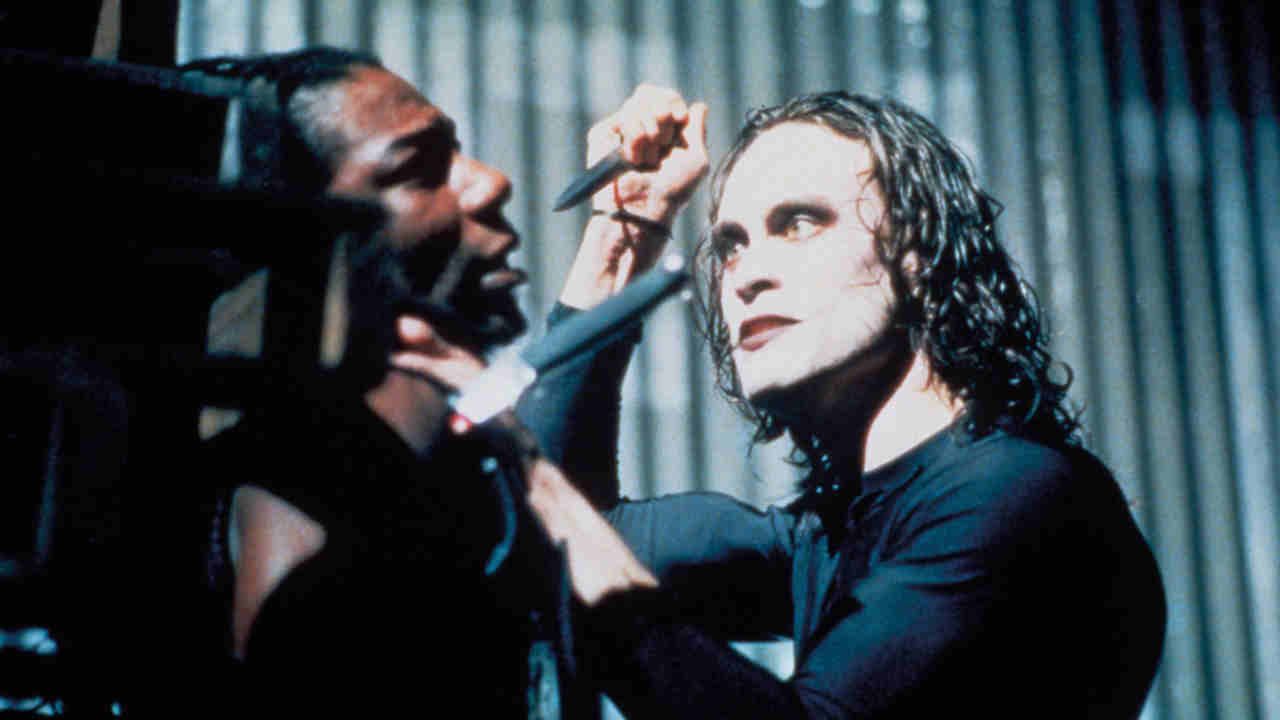
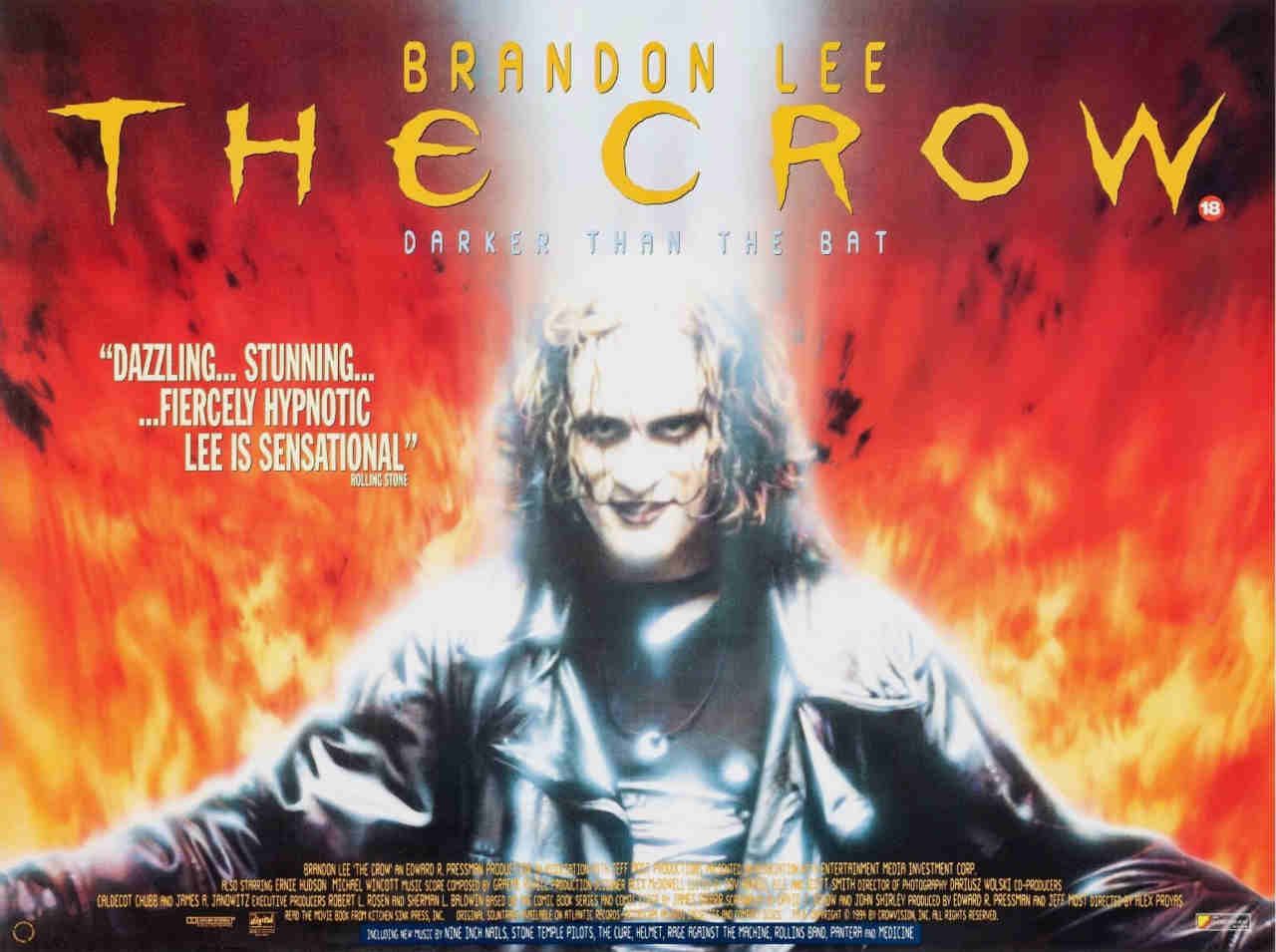
The film version, released in 1994, took this vision to the masses and became a cult classic. Under the eye of Australian director Alex Proyas, and starring Brandon Lee – son of 70s Kung Fu legend Bruce Lee – as bloodthirsty antihero Eric, it plugged into the zeitgeist, riding on the coattails of the emerging wave of industrial bands and playing a part in a 90s goth revival.
But The Crow also became infamous for a tragic event: Brandon Lee was killed during filming, due to an improperly loaded stunt gun, two weeks before he was due to get married.
Brandon Lee as Eric Draven in The Crow (Image credit: Alamy)
The Crow was born out of tragedy. James O’Barr wrote it to help him get to grips with his own grief; his fiancée was killed by a drunk driver while they were still in high school.
“She was the polar opposite of me. I was dark and moody and sullen and hostile, and she was pure sunshine and happiness,” he recalls today. “My life was changed irrevocably, in one instant, for no good reason. All those negative traits in me were amplified after that.”
Following the loss of his fiancée, O’Barr enlisted in the Marines and was posted to Berlin. It was 1978, the height of the Cold War. He yearned for a routine to block out his misery, yet the isolation of military life only drove him further into his own head.
“I became big and strong and physically imposing, but the desired effect was not reached,” he remembers. “In fact, it was probably amplified a little more because I internalised it rather than speak out about it. Luckily, I had art as therapy.”
(Image credit: Alamy)
He began creating The Crow in 1980, at the same time as he discovered the downbeat post-punk and goth bands coming out of England – Joy Division, The Cure, The Comsat Angels and Bauhaus. He drew Eric Draven as the latter band’s singer, Peter Murphy, with a touch of Iggy Pop. The dank streets of Berlin also fed into his work.
“The populace was either angry about the outcome of World War II, or they were ashamed,” he says. “It was on everyone’s face, but it was not spoken of. I don’t have any recollections of the sun ever shining. It was a good visual analogy to the post-punk and darkwave stuff that I was listening to.”
After six years in Berlin’s darkness, O’Barr’s dad passed away, and he was reassigned to Michigan in 1984 to take care of his mother. Three years later, he got a job at the Ford dealership in Detroit, working on cars by day and drawing until two in the morning. The Crow was picked up by a local publisher and enjoyed a small run.
The Crow comic book came out in 1989 and became a cult success, though not enough for O’Barr to give up his day job. He was still working at Ford in 1992 when Hollywood showed interest in turning it into a film. He thought the violence and intense romance would put people off adapting it, but Tim Burton’s Batman had found worldwide success, and studios were hoping to cash in with similar films.
Brandon Lee was a rising star in Hollywood. Good-looking and charismatic, he appeared in 1992 action film Rapid Fire, but was keen to step out of his father’s shadow and prove he could do more than fight scenes. At 28 years old, he had a bright future in front of him, and he was due to be married a few weeks after filming.
The cameras began rolling in early 1993. O’Barr had initially been sceptical of Brandon as Eric, thinking the actor “too sweet” to play the vengeful role, but was won over when he saw him in the distinctive make-up and leather pants. O’Barr, who was on set most of the time, was struck by Lee’s humility.
“The whole film was shot at night in miserable conditions, in freezing rain,” he says. “Between takes, everyone would go huddle around a 50-gallon oil drum filled with wood, and start a fire to get warm, like vagrants do. A lot of the crew had brought their kids with them, and instead of going back to his trailer, Brandon would go over and spend time with them. He was personable, charming and genuine.”
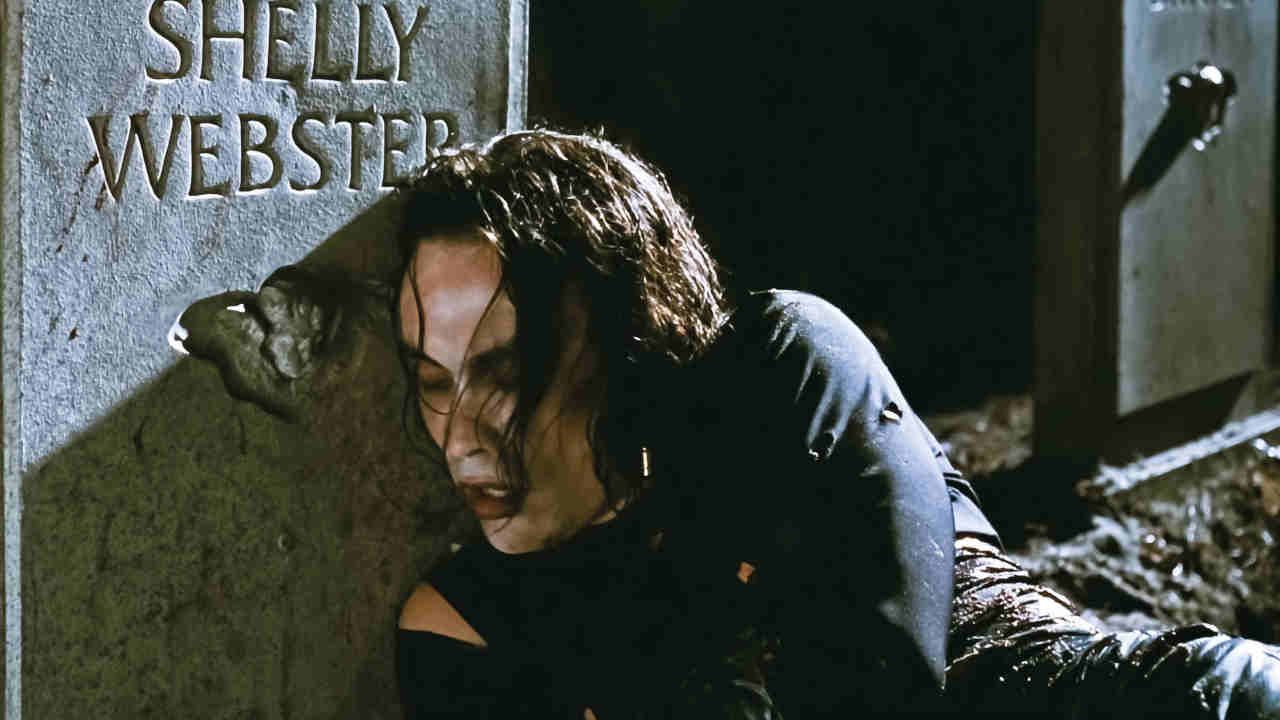
On March 31, 1993, tragedy struck. Lee was filming a scene where Draven is shot and killed in his apartment, but when the take ended, the actor didn’t get up. The tip of a dummy .44 slug had become jammed in the barrel of the gun, and the force of the blank had sent it into his abdomen. He was rushed to hospital, but surgery could not save him from the injuries.
Alex Proyas, traumatised, flew home to Australia for a month. James O’Barr was on a promo trip in Detroit when he heard the news. He couldn’t bring himself to return.
(Image credit: Alamy)
“It felt amazing to be on the set and seeing the things I had drawn come to life,” he recalls. “But with Brandon’s death, it was like I fell back into that place I was when I initially began it. It’s a love story, but it’s couched in pain.”
Rumours began to fly; Lee had been killed on the lot, in mysterious circumstances, echoing his father’s passing. Bruce Lee had died of a brain swelling shortly before the release of his own breakthrough film, 1973 martial arts classic Enter The Dragon. Although the coroner had declared it as ‘death by misadventure’, unfounded theories circulated that he was the victim of the mob or a demonic curse.
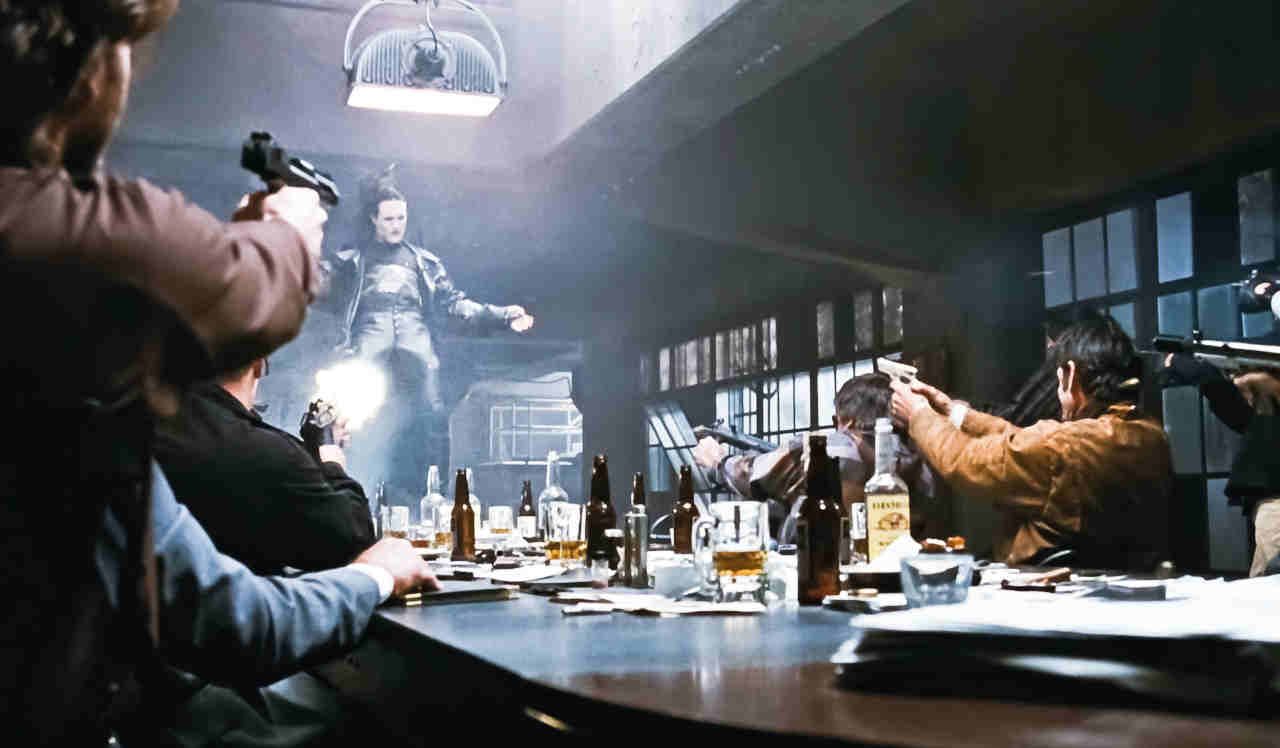
With permission from Brandon’s fiancée and family, the crew returned to work two months later and finished the film in his memory. Aside from some script changes, they leaned on effects company Dream Quest to bring their vision to life, adding $8million to the $15million budget. Dream Quest used then-cutting-edge techniques to create seven new scenes, comprising 52 shots. In two cases, they digitally superimposed Lee’s face onto a body double. The footage of Lee’s death was destroyed.
(Image credit: A poster for the 1994 movie The Crow)
When The Crow was released in May 1994, it was a surprise hit, becoming the Number One film at the box office on its week of release, and grossing more than $50 million domestically. Critics praised its dark visuals, although some felt it borrowed too heavily from existing films and wouldn’t have amounted to anything if it weren’t for fate’s cruel hand. ‘Were it not for Brandon Lee’s death… the movie itself would be little more than your basic heavy-metal occult revenge thriller, complete with rain-swept futuristic dreamscapes right out of Blade Runner and Batman,’ read one review in Entertainment Weekly.
Despite the ghoulish intrigue surrounding its production (there had been a string of minor accidents on set even before Brandon’s death), much of its success was down to timing – alternative culture was on the rise, and it exploded with the movie, which was accompanied by a zeitgeist-capturing soundtrack featuring The Cure, Nine Inch Nails and Stone Temple Pilots.
“It hit the American market just at the right time, where people were discovering post-punk – or what was called industrial in America,” says O’Barr. “Things were happening with the music and the dark fashion, and then The Crow came out and pushed it into the mainstream. So now you were cool to be wearing eyeliner, whereas you were a freak two years earlier.”
“Eric was my hero,” says former Him vocalist turned solo star Ville Valo. “The film happened right after grunge broke and was really grungy in a cool way. There were a few darker films, but I don’t think there was anything considered ‘gothic’ coming out of Hollywood at the time, and it had a bit of rock’n’roll. Eric was carrying a crow and a guitar.”
The Crow spawned a series of forgettable sequels, and a poorly received reboot in 2024 starring Bill Skarsgård in the title role. Yet nothing has dented the enduring appeal of the original. The Crow, like Eric Draven himself, proves there is life after death.
Halloween has come a day early as thousands of metalheads descend on the Utilita Arena in Newcastle, a stone’s throw from the city centre on this particularly mild autumn evening. Considering the size of the arena, 11,000 at capacity, getting in was relatively painless. The huge crowd that greeted me at the top of the … Continue reading Gig Review: Korn / Architects / Youth Code – Utilita Arena, Newcastle (30th October 2026)
We’re slowly, inexorably catching up to modern-day with these pieces! Now we tackle July, and before you know it, August will be here all over again. Time flies when we’re 3-6 months behind. Luckily, you are all such patient, supportive folks and never, ever make us feel rushed or pressured. Well done, you! Your rewards are many. See below.
We all recall the upheaval and tumult that resulted when progressive death metal crew Nothingness’ 2023 release Supraliminal was awarded a measly 2.5. Well, the band got past this undignified slight, grew stronger, and returned with an even bigger, meaner platter of deathy splatter called Godslaughter [out July 31st on Everlasting Spew]. Nothingness still attempt to marry the inventive weirdness of acts like Gorguts with the bathtub bonesaw antics of Autopsy, and while that should never work, here it mostly does. The band aren’t afraid of long-form experimentation and pulling out all their progressive bona fides, but they also remember to pummel and brutalize the listener at regular intervals. This reckless ambition makes Godslaughter a wild and twisted ride. As Ferox aptly expressed, “Like its predecessor, Godslaughter leaves a rancid mouthfeel behind as it rants its way toward Listurnalia.” Get used to being withNothingness.
Runner(s) Up:
Black Sites // For Eternity – Black Sites came back in July with another dose of 100% pure American heavy metal that straddles several sub-genres and picks and pulls from many influences from NWoBHM, prog, and alt-rock. For Eternity [out July 17th via self-release] is a case study in quality songcraft mattering more than the specific genre, as Mark Sugar and company drag the listener through a hodge-podge of eras and styles while keeping things lively and rocking. Nostalgia meets modern-day sounds in slick, inventive ways, and the hooks are plentiful. As Dolpin Whisperer adroitly summed up, “As the fifth step in the Black Sites journey, For Eternity strikes with finesse. And sticking to a tested and refined palette of hooky, hammering, and harmonious heavy metal, Sugar has delivered an experience that, while easy to digest, unfolds new layers with each successive listen.” Pour THIS Sugar on you!
Todomal // Graveyards of Joy – The Spanish duo behind Todomal open up the classic doom sound to progressive ideas and experimentation on Graveyards of Joy [out July 3rd on Season of Mist]. In a genre usually bound to custom and tradition, Todomal fly free, incorporating whatever elements they feel best suit the music. Over the course of this sweeping platter, you will hear Goth influences alongside soft blues and even pop. One would think that would render Graveyards of Joy a mushy mess, but somehow Todomal hold everything together and deliver a stunning experience. As a well-impressed Owlswald gushed, “Graveyards of Joy pulls all of its many ingredients into a layered, multifaceted whole that grows more rewarding with every listen. TodoMal’s twist on doom may feel occasionally strange, but it’s insanely stylish and unmistakably their own.” Get your undead jollies in this here graveyard.
Swedish occult melodic death metal band SERPENT have released the video for “Season of the Witch”, featuring guest vocals from soprano Frida Cewrien-Sollerhag. The song appears on their debut album, The Pit and the Pendulum, due on 13 November 2026 via Hammerheart Records on CD, LP and digital platforms. Watch “Season of the Witch”: Official […]
Halloween is the perfect time to explore the darker side of blues rock. Long before horror movies became an October tradition, blues musicians were singing about hellhounds, graveyards, voodoo, and encounters with the devil. Those themes eventually found their way into blues rock, where electric guitars brought new intensity to the supernatural imagery that had been part of the blues for generations.
These 10 songs provide the perfect soundtrack for Halloween.
Robert Johnson – “Hellhound on My Trail”
Few songs are more closely associated with the supernatural mythology of the blues than Robert Johnson’s “Hellhound on My Trail.” Recorded in 1937, the song features Johnson singing about being relentlessly pursued by an unseen force. His haunting vocals and intricate acoustic guitar playing create an atmosphere of desperation and fear.
The song is closely connected to the legend that Johnson sold his soul to the devil at a Mississippi crossroads in exchange for extraordinary guitar-playing abilities. Although there’s no credible evidence that such an encounter occurred, the story remains one of music’s most enduring legends. What makes “Hellhound on My Trail” particularly unsettling is its ambiguity. Johnson never explains exactly what is chasing him, leaving listeners to interpret the mysterious force for themselves.
Cream – “Crossroads”
Eric Clapton helped introduce Robert Johnson’s music to a new generation when Cream recorded their explosive interpretation of “Cross Road Blues.” Released on the band’s 1968 album Wheels of Fire, the performance was recorded live at Winterland in San Francisco.
Cream transformed Johnson’s acoustic blues into a powerful electric performance featuring Clapton’s blistering guitar solos, Jack Bruce’s driving bass, and Ginger Baker’s explosive drumming.
The song’s Halloween connection comes from the crossroads legend surrounding Johnson. While his original lyrics don’t explicitly describe a deal with the devil, the supernatural mythology associated with the guitarist has made “Crossroads” an enduring part of blues folklore. Cream’s interpretation remains one of the defining live recordings of the blues rock era.
Screamin’ Jay Hawkins – “I Put a Spell on You”
Long before Alice Cooper brought horror theatrics to rock concerts, Screamin’ Jay Hawkins was emerging from coffins and performing with macabre stage props. His 1956 recording of “I Put a Spell on You” remains one of the most outrageous performances in early rock and roll.
Hawkins delivers the song with desperate singing, guttural screams, and exaggerated vocal effects that make it sound more like a supernatural incantation than a conventional love song. His performances frequently incorporated elaborate costumes, a skull named Henry, and other horror-inspired elements. The song has since been covered by numerous artists, including Samantha Fish. Nearly seven decades after its release, “I Put a Spell on You” remains a Halloween essential.
Creedence Clearwater Revival – “Bad Moon Rising”
At first listen, Creedence Clearwater Revival’s “Bad Moon Rising” sounds like an upbeat rock and roll song. John Fogerty’s instantly recognizable guitar rhythm and the band’s infectious groove seem more appropriate for a summer road trip than a Halloween playlist. The lyrics tell a different story, warning of earthquakes, lightning, hurricanes, and impending disaster.
Released in 1969 on Green River, the song reached No. 2 on the Billboard Hot 100. Fogerty has explained that it was partly inspired by the 1941 film The Devil and Daniel Webster. The contrast between its cheerful arrangement and apocalyptic lyrics makes “Bad Moon Rising” an unusual but fitting Halloween selection.
Stevie Ray Vaughan and Double Trouble – “Voodoo Child (Slight Return)”
Jimi Hendrix originally recorded “Voodoo Child (Slight Return)” for his landmark 1968 album Electric Ladyland. Stevie Ray Vaughan later made the song a regular part of his live performances, bringing his unmistakable Texas blues style to Hendrix’s psychedelic masterpiece.
Vaughan’s studio interpretation appeared on his 1984 album Couldn’t Stand the Weather. His aggressive string bending, powerful vibrato, and explosive guitar playing transformed the song into a showcase of electric blues guitar.
With its references to voodoo and seemingly supernatural powers, the song combines mystical imagery with thunderous guitar work. Vaughan’s interpretation also demonstrates the musical connection between two guitar legends who pushed the boundaries of traditional blues.
The Doors – “People Are Strange”
The Doors were masters of creating an unsettling atmosphere, and few of their recordings capture that quality better than “People Are Strange.” Released in 1967 on Strange Days, the song explores alienation and the feeling that the world becomes unfamiliar when someone feels disconnected from everyone around them.
Jim Morrison’s haunting vocals, Ray Manzarek’s distinctive keyboards, and Robby Krieger’s guitar work create an eerie musical backdrop. Unlike many Halloween songs, “People Are Strange” doesn’t feature monsters or supernatural encounters. Its unsettling atmosphere is psychological rather than literal.
The song later became associated with vampire cinema when Echo & the Bunnymen recorded a cover for the soundtrack to the 1987 film The Lost Boys, introducing the composition to another generation of listeners.
George Thorogood and the Destroyers – “Who Do You Love?”
George Thorogood built his reputation on transforming classic blues and rock and roll songs into hard-driving performances. His interpretation of Bo Diddley’s “Who Do You Love?” is a perfect example. Originally recorded by Diddley in 1956, the song features some of the strangest imagery in early rock and roll. The narrator boasts about rattlesnake hide, a human skull, and having a tombstone hand and a graveyard mind.
Thorogood recorded his version for the 1978 album Move It on Over, bringing aggressive slide guitar, gritty vocals, and a powerful rhythm section to the composition. With its bizarre lyrics and raw blues rock energy, “Who Do You Love?” is one of the most entertaining Halloween selections on this list.
Fleetwood Mac – “The Green Manalishi (With the Two Prong Crown)”
Before Fleetwood Mac became internationally famous for albums like Rumours, Peter Green led the group through some of Britain’s finest blues rock recordings. “The Green Manalishi (With the Two Prong Crown)” represents one of the darkest moments in the band’s early history.
Released in 1970, shortly before Green departed Fleetwood Mac, the song features an ominous guitar riff, unsettling vocal harmonies, and a threatening atmosphere. Green reportedly drew inspiration from a disturbing dream involving a green dog that represented money.
Musically, the recording moved Fleetwood Mac beyond traditional blues into heavier territory, anticipating elements of hard rock and heavy metal. Judas Priest later recorded a version, further demonstrating the song’s influence beyond blues rock.
Miles Caton – “I Lied to You” (Sinners Soundtrack)
Miles Caton’s “I Lied to You” brings a modern twist to this Halloween playlist. Featured in the 2025 supernatural horror film Sinners, directed by Ryan Coogler, the song combines traditional blues influences with powerful vocals and a haunting atmosphere.
Caton portrays Sammie “Preacher Boy” Moore in the film, which takes place in the Mississippi Delta during the 1930s. The story explores the connection between blues music, spirituality, and supernatural forces as twin brothers return to their hometown and encounter a terrifying evil. “I Lied to You” plays a pivotal role in one of the film’s most memorable scenes, where Sammie’s performance connects different generations and styles of music.
Written by Raphael Saadiq and Ludwig Göransson, the song captures the emotional intensity of the blues while introducing the music to a new generation. Its connection to Sinners makes it a natural Halloween selection, demonstrating how the blues continues to influence modern storytelling and horror cinema.
Warren Zevon – “Werewolves of London”
Warren Zevon’s “Werewolves of London” provides a more lighthearted way to close out the Halloween playlist. Released in 1978 on Excitable Boy, the song tells the story of werewolves roaming London, visiting restaurants, and terrorizing unsuspecting victims.
The recording features Fleetwood Mac drummer Mick Fleetwood and bassist John McVie, whose relaxed groove complements Zevon’s deadpan delivery. Its memorable piano riff and infectious chorus helped make it Zevon’s biggest commercial hit, reaching No. 21 on the Billboard Hot 100. Unlike the genuinely unsettling recordings elsewhere on this list, “Werewolves of London” embraces humor and absurdity. Its playful horror imagery has made it a Halloween favorite for decades.
Sea Bastard are a sludge/doom band from the UK and this is their third album. Oh, Sea Bastard, where have you been? It’s been a decade since their last release, and even longer since 2013’s colossal full length Scabrous. Something new from this superlative crew is long overdue. And here it is – unlooked for, … Continue reading “Sea Bastard – Cyclopean (Review)”

 Black Sites //
 Todomal //