Blog

  • 14 Guitar Amp Brands a Longtime Guitarist Would Actually Plug Into

    I’ve been playing electric guitar for almost three decades now, and in that time I’ve plugged into just about every kind of amplifier there is, from beat-up practice combos in rehearsal rooms to full stacks on festival stages. I’ve rocked most of the brands on this list myself.

    Your amp matters as much as your guitar. Plug the same Les Paul into a Fender and a Mesa/Boogie and you’ll swear you’re holding two different instruments. So if you don’t know where your tone journey should start, here are fourteen amp brands that built the sound of rock and metal, ranked, with the amp from each that I’d point you to first.

    1. Marshall

    A towering wall of Marshall amplifier heads, cabinets and combos
    A wall of Marshall heads, cabinets and combos at the 2014 NAMM Show. Photo: ArtBrom, CC BY-SA 2.0, via Flickr (cropped)

    Guitar players, music fans and just about anyone who likes rock and roll knows the name. Jim Marshall was a drummer and drum teacher who opened a music shop in Hanwell, west London. In 1962, his team built their first amp, the JTM45, and a few years later Pete Townshend’s demands for more volume helped give the world the Marshall stack.

    From there, it’s basically the history of loud. Jimi Hendrix, Angus Young and Slash all made their names through Marshalls, and the JCM800 was the sound of ’80s metal, from Slayer to Zakk Wylde. These amps ooze that rock-ready crunch, and they’re ideal for everything from AC/DC to thrash.

    Jim Marshall died in 2012, and in 2023 the company merged with the Swedish audio firm Zound to form Marshall Group. In 2025, China’s HongShan Capital agreed to buy a majority stake, with the Marshall family keeping a stake of just over 20%. If you get to a gig and see a Marshall on stage, chances are it’s going to be a loud, fun night.

    Start with: A JCM800 reissue, if your neighbors will allow it.

    2. Fender

    A Fender Hot Rod Deluxe combo amplifier next to a pedalboard and a silverburst Les Paul-style guitar
    A Fender Hot Rod Deluxe, one of the most popular gigging combos around. Photo: colmmcsky, CC BY-SA 2.0, via Flickr (cropped)

    Although Marshall became the name for rock tone, it all started on the other side of the ocean, with a radio repairman in California who wanted to give musicians better tools. His name was Clarence Leonidas “Leo” Fender, and he’s a legend.

    Speaking of legends, it was one of his designs, the tweed Fender Bassman, that made it to England and served as the blueprint for Jim Marshall’s first amp. Without the Bassman, there’s no JTM45, and possibly no British rock as we know it. Fender’s blackface Twin Reverb and Deluxe Reverb went on to define clean tone for generations.

    Believe me, I’ve rarely walked into a venue and not seen a Fender amp somewhere. They sound great, take pedals better than almost anything, and are as easy to repair as they are to love. You can never go wrong playing a Fender amp.

    Start with: A Deluxe Reverb, or a Champion II 25 for the bedroom.

    3. Mesa/Boogie

    Mesa/Boogie Maverick, Dual Rectifier Tremoverb and Stiletto Ace amplifiers stacked together
    Mesa/Boogie Maverick, Dual Rectifier Tremoverb and Stiletto Ace amps. Photo: ArtBrom, CC BY-SA 2.0, via Flickr (cropped)

    Mesa/Boogie began as a prank that worked too well. Around 1969, Randall Smith stuffed a big amp’s guts into a tiny Fender Princeton in Northern California. Carlos Santana tried it and reportedly said, “That little thing really boogies,” and a brand was born.

    Mesa’s Mark series offered tone-shaping options to quench the thirst of the most demanding players on the planet. James Hetfield used a Mark IIC+ on Master of Puppets, and Dream Theater’s John Petrucci has played Mesa for decades. Then, in the early ’90s, the Dual Rectifier arrived and took over like a storm. For years, it was strange to see a nu-metal stage without a Rectifier’s diamond-plate grille.

    Gibson bought Mesa/Boogie in 2021, but the amps are still built in Petaluma, California. If you want heavy, clean and everything in between, you have to try one.

    Start with: A Mark VII for lead tones, or a Rectifier for chugging.

    4. Vox

    A Vox AC30 combo amplifier with its diamond-pattern grille cloth
    A Vox AC30 and its famous diamond grille. Photo: samdecle, CC BY 2.0, via Flickr (cropped)

    Tom Jennings founded Vox in Dartford, England, in 1957, and the AC15 and AC30 followed within a couple of years. Then the Beatles, perhaps the biggest rock and roll band of all time, made it famous. Vox even had to build bigger and louder amps, like the AC100, to keep up as Beatlemania grew too loud for the gear.

    The AC30 is still a music industry standard, an amp you can hear on records by everyone from Queen’s Brian May to U2’s The Edge. If you want a slightly overdriven, jangly, tight and articulate sound, the “chime” of a Vox is hard to beat. Korg has owned the brand since 1992 and makes modern versions at every price point.

    It’s not a metal amp. But nobody ever got fired for showing up to a session with an AC30.

    Start with: An AC15 if the AC30 is too loud for your room (it probably is).

    5. Orange

    Orange amplifier heads and speaker cabinets in the brand's signature orange tolex
    Orange heads and cabinets at the 2017 NAMM Show. Photo: Pete Brown, CC BY 2.0, via Flickr (cropped)

    Cliff Cooper opened the Orange Shop in London’s West End in 1968, and the first Orange amps went out on tour with Peter Green’s Fleetwood Mac. You can’t miss them: bright orange covering, a crest on the front and control labels written in little pictures instead of words.

    Jimmy Page used Orange amps, and the brand’s thick, fuzzy low end made it the backline of choice for heavy rock, stoner and sludge. Slipknot’s Jim Root and the late Brent Hinds of Mastodon have both had signature Orange amps, and you’ll find them behind High on Fire’s Matt Pike too.

    This is a brand with a no-frills approach to tone. You can expect tubes, simple control layouts and a rocking sound, plus the solid-state Crush practice amps for those of us on a budget.

    Start with: A Rockerverb for the stage, or a Crush 20 at home.

    6. Laney

    Laney amplifier heads, cabinets and combos, including Tony Iommi signature models
    Laney heads and combos, including Tony Iommi signature models, at the 2014 NAMM Show. Photo: ArtBrom, CC BY-SA 2.0, via Flickr (cropped)

    Lyndon Laney built his first amp in 1967 in Birmingham, England, the same city that gave us Black Sabbath. That’s not a coincidence. A young Tony Iommi was one of his early customers and used Laney amps when Sabbath recorded their debut album, so in a sense, heavy metal was born through a Laney.

    Iommi has stayed loyal ever since. He got his first Laney signature amp in 1995 and a new signature series in 2012, and the brand is still based in the West Midlands, in Halesowen.

    So what do Laneys sound like? They’re close to Marshall and Orange, but with more gain on tap. You can expect simple layouts, generous gain and reliability to take them to the moon and back. For serious rock and doom tones, try one out.

    Start with: A Laney Ironheart, or the Iommi signature head if you’re feeling heavy.

    7. Peavey

    A Peavey Classic 30 tube combo amplifier on a wooden floor
    A Peavey Classic 30, a tube combo built like a tank. Photo: Jackie L Chan, CC BY 2.0, via Flickr (cropped)

    Hartley Peavey founded his company in Meridian, Mississippi, in 1965, and it celebrated its 60th anniversary in 2025. For decades, Peavey was the working musician’s brand: affordable, built like a tank and everywhere. Half the guitarists I know learned on a solid-state Peavey Bandit.

    Then, in 1992, Peavey built the 5150 with Eddie Van Halen, and it became one of the most important metal amps ever made. Its almost limitless gain powered punk, hardcore, metalcore and death metal through the ’90s and 2000s.

    When Eddie left Peavey in 2004, the company renamed the amp the 6505, and it’s still in production, alongside the Invective, designed with Periphery’s Misha Mansoor. If you want the classic metal tone at a fair price, you start here.

    Start with: A Peavey 6505, the amp half of metalcore was recorded on.

    8. EVH

    Eddie Van Halen playing guitar and singing on stage in front of a wall of EVH 5150III amplifiers
    Eddie Van Halen in front of his wall of EVH 5150III amps in 2012. Photo: Joe Bielawa, CC BY 2.0, via Flickr (cropped)

    After leaving Peavey, Eddie Van Halen took his amp ideas to Fender, which launched the EVH brand. The first EVH 5150 III head arrived in 2007, and it took the original’s gain and added something it never had: a clean channel you’d actually want to use.

    The name comes from 5150, Eddie’s home studio, which he named after a California police code. That’s the kind of joke you can make when you’ve reinvented the electric guitar. The 5150 III, with three channels covering pristine clean, crunch and face-melting lead, became a fixture on metal stages and in studios.

    Eddie died in 2020, but the brand carries on under Fender, with smaller Iconic and lunchbox versions that put his sound within reach of normal budgets. For face-melting gain, pristine cleans and everything in between, you have to check out an EVH amp.

    Start with: The 5150 III 50W head.

    9. Soldano

    Two Soldano amplifier heads stacked, one in black and one in blue tolex
    Two Soldano heads, including an SLO-100 in blue tolex. Photo: fvancini, CC BY 2.0, via Flickr (cropped)

    Mike Soldano is a true tone guru. He started his company in 1986 and unveiled the SLO-100, short for Super Lead Overdrive, at the 1987 NAMM show. Eric Clapton bought one almost right away, and the SLO went on to become one of the most copied high-gain designs ever made.

    For decades, Soldano and a small team built every amp by hand in a Seattle workshop. His creations are what we’d call souped-up Marshalls: simple controls, a chainsaw-like gain stage and a lot of tone.

    In 2019, Soldano sold the company and stayed on as its designer, and in 2020 the brand released a revamped SLO-100 and a lower-wattage SLO-30 for players who don’t need to rattle a stadium. Whatever your size and gain needs, if you’re ready to rock, you should check them out.

    Start with: The SLO-30, the classic sound at a volume you can use.

    10. Friedman

    Jerry Cantrell of Alice in Chains singing and playing guitar on stage at Roskilde Festival
    Alice in Chains’ Jerry Cantrell, one of Friedman’s best-known players, at Roskilde in 2010. Photo: Morten Jensen, CC BY 2.0, via Flickr (cropped)

    Dave Friedman spent years building custom rigs for touring guitarists in Los Angeles before launching his own amp company in 2008. Fun fact: he originally called it Marsha Amps, a nod to the Marshalls he loved to modify, until Marshall’s lawyers sent a cease-and-desist letter.

    The name changed, but the idea didn’t. Friedman’s breakout amp, the BE-100 (BE stands for “Brown Eye”), takes the hot-rodded Marshall “brown sound” of the ’80s and makes it reliable and easy to dial in. Players from Alice in Chains’ Jerry Cantrell to session aces have made Friedman a fixture on big stages.

    If Soldano wrote the rules of the souped-up Marshall, Friedman perfected them for the modern era. The smaller Runt and BE-Mini models bring the same tone to people who don’t have a road crew.

    Start with: A BE-50 Deluxe, or a Runt 20 for home.

    11. Blackstar

    The Blackstar logo on the speaker grille of a Blackstar amplifier
    A Blackstar amp up close. Photo: PRodriguez-, CC BY 2.0, via Flickr (cropped)

    Blackstar is one of the youngest brands on this list, and it was founded by people who knew exactly what they were doing. A group of former Marshall staff, including Bruce Keir, who had been Marshall’s design director, started the company in Northampton, England, and launched it in 2007.

    Their big idea was the ISF knob, which sweeps a tube amp’s voicing between American and British character, so one amp can lean Fender or Marshall. In recent years, Blackstar has become the go-to brand for reliable, great-sounding and affordable tube amps, and its ID:Core practice amps are some of the best-selling first amps around.

    If you’re looking for great tones on a budget, Blackstar should be at the top of your list.

    Start with: An HT-5R MkIII for tubes on a budget, or an ID:Core for practice.

    12. Randall

    A vintage Randall amplifier head with an orange name panel and two channels of controls
    A vintage Randall head, the brand Dimebag Darrell made famous. Photo: David Hilowitz, CC BY 2.0, via Flickr (cropped)

    Randall has one of the best origin stories in gear. Its founder, Don Randall, was Leo Fender’s business partner and the president of Fender in the 1950s, and he’s the man credited with naming the Telecaster and the Stratocaster. After Fender was sold, he started Randall Amplifiers in Southern California around 1970.

    Then a kid from Texas made it legendary. Dimebag Darrell plugged into a solid-state Randall RG100ES to record Pantera’s Cowboys from Hell in 1990, and that scooped, razor-sharp tone launched a thousand groove metal bands. Randall has belonged to JAM Industries since 2009 and still makes high-gain amps for metal players, like its RD series of tube heads.

    Tube snobs love to say solid-state amps can’t be heavy. Somebody should have told Dime.

    Start with: An RD45H, or a used RG100ES if you want Dime’s exact sound.

    13. Hiwatt

    A vintage Custom Hiwatt 100 amplifier head, displayed as David Gilmour's old amp, sitting on a Hiwatt speaker cabinet
    A Custom Hiwatt 100 head shown as David Gilmour’s old amp at the 2014 NAMM Show. Photo: ArtBrom, CC BY-SA 2.0, via Flickr (cropped)

    After losing his job at the Mullard tube factory in 1966, British engineer Dave Reeves started building amps, first for the Sound City music store and then under his own Hiwatt name. His flagship was the 100-watt DR103 Custom 100, and from 1971, Harry Joyce’s workshop hand-wired the chassis, about 40 a month.

    Pete Townshend switched to Hiwatt after his Marshall days, and a wall of them stood behind the Who for Live at Leeds in 1970. The DR103 barely breaks up until it’s ear-splittingly loud, which made it perfect for a guitarist who wanted huge, clean volume. David Gilmour plugged into Hiwatts from Pink Floyd’s early days, and his crew kept them in his rig into the 2000s.

    The name changed hands for decades until its worldwide trademarks were reunited in 2020. Today, the English company Britampco runs Hiwatt, the hand-wired DR103 still sells for about $3,500, and the new Super-Hi 33 head brings the brand’s sound in at about $1,550. If you want to know what loud and clean really means, stand in front of one.

    Start with: A Super-Hi 33, or a DR103 if you’re building a Pink Floyd tribute.

    14. Ampeg

    A vintage Ampeg amplifier with the round Ampeg logo badge on its grille and a silver control panel
    A vintage Ampeg amp with the brand’s famous logo badge. Photo: Michel Curi, CC BY 2.0, via Flickr (cropped)

    Ampeg is the only bass-first brand on this list, and the name tells you why. In 1946, bassist and pianist Everett Hull teamed up with Stanley Michaels to sell a pickup for the upright bass he called the Amplified Peg, or Ampeg for short. In 1960, the company launched the Portaflex B-15, a flip-top combo that went on to become a studio standard for bass.

    Then came the SVT, a 300-watt monster unveiled at the 1969 NAMM show. On their 1969 American tour, the Rolling Stones’ Fender amps, set up for British power, broke down, so Ampeg’s Rich Mandella brought SVT prototypes to rehearsals and went on the road with the band, swapping heads whenever one was about to blow. Keith Richards, Mick Taylor and Bill Wyman all played through them.

    Yamaha Guitar Group bought Ampeg in 2018, and the SVT-CL head still sells for about $2,500. Guitarists get the glory on this list. But the next time a rock show shakes your ribcage, look behind the bass player. It’s probably an Ampeg.

    Start with: A Rocket Bass RB-108 for practice, then an SVT-CL when you need to keep up with the drummer.

    The post 14 Guitar Amp Brands a Longtime Guitarist Would Actually Plug Into appeared first on Metal Shout.
  • Here Are the ‘Big 4’ of Halloween Rock Songs

    These are the four songs that should lead any musical background for All Hallow's Eve… Continue reading…
  • Crown The Empire Share Woozy New Track ‘Violet’

    Crown The Empire have taken another step deeper into their new era with a beautifully atmospheric new track, ‘Violet’.


    ‘Violet’ follows on from ‘raw’, which signalled a shift in sound that the duo say is their final form. And in picking up where that tune left off, the band dive deeper into the atmospheric and sultry.

    Brimming with 808 textures and soulful refrains, it is a woozy and wistful piece of alternative wonderment that shows that all bets are truly off in terms of who and what Crown The Empire can be.

    The band had this to say about it:

    “’violet’ illustrates a toxic relationship. When someone completely isolates you, brainwashes you into believing you’re a horrible person and that they’re the only one who really cares about you, you slowly start to lose who you are. It’s an obsessive, possessive kind of love rooted in the mentality of ‘if I can’t have you, no one can.’ You’re being controlled by someone who demands absolute devotion and threatens destruction at the thought of losing you. It’s about recognizing how dangerous that kind of love can become, but somehow still finding yourself drawn to the very thing that’s destroying you.”


    And here is ‘raw’ to get you completely caught up:

    The post Crown The Empire Share Woozy New Track ‘Violet’ appeared first on Rock Sound.

  • Aerosmith Reunite With Joey Kramer for the Hollywood Bowl – What to Know About “Aerosmith and Friends”?

    For the first time in more than six years, Joey Kramer was back onstage with Aerosmith. The founding drummer reunited with Steven Tyler, Joe Perry, Brad Whitford and Tom Hamilton at the Hollywood Bowl on October 29, giving the band’s return an ending that few fans would have expected two years ago.

    The concert was the first of two Los Angeles performances billed as California, Dream On: Aerosmith & Friends. It also marked the first time Aerosmith had performed together since their farewell tour ended abruptly in September 2023.

    There was another surprise. Dave Grohl played drums for most of Aerosmith’s six-song set before Kramer joined the band for Walk This Way. Johnny Depp appeared on guitar during Train Kept a Rollin’.

    A second Hollywood Bowl concert is scheduled for November 1, with Guns N’ Roses, the Black Crowes and a long list of other musicians involved in the celebration.

    Joey Kramer Finally Returns to Aerosmith


    Kramer’s appearance carries a long history. He helped form Aerosmith in 1970 and played on the recordings that made the band famous, including Dream On, Sweet Emotion and Walk This Way.

    His final concert with Aerosmith before the reunion had been in February 2020. Health problems and disagreements within the group complicated his return, and drummer John Douglas took over live duties.

    Fans began expecting a reunion after Aerosmith published new rehearsal photographs on October 20. All five classic members appeared together, preparing for the Hollywood Bowl shows.

    Yet Kramer did not play the entire October 29 performance. Dave Grohl handled the drums for the opening five songs, with Kramer returning for the finale alongside Douglas.

    Walk This Way was a particularly fitting choice. Released on the 1975 album Toys in the Attic, the song became one of the band’s defining recordings. Its 1986 remake with Run-DMC also introduced Aerosmith to a new generation of listeners.

    For a closer look at the musicians who created those records, the history of the original Aerosmith lineup goes back to their earliest days in Boston.

    What Happened at the First Hollywood Bowl Concert?

    The October 29 show was much larger than a regular Aerosmith performance. Different musicians took turns celebrating the band’s catalog before Tyler and his bandmates arrived for their own set.

    Guns N’ Roses performed Aerosmith songs including Nobody’s Fault, Last Child and Seasons of Wither, then played Welcome to the Jungle and Paradise City.

    The Black Crowes reached further into the catalog with songs such as Combination, No More No More and Chip Away the Stone. Billy Idol, Sammy Hagar, Heart and Eric Church also performed.

    When Aerosmith finally took the stage, they concentrated on six songs that covered some of their most celebrated years.

    Aerosmith Setlist From October 29, 2026

    Song Special Guest
    Toys in the Attic Dave Grohl on drums
    Back in the Saddle Dave Grohl on drums
    Sweet Emotion Dave Grohl on drums
    Dream On Dave Grohl on drums
    Train Kept a Rollin’ Dave Grohl and Johnny Depp
    Walk This Way Joey Kramer and John Douglas

    The complete concert setlist also includes performances by the guest musicians throughout the evening.

    The song choices were especially interesting for longtime fans. Aerosmith avoided filling the set with their later radio hits, instead reaching back to the albums that established their reputation during the 1970s.

    Toys in the Attic and Rocks supplied several of the songs. Both records rank prominently among Aerosmith’s best albums, and their harder guitar sound suited the band’s first full performance in three years.

    Why Aerosmith Stopped Touring in the First Place?

    The Hollywood Bowl reunion seemed unlikely after the events of 2023 and 2024.

    Aerosmith launched their Peace Out farewell tour in September 2023, intending to give fans one final opportunity to see the band live. Only three concerts took place before Steven Tyler suffered serious vocal injuries.

    Tyler damaged his vocal cords and fractured his larynx during the September 9 performance at UBS Arena in New York. The remaining concerts were postponed, and the band initially hoped he would recover sufficiently to return.

    In August 2024, Aerosmith announced that the farewell tour was canceled and that the group was retiring from touring. Tyler’s voice had not recovered enough to sustain the demands of a full tour.

    The band had been performing together for more than five decades, so the announcement raised the possibility that their final concert had already happened without anyone knowing it.

    Tyler gradually returned to occasional public performances. He sang at charity events and joined fellow musicians onstage, including appearances connected to Ozzy Osbourne and the MTV Video Music Awards.

    Those shorter performances suggested he could still sing live, but they offered no guarantee that Aerosmith would ever return for another full concert.

    Who Is Performing at Aerosmith and Friends?

    The official concert announcement brought together musicians with direct connections to Aerosmith and others who grew up listening to the band.

    Several guests have shared stages, recordings or long friendships with Aerosmith members. Others have cited the group as an influence on their own music.

    The announced performers include the following artists.

    • Guns N’ Roses
    • The Black Crowes
    • Run-DMC
    • Heart
    • Billy Idol and Steve Stevens
    • Sammy Hagar
    • Eric Church
    • Tom Morello
    • Jerry Cantrell and Mike Inez of Alice in Chains
    • Nuno Bettencourt
    • Marcus King
    • Chad Smith of Red Hot Chili Peppers
    • Pat Monahan of Train
    • Sully Erna of Godsmack
    • Andrew Watt

    Don Was serves as musical director, helping coordinate the performers and supporting musicians.

    Not every artist will appear on both nights. The organizers have stated that each concert will have a different lineup, with additional surprise appearances possible.

    Why Run-DMC Is Such an Important Guest

    Run-DMC has one of the longest and most influential connections to Aerosmith.

    In 1986, the hip-hop group recorded a new version of Walk This Way featuring Steven Tyler and Joe Perry. The collaboration became a major crossover hit and helped bring rap music to a much larger rock audience.

    Its music video, featuring the two groups performing on opposite sides of a wall before breaking through it, remains one of the best-known videos of the decade.

    Given the history of that recording, Run-DMC’s inclusion carries special significance, especially with Joey Kramer returning to perform the song that helped connect the two groups.

    When Is the Second Hollywood Bowl Concert?

    The second California, Dream On performance is scheduled for Sunday, November 1, 2026, at the Hollywood Bowl in Los Angeles.

    Concert Date Venue
    First night October 29, 2026 Hollywood Bowl
    Second night November 1, 2026 Hollywood Bowl

    Ticket sales began October 10 following several presale periods. The first concert has already taken place, but fans can check the official event website for the remaining date and ticket information.

    The November 1 Ticketmaster listing has advertised standard ticket prices ranging from $207 to $899. Availability and resale prices can change.

    Part of the proceeds will benefit Steven Tyler’s Janie’s Fund, which supports girls and young women who have experienced abuse. Ticket sales also support Los Angeles County park restoration following recent wildfires.

    Does the Reunion Mean Aerosmith Will Tour Again?

    Aerosmith has not announced another tour. The Hollywood Bowl concerts are special performances, and the band has not withdrawn its 2024 decision to retire from touring.

    Joe Perry had suggested before the concerts that Aerosmith might perform together again, even if the band never returned to the demanding schedule of a major tour.

    Steven Tyler’s recovery remains the central question. Performing six songs during a special concert is different from singing through a two-hour show several nights a week.

    October 29 proved that Tyler, Perry, Whitford, Hamilton and Kramer could share a stage again. It also gave Aerosmith a chance to perform together after the sudden ending of their farewell tour.

    The November 1 concert may bring different guests and another set of surprises. For now, the biggest news is already confirmed. Aerosmith has returned to the stage, and Joey Kramer has played with the band again for the first time since 2020.

  • Premiere: Alastair Greene – “Last Train Around the Sun”

    In a Blues Rock Review premiere, listen to Alastair Greene’s “Last Train Around The Sun.” The track is the second single from his upcoming album, Trouble At Your Door (Deluxe Edition), which will be released November 13, 2026, via Ruf Records.

    “Last Train Around The Sun” features a gritty blues rock riff inspired by Muddy Waters’ “Hoochie Coochie Man,” combined with the guitar-driven sound of ZZ Top. Lyrically, the song explores the consequences of self-destructive behavior and watching someone continue down a dangerous path.

    “I wrote ‘Last Train Around The Sun’ many years ago, but the story still rings true today. Most of us have known someone headed down a troubled road, where you can see what’s coming even if they can’t. That’s what gives the lyrics a timeless quality—it’s a human story that doesn’t belong to any one moment,” Greene said.

    Listen to the Blues Rock Review premiere of “Last Train Around The Sun” below.

    Trouble At Your Door (Deluxe Edition) is a newly remastered and expanded version of Greene’s 2014 album, originally released through Delta Groove / Eclecto Groove Productions.

    The 14-track collection features a more organic sound that Greene feels is closer to his original vision for the record. The album was remastered by Sean McCue, who recorded and engineered the original sessions at Coyote Road Studios in Santa Barbara, California.

    The deluxe edition also includes two previously unreleased recordings: an acoustic version of “Drunk Again” and a studio version of “3 Bullets” featuring Erik Norlander on Hammond organ.

    TRACK LISTING

    1. People
    2. Trouble At Your Door
    3. Back Where I Belong
    4. Red Wine Woman
    5. First Born Son
    6. Love You So Bad
    7. Last Train Around The Sun
    8. Calling For You
    9. Make The Devil’s Day
    10. Strange Feeling
    11. Pretty Price To Pay
    12. The Sweetest Honey
    13. Drunk Again (2014 Acoustic Version)
    14. 3 Bullets (2014 Studio Version)

    The post Premiere: Alastair Greene – “Last Train Around the Sun” appeared first on Blues Rock Review.

  • WATCH: My Chemical Romance & Lauren Tsai’s Stopmotion Short Film ‘A Prelude To The End’

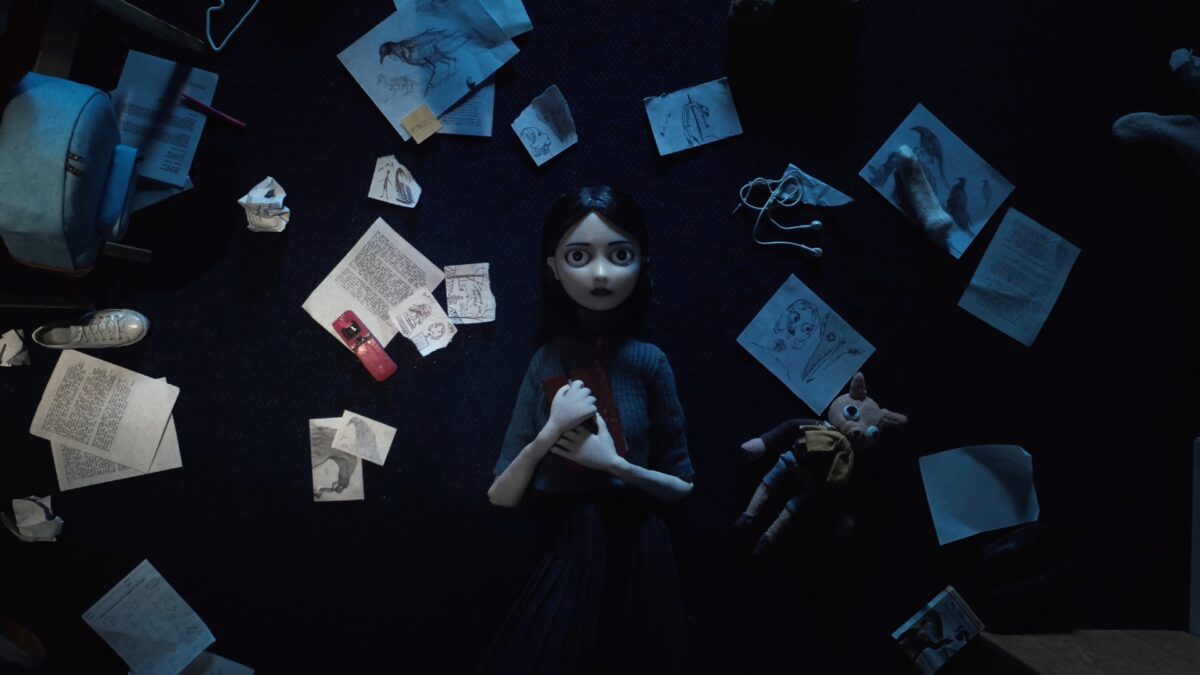
    My Chemical Romance have worked alongside Lauren Tsai to produce ‘Prelude To The End’, a gorgeous new animated short film, all based around their track ‘The End.’.

    ‘Prelude To The End’ follows a girl called Astrid, who appears in Lauren’s other work ‘The Dying World’, who attends the Paper Academy and is constantly being told there is something wrong with her.

    This results in a trip into the pitch-black unknown, and an encounter with a massive crow, all soundtracked by the opening song from MCR’s classic album ‘The Black Parade’.

    It is macabre, dark, mysterious and absolutely beautiful. A sensational piece of unique art that brings together two worlds as one.

    Have a watch for yourself below:


    My Chemical Romance released the 20th anniversary edition of ‘The Black Parade’ last week. Here is one of the newly unveiled accompaniments to it, ‘Mama’ performed live in Hoboken:

    The post WATCH: My Chemical Romance & Lauren Tsai’s Stopmotion Short Film ‘A Prelude To The End’ appeared first on Rock Sound.

  • Master Boot Record – Computer Metal Review

    It’s kind of wild that this is already the 10th anniversary of Victor Love’s Master Boot Record (MBR), with as many (if not more) full-length releases under the name. Across these 10 years, MBR has earned a cult following and carved out a rock-solid niche of floppy synth savagery, in tandem with his resplendent side-project Keygen Church, which preaches a biblical slice of digital blasphemy. Love sits atop this niche within the metal space, deservedly positioned as the premier provider of digitized metal. With this legacy in mind, Computer Metal posits a curious thesis statement. As Love tells it, Computer Metal aims to legitimize and encompass this titular genre, which various internet comments have colloquially referred to MBR in the past, and provide a codex, of sorts, of what this newly codified genre is and represents; simply put, in his words: “Humans do humans. Machines do machines.”

    For those uninitiated in The Code, MBR play instrumental, crazy-high-energy metal with a neoclassical edge in the vein of Dragonforce or Stratovarius, all with digitized instruments, warbling chiptunes and floppy synth drives. What stands out immediately and with blinding clarity about Computer Metal is the inclusion of real guitars. Now, guitars are no stranger to the MBR canon; they’ve long been a key component of live performances, and the previous album Hardwarez, which I adore, was the first studio album to begin using them.1 Even Keygen Church uses actual pianos in tandem with the floppy synths, and it rules. However, in Computer Metal the guitars are noticeably dominant, seizing sonic control over the great majority of the riffwork. As a fan it took some getting used to, but the important thing is whether or not the songwriting makes clever use of the contrasting instruments in a way that sells the premise of the album.

    Surprisingly, Computer Metal falters in this regard. Listen to “Voodoo2,” “Turbo Button,” “Dot Matrix” throw a dart at the tracklist and you’ll find the guitars and floppy synths lack ample space to shine next to or because of each other. Especially in “Voodoo2;” for all its heavy chugging, there’s so little distinction in character between the guitars and floppy synths to the point it becomes needlessly hard to differentiate them. However, the guitars aren’t the true crux of the issue with Computer Metal. Even if this was a traditional floppy-synth-only record, the songwriting on a basic level nevertheless feels less vivid, less vicious, resulting in slightly toothless songs across the board that are rarely able to truly excite. “Firmware” in particular is a miss for me, with weaker, repetitive riffwork bookended by misplaced metalcore chugs, as well as the forgettable “Socket 7” which keeps returning to this high-pitched, grating keyboard melody. Even “Boot Sector,” a “Stratosphere” style neoclassical shred song which, on paper, sounds like a slam fucking dunk in MBR’s hands, feels off. It never quite gets its feet off the ground and overstays its welcome just a touch. It is some genuinely good guitar work, though.

    Credit where it’s due, there is some solid material in Computer Metal. Honestly, there always is with Victor Love. He has a keen ear for some slick riffs and melodies, and Computer Metal is no exception. “Dot Matrix” tears out the gate with nice n’ meaty riffs, the melodies of “Command Prompt” ebb and flow into a thrilling climax, and “Plug and Play” is a game-soundtrack-type romp that’s fun and catchy. My personal favorite is “CRT,” which does make good use of the interplay between guitars and synths for a nice Khonsu-esque2 beat, and, together with the following “Ctrl + Alt + Del,” ends the album on a high note. But my point above still stands. Even the high points of Computer Metal aren’t terribly stimulating, inviting comparison to better works (Truthfully, “Dot Matrix” does feel a sliver like a weaker rehash of “CPU”) and rarely inspiring enthusiasm to start the album again once it’s finished.

    It’s strange that an album that purports to represent the legitimization of its appointed genre is a less effective example than the band’s own prior output. It’s also strange that the incorporation of live guitars feels like a misfire in Computer Metal when they worked so well in Hardwarez. It makes for an album that feels just a touch misaligned, like code that’s incorrectly phrased or what have you. But in the end, if you Praise The Code, then I surmise you’ll still find some fun within Computer Metal, I sure did despite my harping. 10 years and even more full-length albums in, not every new MBR release is going to blow your mind, and honestly that’s okay.


    Rating: Mixed
    Format Reviewed: mp3 | DR: 4
    Label: Metal Blade Records
    Websites: Official | Bandcamp | The Code works in mysterious ways
    Releases Worldwide: October 30th, 2026

    The post Master Boot Record – Computer Metal Review appeared first on Angry Metal Guy.

  • NÆSTVED METALFEST Announces 2027 Lineup With PRETTY MAIDS & DARK TRANQUILITY Headlining

    The Danish heavy metal legends will perform their only show on Zealand in 2027 – joined by seven outstanding acts from the international and Danish metal scenes.

    Næstved Metalfest is once again raising the bar, today announcing eight new bands for the festival, taking place on August 26–28, 2027. And there is particularly exciting news for fans of classic Danish heavy metal.

    Pretty Maids are coming to Næstved!

    With more than four decades of history, international tours, and timeless classics such as Future World, Red, Hot and Heavy, and Pandemonium, Pretty Maids are nothing short of an institution in Danish hard rock and heavy metal. For generations, the band has helped put Denmark firmly on the international metal map, and in August 2027, they will take the stage in Næstved for the very first time.

    The performance will also mark the band’s only appearance on Zealand in 2027, and they will arrive armed with a brand-new album scheduled for release next year.

    Pretty Maids comment: “We’re looking forward to playing Næstved Metalfest in 2027. It will be our first-ever performance in Næstved in the 45 years we’ve been around, and it’s our only show on Zealand in 2027. We can’t wait to rock out with a whole bunch of metalheads and heavy freaks, playing both old classics and brand-new material!!!”

    Næstved Metalfest 2027 is certainly not just about Pretty Maids. The festival is also announcing seven additional acts, showcasing the diversity and strength of next year’s lineup.

    Myrath (Tunisia). One of the most exciting and original acts on the international progressive metal scene. Myrath have created a musical universe entirely their own, where epic melodic metal meets oriental influences, Middle Eastern rhythms and symphonic arrangements. Their music is exotic, dramatic and captivating, while their live performances are renowned for delivering an experience far beyond the ordinary.

    An Abstract Illusion (Sweden). Swedish progressive extreme metal at its most ambitious. An Abstract Illusion effortlessly blends atmospheric death metal, progressive compositions, and dark, melancholic soundscapes. The band has earned recognition for its uncompromising musicianship and remarkable ability to combine sheer brutality with almost cinematic grandeur.

    Dead Head (Netherlands). Old-school thrash metal with death metal running through its veins! Since the late 1980s, Dutch veterans Dead Head have been delivering relentless, aggressive, and uncompromising extreme metal. No gimmicks, no nonsense – just crushing riffs, breakneck speed and an energy that hits like a sledgehammer. An absolute must for fans of raw, heavy and filthy thrash metal.

    F.K.Ü. (Sweden). Horror, humour and full-throttle thrash metal! Sweden’s F.K.Ü. – Freddy Krueger’s Ünderwear – have transformed their love of 1980s horror movies and classic crossover thrash into a gloriously insane universe of their own. Expect a wild explosion of lightning-fast riffs, bloody B-movie atmosphere and pure headbanging madness. This band is guaranteed to get the party started at Næstved Metalfest. And remember: when throwing the horns for F.K.Ü., you use FOUR fingers!

    Darkfall (Austria). Hailing from Austria, Darkfall delivers an explosive combination of melodic death metal and merciless thrash. Over the decades, the band has developed its own fierce and precise sound, blending crushing guitar riffs, melodic passages, and massive energy. Expect nothing less than maximum intensity and raw power.

    Terrorpy (Denmark). World-class technical death metal from Denmark. Terrorpy unleash a brutal and complex assault of razor-sharp riffs, outstanding technical musicianship and insane speed. A band proving that the Danish underground continues to deliver exceptional quality and some seriously impressive extreme metal.

    Trold (Denmark). There will also be plenty of room for celebration, singalongs and pure folk metal madness when Denmark’s Trold take the stage at Næstved Metalfest. With their energetic blend of melodic metal, folk music, fantasy-inspired storytelling and a healthy dose of humour, Trold have rapidly established themselves as one of the most popular acts on the Danish folk metal scene. Expect high spirits, massive singalongs and one hell of a party in front of the stage.

    Metalfest 2027 Lineup:

    Dark Tranquillity (SE)
    Samael (CH) – 40th Anniversary Show
    Burning Witches (CH)
    Hellripper (UK)
    Hatesphere (DK)
    Murder Squad (SE)
    Horned Almighty (DK)
    Sarcator (SE)
    Odd Palace (DK)

    With these latest additions, 17 of the festival’s 32 bands have now been announced, and the lineup already spans everything from classic hard rock and heavy metal to black metal, death metal, thrash, progressive metal and folk metal.

    Næstved Metalfest continues its ambition to establish itself as one of Denmark’s most important gathering points for heavy metal and hard rock. In 2027, the festival will once again present 32 bands across three stages over three days.

    Festivalgoers can also look forward to a large Metal Market, Biergarten, merchandise areas, and plenty of activities contributing to the festival’s unique atmosphere.

    …and there are still 15 more bands to be announced!

    The post NÆSTVED METALFEST Announces 2027 Lineup With PRETTY MAIDS & DARK TRANQUILITY Headlining appeared first on Sonic Perspectives.

  • “Wind of Change” Movie

    From the ashes of a divided post-war Germany, three friends form a band determined to conquer the world with a message of peace—through the power of rock ’n’ roll. To reach the global stage, they vow to sing only in English, daring to break into the American and British hard rock scene. Ridiculed at home for rejecting their own language and distrusted abroad for their nation’s dark past, they answer with a defiant motto: “Our fathers brought tanks— we bring guitars.” Their resolve is pushed to the limit when their friend Andrej is arrested in Soviet-controlled East Germany. With no other weapon but their music, the band risks everything to play across the Berlin Wall, facing their greatest enemy in the hope of proving that a new generation of Germans brings not war, but harmony.