Blog

  • POLYPHIA Releases Fifth Studio Record “Be Not Afraid” & Shares Music Video For “Let There Be Light”

    Genre-defying instrumental rock innovators Polyphia release their highly anticipated fifth full-length studio album Be Not Afraid with Rise Records yesterday, Friday, 23, and with it, the release, they put out a new music video directed by Caleb Young at Hand Crank Films for the standout track “Let There Be Light.”

    “‘Let There Be Light’ is one of those beloved tracks that stuck with us throughout the writing process for the entire record. Being one of the first ideas that kickstarted the style for this album, it has seen every part of this record as it was being written – we’ve added and taken away many parts of the song, and we still feel like we could have kept going on it,” shares guitarist Scott LePage.

    Earlier this year, Polyphia teased their new chapter with the release of their first single in over four years, “Can You Feel It” pushing boundaries in ways the band never has before with a hybrid of metal and dance music. Following, they released “Power In The Blood” and “With Eyes To See,” showcasing powerful visuals that lay the foundation for what listeners can expect of the new record.

    “We turned the record in a couple of months ago, but we love this record so much that we continued working on it all the way up to a week before its release. We were blessed to be able to work with the choir members who sang on Ye’s Sunday Service, which is a bucket list item for me as I listen to them all the time,” shares Tim Henson.

    Throughout 2024 and 2025, Polyphia worked together in various locations in Miami, Los Angeles and Dallas alongside co-producer RJ Pasin and guitar phenom Spiro Dussias. Guitarist Tim Henson took a different approach to composition, initially singing lines aloud and then translating them onto guitar, creating a process that encouraged the entire band to build on each other’s ideas in real time. More than anything, the sessions were defined by how much fun they were having creating music together. By the time the album was finished, they had reached a point where they could let go of any expectations about what would happen next and simply enjoy what they had created together.

    The collective thread together a three-dimensional offering of otherworldly metal, future-facing prog, and pulsating house, sealed tightly with carefully curated samples, inventive beat-craft, and the guitar eloquence that Tim and Scott remain renowned for. This time around, the instrumental push-and-pull invokes the polarity of the ultimate extremes: good and evil.

    When speaking on the themes of the record, Henson adds, “The album takes you through the extremes of two different worlds / moods: one being very uplifting and triumphant, the other being spine-chilling and terrifying. There are moments on the record that legitimately scare me when I listen to them.”

    Polyphia will be on tour this fall in the UK and Europe, before heading out on the North American leg of their World Tour in early 2027. RJ Pasin will still support every date worldwide. North American shows will feature Ladrones, with select dates including Intervals. Perturbator will join all UK and European dates, which remain unchanged for Nov/Dec 2026.

    Polyphia have always said what they need to say with their instruments. Since their emergence in 2010, the Texas-bred outfit—Tim Henson (guitar), Scott LePage (guitar), Clay Gober (bass), and Clay Aeschliman (drums)—have organically progressed across a series of acclaimed albums, including Muse (2014), Renaissance (2016), New Levels New Devils (2018), and Remember That You Will Die (2022). The latter bowed at #1 on the Billboard Top Hard Rock Albums Chart and cracked the Top 40 of the Billboard 200. Tallying hundreds of millions of streams, it established the band as rare outliers equally suited to collaborations with either pop singer Sophia Black, multiplatinum rapper SNOT, guitar hero Steve Vai, or iconic Deftones frontman Chino Moreno (on the same body of work).

    It’s no wonder Guitar World readers unanimously voted it “The Best Guitar Album of 2022.” Beyond headlining sold-out tours, the group incited the applause of Wired, Revolver, and Rolling Stone who described Tim as “reinventing the instrument for more than a decade.” However, the quartet make a particularly provocative and powerful sonic statement on their fifth full-length offering, Be Not Afraid. The collective thread together a three-dimensional tableau of otherworldly metal, future-facing prog, and pulsating house sealed tightly with carefully curated samples, inventive beat-craft, and the guitar eloquence that Tim and Scott remain renowned for. This time around, the instrumental push-and-pull invokes the polarity of the ultimate extremes: good and evil.

    Be Not Afraid is available to order here.

    The post POLYPHIA Releases Fifth Studio Record “Be Not Afraid” & Shares Music Video For “Let There Be Light” appeared first on Sonic Perspectives.
  • The overlooked Deep Purple album that Ian Gillan loved and Ritchie Blackmore hated

    Fireball is often treated as the awkward middle child of the Deep Purple Mark II catalogue, sandwiched between the twin classics In Rock and Machine Head. Yet it was with Fireball, written and recorded amid relentless touring, mounting commercial expectations, personal frustrations and a determination not to repeat themselves, that Deep Purple tested just how far they could push the boundaries of hard rock. Encompassing foundational heavy metal alongside elements of progressive, jazz, psychedelic and even country rock, it was the band’s first album to top the UK chart and became another of their million-sellers.

    Work on Fireball began in September 1970, barely three months after the release of In Rock. Martin Birch was again behind the recording desk, while production remained firmly in the band’s own hands. There was no stockpile of finished songs waiting to be recorded. Like its predecessor, Fireball would emerge gradually from the group’s collective writing sessions, taking shape over the following nine months at De Lane Lea and Olympic studios in London between an increasingly punishing schedule of British, European and American tour dates.

    In this regard, the band’s success had become both a blessing and a burden. “In Rock succeeded so magnificently that it’s kept us working from that day to this,” Jon Lord reflected in early 1973. “We’ve really not had a chance to take stock since then.”

    If In Rock had finally confirmed Deep Purple’s true musical identity, Fireball found them refusing to be confined by it. Lord recognised the change before the album had even been released.

    “This album is more mellow than Deep Purple In Rock,” he told the NME in August 1971. “When we recorded that, we were a bit angry at the world because nobody had taken any notice of us.”

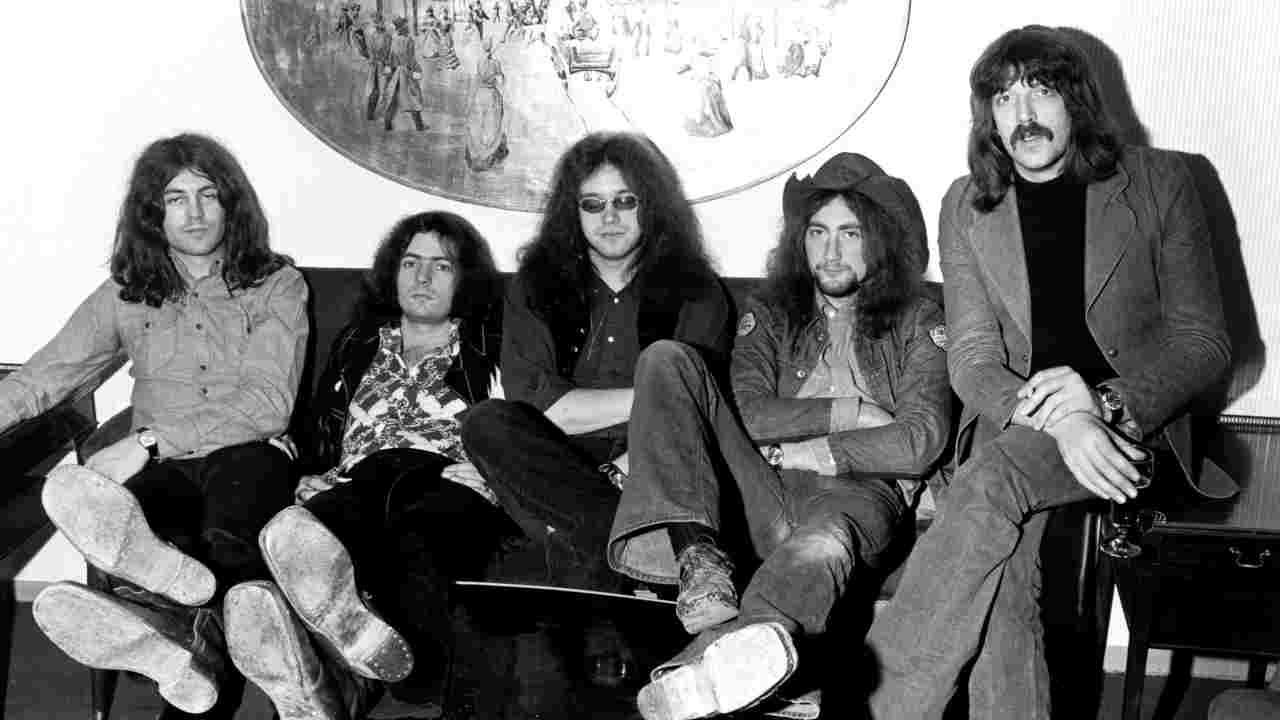
    Deep Purple posing for a photograph in the early 1970s

    Deep Purple Mk II: (from left) Ian Gillan, Ritchie Blackmore, Ian Paice, Roger Glover, Jon Lord (Image credit: Jorgen Angel/Redferns)

    Instead of repeating or refining the formula that had transformed their fortunes, Fireball placed greater emphasis on the musicians’ collective strengths while pushing the emerging hard rock genre into unfamiliar territory.

    The opening title track repurposes the momentum of Speed King (from In Rock), and takes its exhilarating sense of controlled chaos several steps further. Propelled by Ian Paice’s relentless – and revolutionary – double-bass drum pattern and Roger Glover’s elegantly striding bass line, it remains one of the most startling, high-energy performances of the Mark II era. Glover’s lunatic, fuzzed-up bass break, where you might reasonably expect a guitar solo, underlines the point that this is not a conventional guitar-hero album, so much as the work of five exceptional musicians discovering just how powerful they could be as a group.

    Released as a single in October 1971, Fireball’s title track reached No.15 in the UK chart, a populist triumph which also pushed the hard-rock musical vocabulary towards territory that later generations would come to recognise as speed metal. After seeing Deep Purple in Copenhagen in 1973, a nine-year-old Lars Ulrich bought the album the next morning. “I started with that and I didn’t look back,” the future Metallica drummer recalled.

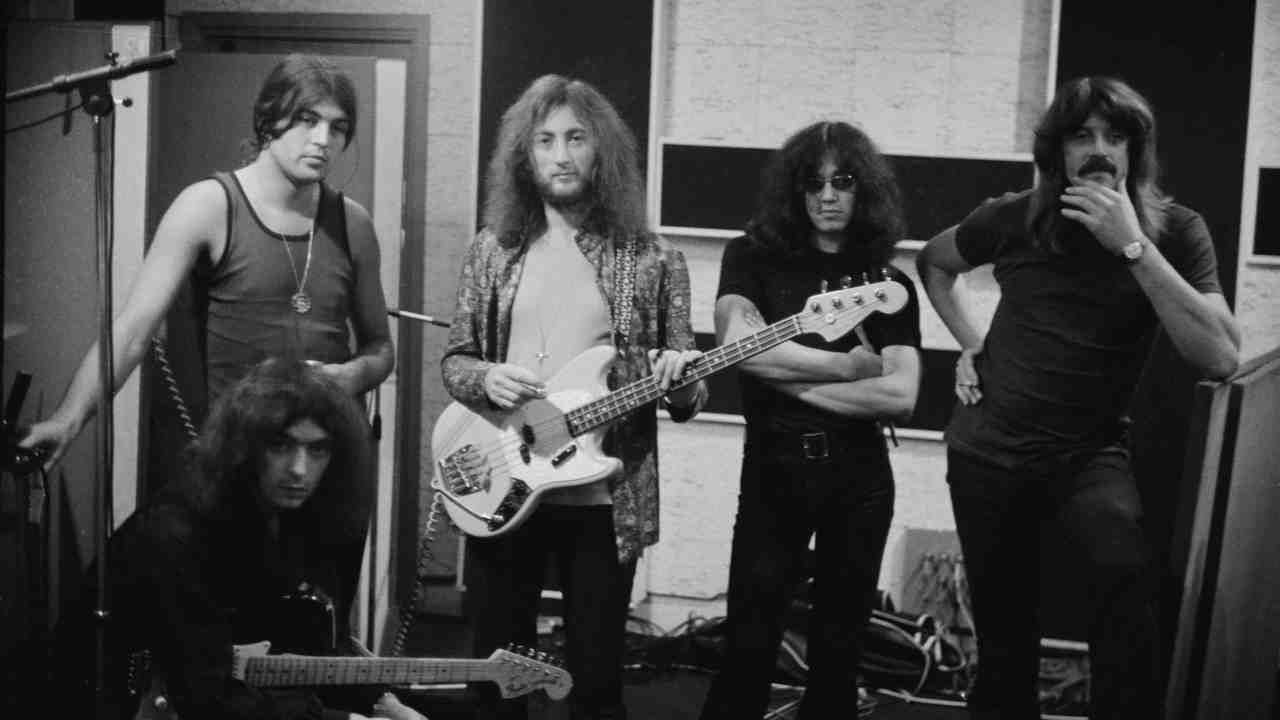
    Deep Purple posing for a photograph in the early 1970s

    Deep Purple in the studio in October 1970 (Image credit: Michael Putland/Getty Images)

    If the title track establishes a new high-energy benchmark, The Mule confirmed the band were working on a far broader canvas than straightforward hard rock. One of only three tracks on the original album’s second side, it unfolded like a musical odyssey, shifting between crashing, crushing riffs, eerie electronic effects and stretches of improvisation. The stereo mix accentuated its dreamlike quality, sounds darting between left and right channels in a way that owes more to the studio experimentation of progressive rock than to the direct attack of In Rock. Ian Gillan’s vocal is sparsely applied before giving way to an extended instrumental section, with Ritchie Blackmore supplying some wild, wang-bar soloing propelled by Glover’s muscular bass and Paice’s immense drumming. Little surprise that in concert it quickly evolved into a platform for Paice’s celebrated drum solo, a feature of the band’s live show for many years.

    The exploratory spirit continues through the album’s second side with Fools, which stretches beyond eight minutes. Beginning with a long, quietly haunting refrain, it blasts into a monster Sabbath-style riff before dissolving into something strange and atmospheric. Blackmore coaxes eerie, violin-like sounds from his guitar, Lord responds with waves of Hammond organ, and the music drifts into an unsettling soundscape. Gillan’s nihilistic lyric (“I am of the dead… You don’t know the pain I feel”) takes the whole piece well over the top, producing an air of apocalyptic melodrama.

    By contrast, No One Came closes the second side on a more exuberant note. Built around one of Glover’s most infectious bass lines and driven by Lord’s exuberant organ-playing, its free-associative lyric suggests a band still willing to experiment without taking itself too seriously, an appropriate conclusion to an album that consistently chooses curiosity over caution.

    Other songs which pull the album in a more traditional direction still incorporate a subtle twist in the tale. No No No combines a woozy, almost narcotic slide guitar with one of Gillan’s most contrary lyrics – a string of questions (“Do we love each other?” “Is it getting better?”), all answered with an emphatic “No. No. No.”

    Demon’s Eye is built around a deceptively simple blues-based riff, with a groove that showcases Glover’s agile bass lines. Lord sets off on an exuberant Hammond solo, and when it’s his turn Blackmore responds with a concise flurry of quicksilver blues licks, peppered towards the end with his signature whammy-bar flourishes. American audiences never heard this track on the original album, from which it was omitted to make room for the UK hit single Strange Kind Of Woman, creating two different versions of Fireball on opposite sides of the Atlantic.

    The biggest surprise, musically, was Anyone’s Daughter, recorded during the very first sessions for the album. A light-hearted country shuffle complete with honky-tonk piano and a laddish lyric – “I won’t get no more eggs and water/Now I’ve laid the farmer’s daughter” – it divided opinion at the time and still does.

    Lord dismissed the criticism with characteristic good humour. “It’s something different,” he said. “Why not?” Given the intensity of the rest of the material, the song indicates a band confident enough to puncture its own seriousness.

    Released several weeks before Fireball and included on all subsequent CD and other reissues of the album, Strange Kind Of Woman hit No. 8 in the UK and became one of Deep Purple’s defining hit singles. It demonstrated the band’s ability to produce commercial records without diluting their musical ambitions. The song’s working title was Prostitute and Gillan’s lyric, said to be about a woman that he knew at the time, has not held up so well: “Her name was Nancy/Her face was nothing fancy…”

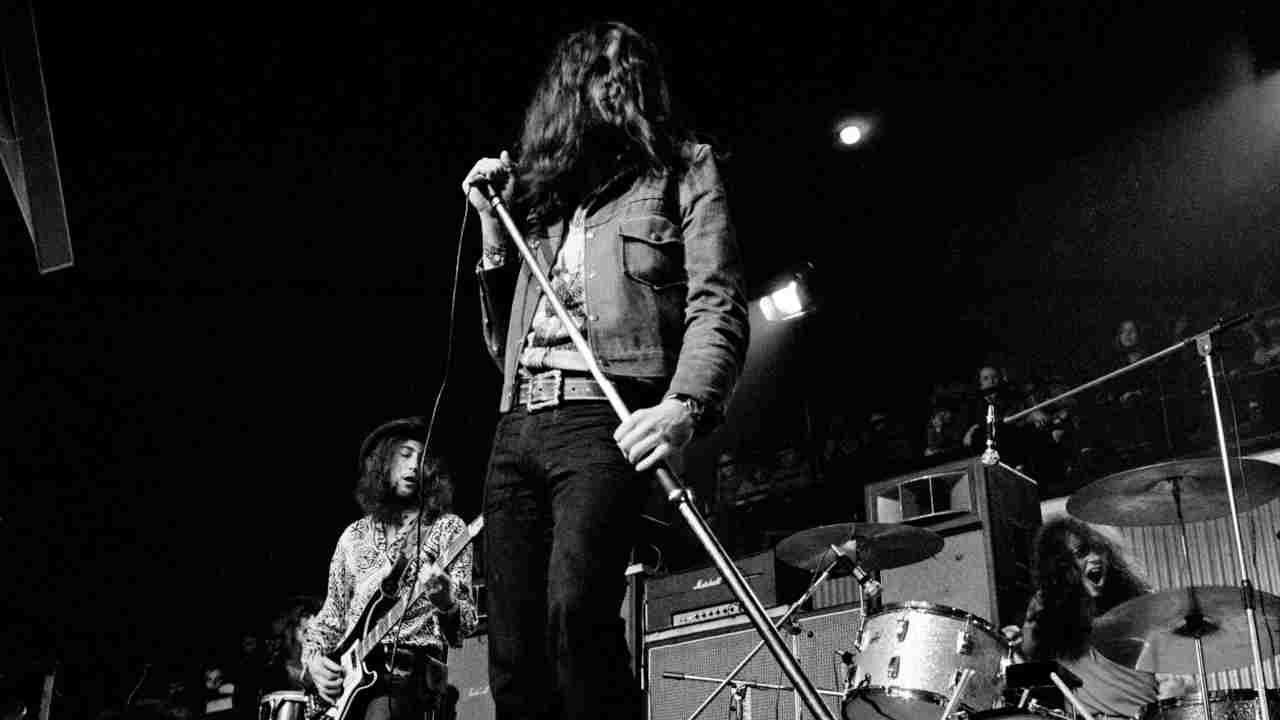
    Deep Purple performing onstage in the early 1970s

    Deep Purple onstage in late 1971 (Image credit: Jorgen Angel/Redferns)

    Critical opinion of the album was divided at the time. Melody Maker praised Fireball for possessing “all the consistency which was lacking in the brash rawness of In Rock, making for a much more satisfying album as a whole.” Disc enthused that the title track arrived in “blistering fashion… packing more into three minutes than most albums manage in 40.” The Rolling Stone reviewer, however, complained about passages of “aimless, extended studio jamming”, suggesting that In Rock had struck with greater force.

    The band had mixed feelings about the album. “The impetus is never as strong as it is when you’re starving,” Paice told NME in January 1973. “When you’ve got nothing, you work your balls off. Around the time of Fireball we got a little too comfortable. Everybody had got to the stage where they had nice cars and houses. There wasn’t so much impetus to work and it showed on the album.”

    Speaking in June 1973, Blackmore was regally dismissive of the way Fireball had been made. “It was a bit of a disaster,” he said. “It was thrown together in the studio. Managerial pressure – we had no time… ‘You’ve got to play here, here, there, then you’ve got to make an LP.’ I told them, ‘If you want an LP, you’ve got to give us time.’ But they wouldn’t. I just threw ideas to the group that I thought up on the spur of the moment.”

    Gillan came to a different conclusion, later describing Fireball as his favourite Deep Purple album of that period because it opened up “tremendous possibilities of expression”, allowing Deep Purple to bring “the funk, the blues, the soul, the jazz and some of the psychedelic thing from our early days” into their hard rock framework.

    Lord agreed. “The fact that it wanders slightly doesn’t worry me at all,” he said. “I love Fireball. I think it does good things. I think it goes to places that the band wasn’t expected to go to.”

    History has largely vindicated the positive perspective. Fireball confirmed that the success of In Rock was no fleeting breakthrough and established Deep Purple alongside Led Zeppelin and Black Sabbath as part of the triumvirate of British hard rock bands of the early 1970s. Fireball continues to cast a long shadow as a stepping stone in the development of the band. As Jon Lord later observed: “You couldn’t have Machine Head without Fireball.”

    Originally published in Classic Rock Presents: Deep Purple – buy it here

  • Deafheaven – Announce US Shows, Supporting Interpol

    Deafheaven have confirmed a string of US shows in March 2027, where they will be supporting American rock band Interpol.
    Read more…
  • Burning Witches – Part Ways With Vocalist

    Female heavy metal force Burning Witches and vocalist Laura Guldemond have parted ways. Laura was part of the ranks for the last 7 years. For the group’s upcoming shows, vocalist Jennifer Gruber of Fireborn will step in.
    Read more…
  • Cryptorium – Drop ‘Concrete Interment’ Song

    Swedish death metal band Cryptorium have revealed the final advance single, “Concrete Interment”, from their upcoming album Through The Bowels Of Ceaseless Dissonance before it drops next week on October 30.
    Read more…
  • Cursebinder – Psychohazard Review

    In the Rush documentary Beyond the Lighted Stage,1 Jack Black describes musicians’ wells of creative juices as ‘rocket sauce.’ He notes that some musicians and bands only muster enough for one BIG album, while others seem to run on an endless supply.2 This description stuck with me through the years, and remains my go-to reference when someone gilds whatever they touch. Kraków vocalist Maciej Proficz is one such individual, and both his active projects Dormant Ordeal and Cursebinder run on vast reserves of rocket sauce while offering multifaceted interpretations of their respective genres. Dormant Ordeal’s Tooth and Nail landed at the #3 spot in last year’s Aggregated List; third album The Grand Scheme of Things received a glowing review from Dr. Wvrm and appeared on several 2021 end-of-year lists despite a late December release, and Cursebinder’s debut Drifting found itself atop Carcharodon’s Top Ten(ish) of 2023. Such accolades can’t guarantee future triumphs, but they can send expectations into the stratosphere—does Cursebinder’s sophomore album Psychohazard harness the rocket sauce to send us there?

    Though Cursebinder operates under the black metal umbrella, no single genre encapsulates Psychohazard’s breadth. In his write-up of Drifting, Carcharodon cites doom, death, and post-metal as descriptors for Cursebinder’s chameleonic character. Instead of using camouflage in a way that makes Psychohazard difficult to absorb or engage with, though, this Polish quartet employs it to disguise barriers between genres and inculcate an atmosphere both familiar and unique. Compared to Drifting, Psychohazard submits more direct applications of riffs (“Saturnine Rage,” “Prayers for the Living, Flowers for the Dead”) and synths (“Limits”), and where Drifting’s genre-hopping evinced distinct moods with thoughtful transitions, Psychohazard blurs lines together with subtler craft.3 Psychohazard’s first four tracks flow together in a sublime strand that ricochets between textured aggression (“Death Season”) and gentler grooves (“The Astronaut”), culminating in a rabid fusion that seethes with angst and catharsis (“Saturnine Rage”). Honestly, this track would make a resounding closer, and to use it at Psychohazard’s midpoint illustrates the puissance of Cursebinder’s surrounding material.

    Merging these sounds into a unified platter requires keen grace, and to then layer in the emotional depth that Cursebinder achieves is stunning. Cursebinder’s promo materials describe Psychohazard’s theme as a study in the collision of life’s ‘rat race’ and humanity’s inherent desire for love and acceptance. As the demands of my own life continue to creep,4 this idea strikes a chord that thrums with self-renewing relevance every day. “Death Season” bustles with vitriol and vigor as Proficz’s caustic vocals impel the track in a blinding tempest, while “The Astronaut” and “Under the Skin” float upon currents that relax and unwind one moment before boiling over into frenzied bursts the next. But even this is an oversimplification, as each track proves vibrant and diverse, refusing to condense into single emotions. Broadly, the back half of Psychohazard feels lighter than the front, putting more emphasis on dimensions that evoke post-metal’s vagrant dreaminess without losing the threads of riffs or motifs.

    Considering Cursebinder’s sprawling ambitions, Psychohazard sounds focused and urgent throughout its runtime. The post-addled haze never drifts too far, the scorching fury never burns too hot, and the tender flashes never linger long enough to caramelize into mawkishness. I credit this purposefulness to the efficient instrumentation that Cursebinder unfurls with nary a wasted flourish. Guitarist Hubert Fudała and bassist Łukasz Sojka wend together in climactic swells and releases that expertly pace the album’s fifty-three minutes,5 and Marek Koszycki drums with nuanced timekeeping that flits between punk-powered d-beats (“Saturnine Rage”), insistent blast beats (“Made to Be Sold”), and delicate rhythms (“The Astronaut”). Proficz’s synth presence penetrates Psychohazard’s compositions, and in totality Cursebinder rewards repeat listens as each musician’s contributions impress individually while coalescing into an assembly greater than its sum.

    Although post-related tags usually thwart my interest, something about Cursebinder’s spell called to me from beyond the ether. Psychohazard proves textures and layers can inculcate depth rather than acting as a standalone attraction, and going forward I hope to point to Cursebinder as my entry point into appreciating a wider expanse of metal. Cursebinder’s faults are few, and even if the record is slightly front-loaded or a few songs linger a tad overlong, these nitpicks pale in light of Psychohazard’s utter glory. If you seek an album that synthesizes the aura of post-metal with more conventional metal structures, I doubt you’ll find a better album this year. Barring that, you should listen to Cursebinder anyway, because missing it could be a Psychohazard to your health.


    Rating: Great!
    DR: 6 | Format Reviewed: 320 kbps mp3
    Label: Avantgarde Music
    Websites: Bandcamp6 | Facebook | Instagram
    Releases Worldwide: October 23rd, 2026

    The post Cursebinder – Psychohazard Review appeared first on Angry Metal Guy.

  • NINE SKIES Unveils Acoustic Version Of “The Explorer” From Upcoming Album “A Whisper Called Home (Acoustic Sessions)”

    French progressive rock band Nine Skies unveils an acoustic version of “The Explorer”, accompanied by a new video, offering the first taste of their forthcoming release, A Whisper Called Home (Acoustic Sessions), due out on 11 December 2026.

    Nine Skies return with a fresh perspective on “The Explorer”, originally featured on their acclaimed studio album The Lightmaker. Reimagined in an acoustic arrangement, the track takes on a new dimension, highlighting a different side of the band’s music.

    The accompanying video was created by Stefan Altzar of PreHistoric Animals, bringing a visual dimension to this intimate reworking and offering fans the first glimpse of A Whisper Called Home (Acoustic Sessions).

    Riccardo Romano says: “Nine Skies are creators of emotional intensity through melody—the focal point and cornerstone of every choice they make. It is a musical project that sets no boundaries for itself, save for those of an aesthetic nature, and refuses to be confined to any single genre or cliché. While this was already clear to me in their rock-oriented work, the acoustic format has only strengthened this conviction. Sometimes, stripping a song down actually enriches it with new meaning, heightening its inherent alchemy and mystery.

    The natural timbres of acoustic instruments have imbued these compositions with an unexpected sweetness, intimacy, and truth. I consider this an essential album for understanding the band’s universe; it is a precious work—akin to seeing something you have always known as if for the very first time. As a singer, I discover unexpected spaces and new room to breathe. These are the same songs, yet they feel entirely different. Rarely has music I was already familiar with gained so much from a new arrangement. This album deserved to see the light of day.”

    Originally scheduled for release on 20 November, A Whisper Called Home (Acoustic Sessions) will now arrive on 11 December 2026. The physical CD edition will be presented in a 2-panel digipak with a 4-page booklet.

    The release will also be available via the band’s Bandcamp page.

    Pre-orders are now open via the FTF-Music shop here.

    Nine Skies are a French progressive rock band known for their ambitious compositions, atmospheric soundscapes and emotionally driven songwriting. Across their discography, the band have explored a broad musical landscape, combining intricate arrangements with a strong sense of melody and narrative.

    Nine Skies are:

    Riccardo Romano / Vocals
    Alexandre Lamia / Guitars, piano, and arrangements
    David Darnaud / Guitars
    Léo Lebrun / Piano and keyboards
    Anne-Claire Rallo / Keyboards
    Alexis Bietti / Bass
    Johnny Marter / Drum

    The post NINE SKIES Unveils Acoustic Version Of “The Explorer” From Upcoming Album “A Whisper Called Home (Acoustic Sessions)” appeared first on Sonic Perspectives.
  • Best 2026 Indie Debuts, Vol. III: Mary in the Junkyard’s strange, spellbinding world

    London trio mary in the junkyard turn folk tales, restless guitar rock and classical strings into ole Model Hermit —a…
  • Vote for Rock’s Spookiest Album Cover: Only the Final Four Remain

    Iron Maiden faces off against Black Sabbath, Dio and Ozzy Osbourne Continue reading…