Blog
-
Fleshwater – To Tour Europe, Supporting Basement
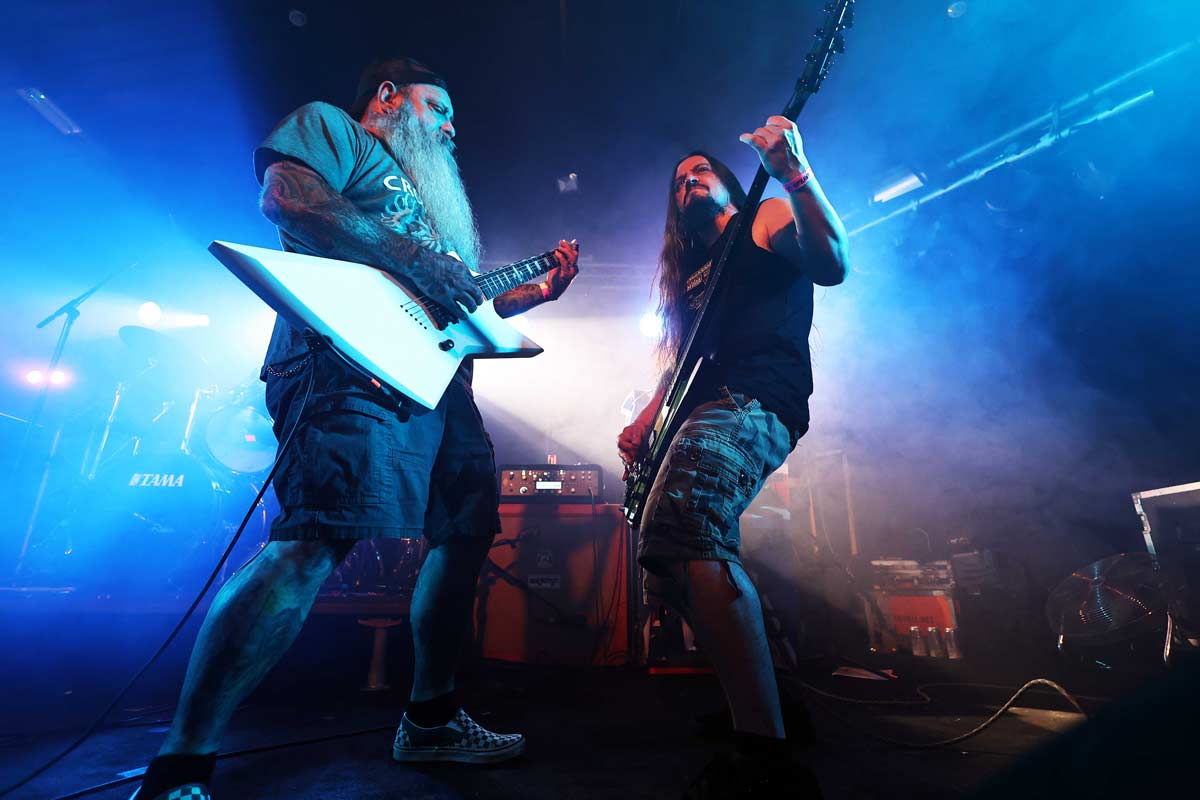
Massachusetts-based alternative metal collective, Fleshwater, will embark on tour over Europe next year where they will support English group Basement.
Read more⊠-
AN NCS INTERVIEW: TODOMAL
(Earlier this year our Comrade Aleks interviewed Javier FernĂĄndez Milla, one of the two members of the Spaanish doom metal band TodoMal. Today we present an English translation of that very good discussion. TodoMal’s newest album Graveyards of Joy was released on July 3rd by Season of Mist, and we reviewed it, along with their […]
The post AN NCS INTERVIEW: TODOMAL appeared first on NO CLEAN SINGING.
-
Novae Militiae – Deliver ‘Psalms Of Nameless Fire’ Single
French black metallers Novae Militiae have shared a new song called “Psalms Of Nameless Fire”. The latter will appear on the group’s next full-length Apocryphon Of The Unborn Light, due on September 18th, 2026.
Read more⊠-
Why Tattoo You Was Built From the Rolling Stones’ Leftovers
'Tattoo You' hit No. 1 and stayed there for nine weeks. That record still stands as the longest chart run the Rolling Stones have ever had. Continue reading… -
Sebastian Bach Adds More Than a Dozen Stops to 2026-27 Tour
Former Skid Row frontman's Party Never Ends! solo dates are mixed in with upcoming shows fronting Twisted Sister. Continue reading… -
Monday Morning Video â Otis Redding
Few performers could captivate a crowd like Otis Redding. It’s been a minute since we paid tribute to one of the masters of the craft, so this week’s Monday Morning Video goes back to a legendary performance from the 1967 Monterey Pop Festival, captured just months before Redding died in a plane crash. If nothing […] -
Basement Announce 2027 UK/EU Headline Tour
Basement have announced that they will be heading back out on the road in early 2027, with some of their biggest headline shows to date.

Fresh off the back of a sensational performance at Outbreak Fest x All Points East, and the release of their latest album ‘WIRED’, the band are already looking forwards to a series of dates that will be taking place in February next year.
They’ll be joined on these dates by two wonderful bands, Fleshwater and BĂ©ton ArmĂ©.
So that means you will be getting some of this:
And then loads of this:
Before a whole tonne of this:
Here are the dates:
02 – AMSTERDAM Melkweg MAX
04 – BRUSSELS AB Ballroom
05 – MUNICH Muffathalle
07 – BERLIN Astra Kulturhaus
09 – HAMBURG Grosse Freiheit
10 – LEIPZIG TĂ€ubchenthal
11 -COLOGNE Live Music Hall
13 -BIRMINGHAM O2 Institute
14 – BRISTOL The Prospect Building
16 – GLASGOW Barrowland Ballroom
17 -NORWICH UEA
18 -LONDON Roundhouse
19 – MANCHESTER Academy
21 – BELFAST The Limelight
22 – DUBLIN National Stadium
S The post Basement Announce 2027 UK/EU Headline Tour appeared first on Rock Sound.
-
Neil Young & The Chrome Hearts Share New Version Of âCasting Me Away From You,â A Song He Wrote Over 60 Years Ago
In the early ’60s, back when he actually was young, Neil Young was a member of a Winnepeg band called the Squires. Next month, Young and his new band the Chrome Hearts will release their new album Second Song; we have already posted the title track. As previously reported, the new LP includes a few new versions of songs that Young wrote long, long ago. Today, we get to hear the new take on “Casting Me Away From You,” which Young wrote more than 60 years ago.
The post Neil Young & The Chrome Hearts Share New Version Of “Casting Me Away From You,” A Song He Wrote Over 60 Years Ago appeared first on Stereogum.
-
The Motown-Inspired ‘Rubber Soul’ Song That Took Only Two Takes
"It's got a James Jamerson feel," Paul McCartney said of it. Continue reading… -
When the Party Ended: How Rock Stars Built Their Careers Back From Addiction
Rock music has a long history of celebrating a lifestyle of excess, and fans love nothing more than recounting tales of drink- and drug-fuelled hijinks of their favorite musicians.
Throwing a TV out of a hotel window is fun to discuss, but the impact of addiction underpinning many of these stories doesnât come across meaningfully, and itâs only when reflecting on the missed opportunities and the lives of idols cut short that the dark side comes into frame.
There are some stars who managed to get through the party-focused phase of their lives and embrace sobriety, writing new chapters in their careers without being brought low by the perils of addiction, and telling their stories is just as important.
Ozzy Osbourne

The Prince of Darkness had well-documented addiction issues throughout his life, and regularly visited rehab clinics to stymie his reliance on alcohol and illegal substances, beginning in 1984.
By the time of his death, he had been sober for over a decade, and his son Jack has been on a journey of sobriety for even longer.
His wife, Sharon, was instrumental in many of the interventions over his life and also helped reignite his career in the 2000s with their reality show, introducing a new audience to rockâs original bad boy.
Attending private alcohol rehab centers UK residents can access, as well as equivalent facilities in the US, gave Ozzy an eventual clean break from the alcohol that was his particular peccadillo.
He performed live just days before his death, and itâs impossible to imagine that the Ozzy of the 70s and 80s would still have been capable of doing that if addiction treatment wasnât available.
Eric Clapton

Another Brit with a drug habit, Clapton was addicted to heroin, starting in the early 70s, and this caused serious disruption to his career at the time, including on-stage collapses and canceled tours.
He stopped using this substance over the course of the decade, but moved on to alcohol as his main substance of abuse.
By the 80s, Clapton reached a low point both personally and professionally, prompting him to eliminate all forms of recreational drugs, with inpatient rehab again being instrumental in this.
As a result, we got his career resurgence in the 90s, with his Unplugged album achieving critical and commercial success he hadnât seen in years.
Slash
Guns Nâ Roses guitarist Slash lived up to expectations in terms of living the rock star lifestyle, with addictive issues stemming from alcohol and heroin, along with a cocktail of other drugs taken during the peak of his bandâs early success.
This took a near-fatal toll on his body, culminating in a 2001 diagnosis of cardiomyopathy, which medical professionals felt gave him less than a year to live.
Miraculously, Slash pushed forward with his recovery from this point and has been sober for 20 years, in addition to quitting smoking.
His story, like that of his bandmates and peers, shows rock star careers can be rebuilt and kept running for decades, even if addiction once looked likely to end the party early.
Trent Reznor

Reznor has spoken about how drinking gradually progressed into harder drug use as he struggled with fame and his own sense of belonging. His addiction culminated in an accidental heroin overdose in 2000.
After getting sober, he returned with Nine Inch Nailsâ With Teeth in 2005 following a six-year gap between studio albums.
That comeback eventually led into an especially productive second phase of his career, including his work with Atticus Ross on film scores.
Joe Walsh
Walsh gives you another particularly clean career-rebuilding story. By the early 1990s, his dependence on alcohol and drugs had reached the point where he doubted that he could perform or write music sober.
Eagles members Glenn Frey and Don Henley encouraged him to enter recovery as the band was preparing to reunite. Walsh has said he became abstinent in 1994.
He then had to effectively relearn how to perform and create without alcohol. His recovery coincided with the Eagles’ enormously successful reunion era, beginning with Hell Freezes Over.
Walsh later described gradually rediscovering his ability to write and play comfortably while sober.
Duff McKagan

You already have Slash, so Duff could either strengthen the Guns N’ Roses angle or feel slightly repetitive depending on how many sections you want.
McKagan’s alcohol use eventually caused acute pancreatitis in 1994, and doctors warned him that his condition was life-threatening. He subsequently became sober and had to learn how to perform without substances.
His post-addiction career has been unusually broad.
He played in Neurotic Outsiders and Velvet Revolver, developed solo projects, wrote books, and eventually returned to Guns N’ Roses for the band’s major reunion era. In a 2023 interview, he described his current life and career as a “second act.”
James Hetfield

Hetfield would also be a strong choice, although his story is less neat because recovery has involved more than one treatment period.
He entered rehab in 2001 while Metallica was going through one of the most turbulent periods in its history.
His treatment and return became a major part of the period documented in Metallica: Some Kind of Monster. He later described rehab as fundamentally changing his priorities and his approach to life.
Hetfield returned to treatment in 2019. In a 2023 Metallica interview, he described that period as another “rebirth” and said he needed to stop band activities temporarily to deal with his personal health.
Metallica subsequently released 72 Seasons and continued touring at stadium level.
Nikki Sixx
Sixx is almost tailor-made for the subject. His heroin addiction became severe enough that he suffered a near-fatal overdose in 1987. Recovery subsequently became a major part of his identity and later work.
His career continued with Mötley CrĂŒe, but the more interesting second-act angle is what he did with his experience afterward.
The Heroin Diaries became a bestseller; he formed Sixx: A.M., and he became involved in addiction-awareness initiatives.
Sixx has said that after becoming sober, his creativity and personal relationships improved dramatically.
Alice Cooper
Alice Cooper would work particularly well because his comeback was substantial.
His alcoholism became so serious that he was hospitalized, and he has said he finally stopped drinking in 1983. He described his earlier drinking as something he had come to depend on simply to function.
That period was followed by a major career revival later in the decade.
Cooper returned to touring, found a new generation of listeners, and ultimately developed one of rock’s longest-running sober careers.
Elton John

Elton isn’t exclusively a “rock star” in the hard-rock sense, but his story may actually be one of the strongest available.
He entered treatment for alcohol and drug addiction in 1990 and has repeatedly described that point as the beginning of a completely different life.
His post-sobriety career included The Lion King, “Candle in the Wind 1997,” hugely successful tours, continued albums, and decades of AIDS activism.
He also became someone other musicians, including Eminem, turned to for advice about recovery.
Summary
The most striking part of these stories is not that addiction became part of rock history, but that it did not have to be the final chapter.
For musicians such as Ozzy Osbourne, Eric Clapton, Slash, Trent Reznor, and others, sobriety created the chance to return to the studio, get back on stage, rebuild damaged relationships, and keep making music long after their most chaotic years.
Rock culture may have spent decades turning excess into mythology, but the careers that survived tell a more important story.
Getting help did not make these musicians less compelling. In many cases, it gave them the time and stability needed to produce some of their most significant work.