Washington, D.C. metalcore pioneers DARKEST HOUR release their new single and video, Warrior, today. This is the second single from the band’s forthcoming album, Suffer Divine, out on October 30. Guitarist Mike Schleibaum comments, “This song showcases our melodic death metal tendencies with a bit of a modern twist. It draws you deep into a […]
Australia has waited fifteen years for this one. This February, Tokyo’s Survive Said The Prophet finally make their Australian debut, bringing their explosive live show to Melbourne, Sydney and Brisbane for three intimate headline shows. Known throughout Japan simply as Sabapuro, Survive Said The Prophet have spent more than a decade turning stages into their […]
Arkansas-based sludge doom metal formation Rwake will release a special live album, Built From Stardust, on November 13th via Relapse Records. The 6-piece outing was recorded live at The Rev Room in Little Rock, AR on March 15, 2026. Recorded, mixed and mastered by Austin Sublett and Rwake. Read more…
SHOGUN MOJO – an exciting new collaboration between legendary Kiss guitarist Tommy Thayer and acclaimed singer-songwriter Dan Reed of Dan Reed Network fame – is thrilled to share the new single and official video, Gonna Raise Hell, taken from the self-titled debut album, out on October 30, 2026, via Frontiers Music Srl. Dan Reed commented: […]
Black Midi formed in London in 2017 after Geordie Greep, Cameron Picton, Morgan Simpson, and Matt Kwasniewski-Kelvin met while attending the BRIT School. The group developed its reputation through volatile live performances at venues including the Windmill in Brixton, where their combination of art rock, post-punk, noise, jazz, and tightly controlled rhythmic chaos quickly attracted attention. Their first official single, “bmbmbm,” arrived in 2018 through Speedy Wunderground. The band’s debut studio album, Schlagenheim, followed in 2019 and captured the aggressive, unpredictable character of their early performances through songs such as “953,” “Speedway,” “Near DT, MI,” “Of Schlagenheim,” and “Ducter.” Black
There is something special about an album like this being released in the fall. There’s a chill in the air and many of us start to spend more time at home after a busy summer, looking inwards and really feeling our feelings (for better or for worse). Well, enter Me and the Bells from Moonraker, there to remind us about what it’s like to live in this world. For fans of the Lawrence Arms, this one is for you. A west coast, so-cal dipped version of the melodic punk that I know and love. If you enjoy the call and response vocal style, you will definitely want to check this out.
The opening track “Wires” starts with more isolated vocals and overall really sets the tone for the record. Melodic, but quickly leading into the high energy punk that’s throughout the majority of the songs. “The Audacity” really stands out for me with the high energy sound and group vocals; honestly, it makes me wish I was at their show seeing it live. But it’s not without a slower acoustic number to break up the fast paced punk songs, which I always more than appreciated. “The Old Art School Try” slows things down and grows more beautiful as the song goes on with some piano strings making an appearance.
The lyrical songwriting really shines on this album and doesn’t go unnoticed. There are many instances of eloquent lines throughout along with brutal honesty about what it’s like to be human. In “Don’t Forget You’re Here Forever” they sing “cause real life looks more like crying in your kitchen just dying for someone to listen”, which really hits home with what the reality can be for so many of us. The single “Umbrage” is hard hitting and again filled with very clever wordplay – honourable mention for the pun from the first verse, “take your demons for a walk outside, lord knows they need the exorcise”.
You can pre-save the album and stream it here. Or better yet, why not order your physical copy through Punkerton Records?! In the meantime, check out the lyric video for the single “Umbrage” below.
Brian May says that his reported comment about Queen ceasing touring was “a misinterpretation”.
During an interview with The Sunday Times, published on October 4, May was quoted as saying that the legendary British band would not tour again in the wake of their acclaimed Rhapsody tour with vocalist Adam Lambert, which ran from 2019 to 2024.
“I made a decision 18 months ago that I didn’t want to tour again,” the guitarist was reported saying to writer Will Hodgkinson, theUK newspaper’s Chief Rock and Pop Critic. “A close family friend died when we were in the States, so I said to my tour manager, I’ll just nip home for a few days and come back. She looked me in the eyes and said, ‘You know you can’t do that.’ I love to play, I love to travel, but the trade-off is sacrificing your freedom. I have a wife [actress Anita Dobson], grandchildren and a lot of astrophysics I want to do, so I’m thinking maybe 50 years is enough.”
May’s comments were picked up by media outlets worldwide, including by Classic Rock, but the guitarist now says that this wasn’t what he actually meant.
“This is a misinterpretation of what I actually said,” he posted on Instagram. “I have actually never said Queen won’t ever tour again. I could never say never. I simply made a personal decision last year to take a break from touring.
“I’ve been making lots of music, and Roger [Taylor] and I are constantly working together on Queen projects behind the scenes. I don’t know what the future holds. I’m ever open to new adventures!”
Last month, May revealed that he and Taylor are still weighing up the pros and cons of developing an ABBA Voyage-style immersive avatar show for Queen.
In an interview with Absolute Radio, the guitarist was asked if he might consider working on a similar virtual concert residency for Queen.
“Yes, we looked at it very seriously,”he replied, “Particularly after I saw the [Las Vegas] Sphere and what the Eagles did with the Sphere, which I thought was amazing. And I spent a lot of time planning out what I thought could be a Queen show.
“I’ve kind of backed off now because you can’t do it without massive use of A.I., with all the consequences of that,” he continued. “Now, in some ways, I don’t wanna be stealing the work of other people. If you’re stealing your own work, I’m not quite sure where I stand on it, ’cause you would be stealing from the Queen oeuvre, you know, which maybe is okay because that’s ours. But at the same time, you’re adding to the stresses that A.I. is putting on the world.
“So, I don’t know,” May admitted. “I’m not so keen as I was. I think it would be great to have a permanent place where people could go and feel like they’re seeing us play live in our peak, maybe all over the world, maybe at all points in time. The doors are open, but I don’t know if we’re gonna walk through.”
DEICIDE are returning to Australia for the first time since 2006. One of the biggest and most influential bands in death metal history will bring their uncompromising brand of extreme metal to Adelaide, Brisbane, Canberra, Melbourne and Sydney in January and February 2027. Formed in Tampa, Florida in 1987 by Glen Benton and Steve Asheim, […]
For years, the iPod Shuffle looked like a perfect example of technology that had finished its job and disappeared. Phones swallowed the MP3 player, streaming swallowed the downloaded music library, and touchscreens replaced the little physical buttons people once used without even looking.
Then something strange happened. People started buying Shuffles again.
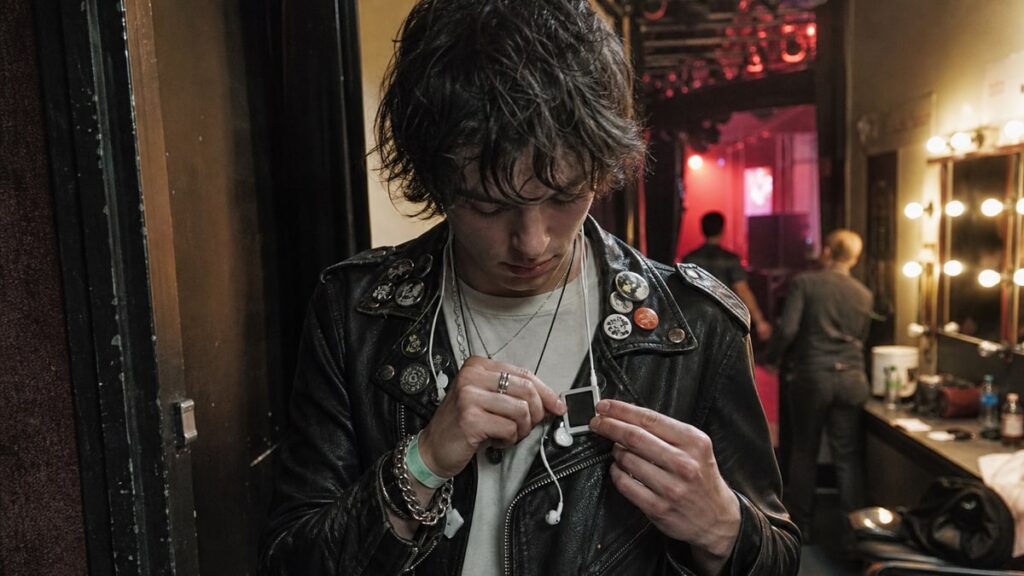
Not only collectors, either. Younger listeners who never owned an iPod during its original run have started picking them up second hand, clipping them to jackets, using them at the gym and filling them with deliberately small music libraries. In August 2026, ITV reported that refurbished-tech marketplace Back Market had recorded a 453% year-on-year increase in iPod Shuffle sales. eBay also reported a 31% rise in UK searches for classic iPods between January 2025 and January 2026.
A device introduced in 2005, with no touchscreen, no streaming apps and no access to an endless catalogue of songs, suddenly makes sense to a generation surrounded by all three.
A Tiny Music Player Has Become an Escape From the Phone
Second-hand audio has developed into a surprisingly active part of music culture, covering everything from preowned wireless headphones to old MP3 players and discontinued iPods. The Shuffle occupies an especially unusual place in that market because its limitations are now part of the attraction.
Streaming music on a phone is wonderfully convenient. It also means opening the same device that holds Instagram, TikTok, messages, email, news alerts and every other excuse not to listen to the song that is already playing.
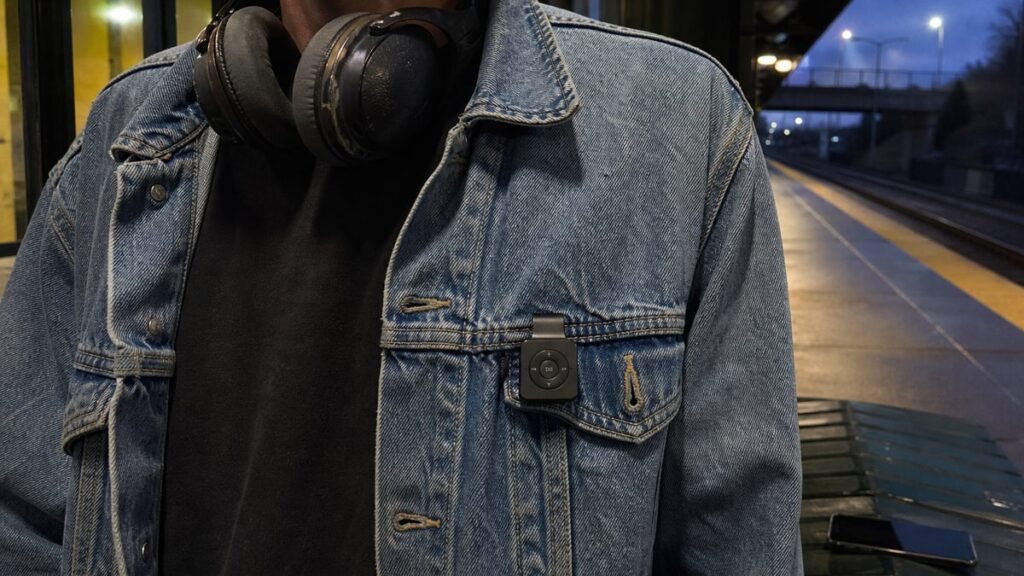
The second-generation iPod Shuffle featured an integrated clip inspired by wearable accessories, making it easy to attach to clothing without a case.
An iPod Shuffle removes all of that.
You press play and music comes out. There is no album artwork to stare at, no notification arriving halfway through a chorus and no recommendation carousel waiting beneath the track. On most Shuffle models, there is not even a screen.
Twenty years ago, that sounded like a compromise.
In 2026, it can feel almost luxurious.
The Numbers Suggest That the Comeback Is Real
The renewed interest is no longer limited to a few nostalgic TikTok videos.
ITV News reported that Back Market had seen iPod Shuffle unit sales rise 453% year on year. The same report cited eBay figures showing growing searches for several older iPod models.
Earlier in the year, Axios also reported increased demand for discontinued iPods, connecting the trend with younger buyers looking for both nostalgia and a break from smartphones.
The Shuffle is particularly suited to the moment. It is tiny, recognizable and cheap enough in many second-hand listings to be treated as an experiment rather than a major electronics purchase. Its brightly colored later models also happen to look far more interesting clipped to a shirt or bag than another anonymous black rectangle.
Some buyers are not even beginning with the music. The clip itself has turned old Shuffles into fashion accessories, with people attaching them to clothing and even wearing them in their hair.
A product originally designed around portability has accidentally become wearable vintage tech.
The iPod Shuffle Was Built Around a Very Different Idea of Music
Apple introduced the first iPod Shuffle in January 2005. Its original pitch now reads like a message from another technological universe.
There was no promise of having every song ever recorded available instantly. Apple instead promoted the idea of loading a limited collection from iTunes and letting the player rearrange it for you.
The name was literal.
You put music on the device, moved a switch to shuffle mode and surrendered some control over what played next.
Modern streaming services technically offer the same button, but the experience is completely different. Spotify, Apple Music and YouTube Music surround playback with search bars, playlists, lyrics and recommendations shaped by systems such as Spotify’s recommendation algorithm.
The Shuffle gives you whatever you remembered to put on it.
That restriction changes listening more than it might appear.
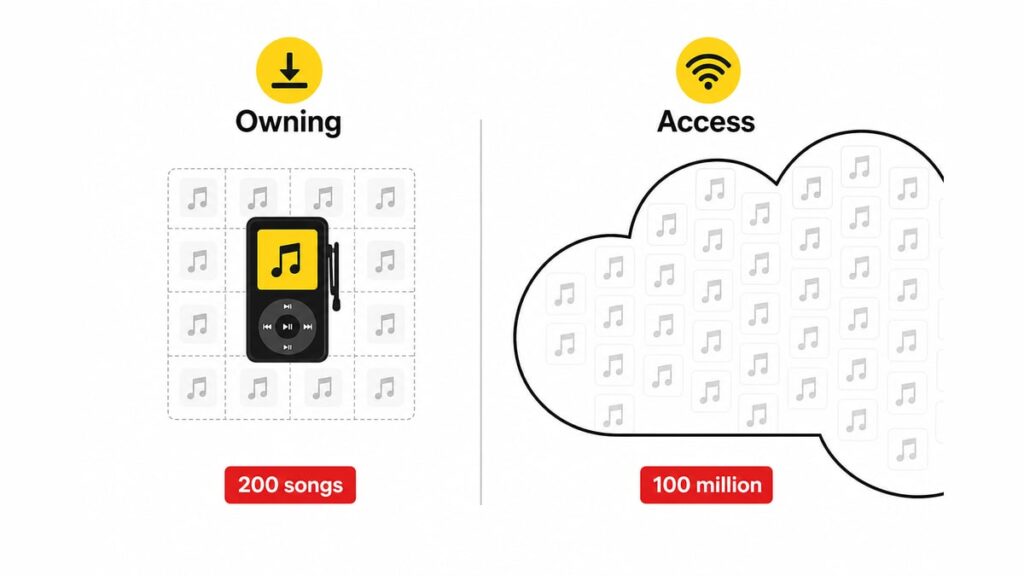
If there are only 200 songs available, skipping ten tracks does not lead to another catalogue containing 100 million alternatives. Eventually, you hear the songs you loaded. Forgotten tracks come back. Album cuts survive. A song that would have lost a five-second battle for attention on a streaming app gets another chance.
Owning 200 Songs Feels Different From Having Access to 100 Million
Purchased DRM-free music files can often be transferred between compatible devices without requiring an active streaming subscription.
Streaming has made music abundance normal.
Almost any artist can be summoned within seconds, which is an extraordinary achievement. Yet unlimited access can also make individual songs feel strangely disposable. Another track is always one tap away.
A small MP3 player creates the opposite situation.
Someone has to choose what goes onto it. A computer is involved. Files need to exist somewhere. Storage has a ceiling. Adding a new batch of music may mean removing something else.
Suddenly, building a music library becomes an activity again.
Older listeners may remember spending an evening deciding which tracks deserved precious space on an MP3 player before a holiday or long bus journey. Younger Shuffle buyers are discovering the same ritual without necessarily carrying any nostalgia for it.
The result resembles making a mixtape for yourself. The limitation gives the collection a shape.
There Is Also Something Refreshing About Buttons
Physical controls have become oddly satisfying.
A fourth-generation iPod Shuffle has a circular control pad with dedicated buttons for play, pause, volume and skipping tracks. Once it is clipped to clothing, basic playback can be controlled by touch alone.
No unlocking. No swiping. No looking down.
Apple lists the fourth-generation model at just 12.5 grams, with a body measuring roughly 29 by 31.6 mm. It carried 2GB of storage and offered up to 15 hours of playback when new, according to Apple’s technical specifications.
Those numbers are modest by modern standards, but the physical design has aged unusually well. There is very little unnecessary hardware because there was never much hardware to begin with.
The entire object exists to play music.
Mechanical buttons provide tactile feedback, allowing users to confirm an action by touch without checking a screen
Yes, Wired Earphones Are Part of the Appeal Too
The Shuffle revival overlaps with another small reversal in personal audio. Wired headphones are making a comeback, appearing in street fashion, photography and social feeds after years of being treated as something everyone would inevitably replace with Bluetooth.
Part of the attraction is aesthetic. A visible cable looks unmistakably different in a world filled with tiny wireless buds.
There is also a practical relationship with the Shuffle. Later models use a standard 3.5 mm headphone connection, so a pair of wired headphones plugs directly into the player without Bluetooth pairing, an app or another battery to monitor.
That simplicity gives the entire setup an appealing sense of finality. Plug in headphones, press play and leave the phone somewhere else.
No ecosystem needs to be managed.
The Shuffle Has Become Fashion in a Way Apple Never Planned
Vintage electronics are increasingly incorporated into streetwear, where older gadgets can serve as personal style statements rather than just functional devices.
Few pieces of consumer electronics survive long enough to become visually interesting again.
The iPod Shuffle has managed it.
The small aluminum fourth-generation versions came in colors including silver, blue, pink, gold and space gray. Earlier generations had completely different shapes, giving collectors several very recognizable designs to hunt for.
The built-in clip matters just as much as the colors. Clipping a Shuffle onto a collar, waistband, bag strap or jacket turns it into something visible rather than another gadget buried in a pocket.
Gen Z has repeatedly found new uses for obsolete technology. Digital cameras returned partly because their imperfect photos looked different from computational smartphone photography. Flip phones acquired new cultural status. Old wired headphones became fashionable again.
The Shuffle fits neatly into the same movement, but it has one advantage over purely decorative retro technology.
It still does its original job extremely well.
Digital Burnout Has Given Old Technology a New Purpose
The most interesting part of the revival has little to do with Apple.
People are experimenting with devices that separate activities which smartphones spent years combining.
The trend extends beyond portable players. The renewed popularity of vinyl records reflects a similar interest in physical music formats and more intentional listening habits.
A camera for taking photos. An e-reader for books. A watch for telling the time. An MP3 player for music.
Using several devices sounds less efficient on paper. Efficiency is exactly what made the smartphone so dominant in the first place.
Attention works differently.
If listening to an album requires opening the same device that contains social media, work messages and breaking news, music has to compete against everything else on the phone. A dedicated player removes the competition before it begins.
TechCrunch recently described growing interest in so-called slow technology, connecting devices such as old iPods with attempts to regain control over attention and screen time.
The Shuffle might be one of the purest examples because it offers almost nothing to interact with once playback starts.
Buying an Old Shuffle in 2026 Still Comes With Problems
Nostalgia cannot repair a twenty-year-old lithium-ion battery.
Anyone buying an original Shuffle now is dealing with ageing hardware. Battery condition can vary dramatically between units, replacement parts require some effort, and older models use cables or accessories that are no longer sitting in every electronics drawer.
Music management can also feel archaic beside modern streaming. Songs need to be stored locally and transferred to the player, which means understanding digital music formats such as MP3, FLAC and WAV becomes useful again. The Shuffle supports specific formats, rather than every audio file type.
Bluetooth is another obvious absence. A standard Shuffle was designed for wired headphones. Using modern wireless headphones requires additional hardware rather than direct pairing.
Those inconveniences explain why the Shuffle is unlikely to replace the smartphone as the primary music device for most listeners.
Replacement may not be the point.
A Shuffle can be the player used on a run, during a walk, at the gym or during an hour when carrying the entire internet around feels unnecessary.
The Funny Part Is That Apple Already Told Us What the Shuffle Was For
Looking back at Apple’s original 2005 announcement, the central idea was remarkably simple. Rather than constantly choosing songs, listeners could let their own music library surprise them.
At the time, Apple was trying to make digital music easier and more spontaneous.
Two decades later, the same design solves a completely different problem.
Music has become almost too accessible. Choosing something can involve browsing playlists, watching previews, checking recommendations, reading comments and skipping repeatedly before a full song gets a chance.
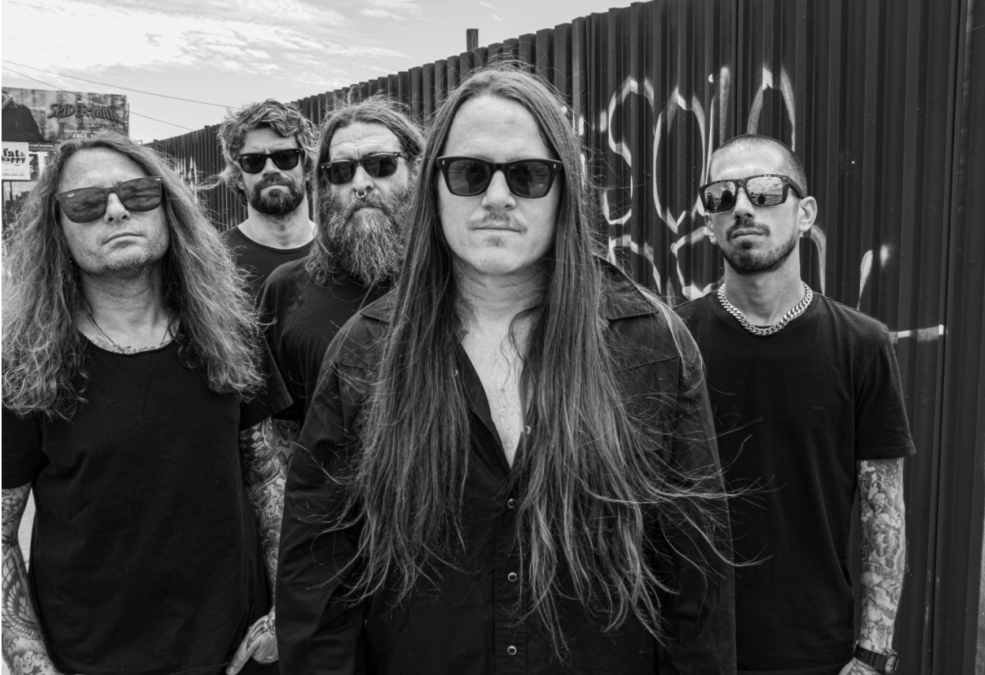 Washington, D.C. metalcore pioneers DARKEST HOUR release their new single and video, Warrior, today. This is the second single from the band’s forthcoming album, Suffer Divine, out on October 30. Guitarist Mike Schleibaum comments, “This song showcases our melodic death metal tendencies with a bit of a modern twist. It draws you deep into a […]
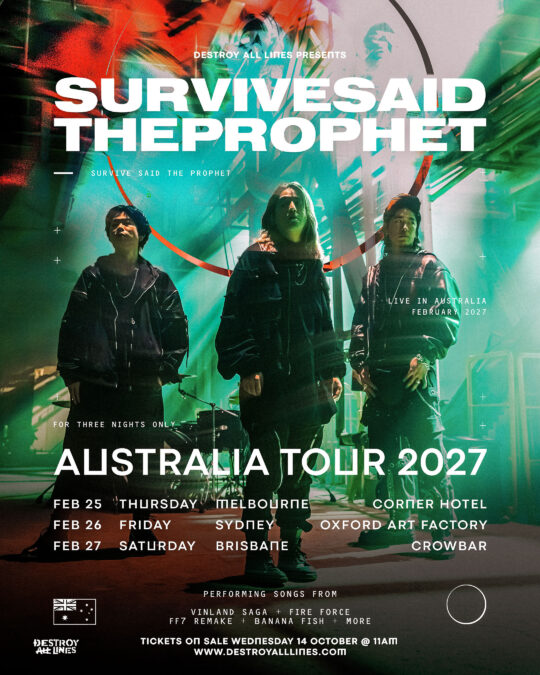 Australia has waited fifteen years for this one. This February, Tokyo’s Survive Said The Prophet finally make their Australian debut, bringing their explosive live show to Melbourne, Sydney and Brisbane for three intimate headline shows. Known throughout Japan simply as Sabapuro, Survive Said The Prophet have spent more than a decade turning stages into their […]
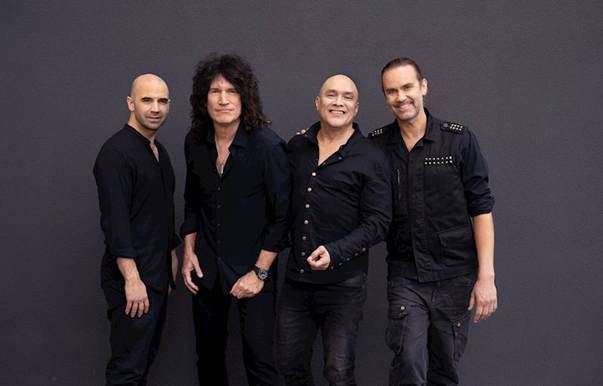 SHOGUN MOJO – an exciting new collaboration between legendary Kiss guitarist Tommy Thayer and acclaimed singer-songwriter Dan Reed of Dan Reed Network fame – is thrilled to share the new single and official video, Gonna Raise Hell, taken from the self-titled debut album, out on October 30, 2026, via Frontiers Music Srl. Dan Reed commented: […]

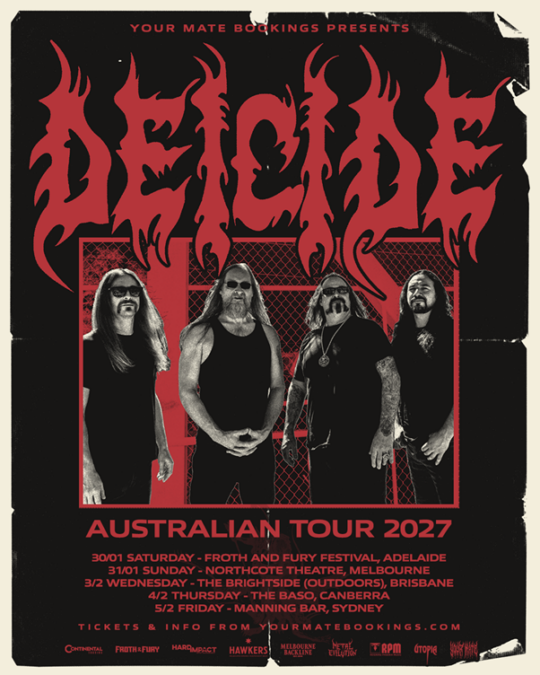 DEICIDE are returning to Australia for the first time since 2006. One of the biggest and most influential bands in death metal history will bring their uncompromising brand of extreme metal to Adelaide, Brisbane, Canberra, Melbourne and Sydney in January and February 2027. Formed in Tampa, Florida in 1987 by Glen Benton and Steve Asheim, […]