FOR IMMEDIATE RELEASE
BLACK HOLE ZION UNVEILS NEW EP 21ST CENTURY NERVOUS BREAKDOWN | OUT NOW
For Fans Of: Rob Zombie, 3TEETH, Ministry, Nine Inch Nails, Devin Townsend
Prepare for a sonic descent into a fractured reality as Black Hole Zion , the ever-evolving musical project created by Mark Benincosa , officially unleashes its latest EP, 21st Century Nervous Breakdown .
Now available worldwide, the new EP delivers a collision of crushing metal riffs, industrial electronics, cinematic atmosphere, and moments of unexpected melody. 21st Century Nervous Breakdown expands the immersive universe Black Hole Zion has been building through concept albums, soundtracks, meditation music, and heavy music, resulting in an experience that feels intensely personal, metaphysical, and eerily futuristic.
Driven by Mark’s fascination with science fiction, psychology, metaphysics, altered states of consciousness, and the transformative power of surviving life’s darkest moments, Black Hole Zion exists as more than just a band. It is an interconnected artistic world where every release contributes another chapter to a larger mythology.
With 21st Century Nervous Breakdown , Black Hole Zion delivers an ambitious collection of songs that seamlessly fuses heavy guitars with jagged industrial textures, pulsing electronics, and memorable hooks. The EP balances raw emotional weight with fictional storytelling, creating an experience that reflects the anxieties, isolation, and resilience of modern existence.
The EP is further brought to life through its visual component, including the music video for “The War” and the upcoming video for “I’m Carrying Poison,” offering listeners an even deeper glimpse into the project’s visually rich and psychologically charged universe.
Whether performing with a full band or crafting music as a solo visionary, Mark Benincosa and Black Hole Zion continue to blur the boundaries between heavy music, electronic experimentation, and cinematic storytelling, inviting listeners to lose themselves inside a world that feels unsettlingly familiar.
21st Century Nervous Breakdown is out now via self-release .
Production Credits
Produced by: Mark Benincosa
Recording & Mixing:
Mark Benincosa: All tracks except I’m Carrying Poison and I Don’t Care if This Thing Crashes
Mark Poole: I’m Carrying Poison and I Don’t Care if This Thing Crashes
Mastered by: Mark Benincosa
Co-Produced by: Mark Poole ( I’m Carrying Poison and I Don’t Care if This Thing Crashes )
Release Date: August 3, 2026
Genre: Metal / Industrial Metal
FFO: Rob Zombie, 3TEETH, Ministry, Nine Inch Nails, Devin Townsend
Follow and stream:
https://open.spotify.com/track/2GzsGMhyztdqyfLjEnj6ih
https://blackholezion.com
https://www.facebook.com/blackholezion
https://www.instagram.com/blackholezion/
https://www.youtube.com/channel/UC7lDG_o4UZ8GXAgC6RbUwdQ
https://blackholezion.bandcamp.com/
https://open.spotify.com/artist/7qF4OB2vH1TdQcWd3Pm0WJ
https://music.apple.com/us/artist/black-hole-zion/892614682
https://bsky.app/profile/blackholezion.bsky.social

“We finally feel like we’ve reached that peak TesseracT sound,” vocalist Daniel Tompkins told Prog in 2023. The leading lights of the British prog metal scene had were poised to release their most recent album to date – but was War Of Being their most progressive work so far? Tompkins and bassist Amos Williams revealed the grand concepts behind their fifth record.
When your band haven’t released a studio album for five years, it feels like a very bold statement to return with an 11-minute prog metal epic. If that wasn’t sufficiently daring, TesseracT’s War Of Being – the title track from their latest album – is accompanied by a high-concept video in which the idea of inner struggle is expressed through a futuristic samurai battling their doppelgänger. It’s nothing if not a gamble.
“Every band must have those discussions: what’s going to be the most successful song to release first?” says frontman Daniel Tompkins. “The last album [2018’s Sonder] was relatively short for us. I felt like I’d seen enough feedback to know people were left a little bit dissatisfied, so I thought it would be a real unexpected thing to release an 11-minute track as the first single. Rather than releasing a song that’s just going to appeal to a wider audience, we wanted to honour the core fanbase that has stuck by us for the past 15 or so years. For me, this is really a song for the fans.”
War Of Being, both the single and album, transports listeners to a place called The Strangeland, experienced through two characters called Ex and El. “The story is fantastic,” says Tompkins. “There’s a lot to it; it isn’t as simple as two protagonists being thrown into a sci-fi world. They splinter into various manifestations of themselves in the form of different characters with unique attributes.”
Sounds complicated and metaphorical. “That’s our subconscious, our memory,” says bassist Amos Williams, when asked to explain The Strangeland. “Within that you’ve got fears and hopes all bundled together and what you end up with is a place where time is non-linear.” It becomes a means to explore how memories and experiences from the past can shape how someone perceives both their present and their own identity. Not that there weren’t reservations about leaning so heavily into science fiction.
“It seems like a cliché,” says Williams. “What are we? Prog metal? Tech metal? That sort of band is expected to do that sort of thing. It’s always felt difficult for me because it never really concentrated on the human; it concentrated on the platform or the staging. I’ve avoided that but, to go really geeky, a lot of the things we see within our genre are all setting and no story. Perhaps, to cause conflict among the geeks, we’re more like Star Trek: all story and no real setting, if that makes sense. I’ve just outed myself as a proper geek.”
“The whole point of the concept is to ask the listener the question: ‘Who are you?’ And the same for us. We’ve been asking the question, ‘Who are we?’” says Tompkins.
War Of Being comes from a band with the confidence to explore new territory musically and thematically. “On a personal journey, I feel like I’ve matured a lot,” says Tompkins. “I have two children. We’ve travelled the world together with many ups and downs, many life stresses, and it’s only at this point where I feel comfortable in my own skin.
“I’ve always suffered with anxiety and stress, and that’s affected my growth as an artist. Going through the process of creating this album has been an amazing experience. It’s very introspective and it highlighted lots of issues from a personal perspective that haven’t been addressed in a long time. It has helped me deal with that, without going into too much detail. I feel like this whole album has brought with it a lot of confidence, and maturity is at the root of that.”
For Williams, the idea is about looking within, not just towards the past. “When you’re saying, ‘Who are you, what are we?’ you’ve got to understand what took you to where you are,” says the bassist. “I talk about detritus, about walking through the rubble and the wreckage that we’ve created just to be able to understand who we are. You’ve got to be able to answer not just the question of projection, of what you want to be seen as, but also how did you get where you are.”
Tompkins put that idea into practice. “At the start of every album I always take a little trip down memory lane. I travel to the place I grew up and spend a bit of time just on the street reminiscing,” he says. “It helps me to write and create. I feel like every album is a stepping stone. It ties into what Amos is saying about understanding where you’ve come from and looking back at all the life events that have led up to this moment in time. It’s about looking back and seeing how far you’ve come and being empowered by that.”
We’ve always been on side hustles, always having no time. This was a breath of fresh air
For guitarist and producer Acle Kahney, the unexpected upside of being off the road during the pandemic was that TesseracT had far more time than usual for songwriting. They were able to jam, allowing them to play the music live as a band before recording it. Duly prepared, they headed to Devon for six weeks at Middle Farm Studios, where they brought in two co-producers to work alongside Kahney. Peter Miles has worked with Architects and Sylosis, while Choir Noir’s Katherine Marsh has collaborated with Bring Me The Horizon and even performed backing vocals on Marillion’s An Hour Before It’s Dark.
In the past, the band have recorded their parts individually in their home studios and obsessed over every note, but that wasn’t the approach that Miles and Marsh brought to the project. “You’re just following a direction there and then, no time to think about it, no preparation, and that’s really cool because that’s not TesseracT,” says Williams. “That’s almost the antithesis of TesseracT.
“We don’t sit down and write a pop song; we slowly craft a track. It takes hours and hours to get a small section down, so it was interesting to have Pete and Kat involved, who were of a different perspective. Like saying, ‘That’s fucking brilliant, why are you saying you need to do that again?’ ‘No, it’s not perfect.’ ‘That’s what makes it perfect!’ It was funny to have that interplay.”
“Another departure from the three preceding albums was being able to record drummer Jay Postones in a live room. “The major thing was getting real drums for the first time since One,” says Kahney, referencing their 2011 debut. “It was down to time and budget on previous albums, so it was nice to finally get Jay in a recording studio and do it properly, and just all be in a room together jamming. We spent the first two or three days experimenting with drum sounds and snare tones. Pretty quickly it was, ‘Yeah, that’s good, let’s roll with that,’ and we started tracking.”
The bigger budget for War Of Being came in the wake of 2020’s livestreamed event Portals, the success of which impressed Kscope. “That spurred them on to support us further, to invest a bit more, which gave us more freedom,” says Tompkins. “We’ve always been on side hustles as musicians, always having no time, so this was a breath of fresh air.
We’re pushing the boundaries… It’s a very interesting angle, crossing over into the gaming industry as a musical artist
“I was there for four weeks just recording vocals and I had a vocal producer with me. Normally if I’m recording something I’m sat in front of the computer with a microphone, editing, tracking and writing as I go along. It was great to take a step back from that and just perform.”
The War Of Being concept is set to expand beyond the limits of the album itself. The video for the title track was created using the 3D creation tool Unreal Engine 5, originally designed for video games. And that’s going to be the next evolutionary leap.
“Before we went into the studio, I was working with a guy who is part of my livestream platform, a coder and programmer,” says Tompkins. “We started to build a computer game for TesseracT in Unreal Engine 5. When we started to develop the video for War Of Being, it was designed in Unreal Engine 5, so the characters and some of the landscapes that were made for the video have been ported across into our project.”
Consequently, second single The Grey is accompanied by a demo version of the game. “We’re pushing the boundaries of what is expected of bands to do with technology,” says Tompkins. “It’s a very interesting angle, crossing over into the gaming industry as a musical artist. I do believe it’s one of the first of its kind, where a computer game has been created around the concept and the full album.
“People are going to hear the song for the first time while experiencing the world we’ve created in virtual reality.” The full game is still in development, and Tompkins is hoping for a release in late 2024.
Simultaneously, Williams has been writing a novella to tie in with the album, with one third already written. “I wouldn’t want to stretch my incapability as a novelist, but it’s all there and it’s got to come out otherwise I’ll go mental,” says Williams. The ideas started pouring out at the end of 2022, so he just went with the flow.
We want to keep doing bigger and better things. We’re still here, we still want to be here; we’ve never stopped being here
“I got up every morning, had my coffee, and spent about four hours letting it happen, filling in the gaps of a story that just kept telling itself. I can’t promise anything because we’re very busy and, unless I can figure out how to do this on tour, it’s going to take a while to make it happen.”
TesseracT are pushing themselves to break new ground as musicians and creative artists. “We just want to keep doing bigger and better things,” says Tompkins. “We wanted to make a statement to show that we’re still here, we still want to be here, we’ve never stopped being here. Five years is a long time, but we’ve been very busy even though we haven’t put any albums out.
“We don’t write fast; that’s just the nature of progressive metal. We’re not the type of band that’s going to churn out singles every couple of months and put an album out every 18 months. So we wanted to make this as big a deal as possible.”
 2026 Yours & Owls Set Times and Site Maps are out. Double sets on Sunday let you get more of your favourites and give you more chances to delve deep into the unknown. Get planning! In light of the recent revelations in The Push’s 2026 Young Australian Music Audiences Report, which identified ticket prices as […]
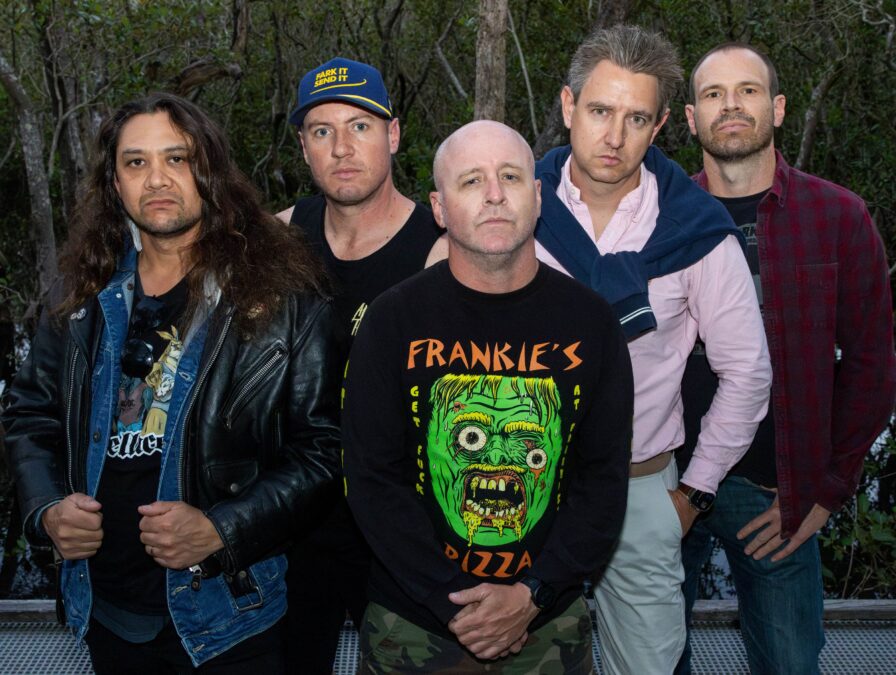 Following the explosive September 3 release of their debut track, the next BIG thing in Australian heavy metal, Boner Contention, has finally come with the official music video for Heavy Metal Heaven, released TODAY. A masterclass in juxtaposition, the track pairs face-melting, world-class musicianship with the existential weight of being a middle-aged headbanger. Fronted by […]
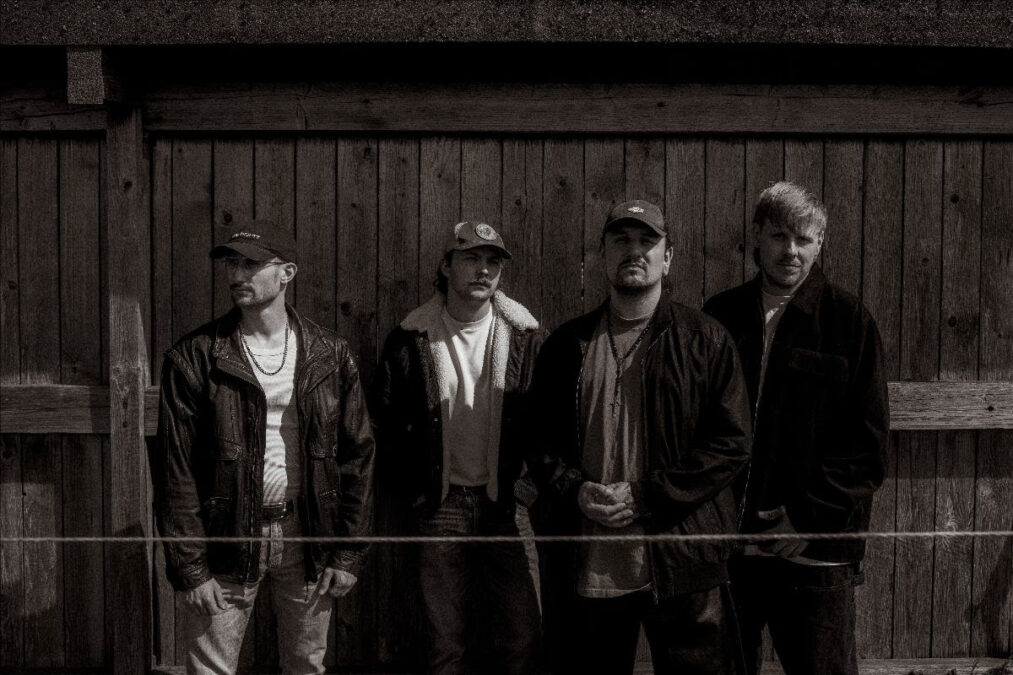 German heavy music force Half Me unleash King, the final single taken from their highly anticipated new album Dogma, set for release on October 23, 2026 via Arising Empire. With the album drawing closer, King delivers one last devastating glimpse into its uncompromising world, pushing the band’s sound into some of its most brutal and […]
 St. Louis quartet dead7 — Jason Kozik (vocals), Dexter Greer (guitar), Tim Quinn (guitar), Stephen Salyer (bass), and Zach Guinn (drums) — are back and in a big way. The band has just dropped the video for new single Cannibal. The gritty, guitar-forward track yanks back the curtain on a topic most of us can […]