As Witchsorrow release their first album in eight years we chat with bassist Emily Witch to find out what took the band so long.
We dive back into the bands origins, recent line up changes, the creative process behind their music, their new working relationship with Church Road Records, hitting the road in support of the album and more!
You can listen to the interview below, or jump over to any of the usual streaming services!
Sgàile is the solo project of Scottish multi-instrumentalist Tony Dunn, based in Glasgow. Tony is hardly a newcomer to the Scottish metal scene, having previously been associated with Saor, Falloch and Cnoc An Tursa. The Gaelic word sgàile translates roughly as “ghost” or “shade,” reflecting Tony’s feeling of existing somewhat outside the established Scottish black-metal … Continue reading Album Review: Sgàile – Onwards To Embrace The Echo
Sisyphus. Cursed forever to roll a boulder uphill, only for it to tumble back down, only to be rolled up anew, only to tumble once more. It makes an obvious parallel to how many of us feel about our own lives, trudging away on a caged treadmill, at once active yet immobile, all the effort in the world gone towards staying in place. Wake work sleep, wake work sleep. On and on, lapse into a tired, nondescript retirement, shuffle around for a bit about as fast as a bag of regrets ever can do, killing time until, finally, it kills you. The daily grind can get us down. Which is I always recommend daily grind. Todays’ offering speaks specifically to the quotidian rut many of us find ourselves slouching through; Suffering Quota claim to explore “recurring patterns of depression, monotony, and the perpetual search for fleeting moments of relief. There are no triumphant resolutions here, only the recognition that some struggles return again and again”. Sound familiar? If so, then maybe Suffering Quota can speak to the restless frustration that burns inside of you, too.
Packing more riffs into eighteen micron-tight minutes than most bands manage in a career Suffering Quota epitomise the suppressed rage those of us in dead-end bullshit jobs endure as we physically feel our lives waste away beneath us. Scorching death and thrash rear end grimy sludge at appalling speed as the band backflip through undulating, ceaseless movements. Trains of powerchords hurtle along pounding blastbeat tracks with military precision, the band rocketing through gears to slam down on the brakes with teeth-splintering doom on “Strain”. The death metal core of “Cruel Rock” yields to grinding discordant chords wrapping themselves about each other’s throats on “Overpowering Weight”, which also swings for the old school hardcore crowd with crusty punk riffs midway through. That’s the first three songs – the band cycles through sections hair breadths from each other as though they’re belt fed.
Fast and technical without being clinical or sterile, a raw, bug-eyed production pens the final variable into the seriously pissed off equation that the band have been writing. At points, broadsides of riffs and blasts merge into a white noise scream of distilled rage, ably chaperoned by the demented shrieking of vocalist Gerald Timmermans. The band toy with meter and time signature, “Striving” punctuating bouts of gratuitous violence with blunt stop-start grooves. In a lot of ways it reminds me of the Ape Unit album that I reviewed not so long back. It takes itself much more seriously, but the darting between sections, the contortions it makes from track to track, the variations it displays over it’s runtime make it something of a more straight-laced twin in some senses. Industrial sustained notes by way of Godflesh surfing on massed piranha shoals of Napalm Death riffs on “Roll Back Down”. “Slope” prowls the yard with the diseased thrash-on-crack stylings of Pig Destroyer, before peering through the wrong window at the misanthropic doom it closes the track with. Each track a fresh wound in the polite facade we greet the corporate world with.
Life seems to have purpose only when you force it to. Misery is comfortable; the call centre job siphoning your soul away down the phone lines that you stay at because it was easier to swallow than finding something new. The rough, loveless relationship that was less scary than being alone. Friends you lost because it was too much to admit you were wrong. Holding patterns of human misery trickling to the drain, taking you with it step by weary step. If there’s one thing that you take from Sisyphean Life, I hope it’s the strength to make whatever change you need to be happy. However you feel though, whenever you have a spare eighteen minutes to fill with a blitzkrieg of molten catharsis, accept no substitute.
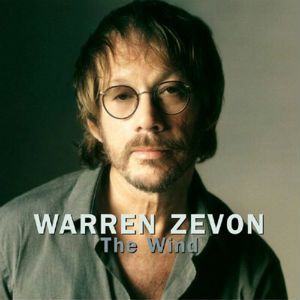
Warren Zevon died as he had lived: fearlessly. After being diagnosed with terminal cancer in 2002, he refused to wallow in depression or self-pity. Instead this most mercurial of musicians released a final, valedictory album, The Wind, and embarked on a series of interviews in which he treated his impending demise as a source of black comedy and philosophical rumination.
But then Zevon was never your typical singer-songwriter. Born in Chicago but coming of age in 60s Los Angeles, he could easily have carved out a successful career as a straight-down-the-line piano man like Elton John or Billy Joel, were it not for his caustic wit, chemical-induced instability and general contempt for the world. He gravitated towards life’s losers, underdogs and addicts, maybe because he saw something of himself in them. “I’m insane. I’m fucked up. I have problems,” he told one interviewer. “But I don’t get depressed and I don’t get bored.”
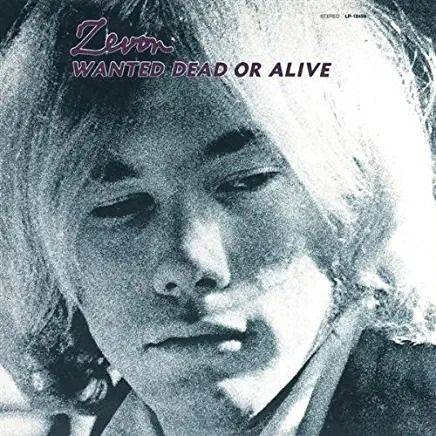
Zevon’s career was anything but predictable. His underwhelming 1969 debut album, Wanted Dead Or Alive, proved to be a false start, and it would be another seven years before he released a follow-up. The 1978 single Werewolves Of London propelled him to fame, but it remained his sole hit – something that proved a source of frustration and amusement to the man behind it. The 80s and 90s were equally erratic, commercially and personally, and although in the early 00s he underwent a mini-renaissance, it was soon cut terminally short.
By all accounts, Zevon wasn’t an easy man to be around. He was vain and combustible, egotistical and petty. But he was also charismatic, funny and more often than not the smartest guy in the room. His magnetic personality attracted an astonishing array of collaborators over the years: Bob Dylan, Bruce Springsteen, Tom Petty, David Gilmour and R.E.M. were just a few of the people who worked with him.
Zevon never made a ‘perfect’ album. But perfection was never the point; he was the rare artist who was defined as much by his flaws as by his successes, and it was those flaws that made him one of the most fascinating musicians America has ever produced.
Zevon died in 2003, aged 56. He was quipping to the end: “I might have made a tactical error in not going to a physician for 20 years. It was one of those phobias that really didn’t pay off,” he told longtime super fan David Letterman. He was never big enough and far too inconsistent to qualify for ‘American National Treasure’ status, although he’d probably bristle at the suggestion that he was a cult artist. The best description of Warren Zevon is that he was just Warren Zevon.
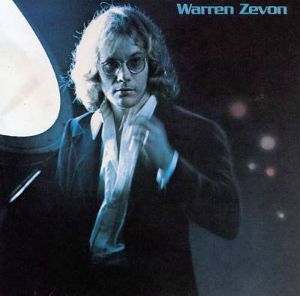
Zevon’s first proper album, at least in his reckoning, and the closest he came to a stone-cold classic. Roping in a bunch A-list muso buddies (Jackson Browne, Don Henley and Glenn Frey, Mick Fleetwood, Lindsey Buckingham, Stevie Nicks), he served up one of the great LA records.
His connections with the early-70s Laurel Canyon ‘mellow mafia’ are evident on Hasten Down The Wind and Desperados Under The Eaves, but the outlaw myth-making of Frank And Jesse James and the S&M-themed Poor Poor Pitiful Me had teeth and weren’t afraid to bare them. Best of all is the country ballad Carmelita, one of the finest junkies’ laments ever written.
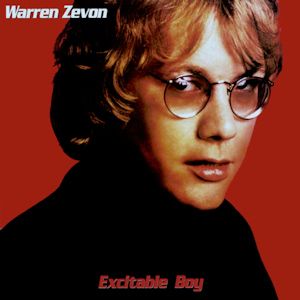
Zevon’s third album was his breakthrough, thanks to Werewolves Of London. With its nagging piano hook, wolverine ‘Ow-oohs’ and surreal images of lycanthropes stalking Soho, it was an unlikely hit single on both sides of the Atlantic.
That song isn’t even the best thing on Excitable Boy. The anthemic Roland The Headless Thompson Gunner is a surreal critique of US foreign policy disguised as the tale of a ghostly mercenary hell-bent on revenge, while Lawyers, Guns And Money paints a gonzo picture of Zevon holed up in some South American hellhole. On the stark ballad Accidentally Like A Martyr, he even reigns in the snarkiness.
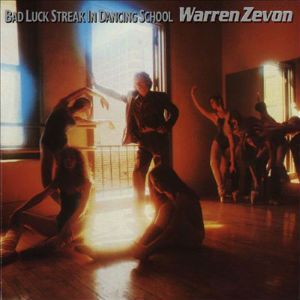
With hindsight, the success of Excitable Boy was a fluke. Certainly the follow-up didn’t have the same impact. It was nowhere near as consistent, while matters weren’t helped by the dated synthesisers Zevon insisted on slathering all over the album, undercutting the ironically macho Jungle Work and ruining Gorilla You’re A Desperado.
But Bad Luck Streak In Dancing School also features some of his finest songs. Play It All Night Long pours scorn on Lynyrd Skynyrd and their fans, and Jeannie Needs A Shooter (a title borrowed from an unreleased Springsteen song) is noir fiction set to a lush musical backdrop.
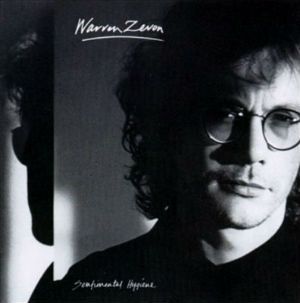
Zevon spent the mid-80s recovering from drug and alcohol addiction. With R.E.M. as his backing band, this comeback album was tougher and more guitar-centric than anything he’d made before.
The taut Boom Boom Mancini, inspired by a real-life boxing match that ended in tragedy, is as pugilistic as its subject matter, while The Factory could have been a Tom Petty number were it not for the scabrous irony. He wasn’t above mocking his own past either – Detox Mansion casts a jaundiced eye over rehab culture, and the raucous Even A Dog Can Shake Hands sticks the knife into the music industry with venomous glee.
The 1990s knocked some humility into Zevon. When he returned at the start of the new millennium after another long break , the old brattiness had been supplanted by the wisdom of age.
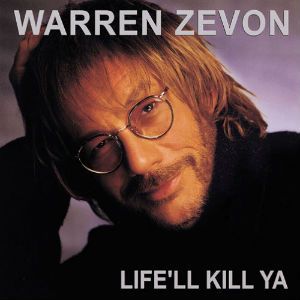
That’s not to say the stripped-back Life’ll Kill Ya, a semi-concept album revolving around mortality, wasn’t funny or toothless. Two of its tracks stand among his best. A stark take on Steve Winwood’s Back In The High Life Again ditches the original’s 80s gloss, although its winking irony can’t hide the bleakness at its core. Even better is My Shit’s Fucked Up, a droll memento mori in which Zevon nailed the absurdity of death. Two years later, it didn’t seem so droll any more.
When Zevon was diagnosed with inoperable lung cancer, he could have given up the ghost there and then. Instead he got a bunch of famous friends (Springsteen, Petty, Billy Bob Thornton) to help him record a farewell album. And it stands among his best.
The shadow of death may hang over The Wind, but Dirty Life And Times and Disorder In The House are the sound of a man going out kicking. Still, it’s hard not to be moved by his cover of Knockin’ On Heaven’s Door and album closer Keep Me In Your Heart. Two weeks after its release, Zevon was dead, leaving this as the perfect valediction.
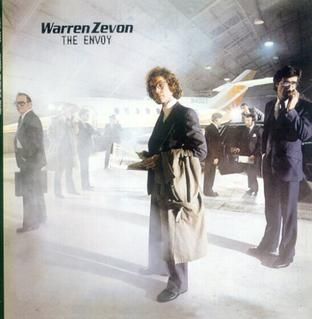
Zevon’s fifth album was his most direct yet, casting a jaundiced eye over the Middle East crisis on the title track and flooring the pedal on raucous rock’n’roll road anthem The Overdraft.
Those infernal keyboards stink the place up once again on Ain’t That Pretty At All, but the hushed Elvis Presley tribute Jesus Mentioned and hilariously self-pitying cuckold’s tale Hula Hula Boys are worth the price of entry alone.
If Zevon hoped this record would give him a much-needed hit, he was out of luck. The Envoy flopped, and he embarked on a drug and booze bender that put him out of action for the next five years.
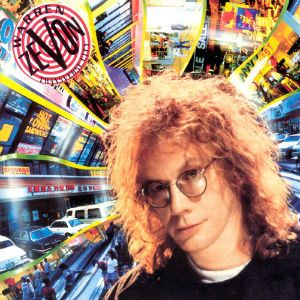
Zevon was on a roll after his creative rebirth with Sentimental Hygiene, even if this follow-up, lacked that album’s knock-out punch. Transverse City found the singer indulging his love of sci-fi, plugging into the futurism of Blade Runner and William Gibson’s cyberpunk novels and then-current Cold War concerns.
While the processed production instantly date-stamped it to the late 80s, a stellar line-up of guest guitarists – David Gilmour, Neil Youngand Jerry Garcia – cut through the bullshit just at the right moments. And in Nobody’s In Love This Year, Zevon serves up his most personal and uncynical ballad.
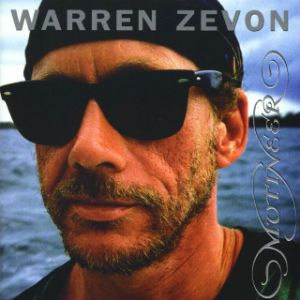
Mutual apathy between Zevon and the general public meant he released only two studio albums during the 90s: Mr Bad Example (1991) and this, released four years later. Both are solid if unspectacular, possessing neither the class of his 70s work nor the focus of his 80s comeback.
Of the two, Mutineer edges it slightly. Recorded largely by Zevon alone in his home studio, it tamps down the more wayward edges of his past work. Opener Seminole Bingo and the title track are the standout numbers, bookending a set of songs that show their creator in more subdued mood than usual. The sound of an artist in a self-imposed holding pattern.
Zevon expressed few regrets in his life, but his often overlooked debut album was one of them. Kim Fowley signed up as producer but, frustrated that the control-freak singer wanted to play all the instruments himself, quit mid-session. Its rocky gestation was only part of the problem.
A bigger issue was that Zevon couldn’t work out if he wanted to be a country singer, a psychedelic bluesman or a Randy Newman-style piano man, and fell short on all three fronts. Considerably less than the sum of its parts, it was released to what Zevon called “the sound of one hand clapping” – and deservedly so.
Just Penelope’s debut EP Great Lake is out this Friday, and they’re still heightening the anticipation. The Bloomington band has shared “After” (which made our list of the 5 best songs of the week) and “Sister,” but the latest single “Copenhagen” might be the best one yet.
Are y’all up on Purplish? Mdou Moctar bassist Mikey Coltun started the boutique label with Mark O’Donnell a couple years back to present curated tunes from lesser known parts of the world. Their flagship artist is TAKAAT, the Mdou Moctar offshoot, but they’ve got a wealth of other releases on Bandcamp for your perusal.
When Kongh released Sole Creation back in 2013, the Swedish outfit had already spent the best part of a decade quietly building one of the most singular reputations in European heavy music, three records of crushing, glacial sludge-doom stretched from 2007’s Counting Heartbeats through Shadows Of The Shapeless to that third full-length and touring alongside the likes of Meshuggah and YOB before slipping into a silence so total that plenty of us assumed it was permanent. Founding member David Johansson decamped to Cult of Luna as their touring guitarist, the years quietly piled up, and Kongh became one of those bands you mention in the past tense. And yet here we are: Dissolved In Time, a fourth full-length arriving via Trust No One Recordings, is proof that some ideas simply refuse to stay buried.
This is a record with its eyes fixed firmly forward, and Johansson has been at pains to make that clear. Dissolved In Time is essentially his record as he writes, plays guitar, bass and electronics, sings, and mixed the thing himself though he has surrounded that vision with kindred spirits, among them drummer Christian Augustin, mastering veteran Magnus Lindberg (who also shaped Sole Creation), and backing vocals from Grave and Entombed man Jörgen Sandström. Three tracks, an eighteen-minute opener, a seven-minute hinge, and a thirteen-minute closer that between them demand the better part of forty minutes of your undivided attention. It is, by some distance, the boldest and most far-reaching record the band has yet made, and it wears that reach without a shred of apology.
Staining The Ether is where Kongh plant their flag, and at nearly nineteen minutes it is less a song than a slow act of tectonic movement. It opens in that familiar Kongh register, riffs the size of continents, dragged forward at a funereal crawl before gradually revealing just how much has changed. Electronics shimmer at the edges of the mix, layered textures bloom and recede, and Johansson’s roar, when it finally arrives, sounds weathered and enormous, a man hollering into a canyon and waiting for the echo. What is remarkable is the patience of it all; the track earns every one of its minutes, building through passages of mesmeric, cyclical riffing into crescendos that feel genuinely cathartic rather than merely loud. There is a ten-minute single edit knocking about for the impatient, but to hear it that way is to miss the point entirely. This is music built for the long haul.
Guided To The End is the record’s most concise statement, and it functions as a kind of pressure valve between the two leviathans that flank it. At a comparatively lean seven minutes it moves with something approaching urgency, the riffs tighter and more insistent, the groove locking into a grim, head-nodding lurch that recalls the band at their most immediate. If Staining The Ether is about the slow accumulation of dread, this is the moment that dread finds a shape and starts walking towards you. Johansson’s vocals here are among the most desperate on the album, and the electronic flourishes that felt decorative on the opener take on a colder, more menacing hue. It is the track most likely to lure in listeners who found the extended pieces daunting, and it manages that without diluting an ounce of the band’s essential heaviness. A brutal, focused centrepiece.
Dissolved In Time arrives to close the circle, and it may well be the finest thing Kongh have ever recorded. Thirteen minutes of controlled devastation, the title track broods where the opener built and the middle cut struck, unfurling with the grim inevitability of its own name: everything eventually eroded, everything eventually gone. Johansson leans hard into atmosphere here, letting cavernous doom passages dissolve into near-ambient stretches before hauling the whole edifice back into the red. The interplay between crushing weight and genuine beauty is masterful, and the closing minutes, all mournful melody and slow collapse, land with the force of a benediction. It is a fittingly monumental way to end a record that has staked everything on scale and conviction, and it leaves you sitting in the silence afterwards, faintly stunned. A staggering close to a fearless release.
So, was it worth the thirteen-year wait? On the evidence of Dissolved In Time, unequivocally so. This is not a band trading on former glories or gently tapping out a comeback for old times’ sake; it is Kongh sounding heavier, stranger and more purposeful than they ever have, a record that could only have been made by a man with nothing left to prove and no reason whatsoever to hurry. It asks a great deal of the listener because three tracks, forty minutes, no easy hooks to cling to, but it repays that investment many times over. Dissolved In Time is the real article: vast, patient and utterly devastating. Some silences, it turns out, are worth breaking.
A monumental return that dissolves the intervening years as though they were nothing: crushing, cavernous and quietly magnificent. Kongh have not merely come back, they have come back better.
Finally I get around to following on from the real writers on our team and continue my own rundown of the bands I saw at Bloodstock 2026. We still have a pile of interviews to come up as well! I tried to get around as many of the stages as possible despite the hot weather, … Continue reading Festival Review: Bloodstock 2026 – Friday (Mosh’s view)