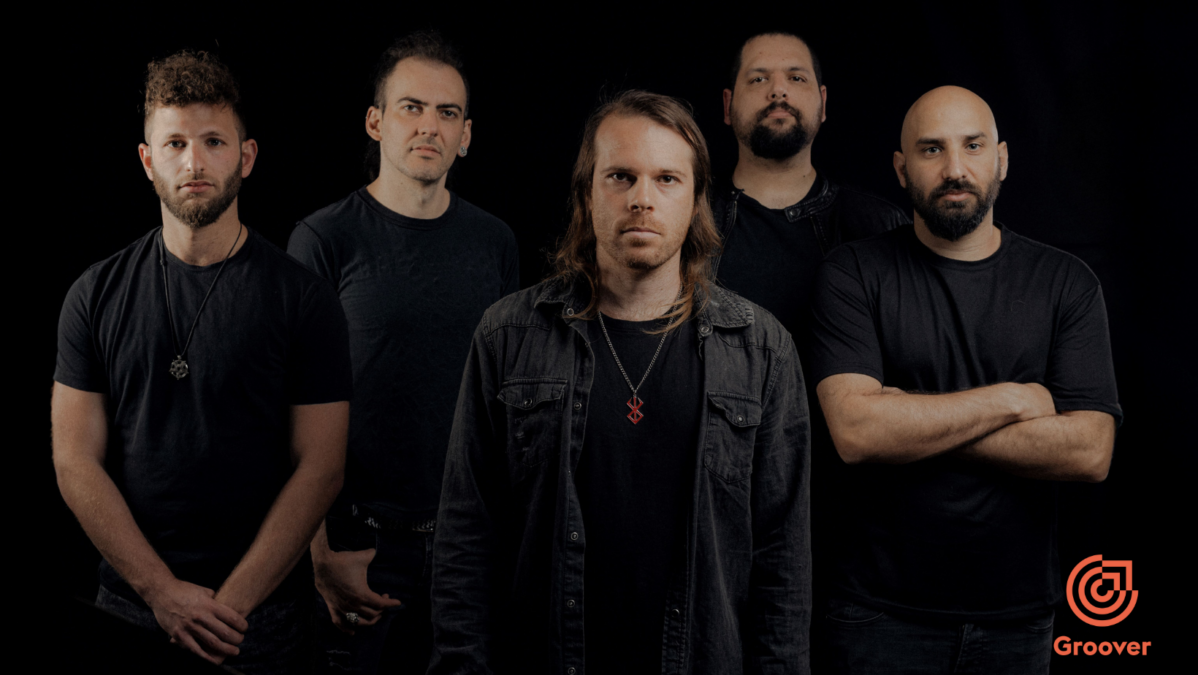
Eight headlining shows have been announced.
The post Orthodox Map Out Spring Headlining Shows Amid Their Tour With Wage War & Nevertel appeared first on Theprp.com.
Eight headlining shows have been announced.
The post Orthodox Map Out Spring Headlining Shows Amid Their Tour With Wage War & Nevertel appeared first on Theprp.com.
Drama with a promoter caused a wave of bands to drop out of CY Fest and their scheduled preshows, leaving a lot of fans disappointed. But some of the touring bands refused to let the trip go to waste. MESS, traveling from Mexico, booked a last‑minute show at Characters Sports Bar in Pomona, playing alongside Bomber and Broken Cuffs. For anyone still hungry for great live music that weekend, this show delivered.
The Venue
If you’ve never been to Characters, it’s a rad spot. The building is a big brick structure with a spacious outdoor patio. Inside, you’ll find a long bar running along the right side and a few billiards tables to the left. The bands set up outside under a tented patio area, which actually gives the space surprisingly good acoustics – clear enough to hear everything without blowing out your ears or needing earplugs.
I walked in right at the 9 p.m. start time.

First up was Broken Cuffs, a three‑piece punk band from Palmdale, CA. They had some tech issues that delayed the start and caused the singer’s mic to cut out for half a second here and there, but it wasn’t enough to ruin the set. Once they locked in, they delivered a solid, energetic performance.
Setlist:

Second up was Bomber, a newer four‑piece made up of veteran LA musicians who’ve been playing punk, rock’n’roll, and Oi! since the ’90s. I’m not sure how many of their members are originally from the UK, but the singer definitely was – and he also handled bass duties, which is always cool to see.
This band absolutely ripped. I walked in without really knowing their music and walked out a fan. The pit had English punks and LA locals mixing it up, and the energy was infectious. I noticed a Chelsea F.C. bag near the stage during setup, and later, when the crowd broke into big anthemic chants, it all made sense; anthems are engrained throughout many areas of English culture. The songs were raw, catchy, and built for shouting along.
Not all of their tracks are available on streaming yet, so a few titles are based on lyrics.
Setlist:
I wanted to grab their EP or a shirt to support, but by then I had already bought a MESS LP, a MESS shirt, and two other LPs from a vendor with an incredible vinyl selection – records from the UK, Australia, the U.S., even Brazil.

Closing out the night was MESS, an Oi! punk band from Guadalajara, Mexico. Frontman Abraham Vilchis has a killer raspy, gritty voice that cuts through everything. The crowd was fully locked in from the first song to the last. Standout moments for me were Revenge, Falso Poder, Leave Me Alone, and Street Boys.
Setlist
Six different colored pressings are available.
The post AngelMaker’s Debut Album “Dissentient” To Receive New Vinyl Reissue In August appeared first on Theprp.com.
Though that’s also kind of their default operating mode.
The post Nunslaughter Revel In Blasphemy With “Jesus F*cking Dies” appeared first on Theprp.com.
The most important deathcore bands today are the ones shaping the genre’s direction while still carrying its identity — including Lorna Shore, Suicide Silence, Thy Art Is Murder, and Shadow Of Intent.
This is a definitive ranking of the 13 deathcore bands that actually matter in 2026 — combining foundational pioneers with modern leaders dominating streaming, touring, and influence.
Deathcore isn’t fading — it’s being pulled in two directions. One side is pushing technical and symphonic extremes. The other is doubling down on raw, stripped-down brutality. The bands on this list are the ones driving that divide — and defining what comes next.
This ranking weighs three things: current dominance (streaming, touring, visibility), lasting influence on the genre, and how much each band is actively pushing deathcore forward — not just maintaining relevance.


Before it had structure, Despised Icon sounded like the genre being built in real time. The dual vocal attack and chaotic precision didn’t just stand out — it became a reference point.
They’re not driving the modern scene, but their DNA is still everywhere. The band even took home a 2026 Juno award for Metal/Hard Music Album Of The Year For Their Critically Acclaimed LP Shadow Work.

There was a moment where Doom was unavoidable. It didn’t just introduce listeners to deathcore — it accelerated the genre’s early growth online.
They moved toward technical death metal quickly, but their early impact is still baked into the genre’s foundation.

This is where the modern wave starts to take shape. Signs Of The Swarm has steadily built momentum, tightening their sound and stepping into a more prominent role in recent years.
They’re not riding hype — they’re building position.
And they absolutely pulverize.

Brand Of Sacrifice tapped into something a lot of bands haven’t — crossover appeal without losing intensity. Their connection to anime culture, combined with relentless heaviness, gives them reach beyond the usual extreme seeking audience.
They represent where branding and brutality intersect.

Carnifex didn’t shift with trends — they stayed rooted in a darker, death metal-leaning version of deathcore. That consistency gave them longevity when other bands drifted.
They’re still here because they never tried to become something else.

Modern deathcore isn’t just about sound — it’s about visibility. Slaughter To Prevail understands that better than most.
Alex Terrible’s presence brings people in, but the band’s sheer aggression keeps them there. They’re built for how heavy music spreads today.

There’s more weight here than just heaviness. Fit For An Autopsy builds atmosphere into their sound without softening it, which gives them a different kind of staying power.
They’ve evolved without losing clarity — and that’s not easy in this genre.
Essential listening for an absolute sonic pounding.

Chelsea Grin helped define an era and didn’t collapse under lineup changes — which is where a lot of bands stall out.
They adapted, recalibrated, and kept pushing forward instead of leaning on past success.

Whitechapel expanded their sound without losing the core that made them essential. That balance keeps them relevant even as the genre shifts around them.
Phil Bozeman remains one of the most identifiable voices in deathcore — a crushing delivery that puts him right up there among the industry’s top guttural vocalists.
Their latest release, 2025’s Hymns In Dissonance, is a beautifully dark and brutal experience.
Shadow Of Intent represents the technical ceiling of modern deathcore. Their blend of symphonic elements and precision songwriting pushes the genre into more cinematic territory.
They’re not just heavy — they’re calculated.

Longevity at this level matters. Australia’s Thy Art Is Murder has maintained visibility, consistency, and global reach through multiple shifts in the scene.
Forming in 2006 and amidst major changes, the band endured.
They reset and remain extremely relevant.

If you remove Suicide Silence from the timeline, deathcore doesn’t develop the same way — it’s that simple. The Cleansing didn’t just land at the right time, it set the tone for what the genre would become.
Mitch Lucker wasn’t just the frontman — he was one of the defining voices of the entire movement. His delivery, presence, and connection with fans pushed the band beyond the underground and into something much bigger. When he died in 2012, it hit the scene hard — not just emotionally, but structurally. It felt like a turning point.
What matters is what happened after.
Instead of fading out, the band regrouped with Eddie Hermida and kept moving forward. That decision alone cemented their place in the genre. They weren’t just tied to one era — they proved they could survive it.

Right now, this is the center of gravity.
Lorna Shore didn’t just rise — they shifted expectations. The combination of technical execution, presentation, and Will Ramos’ vocal performance pushed deathcore into a new phase.
Pain Remains didn’t feel like a peak — it felt like a reset point for the entire genre.
If you’re looking at where deathcore is going, this is the clearest signal.
The genre isn’t unified anymore — and that’s exactly why it’s still growing.
One side is pushing toward technical, almost orchestral complexity. The other is stripping things back to raw aggression built for live impact and viral reach.
Which direction defines the next era isn’t settled yet.
And that tension is exactly what’s keeping deathcore alive.
So here’s the real question —
does the future belong to technical evolution, or pure brutality?
What is deathcore?
A fusion of death metal and metalcore, combining extreme vocals, blast beats, and breakdown-driven songwriting.
Who are the most important deathcore bands right now?
Lorna Shore, Suicide Silence, Thy Art Is Murder, and Shadow Of Intent are among the most influential today.
Is deathcore still growing?
Yes — especially through streaming platforms and newer audiences discovering heavy music digitally.
Who started deathcore?
Bands like Despised Icon and Suicide Silence played a major role in shaping the early sound of the genre.
Deathcore emerged in the early 2000s as a collision between death metal’s technical brutality and metalcore’s breakdown-focused structure. Over time, it evolved into a global subgenre with multiple stylistic directions, while maintaining its core intensity and aggression.
The post Deathcore Bands Ranked: The Top 13 That Still Define Heavy Music Right Now appeared first on Loaded Radio.
Devil .
The post Devil Dog Road release new album ‘Shut Up and Spin It’ first appeared on Sleaze Roxx.
A lunar eclipse, astrologically speaking, has a way of shaking loose what we thought we had neatly packed away. Feelings go off-script. Old grief, old longing, old questions can come back with new force. It can feel disruptive, even chaotic, but that upheaval is often the point: something false or outgrown is being eclipsed so something more honest can emerge. The heart, under this kind of pressure, changes shape. In that brief, unsettling shadow, people sometimes find themselves a little cracked open, and therefore a little closer to the truth.
Just in time for the full Pink Moon, Marie Ann Hedonia’s intense Lunar Eclipse comes at you like a diary ripped from its hiding place and read through a blown speaker. This is an autobiographical record full of rage, revenge, and personal pain. Across five songs, she drags those feelings out by the hair and gives them names, faces, cut-and-paste samples, and a microphone. The entire album lands somewhere in a nightmarish no man’s land of slam poetry, musique concrete and grunge.
Anseka’s Song opens the EP with a hard stare and a persistent bad memory. Hedonia takes aim at humanity’s appetite for violence, that ugly little habit of dressing cruelty up as spectacle, and she sings within the disgust.
The track spills straight into Family Trauma, which lands even harder because there is no decorative distance between the experience and the expression. The droll, dissociative spoken-word passages rub against abrasive grunge textures like exposed wire against brick, and the friction gives the song its force.
Lunar Eclipse cuts deepest in the way it lets satire, bile, and exorcism crowd into the same cracked space. You can catch traces of Patti Smith, Alanis Morissette, and even Scott Walker at his most unmoored, yet Hedonia pulls those threads tight around her own fury. The EP carries the weight of unstable ground without ever sinking into self-pity. It is about what remains when loyalty thins, when love clears out, and when anger becomes the last plainspoken tongue left.
“My family was messed up, screaming fights, job loss, arrests, and it generally made me a pretty angry person,” says Hedonia. “I thought one day I would write this all down, maybe as a quirky memoir. Instead, life guided me to music, and so I channeled my rage and sadness into this EP. I want…to release these emotions for myself and for the listener.”
Listen to Lunar Eclipse below and order the album here.
Marie Ann Hedonia is a synthesist and composer working in the spheres of techno, synth pop, dark ambient, jazz, and more. Located in Baltimore, Maryland, she’s the co-owner and operator of the label, Paul and Marie’s Country Kitchen with her husband, Paul M’Olive. Hedonia’s work encompasses four studio albums and numerous collaborative efforts across the spectrum of electronic sound and genre.
Follow Marie Ann Hedonia:

The post Malleus Maleficarum — Marie Ann Hedonia Blends Grunge and Experimental Synth in “Lunar Eclipse” EP appeared first on Post-Punk.com.