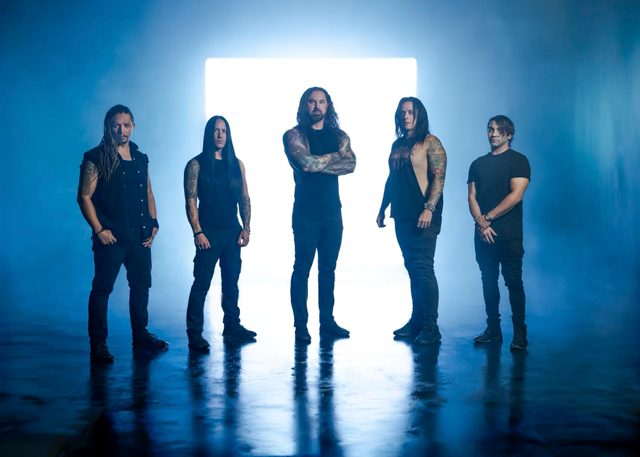
 On February 5, 2027, Grammy-nominated metalcore pioneers AS I LAY DYING return with their new self-titled album, As I Lay Dying, via Napalm Records. For 25 years, the band has helped shape the global metalcore scene through eight acclaimed studio albums, uncompromising heaviness and unmistakable melodic songwriting. With the two new singles Polarized and Retribution, […]
At The Gates singer and melodic death metal icon Tomas Lindberg died on September 16, 2025, aged 52, after being diagnosed with a rare oral cancer. In early 2026, before the posthumous release of his final album The Ghost Of A Future Dead, his bandmates told Metal Hammer about his life, impact and endless curiosity.
No one else in Gothenburg looked like Tomas Lindberg. When twin brothers Anders and Jonas Björler first met their future At The Gates bandmate at a bus stop in 1989, he stood out like a snow-plough in the Sahara. His hair – bright blond at the time – flowed past his shoulders, he was wearing a knee-length leather trench coat and a t-shirt featuring the name of some obscure and long-forgotten death metal band, and he had the bushiest beard that the Björlers had ever seen on a 17-year-old.
“I’d never seen anybody who dressed like that,” remembers bassist Jonas, the older brother by 15 minutes. “With that huge beard as well, he looked like an old man.”
“When we went to his room at his parents’ house, he had obscure demo covers and fanzine clippings all over his walls,” adds guitar player Anders. “He had a cast of a human skull, because he was interested in the occult in his early days. It was like entering this weird kind of new world.”
It was impossible to know at the time, but that striking character would soon be the face of the city’s most important metal band. With Tomas’s anguished snarl and imposing stage presence front and centre, At The Gates became masters of the Gothenburg Sound: a reinvention of death metal that fused the harmonised guitars of classic metal and the rampaging speed of thrash.
In their original incarnation, At The Gates only lasted from 1990 to 1996, but they made a huge impact – their landmark fourth album, 1995’s Slaughter Of The Soul, influenced a generation of American bands, including Trivium, Killswitch Engage and Lamb Of God. They reunited in the late 2000s and continued to record and tour, until Tomas underwent surgery to treat adenoid cystic carcinoma, a rare cancer of the mouth and palate, in early 2024. Following complications in his recovery, he died last September, aged 52.
At The Gates’ new album, The Ghost Of A Future Dead, is an epitaph to their late frontman. Written in 2023 and recorded the following year, it uses vocal demos that Tomas tracked before his surgery – some parts, the day before. He approved every detail, from the artwork to the sequencing, before his death.
“He went into surgery just as I started drum tracking,” says drummer Adrian Erlandsson. “It was like, ‘OK, that was a good take’, and I was straight on the phone: ‘How’s he doing? How’d the surgery go?’ It was an uncertain time and a bit unsettling, but I don’t think there was even a consideration that he wasn’t going to make it.”
To people who didn’t know him personally, the man nicknamed Tompa seemed like the most intense person in the world. He strode all over every stage he played, often making war-faces at the crowd as he did so, and he screamed lyrics about suffering, politics and existentialism with intimidating ferocity. But what his bandmates remember about him first and foremost is how kind he was.
“He wasn’t only this metal singer and the godfather of the Gothenburg scene,” says Anders. “Everybody that met him knows he was a really humble guy. He was always making sure, if somebody was left out, that they were introduced and felt welcome.”
I didn’t understand how he could take six to eight books with him on a tour, read them all and buy more along the way
Adrian Erlandsson
Born into a middle-class family on October 16, 1972, Tomas grew up in Billdal, a suburb half an hour south of central Gothenburg. He had two sisters, but was 15 years younger than them. “They moved out pretty early in his life, so he was alone with his parents,” says Jonas.
As the only kid in the house, it’s no surprise that his two favourite pastimes by his mid-teens were solo activities: reading books and listening to music. He enjoyed shoegaze, post-punk and everything under the Sub Pop Records banner, but his greatest loves were metal and hardcore, which he discovered through school friends blasting Metallica’s Kill ’Em All. He started writing and editing fanzines about the Stockholm death metal underground not long after.
“He really enjoyed discovering new things,” says Adrian, “and that’s something that went on throughout the years. He’d discover a new genre of music and he’d go deep in to find the root of where that scene came from. With death metal in particular, there was an aura around it – horror, death, decay – that suited him to a tee.”
With that same insatiable curiosity, he was constantly picking up books and putting other ones down. Through metal, he found horror greats Edgar Allan Poe, Mary Shelley and H.P. Lovecraft. Then came a short-lived Aleister Crowley obsession (hence the occult stuff and the skull in his room), and from there it was a blur no one could keep track of.
“I remember when he was writing lyrics for [At The Gates’ 2014 comeback album] At War With Reality, sending me excerpts of books he was reading,” says Adrian. “I was just like, ‘Man, I really don’t understand!’ Ha ha ha! I was into techy things like games consoles, and when we were travelling, he’d be like, ‘How can you be bothered to carry these things with you?’ And I didn’t understand how he could take six to eight books with him on a tour, read them all and buy more along the way.”
Wanting to bring the Stockholm death metal sound to his hometown, the singer formed Grotesque with guitarist Alf Svensson in 1989. One of their gigs was a Christmas disco at Anders and Jonas’s school. They played three songs before being forced offstage.
“The PTA stopped the show because Grotesque were so Satanic,” Jonas recalls. “They had corpsepaint and one-metre upside-down crosses.”
“People were surprised,” adds Anders, “because the local scene back then was all white sneakers and thrash: Testament, Exodus, Metallica-style.”
After Grotesque split in 1990, Tomas and Alf started At The Gates. They took the name from the Fields Of The Nephilim song At The Gates Of Silent Memory, which sampled an Aleister Crowley speech. The Björlers joined soon afterwards, with Adrian completing the line-up after meeting Tomas on a coach to a Morbid Angel show.
“He told me, ‘You can’t be in the band! You’ve got short hair!’” the drummer laughs. “But then we had a few beers and he asked, ‘Can you play double-bass [drums]?’”
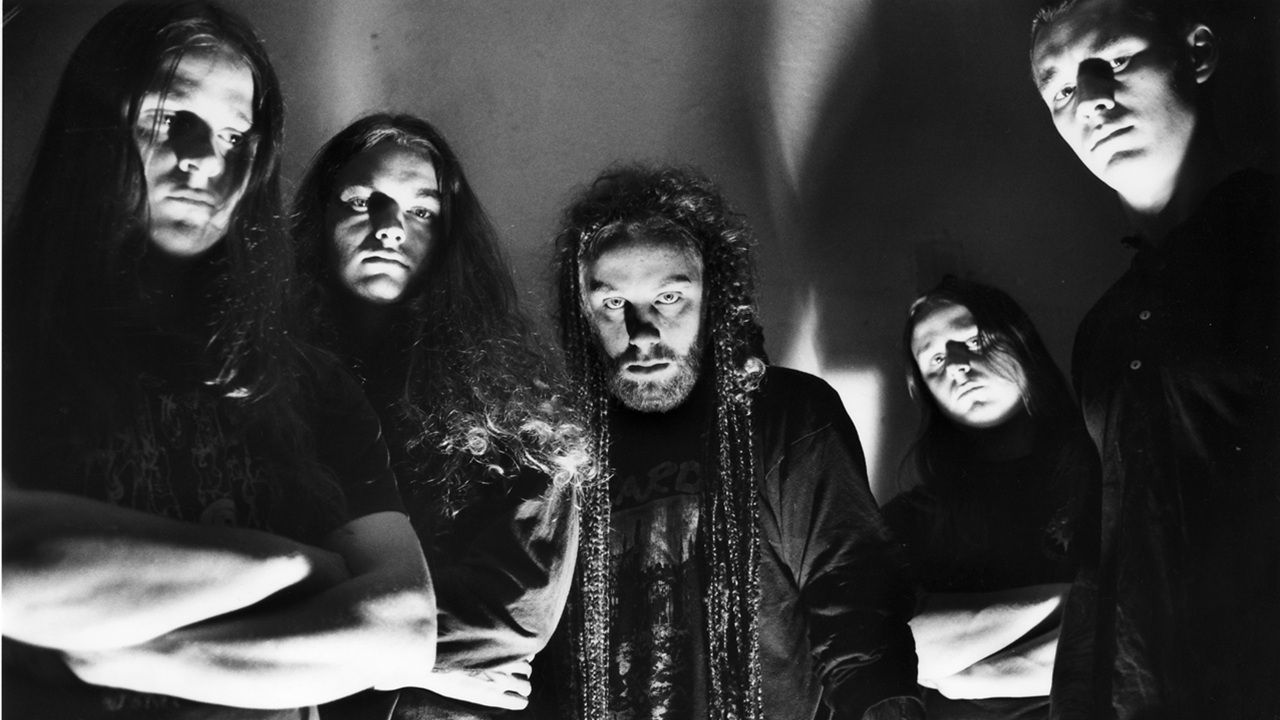
Their early albums were bizarre by their later standards, featuring violin solos and riffs that Alf wrote by playing old demos backwards, but Tomas’s lyrical identity was clear from the off. The title track of 1992 debut The Red In The Sky Is Ours voiced his left-wing beliefs and called for revolution.
Even though At The Gates simplified their songwriting after Martin Larsson replaced Alf in 1993, with the new approach reflecting Tomas’s roots in thrash and punk as well as the Björlers’ love for early-80s metal, that political focus carried on. Lines throughout ’94’s Terminal Spirit Disease and Slaughter Of The Soul spoke about how contemporary society was corrupting the human spirit.
The latter album put At The Gates on the map, but, barely in their 20s, they couldn’t deal with the sudden demand. They toured for eight months nonstop, hitting the US with Morbid Angel and then Napalm Death, yet made next to no money. Burnt out, Anders quit. Rather than continue without a founding member and key composer, the band broke up.
We reunited to make sure that every fan got to see us. But, egotistically, we kind of missed doing it.
Jonas Björler
“[The schedule] affected me more than anyone else,” he reflects, “and I think the other guys were really let down by my departure. But I’m really easily bored. I need constant change. I can’t stand waiting around at airports and sitting on tour buses. I felt like a travelling salesman.”
Jonas admits that the brothers and Adrian didn’t talk to Tomas for a couple of years. “We had different friend groups,” he explains.
Post-At The Gates, the Björlers and Adrian reunited in thrashers The Haunted, whereas Tomas, true to his restless nature, joined an array of projects, including crust punks Disfear, hardcore/metal band The Great Deceiver and grindcore supergroup Lock Up. He settled down with his first wife and her daughter, had a son and pursued a career as a social studies teacher. Adrian reconnected with Tomas at the frontman’s wedding in 1998.
“It was like time had stood still,” he remembers. “There was some house band playing, and I asked him, ‘Should we play a few songs?’ I think everyone was too drunk at that point to pull anything off.”
With the fences mended, Tomas started attending local Haunted shows and talking to the Björlers again. Jonas says that the singer’s newfound fatherhood made him more “mature”, and as interest in Slaughter Of The Soul continued to grow amidst a new era of bands touting its significance, they began talking about a reunion. In 2008, At The Gates played their first shows in 12 years.
“The chemistry was great,” Jonas remembers. “Everybody was friends. The main intention was to make sure that every fan got to see us but, egotistically, we kind of missed doing it.”
Tomas lived something of a double life, balancing his role as a death metal screamer with a career in the classroom. The two rarely intersected. The singer told Loudwire in 2021 that he wanted to be a “nice-but-a-bit-boring teacher”, although he did let his students stand side-stage for an At The Gates show in 2015.
“They looked really freaked out,” Adrian laughs. “I think it’s quite a lot to take in: seeing your teacher screaming at the front of a stage when there’s a few thousand people in the crowd.”
At The Gates’ first three post-reunion albums tapped into what Tomas was reading in some way. At War With Reality was about the literary genre of magic realism, 2018’s To Drink From The Night Itself was based on Peter Weiss’s antifascist novel The Aesthetics Of Resistance, and 2021’s The Nightmare Of Being was inspired by texts on philosophical pessimism. Written before the singer’s diagnosis, The Ghost Of A Future Dead bucks that trend and digs into his greatest fears.
“What frightened him the most was the vastness of the universe and the deep sea, and combining those things with the smallness of man in the grand scheme of things,” says Jonas. “We had a general idea of what he wanted to do, but it’s too bad we never got to ask Tomas about it, because we never thought it would end like this.”
Tomas was told he had adenoid cystic carcinoma in December 2023, although he kept his condition hidden from fans. Plans to record vocals in the studio in late 2024 were scrapped, as he’d need time to re-learn to speak and sing after surgery. Despite the initial shock, Adrian remembers morale being surprisingly high.
“We were just like, ‘It’s going to be tough but he’s going to pull through,’” he says. “After the surgery, they said they’d cleared all the cancer off, he’s going to have a prosthetic piece [on the roof of his mouth] and everything’s going to be fine.”
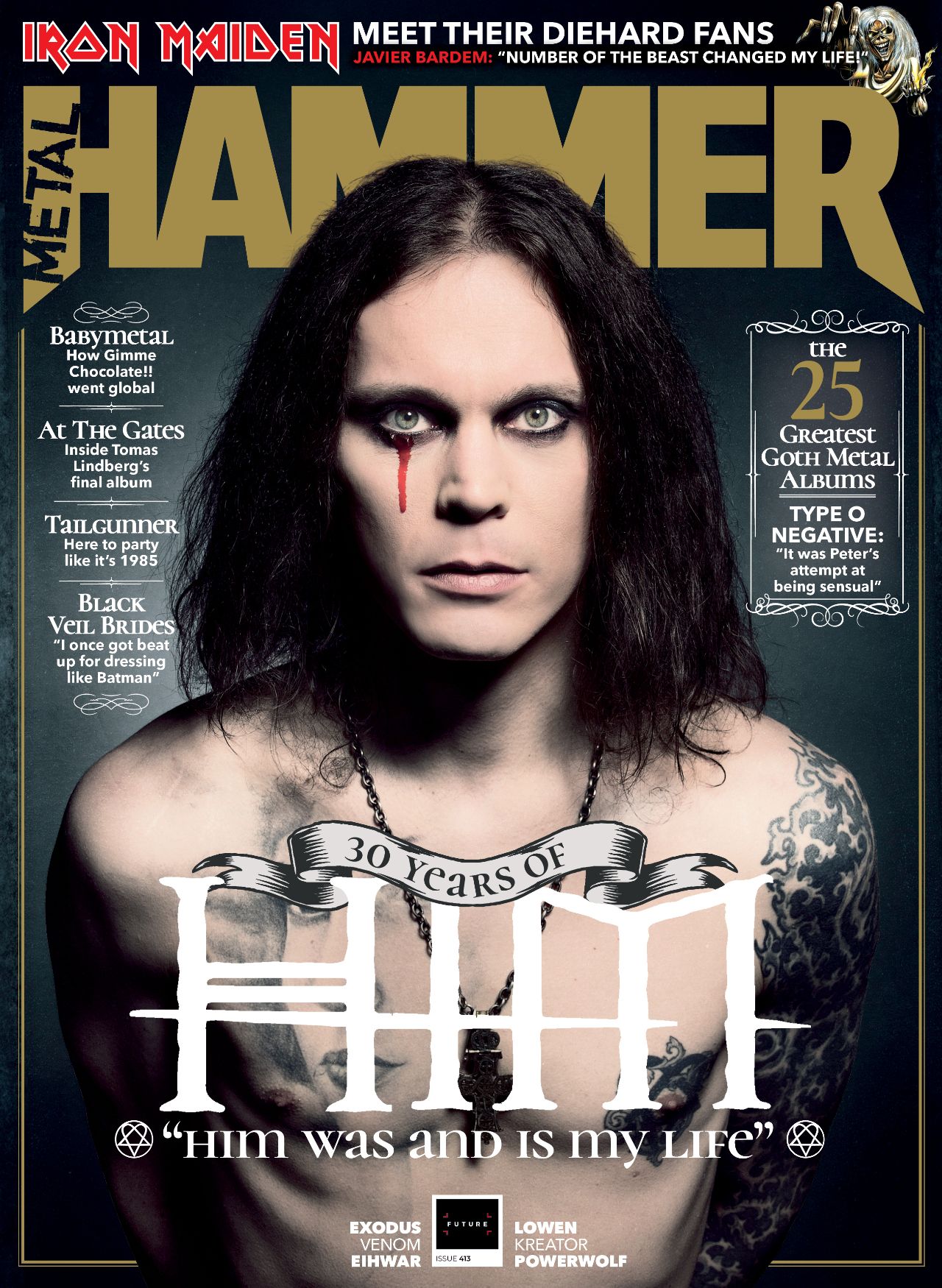
But from that point until his death, Tomas endured a series of dramatic ups and downs. In April ’24, after he’d been put on disorientating opiates to help him through radiotherapy and the after-effects of his surgery, he was so concerned that he may never be able to sing or teach again that he suggested the new album be called The Ghost Of A Future Dead. But in early ’25, he was cancer-free and went out for dinner with Anders, Jonas and Martin – their first time seeing him in-person since he started treatment.
“He told me it was the first time he’d eaten a slice of pizza since his surgery,” remembers Jonas. “He was in really high spirits and looking forward to the release.”
Adrian, who now lives in the UK and has a day job driving trucks, wasn’t given the time off to visit his friend.
“My boss was having none of it,” he says, the frustration audible in his voice. “It was pretty shitty, because that was my one chance to see him in good condition.”
Then, in late spring 2025, Tomas got the news that his cancer had come back, and he returned to hospital. He contracted infections, one of which spread to his brain, and complications from another surgery led to him being put on life support. He died on September 16, a month and a day after the band publicly announced his diagnosis.
Intellectually, he seemed to be a step above and beyond your generic metal musician
Mikael Åkerfeldt, Opeth
Reports of Tomas’s passing started circulating on social media that morning, followed by a wave of tributes from fans and peers. Trivium’s Matt Heafy called him “one of the most important singers/screamers of any metal band”.
“As a frontman… he was awesome, plain and simple,” said Opeth’s Mikael Åkerfeldt, adding, “Intellectually, he seemed to be a step above and beyond your generic metal musician.”
At The Gates confirmed the news that afternoon and remembered him as a “true friend, both compassionate and sympathetic”. Today, the Björlers can’t talk about their emotions around Tomas’s death. Adrian is is choked up as he recalls getting a phone call from Anders on the day that Tomas had died.
“I was driving and I couldn’t answer it,” he says. “When I saw that it was Anders, I knew. It was shit, to be honest.”
Although some on social media have speculated about the band carrying on in some way or putting on a tribute show, none of the members have discussed what’s next with each other, because the idea of At The Gates without Tomas Lindberg just feels wrong.
“He was the heart of At The Gates, really,” says Adrian. “I can’t even imagine what we’d have sounded like without him. Even if you don’t consider his voice, just without him, I have no idea what the outcome would’ve been. He was the crown of the band.”
Originally published in Metal Hammer issue 413, June 2026. The Ghost Of A Future Dead is out now. The Gothenburg Symphony Orchestra will perform At The Gates, In Flames and Dark Tranquillity songs at Göteborgs Konserthus on December 4 and 5.