Blog

  • Criteria To Release New Album On May 22nd; Share New Single “Lean Out”

    Spartan Records and Criteria are pleased to present “Lean Out,” the latest single to be lifted from the Friday, May 22 release of SEIZE!, the
  • Chat Pile – Complete Tracking Next Long Player

    Oklahoma City noise/sludge metal formation Chat Pile has revealed that they’ve finished tracking a new studio album, the successor to 2024’s Cool World and last year’s music output In The Earth Again [Collaboration]. More info soon, stay tuned.
    Read more…
  • Intoxicated – The Dome Review

    Florida death thrash dealers Intoxicated came down the promo sump with a nest of surprises I didn’t anticipate. Learning that once again I selected promo from a forgotten 90s band shocked me. Finding out that not one but two of Intoxicated’s members also serve in known party rock entity Andrew W.K. bamboozled me even more. These little factoids all came to me long after I had imbibed deeply of their upcoming third LP The Dome, which sounds fresher and far more vicarious than what I might’ve expected otherwise. But can it compete with a modern thrash scene desperate to revitalize the glory days of olde?

    If there’s one thing that Intoxicated do well, it’s finding and exploiting their references. Riffs sourced from the bloodied piles amassed by the likes of Destruction, Death Angel, Dark Angel, and Sodom abound, all laced with the deathly wiles of Death to give them extra oomph.1 Anthrax-esque drumming doubles down on speed and extremity as The Dome gallops and blasts through its lean 30-minute runtime.2 A lightly proggy songwriting bent, again reminiscent of Death’s more sophisticated fare, gives The Dome a bit more variety than your average thrash revival record. Nonetheless, Intoxicated feels most at home brawling at bars and swaggering down back alleys in head-to-toe leather.

    When they double down on sleaze and hooks, Intoxicated shine brightest. High-octane cuts like “Carved in Stone,” “The Dome,” “War Club,” and “Drowning the Weak” ooze vitriol and gush piss and vinegar all over the place, making for one nasty arena in which to open up pits and push around posers. Sole original member Erik Payne’s raspy barks and serrated growls feel right at home in this pocket, spewing matter-of-fact verses in the classic thrash tradition with a consistency and effectiveness that belies his age (“It’s Dead”). While that vocal talent provides The Dome with a significant measure of personality, it’s Erik’s and John Sutton’s riffs/leads and Mike Radford’s multifaceted drumming that steal the show, routinely shoving great ideas and weaving durable stitching throughout remarkably tight runtimes (“Shifted Cross” and “Rake the Grate,” for example, feel far more substantial and meaty than their featherweight sub-3-minute lengths suggest).

    There’s a lot to love in The Dome, but there’s also a lot of potential to go further. On the production front, The Dome is very clean and modern, which in some ways detracts from Intoxicated’s brutish delivery (though its clarity makes the drum tones stand out in fantastic fashion). Additionally, while you can hear Gregg Robert’s bass burbling underneath the surface, it lacks the prominence it needs for listeners to reliably nail down what unholy magic he’s doing with it. As far as songwriting goes, The Dome is quite strong but songs that lack punch instantly get lost in the sauce. In some cases, that’s the result of a lack of unique riffs or interesting ideas (“Sever the Strings,” “Tighten Your Eyes”). In others, it’s nothing more than a pacing or tracklist placing issue where The Dome’s momentum is slightly disrupted or impeded (“Unescaped”). And of course, the fact that multiple writers could so readily identify reference points from a number of classic acts speaks to the level of influence they had on Intoxicated’s current sound, which, for some, might make The Dome seem unoriginal or derivative.

    Even so, The Dome is a wholly enjoyable and easily repeatable record by an unsung act hailing from the 90s era of thrash and death. The references they pull from are good company to keep, so if some of the material here borders on worship, at least Intoxicated have good taste. As the dust and rubble settle, The Dome is a fun, raucous, and feisty little gem, and it would be a shame for it to go unnoticed.


    Rating: Good
    DR: 6 | Format Reviewed: 320 kb/s mp3
    Label: Redefining Darkness Records
    Websites: intoxicatedflorida.bandcamp.com | intoxicatedfl.com | facebook.com/pg/intoxicatedFL
    Releases Worldwide: March 27th, 2026

    The post Intoxicated – The Dome Review appeared first on Angry Metal Guy.
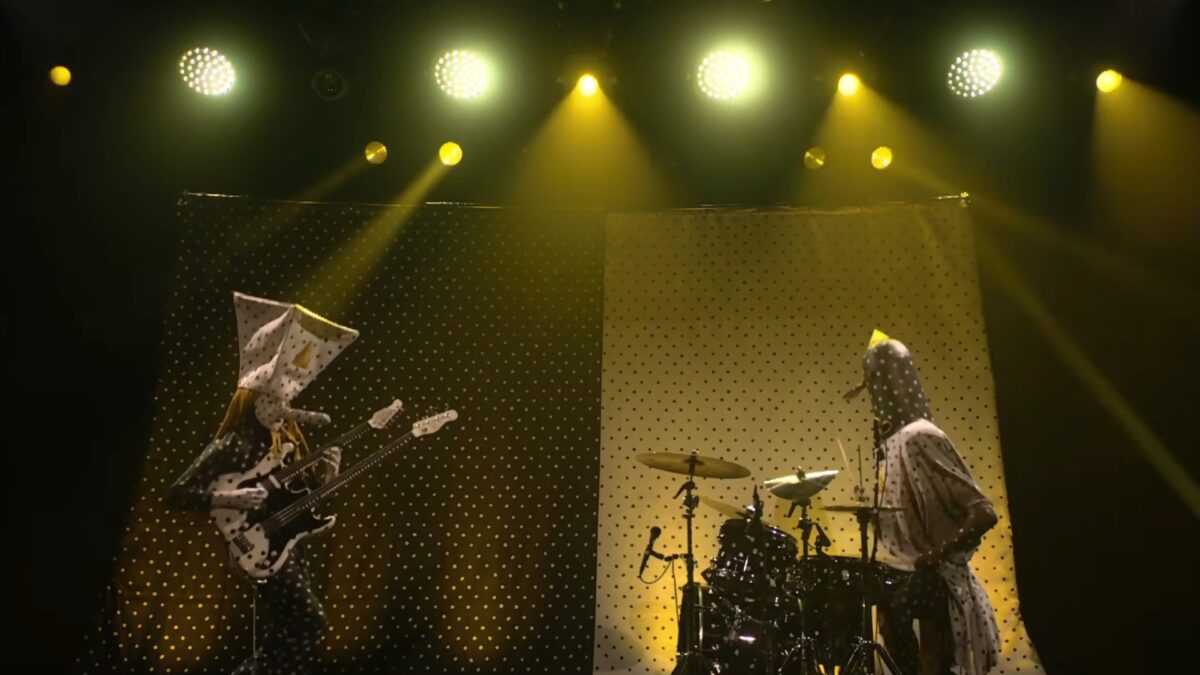
  • Come to Skindred’s K! Pit next week

    Posted on March 31st 2026, 12:00p.m.

  • The Bandana in Rock Culture: 10 Iconic Moments That Defined a Generation

    The bandana became a rock symbol because it did two things at once better than almost any other accessory. First, it solved real stage problems: sweat, hair, heat, movement, dust, and long sets under brutal lighting. Second, it made artists instantly recognizable. In rock, that matters. A bandana could turn a performer into a silhouette fans remembered after one show, one photo, or one MTV appearance.

    Over time, it stopped being just a practical cloth and became a visual language for rebellion, grit, glamour, politics, and identity. That is why the same basic item could belong to Hendrix, Springsteen, Axl Rose, Bret Michaels, Bono, Santana, and Steven Van Zandt without ever feeling outdated.

    What makes the bandana so important in rock history is not that it looked cool. Plenty of things looked cool and disappeared. The bandana lasted because it kept changing meaning without losing its usefulness.

    • Sometimes it read as counterculture.
    • Sometimes it read as blue-collar toughness.
    • Sometimes it became pure MTV-era spectacle.
    • Sometimes it turned into a literal message onstage.

    Across generations, the object stayed simple while the meaning kept expanding. That is what made it durable.

    1. Jimi Hendrix at Monterey Pop Turned The Bandana Into Part of Rock Mythology

    Jimi Hendrix energetically plays an electric guitar on stage, wearing a blue and white outfit with a headband
    Hendrix’s Monterey Pop guitar-burning finale made the bandana iconic

    If you are looking for the moment when the bandana became bigger than a styling detail, Hendrix at Monterey Pop in June 1967 is one of the strongest places to start. This was not just another festival appearance. It was his breakout U.S. performance, and it ended with one of the most famous images in rock history: the guitar-burning finale. But that moment worked visually because everything around it already felt striking, including the head-worn bandana that helped shape his overall silhouette.

    On Hendrix, the bandana looked ritualistic rather than decorative. It helped separate him from the polished pop presentation that still dominated much of the era. In photographs and film footage, it framed the face, controlled the hairline, and added to the sense that this was not a safe or conventional performer. That matters because rock is not remembered through sound alone. It is also remembered through images that can survive decades. Hendrix’s Monterey bandana became part of one of those images.

    A few details make this moment even more interesting:

    • Hendrix was originally scheduled for June 16, but ultimately performed on June 18.
    • Monterey quickly became tied to the public image of the “Summer of Love.”
    • Later commentary treated his stagewear as part of the cultural event, not just an outfit choice.

    2. The Rolling Stones Made the Nandana Feel Cinematic in “Child of the Moon”

    The Rolling Stones used the bandana differently. In the 1968 promotional film for “Child of the Moon,” the bandana fit into a darker psychedelic mood. The visual effect mattered because this was no longer about live heat and movement alone.

    This was about filmed atmosphere. In monochrome footage, a head-worn bandana becomes even more effective because it creates contrast around the face and makes the styling feel deliberate without needing loud color.

    What keeps this moment alive is that it condensed late-1960s Stones imagery into one object. It looked bohemian, slightly ominous, and very much tied to the era’s fascination with psychedelic excess, ambiguity, and visual drama. The bandana helped turn the band into something instantly identifiable on screen, which is exactly why that look still reads as “1968 Stones” so quickly today.

    3. Bob Dylan’s Hard Rain Special Showed How Well a Bandana Worked on Television

    By 1976, the bandana had shifted away from psychedelic style and toward something rougher and more worn-in. In Dylan’s Hard Rain television special, the bandana did not feel ornamental. It felt lived in. That is an important distinction. On a TV broadcast, small visual details matter because the camera keeps returning to the face, and the bandana gives the viewer something fixed to remember.

    In Dylan’s case, that look fit the Rolling Thunder period perfectly. It suggested a mix of practicality and persona: part road warrior, part drifter, part working musician. It also helped carry the tour image into living rooms. That was a major shift in how style spread. Once a look worked on television, it could travel much further than it could through concert photography alone.

    4. Punk Turned the Bandana Into Something Torn, Altered, and Political

    One of the smartest points in your text is that punk did not treat the bandana as a finished object. It treated it as a surface to destroy and remake.

    By the late 1970s, punk scenes in places like London and New York were taking everyday items and turning them into statements. Bandanas were painted on, cut up, safety-pinned, resewn, and made part of a larger DIY aesthetic. They no longer suggested rural labor or festival looseness. Now they suggested anger, refusal, and self-definition.

    That shift matters because it changed the bandana from something worn to something authored. Punk culture insisted that what you wore should say something, and preferably something you made yourself.

    In that world, the bandana was useful precisely because it was cheap, available, and easy to alter. It could become a mini manifesto without needing permission from any brand or label. That idea would echo through later rock fashion over and over again.

    5. Bruce Springsteen Used the Bandana to Stay Grounded While Becoming Huge

    Bruce Springsteen in a red tank top and blue bandana sings passionately into a microphone on stage
    Springsteen’s bandana signaled presence

    Springsteen’s Born in the U.S.A. era is one of the clearest examples of the bandana as image control. By 1984, MTV had made visual identity far more important than it had been a decade earlier. Springsteen understood that, but he did not respond by trying to look glossy or elite. Instead, he leaned harder into a physical, sweaty, working-class presentation. The bandana helped hold that image together.

    It worked because it was believable. On Springsteen, a bandana did not look like costume department styling. It looked like something a performer would actually need while putting everything into a long arena set. At the same time, it reinforced his larger public image: labor, effort, stamina, and presence rather than luxury.

    That made it a small but very effective part of one of the biggest rock personas of the 1980s.

    6. Axl Rose Turned the Red Bandana Into Fan-uniform Rock Iconography

    Axl Rose is where the bandana stops being just recognizable and becomes copyable on a mass scale. According to the text you shared, the bandana started as a practical solution. His hair was falling in his face during performances, so he used a headband. That is exactly the kind of mundane origin story that often sits behind a lasting visual icon. It solved a problem first. The mythology came later.

    Once the red bandana became tied to Axl, fans picked it up immediately. That is what pushed it into rock history. It became a cheap, easy, instantly legible sign of allegiance. You did not need money, tailoring, or access to official merch. You only needed a red bandana and the willingness to wear it like it meant something.

    Why this moment mattered so much:

    • It was functional before it was symbolic.
    • Fans could copy it overnight.
    • It worked just as well in a video, onstage, or in a crowd.
    • It turned into a visual shorthand for volatility, energy, and danger.

    That combination is rare. A lot of famous looks are memorable but hard to imitate. Axl’s was memorable because it was easy to imitate.

    7. Bret Michaels Proved the Bandana Could Also Mean Pure MTV-era Spectacle

    Bret Michaels with long blonde hair and a blue bandana laughs joyfully
    Bret Michaels made the bandana a central piece of glam metal

    If Springsteen’s bandana suggested labor and Axl’s suggested danger, Bret Michaels pushed it in a different direction entirely. In late-1980s glam metal, the bandana became a central piece of showmanship. On Michaels, it did not just sit there as a practical tool. It became part of the frontman image itself. It was bright, styled, recognizable, and made for television.

    This matters because it shows how flexible the object had become by the MTV period. The same cloth that once suggested anti-establishment authenticity could now suggest excess, glam, and theatricality. And yet it still worked.

    That adaptability is the reason the bandana never really disappeared from rock culture. It could slide across subgenres without losing its impact.

    8. The 1991 MTV VMAs Showed How Bandanas Survive Even When Everything Goes Wrong

    Poison’s chaotic 1991 MTV Video Music Awards performance is a good reminder that accessories can outlast the moment that surrounds them. The performance became remembered as a mess, with technical problems and disputed explanations about what exactly went wrong.

    But visually, the bandana remained part of the image. That says a lot about how strong the glam-metal visual code still was at that point.

    In live television, details have to register fast. A frontman’s bandana does exactly that. Even when the music falls apart, the look still lands. In hindsight, the moment also feels like a snapshot of an era on the edge of fading, with alternative rock about to replace glam metal as the dominant youth-TV aesthetic.

    The bandana stayed visible right at that turning point, which gives the accessory an odd kind of historical durability. It becomes part of the era’s final televised self-image.

    9. Axl at the Freddie Mercury Tribute Concert Proved that Some Accessories Become Inseparable From the Artist


    View this post on Instagram


    A post shared by gunsnrosesliveera (@gnrliveeraphotography)

    When Axl Rose appeared at the Freddie Mercury Tribute Concert at Wembley on April 20, 1992, the bandana came with him. That seems like a small detail until you think about the context. This was not a standard Guns N’ Roses show.

    It was a global AIDS-awareness benefit, watched on an enormous scale and loaded with emotional and political tension. And yet Axl still appeared in the same signature visual language audiences already knew.

    That is what makes this moment important. By then, the bandana was not just part of the outfit. It was part of the public identity. The source material also notes that the event drew roughly 72,000 people in the stadium, had a vast global audience, and was tied to the launch of the Mercury Phoenix Trust. That scale matters. A single visual detail worn on that stage could circulate across the world immediately.

    10. Bono’s “COEXIST” Bandana Showed That a Rock Bandana Could Become an Argument

    By the time Bono wore the white “COEXIST” bandana during the Vertigo Tour stop at Twickenham in 2005, the bandana had entered another phase entirely. It was no longer just stage gear, or a marker of subculture, or a frontman trademark. It had become text. It had become message. Bono used it as an explicit stage-prop statement about coexistence and interfaith symbolism.

    This is one of the most important moments on the list because it shows just how far the object had traveled. The bandana could now function as a literal communication device, amplified by giant screens and stadium narration. Whether audiences agreed with the message or not, the object had evolved from expressive styling into something closer to a visual argument.

    That is a big leap from sweat control at Monterey, but it still makes sense inside rock culture because rock has always used clothing to say what the performance wants to say louder.

    The Bandana Survived Because it Kept Doing Three Jobs Better Than Almost Anything Else

    A lively band performs on stage with dynamic LED lights
    Same bandana could mean two different things, it depends who wears it, a rocker or a rapper

    If you step back from the individual artists, a pattern becomes very clear. Across decades, the bandana kept returning because it kept serving three very useful functions:

    • It managed the body: sweat, hair, heat, and movement.
    • It sharpened the image: one glance and you knew who you were looking at.
    • It carried meaning: rebellion, work, glamour, identity, politics, or all of those at once.

    That mix is hard to beat. A leather jacket can carry meaning, but it does not solve the same physical problem. A stage prop can say something, but it often feels artificial. The bandana manages to be functional and symbolic without strain. That is why it stayed believable.

    One of the better modern observations in your draft is that the bandana never really left. Festival culture just gave it another generation of wearers. At outdoor shows, it still does what it always did: manage sweat, dust, sun, and discomfort.

    What changed is the material. Modern moisture-wicking, quick-drying fabrics are much better suited to performance than old cotton bandanas were, which is why products like custom sweatbands now make practical sense beyond fashion alone.

    In that context, 4inbandana fits naturally into the story as a modern performance-focused descendant of the same basic need rock musicians were solving decades ago.

    Final Thought

    The bandana mattered in rock culture because it never had just one meaning. Hendrix used it to intensify a breakthrough image. Punk turned it into DIY protest. Springsteen made it part of a working-class arena identity. Axl made it tribal and instantly copyable. Bret Michaels made it television-ready. Bono made it explicit messaging. Steven Van Zandt turned it into a permanent part of selfhood. Across all of those moments, the object stayed simple while the symbolism kept changing.

  • Guilt Trip – Premiere New Song & Video

    Guilt Trip are premiering a Luigi Sibona-directed music video for “No Love Lost”, the first single off their newly announced full-length effort Armour Of Angels. The latter is ready to hit the streets on June 5th, 2026 through Roadrunner Records.
    Read more…
  • Blaze Bayley and Gypsy’s Kiss join the bill for Iron Maiden’s massive Eddfest weekend

    If you thought the Iron Maiden 50th-anniversary bash at Knebworth couldn’t get any bigger, think again. The band have just announced that former frontman Blaze Bayley will be headlining the Maidenville stage on Friday night. It’s a proper “once in a lifetime” job, with Blaze set to perform a set exclusively made up of songs … Continue reading Blaze Bayley and Gypsy’s Kiss join the bill for Iron Maiden’s massive Eddfest weekend
  • Lambrini Girls Share Scathing New Track ‘Cult of Celebrity’

    Lambrini Girls are back with a new track that doesn’t hold back in summing up the state of the world right now in unflinching terms.

    Titled ‘Cult of Celebrity’, it serves as a post-punk putdown of those who have sold their souls for fame and fortune, but at the cost of contributing to a system that continues to reveal just how vile it is.

    Delivered with an acid tongue and an insatiable catchiness, it’s the latest in a long line of the band standing on business, saying what needs to be said and doing so in a way that will get your feet moving.

    The duo had this to say about the tune, stating, “The age old tale, of selling your soul to the devil has been fabled accounts of high society for years. However due to recent events come to light- it turns out that the elite are very much actually, the devil incarnate, baby eating, pedos. What a fucking surprise! They had no souls to sell in the first place.”


    The track is the band’s first new music since the release of their debut album ‘Who Let The Dogs Out’, which arrived last year via City Slang.

    Here is ‘No Homo’ from that very record.

    The post Lambrini Girls Share Scathing New Track ‘Cult of Celebrity’ appeared first on Rock Sound.

  • Deep Purple – North American Summer Tour Announced

    Rock legends Deep Purple are excited to announce a headlining North American tour, scheduled to be executed this coming summer. Kansas and Jefferson Airplain (select dates) will be joining them as support on this trek.
    Read more…