Costumed Canadian microtonal math-rock sensation Angine de Poitrine blew up beyond anyone’s expectation over the past year, largely on the strength of viral videos from their KEXP session. It’s easy to imagine today’s new footage making its way around the internet too. After making their UK TV debut back in June, the band took to the US airwaves for the first time Monday night, guesting on Jimmy Fallon’s Tonight Show.
The song opens with a desert atmosphere that feels intense and raw. It gives listeners the sensation of being a renegade driving a car through vast arid landscapes. This vivid imagery paves the way for an emotional journey. As the track unfolds, the vocals draw you deeper into its essence, creating a rich, immersive experience.
The steady rhythm complements the lyrical narrative, grounding it effectively. Guitars and arrangements expand the auditory space, leading listeners into a territory that almost feels psychedelic. This musical exploration evokes a strong sense of nostalgia while maintaining high emotional intensity. Each note serves to envelop the listener, creating a powerful connection to the song’s theme.
The visionary quality is enhanced by the building intensity of the vocals and harmonies. Additional backing vocals become increasingly insistent, adding layers to the experience. This gradual growth creates a sense of instability, engaging the listener both sonically and emotionally.
You Can’t Kill My Love – Sound and Atmosphere
The track expertly blends numerous influences, ranging from folk and country to alternative and even avant-garde flavors. This eclectic mixture results in a sophisticated musical offering. Each style contributes its unique flavor to the overall composition, enriching the listening experience. The diverse elements resonate well, showcasing the band’s versatility and creativity.
The song’s structure supports a journey that feels thoughtfully crafted. Lines of verse and chorus intertwine seamlessly, creating a narrative flow that encourages deeper listening. This construction elevates the emotional weight of the lyrics, allowing powerful moments to shine through. Each transition enhances the overall experience, making it more than just a collection of sounds.
Even amid its complexity, the song remains accessible. Listeners may find themselves tapping along or letting the music wash over them. There is a sense of familiarity, even as the sound embraces the avant-garde. This balance between innovation and tradition makes the track inviting.
You Can’t Kill My Love – Performance and Production
Production is also a highlight of the song. Each instrument finds its place, blending without overshadowing one another. The clarity of sound enhances the emotions portrayed, drawing you closer to the heart of the piece. Sound engineering intricacies add to its enchanting essence, creating a space where listeners can connect with the music.
Ultimately, this single is a striking discovery. It invites you to explore multiple layers, revealing new nuances with each listen. The combination of elements works harmoniously, showcasing the artistic intent behind the music. There is something for everyone, making it an inviting experience.
Fans of various genres will find enjoyment and resonance here. Each listen deepens your appreciation for the creativity on display. Therefore, it is highly recommended for anyone looking for fresh and engaging music.
Def Leppard, Britain’s greatest arena rock band, release “Volume 4”, the fourth of six volumes showcasing the band’s complete recorded output. Available on both 180g […]
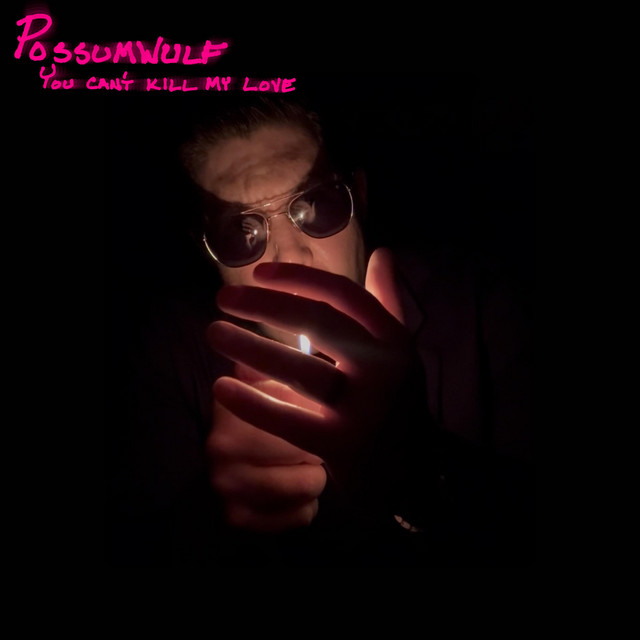
Possumwulf’s You Can’t Kill My Love is a wonderfully unruly piece of alternative rock that refuses to settle into one shape. Rooted in Southern Americana but pushed into art-rock and post-rock territory, the track begins with ethereal strings and acoustic guitar before gradually erupting into a dense wall of fuzz and abrasive horns. There is a raw, almost feral quality to the arrangement, with the rough edges becoming an essential part of its character.
The song carries a strong sense of defiance, reflected in its increasingly confrontational sound. Possumwulf’s distinctly Southern perspective gives the track an earthy identity, while the unpredictable shifts between fragile and explosive passages keep it constantly engaging. You Can’t Kill My Love feels like a beautiful mess by design—dark, noisy, dramatic and gloriously resistant to convention.
If Slide It In would open the possibilities of Whitesnake hitting America, the self-titled album commonly known as 1987, the second of three albums re-released by Craft Recordings on stunning vinyl on 18 September 2026, would blow the bloody doors off.
After the success of Slide It In, there were struggles to keep Whitesnake lineups together. Jon Lord would leave for a returning Deep Purple. Cozy Powell would depart too, though he would have fit in perfectly with the image upgrade that was in the air, driven by Geffen Records and John Kalodner.
David Coverdale was aware a new record was due. There were tensions with John Sykes, but the pair went to the South of France to write some future classics. Neil Murray joined them in mid-’85, before all three moved to Los Angeles and, after auditioning a large number of drummers, ended up with 39-year-old Aynsley Dunbar. This was maybe a strange choice considering the ‘image upgrade’ that was in place from Kalodner.
Whitesnake 1987 returns on stunning vinyl through Craft Recordings on 18 September 2026.
Late in ’85, the new Whitesnake lineup then moved to Little Mountain in Vancouver to record the album. Coverdale had vocal problems, while Sykes would layer guitar over guitar over guitar, and with much reworking going on, a colossal wall of guitars and a big production was underway.
Mike Stone was brought on board. Sykes’ guitar track count was in the 30s, and with all the effects going on, it was felt that this made the guitars out of tune and gave Coverdale problems singing the new songs.
Kalodner would pull the album from Mike Stone, who was having a difficult time on the project and bring back Keith Olsen, telling him to “fix this record.” The results were outstanding.
Olsen would end up getting Dann Huff in for some guitar parts. They were working on a new version of Here I Go Again. As Keith Olsen said, they needed eighth notes in the verses, and Sykes was proving difficult in wanting his whole rig. Huff was there for less than an hour, with his guitar plugged into the studio amp and the job was done.
With Huff and Adrian Vandenberg playing rhythm guitar on the radio version of Here I Go Again, as well as Bill Cuomo redoing around 50% of the bass electronically across the album. 1987 was proving a difficult operation.
Kalodner had thought that Here I Go Again would be a smash hit if recorded properly. He was not happy with the version recorded, hence the existence of the single version, or US remix as it is more commonly known.
The problem is, it is a re-recording, featuring drummer Denny Carmassi, Dann Huff on guitars, Mark Andes on bass and Alan Pasqua on keyboards. The album would also feature Richard Page, of Mr Mister fame, but this was all married together with Coverdale’s new stunning vocals.
Kalodner said that Geffen were stunned by this version of Here I Go Again, but with 1987 in production and two years late, the decision was made to release it as a single. But this was a single was not on the album.
When Sykes and Coverdale parted company, Vivian Campbell was brought in, and then Rudy Sarzo and Tommy Aldridge joined for some video work in what was called Kalodner’s “fantasy lineup.”
If the Still Of The Night video would announce the band on a global superstar stage, then the reworking of the older tracks Here I Go Again and Crying In The Rain, alongside Is This Love, would cement this position.
As with the US version of Slide It In, I am not an expert in album tracklisting order, but I did love the immediacy of the UK version of 1987 having Still Of The Night in the opening slot. But you cannot argue with the impact of Crying In The Rain opening the US version, as with this new vinyl reissue.
Children Of The Night was epic, while Straight For The Heart’s keyboard always made me wonder what Jon Lord would have made with this track.
Don’t Turn Away, near the back of both versions, was a favourite at the time and teased what may come next. Even now, you can feel it would fit prominently with any of those early Bon Jovi album songs.
As with Slide It In, it is such a joy to revisit these albums on brand new vinyl. The new Craft Recordings reissues are such a thrill to hold and play. 1987 was such a fantastic record. You could hear it in most pubs as the ’80s wore on, and songs from it still hit radio stations worldwide today.
Coverdale would say he had been dreaming about playing in America again, having spent so little time over there with Whitesnake prior to 1987. With this new album, he was convinced that they would instantly fall in love with Whitesnake.
John Sykes would form Blue Murder, the Whitesnake fantasy lineup would complete one tour, and for some time, it felt like everyone was buying 1987. As Coverdale said, on this record, “We made more money than God.”
Whitesnake returns to vinyl in its original US 1-LP configuration, alongside the wide release on standard black vinyl and exclusive colour pressings. Released on 18 September 2026, visit craftrecordings.com/whitesnake-lps to pre-order all three albums.
Whitesnake – Track listing
Side A
Crying in the Rain Bad Boys Still of the Night Here I Go Again
Side B
Give Me All Your Love Is This Love Children of the Night Straight for the Heart Don’t Turn Away
Long before modern thrillers, psychological horror, and suspense films, Edgar Allan Poe discovered how to make readers fear what might happen next. His stories rarely depend on monsters, violent action, or supernatural spectacles. Instead, they create tension through uncertainty, anticipation, and the gradual collapse of the human mind. Readers know something is wrong almost immediately. The question is not whether disaster will arrive, but when.
A beating heart grows louder beneath the floorboards. A prisoner watches a pendulum descend toward his body. A man calmly describes a murder while revealing far more than he intends. Poe understood that fear often emerges from expectation rather than shock. By controlling information, manipulating perspective, and exploring psychological instability, he transformed suspense into an art form.
His techniques helped shape modern Gothic fiction, detective stories, psychological horror, and countless suspense narratives that followed. More than a century and a half after his death, Poe remains one of the most influential architects of literary tension.
Poe and the Art of Suspense
How Poe Changed Suspense Forever
Before Poe, Gothic fiction often relied on dramatic events, supernatural interventions, and elaborate plots to create excitement.
Poe shifted attention inward.
Instead of asking readers to fear external threats alone, he encouraged them to confront the darker regions of the human mind. His stories frequently focus on obsession, guilt, paranoia, and psychological deterioration.
This innovation changed the nature of suspense.
The greatest danger was no longer hiding in a castle corridor or emerging from a stormy night. It often existed within the narrator himself.
By making consciousness the source of tension, Poe introduced a psychological dimension that remains central to suspense fiction today.
The Power of Anticipation
One of Poe’s greatest strengths was his ability to build anticipation.
Many writers rely on surprise. Poe preferred expectation.
Readers are frequently aware that something terrible is approaching long before it arrives. The suspense emerges from waiting for the inevitable.
In The Tell-Tale Heart, the murder occurs relatively early in the story. The true tension begins afterward, as the narrator attempts to maintain control while guilt gradually overwhelms him.
The reader senses that the situation cannot continue indefinitely.
Every conversation, every sound, and every passing moment increases the pressure.
Poe understood that anticipation often produces stronger emotional responses than sudden shocks.
The imagination becomes an active participant in the story, generating fear before the narrative fully reveals its consequences.
The Unreliable Narrator and Psychological Tension
Another of Poe’s most influential techniques is the unreliable narrator.
Many of his stories are told by individuals whose perceptions cannot be trusted completely.
Rather than presenting an objective account of events, Poe places readers inside unstable minds.
This approach creates immediate tension because readers must constantly evaluate what is true.
The narrator of The Tell-Tale Heart insists repeatedly that he is sane. Ironically, these declarations only increase suspicion. Every attempt to prove his rationality reveals growing instability.
The same technique appears throughout Poe’s fiction. Narrators often expose their fears, obsessions, and contradictions without realizing it.
Readers become investigators, searching for truth beneath distorted perceptions.
The result is a uniquely psychological form of suspense that continues influencing literature and cinema.
The Cask of Amontillado and the Fear of Inevitability
Few stories demonstrate Poe’s command of suspense more effectively than The Cask of Amontillado.
From the beginning, readers know that Montresor intends revenge.
The suspense does not depend on discovering his plan. Instead, it emerges from watching the plan unfold.
Every step deeper into the catacombs increases tension. The atmosphere becomes more oppressive. The danger becomes more apparent. Yet Fortunato remains unaware of his fate.
This dramatic imbalance of knowledge is one of Poe’s most effective techniques.
Readers understand the threat while the victim does not.
The resulting helplessness creates an overwhelming sense of inevitability.
The story remains suspenseful not because the outcome is uncertain, but because it feels unavoidable.
The Pit and the Pendulum: Fear Through Confinement
Poe understood that suspense becomes more intense when characters cannot escape their circumstances.
Few stories demonstrate this principle more effectively than The Pit and the Pendulum.
The narrative places readers inside a confined environment where danger is immediate yet uncertain. The protagonist awakens in darkness, unable to understand his surroundings or predict what will happen next.
This lack of information becomes a source of terror.
Readers discover the environment gradually, sharing the character’s confusion and vulnerability. Every revelation introduces a new threat, transforming the setting itself into an instrument of suspense.
The descending pendulum remains one of Poe’s most memorable images because it combines anticipation with inevitability. Death does not arrive suddenly.
It approaches slowly.
The protagonist can see it coming, measure its progress, and imagine its consequences.
Poe recognized that prolonged anticipation often creates greater tension than immediate danger.
Guilt as a Source of Suspense
Many suspense writers build tension through external threats.
Poe frequently builds it through guilt.
In stories such as The Tell-Tale Heart and The Black Cat, the greatest danger comes not from the outside world but from the narrator’s own conscience.
The crime has already occurred. The question becomes whether the narrator can live with what he has done.
This approach allows Poe to transform ordinary situations into psychological battlegrounds. A casual conversation with the police becomes unbearable. A quiet room becomes filled with imagined sounds. Everyday reality begins to feel threatening because guilt alters perception.
Readers witness the gradual breakdown of the narrator’s self-control.
The suspense emerges from knowing that the truth is struggling to surface.
Eventually, the mind becomes incapable of containing what it wishes to conceal.
The Black Cat and Self-Destruction
One of Poe’s most fascinating psychological insights appears in The Black Cat.
The narrator repeatedly acts against his own interests, destroying relationships and ultimately bringing about his own downfall.
Rather than presenting evil as an external force, Poe explores the unsettling possibility that people sometimes participate in their own destruction.
This idea creates a distinctive form of suspense.
Readers understand that disaster is approaching, yet the narrator seems unable to change course. Every decision pushes him closer to catastrophe.
The tension comes from watching an individual move steadily toward consequences that appear increasingly unavoidable.
Poe recognized that human beings often fear their own impulses as much as any external threat.
By transforming self-destructive behavior into narrative tension, he expanded the possibilities of suspense fiction.
Why Obsession Creates Tension
Obsession occupies a central place in Poe’s fiction.
His characters frequently become consumed by a single idea, memory, or desire. Once this process begins, the outside world gradually loses importance.
The obsession takes control.
This pattern appears throughout Poe’s work because obsession naturally generates suspense. Readers recognize that the character’s behavior is becoming increasingly dangerous, while the character often remains unaware of the full consequences.
The narrowing of focus creates momentum.
Each decision feels like another step toward an outcome that cannot easily be avoided.
Whether the obsession involves revenge, guilt, fear, or pride, it transforms the narrative into a psychological countdown.
The suspense lies not in whether something will happen, but in how far the character will go before recognizing the truth.
Suspense Through the Human Mind
Poe’s greatest innovation may have been his decision to treat the mind itself as a source of danger.
Traditional Gothic fiction often relied on haunted castles, mysterious strangers, and supernatural threats.
Poe retained Gothic atmosphere but redirected attention inward.
Madness, guilt, obsession, and paranoia became the engines of suspense.
This shift transformed the genre.
Readers no longer feared only what might emerge from the darkness. They feared what might emerge from within the characters themselves.
The result was a more intimate and psychologically disturbing form of suspense, one that continues influencing horror, thrillers, and Gothic fiction today.
The Unity of Effect
Among Poe’s most important contributions to literature is his concept of the “unity of effect.”
Poe believed that every element of a story should contribute to a single emotional outcome. Plot, setting, narration, imagery, and pacing should work together toward one carefully controlled effect on the reader.
For suspense fiction, this principle proved revolutionary.
Nothing is accidental in a Poe story. Every detail increases tension, reinforces atmosphere, or deepens psychological unease.
A creaking floorboard, a dark corridor, an unusual sound, or an obsessive thought all contribute to the same emotional destination.
This disciplined approach explains why many of Poe’s stories remain so effective. The reader is never allowed to escape the emotional pressure of the narrative.
The suspense builds continuously until the story reaches its inevitable conclusion.
How Poe Influenced Modern Suspense
The techniques Poe developed continue shaping suspense storytelling today.
Modern crime fiction, psychological thrillers, horror novels, and suspense films all rely on methods that Poe helped refine.
His use of unreliable narrators remains common in contemporary fiction, and his focus on psychological instability continues influencing horror writers. His ability to transform ordinary environments into sources of fear appears throughout modern cinema.
Perhaps most importantly, Poe demonstrated that suspense does not require constant action.
A character sitting alone in a room can be more compelling than a dramatic chase sequence if the psychological tension is strong enough.
This lesson remains central to many of the most successful suspense stories ever created.
Poe and Hitchcock: Masters of Anticipation
Although separated by nearly a century, Edgar Allan Poe and Alfred Hitchcock shared a similar understanding of suspense.
Both recognized that anticipation is often more powerful than surprise.
A sudden shock may startle an audience for a moment. Suspense can hold attention for minutes, pages, or entire stories.
Poe frequently allows readers to sense danger before his characters fully understand it. Hitchcock employed a similar strategy in many of his films, creating tension by giving audiences information that characters lacked.
The result is an emotional experience built on expectation.
Readers and viewers become active participants, constantly imagining what might happen next.
This technique remains one of the foundations of suspense storytelling.
Why Poe’s Suspense Still Works
Many nineteenth-century literary techniques feel distant to modern readers.
Poe’s suspense remains remarkably fresh.
The reason is simple.
His stories are built around psychological experiences that remain universal. Guilt, fear, obsession, paranoia, uncertainty, and anticipation continue affecting people today just as they did in Poe’s lifetime.
Technology changes. Human psychology changes much more slowly.
Readers still understand the fear of losing control. They still recognize the pressure of hidden guilt. They still feel the tension created by waiting for an unavoidable outcome.
Because Poe’s suspense emerges from these fundamental experiences, it continues resonating across generations.
Poe and the Art of Suspense
Edgar Allan Poe transformed suspense by shifting attention from external threats to internal conflicts.
Through unreliable narrators, psychological tension, guilt, obsession, confined spaces, and carefully controlled anticipation, he created a new model for storytelling.
His greatest innovation was recognizing that the human mind could be more frightening than any monster.
The narrators of The Tell-Tale Heart, The Black Cat, The Cask of Amontillado, and The Pit and the Pendulum remain compelling because their fears emerge from recognizable human emotions.
Nearly two centuries later, writers and filmmakers still rely on techniques Poe helped perfect.
His stories continue demonstrating a fundamental truth about suspense:
the most powerful fear often comes not from what is happening now, but from what we believe is about to happen.
Wear the Darkness
If Poe and the Art of Suspense inspired you, explore the Edgar Allan Poets store. Our designs celebrate Edgar Allan Poe, Gothic literature, psychological horror, mystery, and the dark imagination that continues influencing modern culture.
Join the Noir Newsletter
Receive more essays exploring Edgar Allan Poe, Gothic literature, suspense, psychological horror, and the ideas that continue shaping dark storytelling.
Frequently Asked Questions
Why is Edgar Allan Poe considered a master of suspense?
Poe created suspense through anticipation, psychological tension, unreliable narrators, and carefully controlled pacing rather than relying solely on shock or action.
What is Poe’s theory of the unity of effect?
Poe believed every element of a story should contribute to a single emotional impact, creating a unified and powerful reading experience.
How does The Tell-Tale Heart create suspense?
The story builds tension through guilt, paranoia, and the narrator’s increasingly unstable mental state.
Which Poe story is most suspenseful?
Many readers consider The Pit and the Pendulum one of Poe’s most suspenseful works because of its relentless anticipation and confined setting.
How did Poe influence modern suspense fiction?
His techniques influenced psychological horror, detective fiction, thrillers, and suspense cinema by demonstrating the power of anticipation and psychological conflict.
If you want to make a great cake, there are a few necessary ingredients that you will need. Then, you must combine the proper measurements of each ingredient and bake them together, being careful not to allow it to cook too little or too much. Recording a great album is a similar process, beginning with a great song idea and talented musicians with the ability to translate an idea into music, and then mixing those ingredients into a great song.
Jovin Webb, with the aid of some of the finest musicians and music minds available, has baked up a delicious recording with his Son Of A Sinner album release. Born and raised in the Baton Rouge, Louisiana, area, Webb was turned on to blues music by listening to his dad’s blues record collection. He was also influenced as a youngster by the gospel music of his church, where he played drums.
As he got older, he played blues and soul music all around the Gulf Coast area. In addition to being a soulful vocalist and drummer, Webb also plays guitar, piano, and harmonica and is a songwriter. He first gained major recognition as a contestant on American Idol in 2020. Jovin Webb then recorded his first album, Drifter, in 2024, and it received strong critical acclaim.
Son Of A Sinner comes out smoking with “Gunpowder And Lead” as Jovin Webb belts out, “Take a pocket full of money, start waving it around; in a downtown juke joint, there’ll be violence going down. You better back up brother, before you wind up dead. You’re playing around with fire, mixing gunpowder and lead.” Can’t you just picture that scene in your mind?
Let me just say it right now and get it out of the way. These musicians are “aces,” some of the best in the music business, and they’re showing out all through this album. So please allow me to give them a shout-out. You have Kenny Greenberg (guitar), Tom Hambridge (drums and background vocals), Tommy Macdonald (bass), and Mike Rojas (piano/keyboards). These are some of the best that exist, and Jovin Webb’s bluesy, soulful vocal contributions just make this album a really special piece.
Track two of Son Of A Sinner is “Pray For Me,” and it sounds like a very personal piece from Webb. It’s a slow, emotional tune where he sings, “I been a liar, a backslider. I been indulging in my desires.” I really love the guitar work in this one. “So I prayed, down on my knees; asking the Lord to forgive me please.”
Webb continues with pleading vocals: “Pray for me, pray for me, Lord. I need somebody to pray for me.” A tasty Kenny Greenberg guitar solo follows before Webb returns, singing, “Lord I know what you want me to be, but the devil won’t set me free.” The song ends with the line, “I’m just the son of a sinner. Pray for me.” This is one of those tunes that you will not soon forget, and it’s going to roll around in your head long after the music ends.
“After The Rain” is a slow, pretty ballad about a broken relationship. Even though Jovin Webb can belt out heavy, fast-paced tunes, this one demonstrates that he has a softer side. It really is a great selection that appears in exactly the right spot on this album.
He sings, “No more arguing; no more talking on the phone. No more crying; you blame me even if you’re wrong.” I’m loving the fills, great lead break, and outro played by Kenny Greenberg in this one. “I hear the distance in I love you.” Almost every one of us has had to recover from a broken relationship, and Webb is singing about it here in a language that we can all understand. “Our love is gone with the rain. But after the rain, the sun will come shining in to wash away the pain.”
The ninth track of Son Of A Sinner is “It’s Alright,” and it’s a soulful, dance-if-you-want-to song. “Sometimes I get down and I lay awake in bed at night; thinking about my problems and holding that whiskey bottle tight. I had to remind myself I’m only human, but I’m strong enough to fight. And it’s alright, it’s alright to have the blues.”
It sure is alright to have this kind of blues, and Jovin Webb sounds right at home and in the groove singing this one. There’s more great guitar and some sweet keyboard work in this one as well.
I would also like to mention that Son Of A Sinner features two masterfully performed cover songs. Jovin Webb and the band tackle Delbert McClinton’s “Every Time I Roll The Dice” and The Allman Brothers’ “Whipping Post.” I’ll just say, take a listen; they are both great.
Jovin Webb possesses a great voice, selects great songs, and surrounds himself with great musicians. I believe that he is only witnessing the early stages of what will become a long and successful career.
Lionel Richie has said this about Webb: “This is what barbecue sauce sounds like.” BET said, “Jovin Webb is bringing the blues to a new generation.” Webb says of himself, “I’m just a son of a sinner figuring it out.” Aren’t we all?
I would encourage listeners to check out his previous release, Drifter, and other selections available on YouTube. He has one event scheduled in N.C. on September 19 before he heads out to Lithuania for a concert date, followed by a string of dates in France. Consult his social media for more information.
I predict that we will see and hear more of Jovin Webb in the near future, and we shoulld all look forward to what might be next from him.
The Review: 9/10
Can’t Miss Tracks
– Gunpowder And Lead – Pray For Me – After The Rain – It’s Alright
Hellripper – Release Zeke cover versions digitally; European tour starting this week; North American tour next month! Scotland’s ibex-obsessed blackened thrash bastards of Hades otherwise […]
KULK, IAN & Hellga – The Holloway, Norwich, 04.09.26
There’s something genuinely special brewing in Norwich right now. If you spend enough time following underground music, you learn to cherish the small rooms where the divide between the stage and the floor simply ceases to exist.
The Holloway has rapidly become one of my absolute favourite spots for live music in the city. There is no elevated platform, no security barrier, and no safety net. The bands stand right on the floorboards directly in front of you, the crowd presses in, and the sonic energy bleeds straight into the room. It’s intimate, sweaty, suffocatingly loud, and utterly vital.
Massive credit goes to Alfie and the whole team at The Holloway for cultivating a space that treats heavy, uncompromising music with the respect and intensity it deserves. On nights like this, with a bill that brought together local blood and underground titans, you are reminded why we drag ourselves out to live gigs week after week.
Kicking things off were Hellga (8), making their live debut at The Holloway. A local Norwich outfit, they describe their sound as a “chimaera of melodic loudness.” Mid-set, they showed a refreshingly self-deprecating streak, jokingly referring to themselves as the “Powerpuff Girls” of tonight’s heavy billing. Honestly, they were far too hard on themselves.
Their blend of melodic hooks and distorted punch was sharp, energetic, and remarkably tight for an opening set. The crowd took to them immediately, and the room was warmed up properly within minutes. Having never heard or seen them before walking in, I walked away making a mental note to dig into their recorded material as soon as I got home. An impressive, confident opening salvo.
Next up were IAN (9), a band that has become a firm personal favourite. I first crossed paths with their work through Musipedia of Metal when I was tasked with reviewing their record, and after catching them headline The Holloway on a previous visit, my expectations were sky-high. They did not disappoint. IAN create a soundscape that is as devastating as it is emotionally fragile.
The pairing of massive, down-tuned guitar distortion with delicate, weeping cello melodies, field recordings, and raw, anguished screams is nothing short of a stroke of genius. The cello isn’t just an ornamental gimmick; it’s an essential, beating organ in their songwriting.
They played the main stage at ArcTanGent festival recently, and a review from Veil Of Sound put their dynamic better than I ever could:
“The whole band is built around the cello and the quieter parts feel fully integrated into their music, an essential component of the songs, yet when the riffs hit, oh boy. They understand dynamics as violence. The quiet moments aren’t merely introductions to the heavy parts; they are the tension that makes the heavy parts hurt.”
Standing barely two feet away on The Holloway’s floor, that exact sensation hit me like a train. When IAN drop from a quiet, mournful cello phrase into a tectonic post-metal crescendo, the volume doesn’t just hit your eardrums, it vibrates your ribcage. It is pure tension and release delivered with theatrical poise, and they proved once again why they are one of the most exciting propositions in British underground heavy music.
Then came the headliners, KULK (9) I first saw Thom Longdin and Jade Ashleigh Squires support Conan over at The Waterfront, and even on that larger stage, the sheer volume and atmospheric weight they wrenched out of a two-piece setup was astonishing. But seeing them cornered on the floor at The Holloway, with the crowd standing barely two metres away, was an entirely different beast.
It is immediately obvious that Jade’s drum kit hasn’t behaved any better since that Conan show; she attacks the skins and cymbals with a ferocious, targeted hostility, hitting them like they’ve personally and mortally offended her. Thom stands opposite, coaxing horrifying screeches of feedback and massive, sludge-laden riffs out of his rig while tearing his vocal cords to shreds. There’s a rare, almost telepathic chemistry between them. Their banter between tracks is sparse and quiet, but the second the count-in lands, the performance is raw, deeply personal, and agonizingly heavy. You don’t just watch KULK play; you survive them. It feels like an emotional purge laid bare on the concrete.
Naturally, I wasn’t leaving without picking up a physical copy of KULK’s brand new studio album, Choosing To Die, on Church Road Records, this was the first night of their album release show takeover. Sitting down with the record at home with decent speakers only confirmed what that live set made obvious: KULK are operating on an entirely different level, and this record should see them skyrocket across the UK heavy scene. See the review soon.

 If you love this music: