A song influenced by the final words of Taiwanese political prisoners.
The post Chthonic And Mariska Join Forces For “Näin Määrättiin” appeared first on Theprp.com.
A song influenced by the final words of Taiwanese political prisoners.
The post Chthonic And Mariska Join Forces For “Näin Määrättiin” appeared first on Theprp.com.
The Concord, New Hampshire band FFO: Chillin has a warm, comforting, instantly familiar sound that’s weirdly hard to describe. They basically make big, hearty ’90s-style indie-punk anthems with occasional hardcore breakdowns, and their songs tend to be really short. Last month, they released “All I Know,” their first single for the great hardcore-centric label DAZE, and I saw them open for Joyce Manor and Glitterer in Charlottesville. They were drunk and sloppy and really, really fun. Today, they’ve got another song.
The post FFO: Chillin – “Perpetual Motion” appeared first on Stereogum.
When the Misfits split two days before Halloween 1983, the world barely noticed. The New Jersey horror-punks were the missing link between the Ramones and Boris Karloff, a bunch of B-movie fixated kids who worshipped Ed Wood, underground comics and Elvis. But they were way too strange for mainstream acceptance, even if they’d wanted it. They would get a posthumous boost from a cusp-of-stardom Metallica, who wore their T-shirts and covered their songs, but too most people they were little more than a logo.
That’s all future Journey singer Jeff Scott Soto knew of them when he got a call in 1988 from a music industry match-maker he knew. She told him that some of the guys from the Misfits were putting together a new project, and was he interested in working with them?
“I knew nothing about them,” Soto told Classic Rock in 2025. “I’d heard the name and seen the logo, but that was all. I hadn’t heard the music. I couldn’t have told you the name of any of their songs. But she was, like, ‘They’ve got a new band going on, are you interested in singing for them?’”
The LA-born Soto had made a name for himself singing on the first two albums by Swedish guitar wizard Yngwie Malmsteen, only to butt heads with his boss once too often. By the time he got the call asking if he was interested in working with the guys from the Misfits, he was out of Yngwie’s band and in need of a little cash.
“My son had just been born, so I needed money to make sure we could afford diapers,” Soto told Classic Rock. “So I said, ‘Absolutely, I’ll take their call.’”
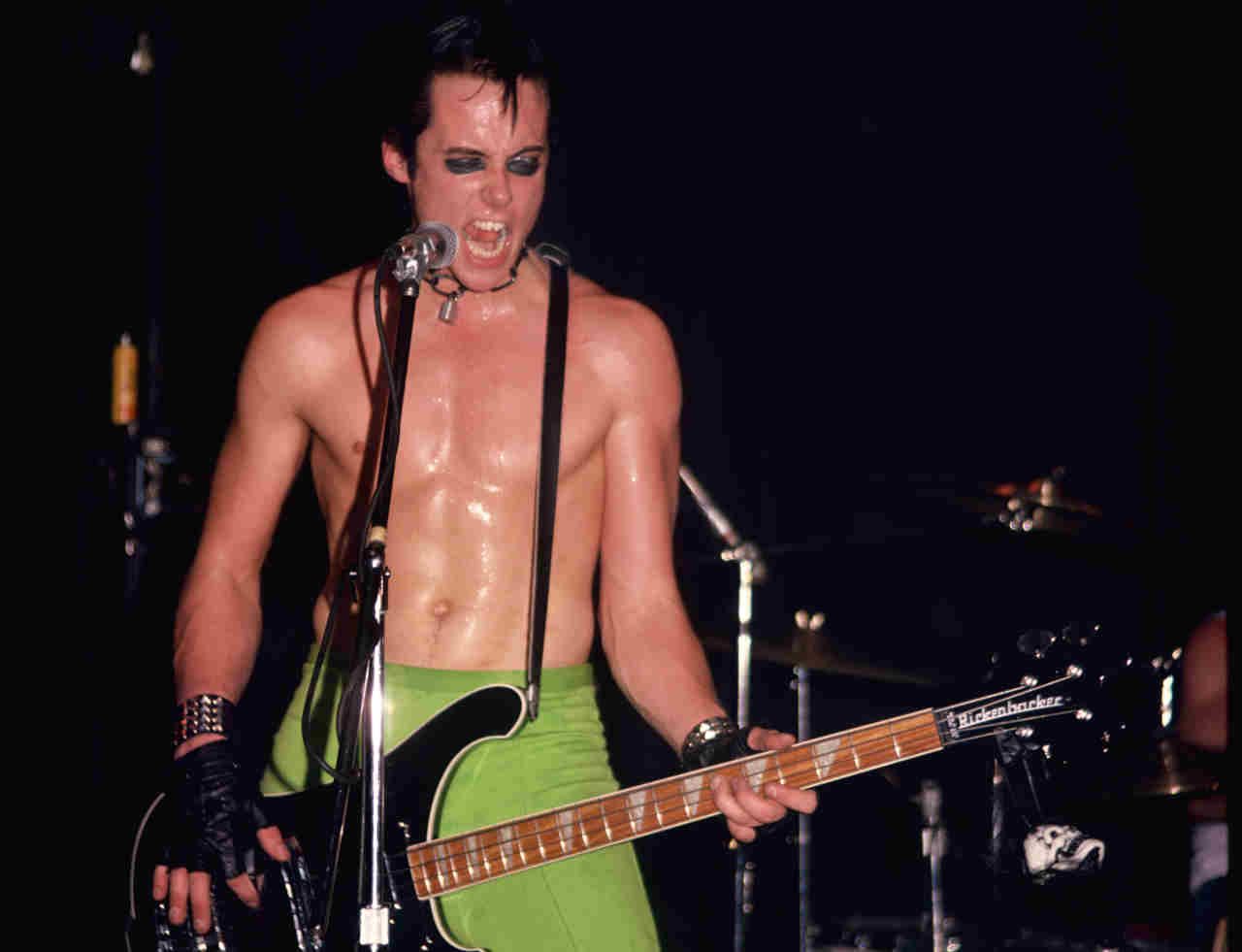
After the Misfits imploded, frontman Glenn Danzig formed a new, more occult-themed band, Samhain, who would eventually mutate into the more successful Danzig. By contrast, founding bassist Jerry Only and his hulking, guitar-player brother Doyle, spent the middle of the decade in the musical wilderness. They had originally intended to continue the Misfits with a new singer, but ended up tangled in a lawsuit over the band name with their former bandmate.
“The Misfits name was locked down in court, and we couldn’t really get much done,” Jerry told Maximum Rock N Roll in 1995. “So what Doyle and I did, we sat back and wrote an album that was musically a step above [the Misfits]. It had a lot of riffs in it, and a lot of good drum cuts. It was kind of like Iron Maiden meets the Misfits through Motörhead’s amps.”
Except there was even more to it than that. Jerry and Doyle planned to launch a new band called Kryst The Conqueror – pronounced ‘Christ’. The songs album they were writing centred around a quasi-religious sci-fi concept, and there was talk of a comic book too. Jerry started calling himself Mocavious Kryst, later changed to Mo The Great, and shots of the pair from time show them shorn of their signature devilocks and proto-corpse paint make-up, instead kitted out in Manowar-style sleeveless leather tops.
“With the Misfits, we were seen as this dark, evil band,” Jerry told Metal Hammer in 2012. “We wanted to do something that was positive instead. It was as far away from the Misfits as you could get. We wanted Bruce Dickinson to sing for it.”
Sadly for Jerry and Doyle, Bruce was otherwise engaged. They looked elsewhere. “We went out and hired a singer that had a real Viking-type, godly voice,” Jerry told Maximum Rock And Roll. “We were trying to form ourselves in the image of the Lord.”
That godly Viking was Jeff Scott Soto, whose lack of knowledge of the pair’s previous band was outweighed by his need to put food on the table. He flew to New Jersey to meet Jerry and Doyle. “Those guys were just so nice,” Soto told Classic Rock. “I knew they wanted to go in a completely different direction and get away from Misfits territory.”
Together with drummer The Murp (aka Jim Murphy), they spent just under two weeks laying down 13 songs at House Of Music studio in West Orange, New Jersey. Tracks such as Thunder Thruster and In God We Trust were riffier, heavier than the Misfits had ever been, sitting somewhere between thrash metal and Manowar. One song, the Maiden-inspired March Of The Mega-mites, was a primitive prog metal mini-epic. “That was six minutes and 58 seconds long and it never played the same thing twice,” Jerry told Metal Hammer.
They roped in a friend-of-a-friend from New Jersey, Dave ‘Snake’ Sabo, to play lead guitar on a couple of the songs. Snake had his own up-and-coming band, Skid Row, but he was happy to help out, reputedly playing on the songs Trial Of The Soul and Spellbound, although his contract with his main group meant he couldn’t be credited for his appearance.
Soto himself would be credited as the titular Kryst The Conqueror – not because he was still under contract to Yngwie Malmsteen (he wasn’t), but because it fitted in with the comic book storyline Only had in his head. “Everybody was supposed to have comic book names, so they gave the lead vocalist that character name,” he told Brave Words.
If Kryst The Conqueror’s music was at right angles to the Misfits, the concept was the polar opposite . The band name and several of their song titles suggested there was a heavy religious bent to it that bordered on Christian metal. “We don’t want people to come out and say, ‘They were great, but they’re into that devil shit,’” Only told Yeszista zine at the time. “That’s not it, all of our songs are about going out and chasing the son of a bitch. That’s what it’s all about… if I made Kryst with a ‘C,’ people are gonna say, ‘He’s making fun of God.’ We’ve come in His name to do the job.”
Whether they’d gone the full Stryper or it was a schtick wasn’t clear, though Jerry was certainly more godly than his former bandmate Danzig. “Well, I grew up [with religion] very much so,” he told Metal Hammer. “I’ve had experiences where I feel you kind of touch the other side and realise that it’s there. Look, I don’t push it on anybody. God’s different for everyone. That’s the beauty of God.”
It turned out that Kryst The Conqueror could have done with a little divine intervention. Despite hitting it off with Jerry and Doyle on a personal level, Jeff Scott Soto wasn’t sold on the project. “I was a total gun for hire,” he told Classic Rock. “I think they thought: ‘Let’s get him down here, once he sings these songs, he’s going to be convinced to actually want to continue. I had a great camaraderie with the guys, but musically it just wasn’t what I was looking for, nor was it something I would have actually left everything else that I was doing at the time to stop and do with them.”
It was a blow, but Jerry and Doyle weren’t giving up on their passion project. In January 1990, they put out five of the tracks they’d recorded with Soto as the Deliver Us From Evil EP on their own Cyclopean Music Inc. label. Featuring a cheeseball cover featuring an angelic sword whose hilt makes the letter ‘K’, suspended in a stormy celestial sky, it wasn’t well received by the few people who heard it.
Ultimately, the odds were stacked against Jerry and Doyle. As well as not having a singer, the comic book idea proved too costly. As the 80s turned into the 1990s, Kryst The Conqueror languished in Pugatory.
Jerry and Doyle’s prayers were finally answered in the mid-90s, when the legal issues with Danzig were finally settled. The pair secured the rights to the Misfits name, and assembled a new incarnation of the band fronted by singer Michale Graves. A handful of Kryst The Conqueror riffs were recycled in some of the songs they were writing, and at least one track, Dr Phibes Rises Again, was recorded by this latest line-up (the new version was exhumed on the 2001 compilation, Cuts From The Crypt).
And that insane idea for a sci-fi-Jesus concept album with its own comic book? That was firmly shoved to the back of a dusty drawer, where it’s languished in semi-obscurity ever since, give or take the odd bootleg release of the full Jeff Scott Soto session. With Jerry and Doyle now reunited with onetime adversary Danzig and playing sporadic, money-spinning reunion shows, it’s unlikely the pair are going to revisit it any time soon. The same goes for Jeff Scott Soto, whose long career has included a mid-2000s stint with Journey.
“I haven’t heard it in decades.,” Jeff Scott Soto. told Classic Rock of the forgotten quasi-Christian metal experiment he was fleetingly involved in. “If I listened back to it, it’ll probably all come back to me, but I couldn’t even sing you a melody from it because it’s been so long.”
Drummer .
The post Drummer Bobby Rock celebrates 50 years of sobriety first appeared on Sleaze Roxx.
They previously went separate ways back in 2023.
The post Hollow Front Welcome Back Dakota Alvarez Ahead Of Their New Single “So Long To Yesterday” appeared first on Theprp.com.
Reviewed by Oli Gonzalez
Few bands can match the sheer velocity and release cadence of Krallice! Since their 2007 inception, the band have 15 full length albums to their name! Largely a studio project, live appearances have been rare but performing as Roadburn Festival’s in-house band for the 2026 edition must be seriously respected! They will add appearances at this autumn’s Damnation and Desertfest Belgium to their list. As well as album 16 “Scour Order” via Profound Lore records, joining the ranks of Bell Witch, Spectral Wound, and other prestigious extreme metal acts who also call the record label home. This is significant as Krallice has largely released music independently. So, what can we expect from “Scour Order”?
Well, there’s raw and gritty albums. Then there’s rushed and half-baked releases. Sadly, “Scour Order” is leaning too close to the latter! To keep it concise, it just feels like Krallice has produced much better records than this! “Years Past Matter” offered a deep dive into the cosmic atmospheric reaches of black metal whilst retaining the pace and ferocity that pushed Krallice beyond the reaches of the genre.

“Crystalline Exhaustion” offered a similar explosive burst of black metal but with an indulgent synth driven spine that added mystery, intrigue and melody to proceedings. All of these elements are absent from “Scour Order”. The overall sound feels flat and never reaches the crushing highs of those albums. With so much studio experience, this should be a record that learns from the lessons – victories and defeats – from the past. This at times feels like devolution though.Then again, we’d be complaining if it sounded too polished and sterile. So we can’t have it both ways. Surely there’s a happy medium though?
Maybe it’s one that needs some time to get used to. Because after a few listens, ‘Her Green Arms’ began to resonate with me and the raw unpolished aggression started to strike a chord. As did the final song and album title track ‘Scour Order’. Except that this was much quicker to get on board with. Despite being an indulgent thirteen minutes, this journey felt worth it and traces of that cosmic atmosphere were becoming more salient in the mix, as well as some psychedelic spice to add urgency and tension. This one flows like lava, consuming everyone and everything in its path! A saving grace and satisfying end to what has been an album not up to Krallice’s high standards!
For all the latest news, reviews, interviews across the heavy metal spectrum follow THE RAZORS’S EDGE on facebook, twitter and instagram.
The post Album Review: Krallice – Scour Order appeared first on The Razor's Edge.
Ever since 2010, Elena Tonra has led the London indie-rolk trio Daughter; they shared their decade-old outtake “Not Enough” earlier this year. Back in 2018, Tonra released a self-titled solo album under the name Ex:Re. She never intended to make a follow-up, but she got to working on a few fragments of songs a few years ago, and now she’s got another Ex:Re record on the way. It’s called Save As — great title, a menu selection that I used constantly — and it comes out next month.
The post Daughter’s Elena Tonra Announces New Ex:Re Album <em>Save As</em>: Hear “Radio Station” appeared first on Stereogum.
Last week I went to the Norwegian Consulate in Manhattan, where all Norwegian musicians live when they play Bowery Ballroom (someone fact check that), and I ran into Sondre Lerche, the Bergen-born singer-songwriter who just released a lovely new album called ‘Acrobats’ on PLZ/Virgin. He’s on tour in the US this month before heading home for a run of shows in Norway.
The post Sondre Lerche Schools Us On The Pronunciation Of Norwegian Band Names appeared first on Stereogum.
That song first appeared on their debut EP, “Snakebeard”.
The post Anciients Release Newly Re-Recorded Version Of “Humanist” appeared first on Theprp.com.
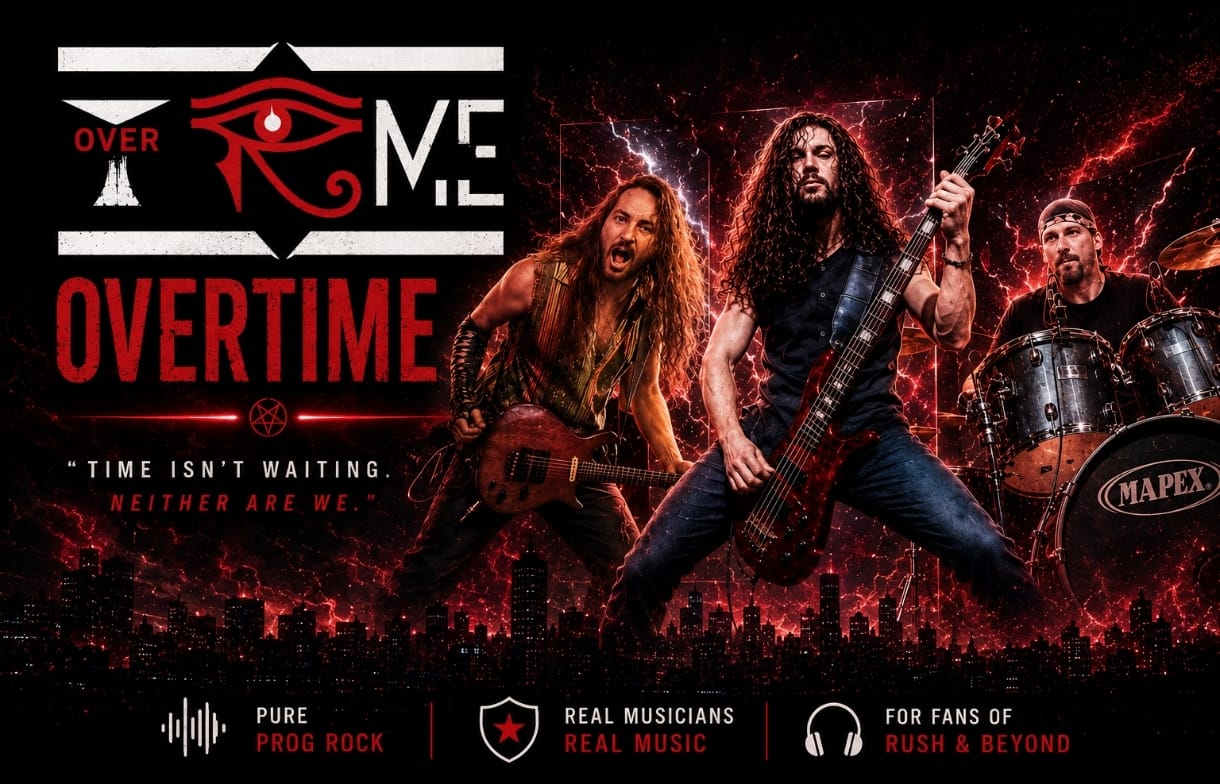
Over Time is an instrumental progressive hard rock trio from Split, Croatia, consisting of Alen Koljanin on guitar and composition, Danijel Stojan on drums, and Luka Brodarić on bass.
The band draws from progressive and classic rock, with Rush standing as an obvious progressive reference alongside the harder-edged influence of Van Halen and Led Zeppelin. But while those names help explain where some of the inspiration comes from, Over Time are at their most interesting when those influences become secondary, and the trio simply sounds like itself.
The project began during the COVID period, when Stojan invited Koljanin to jam in his garage. Koljanin arrived with riffs and compositions built around unusual meters and tempo changes, turning what started as informal sessions into complete instrumental pieces. Brodarić later joined on bass, completing the three-piece lineup.
That trio format is important to the way Over Time works. The music is technically demanding, but it rarely feels as though complexity exists simply to demonstrate technique. Odd meters, abrupt rhythmic turns and tempo changes are woven into songs in a way that often feels more like a change in intensity than an exercise in counting.
When listening to Over Time, their devotion to progressive technicality and classic rock ’n’ roll becomes apparent almost immediately. Rapid guitar trills, eccentric grooves and shifting rhythms sit alongside old-school rock production and a distinctly 1980s-influenced guitar tone.
What impressed me most about the rhythmic changes is that they usually feel natural. You can hear the timing and tempo move if you are paying attention, but those transitions rarely sound forced. Instead, they often create a sudden change in dynamics, pushing the music somewhere new without interrupting its momentum.
That is where the interaction between guitar, bass, and drums becomes particularly important. Music built around constantly shifting meters only works when the whole band moves together, and Over Time’s arrangements depend heavily on that relationship. The guitar may take the most immediately noticeable role, but the rhythmic framework underneath it is what allows the more complicated passages to keep their sense of groove.
Among the tracks, “Overtime” is probably the clearest introduction to what Over Time are trying to do on their own terms.
It combines progressive structure with the directness of hard rock — heavy riffs, melodic guitar work, rhythmic movement, and enough changes to keep the track evolving without losing its basic rock character. Rather than sounding like a tribute to a particular era or artist, “Overtime” feels like the best snapshot of Over Time developing their own musical identity.
“Für Eddie” and “L’Zepp” lean more openly toward classic hard rock. Both have a more upbeat, familiar rock feel, while still filtering those influences through the band’s unusual rhythmic approach.
“Ode to Rush,” as its title suggests, moves closer to the progressive side of the band’s influences. It has a more relaxed character while maintaining the structural movement and technical playing found throughout the rest of their music.
Then there is “4 in 1,” perhaps the most overtly progressive concept of the group. The composition moves through four different tempos and also features guest keyboardist Duje Ivić, whose organ playing brings another texture into the band’s sound. The shredding organ sections add a different flavour without sounding disconnected from the guitar-driven material around them.
Across these tracks, Over Time manage to reference older progressive and hard rock without simply reproducing it. There is a recognisable classic-rock character to the production and guitar tone, but the constant rhythmic shifts give the material a more modern and sometimes more extreme edge.
Being completely instrumental also creates one of the band’s biggest challenges.
Instrumental music — particularly songs stretching beyond four minutes — has to work harder to hold the attention of listeners who might normally connect with a song through a vocal melody or chorus.
Bands such as Polyphia and Animals as Leaders have approached that problem by making the guitar itself function almost like a vocalist. Their central melodies can become hooks that remain in your head in much the same way a sung chorus might.
Over Time take a somewhat different approach.
Their strength lies more in movement, musicianship, riffs, solos, and changing dynamics. There are plenty of technically impressive guitar moments, and Koljanin delivers some genuinely epic and shredding lead work, but I don’t always find those melodies as immediately memorable as the hook-focused approach used by bands such as Polyphia.
That is not necessarily a problem with the music — it is more a question of audience.
At the moment, I can imagine Over Time connecting particularly strongly with guitar players, musicians and listeners who enjoy progressive arrangements and technical rock. If the band ever wanted to reach further outside that audience, one possibility would be to experiment more often with recurring guitar melodies that perform the psychological role of a vocal hook.
That does not mean becoming Polyphia or abandoning what makes Over Time distinctive. In fact, their old-school character is part of what makes them interesting. A memorable recurring melodic idea placed inside their existing rhythmic approach could potentially make that sound accessible to an even wider audience.
Ultimately, Over Time sound like musicians who genuinely enjoy what happens when classic hard rock is pushed into less predictable territory.
The influence of Rush, Van Halen and Led Zeppelin can certainly be heard, but Over Time are not simply recreating those bands. Their identity comes from the combination of those older influences with constantly shifting tempos, unusual meters, heavy riffs and the interaction of three musicians working inside arrangements that rarely stay still for long.
The result is music that can sometimes sound as though it belongs to the classic-rock era — only more rhythmically restless, more technically extreme and less interested in following conventional song structures.
For listeners who enjoy real instruments, progressive musicianship and guitar-driven rock that refuses to remain in one place for very long, Over Time are well worth hearing.
The band currently releases its music exclusively through YouTube, where listeners can hear “Overtime,” “Ode to Rush,” “Für Eddie,” “4 in 1,” “L’Zepp” and the rest of the band’s material.
Over Time is an instrumental progressive hard rock trio from Split, Croatia.
Built around guitar-driven compositions, odd time signatures, changing tempos, and the chemistry between guitar, bass, and drums, the band combines progressive structure with the weight and directness of classic hard rock.
Rather than chasing current trends, Over Time focuses on musicianship, real performances, and songs designed to develop and change as they move.
Alen Koljanin — guitar, composer/songwriter
Danijel Stojan — drums
Luka Brodarić — bass
Find Them Here: YouTube | Facebook
Thanks for reading!