Blog

  • Review ANTHRAX “Cursum Perficio”

    Anthrax fans have had to be patient. The New York thrash metal veterans have remained a regular presence on the live circuit, but it has been quite some time since the band delivered a new studio record. For All Kings arrived back in 2016, followed by a handful of live releases, but a new studio album remained… Continue Reading →
  • “It’s really ironic. The spirit has been missing for some time, though we did a good job of camouflaging it”: Mike Portnoy was right – Dream Theater needed to change. No one thought they’d do it without him

    After Mike Portnoy left Dream Theater acrimoniously in 2010, the band’s new line-up – featuring drummer Mike Mangini – faced the task of making an album that would answer all questions about their status as leading lights of prog metal. 2011’s A Dramatic Turn Of Events did just that. Around the time of its release, vocalist James LaBrie accepted the irony that Portnoy had been right when he’s said the band needed to change.

    There can’t be many progressive drummers who’ve quit a band and caused quite so much of a stir as when Mike Portnoy left Dream Theater. Perhaps Cozy Powell replacing Carl Palmer in ELP, or Bill Bruford’s exit from Yes,. But often, drummers are seen as replaceable assets, and the ripples caused by Portnoy’s decision were decidedly rare.

    Dream Theater’s rebuff when he wanted to rejoin a few weeks later, the quest to find a replacement, the hiring of Mike Mangini and the legal dramas that tend to follow acrimonious splits, would seem to have this a particularly stressful time for the band. Yet on the eve of the release of their new album, the aptly named A Dramatic Turn Of Events, frontman James LaBrie reveals it’s been far less of an upheaval than you might imagine.

    “We knew we were swimming into uncharted waters,” he reflects. “The legal situation was definitely going on when we were in the studio, and that can be a distraction, but you’ve got to put everything in perspective. We knew it was going to come with the territory. We all realised it was going to be an exceptionally important album for us, and that there’d be scepticism. So I don’t think it was what most people would call a stressful period – it was just us accepting our situation and handling it with grace.”

    With Portnoy’s departure, the reconvening members discovered that their studio dynamic had considerably changed. One of his pivotal roles had been musical director, guiding the band in terms of which riffs to adopt, which to discard, and forming the bigger picture of an album’s direction.

    “Even though Mike was very involved, it’s really about John Petrucci and I, with some help from the others, writing the music,” explains keyboardist Jordan Rudess. “The biggest change that happened is that we put even more energy into making sure that everything we wrote was as fantastic as we could make it. We knew things were going to be under a microscope.

    “Another thing is the freeing of John Myung’s spirit. He’s been more involved than he has been in a while. He’s writing some lyrics and he had a lot of riff ideas; he was very excited about going forward with the new situation. He really presented a lot of energy, whereas in past albums he was more in his quiet world doing his thing.”

    LaBrie suggests that Portnoy’s absence also ensured that the atmosphere was far more conducive to writing , which allowed the previously withdrawn and somewhat reclusive Myung to flourish. “You could see the atmosphere was much more calm and relaxed, and far more interactive.” the singer says. “It really allowed everyone to be able to assert themselves throughout the entire process. John absolutely stepped so far up and onto the plate that it was unbelievable. He was just being himself, involved and dedicated – and the same goes for everyone.”

    Rudess laughs: “The studio was a whole lot quieter as we didn’t have any drums in the room when we were writing! For me as a composer, having that space really helps. I mean, it’s kind of fun to write when there’s a drummer in the room. They can certainly add something. But I prefer to write in a peaceful place. There was an atmosphere of patience surrounding the writing of this album; we’d give each other the time and space. I think it was productive.”

    Certainly the band were more than aware that if their new album fell short, critics – and some fans – would castigate them for choosing to continue without Portnoy. Fortunately, A Dramatic Turn Of Events is one of the most alluring albums they’ve ever written, containing all of the elements that fans demand. Yet Rudess is pragmatic about the situation.
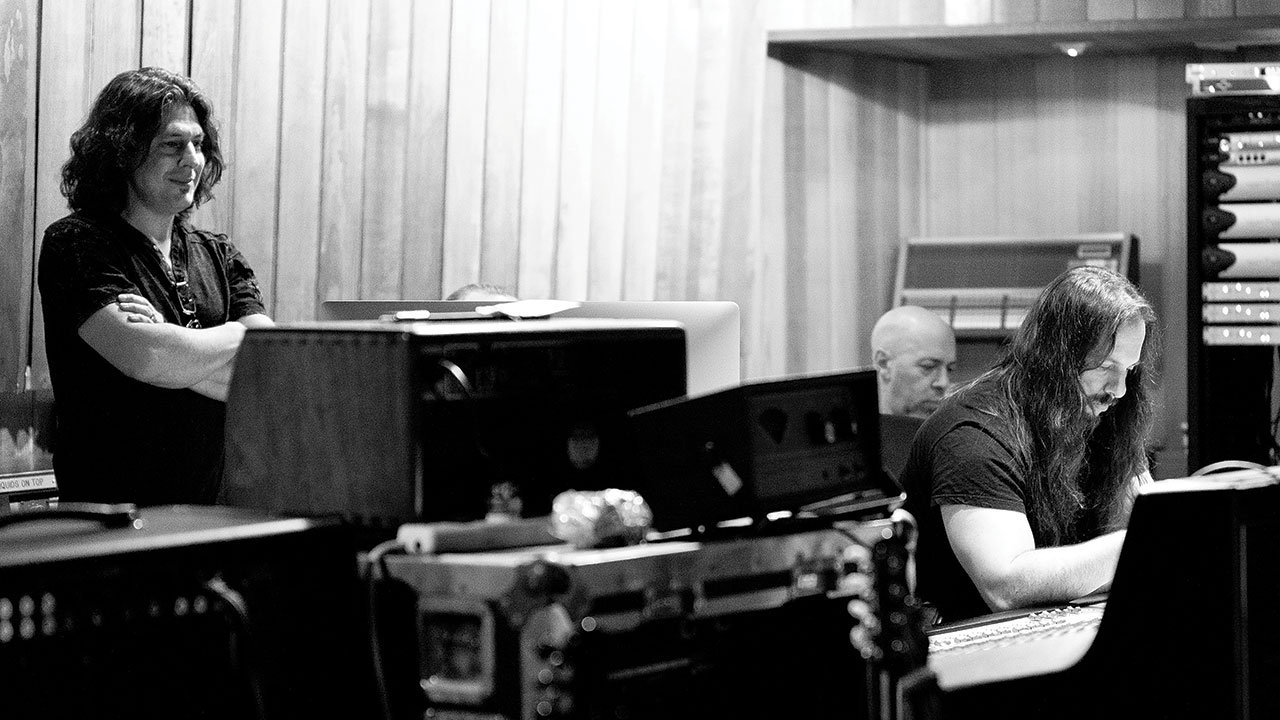
    Dream Theater

    (Image credit: Press)

    “Obviously we’ll have people who love Mike Portnoy, who won’t be able to accept the change; won’t be able to just listen to the music, and will probably still be bitter,” he admits. “I guess that’s just one of the things we’ll have to accept. That’s just real life. Mangini could be God’s gift to drumming and it wouldn’t matter. People will still miss Mike, which is understandable. I mean, with his personality he was such a big part of our situation, and yeah, I’m going to miss him too. But musically speaking, we’re all happy – the music lives on and I’m very pleased with how this new album turned out.”

    It’s been challenging for the past 12 years. You just keep finding ways to keep things in check – or worse, you start to accept it

    “We knew we were going to be scrutinised because we were replacing somebody who was very much in contact with our fans worldwide,” says LaBrie. “For the most part, it was a matter of making sure that it would be a classic Dream Theater album. We had to really think about who and what we’ve been up until now, and then take it even further.

    “We wanted to arrange all those classic elements so the progressive side and the heavy side were presented in a more complementary fashion. I think on some our albums, the heavy element overshadowed the progressive element. The beauty of this album is that everything is in its rightful place.”

    There’s a huge irony, though – Portnoy’s primary reason for wanting a hiatus was that he perceived them as jaded in need of time apart to refresh themselves and return stronger. That’s definitely not lost on LaBrie. “Oh yes, it’s really ironic. I believe the universe has a way of orchestrating things to happen for a reason.

    “Ultimately, I think the universe wants to give us back positive energy and vibes, and that’s exactly what’s happened here. A lot of people are saying you can really feel and see the spirit on stage every night. I think it’s been missing for quite some time, though we did a good job of camouflaging it.”

    Can he pinpoint a time when the fun of touring started to disappear?“I think it’s been a little challenging, off and on, for the past 12 years, maybe more. You just keep finding ways to keep things in check – or worse, you start to accept it. You think that maybe this is the only way that it can exist. It’s not until you’re flipped upside down, and somebody gives you a fresh perspective, you even see it in that light.

    “I think that if anything, what’s happened to us in the last year has proved to be a good thing. The bottom line is that we really love what we’re doing, and this has only enhanced our appreciation of our lives.”

  • Dizzy Scent Summons Spectral Folk on Her New EP “Doggy’s Cake”

    An acoustic guitar can make a room feel inhabited; on Dizzy Scent’s Doggy’s Cake, it also makes you wonder what else might be in there. Fingers travel audibly across strings, gentle strumming takes on the unease of branches brushing a house after dark, and a voice slips between a confidential murmur and a disorienting chorus. Across these six songs, familiar folk gestures acquire strange proportions, with tenderness, sensuality, and distress sharing the same small space.

    Released on September 11, 2026, Doggy’s Cake follows July’s debut album, My Polarizing Nature, from independent singer, songwriter, and guitarist Dizzy Scent. She describes her approach as “dark raw,” pursuing instinctive playing and unusual chords while managing her career herself. In her account of the EP’s creation, depression, occult interests, and frustration with the music industry all feed into the work. Her attachment to imperfection comes with a pointed explanation:

    “Imperfection has a greater impact on humans because, with perfection, we already know what to expect.”

    That philosophy suits a record in which the movement of a hand across strings and an unguarded vocal sound carry so much feeling. The relationship between guitar and singer stays exposed, allowing changes in delivery to alter the character of an entire passage.

    The EP’s first track, “Witch (When Im Completely Red)” opens with acoustic strumming that scratches like the branches of a skeletal old tree against the side of a house at night. Over that dry contact, her soft, ghostly vocals develop a folky flutter, then climb into high notes resembling wind whistling around the building. There is something eerie and otherworldly about the way those two elements occupy the same space: the guitar feels close and physical, while the singing seems to drift beyond its reach. At nearly seven minutes, the opener gives that sensation ample time to develop. Dizzy’s release notes connect the song to her fascination with magic and admiration for Papus, placing its supernatural associations within her broader occult interests.

    The gently strummed opening of “My Dark Sides” has the plain, soothing shape of a lullaby. Her voice enters in a hushed whisper, suggesting an incantation murmured quietly enough to be mistaken for someone talking to herself. As the singing quivers and flutters, higher notes take on the character of a cry carried by the wind. The effect suggests glimpses of an inner world projected into the room, with the simplicity of the guitar making every vocal tremor more conspicuous. Dizzy describes the song as an effort to free herself from fears and the darker aspects of her character; the tentative intimacy of the performance gives those concerns a fragile, immediate presence.

    “Unchangeable” pushes the guitar forward with deep, resonant tones, its volume drawing attention to the sound of fingers gliding along the strings. Her singing carries a smoldering sensuality, almost jazzy in character, while retaining its folky appeal. A dreamy, ethereal quality surrounds that tactile opening. Halfway through, the arrangement becomes pleasingly unruly, resembling a chorus of ghostly voices, and her singing climbs higher while preserving its silky texture. The shortest song on the EP packs considerable movement into its two and a half minutes. According to Dizzy, it grew from months of searching for recognition and fielding opinions about her music before finding someone who acknowledged its value. She remains attached to the unusual chords and imperfections that make the work hers.

    Soft guitar strumming moves through “So That Means To Be An Artist And Sing ?” like footsteps on a moonlit walk. Dizzy’s languid, smoky delivery recalls PJ Harvey, its sensuality carried by the ease with which her voice drifts into the song. Around the one-minute mark, the arrangement and layered vocals become ghostly and disorienting for nearly a minute. A spoken turn and a grunt of pain follow that passage, before the folky singing returns and the sequence begins again. These changes give the performance an unstable emotional temperature, passing from languor through confusion to an abrupt expression of hurt. The title also echoes the question about being an artist raised in her accompanying statement, which criticizes the glamour and hypocrisy she associates with the music industry.

    More of the room is audible on “Blood Everywhere.” Ambient tone surrounds deliberate guitar strumming and a simple melody, while Dizzy’s vocals remain eerily hushed and murmured. Rattling sounds enter later, introducing small disturbances around the subdued performance. With so much space audible around the guitar and voice, those noises become unusually noticeable. The song’s unease rests in that exposed setting, where a quiet rattle can feel as consequential as a raised voice.

    A dog barks at the opening of “Life Is A Dog,” before gentle guitar strumming accompanies bluesy, folky singing. Her lamenting delivery carries a deep sorrow, with eerie layers of reverberant vocals gathering around it. Midway through, the song pauses for a spectral vocal passage, distorted and unstable like a voice breaking up on the radio or a cassette warbling as it plays. The interruption is chilling, briefly displacing the familiar intimacy of guitar and singer. When the earlier strumming and vocal style resume, that sorrow remains central. In her release notes, Dizzy links the song to anger toward the world and the suffering she has endured; the lament in her delivery gives those stated concerns an aching musical form.

    The EP takes its name from that closing song’s premise: life is a dog, and the cake is a piece of herself offered in response. Across the record, the guitar’s simplicity leaves room for a remarkably changeable voice, capable of moving from a folky murmur to bluesy complaint, sensual ease, or something suddenly strange and difficult to place. Her most unsettling passages grow from alterations to that intimate relationship, making the return of a familiar vocal tone feel newly significant.

    Dizzy makes her preference clear: “I love amateur art. It’s the most beautiful.” Her defense of instinctive expression runs alongside a wish to reach other people living with depression, a purpose she explains in the release statement. That desire for connection gives a generous dimension to her forceful insistence on doing things her own way:

    “Whether you believe in me or not, I don’t care. Because I believe in myself and my guitar. Fuck the rest.”

    Doggy’s Cake is out now digitally, with vinyl and CD editions available through ElasticStage. Order the EP here.

    Follow Dizzy Scent:

    The post Dizzy Scent Summons Spectral Folk on Her New EP “Doggy’s Cake” appeared first on Post-Punk.com.

  • Deep Purple & Kansas | September 10, 2026 | PH Live | Las Vegas, NV – Concert Review & Photo Gallery

    Review & photos by Joe Schaeffer

    Kansas opened the festivities with a solid band fronted by Ronnie Platt on lead vocals and keyboards. He also ranks as the longest-serving member of the touring band. Opening with their rock-radio staple “Point of Know Return,” they immediately had the appreciative crowd up and grooving along.

    “Dust In The Wind” is the Kansas song virtually everyone knows. Responding to the opening acoustic guitar intro, the audience leaped to their feet and engaged in a singalong for the remainder of the tune. It gives the set an intimate moment before the heavier material returns.

    Ending the show with “Carry On Wayward Son,” Kansas gave the Vegas audience a well-balanced show by mixing their progressive and classic-rock favorites.

    It was precisely 10:00 when Deep Purple hit the stage accompanied by a video montage containing a nod to every album in the 50+ years of the band. Next, we heard the opening chords of “Highway Star,” and the show was off and running.

    Following “Into the Fire,” guitarist Simon McBride took his own showcase guitar solo. He’s not trying to impersonate Ritchie Blackmore, and his playing gives the older songs his own identity while still respecting the original arrangements.

    Singer Ian Gillan was in top form; he even gave us a quick story of “Mitzi Dupree” who was immortalized in a song on the 1987 album House Of Blue Light. She had recently passed and Gillan reminisced about their meeting and time they spent together in Vancouver.

    Don Airey played a short keyboard interlude before starting the opening notes to the Machine Head classic “Lazy.” Later, he returned with a proper solo and included a taste of Ozzy Osbourne’s “Mr. Crowley,” which he originally played on.

    The night was a perfect mix of classic and new with a good number of tunes from their 2026 album, SPLAT!, including “A Bit On The Side,” “Arrogant Boy,”  and “Diablo” from the album.

    The musicianship of the band is second to none. Bassist Roger Glover and drummer Ian Paice have been together on and off for over 50 years and it sounds as tight as when they began.

    No Deep Purple show is complete without staples “Space Truckin’” and “Smoke on the Water,” with the famous opening chords to get everyone on their feet.

    They finished with Joe South’s “Hush,” a song that goes all the way back to Deep Purple’s beginnings. It’s a fantastic way to end the night playing a song from the band’s earliest era performed by the current lineup.

    With the band within reach of 60 years, Deep Purple show no signs of letting up.

  • Legendary drummer Carmine Appice on writing Rod Stewart’s biggest hit on a drum machine – and then getting fired: “I don’t know why it happened, and neither does he. Somebody didn’t like the fact that I was the second-most popular person in the band”

    By the time Carmine Appice joined Rod Stewart’s band in 1977, the powerhouse drummer was already rock royalty, having helped redefine hard-hitting heavy rock percussion as a founding member of Vanilla Fudge, Cactus, and the power trio Beck, Bogert & Appice. Yet, while his mammoth grooves brought an arena-ready edge to Stewart’s band, Appice’s contribution to the singer’s career went far beyond the drum kit—he would end up co-writing one of Stewart’s biggest, most defining chart-topping hits of the decade, only to be sacked by the singer a few years later.

    In the current issue of Classic Rock, Appice looks back on his uo-and-down career with Rod The Mod – as well as what he thinks about him as a performer. “Being in Rod’s band was the best,” says Appice. “I’d become really good friends with Rod when Cactus went on the road with the Faces. That’s when they were crazy – they had a bar on stage. After Cactus, I had a band called KGB with [guitarist] Mike Bloomfield, which didn’t happen. And I was asked to join Rainbow, but I couldn’t do it cos they were signed to someone else.

    “Then I hear that Rod’s looking for a drummer. I get a message from Rod via his tour manager, saying: ‘Tell Carmine to come up to the house, see if he likes the band.’ Rod wasn’t there, but I knew those guys, [guitarist] Jim Cregan, [bassist] Phil Chen. Rod came back a couple of days later and says: “You got the job if you want it. Just one thing: how do you say your fuckin’ name? You’re like five different people.” (It’s pronounced ‘Ap-piece’, if you’re interested).

    A highlight of the drummer’s time in the band was undoubtedly co-writing Do Ya Think I’m Sexy?, the disco-inspired monster hit that would give Rod a Number 1 on both sides of the Atlantic.

    “Rod would say: ‘I want a song like Miss You by the Stones,’” recalls Appice. “I wrote it on a keyboard with a drum machine, I went to my buddy Duane Hitchings’ house, I played him the chords, we put a groove together, he wrote a bridge. So when we presented it to Rod it sounded like a finished song. He said: ‘Great, let’s do it.’

    “We did it a few different ways – great big drums, big guitars, it sounded freakin’ great. Then [producer] Tom Dowd came in and put so much other junk on it – orchestra, percussion, Linda Lewis singing the high line. We were like: ‘Is that gonna work?’ Then it went to Number One in fifteen countries. I guess he knew what he was doing.”

    Appice would stay with Rod until 1982, when he was fired by the singer – and he’s still not sure why it happened. “I don’t know, and neither does he. When I did my autobiography, he said in the intro: ‘I fired Carmine. Fuck knows why.’ There you go. Too much drinking, too much drugging, somebody didn’t like the fact that I was the second-most popular person in the band. I don’t remember how we made up. I went to one of his weddings. By ’83 or ’84 we were friends again.”

    Appice currently leads the latest incarnation of Cactus, who have just released their new album, Cactus, Temple Of Blues II. Read the full interview in the new issue of Classic Rock, available to buy here.

  • Miss May I share new single and video “Highbrow Thieves”

    Ahead of their upcoming tour with Born of Osiris, Convictions and Downswing

    Source

  • Devil Master announce U.S. fall headlining tour

    Starting with a hometown-area East Coast run that kicks off at Brooklyn’s Saint Vitus

    Source