The surviving members of Supertramp, along with the Estate of Rick Davies, have launched a brand new website under the collective banner of ‘Supertramp Partnership: The Classic LineUp’.
In a message to fans, former bassist Dougie Thomson, saxophonist and vocalist John Helliwell, and drummer Bob Siebenberg said, “As surviving members of the classic lineup, we reflect on the year since Rick Davies’ death, more grateful than ever to have brought Rick’s dreams for Supertramp to life. Two iconic writers with indelible voices led to a body of work that is revered by millions. We are proud of what this music represents as much today as we were when it was created.
“Dougie, John and Bob are happy to mark this milestone with this new path to connect with Supertramp fans around the world for whom this music has been formative and who have kept Rick’s legacy burning brightly. The polarity of Rick Davis and Roger Hodgson within Supertramp was a source of fruitful creative tension, and relations between the players have been challenging over the years. Nevertheless, the music is a common thread that binds us all. The classic era of Supertramp endures…”
The band’s social media presence has never been particularly strong, even when they were a going concern, but the new Supertramp Partnership website also boasts links to a new Facebook and Instagram page.
How Poe Transformed Gothic Horror into Atmospheric Horror
Long before horror films filled screens with monsters and jump scares, Edgar Allan Poe discovered a different path to fear. His stories rarely depend on supernatural creatures, elaborate action, or graphic violence. Instead, they create a feeling. A growing sense of unease. A pressure that slowly tightens around the reader.
The horror emerges from atmosphere itself. Today this approach feels familiar, but during Poe’s lifetime it was revolutionary. Earlier Gothic fiction often relied on ruined castles, family curses, mysterious villains, and supernatural events. Poe inherited those traditions but transformed them into something more psychological.
The most frightening place in a Poe story is usually not a haunted building. It is the human mind. By shifting horror inward, Poe helped create a new model for the genre—one where mood, perception, obsession, and emotional tension became more important than external threats. This transformation helped establish what we now recognize as atmospheric horror.
How Poe Transformed Gothic Horror into Atmospheric Horror
The Gothic Tradition Before Poe
Poe did not invent Gothic fiction.
Writers such as Horace Walpole, Ann Radcliffe, Matthew Lewis, and Mary Shelley had already established many of the genre’s defining elements. Crumbling architecture, isolated landscapes, family secrets, supernatural possibilities, and emotional intensity all appeared before Poe began writing.
Walpole’s The Castle of Otranto helped create the Gothic template. Radcliffe refined the atmosphere of mystery and suspense. Shelley’s Frankenstein introduced psychological and philosophical depth.
These writers built the foundation.
Poe changed the emphasis.
Rather than focusing primarily on external settings and events, he became fascinated by perception itself. His stories ask what happens when fear grows inside the mind and begins altering reality.
The result was a form of horror that felt far more intimate than traditional Gothic fiction.
The castle remained.
The real terror moved inside.
Poe’s Theory of Emotional Effect
One reason Poe’s stories feel so distinctive is that he approached writing with unusual precision.
In essays such as The Philosophy of Composition, Poe argued that every element of a work should contribute to a single emotional effect. Nothing should be accidental. Every image, sound, rhythm, and narrative choice should guide readers toward a specific psychological experience.
This idea became known as the principle of unity of effect.
For Poe, atmosphere was not decoration.
It was the purpose.
A successful story did not merely describe fear. It created fear. Every sentence served that objective.
This philosophy helps explain why so many of Poe’s works feel immersive. Readers do not simply observe the characters’ emotions. They experience them.
The growing panic of the narrator in The Tell-Tale Heart, the oppressive melancholy of The Fall of the House of Usher, and the despair of The Raven all emerge from carefully controlled emotional design.
Poe understood that horror becomes most effective when atmosphere and psychology work together.
The House of Usher and the Architecture of Dread
Perhaps no story demonstrates Poe’s atmospheric method more clearly than The Fall of the House of Usher.
The story begins before anything frightening occurs.
A visitor approaches an isolated mansion beneath a gloomy sky. The landscape appears lifeless. The building itself seems infected by decay. Readers immediately experience a sense of unease long before the plot reveals its secrets.
This is atmospheric horror in its purest form.
The setting does not merely contain the horror.
The setting becomes the horror.
As the story progresses, the psychological deterioration of Roderick Usher begins reflecting the physical deterioration of the house itself. Architecture and emotion become inseparable.
Poe creates fear not through sudden shocks but through accumulation. Every detail contributes to a growing sense that something is profoundly wrong.
By the time the story reaches its climax, the atmosphere has already done much of the work.
The reader feels trapped inside the same nightmare as the characters.
The Language of Dread
Atmosphere in Poe’s fiction is not created by setting alone.
Language itself becomes a source of horror.
Poe understood that words possess emotional weight independent of their literal meaning. Rhythm, repetition, sound, and sentence structure all influence how readers experience a story.
This sensitivity to language appears throughout his work.
In The Raven, the repeated word “Nevermore” becomes more than a refrain. Each repetition deepens the narrator’s despair until the sound itself feels oppressive. Meaning and atmosphere merge into a single effect.
The same principle appears in his prose.
Poe often uses repetition to create psychological pressure. Certain words, images, and ideas return again and again, mirroring the obsessive thoughts of his narrators.
The reader becomes trapped inside the rhythm of the character’s mind.
This technique helped distinguish Poe from many earlier Gothic writers. The horror no longer depended solely on what happened.
It depended on how the experience felt.
The Tell-Tale Heart and Psychological Horror
If The Fall of the House of Usher demonstrates Poe’s mastery of atmosphere through setting, The Tell-Tale Heart demonstrates his mastery of atmosphere through psychology.
The story contains very little physical action.
A narrator becomes obsessed with an old man’s eye, commits murder, and eventually confesses.
The plot itself is relatively simple.
What makes the story unforgettable is the narrator’s state of mind.
Readers experience events through a voice consumed by paranoia and obsession. Every detail becomes magnified. Every sound acquires terrifying significance.
The famous heartbeat illustrates Poe’s genius.
Whether the sound is real or imagined ultimately matters less than its psychological effect. The heartbeat becomes a manifestation of guilt, transforming an ordinary sound into a source of unbearable tension.
Poe understood that fear often originates within the mind itself.
The most terrifying monsters are not always external.
Sometimes they are our own thoughts.
Madness, Guilt, and the Human Psyche
Many Gothic writers explored supernatural threats.
Poe frequently explored psychological ones.
Stories such as The Black Cat, The Tell-Tale Heart, and The Imp of the Perverse focus on narrators whose minds become their own worst enemies.
These characters are not haunted by ghosts in the traditional sense.
They are haunted by guilt, obsession, self-destruction, and irrational impulses.
This shift was crucial to the development of atmospheric horror.
Fear becomes internalized.
The reader is invited into psychological spaces where reality itself feels unstable.
Modern horror often relies on the same principle.
Films and novels that focus on psychological breakdown, unreliable perception, and emotional disintegration owe a significant debt to Poe’s innovations.
He demonstrated that horror could emerge from ordinary human emotions pushed to their limits.
Poe and His Contemporaries
Comparing Poe to his contemporaries reveals how unusual his approach truly was.
Nathaniel Hawthorne frequently used dark themes to explore morality and religious guilt. Charles Dickens occasionally incorporated Gothic elements while maintaining a strong interest in social commentary.
Poe pursued a different objective.
His primary concern was emotional experience.
Rather than teaching moral lessons or examining social problems, he focused on creating specific psychological states within the reader.
This emphasis on atmosphere over message helped distinguish his fiction from much nineteenth-century literature.
The stories feel intensely personal.
Readers are not asked to judge the characters.
They are asked to inhabit them.
That immersive quality remains one of Poe’s most important contributions to horror.
Why Poe Changed Horror Forever
Before Poe, Gothic horror often depended upon external threats and dramatic events.
After Poe, horror increasingly became psychological.
Writers discovered that atmosphere could be more frightening than action. Suggestion could be more powerful than revelation. Internal fears could be more disturbing than external monsters.
Poe did not abandon the Gothic tradition.
He transformed it.
By combining atmosphere, psychology, and carefully controlled emotional effects, he created a model that continues influencing horror literature, cinema, and popular culture.
His stories remind us that fear is not always something we encounter.
Often, it is something we carry within ourselves.
The Legacy of Atmospheric Horror
The influence of Edgar Allan Poe extends far beyond the nineteenth century.
Many of the techniques that define modern horror can be traced directly to his work. Psychological instability, unreliable narrators, oppressive atmosphere, and carefully controlled emotional tension have become central elements of the genre.
Writers such as H. P. Lovecraft, Shirley Jackson, Robert Bloch, and Stephen King all inherited aspects of Poe’s approach.
Although their styles differ dramatically, each understood that fear often becomes more powerful when it grows gradually within the imagination.
Poe’s influence extends beyond literature.
Modern horror cinema frequently relies on atmosphere rather than constant action. Films such as The Shining, The Witch, and Hereditary demonstrate how mood, isolation, and psychological tension can create terror more effectively than conventional shocks.
The principle remains remarkably similar to Poe’s own artistic philosophy.
The audience must feel the horror before it fully understands it.
Atmosphere as the True Monster
One reason Poe’s stories continue to feel modern is that they rarely depend on specific monsters.
Many classic horror tales lose some of their power once the threat is revealed. The unknown becomes known. Mystery becomes explanation.
Poe often avoids this problem.
His greatest stories do not rely on creatures lurking in the shadows.
The shadows themselves become the source of fear.
In The Fall of the House of Usher, readers remember the atmosphere long after they forget individual plot details. In The Tell-Tale Heart, the narrator’s unraveling mind becomes more terrifying than the murder itself.
This approach allows the stories to remain effective across generations.
Human psychology changes far less than cultural fears.
Poe understood that atmosphere could reach emotional truths that monsters alone could never fully capture.
Why Poe Still Feels Contemporary
Modern audiences live in a world saturated with horror.
Films, television series, novels, video games, and online media constantly compete for attention through increasingly elaborate spectacles.
Yet Poe’s stories continue finding new readers.
Part of the reason lies in their psychological focus.
Anxiety, obsession, guilt, grief, loneliness, and uncertainty remain universal human experiences. Poe explored these emotions with unusual precision, creating stories that feel surprisingly relevant despite their age.
His narrators struggle with problems that still resonate today.
They fear losing control of their minds, and they wrestle with guilt.
They confront grief and isolation.
The details may belong to the nineteenth century, but the emotions remain timeless.
The Master of Atmospheric Horror
Edgar Allan Poe did not invent Gothic horror.
Writers before him had already established many of the genre’s defining themes and images.
What Poe accomplished was something equally important.
He transformed horror into an emotional experience governed by atmosphere, psychology, and carefully controlled artistic effect.
Through his principle of unity of effect, he demonstrated that every element of a story could work together to produce a specific emotional response. Settings became extensions of psychological states. Language became a tool of dread. Narrators became prisons for their own fears.
The result was a new kind of horror.
A horror built not upon monsters alone, but upon perception, emotion, and the hidden landscapes of the human mind.
More than a century and a half later, that achievement continues shaping the genre.
Whenever a writer uses mood to create tension, whenever a filmmaker relies on atmosphere rather than spectacle, and whenever horror emerges from psychological uncertainty rather than physical danger, Poe’s influence can still be felt.
That is why he remains not merely an important Gothic writer.
He remains the master of atmospheric horror.
Wear the Darkness
If How Poe Transformed Gothic Horror into Atmospheric Horror resonates with your love of Gothic literature, psychological horror, and dark culture, explore the Edgar Allan Poets store. Our designs celebrate the writers, symbols, and ideas that continue haunting the imagination.
Join the Noir Newsletter
Receive more essays on Edgar Allan Poe, Gothic literature, noir psychology, symbolism, horror history, and the creative forces that shaped dark culture.
Frequently Asked Questions
Did Edgar Allan Poe invent Gothic horror?
No. Gothic horror existed before Poe through writers such as Horace Walpole, Ann Radcliffe, Matthew Lewis, and Mary Shelley. Poe transformed the genre by emphasizing atmosphere and psychology.
What is Poe’s theory of unity of effect?
Unity of effect is Poe’s idea that every element of a story should contribute to a single emotional response, creating a focused and immersive experience for the reader.
Why is The Fall of the House of Usher considered atmospheric horror?
The story uses setting, mood, symbolism, and psychological tension to create fear long before any dramatic events occur.
How did Poe influence modern horror?
Poe helped establish psychological horror by focusing on guilt, obsession, madness, and emotional tension rather than relying solely on supernatural threats.
Why is Edgar Allan Poe still important today?
His exploration of fear, grief, guilt, and psychological instability remains relevant, and his techniques continue influencing literature, film, and popular culture.
WALL OF SLEEP are celebrating their 25th anniversary this year, and activity around the band has intensified considerably since the release of The Kingdom in 2025. The album won a Fonogram Award, the band’s earliest recordings have been reissued, and the seven-track Monolith EP, with a running time of more than 40 minutes, is due […]
When I speak to friends who are prog fans, I often find that we love the same music, but for different reasons. Some are deeply interested in the sound and production; others are moved or drawn in by the lyrics; for others still, it might be the presence or performance of a particular musician or instrument. Indeed, all of the above can equally be reasons why someone doesn’t like a particular song or album.
Many of those conversations prompt me to return to a piece of music and listen again, armed with a new perspective and an understanding of what makes it special to someone else. That’s why, if you have any interest whatsoever in the music of Big Big Train, you need to get this book!
If you own any of Kingmaker Publishing’s previous books, you’ll already know that this will be a colourful and enticing blend of words and pictures. In this case, it features numerous archive photographs of the band, along with historical artefacts and key illustrations relating to the songs’ lyrics and themes. If you’ve ever wondered what the Brave Captain, Winkie or the Winchester Diver looked like, you’ll find them here.
The accompanying words come from Andrew Wild – an author with a long list of excellent music books to his name – and R. Douglas Helvering, aka The Daily Doug, whom many readers will know from his YouTube reaction channel. Andrew provides the book’s main text, drawing on interviews with a huge number of past and present band members, while Doug offers musicological insights into more than 40 of the band’s songs.
Perhaps it’s worth mentioning what the book isn’t. It’s not a biography, yet it contains the whole story of the band, including many details I hadn’t previously encountered despite having read Grant Moon’s excellent official biography. Nor is it a hagiography. The band members – and particularly Gregory Spawton, the one constant member throughout its history – are at times constructively critical of their own work. They speak in the spirit of craftspeople wishing they could have produced a better final result in circumstances where resources, equipment, time or experience were sometimes lacking.
Although the book contains detailed musical analysis and technical terminology, it strikes an effective balance. Knowledgeable readers can engage with its depth, while the time-coded commentary helps those with little or no musical background to follow the discussion. In his analysis of “Victorian Brickwork”, for example, Doug relates the musical shifts to the song’s narrative and lyrics. Explaining one passage, he writes: “The melodic notes are the same as earlier in the song, but the changes in instrumentation suggest a change in perspective, with David’s performance shifting the emotion to grief.”
I’d strongly recommend that anyone who buys the book try listening along with one of the commentaries. You may not know an A-flat from an F-sharp, or Lydian from Mixolydian, but there is still plenty here to enjoy. I’ve made a playlist and intend to work through them all!
For many fans, the David Longdon era was when they first connected with Big Big Train’s music. One of the text’s great achievements is that it doesn’t neglect the early years, while also recognising that many listeners have not connected with the material from this period – or, in the case of out-of-print releases, have been unable to do so. The book therefore moves through those years briskly, but not without offering insights into all the recorded tracks, as well as many that were never recorded, with contributions from Andy Poole, Ian Cooper, Steve Hughes, Sean Filkins and others. It also helpfully directs readers towards the “old songs” that anticipate the future BBT style, providing an excellent primer for anyone looking for the threads that run throughout the band’s history.
What really makes this book stand out for me is the revelation that many of BBT’s narrative songs are connected to personal memories, or that their subjects were chosen to express broader meanings. The book tells the story of Albert Ball in its section on “Brave Captain”, while reminding us of David’s childhood connection with the character. The fact that David’s father served in the Royal Air Force adds another layer.
Then there is “The Transit of Venus Across the Sun”, which is about astronomy but also explores the love story of the late Sir Patrick Moore, the UK’s most famous astronomer. The book also delves into two “lost” BBT albums: Station Masters, a project intended to remake a selection of earlier songs, and Hope, a concept album written after The Underfall Yard that never came to full fruition. BBT’s Passengers Club has already released some demos, and it’s wonderful finally to learn how the tracks fitted into the story. Perhaps one day we’ll get a complete version!
I’ve come this far without properly mentioning the remarkable images accompanying the text. Historical photographs are mixed with striking original artworks inspired by the songs’ themes. The book begins with individual reflections from each current band member on the art of songwriting and recording, and ends with a detailed musical examination of the album Woodcut.
We’ve already had Andy Stuart’s Woodcut – The Making and the Meaning, which provides a wealth of background on the album. Time & Tide covers some of the same ground, but its treatment is very much fresh writing, supplemented by Daily Doug’s commentary on the music itself. As I’ve already suggested, the ideal way to experience the book is to read it while listening to the tracks.
Given the songwriters’ love of history, it stands to reason that an in-depth book about BBT should feel like an encyclopaedia – and it does. But this isn’t an encyclopaedia that will sit gathering dust on a shelf. It’s a book I know I’ll return to time and again. It is full of detail that will enhance your enjoyment of music you probably already love, yet it is written and presented in a way that will keep you turning the pages.
I’ve read a great many music books and biographies over the years, and I can say with complete confidence that this one is a rare jewel – one that will illuminate the music in ways you never imagined.
Green Lung has always flirted with metal’s ponderous weight and classic rock’s sly melodicism, uniting two musical forces I love. Before I dove into metal whole hog, I spent years soaking up the classics. Rush and Boston were in constant rotation alongside Black Sabbath and Metallica, looping endlessly on my 5-disc CD stereo through high school and college. Gradually, my listening gave way to more extreme acts as I succumbed to what my mother endearingly calls ‘devil music.’ Despite my unflinching commitment to placing my immortal soul in peril, I just can’t resist acts that channel the music I grew up listening to, and London’s Green Lung sticks this balance expertly. Hypnotic grooves, bouncing riffs, and heartfelt vocals run rampant across Green Lung’s fourth album Necropolitan, invoking the rumble of ecclesiastical dynamite and ghoulish glee. But are Necropolitan’s enchanting atmospheres and retro pleasures enough to wreck your Nec to?
Since forming in 2017, Green Lung has celebrated nature and the ways of olde, often through a lens of freewheeling paganism. Their earliest material saturated sylvan rituals with fuzz and thunder, ensconcing songs in the Green haze of stoner metal. Black Harvest redirected attention to elements of occult rituals recalling 1970s horror films like The Wicker Man and The Blood on Satan’s Claw, placing a greater emphasis on hooky riffs and John Wright’s organ, while This Heathen Landadopted a backdrop rooted in history that found Green Lung wallowing in doomier arrangements. Necropolitan hews much closer to Black Harvest, crafting a bevy of heavy earworms and begetting their catchiest and most immediate platter to date. Conceptually, Necropolitan finds Green Lung drawing inspiration from the sprawling necropolis grounds built during the Victorian era to resolve the calculus of too many bodies and too few burial plots. The upkeep of these gardens collapsed in the 1960s, and since then Earth has slowly reclaimed and transformed these gravesites into pockets of wilderness, incidentally furnishing Necropolitan with a fascinating intersection of nature and the occult.
Reference points abound on Necropolitan, although Green Lung always adheres to their own guiding sonic principles. Vocalist Tom Templar’s voice strongly echoes Tobias Forge’s, and there’s also a smidge of Ian Gillan’s upper register as well,1 albeit with punky snottiness. Speaking of Gillan, “Necropolitan Line” is the best song Deep Purple never wrote (and might be my “Mambo No. 5”), and “Evil in This House” strikes me as a more upbeat musical take on Sabbath’s “Electric Funeral.” “Oxymandias” oozes with a swagger that reminds me of Clutch, “Black Magic Radio” marries the pop-forward sensibilities of Ghost with the heft of Black Sabbath or Cathedral, and closer “To the Gallows Born” begins with gorgeous harmonization reminiscent of “The Wellerman”2 before dipping into Wytch Hazel levels of lilting beauty.
Throughout NecropolitanGreen Lung dispenses sharp performances in a lean package that offers enough to satisfy yet leaves me wanting more. Templar’s voice smolders as he directs listeners through Necropolitan’s lush landscapes. “Dance to the Grave” and “Black Magic Radio” mesh his top-notch croon with elephantine riffs while “Necropolitan Line” and “To the Gallows Born” gush with Templar’s sweltering magnetism. Guitarist Scott Black wields his fuzz tone with surgical precision, hitting swells and transitions with impeccable instincts and sexy tones (the solo into the bridge on “Oxymandias,” for example) while John Wright’s organ grinding ignites melodies with fabulous vintage verve. Meanwhile, bassist Joseph Ghast unchains a terrific low-end showcase with audible yet unobtrusive obbligatos (“Necropolitan Line,” “To the Gallows Born”) and drummer Matt Wiseman looses frills and fills with measured gusto (“Black Magic Radio,” “Evil in this House”). In all, everyone in Green Lung brings their A-game to Necropolitan.
Everything about Necropolitan leave me wanting more, and I can’t stop listening to the damned thing. At forty-one minutes, it’s an irresistibly easy listen and has quickly become one of my most played albums this year. The guitar-and-keys interplay is exquisite, the grooves bowl me over with unholy spirit, and the choruses make a fool of me as I try to sing along. Admittedly, “Together in Death” lacks the indispensability of other tracks, and “Dance to the Grave” and “Black Magic Radio” blur together a tad one after the other, but these are minor cavils in what is one of the best damn stoner-adjacent releases this year. So don’t let Green Lung and their latest wares pass you by—hop a rail down “Necropolitan Line” and breathe in the Greatness.
Julien Baker is one of this era’s defining songwriters, but she hasn’t released a solo album in a long time. Little Oblivions, Baker’s third solo LP, came out back in early 2021. Since then, Baker blew up as a member of boygenius. Last year, she and Torres got together to release the collaborative country experiment Send A Prayer My Way and canceled the corresponding tour to focus on her health. Baker has continued to help out on other people’s records. She’s on her boygenius bandmate Phoebe Bridgers’ new Lost Weekend, for instance, as well as Turnstile’s remixes-and-covers collection Never Enough: Versions. And now, she might just be gearing up to release something of her own.
Trans-Siberian Orchestra is bringing back their holiday spectacle for 2026, marking 30 years of 'The Ghosts of Christmas Eve' with over 50 cities on the tour. Continue reading…
Danish metal outfit, Grandience, is pleased to unveil their video for “Agony.” The track comes off the band’s debut full-length, Anomaly, out now on Metal Blade Records. Comments guitarist/vocalist Jakob Lærke Harris, “People who know us by now should be aware that we like to mix things up and see what we can make work. ‘Agony’ is… Continue Reading →
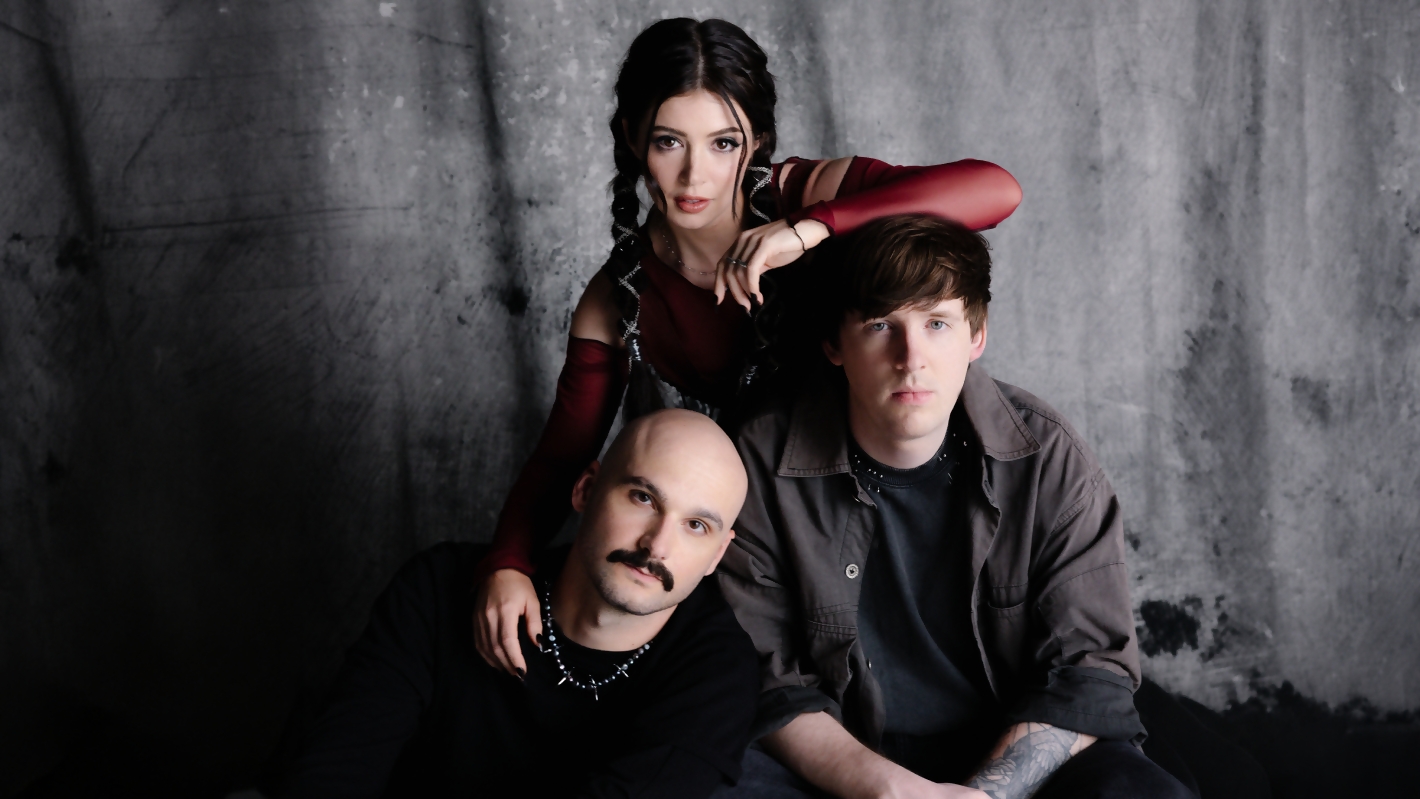
Against the Current have announced the details of their long-awaited new full-length album, and it will be yours very soon indeed.
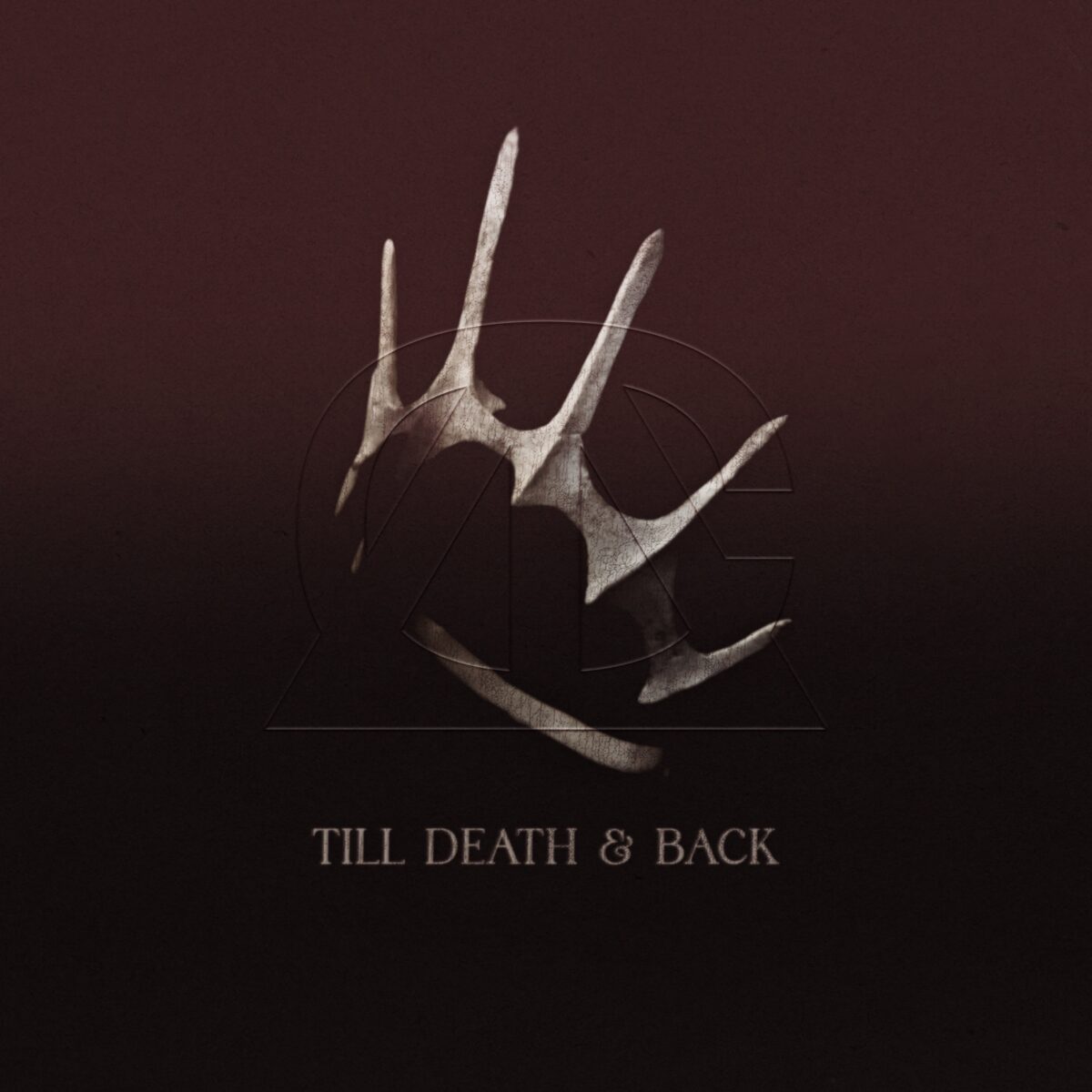
The record will be called ‘Till Death & Back’ and will be released on October 30. It’s the band’s first album since 2018’s ‘Past Lives’ and their first as an independent band too.
Vocalist Chrissy Costanza had this to say about the record:
“Fate is the thread running through every song on this album, the belief that what’s meant for you is bound to you across time. The cost is the fire, the fight, the version of yourself you don’t get back. Till Death & Back is the promise that no matter how far you go, the thread never breaks, not even in death.”
The artwork looks like this:
It will feature previous singles ‘Heavenly’, ‘Dead Man Walking’ and ‘Always You & I’, as well as newly unleashed track ‘Protégé’. An atmospheric, beautifully constructed, spine-tingling track full of heart, soul and earnest feeling. All of the things that the band show off so brilliantly in everything they do.
The band will be kicking off a UK/EU tour on the day of the album’s release. Here are all the dates they will be playing:
OCTOBER
30 – GLASGOW SWG3 (TV Studio) 31 – LEEDS Leeds Beckett Students Union
NOVEMBER
01 – MANCHESTER Academy 03 – BIRMINGHAM O2 Institute 04 – LONDON O2 Shepherd’s Bush Empire 06 – PARIS Le Trianon 07 – SAARBRÜCKEN Garage 08 – BRUSSELS Ancienne Belgique 11 – KÖLN E-Werk 12 – UTRECHT TivoliVredenburg 13 – HAMBURG Grosse Freiheit 36 14 – BERLIN Metropol 16 – VIENNA Simm City 17 – MUNICH Muffathalle 19 – ZURICH Komplex 457 20 – STUTTGART LKA Longhorn 21 – WIESBADEN Schlachthof


 Green Lung has always flirted with metal’s ponderous weight and classic rock’s sly melodicism, uniting two musical forces I love. Before I dove into metal whole hog, I spent years soaking up the classics. Rush and Boston were in constant rotation alongside Black Sabbath and Metallica, looping endlessly on my 5-disc CD stereo through high school and college. Gradually, my listening gave way to more extreme acts as I succumbed to what my mother endearingly calls ‘devil music.’ Despite my unflinching commitment to placing my immortal soul in peril, I just can’t resist acts that channel the music I grew up listening to, and London’s Green Lung sticks this balance expertly. Hypnotic grooves, bouncing riffs, and heartfelt vocals run rampant across Green Lung’s fourth album Necropolitan, invoking the rumble of ecclesiastical dynamite and ghoulish glee. But are Necropolitan’s enchanting atmospheres and retro pleasures enough to wreck your Nec to?