Blog

  • Downeast Hardcore: Stories From the Kave — Q&A With Director Ricky Leighton

    Isolation breeds a special kind of creativity and community. In locales situated outside of major markets, this becomes a matter of necessity for any kids who want to see something cool happen in their town. Although the explosion of the internet in the 1990s made it easier to find music and learn about shows happening all over the world — from anywhere in the world — it didn’t solve the challenge of getting a local metal or hardcore scene going, especially in rural areas. But that challenge is also what makes so many of those isolated scenes so special. Everyone knows each other, knows the local bands, knows where to hang out for shows, and who makes things happen.

    Downeast Hardcore: Stories From The Kave tells the story of one of those communities, and of Kathy Findlay, a woman who made things happen for the kids in Bucksport, Maine. Bucksport lies about four hours north of Boston, close enough for kids in the early 2000s to know about what was going on, but just far enough out of reach to benefit from any bleed-over to local venues. But there were enough kids passionate about hardcore to create a group that traveled to shows together, formed bands, and eventually link up with Findlay, who went on to run her own venue, The Kave. From 2003 to 2016, the Kave became an epicenter for metal and hardcore in northern New England. Ricky Leighton went to shows at The Kave back in the day, and it became and important and formative experience for him. Now in 2026, he wants to share the story of Kathy, The Kave, and the various bands and characters who came through over the years.

    I think there’s something truly inspiring about Kathy’s dedication to giving kids in her community something to do and create together, AND the fact she and a lot of those (now grown) kids are still involved. If you’re looking for a reason to feel less jaded, you should watch the documentary read our discussion with Ricky below.

    More information about the documentary and local screenings can be found at its website.

    —

    Hello Ricky, thanks for taking the time to talk to us! Tell us about the film and how it came about. What made you decide to tell the story of Kathy, The Kave, and the scene in upper New England — and why now?

    I moved back to Maine in 2018 after spending nearly a decade away. As a documentary filmmaker, I found myself naturally gravitating toward unique stories rooted in Maine. One evening, I was sitting around a campfire with my friend Sam, reminiscing about all the shows we had been to over the years, when he brought up The Kave. The idea immediately clicked. I think we both knew there was a story there that needed to be documented.

    The Kave was a hardcore/heavy metal venue run by Kathy Findlay, an occupational therapy assistant at a nearby school. From the early 2000’s to 2016, this rural venue in Bucksport, ME hosted major touring acts including Terror, Biohazard, Agnostic Front, Madball, Unearth and Hatebreed, alongside dozens of Maine and New England bands.

    Once I started researching the possibility of making a documentary, it quickly became clear that Kathy’s impact went far beyond music. She had become a matriarchal figure to generations of young people, many of whom were struggling to find a place where they felt accepted or understood. When we first announced the documentary, 90 people submitted written testimonials within a single week describing how Kathy had changed their lives.

    Kathy ultimately had to close The Kave in 2016 while battling cancer. I think its absence made people realize just how special that place and period of their lives had been. It felt like the right time to jump into this project as everyone had grown up, started families and were ready to reflect on such a special time.

    What was your personal experience of going to shows at the Kave, and of the local scene more generally? Would you say your experience was part of what inspired you to become a filmmaker?

    I went to George Stevens Academy in Blue Hill, Maine, just down the road from The Kave. The school had a strong arts program, and a lot of my friends were musicians who played in bands and performed locally. (Shout out to my own high school band, Punch Us Pilot, although we only managed to play one show).

    The Kave was definitely on our radar because Kathy was great about giving local bands opportunities to open for the touring acts she brought to Maine. My first show there was Unearth, which my cousin Shane took me to. I remember walking in and thinking it was dark, cold and pretty intimidating!

    I was fortunate to know from a young age that I wanted to make movies, and music has always been an important part of how I think about filmmaking. It’s really the icing on the cake when you’re trying to convey emotion and make the audience feel something. I also felt I could do justice to Kathy and The Kave because while I wasn’t necessarily a “Kave Kid,” I was very familiar with being an angsty rural Maine teenager who loved heavy music. I understood what it was like to grow up in a place where there wasn’t always a lot for young people to do and how important music could become as an outlet. Fun fact: the film features quite a bit of early 2000’s miniDV tape footage that was mine from high school.

    One of the first things I did when we started the documentary was build a playlist of bands that had played The Kave. I basically immersed myself in that music for all three years of making the film. Major props to my wife, Sarah, for tolerating some very loud car rides along the way!

    The film paints an evocative picture of life in Maine, particularly in the Bucksport area. It’s amazing what Kathy did for the kids up there, basically building up a community from scratch that became a node in the worldwide network of metal and hardcore. Although the venue has been closed since 2016, I imagine it’s left an enduring impact on the area. Have other venues come along since to fill the void?

    While I try to remain hopeful, I’m not sure anyone could ever truly replicate what Kathy did. She not only managed to successfully run a venue way off the beaten path, but she also took care of the bands who came through. She would make them home-cooked meals, give them a place to stay and even let them camp out for several days after a show. That level of hospitality was a huge part of what made The Kave so unique.

    What is encouraging though, is seeing how that spirit has continued through the “Kave Kids” she helped foster. Many of them have gone on to book their own shows and help support Maine’s music scene in their own ways. The Old Town Theatre has also provided a space for shows in the Bangor area and if you go to one you’ll find plenty of familiar faces from The Kave days and possibly even Kathy herself.

    On a related note, what is the scene like nowadays, in terms of metal, hardcore and other forms of extreme music? I know of a couple black metal bands but I’m sure there must be a lot going on. And is Kathy still involved in some way?

    We just wrapped up a screening at Geno’s Rock Club and the scene in Maine is stronger than it’s ever been. We had three bands play after the film: Dying Mind, Mortar and Corrective Measure — and Kathy was up front for all of it. Seeing her rush the mic was a highlight.

    Cheap Life Records, owned and operated by Chris Linkovich (Cruel Hand/Terror) and Corey Jones, has been a driving force in booking shows in the area. I think what particularly excites me is that the shows are full of young kids as well as us “older” folks.

    There are some fantastic Maine hardcore and metal bands worth checking out: Stab, Free To Think, Forked Tongue, Last Embrace, Peacebreaker, and Infernal Diatribe to name a few.

    Finally, from the years the Kave was active (2003-2016), were there any shows that are known by locals as “legendary”? Like, the shows where you “just had to be there.”

    The most obvious answer is Hatebreed. That was the show that put the place on the map. Kathy put together a Kavefest line up that included Hatebreed, Most Precious Blood, The Hope Conspiracy, Ringworm and more. Not only did it sell out but there was also a Navy ship in town that weekend so needless to say it was quite the mosh crew…

    The post Downeast Hardcore: Stories From the Kave — Q&A With Director Ricky Leighton appeared first on Decibel Magazine.

  • Why Moonlight Feels More Gothic Than Sunlight

    Why Moonlight Feels More Gothic Than Sunlight

    A ruined abbey at noon is an architectural monument.

    The same structure beneath a full moon becomes something else entirely. Cracks seem deeper, shadows stretch across broken stone, and every dark doorway feels capable of concealing a story.

    Nothing physical has changed.

    The transformation occurs inside the observer. Moonlight alters perception by withholding information, and the imagination rushes in to complete what the eye can no longer fully understand.

    That process lies at the heart of Gothic culture.

    Sunlight rewards observation. Moonlight rewards interpretation. One clarifies the world while the other encourages us to question it.

    For more than two centuries, Gothic writers, painters, and filmmakers have returned to moonlit settings because uncertainty generates emotional intensity. Fear, wonder, nostalgia, and desire all become stronger when reality appears slightly out of focus.

    The moon does not simply illuminate darkness.

    It turns darkness into a stage where imagination becomes an active participant.

    gothic moonlight symbolism gothic noir illustration

    Why Moonlight Feels More Gothic Than Sunlight


    Sunlight Explains. Moonlight Questions.

    The difference between sunlight and moonlight is often described as visual, but the deeper distinction is psychological.

    Bright daylight exposes detail. Distances become easier to judge, edges sharpen, and the brain receives a steady stream of reliable information. We rarely need to speculate about what stands before us because the environment explains itself.

    Moonlight operates according to different rules.

    Its pale glow softens boundaries and reduces certainty. Trees become silhouettes rather than individual branches, while familiar buildings acquire an unfamiliar character that can feel strangely unsettling. The mind begins supplying possibilities where facts are missing.

    Psychologists have long recognized that uncertainty activates imagination. When information becomes incomplete, the brain does not simply stop working. Instead, it constructs explanations, stories, and expectations that fill the empty spaces.

    A distant figure may be a traveler.

    Or a threat.

    The uncertainty matters more than the answer because it creates emotional tension. Gothic culture thrives within that tension, occupying the territory between what is known and what is merely suspected.

    This is why moonlight appears so frequently in Gothic fiction. It creates the ideal conditions for mystery before a single supernatural event occurs.


    The Beauty of Incomplete Information

    Modern life encourages certainty.

    Maps reveal locations instantly, search engines answer questions within seconds, and artificial lighting pushes darkness away from streets, buildings, and public spaces. Mystery has become increasingly difficult to preserve.

    Moonlight restores a small part of what has been lost.

    For most of human history, night transformed the world into something less predictable. Villages disappeared beyond the reach of firelight, forests became labyrinths of shadow, and ordinary paths felt capable of leading somewhere unexpected.

    The moon provided enough illumination to navigate, but not enough to eliminate uncertainty. That balance created a unique emotional experience that Gothic artists later transformed into an aesthetic principle.

    The genre’s greatest settings are rarely terrifying because of what they reveal. They are terrifying because of what they conceal. A locked room, a distant sound, or a shape glimpsed at the edge of vision becomes more powerful than any detailed explanation.

    Moonlight embodies that principle perfectly.

    It allows us to see just enough to wonder what remains hidden.


    Moonlight and the Shadow Self

    The connection between moonlight and Gothic culture becomes even clearer when viewed through psychology.

    Carl Jung argued that every individual possesses a hidden aspect of the personality he called the Shadow. This hidden territory contains desires, fears, impulses, and emotions that remain outside conscious awareness, influencing behavior from beneath the surface.

    Moonlight functions as a striking visual metaphor for that idea.

    Unlike sunlight, which illuminates a landscape evenly, moonlight reveals fragments. One section of a path becomes visible while another disappears into darkness. The observer receives partial information and must infer the rest.

    The unconscious mind behaves in a remarkably similar way.

    Dreams provide clues rather than answers. Sudden emotions appear without explanation. Forgotten memories return in distorted forms that feel both familiar and strange.

    Edgar Allan Poe understood this psychological territory long before Jung attempted to describe it. His characters repeatedly encounter forces that seem external but often originate within their own minds. The horror emerges not from monsters alone but from the unsettling realization that the greatest mysteries may exist inside the self.

    Moonlight became a natural symbol for this hidden world because it reveals enough to attract attention while concealing enough to preserve mystery.


    Why Gothic Writers Chose Moonlight

    Gothic literature did not adopt moonlight simply because it looked beautiful.

    Writers discovered that moonlit settings could accomplish something daylight rarely achieved. They created a world where ordinary reality felt unstable, allowing psychological fears and hidden desires to emerge without requiring a supernatural explanation.

    A castle illuminated by the afternoon sun remains a building. Under moonlight, the same structure becomes a question. The reader begins imagining histories, secrets, and dangers that may not actually exist.

    That shift is crucial.

    The most effective Gothic stories do not begin with monsters. They begin with uncertainty. Moonlight became one of the genre’s most valuable tools because it transformed certainty into suspicion before the plot even started.


    Edgar Allan Poe and the Geography of the Mind

    No writer understood the emotional power of darkness more completely than Edgar Allan Poe.

    His stories rarely rely on graphic horrors or elaborate supernatural spectacles. Instead, they create psychological landscapes where perception itself becomes unreliable. Moonlight, whether explicitly described or merely implied through atmosphere, fits naturally within this approach because it mirrors the instability of the human mind.

    In The Fall of the House of Usher, the narrator approaches the mansion and sees its reflection trembling in the dark tarn below. The scene feels dreamlike from the beginning. The house appears less like a structure than a physical manifestation of Roderick Usher’s deteriorating psyche.

    The story never depends on clear illumination.

    It depends on shadows, reflections, echoes, and uncertainty. Every element encourages readers to question whether the horrors they witness belong to the external world or to the minds of the characters themselves.

    The same atmosphere appears in Ulalume, one of Poe’s most haunting poems. The narrator wanders through an October night beside the “ghoul-haunted woodland of Weir,” guided by emotions he barely understands. When he encounters the tomb of his lost love, the revelation feels less like a discovery than a dream slowly becoming conscious.

    “It was night in the lonesome October.”

    That opening line immediately establishes the emotional territory Poe wanted to explore. Night is not merely a setting. It becomes a psychological condition where memory, grief, and desire move freely through the landscape.

    Poe recognized that darkness does not conceal only monsters.

    It conceals the self.


    Mary Shelley and the Light of Forbidden Knowledge

    While Poe used darkness to explore psychology, Mary Shelley used it to examine ambition.

    Throughout Frankenstein, crucial events unfold at night, when ordinary boundaries appear weaker and dangerous ideas become easier to pursue. Victor Frankenstein’s scientific obsession thrives in isolation, surrounded by shadows and illuminated by uncertain light.

    Shelley understood that night changes human behavior.

    People often think differently when separated from the routines and distractions of daylight. The mind becomes more introspective, more vulnerable to obsession, and more willing to cross boundaries that seem reasonable during the day.

    This pattern reaches its climax when Victor succeeds in creating life. The scene does not feel triumphant. Instead, it feels uncanny and deeply unsettling because the achievement occurs within an atmosphere of darkness and secrecy.

    The moon witnesses what society cannot.

    That idea would become one of Gothic fiction’s most enduring themes. Night transforms hidden thoughts into actions, exposing desires that daylight usually keeps under control.


    Dracula and the Seduction of Uncertainty

    Bram Stoker elevated moonlight from atmosphere to mythology.

    In Dracula, darkness is not merely the absence of light. It becomes a realm governed by different rules, where the ordinary logic of the day loses its authority. Moonlit landscapes repeatedly mark the boundary between the familiar world and the unknown.

    One of the novel’s most memorable scenes occurs when Lucy Westenra sleepwalks across the Whitby cliffs under the night sky. The image remains powerful because it combines beauty and danger within a single moment. Readers sense that something is wrong long before they fully understand what is happening.

    This is the genius of moonlight in Gothic fiction.

    It creates emotional tension without revealing its source. The atmosphere becomes unsettling first, while the explanation arrives later.

    Dracula himself embodies the same contradiction. He is attractive and terrifying, elegant and monstrous, well-mannered and predatory. Moonlight mirrors these dualities perfectly because it is neither complete darkness nor complete illumination.

    The moon occupies a space between opposites.

    So do Gothic monsters.


    The Romantic Origins of Gothic Moonlight

    The Gothic fascination with moonlight did not emerge from nowhere.

    Its roots extend into Romanticism, a movement that challenged the growing belief that reason alone could explain human experience. Romantic artists argued that imagination, emotion, and wonder were equally important ways of understanding the world.

    Few painters expressed this idea more effectively than Caspar David Friedrich. In works such as Two Men Contemplating the Moon, figures stand beneath a night sky that feels vast and unknowable. The painting contains no obvious horror, yet it evokes many of the emotions that Gothic art would later embrace.

    The viewer confronts mystery rather than information.

    Questions become more important than answers.

    That shift would influence generations of Gothic writers and artists. Moonlight ceased to be merely a natural phenomenon and became a symbol of humanity’s encounter with the unknown, a reminder that some aspects of existence remain beyond explanation.


    Why Moonlight Still Fascinates Us

    The moon has survived every technological revolution.

    Electric lighting transformed cities, photography changed the way we see the world, and digital screens now dominate daily life. Yet moonlight continues to possess an emotional power that artificial illumination cannot reproduce.

    The reason is surprisingly simple.

    Artificial light exists to eliminate uncertainty. Streetlights, headlights, and screens are designed to make the world more visible and predictable. Moonlight does something entirely different. It reveals enough to orient us while preserving enough darkness to stimulate imagination.

    That balance remains deeply appealing.

    Human beings are curious creatures. We seek explanations, yet we are also drawn toward mysteries that resist easy answers. Moonlit landscapes satisfy both instincts simultaneously. We recognize the world around us, but we experience it as something slightly altered.

    A quiet lake becomes reflective in more ways than one.

    An empty road feels capable of leading somewhere unexpected.

    An ordinary house at the edge of town suddenly appears connected to stories that daylight keeps hidden.

    The environment remains unchanged.

    Perception does not.


    Moonlight in Modern Gothic Cinema

    Contemporary filmmakers continue using moonlight for the same reason Gothic writers embraced it centuries ago.

    Atmosphere often creates stronger emotions than direct explanation. A moonlit scene encourages viewers to anticipate danger before any threat appears on screen.

    Consider the forests in Robert Eggers’ The Witch. The landscape itself rarely attacks anyone, yet the darkness surrounding the characters feels oppressive because it conceals possibilities rather than facts. Fear grows from what might be waiting beyond visibility.

    Guillermo del Toro employs a similar technique in films such as Crimson Peak, where pale light filters through ruined architecture and transforms the mansion into a living presence. The building becomes emotionally expressive long before any ghost appears.

    Tim Burton’s work frequently uses moonlit imagery as well, though often with a more romantic tone. In Sleepy Hollow, twisted trees and mist-covered landscapes create a world that feels suspended between folklore and reality.

    These directors understand a lesson Gothic literature discovered long ago.

    The imagination becomes most active when certainty begins to fade.


    The Sound of Moonlight

    Music cannot literally reproduce moonlight, yet certain artists come remarkably close.

    The connection has less to do with lyrics than atmosphere. Some compositions create the same emotional effect that moonlit landscapes create visually: beauty mixed with uncertainty, calm mixed with longing.

    Listening to the Cocteau Twins often feels like wandering through a landscape where familiar details remain just beyond reach. Elizabeth Fraser’s voice drifts through the music like a memory that refuses to become fully clear.

    The Cure frequently achieves a similar effect through mood rather than narrative. Songs such as “Plainsong” surround the listener with spacious arrangements that feel expansive, melancholy, and strangely luminous.

    Dead Can Dance pushes the experience even further, blending ancient influences with modern textures to create music that feels detached from any specific time or place.

    Moonlight operates in much the same way.

    It removes the world from ordinary context and allows familiar things to appear newly mysterious.


    The Return of Wonder

    Children experience the world as a place filled with mysteries.

    Adults often lose that perspective. Experience replaces curiosity, routines replace exploration, and practical concerns leave less room for wonder.

    Moonlight briefly reverses that process.

    The familiar becomes unfamiliar again. Streets, trees, buildings, and open fields acquire an emotional depth that often disappears during the day. People slow down and begin noticing details that normally escape attention.

    This reaction explains why moonlit walks remain so appealing across cultures and generations.

    The experience reconnects us with a more imaginative way of seeing the world, one that values mystery not as a problem to solve but as something worth preserving.


    Why Moonlight Feels More Gothic Than Sunlight

    The answer ultimately comes down to a fundamental difference in how the two forms of light shape perception.

    Sunlight encourages certainty. It reveals details, clarifies distances, and rewards rational observation. The world becomes easier to understand because fewer things remain hidden.

    Moonlight encourages interpretation.

    Its pale glow softens reality, transforms familiar landscapes into dreamlike settings, and invites the imagination to participate in what we see. Gothic writers, artists, musicians, and filmmakers have long understood this power because it allows emotion, memory, and mystery to occupy the same space.

    A medieval ruin illuminated by daylight invites historical curiosity. The same structure beneath a full moon evokes something far less predictable. The observer begins imagining forgotten stories, vanished lives, and unseen presences lingering among the stones.

    That transformation reveals the true relationship between moonlight and Gothic culture.

    The moon does not create mystery.

    It reveals our desire for mystery.

    For centuries, Gothic art has explored the territory between what can be explained and what can only be imagined. Moonlight remains its most enduring symbol because it occupies exactly the same space, illuminating the world while reminding us that part of it will always remain hidden.


    Wear the Darkness

    If Gothic atmosphere, moonlit landscapes, and Edgar Allan Poe’s world inspire you, explore the Edgar Allan Poets store and discover apparel created for lovers of mystery, literature, and the macabre.


    Edgar Allan Poe Gothic apparel and noir-inspired fashion


    Frequently Asked Questions

    Why does moonlight feel mysterious?

    Moonlight reduces visual certainty and encourages the imagination to fill in missing details, creating an atmosphere of mystery.

    Why is moonlight important in Gothic literature?

    Gothic writers use moonlight to create uncertainty, emotional intensity, and a sense of connection to the unknown.

    Did Edgar Allan Poe use moonlight symbolism?

    While Poe did not always describe moonlight directly, many of his stories and poems rely on nocturnal settings, dreamlike landscapes, and psychological uncertainty associated with moonlit imagery.

    Why does moonlight inspire creativity?

    Moonlight encourages reflection, imagination, and emotional awareness by creating environments that feel less predictable and more mysterious.

    Why does a place look different under moonlight?

    Moonlight softens edges, deepens shadows, and reduces visual detail, causing familiar environments to appear more dramatic and mysterious.


    The post Why Moonlight Feels More Gothic Than Sunlight appeared first on Edgar Allan Poets – Noir Rock Band.

  • “They brought glamour to a nation descending into gloom”: Roxy Music and the invention of sci-fi rock, just when it was needed most

    Roxy Music’s invention of sci-fi rock surprised a world that was enduring a difficult upheaval, and they took off as they built an impressive catalogue of work in the 1970s. In 2012, to mark the release of a complete box set, we chose five of their proggiest moments from 1972 to 1979.

    The BoB (Medley), from Roxy Music (1972)

    That’s “Bob” as in “Battle Of Britain” – but the reference to World War II only partly explains the deliberately unsettling ambience of the first track on Side two of Roxy’s debut album.

    Brian Eno’s off-kilter synth precedes a relatively conventional Bryan Ferry verse, then it’s gunfire and explosions in the distance to Andy Mackay’s horns. The band’s retro references tease out almost a boogie-woogie section underpinned by Phil Manzanera’s guitar solo and Paul Thompson’s steady beat.

    More tempo changes lead to an Albert Hall-sized ending. These days it would be a prom in itself.

    The Bogus Man, from For Your Pleasure (1973)

    The band’s second album also includes Do The Strand and the eerie In Every Dream Home A Heartache, but The Bogus Man remains one of Thompson’s favourites.

    His strange, relentless drum pattern accompanies a cautionary lyric about a character to avoid; yet that framework is almost a haunted house, containing so many different processing effects that the overall effect is unorthodox in the extreme – especially when you get to the end and realise that it’s been doing that for more than nine minutes.

    “It’s a bit trance-like as well,” says Thompson, “so it was probably before its time.”

    Amazona, from Stranded (1973)

    Roxy’s first album without Eno became their first UK number one, and brought a bit of glamour to a nation descending into the gloom of the three-day week, a result of UK industrial action which led to an energy shortage.

    It included the top 10 hit Street Life, and Ferry’s first songwriting collaborations – with Mackay for A Song For Europe, and with Manzanera for this favourite song of his.

    Amazona starts conventionally with a rhythm guitar and exotic lyrical scene-setting, but reintroduces itself two minutes in for its complex, nimble guitar solo.

    Sentimental Fool, from Siren (1975)

    Roxy’s fifth set contained one of their greatest theme songs, Love Is The Drug, plus the underrated follow-up Both Ends Burning.

    Ferry and Mackay’s Sentimental Fool wafts in with Eddie Jobson’s ethereal synthesisers, then Manzanera plugs in for a haunting fuzz guitar motif, with brilliant and subtly off-kilter details from Mackay’s oboe, Jobson’s electric organ and a great bassline from John Gustafson.

    Characteristically episodic, the body of the track then begins on Thompson’s drums and Ferry’s vocals, with Mackay now on saxophone and Manzanera adding yet another layer of sophistication.

    Manifesto, from Manifesto (1979)

    Things may not have been quite the same when Roxy reunited. But the Manifesto album has more edge than followers Flesh And Blood and Avalon – by the end of which it felt like they’d been almost subsumed by Ferry’s solo personality.

    The title track features sterling work by Gary Tibbs on bass and Paul Carrack on synths, conjuring a late-night urban mood. Manzanera’s excellent guitar textures also help set up Ferry’s peerlessly atmospheric lead lines.

    ‘Question what you see,’ he advises, ‘and when you find an answer, bring it home to me.’

  • Soulgrind – Ad Pulchram Mortem Review

    When Lord Heikkinen formed Soulgrind in 1992, it was a rough and raw solo death/doom band. He released two EPs and two LPs between 1993 and 1995 for the now-defunct Malodorous Mangled Innards Records before deciding to invite some band members along for the ride. This would drastically alter Soulgrind’s musical direction towards gothic black/thrash, a decision likely influenced by the introduction of vocalist Tanya Lilith. Lilith and Lord Heikkinen remain the only current band members from the 1997 record, Whitsongs, as long-time drummer and sometimes vocalist Agathon “The Beast” sadly passed away in 2022 from cancer. Soulgrind experimented with harsh vocalists until settling on keyboardist Azhemin in 2001, though they still incorporated a vocalist committee for some time. In 2010, Soulgrind released their ninth full-length album, The Tuoni Pathway, before suddenly disappearing. It took sixteen years until they finally found the time and inspiration to release their tenth album, Ad Pulchram Mortem.1

    Soulgrind has seen a significant evolution in their sound since the beginnings of their life as a gothic act. Their early material was raw and evil-sounding, with demo-level production quality. The blackened rasps from Lord Heikkinen and Caesar McLaulone were sometimes grating,2 yet there’s no denying a hunger and passion in their music. The early 2000s felt like a period where Soulgrind were trying to figure themselves out, with some inconsistency in identity from release to release. Then something clicked in 2007 with the release of Pakana, and the music grew more cohesive as it began to revolve around Lilith’s melodic touch. The Tuoni Pathway would see this direction improved before Soulgrind’s lengthy hiatus. Ad Pulchram Mortem brings about a mix of the old and the new, continuing the melodic direction of the last two records while still including some of the rough blackened touches of the older material. This sounds like a veteran group that hasn’t lost an edge of its passion despite the long hiatus.

    Ad Pulchram Mortem contains gothic touches resembling fellow Helsinki natives Hanging Garden and the melodic black metal of Sojourner. They dabble in thrash on the likes of “Jylhä Metsämies” and “A Whispered Curse Upon the Gale,” as well as Paradise Lost-style death/doom on the terrific “The Origin of the White Serpent.” The deep, grizzled blackened growls of Azhemin delve into a darkness and ugliness that bring a harsh edge to the music—sometimes at the risk of putting off listeners. Soulgrind occasionally gets weird, such as on the sinister “In the Circus of Tuonela,” yet typically the weirdness is offset by the melodic and catchy choruses from Lilith, as exemplified by “Tears of the Earth.” The duo of Lilith and Azhemin proves a boon, as she serves as the foil of beauty to his beast. Her emotionally charged cleans lift the spirits and act as a soothing balm. This culminates in an outpouring of passion and melody on finale, “Into the Shadows of Devotion,” that is simply jaw-dropping.

    For a band with a sixteen-year gap between releases, there is, understandably, still some rust to shake out—in this case, struggles with consistency and length. The record generally works better when Lilith is singing, and she sometimes rescues songs that are otherwise just okay, such as “Tears of the Earth” and “As a Narrow Fjord Descends.” Even so, she occasionally has distracting issues with pitch or odd-sounding vocal tones. Perhaps the biggest miss is the mid-album tune, “In the Circus of Tuonela,” which feels out of place with its lack of memorable hooks. The inconsistency goes hand in hand with a need to edit. While Soulgrind has pretty consistently pumped out 45-minute records throughout their career, this one feels a bit YOLO, reaching the 65-minute mark, including an eleven-minute finale. This last song, incredible as it is, would have a greater impact in a tighter package.

    Soulgrind write the sort of melodic music that I love to overrate, with choruses that have me swooning and a heavy crunch of guitar and growls that beautifully contrast with the gentler side of the music. Yet Ad Pulchram Mortem feels as if the band was a touch over-enthusiastic, unable to make the edits necessary to create a more cohesive record. In my heart, there is a 4.0 lurking within these 65 minutes. The compositions revolving around Lilith as well as her soaring performance are just too good. Now that they have this one under their (onion) belt, I hope Soulgrind can return to the studio and create another work with this level of artistry, but a little more cohesion.


    Rating: 3.0/5.0
    DR: 8 | Format Reviewed: 320 kbps mp3
    Label: Inverse Records
    Websites: Bandcamp | Facebook
    Releases Worldwide: August 14th, 2026

    The post Soulgrind – Ad Pulchram Mortem Review appeared first on Angry Metal Guy.

  • GRAVEYARD Releases Stomping New Single “A Means To An End” From Upcoming Album “Fever”

    One of the most distinctive and revered forces in modern rock music, Sweden’s very own Graveyard are back with a brand new single, “A Means To An End”, the first glimpse at their highly anticipated 7th studio album, Fever, which will be released on October 9th, 2026, worldwide on Nuclear Blast Records.

    Arriving three years after the gloomier, introverted Six, Graveyard are literally turning up the heat by delivering a sonic experience that is drenched in fuzz and distortion, sporting massive Sabbath-ian grooves on opener “Back From The Grave”, CCR fuelled grandeur on “Time To Tell” and straight-forward, hard hitting rock on “Room Tempered”, “Tongue Tied” and “Means To An End”. Formed in 2006, the band collectively emphasizes the fierce spirit of the album.

    With Fever, the band returns to the forefront of the scene with a noticeably heavier, more direct sound. They’ve entrusted the mixing duties to Pelle Gunnerfeldt, who is widely renowned for capturing the ferocious energy of bands such as The Hives, Refused, and recently Viagra Boys, whereas mastering was handled by Robin Schmidt at 24-96 Mastering. Amidst its sheer drive, Graveyard retained the undeniable, blues-soaked soul that originally defined their breakthrough album, Hisingen Blues, on slower songs like album closer “Dead Note” yet with a good dose of fiery anger.

    Fever will be available in the following formats here.

    • LP Black (Gatefold)
    • LP Oxblood (Gatefold)
    • LP Transparent Orange (Gatefold) Ltd. Sweden Exclusive
    • LP Coke Bottle Green / Black Marbled (Gatefold) Ltd. EU & US NB Mailorder Exclusive
    • LP Transparent Blue, Red, Yellow Twister (Gatefold) Ltd. EU NB Mailorder Exclusive
    • Jewelcase CD

    After the fairly subtle, mysterious art on Six, Graveyard went for a striking visual approach on Fever, relying on acclaimed Dutch artist Maarten Donders, who cooperated with the band on their Split 7” with Goat, and whose work has been prominently showcased at cult festival Roadburn, featuring designs for more than 50 artists, ranging from Acid King to legendary Frank Zappa.

    With two number-one albums in Sweden already to their name, Graveyard will initiate the touring cycle with a co-headline run through Scandinavia with Blues Pills to properly celebrate the release of Fever, followed by Europe/UK wide touring and festivals in 2027.

    Brace for impact, Graveyard came back from the grave and they caught a Fever.

    The post GRAVEYARD Releases Stomping New Single “A Means To An End” From Upcoming Album “Fever” appeared first on Sonic Perspectives.

  • Interview: Vended at Bloodstock Festival

    Interview: Vended at Bloodstock Festival

    Interviewed by Cat Finch

    Vended guitarist Cole Espeland chats to us at Bloodstock Festival.

    He talks about returning to Bloodstock for a second time, how the band have grown since their last visit, the success of their album and how they plan to follow it up, his guitar inspirations and what the next twelve months has in store for the band.

    You can listen to the interview below, or jump over to any of the usual streaming services!

    Youtube | Spotify | Apple Podcasts | Youtube Music

    Check out all of our interviews on the usual podcast channels!

    Youtube | Spotify | Apple Podcasts | Youtube Music

    For all the latest news, reviews, interviews across the heavy metal spectrum follow THE RAZORS’S EDGE on facebook, twitter and instagram.

    The post Interview: Vended at Bloodstock Festival appeared first on The Razor's Edge.

  • more eaze Announces New Album valley and structure: Hear “what’s wrong with the structure?”

    Mari Rubio stays busy. The avant-garde musician is always juggling a million musical projects, including partnerships with claire rousay and Wendy Eisenberg (as Whait) and Lynn Avery (as Pink Must), the sprawling ensemble Water Damage, and her own robust solo catalog as more eaze. She’s about to add to that discography.

    The post more eaze Announces New Album <em>valley and structure</em>: Hear “what’s wrong with the structure?” appeared first on Stereogum.

  • Album review : ODDLAND – Unilluminate To Illuminate

    ODDLAND 150 Illuminate imageFrontiers Music [Release date : 21.08.26] At last, after 3 albums at the fringes, Oddland is now pushing the boundaries of structure and tone to the outer edges of Prog Metal. It’s a scary place to be if you can’t … Continue reading →

    The post Album review : ODDLAND – Unilluminate To Illuminate appeared first on Get Ready to ROCK!.

  • SonicBlast 2026 Day One – Trash Talk Light The Fuse In Portugal

    Trash Talk - SonicBlast 2026 - Photo: Tim Bugbee/MetalTalk

    Sonic Blast 2026. Riffs, chaos and a seaside festival worth crossing the atlantic for. After a few years of seeing the lineups and pining from across the Atlantic Ocean over my lack of attendance, the 2026 SonicBlast lineup was too good to pass up.

    SonicBlast 2026 – Day One

    Viana do Castelo, Portugal – 6-8 August 2026

    Words And Photography: Tim Bugbee

    There are many different forms of music festivals, and I prefer the ones that are not sprawling, artificial cities set up over a weekend, where the stress of getting and being there and wanting to see bands you came for can be a significant detractor. Forgone festivals like All Tomorrow’s Parties or Psycho Las Vegas were about the ideal for me. Manageable crowds, small enough that you can make random connections with other festival-goers early and often over the course of the event.

    Roadburn still carries that flag, as do the various Desertfests. But over in the US, ask a person about a music festival, and they will probably answer with Coachella or Bonnaroo or another similar soulless, corporate-driven event with little continuity to the lineup other than trying to maximise profits. 

    SonicBlast 2026 - Photo: Tim Bugbee/MetalTalk
    SonicBlast 2026 – Photo: Tim Bugbee/MetalTalk

    Flights and lodging were booked. What a shitshow the Lisbon airport is. The only place where a 2.5-hour layover still had me running to my now-closed gate. Thankfully, they let me board. I arrived at the semi-bustling and beautiful seaside town of Âncora, ready for what looked to be a wide-ranging and highly interesting lineup stretched over three and a half days.

    Stoner rock with riffs capable of crushing skulls, foreboding Doom Metal, frenetic Hardcore, Black Metal, psychedelia, electronically-fueled dance music, Thrash Metal, feral garage rock, there was something here for everyone, and plenty of great options for most.

    If you asked 20 random people who their top three bands were that drew them to this northern Portugal coastal town, odds are good you would get 20 completely different answers.

    SonicBlast 2026 - Photo: Tim Bugbee/MetalTalk
    SonicBlast 2026 – Photo: Tim Bugbee/MetalTalk

    Fighting jet lag, I decided to skip the pre-fest event of four bands and a DJ that started at 22:20 and concluded sometime in the early morning hours to conserve my energy for the main event. The weather couldn’t have been better. Perfectly blue skies and moderate temps (18-25 °C) with a gentle breeze that did not screw up the sound.

    Heading in from my lodging was an easy 15-20 minute walk along the beach and dunes, taking a left to descend to the festival grounds while the Atlantic beckoned on your right. The stage setup was ideal, two large stages side by side, and quick turnovers meant that there were no conflicts.

    SonicBlast 2026 - Photo: Tim Bugbee/MetalTalk
    SonicBlast 2026 – Photo: Tim Bugbee/MetalTalk

    A smaller third stage was situated to the right of the main stage, over near the myriad food vendors (pro tip – get a late-night bifana), and the covering afforded some shade relief from the unrelenting sun, while still offering good viewing of the main stage.

    SonicBlast – Day One

    Day One kicked off with Madrid’s Free Ride at the third stage, wearing obvious influences of Fu Manchu on their sleeves. As more people slowly filtered onto the grounds, the many moving parts of a festival quickly became apparent.

    Free Ride - SonicBlast 2026 - Photo: Tim Bugbee/MetalTalk
    Free Ride – SonicBlast 2026 – Photo: Tim Bugbee/MetalTalk

    Elephant Tree and Clamm swapped slots as Jack Townley had suffered an epileptic seizure and was not cleared to fly from the UK, so the band marshalled a hasty game plan to play without their lead vocalist and guitar player as a trio and pulled it off brilliantly.

    They got a little help on one song when Ritual King singer Jordan Leppitt came out to lend a hand and larynx. Well done, mates. 

    Clamm - SonicBlast 2026 - Photo: Tim Bugbee/MetalTalk
    Clamm – SonicBlast 2026 – Photo: Tim Bugbee/MetalTalk

    Melbourne’s Clamm were up next, another band in what seems to be an endless supply of Australian bands with a sneering in-your-face punk edge, tinged with a post-punk approach.

    According to the International Monetary Fund, that particular flavour of Aussie rock is now the country’s fourth leading export. 

    California’s Trash Talk stalked out on stage with singer Lee Spielman saying that the band did not do so well with high stages and separation from the crowd. So after about 30 seconds on stage, he jumped down and spent the remainder of the set at the rail or in the crowd.

    Trash Talk - SonicBlast 2026 - Photo: Tim Bugbee/MetalTalk
    Trash Talk – SonicBlast 2026 – Photo: Tim Bugbee/MetalTalk

    To say he was the match that lit SonicBlast’s day one fuse would be an understatement. The circle pit was at maximum velocity for their entire set. At one point he had the entire crowd crouching down, instructing them that “When the drum hits I wanna see you act like it’s the first time you ever heard music.” Unsurprisingly, chaos soon erupted.

    Midnight - SonicBlast 2026 - Photo: Tim Bugbee/MetalTalk
    Midnight – SonicBlast 2026 – Photo: Tim Bugbee/MetalTalk

    The standard was set, and no following band wanted even a whiff of mailing in their performance. For anyone who has seen the black-hooded sleaze merchants Midnight, that was never in question. Coming out on stage, Athenar quickly tossed a few cans of Super Bock into the crowd, with opener Unholy And Rotten, a good signifier of what they trade in, the muscular backbone of Motörhead rewired with the genetic code of Thrash Metal.

    A few songs later, Athenar was rueing his decision and asked to barter a bottle of water for the beer cans he distributed. “I gave away my water, I gave away my Super Bock, next I’m giving away my anal virginity.”

    Midnight - SonicBlast 2026 - Photo: Tim Bugbee/MetalTalk
    Midnight – SonicBlast 2026 – Photo: Tim Bugbee/MetalTalk

    Not sure if his attempt at learning Portuguese was in earnest, but he did want to know how to say “Fuck you, you cocksucker from Ohio.” You definitely cannot stop steel. 

    Frankie And The Witch Fingers started with an unstoppable groove to their sound and then kept stepping on the accelerator. The Osees are a stepping-off point, and Dylan Sizemore’s guitar strap set-up preference does not dissuade those Dwyer vibes, but they take that blueprint into new directions.

    Frankie And The Witch Fingers - SonicBlast 2026 - Photo: Tim Bugbee/MetalTalk
    Frankie And The Witch Fingers – SonicBlast 2026 – Photo: Tim Bugbee/MetalTalk

    Their set ended with Sizemore climbing up the PA scaffolding at the second stage and launching into the crowd, a precursor of things to come.

    Frankie And The Witch Fingers - SonicBlast 2026 - Photo: Tim Bugbee/MetalTalk
    Frankie And The Witch Fingers – SonicBlast 2026 – Photo: Tim Bugbee/MetalTalk

    As the sun retreated, Deafheaven came out to the “You are sleeping” dialogue sample that The Smiths used for Asleep. No one was sleeping for very long as the band dialled back to their wild-eyed Black Metal sound, singer George Clarke eschewing the more mannered singing style of 2021’s Infinite Granite with a sound one might make after washing down a handful of rusty thumbtacks with a pint of kerosene. 

    Deafheaven - SonicBlast 2026 - Photo: Tim Bugbee/MetalTalk
    Deafheaven – SonicBlast 2026 – Photo: Tim Bugbee/MetalTalk

    Aside from The Flaming Lips, I cannot name another band from Oklahoma City, but Chat Pile put that city back on the musical map with a vengeance when 2022’s God’s Country came out of nowhere and recharged the noise rock world.

    Famously known for riffing on obscure movie trivia between songs, vocalist Raygun Busch found the audience not well-versed in the filmography of Michael Wilcox. The band plays an acerbic brand of noise rock, with consistent themes about injustice and the struggle to just survive. Check out Why if you are not familiar with their songs.

    Snapped Ankles - SonicBlast 2026 - Photo: Tim Bugbee/MetalTalk
    Snapped Ankles – SonicBlast 2026 – Photo: Tim Bugbee/MetalTalk

    Mixing up the adrenaline onslaught delivery method was Snapped Ankles. The British quartet came out in Jawa costumes run through a shredder, headlamps affixed to their foreheads and obscuring their identities.

    Highly danceable, the group display a heavy African rhythmic sound with what looks to be homemade or heavily modified electronic instruments. Ostensible leader Austin decided certain members of the crowd needed a closer look at these contraptions, so he clambered over the barricade and mingled with the people.

    Bongzilla - SonicBlast 2026 - Photo: Tim Bugbee/MetalTalk
    Bongzilla – SonicBlast 2026 – Photo: Tim Bugbee/MetalTalk

    “Hello, we’re Weedeater. Without the Weedeater.” Wisconsin’s Bongzilla are definitely the Midwest answer to that band, and Muleboy does not deny the obvious parallels of singing about weed with a raspy voice amid relentless riffs.

    My energy level drained, I made my way back to the hotel and could still hear the songs as clear as day when I reached the street across from the beach. If there is one thing you do not want to forget at SonicBlast, it is a good pair of earplugs.

    Bongzilla - SonicBlast 2026 - Photo: Tim Bugbee/MetalTalk
    Bongzilla – SonicBlast 2026 – Photo: Tim Bugbee/MetalTalk
    Clamm - SonicBlast 2026 - Photo: Tim Bugbee/MetalTalk
    Clamm – SonicBlast 2026 – Photo: Tim Bugbee/MetalTalk
    Chat Pile - SonicBlast 2026 - Photo: Tim Bugbee/MetalTalk
    Chat Pile – SonicBlast 2026 – Photo: Tim Bugbee/MetalTalk
    Chat Pile - SonicBlast 2026 - Photo: Tim Bugbee/MetalTalk
    Chat Pile – SonicBlast 2026 – Photo: Tim Bugbee/MetalTalk
    Deafheaven - SonicBlast 2026 - Photo: Tim Bugbee/MetalTalk
    Deafheaven – SonicBlast 2026 – Photo: Tim Bugbee/MetalTalk
    Elephant Tree - SonicBlast 2026 - Photo: Tim Bugbee/MetalTalk
    Elephant Tree – SonicBlast 2026 – Photo: Tim Bugbee/MetalTalk
    Frankie And The Witch Fingers - SonicBlast 2026 - Photo: Tim Bugbee/MetalTalk
    Frankie And The Witch Fingers – SonicBlast 2026 – Photo: Tim Bugbee/MetalTalk
    Midnight - SonicBlast 2026 - Photo: Tim Bugbee/MetalTalk
    Midnight – SonicBlast 2026 – Photo: Tim Bugbee/MetalTalk
    The post SonicBlast 2026 Day One – Trash Talk Light The Fuse In Portugal first appeared on MetalTalk – Heavy Metal News, Reviews and Interviews.
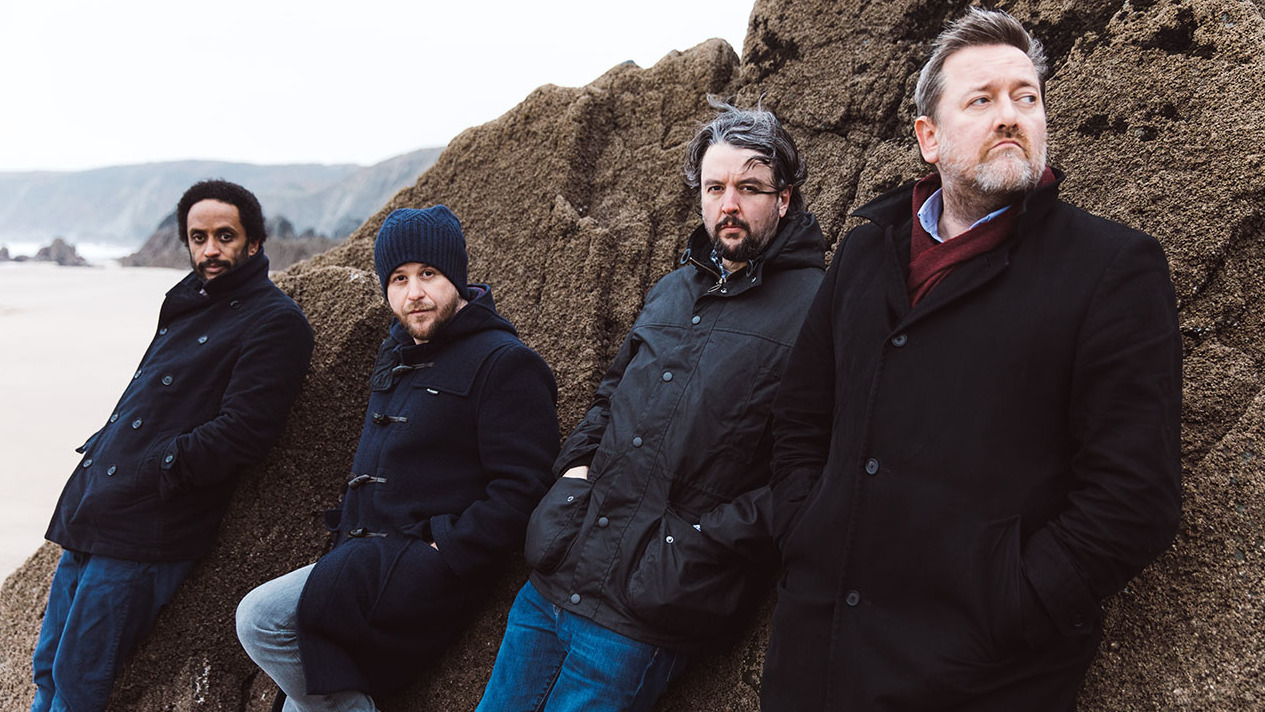
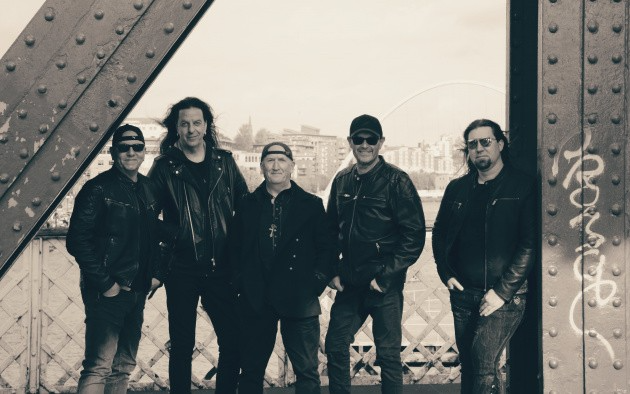
  • EMF keyboardist Derran ‘Derry’ Brownson dead at 55

    EMF keyboardist Derran ‘Derry’ Brownson has died, aged 55.

    The Forest of Dean alt. rock band announced the passing of their friend and bandmate on social media earlier today, August 14.

    “Late last night we started to hear the news that we have lost our Brother In Arms Derran Brownson,” they posted alongside a photo of the keyboardist. “We are devastated, the only solace we can find is that we are eternally grateful Derry was able to join us on stage a couple times just a few short months back. Nothing will ever be the same again without our band mate and friend, fly high brother Derry.”

    BBC Gloucestershire reported that the musician had been diagnosed with a brain tumour and had been undergoing treatment.

    EMF – Epsom Mad Funkers – are best known for their electro-rock hit single Unbelievable, which topped the US charts in the summer of 1991, and reached number 3 in the UK in December 1990. The single was taken from the quintet’s debut album, Schubert Dip, which peaked at number 3 in the UK, and number 12 in America.

    Brownson is the second member of the group’s original line-up to pass away. Bassist Zac Foley (later a member of Carrie) died from ‘misadventure’ while celebrating New Year 2001: pathologist Dr Diana Cox reported high traces of heroin, cocaine, ecstasy, barbituates and alcohol in Foley’s blood.

    Unbelievable producer Ralph Jezzard passed away on February 24 last year.

    Therapy?, Feeder, Ash, ‘A’ and former Creation Records boss Alan McGee are among those who’ve offered their condolences to EMF on social media.

    EMF were set to embark upon a Schubert Dip 35th anniversary tour later this year.