Rock’n’roll rebel Ricky Warwick has released his new album ‘Fire & Vengeance‘ via Earache Records and is currently #6 in the midweek official UK Top 40 Album chart. It is available in multiple colour vinyl variants, signed editions, exclusive bundles and more and is available from £4.99 at earache.com/rickywarwick and from iTunes for this week only. Ricky […]
“Cold War Bootlicker” Video/Single Now Playing + Pre-Orders Available
Watch/stream WOLFBRIGADE’s “Cold War Bootlicker” HERE
Swedish lycanthro punk outfit WOLFBRIGADE will release their Howl From Underground full-length on October 9th through Metal Blade Records.
With the amps still warm from 2024′s coruscating comeback Life Knife Death, veteran Swedish punk-metal masters WOLFBRIGADE strike back like a wounded cobra with their loudest, fullest, thickest-sounding record yet. And that’s no happy accident. On their twelfth LP (the first three released under the Wolfpack moniker, 1996-99), Howl From Underground, the quintet concertedly resolved to shake up their habitual processes and interrogate their customary methodology.
Photo by Therese Öhrvall
“As the songs started to fall into place, we decided to do something we hadn’t done in many years,” explains the band. “For the last decade we’ve recorded, produced, and mixed our albums ourselves. This time we wanted to work with someone from outside the band whose work we respect and who we felt would understand what WOLFBRIGADE is about.” The honor fell to Lawrence Mackrory – already a trusted collaborator with the likes of Meshuggah, Katatonia, Paradise Lost, and Bloodbath – at Necromorbus Studio, the converted Baptist church where Watain and Mayhem refined their occult chaos.
The urge to initiate a new working environment may have been emboldened by the return of drummer David “Dadde” Stark, who originally hammered the d-beats for WOLFBRIGADE from 2002-2015. “Everything clicked immediately. The chemistry was still there,” attests the band.
The term “lycanthro punk” recurs throughout the band’s 30+ year history, a catchy coinage acknowledging their d-beat raw punk roots and adding a maniacal bloodthirst and superhuman strength to the mix. It abides as the band’s preferred musical identity, so their own definition is essential: “Lycanthro Punk has always been about that force which refuses to be tamed. The same force that runs through myth, folklore, and philosophy throughout history. The wolf is one name for it. Dionysus another. A restlessness that survives civilization.” That force drives Howl From Underground.
In advance of the record’s release, today the band presents first single, “Cold War Bootlicker,” noting of the track, “‘Cold War Bootlicker’ is about false opposites. We divide the world into competing camps, but the machinery never changes. Two heads fighting over the same body. Every master speaks a different language of obedience.”
Watch WOLFBRIGADE‘s “Cold War Bootlicker” video HERE.
Howl From Underground will be released on CD and digital formats as well as vinyl in the following color variants:
Howl From Underground Track Listing:
01. Caveman Motherfuck
02. Doomrunner
03. Howl from Underground
04. Born to Rot
05. When Dogs Cry
06. Cold War Bootlicker
07. Fat Man Hellscape
08. Headhunting
09. Cosmic Meatgrinder
10. Seeking Scapegoats
11. Man Is Wolf to Man
12. Tangled Steel Mask
WOLFBRIGADE:
Micke Dahl – vocals
Erik Norberg – guitar
Jocke Rydbjer – guitar
Johan Erken – bass
Dadde Stark – drums
American blues rock guitarist and singer Eric Steckel brings his listeners back to the days when great guitars were played loudly through great amps. With Sandstorm, released on September 11th via SPV Recordings, Eric and the band deliver a powerhouse, mesmerizing performance. “My forthcoming new album, ‘Sandstorm’ is the most fun I’ve had making a record in my career thus far” said Steckel, and this is evident on the record itself.
Starting out with a killer Painkilleresque drum fill, “When It Rains, It Pours” is a heavy, bluesy goodness lit up by distorted guitar work made up of soaring licks, harmonics and pinch squeals. Steckel does a great job at fusing late 80s / early 90s hard rock vibe with modern blues. This continues with “The Other Guy”. Aggressive, in-your-face rock and roll energy, rich guitar tone and punchy arena-rock drums. Think Whitesnake meets Lynch Mob, meets Mr. Big, meets Bonamassa.
Perhaps a bit unexpectedly, Eric and the band make a 180 turn on “Blues for the Lonely”, a soul-sprinkled slow blues number with long notes on the electric organ providing a solid ground upon which the band strolls slowly while Eric walks and talks us through the story. Back to the heavy sound, “What I Wanna Believe” sounds like southern metal more than anything. Imagine Zakk Wylde playing with Lynyrd Skynyrd. Completely explosive!
The introspective title track has been written on the spot thanks to the fantastic vibe and chemistry in the studio. Talking about “Sandstorm,” Steckel said: “The incredible vibe in the studio brought forth tons of new and spontaneous material such as the title track ‘Sandstorm’ which instantly became my favorite track on this album and a perfect representation of this body of work.” Jazzy piano then paves the way for a love ballad that is “Empty Promises”. Eric’s incredible, soulful vocal performance is the absolute highlight of this song. Eric had previously recorded this Michael Burks cover on 2012’s Dismantle the Sun.
A Lance Lopez classic, “El Paso Sugar” follows, and it fits the vibe of this album oh so well. Incredible pick! But let me ask you, what on earth is that guitar sound on “Axe to Grind”? The dirtiest, meanest, most sinister distortion you’ll hear. Major pentatonic blues licks in between that heavy riff are such a tasty contrast. Wonderful, dirty, fat blues rock tune that brought out that pure teenage-style excitement in me, like the first time I heard Deep Purple’s “Stormbringer”. This is followed by a cheeky, funky, bluesy “She’s a Golddigger” bringing a juicy groove and fiery slide guitar licks. Closing out this wild ride of an album is a warm ballad titled “Back to Life”, ideal listening for a late night tipple.
Sandstorm is a bold blues rock album that packs a punch. Excellent choice if you’re living on a heavier side of blues town, or if you simply need an energy boost. A cohesive mix of 10 well-produced tracks, top-class musicianship from Eric and the band, and just enough contrast to keep you on your toes throughout – a great listen!
The Review: 8/10
Can’t Miss Tracks
– When It Rains It Pours – Sandstorm – Axe to Grind
A prompt can produce a polished illustration in seconds, a song can arrive with a convincing synthetic voice, and a language model can sketch ten story ideas before a writer has finished making coffee. AI has become remarkably good at producing things that look creative.
Human artists still occupy a different role. Art carries intention, biography, judgment, cultural context, and responsibility.
AI can automate parts of the process and may reduce demand for routine commercial work, yet generation alone does not erase the value of the person deciding what deserves to exist and why anyone should care.
The harder question is no longer whether machines can make attractive outputs. They clearly can. The question is what society means when it calls someone an artist.
AI Can Already Perform Many Creative Tasks
AI can strengthen individual ideas, even as broader creative diversity may narrow. Image credits: 123RF.com
Generative AI deserves more credit than the claim “it just copies” allows. Modern systems can recombine patterns, propose unusual associations, imitate visual conventions, vary musical phrases, draft dialogue, and help people escape a blank page.
A 2024 Nature Human Behaviour study found that people using ChatGPT produced ideas rated as more creative than people working without the tool or using conventional web search.
A follow-up analysis found a trade-off: individual ideas improved on average, while the pool of ideas became less diverse, according to the published creativity study.
A larger study published in Nature Human Behaviour in 2026 compared 9,198 humans with more than 215,000 large-language-model observations on a divergent-creativity task.
Humans scored slightly higher on average, and the biggest difference appeared at the creative extreme, where people showed greater variability and stronger top-end performance. The large-scale comparison suggests AI can be a formidable idea machine while exceptional human creativity remains difficult to reproduce consistently.
Repeated use may also pull many people toward similar regions of the idea space. A tool can help an individual produce a stronger idea while simultaneously making a wider group of users sound or think a little more alike.
Art Has Been Sharing the Studio With Machines for Decades
Arguments over machine creativity arrived long before image generators appeared in browser tabs.
British-born painter Harold Cohen began developing AARON at Stanford University’s Artificial Intelligence Laboratory in 1973. The program used rules and random variables to produce drawings, and Cohen spent decades refining it. The Victoria and Albert Museum describes AARON as widely considered the first AI artmaking program in its history of artificial intelligence.
Cohen treated the machine as a way to investigate artistic decision-making. Early AARON drawings were even hand-coloured by Cohen. His work raised questions about agency, intention, and collaboration that sound remarkably current half a century later.
Cameras changed painting. Synthesizers changed music. Digital editing changed photography and film. New tools shifted craft, taste, economics, and expectations, while human authorship kept evolving around them.
Where the Human Artist Still Has an Edge
The biggest human advantage appears before the first brushstroke, note, frame, or sentence. A person can decide that a private memory deserves a public form.
A musician can turn grief into a melody. A filmmaker can risk reputation on an unpopular idea. A painter can spend years returning to one image because it refuses to leave them alone.
Inspiration still has to become craft: Embervane’s step-by-step songwriting guide, for example, shows how a musical idea develops through a series of intentional choices rather than appearing as a finished song.
Generative systems can reproduce surface signs associated with grief, rebellion, tenderness, or nostalgia. Their output does not arrive with a personal history behind it. Meaning enters through the people who prompt, select, reject, edit, perform, publish, interpret, and respond.
Experiments published in Computers in Human Behavior found that people rated the same artwork as less creative and less awe-inspiring when told it was AI-made. The research on AI art indicates that information about authorship can influence how viewers experience a work.
The findings reveal bias as well as preference. They also show that viewers care about where an artwork came from. The story of creation can become part of the artwork’s value.
The Market Is Already Making Room for AI Art
AI-assisted work is increasingly entering established creative and commercial markets. Image credits: 123RF.com
In 2025, Christie’s held Augmented Intelligence, its first auction devoted entirely to AI-related art at a major auction house. The sale brought in $728,784, including buyer’s premium, across works connected with artists such as Refik Anadol, Holly Herndon, Mat Dryhurst, Claire Silver, and computer-art pioneer Harold Cohen. Christie’s published the results through its Augmented Intelligence auction page.
The result matters because AI art has moved beyond novelty demos. Collectors, galleries, musicians, filmmakers, and designers are already testing new forms of authorship.
A particularly humane example came from country singer Randy Travis. After a 2013 stroke left him with aphasia and severely limited speech, Travis worked with producer Kyle Lehning and Warner Music Nashville on “Where That Came From,” released in 2024.
AI helped recreate Travis’s singing voice, while Travis and his team directed the musical work and editing. Warner described months of detailed human involvement in the Randy Travis recording.
AI served the artist’s intention there. The emotional significance came from Travis, his history, his collaborators, and listeners who knew what hearing that voice meant.
Copyright Law Still Draws a Line Around Human Creativity
In January 2025, the U.S. Copyright Office concluded that generative-AI output can receive copyright protection when a human author determines sufficient expressive elements. Human selection, arrangement, or creative modification may qualify. Mere prompting, by itself, does not provide the same basis for protection under current U.S. guidance.
The agency explained its position in its AI copyright guidance, reinforcing a practical distinction between producing an output and exercising authorship over expressive choices.
Legal frameworks vary by country and will keep changing. The American position still captures a central idea in the art debate: tools can participate deeply in creation, while responsibility and authorship remain tied to people.
Creative Tasks Will Change Faster Than the Artist’s Role
Automation may reshape creative work without eliminating the value of a distinct human point of view. Image credits: 123RF.com
Advertising layouts, background illustrations, stock-style images, rough storyboards, generic music beds, and first-draft copy are vulnerable to automation because buyers often care about speed, price, and adequacy. Creative careers will feel real economic pressure as a result.
The human artist survives through a different kind of scarcity. A recognizable point of view is scarce. Trust is scarce. A career built over years, a live performance, a community, a body of work, and a personal history cannot be generated on demand in the same way as a competent image.
Artists who use AI may become common. Artists who refuse it may become more distinctive in some markets. New genres will appear, and arguments over legitimacy will probably continue, much as they did around photography, sampling, electronic music, and digital art.
AI can mimic many visible features of creativity. Human artistry remains anchored in agency: choosing the problem, taking the risk, assigning meaning, and standing behind the result. As long as audiences care about who made something and why, the human artist remains part of the work.
Summary
Generative AI has already changed creative production. Research shows genuine strengths in ideation, real markets are forming around AI-assisted art, and musicians and visual artists are finding productive ways to work with the technology.
The deeper role of the artist remains human. A tool can accelerate making. A person supplies a life, a point of view, and a relationship with an audience. Human beings still decide what is worth making meaningful.
Join Ally Venable “LIVE“ from the legendary 100 Club in London on Thursday September 10th. Tickets are priced £12.50 and are available from Lounges.TV. Experience a night of high-energy blues rock, soulful vocals, and electrifying guitar as critically acclaimed Texan guitarist and singer songwriter Ally Venable and her band take the stage at one of […]
Steven Wilson has launched a new website and released a short trailer for his next studio album, featruing Dr. Who actor David Tennant narrating and bearing the title “The Village Is Alive. Welcome to the village.”, hinting that he may soon release a follow-up to last year’s The Overview.
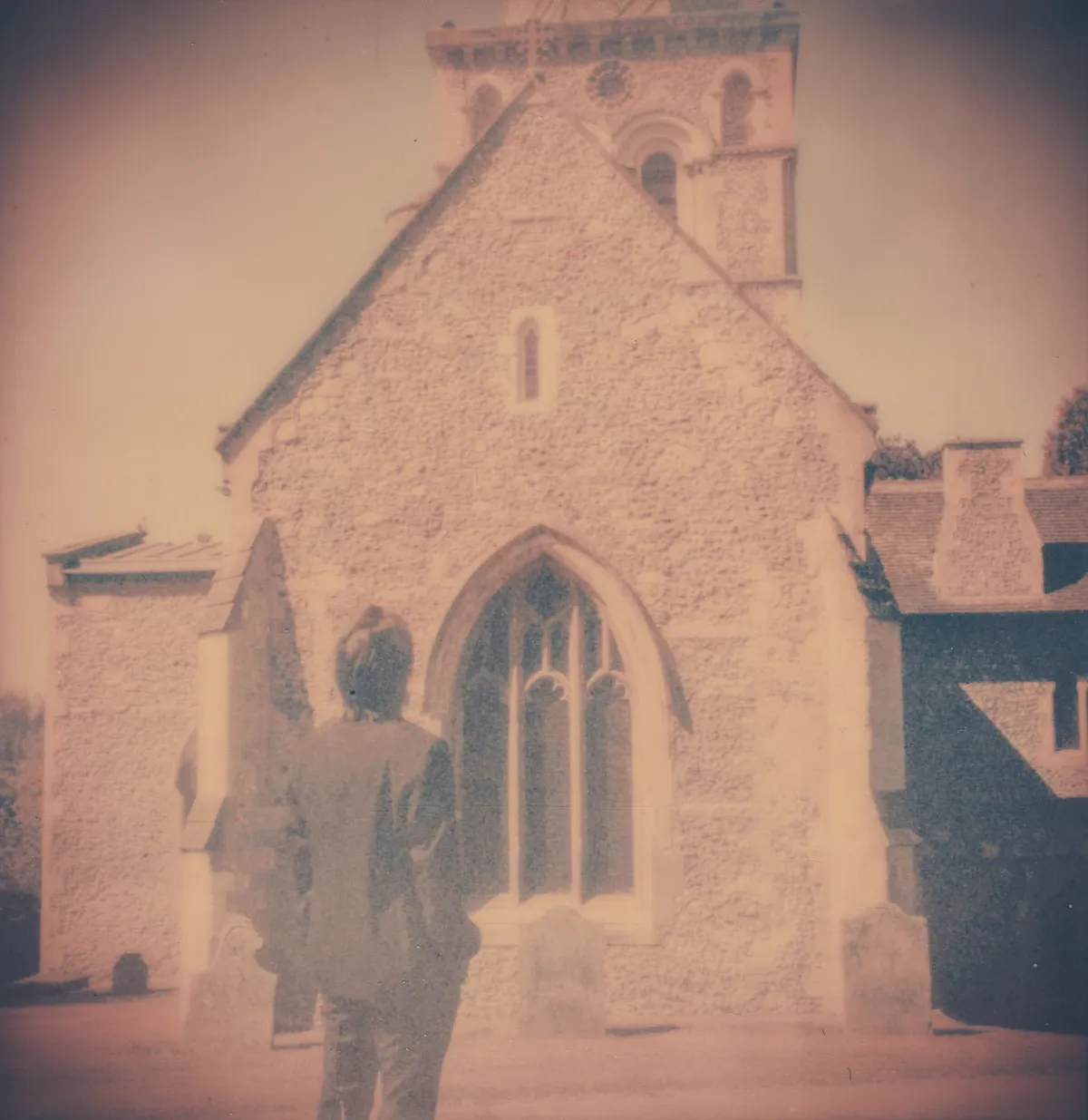
A website, taking the form of a village parish council-style website for Larkstone, entitled Requiem For A Village, appeared online this morning. Amongst the notices for village hall hire, the Village Historical Society, North Boundary Footpath Group and Over-60s Lunch Club, is a photograph featuring Wilson staring up at a village church.
The overall effect carries with it hints of a bygone world, as seen in films such as 1974’s Pender’s Fen (from the BBC’s Play For Today series), the 1970s children’s TV series Children Of The Stones and Robin Hardy’s 1973 classic The Wicker Man, among others.
(Image credit: Reproduced by kind permission of the contributor and the parish clerk. All rights reserved.)
There has been no official announcement about the album, its title or release date, but this recent spate of activity suggests the wheels are in motion.
Listening sessions were held for some fans back in May and June at the Polygon Portal in London’s Soho, where reports included the fact that the upcoming album featured a narration from Tennant, that the album seemed to be inspired by folk horror, centred around a fictional village from which there was no escape, and musically blended prog, ambient electronica, acid folk and crunching heavy guitar riffs.
The unsettling trailer – released through Wilson’s YouTube channel, which now features an image of a Celtic-type gravestone that also appears on Wilson’s other social channels – features Tennant’s voice and some folk-like acoustic guitar.
Perhaps most importantly for eager fans, the website lists an Autumn Festival in its events section for November 6.