Spiritbox have released “Mourning,” a standalone single, four days before they open a European headline tour in Glasgow. The band co-produced it with longtime collaborator Dan Braunstein, and the video was directed by their own guitarist, Mike Stringer, alongside Alex Bemis. It isn’t attached to an album and nothing has been announced. But look at where they’re playing over the next month and the timing makes complete sense.
STREAM THE METAL BREAKDOWN DAILY NOW:
Scott Penfold covers the new Spiritbox single on today’s Metal Breakdown Daily — the song, the tour, and the venue list that tells you how far this band have come in two years. Download the free Loaded Radio App on Apple iOS and Google Play and get it every weekday morning.
What we know about “Mourning”
Not much, deliberately, and that’s part of the appeal.
It’s a standalone track — no album attached, no campaign, no announcement. The band co-produced it with Dan Braunstein, who has worked with them repeatedly and who knows how to keep the low end doing damage without burying Courtney LaPlante.
The video was directed by guitarist Mike Stringer with Alex Bemis, which is worth flagging because it’s becoming a pattern in this corner of the scene. Miss May I made their “Death Threat” video in-house at the band members’ own houses. Novelists had their vocalist design the concept for “Ravage.” Bands with major-label money are increasingly choosing to keep the visual side under their own control.
Stringer isn’t a guitarist dabbling. He’s been shaping this band’s look since the beginning.
Here’s what almost nobody covering this will point out.
Spiritbox open in Glasgow on Saturday, September 12 and finish in Paris on October 9. Eighteen dates, ten countries. Jinjer and Dying Wish supporting throughout — which is a genuinely strong bill and not a token undercard.
Now look at the rooms.
Nottingham Motorpoint Arena. Co-op Live in Manchester. Utilita Arena Cardiff. OVO Arena Wembley. AFAS Live in Amsterdam. Lotto Arena in Antwerp. Zenith in Munich. Mitsubishi Electric Halle in Düsseldorf.
That’s an arena tour. Not a big-clubs tour with two arena dates bolted on — an arena tour, headlining, across a continent where this band were playing rooms a tenth of that size not long ago.
To be precise about it, because it matters: OVO Arena Wembley is the 12,500-capacity arena, not the stadium. Still an enormous room, and still a venue most metal bands never headline.
A band who release a surprise single four days before that kind of run aren’t doing it because they need the promotion. They’re doing it because they’ve got a song and eighteen rooms full of people about to hear it.
LIVE & LOUD: Stream the World’s Hardest Radio Station 24/7
Where they’ve got to
The scale isn’t an accident and it’s been building fast.
Tsunami Sea arrived in March 2025 and drew the best reviews of their career — Metal Hammer gave it 4.5 stars, with Rich Hobson writing that the album felt like the moment Spiritbox stepped into their own as a band who could contend with Bring Me The Horizon and Sleep Token as the next zeitgeist-setting act.
In February, the Tsunami Sea track “Soft Spine” was nominated for Best Metal Performance at the Grammys. It lost to Turnstile’s “Birds,” which is not a bad loss.
Last September, LaPlante teamed with Poppy and Evanescence’s Amy Lee on the standalone single “End Of You,” produced by former Bring Me The Horizon member Jordan Fish. It’s past 15 million YouTube views. She’s also been announced for a collaboration with Oli Sykes on a new song, “If The Sun Burns Out Tonight.”
That’s a Grammy nomination, a viral three-way collaboration, a Bring Me The Horizon team-up and an arena tour inside eighteen months — from a band who formed on Vancouver Island and released their first album during a pandemic with no live shows at all.
On November 21, Spiritbox support Metallica at Mohegan Sun Arena in Connecticut — an intimate show by that band’s standards, and the sort of slot that doesn’t go to bands who haven’t already proved they can hold a room.
Then three Australian dates on the Good Things festival run, December 4 to 6.
September 12 — Glasgow, UK @ SEC Centre Hall 3 September 14 — Nottingham, UK @ Motorpoint Arena September 16 — Manchester, UK @ Co-op Live September 17 — Cardiff, UK @ Utilita Arena September 19 — London, UK @ OVO Arena Wembley September 22 — Berlin, DE @ UFO im Velodrom September 23 — Gliwice, PL @ Gliwice Arena September 25 — Prague, CZ @ Forum Karlín September 26 — Vienna, AT @ Gasometer September 28 — Zurich, CH @ Halle 622 September 29 — Munich, DE @ Zenith September 30 — Frankfurt, DE @ Jahrhunderthalle October 2 — Hamburg, DE @ Sporthalle October 3 — Amsterdam, NL @ AFAS Live October 4 — Düsseldorf, DE @ Mitsubishi Electric Halle October 6 — Esch-sur-Alzette, LU @ Rockhal October 8 — Antwerp, BE @ Lotto Arena October 9 — Paris, FR @ La Seine Musicale
Tickets are via the band’s own site.
TL;DR
“Mourning” is out now — a standalone Spiritbox single with no album attached and nothing announced.
Self-produced alongside frequent collaborator Dan Braunstein, with a video directed by guitarist Mike Stringer and Alex Bemis.
The European headline tour opens September 12 in Glasgow and closes October 9 in Paris — eighteen dates across ten countries, with Jinjer and Dying Wish supporting.
It’s an arena run: Co-op Live, OVO Arena Wembley, AFAS Live, Lotto Arena, Zenith and more.
Their last album, Tsunami Sea, arrived March 2025 and earned 4.5 stars from Metal Hammer.
“Soft Spine” was nominated for Best Metal Performance at the Grammys in February, losing to Turnstile’s “Birds.”
They support Metallica at Mohegan Sun Arena in Connecticut on November 21, then play the Good Things festival in Australia from December 4 to 6.
FAQ
Is “Mourning” from a new Spiritbox album?
No. It is a standalone single with no album attached, and Spiritbox have not announced a follow-up to 2025’s Tsunami Sea. The band co-produced the track with Dan Braunstein.
Who directed the Spiritbox “Mourning” video?
Spiritbox guitarist Mike Stringer, alongside Alex Bemis. Stringer has been closely involved in the band’s visual identity since their earliest releases.
When does Spiritbox’s 2026 European tour start?
September 12, 2026 at SEC Centre Hall 3 in Glasgow. The run takes in eighteen dates across ten countries and finishes at La Seine Musicale in Paris on October 9. Jinjer and Dying Wish support throughout.
What was Spiritbox’s last album?
Tsunami Sea, released in March 2025. It earned some of the strongest reviews of the band’s career, including 4.5 stars from Metal Hammer, and its track “Soft Spine” was nominated for Best Metal Performance at the Grammy Awards in February 2026.
Are Spiritbox touring with Metallica?
They support Metallica at Mohegan Sun Arena in Uncasville, Connecticut on November 21, 2026 — a single show rather than a full run. They then play three Australian dates as part of the Good Things festival from December 4 to 6.
A surprise single, eighteen arena dates, and a Metallica support slot to finish the year. Have you heard “Mourning” yet, and where does it sit against Tsunami Sea? Tell me below. And keep it locked on the Loaded Radio stream — follow Loaded Radio for daily rock and metal news.
Italian and Swedish hard rock band Hell in the Club has released a brand new single and accompanying official music video titled “Call Me At 666” via Frontiers Music. The energetic new track is described by the group as a playful anthem that encourages listeners to let loose, hit the streets, and embrace their inner rebel without taking life too seriously. Musically, the song harkens back to the classic roots of the band while reflecting their current sonic maturity, operating as an updated spiritual successor to their earlier material.
Operating as a dynamic heavy metal unit, Hell in the Club was originally founded by bassist Andrea Andy Buratto, former vocalist Dave Damna Moras, and guitarist Andrea Picco Piccardi. Following a major lineup shift, the group welcomed powerhouse Swedish vocalist Terese Tezzi Persson to front their evolving sound. The new single continues to build upon the intense momentum generated by their highly praised seventh studio album, Joker In The Pack, which arrived last November and officially introduced Persson to their dedicated international audience.
The choreographer Sonya Tayeh’s “The Surge” is a dance response to themes in O’Connor’s life: spirituality, identity and what Tayeh calls jrage, or joy and rage.
Since getting started in 1989, Finland’s Archgoat have more than earned their place on the Mt. Rushmore of bestial blackened death metal (or “war metal,” for those like-minded fukks who spend too much time on Metal Archives and wear camo shorts to Best Buy). Helmed by twin brothers “Lord Angelslayer” (bass/vocals) and “Ritual Butcherer” (guitars), the group’s formula is simple yet effective: take rushing black metal riffs, add uber-deep growls, downtune the fukk out of the guitars, and throw in a lot of ritualistic, marching breaks that whip live audiences into a godless frenzy. For those who’ve never listened to them, imagine Beherit’s Drawing Down the Moon but more bludgeoning and blasphemous. Since returning from a decade-plus hiatus and releasing their long-awaited debut Whore of Bethlehem in 2006, the band’s albums have shown them honing that core sound while offering minor variations of it, with 2009’s The Light-Devouring Darkness veering closer to the more chaotic side of war metal and 2018’s The Luciferian Crown serving as a career high with its excellent variety and commanding production. Their last album, 2021’s Worship the Eternal Darkness, unfortunately felt a bit like the band was treading water after The Luciferian Crown, making me worried about how their sixth album, Nightbringer, Lightbringer, would fare.
Turns out those worries were for naught, as Nightbringer, Lightbringer shows Archgoat continuing to trample Christianity beneath their hooves with as much conviction as ever. After the requisite ambient intro, the title track blasts forth like a firestorm, scorching your pathetic little ears with stampeding double-bass runs, guttural pigfuck vocals, and pounding mid-paced riffs that force heads to be banged. With lots of pauses and tempo shifts, the track at times feels like it was blown up by a grenade and hastily reassembled, though the grunts of the track title (with dramatic pauses between each word) serve as a catchy anchor that holds everything together. Other than this song, the late-album track, “Reaper of Christianity,” comes the closest to the “classic” Archgoat formula, aside from the pianos that embellish that track’s marching riffs.
Those pianos, it turns out, aren’t the only experimental touches here, as this record shows Archgoat trying more new things than perhaps any other album in the band’s catalog. Several songs feature novel vocal approaches: the relentless assault of “Iconoclasm the Nazarene” has moments of higher-pitched screams that recall Revenge, while “Blood of Jesus Spilling Upon the Earth” employs bits of deep spoken word that might even be pitch-shifted. The latter song also uses passages of spacey, ringing chords that aren’t as powerful as the band’s trademark marching riffs, but are at least different. Perhaps the most notable moment, however, is in “Keys of Hell and Death,” whose epic conclusion is probably the most melodic minute of music the group has ever performed.
Overall, these new touches are welcome, though given how goddamn effective the band’s core sound is, I do wish the record offered a few more “traditional” Archgoat songs. The average tempos also feel slower than usual and, when combined with the heavy use of keyboards, create a sinister, ritualistic feel that may displease those looking for something with more raw bloodthirst. The only real misstep, however, is second proper track, “The Dawn to Armageddon.” The track itself is actually great, with hypnotic mid-paced riffing and keyboard embellishments that together make it sound a bit like old Samael. The problem is that its placement on the tracklist saps the album’s momentum early. Fortunately, songs like “The Light Behind the Horns” and the closing track, “Obsidian Reflection of Anti-Light,” are the perfect antidote, with punky energy and rampaging riffs that make it easy to bang your fukkin head (for the master in hell). Tracks like these are all the more powerful given the clear, full production that lets every layer shine through the darkness while retaining plenty of raw grit.
Apparently, Nightbringer, Lightbringer is about the end of Christianity and the beginning of a new Satanic dawn. The band supports this theme with as much conviction as ever while offering plenty of new embellishments, yet remaining wholly recognizable as the one and only Archgoat. In some ways, Lightbringer, Nightbringer is the epitome of the late-career dilemma: should a band continue doing the same thing or actually try new shit? For Archgoat, the answer is apparently a little bit of both, and the result is yet another Satanic stampede that’s sure to please war metal fans and anyone else looking for a blasphemous good time.
The finalists for the Abbey Road Music Photography Awards have been announced, with some familiar faces from the worlds of rock and alternative featuring heavily.
The competition is made up of these open categories: Portrait, Festivals, Emerging Photographer of the Year, Behind The Scenes, Underground Scenes, Live Music, Music Moment of the Year.
Then there is a guest catagory in the form of 50 Years Of Punk, as well as Music Moment Of The Year, which is open for public vote right here.
Head Judge Rankin had this to say about the work submitted: “2026 feels like the strongest year yet for the Abbey Road Music Photography Awards. The quality of the work entered was genuinely exceptional – not just technically brilliant, but full of energy, emotion and a real point of view. Judging was incredibly tough. Getting down to just five finalists in each category meant leaving out so many images that deserved to be recognised, which says everything about the standard this year. Music photography is in a really exciting place right now, and these awards are a brilliant snapshot of that.”
Whilst Abbey Road’s Managing Director Sally Davies adds: “It’s been wonderful to see how warmly the music photography community has embraced the MPAs, and to watch that community grow year after year. The extraordinary response reminds us just how much brilliant talent there is behind the lens, and how important it is to create opportunities for that work to be seen and celebrated. From the awards themselves, to our first Music Photography Festival in New York, we’re incredibly proud to be bringing people together around this unique art form and to see the MPAs becoming a genuinely global celebration of music photography.”
You can find out more about the awards here, but here are some of the photos up for these prestigious awards.
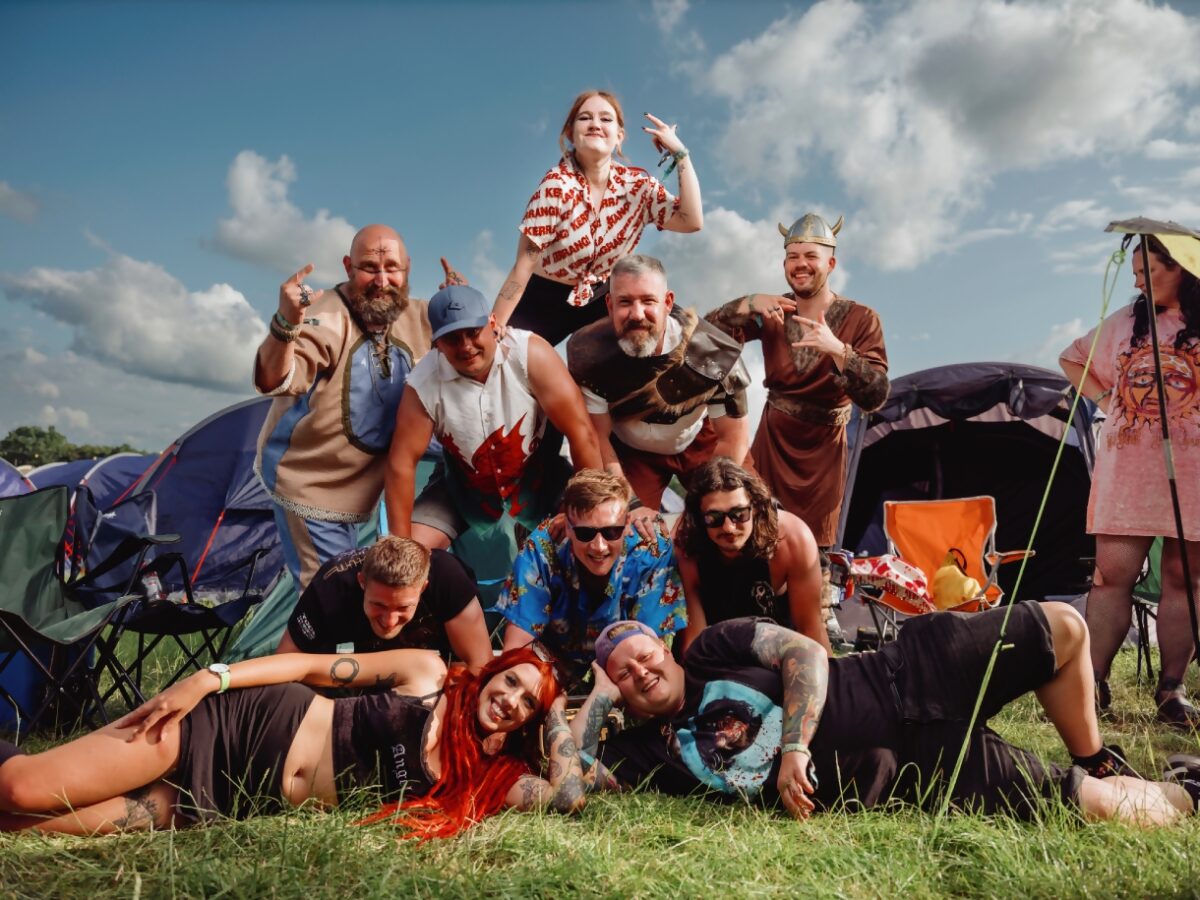
In the festivals category, Download Festival is represented via a Humans Of Download shot by Danny North, alongside a photo of Palaye Royale taken at Sziget Festival by Viktória Erdős.
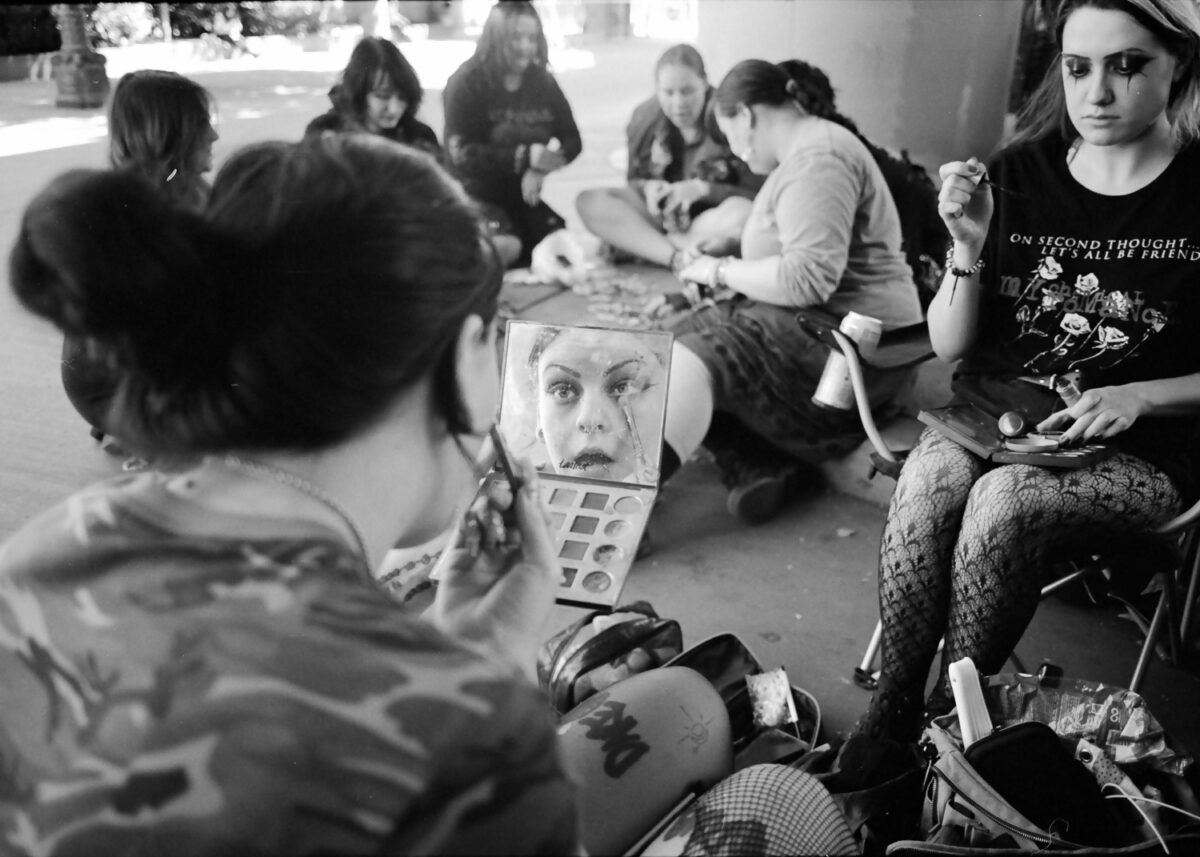
The Behind The Scenes Awards features a shot by Gabrielle Ravet of My Chemical Romance fans getting ready whilst sat in the queue for their show.
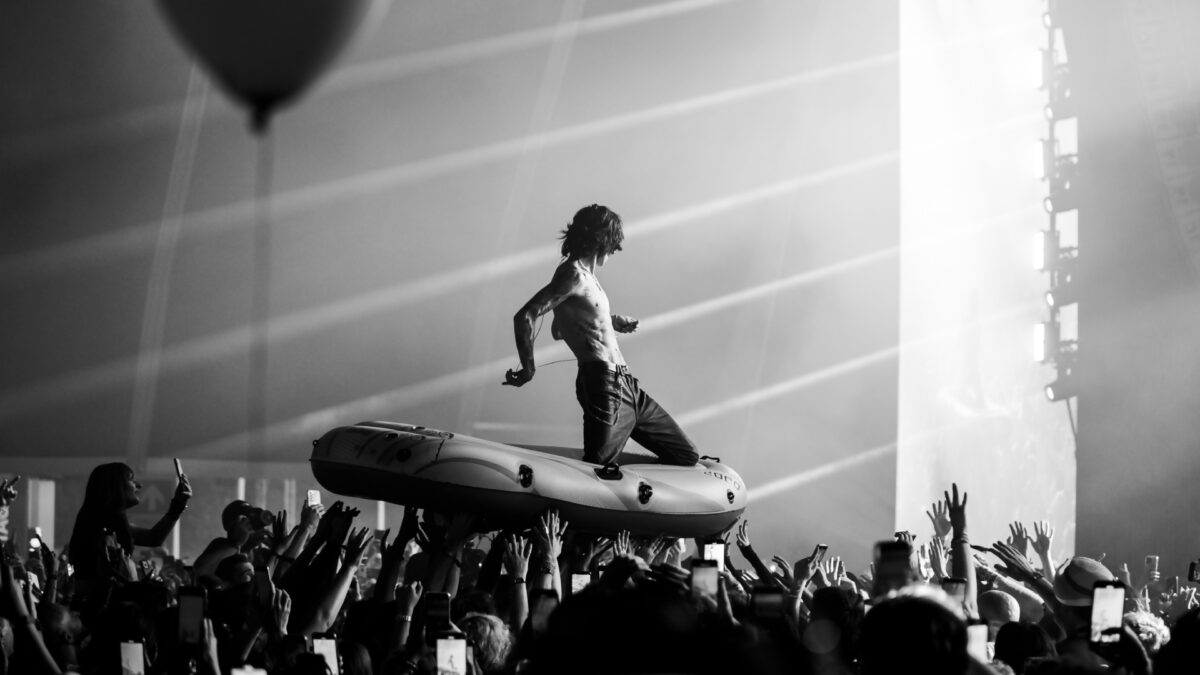
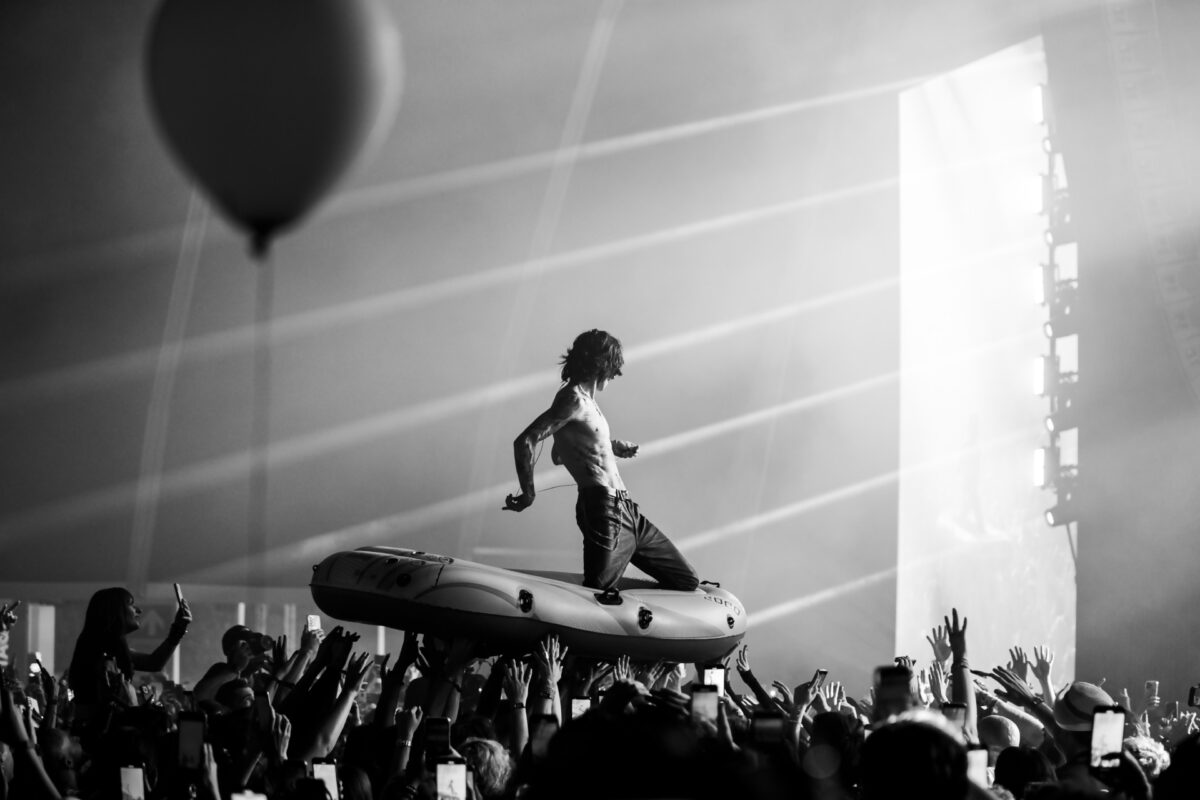
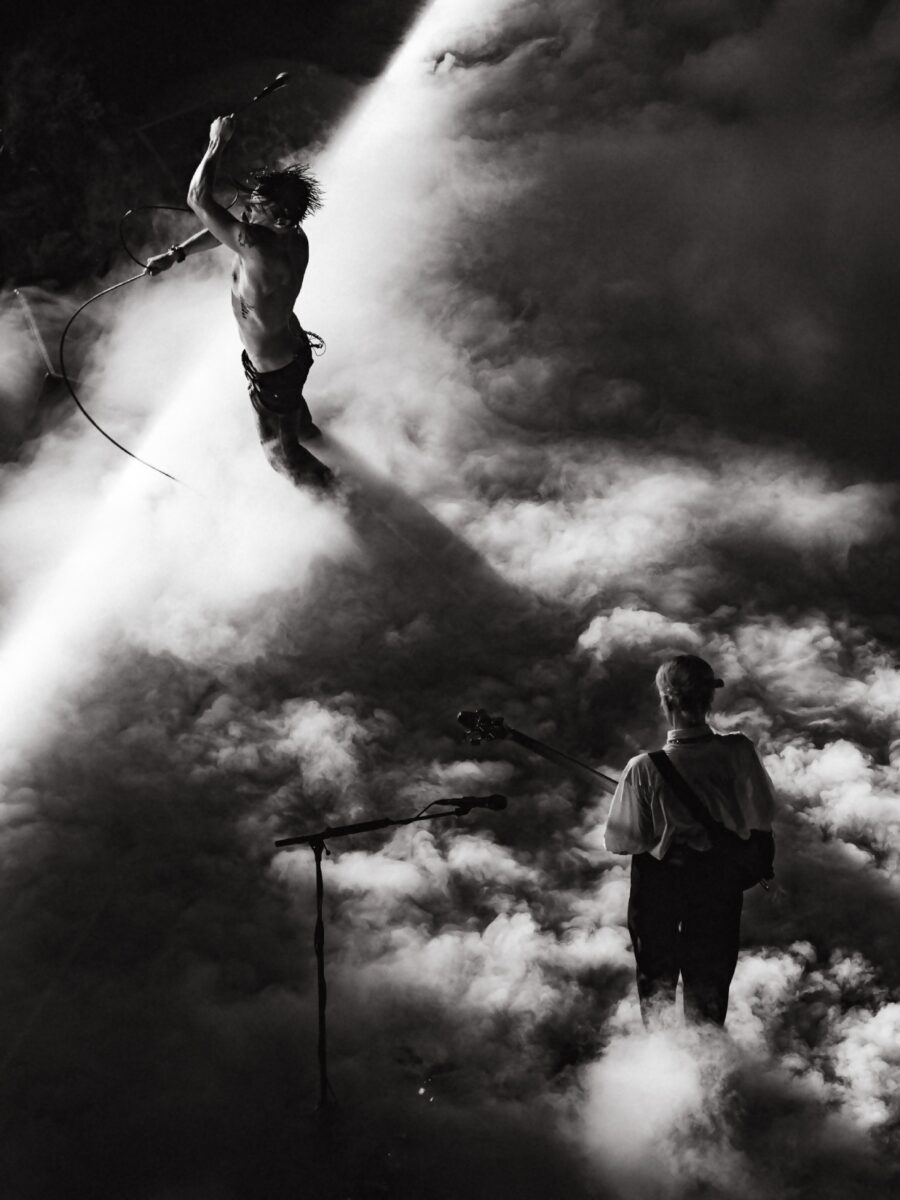
The Live Music category has a shot by Tom Pallant of YUNGBLUD doing his thing.
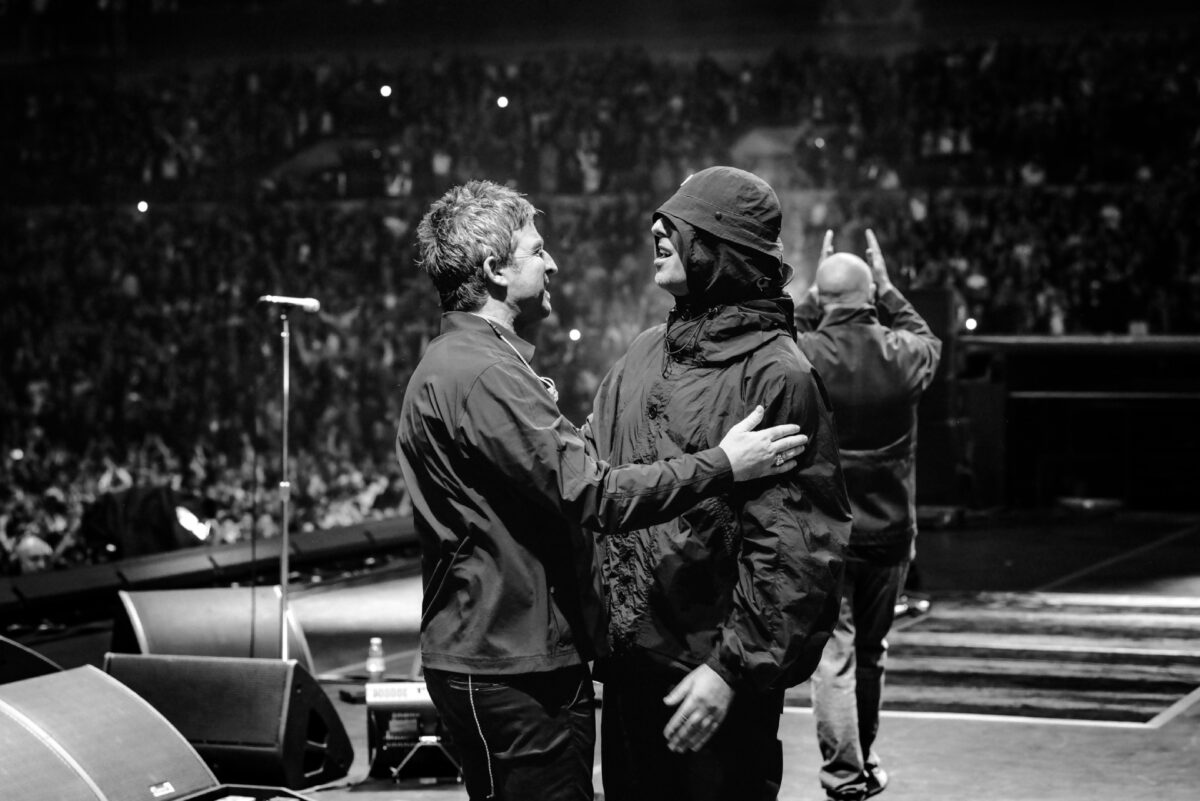
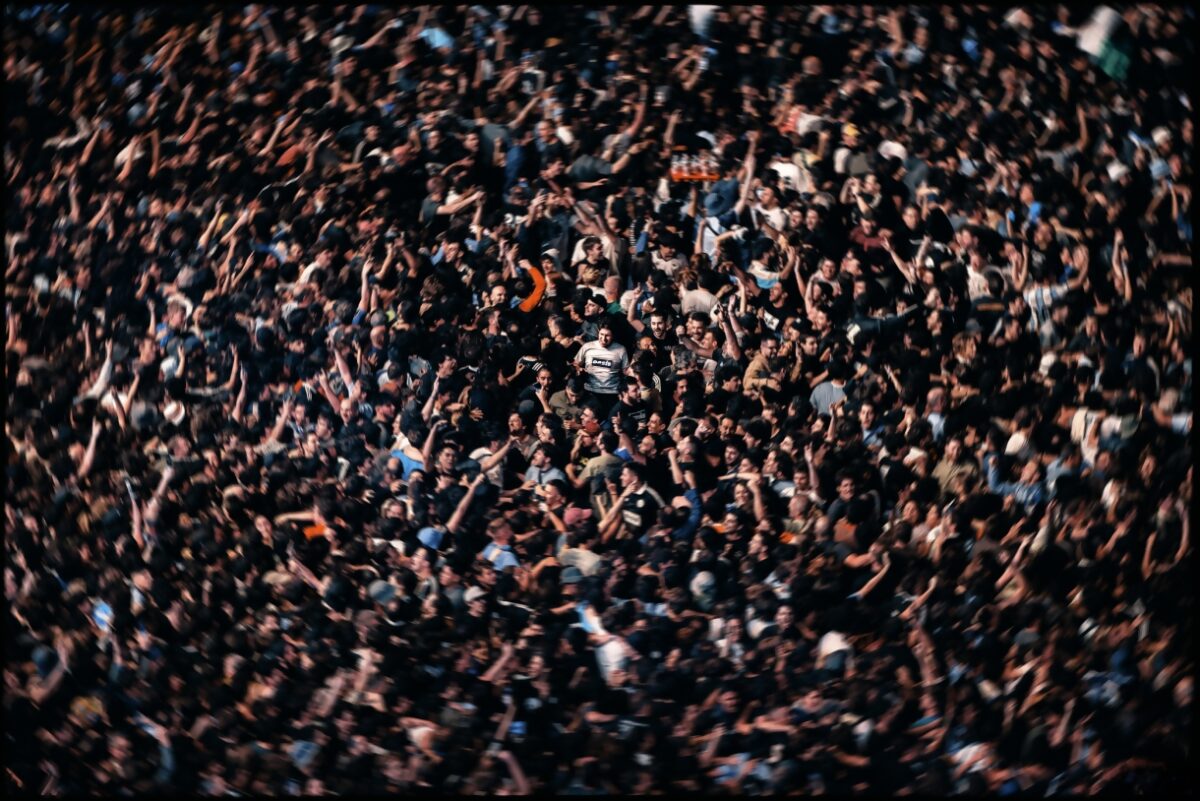
And the Music Moment Of The Year has two shots of Oasis, from the stage and the crowd. The first is by Harriet T K Bols and the second by Joshua Halling.
Winners will be announced when the awards take place on September 24.
The heatwave never seems to end. Perhaps you’re lucky enough to live near an open body of water. You might know of the dangers. The air heats quickly but the water is cold. Leap in, and you might get a shock. You might have a cardiac arrest. You might die. If you take a Midnight Swim the air is cooler, you’re less likely to be shocked, but at of course, there’s no one around to save you.
Maybe this sounds familiar, maybe you’re from Manchester like Midnight Swim. Even if you’re not, you should probably check out their self-titled debut. They’re a rock band and, after collecting their scattered singles onto 2023’s ‘Into The Night’ EP, they’re ready to break the surface.
Shock derives from the unexpected, a sharp jolt to the senses. You’re less likely to experience it if you submerge yourself slowly. So if you’re familiar with bands like Anberlin, Kids In Glass Houses or You Me At Six – rock bands with something heavy in their DNA – you’ll easily slip into the sound. They’re keen to describe it as ‘alt-pop’ but there’s something else beneath the surface, a love for swaying rhythms that invites you to dance.
Bodies of water, with their shimmering surfaces, are renowned for what they hide. Once you immerse yourself in the record, you’ll find it behaves in the same way. This is partly because of the band’s roots in a variety of local bands, meaning you can hear all kinds of interesting influences coming together to create the whole.
Over the summer, the moors above Manchester have been on fire. Occasional tongues of flame, heat, smoke, moments of intensity, but the defining characteristic is how it creeps up on you, spreading until the whole area is engulfed in flames. That’s also how the record works. It has a slow-burning quality that takes a little time to get going, and it’s all to do with the sound. Danny Heaton and Matt Lunn’s interwoven guitar parts have a rough, crinkly sound that helps shape the music. Although they use riffs to drive ‘Tease’ and ‘Don’t Want To Talk About It’, there is an undercurrent that powers songs like ‘Play It Cool’ which operates more like a corkscrew, drawing you along with its momentum. At its best, ‘Push Back’ is built around a huge, funky bassline from Matty Ashton, and the solo part on ‘I Don’t Wanna Talk About It’ proves that he can skillfully control their swagger.
Some of the songs also feel more alt-rock than others. On ‘Sinners’ this is a trick of the bright guitar tone, while on ‘Do You Want To Get Away’ they use wide, strummed chords like a reflecting pool. Other elements are blended into the sound, giving it unexpected flavours and character, especially more ballad-like ‘Bend & Break’ or the way the softened guitar effects on ‘In The Rain, By The Car’ actually sound like rainfall. Indeed, you’d be hard pushed to find a song title that captures the experience of visiting Manchester’s reservoirs so accurately.
Sitting by the reservoir, perhaps on a picnic rug, at the foot of the moorland you might hear the song of a ring ouzel, the cackle of ducks or the fascinating call of a heron. Each bird has its own distinctive sound and likewise Jack Valentine has a genuinely interesting voice. His singing style favours a slightly unnatural, forced sound as though deepened by back of his throat, making him sound chunky and powerful but tense. This gives him opportunity to do the opposite which leads to fascinating sections where he relaxes and sighs out syllables, creating a wash of emotion. It’s a delightful trick.
Reservoirs can appear to be natural bodies of water but are manmade, constructed from a series of choices but contained within a solid wall. Valentine’s songwriting does something similar, so while he uses repetition to create choruses, adds simple refrains or cries of ‘Hey!’ it is all braced inside the driving guitar parts. This is notable on the rock-solid ‘Tease’ which makes for a kind of effective brainworm. ‘Play It Cool’ even experiments with a vocal tick that is both surprisingly tasteful and extremely brief. However, he’s also a storyteller and on songs like ‘Fade’ or the softer parts of ‘Bend & Break’ he creates a narrative and sense of character with the restrained framework. It’s an effective piece of work.
As a debut album, it establishes the band’s sound, contains catchy singles, offers varied style and paints with broad scope. Each song has different energy and swagger making it feel pleasingly varied. In fact, it ticks all the boxes, and Valentine says it best on the album’s strongest cut ‘In The Rain, By The Car’ when he ‘Can’t stop thinking about it’.
A sense of motion runs through the album and although the record’s second half features slower songs like ‘This Is The Last Song I’ll Write About You’, there’s enough power balladry about it to save it from being lacklustre. It’s also where you find ‘Like You Love To’ which gives the band chance to play something a little more expansive.
Valentine repeatedly sets the song’s subjects against time. Phrases like ‘soon’ and ‘when’ create a sense of vague motion and hint at the slow drive of change, of indecision. It’s an interesting tension, particularly when combined with the mid-tempo music. This is also evident during the shouted verses of ‘Don’t Wanna Talk About It‘ as though he isn’t quite sure of his own aggression.
It has been a curious summer, aside from the perils of cold water and moorland fires, Manchester’s mayor left to lead the country, drawing attention to the city. What better time for the band to release their debut.
‘Midnight swim’ is a slow-burning rock record with hidden depths.
Live footage of Slayer playing 1986 album Reign In Blood in full has made its way online.
The California thrash metal hellraisers kicked off a tour celebrating 40 years of their most lauded release with a show at Mystic Lake Amphitheater in Shakopee, Minnesota on September 4. They dusted off an assortment of hits before finishing with Reign… in its 28-minute entirety: the first time they’ve performed the whole thing since 2014.
Watch footage of the complete Reign… section of the show below.
The Reign In Blood 40th-anniversary tour resumed at Rocklahoma in Pryor, Oklahoma on September 6. It will pick back up with a stop at Palacio de los Deportes in Mexico City on October 21, then continue for more North and Latin American dates. See the full list of dates below.
Slayer’s third full-length album, Reign In Blood was produced by Rick Rubin (then known for his collaborations with such hip-hop stars as the Beastie Boys and Run-DMC) and released via Rubin’s label, Def Jam. It charted in the UK and US and won critical acclaim. In 2017, Rolling Stone put it at number six on their list of the 100 greatest metal albums of all time.
Reign… faced public backlash due to its album art and lyrical themes. Conservative commentators accused Slayer of having Nazi sympathies due to the opening song Angel Of Death, which was about Josef Mengele and his experimental surgeries at the Auschwitz concentration camp. The band have repeatedly denied that they support Nazism.
Guitarist Kerry King said of the controversy during a Loudwire interview in 2015: “My rebuttal to that has been since day one, if you put that on the History Channel and took Slayer out of it, it would be an educational, intriguing ride through World War II. You put Slayer in, and heavy metal, and it’s, ‘Oh, they meant that shit!’”
Slayer retired from touring in 2019 but reunited in 2024 and have since played standalone shows and short tours. Talking to Australia’s Metal Roos in 2024, King dismissed the possibility of a new Slayer album and more extensive touring.
“Mark my words: we’re never gonna make a record again, we’re never gonna tour again,” he said. “Because that was the last thing. We said [in 2019], ‘This is our final tour.’ It took five years for us to come and say, ‘Hey, here’s a couple of shows, five-year anniversary.’”
Slayer’s final album, Repentless, came out in 2015. King took his ideas for a scrapped follow-up and used them to start a solo band. His first album under his own name, From Hell I Rise, came out in 2024. A second album is in the works.
Slayer Reign In Blood: 40th Anniversary tour dates:
Oct 21: Mexico City Palacio de los Deportes, Mexico
Oct 24: Fort Worth Sick New World, TX
Nov 13: Inglewood Kia Forum, CA
Nov 14: Inglewood Kia Forum, CA
Dec 05: Bogota Vive Claro – Distrito Cultural, Colombia

 STREAM THE METAL BREAKDOWN DAILY NOW:
 LIVE & LOUD: Stream the World’s Hardest Radio Station 24/7

 Since getting started in 1989, Finland’s Archgoat have more than earned their place on the Mt. Rushmore of bestial blackened death metal (or “war metal,” for those like-minded fukks who spend too much time on Metal Archives and wear camo shorts to Best Buy). Helmed by twin brothers “Lord Angelslayer” (bass/vocals) and “Ritual Butcherer” (guitars), the group’s formula is simple yet effective: take rushing black metal riffs, add uber-deep growls, downtune the fukk out of the guitars, and throw in a lot of ritualistic, marching breaks that whip live audiences into a godless frenzy. For those who’ve never listened to them, imagine Beherit’s Drawing Down the Moon but more bludgeoning and blasphemous. Since returning from a decade-plus hiatus and releasing their long-awaited debut Whore of Bethlehem in 2006, the band’s albums have shown them honing that core sound while offering minor variations of it, with 2009’s The Light-Devouring Darkness veering closer to the more chaotic side of war metal and 2018’s The Luciferian Crown serving as a career high with its excellent variety and commanding production. Their last album, 2021’s Worship the Eternal Darkness, unfortunately felt a bit like the band was treading water after The Luciferian Crown, making me worried about how their sixth album, Nightbringer, Lightbringer, would fare.
 Overall, these new touches are welcome, though given how goddamn effective the band’s core sound is, I do wish the record offered a few more “traditional” Archgoat songs. The average tempos also feel slower than usual and, when combined with the heavy use of keyboards, create a sinister, ritualistic feel that may displease those looking for something with more raw bloodthirst. The only real misstep, however, is second proper track, “The Dawn to Armageddon.” The track itself is actually great, with hypnotic mid-paced riffing and keyboard embellishments that together make it sound a bit like old Samael. The problem is that its placement on the tracklist saps the album’s momentum early. Fortunately, songs like “The Light Behind the Horns” and the closing track, “Obsidian Reflection of Anti-Light,” are the perfect antidote, with punky energy and rampaging riffs that make it easy to bang your fukkin head (for the master in hell). Tracks like these are all the more powerful given the clear, full production that lets every layer shine through the darkness while retaining plenty of raw grit.