Still hard to believe.
The post Former Every Time I Die Members Pay Tribute To The Late Andy Williams appeared first on Theprp.com.
Still hard to believe.
The post Former Every Time I Die Members Pay Tribute To The Late Andy Williams appeared first on Theprp.com.
Song of Love
Medley (Rock & Roll Crazies/ Cuban Bluegrass)
Jet Set (Sigh)
Anyway
Both Of Us (Bound to Lose)
Fallen Eagle
Jesus Gave Love Away For Free
Colorado
So Begins The Task
Hide It So Deep
Don’t Look At My Shadow
It Doesn’t Matter
Bound To Fall
How Far
Move Around
The Love Gangster
What To Do
Right Now
The Treasure (Take One)
Blues Man
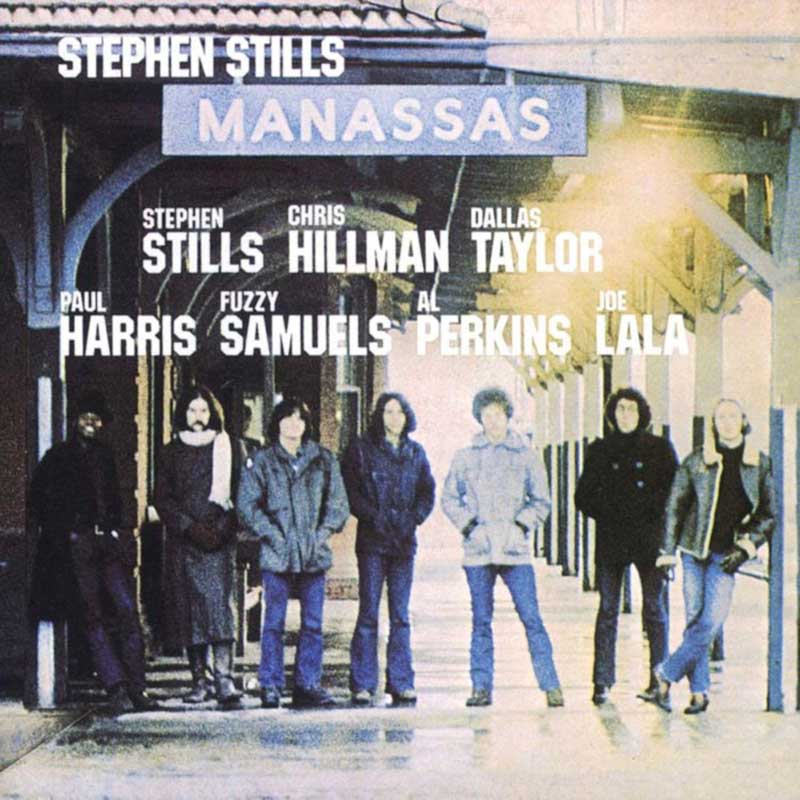
The same year his ex-Buffalo Springfield/CSNY colleague Neil Young was scaling commercial heights with Harvest, guitarist Stephen Stills offered up his own country rock collection. Manassas, released in 1972, reached the US top 10 and remains a gem.
Amassing a talented group of musicians around him, including ex-Byrd Chris Hillman, Stills explored four musical avenues on four sides of vinyl. The Wilderness section is primarily country and bluegrass, although the folk vibe of Consider and the closing Rock & Roll Is Here To Stay stray into country rock.
Perhaps too expansive for its own good, time has served Manassas well. Stills has always maintained that the band struggled for success because Atlantic Records would rather focus on the Crosby, Stills and Nash (and sometimes Young) gravy train, and the band’s first album (a second, Down the Road, followed in 1973) remains one of rock’s half-forgotten treasures. Some argue it’s the best album Stills ever released.

Every week, Album of the Week Club listens to and discusses the album in question, votes on how good it is, and publishes our findings, with the aim of giving people reliable reviews and the wider rock community the chance to contribute.
“Although a certain amount of throwaway is always present in any double-LP set, Manassas always remains admirable if not exciting. The musicianship is generally excellent, with the only pitfall being that the droning Stills’ vocal pervades all but one of the LP’s sixteen cuts.” (Cameron Crowe)
“A sprawling masterpiece, akin to the Beatles’ White Album, the Stones’ Exile on Main St., or Wilco’s Being There in its makeup, if not its sound. Rock, folk, blues, country, Latin, and bluegrass have all been styles touched on in Stephen Stills’ career, and the skilled, energetic musicians he had gathered in Manassas played them all on this album. What could have been a disorganised mess in other hands, though, here all gelled together and formed a cohesive musical statement.” (AllMusic)
“Yes, Steve has gotten it together a little, even deigning to cooperate with real musicians in a real band, and yes, some of this four-sided set echoes in your head after you play it a lot. The only problem is you’re never sure where the echoes come from.” (Robert Christgau)
Andrew Cumming: There must have been times when Stephen Stills couldn’t figure out why Neil Young was so much more successful than he was. Is his old Buffalo Springfield and CSNY bandmate really that much better a songwriter? Well, maybe. And he had Heart Of Gold. But Stills shows himself time and again to be a very capable songwriter and musician. Of course, he didn’t have a Crazy Horse to back him. And maybe the Manassas Band should have been his Crazy Horse.
This record is a great listen. All Music Guide reckons it has the sprawling feel of Exile on Main Street or the White Album, and there’s a lot to be said for this argument. The four sides (of vinyl) all have a very different feel – from blues, to country/bluegrass, to folk rock, to blues rock. It’s a good listen; however, it lacks stellar songs (hits). And I wonder if that’s the real nub for Stephen Stills. He’s got some great songs (Suite: Judy Blue Eyes, Love The One You’re With, etc). But Neil Young just has more great songs.
That said, this is a decent album and an enjoyable listen.
Mike Canoe: Well, this one was an education. I’m used to occasionally not recognising a club pick, but they usually don’t have a pedigree or commercial success like Manassas. Maybe most surprising was that this was considered an important comeback for Stephen Stills, who was strangely, improbably considered damaged goods after a wanly received second solo album and the ugly breakup of Crosby, Stills, Nash & Young. Yet I’d never heard of the band or the album (or the drama) until now.
Listening to it this week, and you probably saw this coming, it sounds like a CSNY album with a whole lot more S. While the four album sides supposedly have separate musical themes, it all sounds like Stills’ rootsy, folksy Americana complete with the trademark vocal harmonies, just done by other guys this time around. I know I’ve listened to the Flying Burrito Brothers before, but they didn’t really make an impression, and so it goes with Chris Hillman. A song may sound a little more country here or there, but nothing seems outside of Stills’ already established comfort zone.
Favourites include Johnny’s Garden, So Begins the Task, The Love Gangster, and Blues Man. On the whole, it’s one of those albums that gets better with each listen but is also one I’m not likely to listen to past this week. Too much music, too little time!
John Davidson: As a teenager, I was aware of Neil Young from his flirtation with the UK charts and the harder-edged rock of Rust Never Sleeps, but I was never a fan and had zero interest in exploring the sort of blues-infused Americana that was CSNY.
I hadn’t heard of Stephen Stills, so it’s no surprise that this album was complete news to me. That said, it is exactly what you’d expect. Pretty laid-back West Coast country blues. It has plenty of gas in the tank, but it’s content to drive along the highway well within the speed limit.
I’m more tolerant of this sort of languid music than I was in the 1970s, but it’s still not something I’m likely to play often. While none of the songs are clunkers, there’s nothing that makes me want to listen again right away. 6/10.
Robby Jackson: The music is beautifully arranged. Great album to listen to on a Sunday morning.
Chris Elliott: It’s been a while since I heard this as an album – yet it’s part of a playlist I listen to a lot.
It’s a flawed, sprawling album – but still a lovely thing. His voice doesn’t really do blues – the classic CSN-type tracks forget C&N aren’t there, and the harmonies don’t have that perfection. And, given it’s the early 70s, there are two jamtastic horrors best placed in the recycle bin. Equally, there are moments of where did that come from (every time I hear the Bert Jansch guitar bit, it’s wonderfully odd).
It bookends Chris Hillman’s golden period – from Sweetheart Of The Rodeo through the Flying Burrito Brothers and then this – a series of great and influential albums that were all commercial flops.
As I started with, it’s an album I know, but it’s normally shuffled along with the equally flawed but wonderful Sweetheart Of The Rodeo and Gene Clark’s No Other (flawless but you end up sitting under a tree and fuck all gets done). Put the three together, and you can wander along for hours.
Adam Ranger: Always been a fan of Crosby, Stills and Nash (and of course Young). This Stephen Stills album has some great moments and some lovely harmonies. It’s almost like CSN at times. Stills’ guitar playing is – for the most part – top-notch.
My issue is that this could have been a killer single album instead of an OK double album with some good tracks. It starts very well and ends strongly, but the middle two sides let it down. Perhaps it’s the country thing that I never really got into.
I understand that a lot of the songs may have been cathartic. Dealing with his breakup with Rita Coolidge, something that must have been doubly hard as Coolidge started a relationship with his friend and ex-bandmate Graham Nash!
Still (excuse the pun), I feel some of the tracks are a little bland, and I lost interest. But when it’s good… boy is it good!
Martin Painter: This album is near perfect, and so many people have never heard it! If you are one of them, do your ears a favour and give it a go.
Keith Jenkin: Highly interesting document of this fairly short-lived outfit consisting mostly of Stills’ touring band and ex-members of The Flying Burrito Brothers. The double album is split into four loosely themed sides – The Raven (mostly classic rock), Wilderness (mostly country), Consider (a mixture of styles and Rock n Roll is Here To Stay (mostly bluesy rock).
Many of the more personal songs relate to Stills’ recent relationship with Rita Coolidge. I found this a fantastic record to lose myself in when I first discovered it in the eighties, and I think many would enjoy it fifty-odd years on from release. If I were being critical, the melodies are not the most memorable, but if there is a record out there that has a legacy that better sums up that bedevilled American rock scene of 1972, I am not aware of it.
Sebastian B-c: I just heard this album last month, and it’s fantastic. Stephen Stills is the man!
Brenda Hagen: The beauty and flow of this album. Each side tells a story. I still have this on my playlist after many years. Give it a fresh listen. I hope generations behind me find it.
John Bowman: A fantastic album. Love the way it flows across the four sides.
Greg Schwepe: Except for his work with his friends Crosby, Nash, and occasionally Young, I have not ventured much at all into the solo work of Stephen Stills. Love The One You’re With and Buffalo Springfield’s For What It’s Worth are really the only songs of his that I’m familiar with since both of those seem to be classic rock FM radio staples no matter where you live.
So I dove headfirst into Masassas and immediately liked what I heard. Song Of Love ended, and Rock and Roll Crazies/Cuban Bluegrass came next and had me excited about this album. Jet Set (Sigh) was more of the same.
At that point I got a little ahead of myself. I scribbled down “Cool, funky, laid back groove” and “listen again and set on repeat” in the notes for my review. But then, it happened…
I got to Fallen Eagle and, uh oh, my pedal steel meter got tripped. This gets noted in all reviews where there is excessive pedal steel involved. And I can take it to a point, and then the meter gets tripped, and my interest in the song takes a nosedive. Usually when there is too much pedal steel, the song gets a little too twangy and too country for my taste. This is sometimes accompanied by too much fiddle.
So from Fallen Eagle to Don’t Look At My Shadow, I was basically half listening; “Pedal steel…again?” Almost scratched out my previous notes on the piece of paper I was writing on and crumpled up the paper.
But not all is lost, because by the time we get to It Doesn’t Matter, we were back in that cool, funky, laid-back groove once again for the remainder of the album. All was not lost! Paper uncrumpled and smoothed out.
To wrap this up, you whack out those six songs in the middle, and you’d have a killer Stephen Stills album. What’s left is the Stills vibe I really, really like. But the album as it is, with the excessive twang in those songs, will get a 7 out of 10 from me.
Philip Qvist: I am not a huge fan of Stephen Stills or some of his projects such as CSNY, which is not to say that I cannot fault him as a songwriter or musician, while even I would agree that he has produced a huge amount of impressive songs throughout his lengthy musical career. It does mean, though, that Manassas, another early 70s Supergroup of some sort, has hardly featured on my music radar.
Side one (The Raven) was my pick of the album, thanks to songs such as Song Of Love and Anyway, while – thanks to songs such as the eight-minute The Treasure – side four (Rock & Roll Is Here To Stay) was my other pick.
It is sides two (The Wilderness) and three (Consider) that let the album down somewhat. Too many country-influenced songs, complete with pedal steel guitars and mandolins, and too few songs that rock.
It isn’t bad at all, and it is worth a spin or two, even if only for the aforementioned sides 1 & 4; at just 72 minutes long, Manassas is pretty brief for a double album. A 6, perhaps a 7, from me.
Join the Album Of The Week Club on Facebook to join in. The history of rock, one album at a time.
That set took place in Shakopee, MN this past Friday.
The post Fan-Filmed Footage Of Slayer’s First “Reign In Blood” 40th Anniversary Full Album Performance Now Available appeared first on Theprp.com.
She took to cover a number of artists at last night’s ‘Velocity Festival’.
The post Watch: Country Star Carrie Underwood Covered Limp Bizkit & Linkin Park Live At ‘Velocity Festival’ appeared first on Theprp.com.
One month ago, Jane Remover issued an ultimatum to M3F Fest: Drop the Israeli alt-rock trio Temper City or they would no longer play next year’s event. “yo get that idf band off the lineup or I’m not playing,” the genre-blurring experimental pop artist posted on Instagram Stories on Aug. 5. Tonight the Phoenix festival officially revealed an updated lineup, and Jane Remover has been removed.
The post Jane Remover Drops Off M3F Fest Over “IDF Band” Temper City appeared first on Stereogum.
Tony Iommi has recalled his last ever conversation with Ozzy Osbourne – the night before the Prince of Darkness’ death.
The Black Sabbath frontman died on July 22 of last year, just weeks after his Back To The Beginning retirement show held at Villa Park in his hometown of Birmingham.
Sabbath guitarist Iommi spoke with Ozzy on the phone the night before his passing and says the singer was exhausted.
Iommi tells Loudwire Nights: “I spoke to him the night before he passed.
“He said to me, ‘I really feel tired and really worn out’. I said, ‘Well, you’re bound to really, it’s been a lot of stress and pressure and stuff like that’.
“And the next thing, the next day, gone.”
Iommi admits he has struggled to accept Ozzy is no longer around and that, at times, he still feels his presence.
“It still feels like he’s there,” he says.
While the Back To The Beginning celebration was a huge success that fans and artists on the bill were thrilled to be part of, Iommi reveals it was difficult for him to see Ozzy performing from a seated position when he had been such a live wire for decades.
He adds: “It was difficult because seeing Ozzy sitting in a throne is not the way I see him.
“Always when we’ve been on stage, he’s been running around, and he’d run up to Geezer and pull a face jokingly and come over to me and pull a face or the drummer or whatever.
“We always had a little laugh on stage and enjoy when he’d run about.
“But at Back To The Beginning, of course, he’s in a throne, and I couldn’t see him, which felt very unusual.
“But it was a great moment, and I’m really glad we could get the opportunity to do it, because I mean, God, we didn’t know he was going to go that quick.”
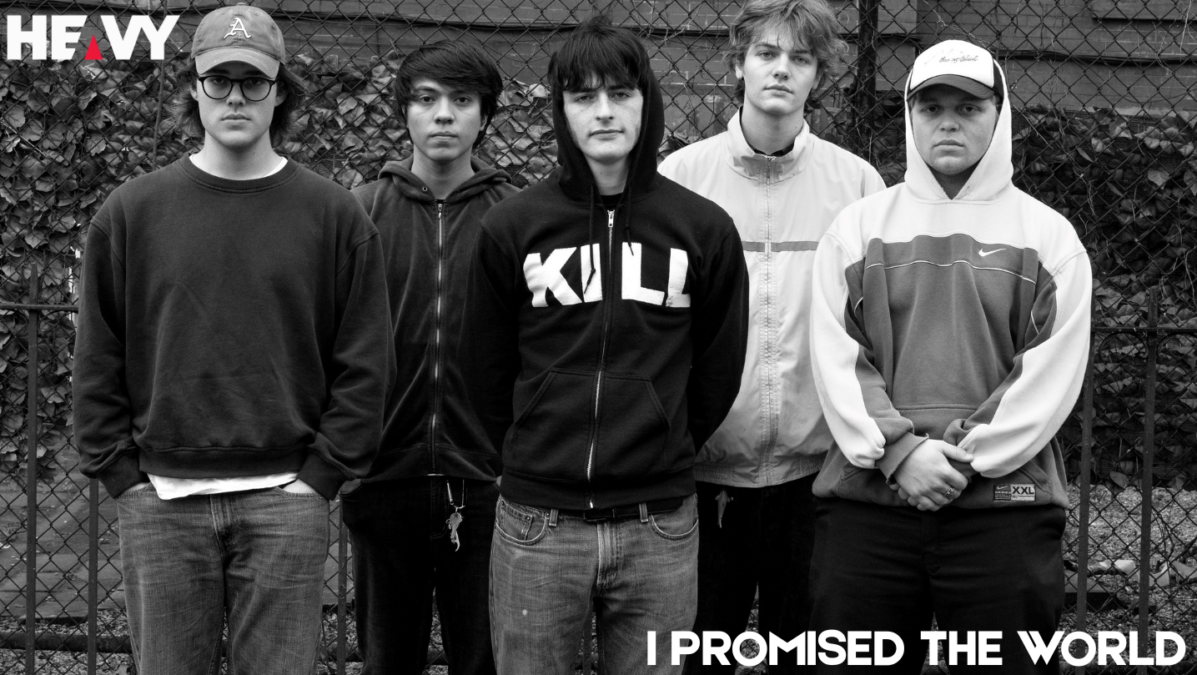 There is nothing quite like the raw, unfiltered power of a band that breathes their entire soul into the music. It’s that exact, devastatingly beautiful energy that rising Texan metalcore heavyweights I Promised The World are bringing Down Under this month. For the very first time, the five-piece is packing their bags and hitting our […]
Farnham trio Kit Trigg are about to embark on their first headline tour, and we hope they’ll be buoyed by the news that their recent Down To Earth single is the latest winner in our Tracks Of The Week fandango. Indeed, we hope they mention it every night.
Danielle Nicole and Grace Potter picked up the silver and bronze medals (disclaimer: there are no actual medals), and an exciting new batch of rockers and rollers are now eagerly awaiting your ears. They’re below.
Pittsburgh’s bell-bottomed, curly-cabled brigade evoke the freewheeling, anthemic heat and richness of The Who circa Who’s Next (along with some tasty 70s organ action and swirls of psychedelia) on Open My Eyes. And is that a touch of Elton John’s Saturday Night’s Alright For Fighting we hear? Tried n’ tested classic rock sensibilities, lovingly cooked up to commanding effect. A vibrant, fulsome three minutes and forty-seven seconds.
A big, hard-kicking rocker, full of teeth and swagger, the Canadians’ latest sounds like something that belongs in arenas and on festival stages. It’s anthemic but gritty; the riff and central hook are relatively simple, but they jazz it all up with dynamics and subtle touches (e.g low-key backing vocals, pacing shifts) that elevate it above standard pop/rock song territory. Check out more on its parent album, Elephant, which has just come out.
A raw, garage-fresh hit of New York art punk riffing (from the North West of England), Hotter On The Internet kicks, sidles and struts with the same power, self-deprecating humour and sensuality captured in Genevieve Glynn-Reeves’ deliciously satirical lyrics. The synthed-up, dreamlike bridge section feels a bit out-of-the-blue, but just about works. Either way, a lip-smacking cocktail, teasing their next album Earthly Delights, which comes out in January.
One of our favourite tracks from the Swedes’ excellent new album, Come This Madness (their first since 2017’s Walk The Earth), Scandinavian Eyes finds Messrs Tempest, Norum, Leven, Michaeli and Haughland going full Deep Purple – in the best way. Think galloping riffage with fiery organ lines and beats in hot pursuit, plus theatrical flourishes in the form of orchestral layers. Nice growl from Opeth mainman/friend/fan Mikael Akerfeldt, too.
Ahhh Airbourne, doing their Airbourne thing in such a straight-shootingly likeable manner of which has never shifted and is not about to change now. Accordingly, Kid In A Candy Store finds the Aussie foursome rocking the bejeezus out of a big fat A-chord boogie, complete with drums that charge forth like dinosaurs gatecrashing a school sports day, and lyrics about using ‘the back door’ and ‘69 on the seventh floor’ that make Def Leppard sound like Shakespeare. Imminently reliable fun.
Captured on film as headliners at Chepstow Castle, the Welsh rockers fly high on this upward-punching new single. The sort of moody, euphoric banger that lifts them up a league. It all sets the stage in style for their next album, Flawed By Design, which comes out in November. “This song dropped out of the blue, quite literally,” frontman Wayne Doyle says. “I picked my acoustic guitar up at home, hit the first chord and sang ‘Set my soul on fire again’. It went from there. This was the first song we started to work on for the record.”
Stenley Simmons have now released an estimated eight singles (to be honest, we’ve lost count), and the quality shows no sign of dropping. The latest, Cold, has a Fleetwood Mac vibe, with the sweetest of harmonies and the kind of relaxed, impossibly breezy vibe you only get with Californian types and those attempting to sound Californian. Lovely guitar solo too. The pair’s debut album, Dancing While The World Is Ending, is out on physical formats now.
American doom metal supergroup Silvertomb (featuring members of Type O Negative, Inhuman, Agnostic Front and Empyreon) have come up trumps on a new single that sounds like Black Sabbath (expected), Pink Floyd (less so, but not a surprise) and Oasis (probably an accident). The end result works well, with Kenny Hickey’s Ozzy-ish vocal matching both the spectral vibes of the first half of the song and the Gallagher-ness of the second. New album The Interpretation Of Nightmares will surface in November.

Dreams have always been a powerful force in rock music, shaping lyrics, melodies, and entire albums around the intricate web of emotions they evoke. Rock musicians and songwriters have long used dreams to explore everything from personal aspirations and haunting fears to nostalgic reflections and existential dilemmas. These songs don’t just speak to our subconscious thoughts when we sleep; they tap into a deeper psychological terrain where dreams can represent hope, longing, ambition, or even despair. In rock music, the word “dream” is a versatile tool for conveying the full spectrum of human experience. From the soaring optimism of Van
The post 10 Best Rock Songs About Dreams appeared first on ClassicRockHistory.com.