This week’s “Dark Wave” featured music by The Cure, Sad Lovers and Giants, Siouxsie and the Banshees, Revolting Cocks, The Neon Judgement, Front 242, Wire and more.
Every Monday morning, Still in Rock kicks off the week with an article featuring a bunch of new releases. At the end of each month, I dedicate a playlist to the best of these articles (link). Don’t miss out and join Still in Rock on Facebook (here), WhatsApp (here), and Instagram (here). Cheers.
***
Getdown Services – Massive Champion
LP, Breakfast Records, 14 August 2026
[post-punk]
🇬🇧
In one sentence: In the lineage of Pist Idiots and Viagra Boys, those bon vivant dudes who never take themselves seriously.
***
Spring Breeding – Backflip Soundtrack
LP, Zum Audio, 21 August 2026
[art punk]
🇺🇸
In one sentence: I can already see the band renamed SPRINT Breeding, furious, inventive as fuck, wow, one of the slaps of 2026.
***
Wine Lips – TV Dinner
LP, Stomp Records, 28 August 2026
[garage psych]
🇨🇦
In one sentence: While plenty of slackers have put their guitars back in the closet, Wine Lips stay faithful, and still with the same excellence.
***
Ty Segall – Chrome
LP, Drag City, 28 August 2026
[garage rock]
🇺🇸
In one sentence: Ty does Ty, what more could we ask for?
Every Monday morning, Still in Rock kicks off the week with an article featuring a bunch of new releases. At the end of each month, I dedicate a playlist to the best of these articles (link). Don’t miss out and join Still in Rock on Facebook (here), WhatsApp (here), and Instagram (here). Cheers.
***
Getdown Services – Massive Champion
LP, Breakfast Records, 14 August 2026
[post-punk]
🇬🇧
In one sentence: In the lineage of Pist Idiots and Viagra Boys, those bon vivant dudes who never take themselves seriously.
***
Spring Breeding – Backflip Soundtrack
LP, Zum Audio, 21 August 2026
[art punk]
🇺🇸
In one sentence: I can already see the band renamed SPRINT Breeding, furious, inventive as fuck, wow, one of the slaps of 2026.
***
Wine Lips – TV Dinner
LP, Stomp Records, 28 August 2026
[garage psych]
🇨🇦
In one sentence: While plenty of slackers have put their guitars back in the closet, Wine Lips stay faithful, and still with the same excellence.
***
Ty Segall – Chrome
LP, Drag City, 28 August 2026
[garage rock]
🇺🇸
In one sentence: Ty does Ty, what more could we ask for?
Taking inspiration from the rainbow-hungry goblin protagonists of a 1970s children’s book, Primus released The Desaturating Seven in 2017. Les Claypool told Prog about the band’s seventh album, another madcap concept work designed to spook and spellbind in equal measure.
In 1978, Italian illustrator Ulderico Conte Gropplero di Troppenburg published a children’s book. The Rainbow Goblins was a vivid affair that told the story of seven evil characters named after the colours of the spectrum: Red, Orange, Yellow, Green, Blue, Indigo and Violet. They traverse the land, stealing the colour from rainbows with their lassos, filling their bellies with its kaleidoscopic goodness. It all comes to a surprisingly violent conclusion for the miniature protagonists, but the story doesn’t end there.
While Ul de Rico – as he’s more commonly known – went on to publish a sequel (The White Goblin, in 1996) and work as a designer on Hollywood blockbusters The NeverEnding Story and Flash Gordon, the goblins have made something of a comeback: their story is retold in new Primus album The Desaturating Seven.
“I’m getting older,” says Primus mainman Les Claypool, speaking to Prog from his home in Sonoma County, California, punctuating his conversation with suitably maniacal cackles. “I’m figuring I need to pull some of the pots off the stove, and this is something that I’ve been thinking about for a long time.
”My wife used to read The Rainbow Goblins to my kids a lot when they were little. I remember going through it and thinking how amazing it was: the artwork, the colours, the beauty… and yet the darkness, and the creepiness, and the message. It was just an amazing piece of art.
“It was inspiring to me and I wanted to supplement it with my obscure interpretation and perspective. Obviously it’s also fairly relevant to what’s going on today. It just seemed like the right time.”
Thinly veiled political sentiments aside, the album manages to capture the book’s prismatic yet black-hearted vibrance perfectly. The ominous spoken-word introduction is read by Tool bass player Justin Chancellor (“the champion goblin,” says Claypool) to the chilling denouement, it’s an album that conjures up images of peculiar lands, epic journeys and dark, sinister activity with some considerable degree of skill.
From the stumbling lurch of The Valley, with its spookily disembodied vocals that sound as if they were recorded underwater, via the stuttering The Seven – a song with a cadence that makes it feel like a demented, foreboding sequel to John Walter Bratton’s Teddy Bear’s Picnic – to the off-kilter, racing drama of the climactic The Storm, it’s full of squirting rhythms, lolloping basslines and enormous mischief.
It’s like a nursery rhyme set to some form of alien, disjointed jazz, but it somehow succeeds in breathing life into Ul de Rico’s deviant story.
“That’s what I’ve always tried to do with Primus stuff,” says Claypool. “We’ve never been about dance floor lyrics. It’s always been about visuals and trying to evoke some interesting pictures through music. The visual element has always been a very strong part of what we do live, given the parameters of what we can afford.
“We’re not Radiohead, who have a little bigger production budget than we do, but we come up with some pretty cool stuff. For me, the images Ul de Rico painted for this thing are so spectacular and so strong I just really wanted to support that as best I could and not detract. At times it was incredibly easy, and at times it was difficult.
I don’t want to hear 20 songs by my favourite artist. I’d rather hear 10 songs and get to suck them in
“The biggest challenge was to write lyrics about goblins and rainbows and it not to come off like a Tenacious D song. It could easily be interpreted as some form of parody, and if you look through the lyrics I don’t often mention goblins and very rarely mention rainbows. Instead I use the notion of the metaphors that are implied in the story.”
Given the epic nature of the tale, it’s something of a triumph that in an age where attention spans are lower than ever and yet 70-minute albums are the norm, Primus managed to bring the album to a frothing climax in just over half an hour. “That, to me, is the folly of CDs,” says Claypool. “I don’t want to hear 20 songs by my favourite artist. I’d rather hear 10 songs and get to suck them in. For me, one of my all-time favourite records as a kid – it was also my first concert – was Hemispheres by Rush, and this record is either a minute or 40 seconds shorter than that.
“Of course, part of the reason that albums were shorter back in the day was that the more information you put on a disc, the more you included, the more the quality dropped. The grooves got closer together, and you lost the bottom end. So I wanted to make sure it sounded great on a single album.”
Rush aren’t the only band referenced by Claypool as he talks about the album. Lead single The Seven, with its corrugated rhythms and wobbling bass, definitely has an air of Discipline-era King Crimson about it. “There are different eras of Crimson,” says Claypool, “but when I discovered them it was 80s Crimson, the Adrian Belew, Tony Levin Crimson era. That, to me, was Crimson. So when I heard the earlier stuff, I was like, ‘Woah! This is quite a different chapter!’ But those 80s Crimson songs are just spectacular.
“They were very powerful for a young man to hear: Tony Levin and Bill Bruford playing those rhythms together, just the whole package. They’re one of the greatest bands ever. They’re all monsters and they have this chemistry together. When you get a group of individuals – no matter how strong they are separately – and they don’t have that chemistry when they come together, it can be quite interesting. But if they do have that chemistry, it just takes it beyond.”
Sean Lennon has this incredible ability to form vocal melodies and harmonies… that was very helpful for me
In August, Claypool and Sean Lennon released the four-track EP Lime And Limpid Green, the follow-up to The Claypool Lennon Delirium’s whimsical debut album of last year, Monolith Of Phobos. Alongside covers of Flower Travellin’ Band’s Satori, Pink Floyd’s Astronomy Domine and The Who’s Boris The Spider was a faithful version of Crimson’s The Court Of The Crimson King. “It’s a phenomenal song to play, record and perform,” says Claypool.
“Any time you do a project with other people, you grow, hopefully. Working with Sean, he and I pushed each other in directions that we probably wouldn’t go on our own. He has this incredible ability to form vocal melodies and harmonies, and that was very helpful for me on The Desaturated Seven.”
Another different approach Claypool brought to the recording of the album was by creating a storyboard to lay out the goblins’ tale for the other members of the band, guitarist Larry “Ler” LaLonde and drummer Tim “Herb” Alexander, before they came up with their parts. Aside from that, it was business as usual.
“We do everything in my house,” says Claypool, “where I’ve assembled all this old vintage gear. Every now and then I need to kick things to keep them going, but I’m the only one who knows exactly where to kick them, so I’m the only guy who can run it.”
Maybe I’ll start telling people I play Beatles music… but sideways
Have his kids heard the album? “They’re adults now,” says Claypool. “And like everything else I do, my daughter thinks it’s incredibly weird, whereas with my son, it’s right up his alley. When I played The Residents in the car when they were little, my daughter would cry and say it was scary, while he loved it and wanted to hear it again.”
The band have been in touch with Ul de Rico, (“a thoroughly eccentric fellow,” says Claypool) to licence the artwork. “My manager was emailing with him there for a while because we needed his permission. To me, a huge part of the pie is utilising all those images. He painted all that stuff on these wood panels, and we’ve had a couple of people do some reproductions of some of it, and it just doesn’t look nearly as good as what he came up with.”
The fruits of the collaboration will be seen when Primus take the goblins on the road, and if all goes according to plan, it’s going to be spectacular. After all, the band set the bar high with the tour for the Primus & The Chocolate Factory album, which reimagined the soundtrack to the classic children’s film Willy Wonka & The Chocolate Factory.
“We have a pretty amazing team that have been part of our visual world for a while,” says Claypool, “and when we did the Wonka thing, we put together a pretty interesting stage show. It started off with us going out and doing the stripped-down production version of Primus, before we opened the curtains of this magical world that was Willy Wonka and the chocolate factory, with Oompa Loompas jumping around and lots of video visuals. We’re going to do something similar to that on this. Obviously there’s going to be a lot of rainbows and lots of goblins. Not a lot of helicopters on this one.”
Prog asks if Claypool is familiar with synaesthesia, the neurological condition in which real-world stimulation is experienced by more senses than would normally be the case. Those affected might see a picture of the sea and immediately taste apricots, or unfailingly think of January as being yellow. One variant, chromaesthesia, results in different musical notes provoking the listener into visualising involuntary, simultaneous bursts of colour.
It sounds like the kind of thing Claypool might have a theory or two about, given the visual impact of Primus’s new album and the brilliance of Ul de Rico’s images, but he’s not biting. “I see music in the form of sandwiches,” he chortles, before asking how to spell synaesthesia and writing it down. Don’t be surprised if it shows up on the next album.
Or maybe it won’t. Primus are nothing if not unpredictable. “I’ve no idea what kind of music I play,” says Claypool. “Maybe I’ll start telling people I play Beatles music… but sideways.”
Song of Love Medley (Rock & Roll Crazies/ Cuban Bluegrass) Jet Set (Sigh) Anyway Both Of Us (Bound to Lose) Fallen Eagle Jesus Gave Love Away For Free Colorado So Begins The Task Hide It So Deep Don’t Look At My Shadow It Doesn’t Matter Bound To Fall How Far Move Around The Love Gangster What To Do Right Now The Treasure (Take One) Blues Man
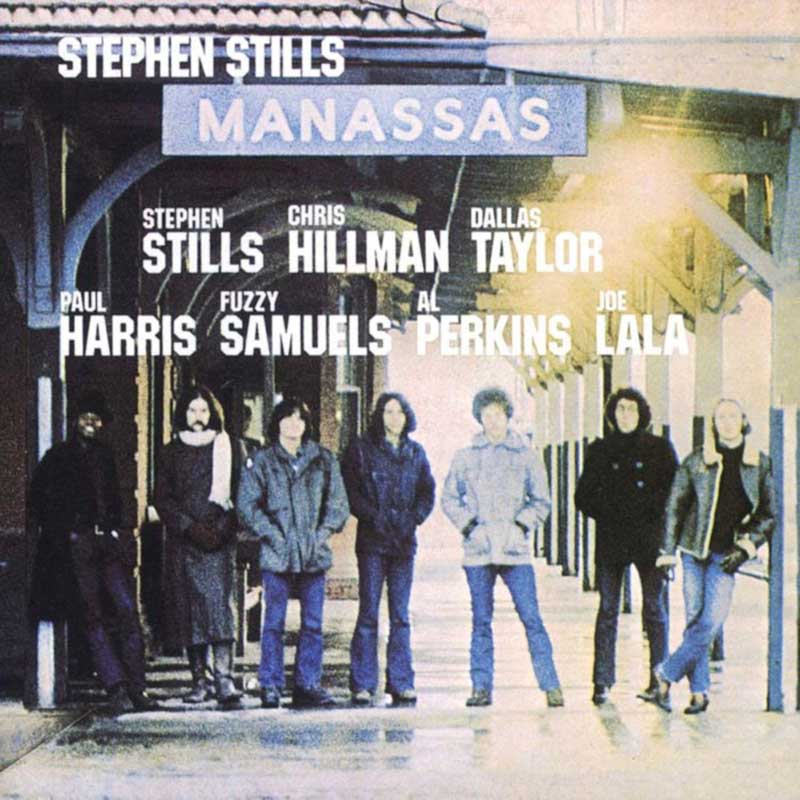
The same year his ex-Buffalo Springfield/CSNY colleague Neil Young was scaling commercial heights with Harvest, guitarist Stephen Stills offered up his own country rock collection. Manassas, released in 1972, reached the US top 10 and remains a gem.
Amassing a talented group of musicians around him, including ex-Byrd Chris Hillman, Stills explored four musical avenues on four sides of vinyl. The Wilderness section is primarily country and bluegrass, although the folk vibe of Consider and the closing Rock & Roll Is Here To Stay stray into country rock.
Perhaps too expansive for its own good, time has served Manassas well. Stills has always maintained that the band struggled for success because Atlantic Records would rather focus on the Crosby, Stills and Nash (and sometimes Young) gravy train, and the band’s first album (a second, Down the Road, followed in 1973)remains one of rock’s half-forgotten treasures. Some argue it’s the best album Stills ever released.
Every week, Album of the Week Club listens to and discusses the album in question, votes on how good it is, and publishes our findings, with the aim of giving people reliable reviews and the wider rock community the chance to contribute.
Kossoff, Kirke, Tetsu and Rabbit- Kossoff, Kirke, Tetsu and Rabbit
Mountain Live: The Road Goes Ever On – Mountain
On Record – April Wine
Phantasmagoria – Curved Air
A Possible Projection of the Future / Childhood’s End – Al Kooper
Procol Harum Live: In Concert with the Edmonton Symphony Orchestra – Procol Harum
What they said…
“Although a certain amount of throwaway is always present in any double-LP set, Manassas always remains admirable if not exciting. The musicianship is generally excellent, with the only pitfall being that the droning Stills’ vocal pervades all but one of the LP’s sixteen cuts.” (Cameron Crowe)
“A sprawling masterpiece, akin to the Beatles’ White Album, the Stones’ Exile on Main St., or Wilco’s Being There in its makeup, if not its sound. Rock, folk, blues, country, Latin, and bluegrass have all been styles touched on in Stephen Stills’ career, and the skilled, energetic musicians he had gathered in Manassas played them all on this album. What could have been a disorganised mess in other hands, though, here all gelled together and formed a cohesive musical statement.” (AllMusic)
“Yes, Steve has gotten it together a little, even deigning to cooperate with real musicians in a real band, and yes, some of this four-sided set echoes in your head after you play it a lot. The only problem is you’re never sure where the echoes come from.” (Robert Christgau)
What you said…
Andrew Cumming: There must have been times when Stephen Stills couldn’t figure out why Neil Young was so much more successful than he was. Is his old Buffalo Springfield and CSNY bandmate really that much better a songwriter? Well, maybe. And he had Heart Of Gold. But Stills shows himself time and again to be a very capable songwriter and musician. Of course, he didn’t have a Crazy Horse to back him. And maybe the Manassas Band should have been his Crazy Horse.
This record is a great listen. All Music Guide reckons it has the sprawling feel of Exile on Main Street or the White Album, and there’s a lot to be said for this argument. The four sides (of vinyl) all have a very different feel – from blues, to country/bluegrass, to folk rock, to blues rock. It’s a good listen; however, it lacks stellar songs (hits). And I wonder if that’s the real nub for Stephen Stills. He’s got some great songs (Suite: Judy Blue Eyes, Love The One You’re With, etc). But Neil Young just has more great songs.
That said, this is a decent album and an enjoyable listen.
Mike Canoe: Well, this one was an education. I’m used to occasionally not recognising a club pick, but they usually don’t have a pedigree or commercial success like Manassas. Maybe most surprising was that this was considered an important comeback for Stephen Stills, who was strangely, improbably considered damaged goods after a wanly received second solo album and the ugly breakup of Crosby, Stills, Nash & Young. Yet I’d never heard of the band or the album (or the drama) until now.
Listening to it this week, and you probably saw this coming, it sounds like a CSNY album with a whole lot more S. While the four album sides supposedly have separate musical themes, it all sounds like Stills’ rootsy, folksy Americana complete with the trademark vocal harmonies, just done by other guys this time around. I know I’ve listened to the Flying Burrito Brothers before, but they didn’t really make an impression, and so it goes with Chris Hillman. A song may sound a little more country here or there, but nothing seems outside of Stills’ already established comfort zone.
Favourites include Johnny’s Garden, So Begins the Task, The Love Gangster, and Blues Man. On the whole, it’s one of those albums that gets better with each listen but is also one I’m not likely to listen to past this week. Too much music, too little time!
John Davidson: As a teenager, I was aware of Neil Young from his flirtation with the UK charts and the harder-edged rock of Rust Never Sleeps, but I was never a fan and had zero interest in exploring the sort of blues-infused Americana that was CSNY.
I hadn’t heard of Stephen Stills, so it’s no surprise that this album was complete news to me. That said, it is exactly what you’d expect. Pretty laid-back West Coast country blues. It has plenty of gas in the tank, but it’s content to drive along the highway well within the speed limit.
I’m more tolerant of this sort of languid music than I was in the 1970s, but it’s still not something I’m likely to play often. While none of the songs are clunkers, there’s nothing that makes me want to listen again right away. 6/10.
Robby Jackson: The music is beautifully arranged. Great album to listen to on a Sunday morning.
Chris Elliott: It’s been a while since I heard this as an album – yet it’s part of a playlist I listen to a lot.
It’s a flawed, sprawling album – but still a lovely thing. His voice doesn’t really do blues – the classic CSN-type tracks forget C&N aren’t there, and the harmonies don’t have that perfection. And, given it’s the early 70s, there are two jamtastic horrors best placed in the recycle bin. Equally, there are moments of where did that come from (every time I hear the Bert Jansch guitar bit, it’s wonderfully odd).
It bookends Chris Hillman’s golden period – from Sweetheart Of The Rodeo through the Flying Burrito Brothers and then this – a series of great and influential albums that were all commercial flops.
As I started with, it’s an album I know, but it’s normally shuffled along with the equally flawed but wonderful Sweetheart Of The Rodeo and Gene Clark’s No Other (flawless but you end up sitting under a tree and fuck all gets done). Put the three together, and you can wander along for hours.
Adam Ranger: Always been a fan of Crosby, Stills and Nash (and of course Young). This Stephen Stills album has some great moments and some lovely harmonies. It’s almost like CSN at times. Stills’ guitar playing is – for the most part – top-notch.
My issue is that this could have been a killer single album instead of an OK double album with some good tracks. It starts very well and ends strongly, but the middle two sides let it down. Perhaps it’s the country thing that I never really got into.
I understand that a lot of the songs may have been cathartic. Dealing with his breakup with Rita Coolidge, something that must have been doubly hard as Coolidge started a relationship with his friend and ex-bandmate Graham Nash!
Still (excuse the pun), I feel some of the tracks are a little bland, and I lost interest. But when it’s good… boy is it good!
Martin Painter: This album is near perfect, and so many people have never heard it! If you are one of them, do your ears a favour and give it a go.
Keith Jenkin: Highly interesting document of this fairly short-lived outfit consisting mostly of Stills’ touring band and ex-members of The Flying Burrito Brothers. The double album is split into four loosely themed sides – The Raven (mostly classic rock), Wilderness (mostly country), Consider (a mixture of styles and Rock n Roll is Here To Stay (mostly bluesy rock).
Many of the more personal songs relate to Stills’ recent relationship with Rita Coolidge. I found this a fantastic record to lose myself in when I first discovered it in the eighties, and I think many would enjoy it fifty-odd years on from release. If I were being critical, the melodies are not the most memorable, but if there is a record out there that has a legacy that better sums up that bedevilled American rock scene of 1972, I am not aware of it.
Sebastian B-c: I just heard this album last month, and it’s fantastic. Stephen Stills is the man!
Brenda Hagen: The beauty and flow of this album. Each side tells a story. I still have this on my playlist after many years. Give it a fresh listen. I hope generations behind me find it.
John Bowman: A fantastic album. Love the way it flows across the four sides.
Greg Schwepe: Except for his work with his friends Crosby, Nash, and occasionally Young, I have not ventured much at all into the solo work of Stephen Stills. Love The One You’re With and Buffalo Springfield’s For What It’s Worth are really the only songs of his that I’m familiar with since both of those seem to be classic rock FM radio staples no matter where you live.
So I dove headfirst into Masassas and immediately liked what I heard. Song Of Love ended, and Rock and Roll Crazies/Cuban Bluegrass came next and had me excited about this album. Jet Set (Sigh) was more of the same.
At that point I got a little ahead of myself. I scribbled down “Cool, funky, laid back groove” and “listen again and set on repeat” in the notes for my review. But then, it happened…
I got to Fallen Eagle and, uh oh, my pedal steel meter got tripped. This gets noted in all reviews where there is excessive pedal steel involved. And I can take it to a point, and then the meter gets tripped, and my interest in the song takes a nosedive. Usually when there is too much pedal steel, the song gets a little too twangy and too country for my taste. This is sometimes accompanied by too much fiddle.
So from Fallen Eagle to Don’t Look At My Shadow, I was basically half listening; “Pedal steel…again?” Almost scratched out my previous notes on the piece of paper I was writing on and crumpled up the paper.
But not all is lost, because by the time we get to It Doesn’t Matter, we were back in that cool, funky, laid-back groove once again for the remainder of the album. All was not lost! Paper uncrumpled and smoothed out.
To wrap this up, you whack out those six songs in the middle, and you’d have a killer Stephen Stills album. What’s left is the Stills vibe I really, really like. But the album as it is, with the excessive twang in those songs, will get a 7 out of 10 from me.
Philip Qvist: I am not a huge fan of Stephen Stills or some of his projects such as CSNY, which is not to say that I cannot fault him as a songwriter or musician, while even I would agree that he has produced a huge amount of impressive songs throughout his lengthy musical career. It does mean, though, that Manassas, another early 70s Supergroup of some sort, has hardly featured on my music radar.
Side one (The Raven) was my pick of the album, thanks to songs such as Song Of Love and Anyway, while – thanks to songs such as the eight-minute The Treasure – side four (Rock & Roll Is Here To Stay) was my other pick.
It is sides two (The Wilderness) and three (Consider) that let the album down somewhat. Too many country-influenced songs, complete with pedal steel guitars and mandolins, and too few songs that rock.
It isn’t bad at all, and it is worth a spin or two, even if only for the aforementioned sides 1 & 4; at just 72 minutes long, Manassas is pretty brief for a double album. A 6, perhaps a 7, from me.
Final score: 7.89 (38 votes cast, total score 300)
While Gotthard has never shied away from melodies that occasionally lean toward the pop side of rock or from a good heartbreak ballad, CoreLeoni is something like the uncompromising brother in a denim jacket, with a little dirt still under his fingernails. There’s no question that both sides have their place, and it’s Gotthard guitarist… Continue Reading →
One month ago, Jane Remover issued an ultimatum to M3F Fest: Drop the Israeli alt-rock trio Temper City or they would no longer play next year’s event. “yo get that idf band off the lineup or I’m not playing,” the genre-blurring experimental pop artist posted on Instagram Stories on Aug. 5. Tonight the Phoenix festival officially revealed an updated lineup, and Jane Remover has been removed.