The UK’s Rock & Metal Festival continues to build momentum ahead of 2027. As the 2026 summer festival season draws to a close, Call Of The Wild Festival is already looking firmly towards 2027, and continues to whet the appetite with an eclectic third wave of band announcements guaranteed to please, excite and intrigue rock […]
There’s something innately American about Chat Pile. It helps that they’re based in Oklahoma. This is the Wild West, where the corn is as high as an elephant’s eye – Uncle Sam’s territory. But Chat Pile has seldom sought comfort in their hometown. Their debut album ‘God’s Country’ features cover artwork that displays the Oklahoma County Detention Centre; a grisly visage of the cruelty often purported as the American dream. Their second, ‘Cool World’, features artwork depicting a monolithic cross, photographed just north of Oklahoma City – a stately image of conservative fundamentalism. For their third and latest, ‘Who Loves The Sun’, the artwork depicts a stark contrast between a foreground of urban abandonment and a distantly affluent world that is at once both seductive and unobtainable. All three albums incidentally are also sludgy juggernauts of metallic rage.
Cover art of this nature doesn’t inherently mean Chat Pile dislike Oklahoma. Their home state is merely indicative of the kind of societal ills that are ubiquitous. Past songs about Oklahoman homelessness (‘Why’) or the local meat industry (‘Slaughterhouse’), may sound hyper-localised, but these problems carry a borderless universality that is part of Chat Pile’s appeal.
‘PEN I S MALL’ – one of this new album’s already-released singles – continues this trend. Yes, it is lyrically inspired by vocalist Ray B.’s time working as a local maintenance man, but themes about capitalism’s repressive nature turning life into “a series of acts of subordination,” are applicable worldwide. The song’s emotional palette is twofold; despair and rage. The former is lyrical and the latter instrumental, which largely summarises Chat Pile’s third and most brutal album to date. It’s not hard to imagine Ray B.’s fury manifesting in a vocal performance achieved only by smashing up the recording studio in the process.
Chat Pile fans will be used to this. But ‘Who Loves The Sun’ is an especially feral album. The aptly named ‘Creature’ bashes around like one, its brooding riffs a perfect accompaniment to lyrics about self-imposed extinction – “Please don’t say we couldn’t stop this,” Ray B. bemoans morbidly.
It’s all rather bleak, what with most of the album being dedicated to themes of global turpitude and suffering. It is also agreeable in its criticisms, so much so that at times it teeters on the edge of sounding glib. But Chat Pile back their stances by being no more street smart than they are book smart. Take ‘Deep Blue’, its title sharing a name with the computer that famously defeated chess world champion Garry Kasparov in the ‘90s, forming a lofty allusion that encapsulates technocratic anxiety. There’s likewise a pleasing Kafka reference, with Ray B. stating that he “might be a bug now but I still gotta get to work.” This is a band whose anger is not only sincere, it is accompanied by a reading list.
They’re also somewhat of an old-fashioned prospect when it comes to the use of the riff which, like all good descendants of Sabbath, is central to their songwriting. There are occasions when Chat Pile rely perhaps too heavily on this, with songs like ‘Christabel ‘26’ and ‘Influence’ gleaning all potential from the weight of these riffs alone, but Chat Pile are nonetheless creative songwriters, using jagged riffs to cast a spiky mysteriousness across ‘Intruder’. In one of the band’s more sinister moments of storytelling, Ray. B. talks of an imposter “dreaming about a life that’s fair and true,” who finds themselves “living under your bed now, knife inside your sleeping mouth.” It’s the stuff of nightmares, all from a band with no qualms about using the vividness of their imagery to create something evil.
It might all sound a little too gruesome for some. Fortunately though, ‘Who Loves The Sun’ does include vocals that are so overwrought, some of this macabre storytelling is rendered near inaudible as Ray B.’s vocals sear their way through the Oklahoman heat of these ten songs, his growls and roars becoming their own instrument, offering a visceral enjoyment all of its own.
So, when on ‘Family Funeral’ he reverts to a clearer, almost conversational tone, it’s arresting. “I never wanted to be in love,” Ray B. sings. “Awful thing, dreadful thing.” The unravelling and titular funeral that follows is hideous when taken at face value. When considered as a metaphor – for human suffering, the breakdown of community and the dissolving of relationships more broadly – it sees Chat Pile at their most disconsolate.
Let that be a reminder then that, while Chat Pile deserve praise for the knockabout brashness of their chunky riffs and Ray B.’s savage vocals, ‘Who Loves The Sun’ should be approached with caution. It is an album that faces difficult subjects with striking earnestness, however painful that may be.
When Spooky Tooth agreed to collaborate with composer Pierre Henry, the resulting album – 1969’s Ceremony – turned out to be a brave but misguided disaster that, as far as one band member was concerned, ruined their career. In 2013 Prog argued that, with the passage of time, Ceremony deserves a second look.
In the spring of 1969, Spooky Tooth could have been forgiven for thinking they had the world at their feet. Their second album, Spooky Two, had been canonised in the music press – and with just cause.
Shortly afterwards, the band were approached by avant-garde French composer Pierre Henry, who was seeking a rock band to collaborate on his next project.
Formally trained at the Paris Conservatoire, Henry had developed an interest in studying the art of noise, which led to him becoming an exponent of musique concrète. He exhibited the results in Symphonie Pour Un Homme Seul (“Symphony for One Man Alone”) – a work based entirely upon sounds made by the human body.
He’d also scored the ballet Messe Pour Le Temps Present (“Mass For The Present Time”) in 1967, including a piece called Psyché Rock, which was later remade to become the Futurama theme tune.
Henry proposed the concept of a holy ritual, and Spooky Tooth keyboardist Gary Wright warmed to the idea, composing six numbers laden with Gothic overtones and laced with enough Wagnerian chords to give the Hellfire monks of Medmenham the heebie-jeebies.
While other band members may not have shared the same level of enthusiasm, they nevertheless entered wholeheartedly into the concept; and mad vicar Mike Harrison’s gutsy, gospel-tinged vocals conferred much authority upon proceedings.
Henry had no contact with the band during his recording process; upon receiving the two-track tapes, he overdubbed his own contributions.
The result was a work which possessed a kinship with Terry Riley’s A Rainbow In Curved Air, and An Electric Storm by White Noise; and held a direct lineage to Louis and Bebe Barron’s soundtrack for sci-fi classic Forbidden Planet.
Ceremony (An Electronic Mass) was released by Island Records in the December of 1969 – without the consensus of the band. “That wasn’t our album,” Wright said in a later interview. “It was with this French electronic music composer named Pierre Henry. We told the label, ‘You know, this is his album, not our album. We’ll play on it just like musicians.’”
The release drew scathing reviews and divided fans – as did John Holmes’ provocative cover art. After recently gained notoriety for the jacket of Germaine Greer’s book The Female Eunuch) Holmes depicted a man with a hand nailed to his head – an image that some believed irreligiously aped the crucifixion of Christ.
Although a commercial success in France, the album failed to chart elsewhere. It fractured the original Spooky Tooth line-up as a disillusioned Wright (who died in 2023) quit the band, declaring the work “an utter failure.”
“When it was finished they said, ‘It’s great – we’re gonna release this as your next album,’” Wright recalled. “We said, ‘You can’t do that. It doesn’t have anything to do with the direction of Spooky Two and it will ruin our career.’ And that’s exactly what happened.”
But he was wrong, even if it felt like that at the time. Ceremony may have been flawed – but fusing electronic music and rock became the cornerstone of an entire progressive movement, with proponents directly related to Ceremony including Robert Fripp and Brian Eno. The artists who made the 1969 proto-prog experiment should be proud of it.
German hard rock titans MAD MAX celebrate the record release of ‘Stories Of Destiny‘ with a brand-new music video for ‘Dulces Falsos‘. The song marks a special first in the band’s history: it is the first MAD MAX track ever recorded with Spanish lyrics and presents their classic ‘Piece Of Candy‘ in a powerful new […]
The Liquid Arcade is a powerhouse Aussie rock outfit delivering raw, guitar-driven energy with a sharp modern edge. Their debut EP, Eleven 11, brings together an absolute dream team of Australian rock royalty, featuring Peter Oxley (Sunnyboys), Paul Larsen (Celibate Rifles), Alister Spence (Asteroid Ekosystem), and Shane Purnell on trumpet. To cap it all off, legendary Celibate Rifles guitarist Kent Steedman makes a guest appearance to close out the EP’s final track, “Outro.”
Recorded at Sydney’s Oceanic Studios with engineer Brent Clark and mastered by Steve Smart at Studios 301, Eleven 11 captures the spirit and grit of classic Oz rock while keeping things fiercely modern.
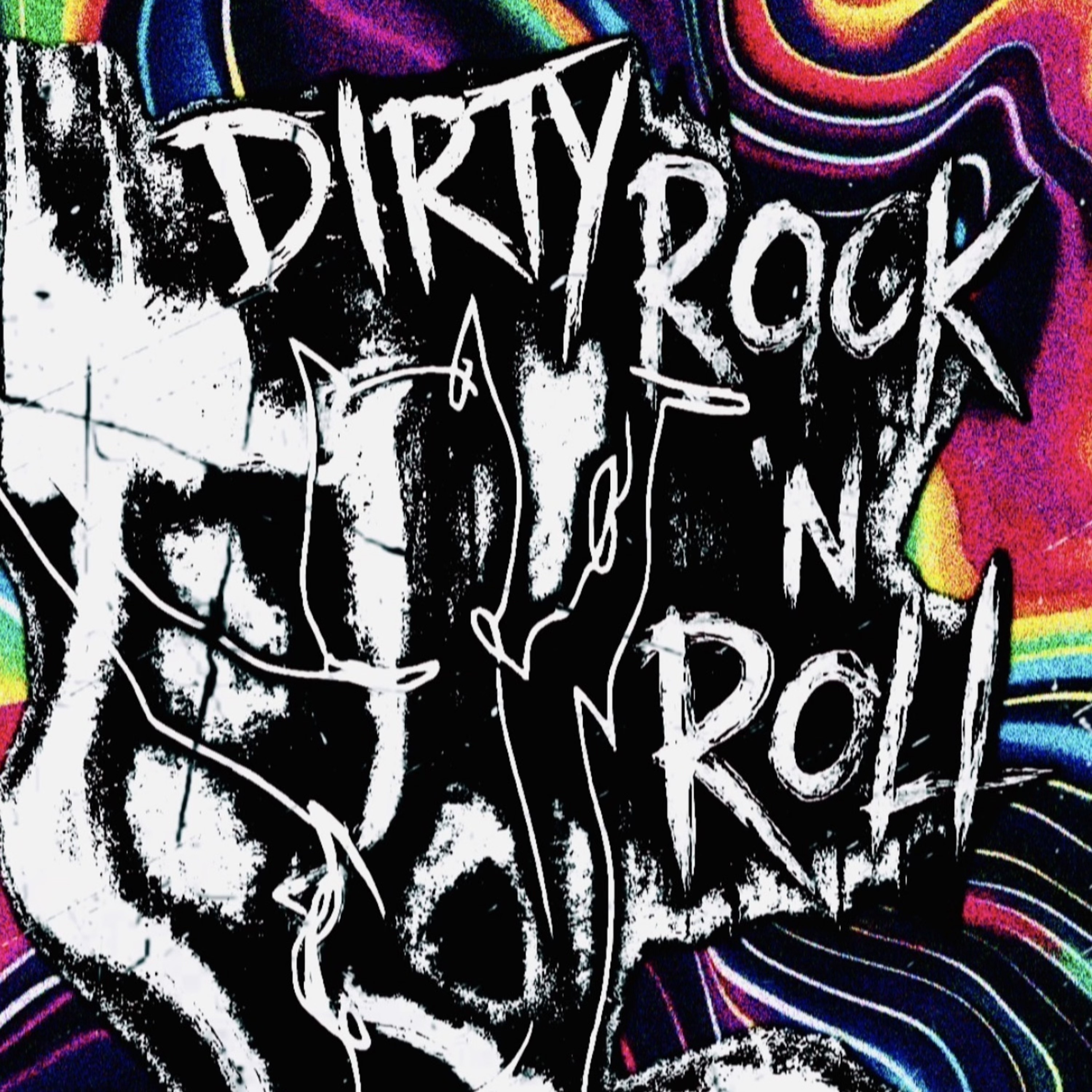
I love the mood and the attitude of their new single “Dirty Rock’n’Roll”, I find it classic but very inspired, love the guitars, the dynamic rhythm section and the energetic and catchy vocals. A very cool song, amazingly performed by the band and with a top notch production as well.
Give it a go by clicking on the Spotify player below and follow The Liquid Arcade if you like what you hear.
A long queue formed outside the legendary Grade II* listed Eventim Apollo. Built in 1932 as a cinema, this Art Deco theatre buzzed with pre-gig energy. The low hum of calm conversation created an electric tension in the air. A sea of people cascaded into the sloping stalls wearing merch and holding plastic pints of cider. With a sold-out crowd, we were all waiting for the Peaches ‘n Kream tour to hit London. We were all as ready as The Black Keys were.
No bells or whistles, a simple draped red curtain framed the stage and sat centre stage and in Cabaret-style font lit up with individual bulbs, spelt THE BLACK KEYS.
The Black Keys – Eventim Apollo, London – 31 August 2026. Photo: Manuela Langotsch/MetalTalk
With only a few stage lights, ’70s oil lamps and one disco ball to light the stage, this gig somehow became even more impactful. Songs like Weight Of Love and Tighten Up, with sharp timing and limited colours, created strong moods.
Track after track, song after song, for long-standing fans and those with fresh ears, felt like a journey down Route 66.
The Black Keys – Eventim Apollo, London – 31 August 2026. Photo: Manuela Langotsch/MetalTalk
The Black Keys are an American rock duo formed in Akron, Ohio, in 2001. The group consists of Dan Auerbach (guitar, vocals) and Patrick Carney (drums). The Black Keys are currently on their Peaches ‘n Kream World Tour 2026 supporting their 14th studio album, Peaches, released on 1 May 2026.
The Black Keys’ energetic yet intricate music draws heavily on bluegrass, garage rock, electric blues, and rockabilly influences. Lead guitarist Dan played a wide variety of vintage guitars, most notably Harmony and National Phonic. With distorted, driving guitar riffs and solos, Patrick on drums provided thumping, raw, and massive beats.
Their blend offered a backbeat dancehall feel, with an almost rebellious edge for all watching.
The Black Keys – Eventim Apollo, London – 31 August 2026. Photo: Manuela Langotsch/MetalTalk
The Black Keys clearly prioritise instrumental grooves, blues-rock riffs, and studio textures over complex or deep lyrical storytelling. But all tracks, whether at a slow or fast pace, felt a distinct dynamic build. Songs sometimes started almost fragile, with acoustic folk-rock melodies, before dramatically exploding into a heavy, crashing electric guitar rock ‘n’ roll finale.
With so little dancing to be seen, the energy was intensely high. Everyone moved like a cultivated community of head-nodders, showing intense energy purely through rhythmic nodding. With the chosen slower numbers, these tracks featured atmospheric keyboards and sweeping, emotional guitar solos that drew the crowd in like a magnet.
The Black Keys – Eventim Apollo, London – 31 August 2026. Photo: Manuela Langotsch/MetalTalk
There was a clear sense that the duo’s music is built on a full musical groove and structure before any words are written. As much as lyrics are vital for inspiration, emotional hooks, and deep connections, The Black Keys almost got away with using fewer words, thanks to their rhythmic, deep melodies, which prioritise instrumental grooves, blues-rock riffs, and studio textures over complex or deep lyrical storytelling.
All tracks, whether slow or fast, felt a distinct dynamic build. Songs sometimes started fragile, with acoustic folk-rock melodies, before dramatically exploding into a heavy, crashing electric guitar rock ‘n’ roll finale.
The Black Keys – Eventim Apollo, London – 31 August 2026. Photo: Manuela Langotsch/MetalTalk
Of course, like most gigs, an encore was expected. But this was unlike any other. With much anticipation, a surge of energy hit like a tidal wave.
The room’s already euphoric state heightened, its excitement intensifying without anyone even moving. There was a palpable shift in the air, triggered by this continuous array of music, that connected everybody in the room almost spiritually.
The Black Keys – Eventim Apollo, London – 31 August 2026. Photo: Manuela Langotsch/MetalTalk
With loved hits Little Black Submarine and Lonely Boy, the band stripped back Little Black Submarine and slowed things down. The melody had a similar feel to Led Zeppelin’s Stairway To Heaven and had the entire theatre singing along as one.
Ending the gig, they suddenly ripped into the fast-paced Lonely Boy. With arms in the air, dancing as one, this was a terrific way to end such an incredible gig.
Let The Black Keys continue to return again and again.
French collective Novelists put out a new single “Ravage”, which can be streamed now together with an official music video directed by Bastien Sablé. The song was written, produced, mixed and mastered by the band. Read more…
Philadelphia blues-rock Kat Rivers and The Second Sight have quickly built a reputation for show-stopping live sets, powerhouse vocals, and razor-sharp musicianship. Fronted by the explosive vocal presence of Kat Rivers alongside lead guitarist Ric Haas, the band channels the raw, classic-rock spirit of Led Zeppelin, Heart, and Grace Potter & the Nocturnals.
Marking their first year together, the band dropped their debut four-track EP, Deception. Across tracks like “Broken Promised Land,” “Smooth Talkin’,” “When You Meet the Devil,” and “Private Showing,” the release anchors their core blues-rock identity while skillfully weaving in elements of funk, jazz, country, and metal. Backed by high-profile supporting slots at the Sellersville Theater alongside Ally Venable, Jax Hollow, and Magnolia Boulevard, Kat Rivers and The Second Sight are proving to be a force on the mid-Atlantic circuit.
I love the pace and the mood of their new song All Night. It’s amazingly written and performed, with infectuous riffs, catchy and energetic vocal lines and with a perfect sound for the genre as well. A quality song from every point of view. Give it a go by clicking on the Spotify player below and follow Kat Rivers and The Second Sight on social media as well, you like what you hear.