Cats In Space guitarist and songwriter Greg Hart steps into The MetalTalk Lowdown, and it is fair to say he does not hold back. From playing to a man and his dog in Gravesend to opening for Deep Purple at The O2, setting his hair on fire (twice) and admitting to occasionally becoming a “pound shop Gene Simmons”, Hart takes us through the highs, lows and glorious absurdities of a life in rock ‘n’ roll.
But beneath the humour is a songwriter who still worries whether the next record will connect and, ultimately, believes it is all about one thing. The song.
What’s the most Metal thing you’ve ever done off stage? I cannot say most of it, as I had a VERY crazy ’90s. I have had my hair catch fire not once but twice on stage with pyro.
What’s the worst gig you’ve ever played, and why? Gravesend Red Lion 1985. Not one person came, aside from, and I swear it’s true, a man and a dog stuck their head round the corner but left after three seconds.
What’s the best gig you’ve ever played, and why? Cats In Space playing The O2 in London with Deep Purple. And we smashed it. Why? Because we knew then our music worked a treat in the biggest arenas.
Would you choose a platinum record or one perfect, legendary live show? A platinum record, purely as it would mean I might get some of the money back that Steevi Bacon and I have invested in the band.
What’s your greatest fear? I always fear the new record will be hated, and I do worry over that more than I should. But our fans are just incredible, so I know I’m being stupid.
What’s the trait you most deplore in yourself? I can sometimes ‘push the hard sell’ like a pound shop Gene Simmons [Laughs].
What’s the trait you most deplore in other musicians? Musicians have it tough enough. But some of the other ‘types’ who litter the business can be complete wankers, with egos far greater than the musicians.
Describe yourself in three words. My. Own. Boss.
What’s your guiltiest pleasure? No such thing. If I like something, I don’t care if anyone thinks I’m a fanny.
What does a great riff feel like to write? If it’s a goodie, then maybe I am getting one step closer to Phil Lynott?
What’s the worst thing a fan has ever said to you? “I’m putting on weight.” That was rather cruel, especially as they were fat too.
What’s the worst thing a critic has ever said to you? CATS have been very lucky to be honest with the press. Thank you!. Though years ago my band were called “Knock-kneed American wannabees singing about fast cars, so why don’t we just fuck off there.” Hilarious.
If you weren’t in music, what would you be doing? Art, which I am lucky enough to say I also do for a living. Thanks, Dad.
What’s one album outside your genre you secretly love? Lots!!! Any Carpenters record. Any Mud record. Kylie’s disco album. I could go on.
When did you last cry, and why? I cry a lot. My girlfriend, a very, very good therapist, encourages it as an expression. I will say there’s a song on the new album that gets me every time because it is absolutely about me, and a true story. But it is joyous and self-deprecating.
What keeps you awake at night? I am a shit sleeper in general. But I have to say our huge puppy Bunty is a guilty culprit too. She is as big as an Omnibus.
Riffs, royalties or recognition, if you had to choose? Royalties, to be honest. God knows we have earned anything we get.
How do you want to be remembered? If just one song I have written touches anyone for life, then that is good enough for me. It’s all about the song.
What’s the most important lesson the road has taught you? Do not take yourself too seriously, and try to be kind to everyone.
What happens when the music stops? It will never stop. I will go in the box playing The Boys Are Back In Town with my Les Paul still with me.
Cats In Space will release their seventh studio album, Suit Of Armour, on 6 November 2026 through Cherry Red Records’ Esoteric Antenna label, and a UK tour will follow in March and April 2027. Pre-order and tour ticket details are available via CatsInSpace.co.uk.
Cats In Space guitarist and songwriter Greg Hart steps into The MetalTalk Lowdown, and it is fair to say he does not hold back. From playing to a man and his dog in Gravesend to opening for Deep Purple at The O2, setting his hair on fire (twice) and admitting to occasionally becoming a “pound shop Gene Simmons”, Hart takes us through the highs, lows and glorious absurdities of a life in rock ‘n’ roll.
But beneath the humour is a songwriter who still worries whether the next record will connect and, ultimately, believes it is all about one thing. The song.
What’s the most Metal thing you’ve ever done off stage? I cannot say most of it, as I had a VERY crazy ’90s. I have had my hair catch fire not once but twice on stage with pyro.
What’s the worst gig you’ve ever played, and why? Gravesend Red Lion 1985. Not one person came, aside from, and I swear it’s true, a man and a dog stuck their head round the corner but left after three seconds.
What’s the best gig you’ve ever played, and why? Cats In Space playing The O2 in London with Deep Purple. And we smashed it. Why? Because we knew then our music worked a treat in the biggest arenas.
Would you choose a platinum record or one perfect, legendary live show? A platinum record, purely as it would mean I might get some of the money back that Steevi Bacon and I have invested in the band.
What’s your greatest fear? I always fear the new record will be hated, and I do worry over that more than I should. But our fans are just incredible, so I know I’m being stupid.
What’s the trait you most deplore in yourself? I can sometimes ‘push the hard sell’ like a pound shop Gene Simmons [Laughs].
What’s the trait you most deplore in other musicians? Musicians have it tough enough. But some of the other ‘types’ who litter the business can be complete wankers, with egos far greater than the musicians.
Describe yourself in three words. My. Own. Boss.
What’s your guiltiest pleasure? No such thing. If I like something, I don’t care if anyone thinks I’m a fanny.
What does a great riff feel like to write? If it’s a goodie, then maybe I am getting one step closer to Phil Lynott?
What’s the worst thing a fan has ever said to you? “I’m putting on weight.” That was rather cruel, especially as they were fat too.
What’s the worst thing a critic has ever said to you? CATS have been very lucky to be honest with the press. Thank you!. Though years ago my band were called “Knock-kneed American wannabees singing about fast cars, so why don’t we just fuck off there.” Hilarious.
If you weren’t in music, what would you be doing? Art, which I am lucky enough to say I also do for a living. Thanks, Dad.
What’s one album outside your genre you secretly love? Lots!!! Any Carpenters record. Any Mud record. Kylie’s disco album. I could go on.
When did you last cry, and why? I cry a lot. My girlfriend, a very, very good therapist, encourages it as an expression. I will say there’s a song on the new album that gets me every time because it is absolutely about me, and a true story. But it is joyous and self-deprecating.
What keeps you awake at night? I am a shit sleeper in general. But I have to say our huge puppy Bunty is a guilty culprit too. She is as big as an Omnibus.
Riffs, royalties or recognition, if you had to choose? Royalties, to be honest. God knows we have earned anything we get.
How do you want to be remembered? If just one song I have written touches anyone for life, then that is good enough for me. It’s all about the song.
What’s the most important lesson the road has taught you? Do not take yourself too seriously, and try to be kind to everyone.
What happens when the music stops? It will never stop. I will go in the box playing The Boys Are Back In Town with my Les Paul still with me.
Cats In Space will release their seventh studio album, Suit Of Armour, on 6 November 2026 through Cherry Red Records’ Esoteric Antenna label, and a UK tour will follow in March and April 2027. Pre-order and tour ticket details are available via CatsInSpace.co.uk.
Southern Californian blues rockers Robert Jon & The Wreck have released a new radio edit of their single ‘Put Your Money Where Your Mouth Is‘ ahead of their October 2026 UK Tour with special guests These Wicked Rivers. Stream the single on Spotify – here. Tickets for the UK tour are available from alttickets, robertjonandthewreck, […]
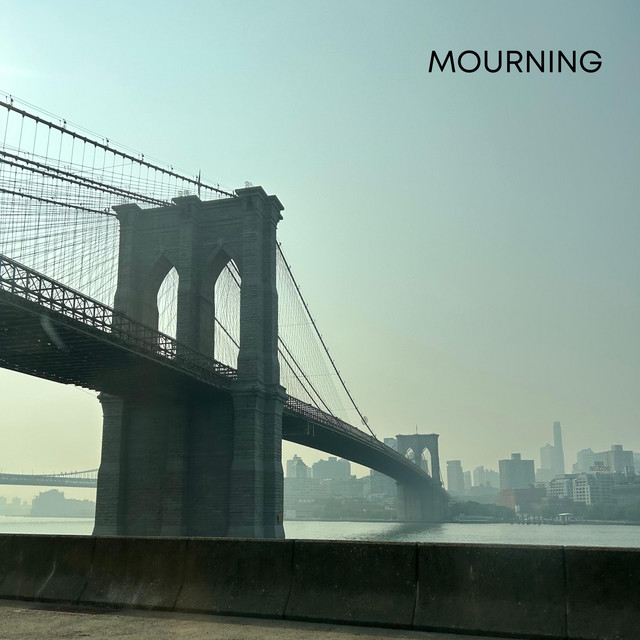
Willis Mathewson’s Mourning carries the weight of a personal elegy while staying rooted in the earthy traditions of country rock and the NYC indie scene. Written in memory of a friend who passed away young, the song has a deeply intimate emotional core, with Mathewson expressing grief through understated, sincere songwriting rather than excessive dramatics. The involvement of musicians from New York’s indie/country community adds authenticity to the performance, while the warm, organic recording approach reinforces the song’s reflective character. It is a heartfelt piece that balances loss and remembrance with genuine emotional weight.
In 1974 Supertramp released breakthrough album Crime Of The Century. It was welcomed by fans and critics alike, securing them a place in the UK Top 5 – but it nearly didn’t happen. To coincide with the Blu-ray release of the accompanying live show, Prog asked ex-bandmates John Helliwell and Bob Siebenberg about the highs and lows behind the record’s creation.
Early summer, 1974: Supertramp’s classic line-up is go – but as they track future single Dreamer at Ramport Studios in Battersea, London, Roger Hodgson isn’t happy. Four years earlier the co-frontman had demoed the song at his mother’s house in Portsmouth, adding primitive cardboard-box percussion to its ace Wurlitzer piano. Now, though, Hodgson feels that whatever magic the song once had is fading.
“Roger had a bad case of demo-itis,” recalls Supertramp’s Californian drummer, Bob Siebenberg, today. “We were like, ‘Yes, the demo’s charming, but you can’t put it out. The sound quality isn’t good enough.’” He says the solution was to play to the demo, preserving its feel, but gradually replacing its constituent parts. “That’s how we cracked it.”
Sure enough, Dreamer reached No.13 in the UK in March 1975, and helped give wings to 1974 breakthrough LP Crime Of The Century. But not every hiccup in the Supertramp camp was resolved so satisfactorily. Issues arising from the group’s differing backgrounds, personalities and ideals would eventually waylay their genius, with Hodgson eventually quitting to go solo.
Prog’s audience with Siebenberg, along with horns and woodwinds whizz John Helliwell, arises from the Blu-ray release of Crime Of The Century: In Concert At Hammersmith Odeon 1975. Director Derek Burbidge’s superb, no-frills film is further proof, were it needed, of the classic line-up’s majesty. Like bassist Dougie Thomson, Siebenberg and Helliwell were relatively new recruits; fresh foils for Hodgson and his fellow frontman/ keyboardist Rick Davies as the pair’s songwriting skills blossomed, reaching new heights on future classics Bloody Well Right and School.
“I was last in,” recalls Helliwell. “They never officially asked me to join – I just kept going back after my initial blow with them in July ’73. I’d played with Dougie in The Alan Bown Set; he told me Rick and Roger weren’t happy because their first two albums [1970’s Supertramp and 1971’s Indelibly Stamped] hadn’t done much.
“Dougie had a good business head on him and he convinced them to try one more album. Rick and Roger knew they need a line-up change but were frightened of sacking people, apparently. They’d just break up and reform.”
Siebenberg had moved to London in April 1971and joined Bees Make Honey, part of the capital’s burgeoning pub-rock scene alongside Brinsley Schwarz and Ducks Deluxe. Rick Davies was a BMH fan, and clocked the drummer’s facility with a blues shuffle. Packing up his kit at The Kensington pub in west London one evening, Siebenberg was headhunted by Davies and Hodgson. The pair proposed “a blow” in the rehearsal-space basement of The Furniture Cave, an antique shop on Chelsea’s Kings Road.
“I was told later that they couldn’t bear to go through more formal auditions,” says Siebenberg. “I remember they were pleased I could nail the little ‘bap, bap!’ bits at the start of Bloody Well Right. They showed me that and Crime Of The Century and I was in.”
Supertramp were wondering whether to recruit a brass/woodwind player or a second guitarist. Guitar-wise, Siebenberg had a pal in mind: his future brother-in-law Scott Gorham. “We’d been best friends in Glendale [California] growing up,” the drummer says, “finishing each other’s sentences and playing in bands together. Scott was still working in a warehouse; I played him some early Supertramp demos and he really liked them. I said, ‘If you can follow me over to London…’”
But by the time Gorham arrived in 1974 the ship had sailed. Supertramp had recruited John Helliwell, whose multi-instrumentalist skills – and talent as a live MC who could compensate for Hodgson and Davies’ shyness between songs – make it impossible imagine the band’s classic era without him. Gorham joined Thin Lizzy that June. Fate, it seemed, knew best.
It was former A&M records man turned Supertramp manager Dave Margereson who suggested the new unit get it together in the country. He rented Southcombe, a spacious but primitive two-storey farmhouse near Thorncombe in Dorset for £20 a week. This canny move distanced Supertramp – plus their wives, children, pets and gifted sound engineer Russel Pope – 140 miles from record company interference.
The good vibes are flowing and the record company’s nurturing us – then Roger says he wants to pack it all in and go to India
“Dougie was down the hall with his wife and their brand-new baby,” says Siebenberg. “John and his wife Christine were upstairs; so was I. Rick and Roger had rooms downstairs. We ran all these cables through a room full of farm implements to the nook where Russel sat with our two-track and our little mixing console. All the wives got on; initially there was no tension from any quarter.”
“Everybody had brought their favourite records,” Helliwell adds. “So we were listening to The Dark Side Of The Moon, stuff byProcol Harum, Spooky Tooth and Loggins And Messina. I remember Bob wasn’t keen on the milk because it was straight from the cow. ‘Cholera juice,’ he called it! But me and Christine kept re-filling an empty bottle of pasteurised milk with it and he was none the wiser.”
New material, including Hodgson’s Hide In Your Shell, a pointedly honest song about loneliness and insecurity, was taking shape nicely; while Rudy, a song they’d played live for years that documented Davies’ own feelings of isolation and alienation, was being beautifully reshaped. “We didn’t have all the transitions between sections of different songs together yet,” Siebenberg says, “but you could feel the magic: all the potential we had following Rick and Roger’s lead. It was this peaceful, bonding time, with me and Rick taking long walks across the fields to the pub in our wellies.”
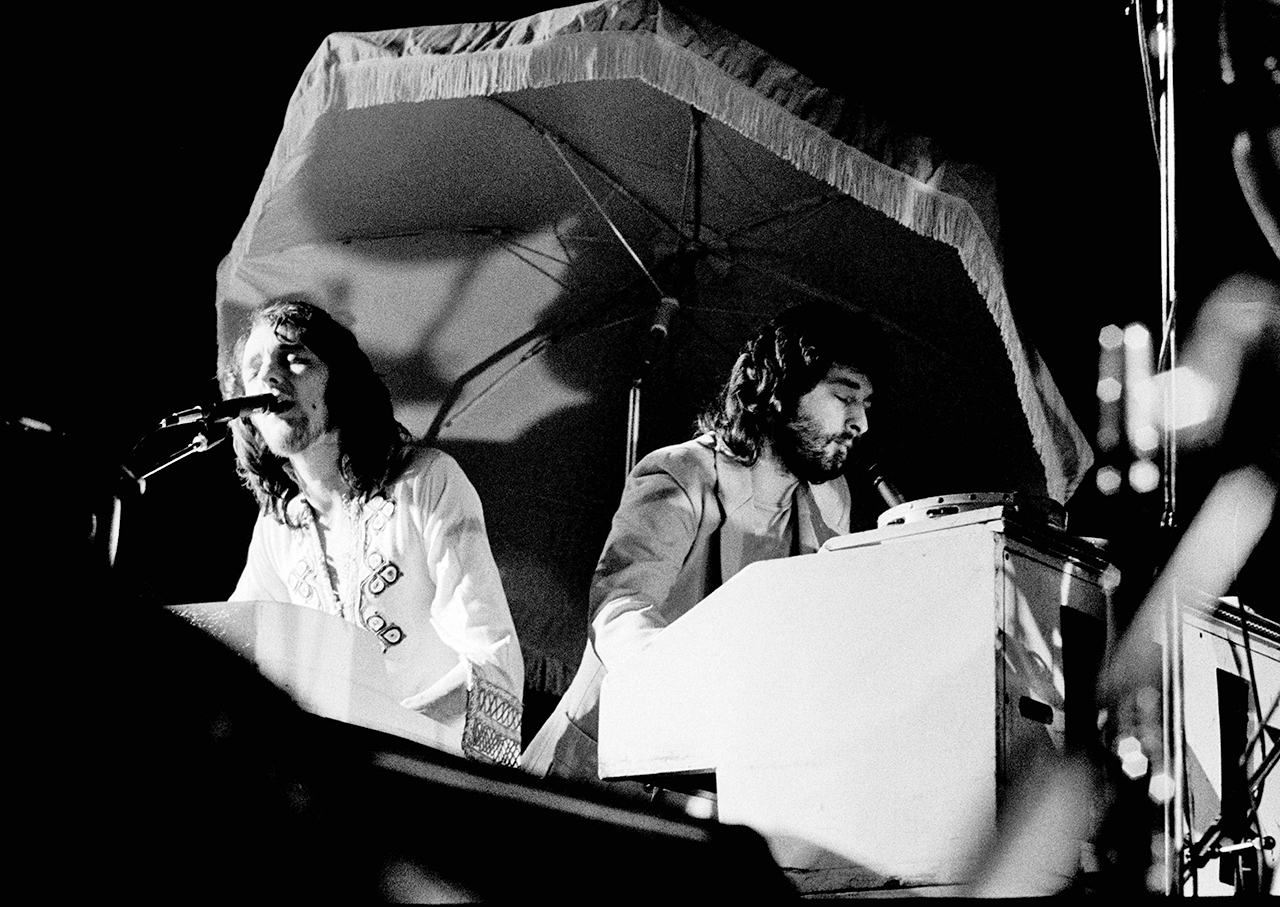
Hodgson and Davies on stage in 1975 (Image credit: Getty Images)
He also recalls a thunderstorm and a “too-close-for-comfort” lightning strike that blew the cottage’s telephone off the wall one night. It could have been an omen for what happened next. “The good vibes are flowing and the record company’s nurturing us – then Roger says he wants to pack it all in and go to India,” remembers the drummer. “It was like a hand grenade going off. Obviously Roger didn’t go that time, but it was a really weird vibe for a few days, rehearsing and knowing what he’d been thinking. John once said Roger was always trying to leave the band. I don’t know psychologically what that was about, but it’s true.”
Supertramp teamed up with producer Ken Scott to record Crime Of The Century at Trident studios and Ramport studios. His most recent production gigs had included David Bowie’s Aladdin Sane. He’d initially been reticent to work with Supertramp after hearing some rather disjointed demos, but once he caught a live A&M Records showcase, he realised their huge potential. Less immediately apparent, though, was the complex inter-band dynamic that lurked beneath the surface. “We were all pretty friendly together, but there were certain factions,” says Helliwell. “Roger was probably more friendly with Ken and the lighting guys and Rick was more of a loner, more self-contained. I was friendly with everyone.”
Roger was always searching for something; it was a serious business for him. But by Breakfast In America it wasn’t funny any more
Siebenberg adds: “I’d describe Rick and Roger’s relationship as one of healthy competition rather than rivalry. Roger has a posh voice and he had this privileged public schoolboy upbringing; Rick was a working-class kid from Swindon. Roger would talk about crop circles and UFOs he’d seen and Rick would say, ‘Yeah, right; pull the other one.’ They kind of filled in holes in each other’s personalities. Even back then Roger was a different kind of guy. We watched him change and move away from us down a path of spiritualism and Eastern philosophy.
“Roger was always searching for something and it was a serious business for him. We were fine with that, even if we poked fun at him initially. But by [1979’s] Breakfast In America – even before that, actually – it just wasn’t funny any more.”
After Crime Of The Century Hodgson would record four more studio albums with Supertramp. He quit the band when the tour for …Famous Last Words… wrapped in September 1983. He released his first and most successful solo album, In The Eye Of The Storm, 12 months later. However, periodic speculation about the full classic line-up reforming circulated right up until Rick Davies’ death last year at the age of 81. Both Helliwell and Siebenberg miss him greatly. “Sadly there was no funeral,” says Helliwell.
“It was crushing,” says Siebenberg. “A world without Rick in it makes me want to fall down. He used to call me ‘The king of the hi-hat.’”
The pair were already been mourning Supertramp’s former manager Dave Margereson, who’d died a couple of weeks earlier. “Dougie and myself went to his funeral,” says Helliwell. “Unfortunately Bob couldn’t come because of work commitments.”
And Roger? “Roger is out there in the ether somewhere,” Helliwell adds, widening his eyes. “I don’t know if he’ll ever come down.” What chance is there of the remaining trio working with their former bandmate? “Highly unlikely,” he says. “He’s part of a religious organisation in Florida and doesn’t communicate.
The camaraderie was so great. It’s amazing what you can achieve when nobody cares who gets the credit!
“Well, we have had some contact – Dougie, Bob and myself took Roger to court a few years ago. It was actually quite nice to see him. There was an issue with the small amount of publishing royalties he and Rick had agreed to give us, which after a period of decades had stopped. We lost the case and it was ridiculously expensive. Then we appealed and won, but we’re still waiting. These things move slowly.”
Siebenberg is still gigging around Ventura and Santa Barbara, playing drums in Sleeping Chief. John Helliwell steps out with his Super Big Tramp Band and his Dutch jazz quartet Don’t Ever Leave Me. Both retain especially fond memories of Crime Of The Century, Supertramp’s big breakthrough. “It’s the beginning of the good period and I love the enigma of it,” says Helliwell. “What was the crime of that century?”
“It set a great standard for all of our records to come,” adds Siebenberg. “The camaraderie between us was still so great. It’s amazing what you can achieve when nobody cares who gets the credit!”
WHETHER they are touring relentlessly or releasing a new recording, vegan deathcore unit To the Grave are one of the hardest working bands in extreme metal. With six full length studio albums, a live effort and a string of EPs and splits since their 2013 debut, they have carved out an impressive niche while maintaining an uncompromising, almost incorruptible stance on the issues they support.
Their hardline veganism puts them at odds with even the most extreme supporters of similar causes, like Cattle Decapitation. That band’s vocalist Travis Ryan has rejected the widely-perceived idea of them as a vegan band, claiming instead to be vegetarian and saying in interviews such as this one back in 2015 that being on the road often makes it hard for them to know what’s in the food they’re getting while on tour.
As we settle in to discuss the band’s latest album of unapologetic misanthropy in opposition to humanity’s cruelty to life on our planet, Liberation Front, To the Grave’s frontman Dane Evans scoffs at that suggestion.
“We have never had a problem finding plant-based foods or vegan food at Walmart or whatever when we’ve been on tour,” he says. “When you make a commitment to the cause you can’t just cut corners or take shortcuts. Maybe that’s just the way it is for people who don’t have the full motivation to look a little bit harder for vegan food. Paying a bit more, sometimes… whatever you’ve got to do.”
LOUD: It’s not something you can half do, is it? Dane Evans: No, definitely not.
L: I’m really interested in the philosophy behind the music you make. You certainly take it to an extreme level! DE: That’s something that we certainly hear a lot! I always challenge that, and I always like to say something that was told me, and that’s something like – If I was speaking the way I was speaking, but I was speaking on your behalf, and if someone was going to bite your head off tomorrow morning, it wouldn’t look so extreme then, would it? It would probably look fair and just. I advocate for animals how I would want to be advocated for if I was in that position. I wouldn’t want people to be wusses about and be like, “Oh… please… Let’s talk about it over a picnic” or this and that…
L: Are you pessimistic about the way you see things going? DE: It depends on the day you ask me, I suppose. Some days are a little bit better. Some days we’re making music, making a video, seeing the video come out, watching people pay attention to what we’re saying. Then I’ll be on the highway and I see a truck full of animals that within an hour will all have their heads chopped off. All of them begging me from this truck to let them go. That’s the world we’re in. Then I fucking lose a bit of hope. Because how could you not, when you open your eyes a bit?
L: I’m not vegan, but I am vegetarian and haven’t eaten meat for seven years. As a person who once raised chickens from eggs and got to understand how beautiful they are as creatures, how they problem solve, set hierarchies and care for their young, it can upset me a bit when I see hundreds of them stuffed into crates on a truck headed to a processing plant somewhere. So I can get behind the message you’re trying to deliver. DE: I think the majority of people, deep down, do. There’s a lot of conditioning that goes into confessing that we don’t care about animals. But most people do care about their dog, their cat, companion animals, or they don’t want unnecessary cruelty to happen to animals. But that’s what happens every time we eat these products. It is flat-out unnecessary cruelty. I feel like most people would agree if they understood it a bit more.
L: Dane, is that the message you’re trying to get through with this album? DE: Look – we’re not a band that’s going to get up there and make it really obvious. We’re not going to beg people. I’ve tried that. We’ve tried being nice. We’ve tried that approach and people are numb to it at this point. My band is there to remind people of exactly what they’re paying for three, four times a day, and what that would look like if it happened to you. All of a sudden, you wouldn’t like it. That’s definitely something we pulled from Cattle Decapitation. Put people in those positions, and all of a sudden it’s a horror movie. Put animals in there, and it’s just business as usual. So that’s what we’re there for, man. To make you think. The Golden Rule. How would you like it if it was done to yourself?
L: That is the Golden Rule, and what you’re saying is almost Biblical in some ways. I’m not a Christian, but one of the things that’s taught in the early scriptures is that man was put here to be a caretaker of the earth, and we really haven’t been that at all, have we? DE: No, not at all. When you think about Noah’s Ark and all the early scriptures, the ways that we’re supposed to treat animals. It’s insane how we got here. It’s way we wrote a song like Nail Mary. I don’t think any benevolent, all powerful, all kind God would want a world like this, or would want this for His creatures.
L: Before we move on to the tour, tell us a little about Torture Porn. Because it’s not about what most of us would consider torture porn, right? DE: No! More so the title than anything else is a commentary on how people can think about what we’re talking about and reduce it to another horrific thing that we just like to write about, or that we’re exaggerating. It’s like when we’re talking about a human rights issue, it’s a very serious thing, and we all agree, and we should be really angry and almost violent when we need to help people, and to liberate people. But then, when we’re talking about animals we get called extreme and all kinds of shit. So we just wanted to have a song that’s commentary on that. We’re a band that actively tells 99.5% of the population to go fuck themselves. This is just one of those songs where we’re like… don’t think that we won’t – you might have met a million vegans whom you’ve bullied or talked shit to, but not us!
L: We should talk a little bit about the tour because you’ve got the Australian dates, and then it seems like you’re touring forever after that! DE: You’re not wrong! We finish that Australian tour and then we fly from Brissie to the States, and then we head back from there for the Hellbound Cruise. And then we might get a second to sit back down.
L: Even for young blokes like you, that’s a lot of shows in a row. DE: You’ve definitely got to make sure you’re on top of your game and that you’re hydrated and you can sleep in. After a while on the road, you kind of get used to it. It’s like, a show tomorrow, and you feel great after that one, and before you know it you’re home. It’s sort of crazy.
L: You’re the first band I’ve had the chance to talk to about Hellbound. Looking at the line-up, you guys are probably by far the most extreme band to be playing it. There’s probably going to be people there who’ve never seen a band as extreme as To the Grave before. DE: Yep, that’s going to be a very cool thing about it.
L: Do you think you’ll be able to get through to some of the people who’ll be there? DE: I don’t think we’ve ever gone somewhere and not had that infectious energy. It’s been pretty effective everywhere we go with it. So I’m very confident. It sold out really quickly and it’s very cool anytime we get to play to an entirely new crowd. This is Parkway’s fanbase, and I’m looking forward to that. I’m curious! I’ve never been on a cruise before. I have no idea what to expect. I’m just pretty excited for the whole thing.
A pre-fame John Lydon may have famously scrawled ‘I Hate Pink Floyd’ on a t-shirt, but behind the punk posturing lay an appreciation for music that pushed boundaries. While th likes of Yes and Genesis were off the menu, the then-Sex Pistols frontman championed the genre’s more adventurous outer fringes, citing Hawkwind, Van der Graaf Generator and Krautrock pioneers Can as major influences.
The brand new issue of Prog magazine reveals just how far that admiration went. In an interview with Can co-founder Irmin Schmidt, the keyboardist reveals a tantalising ‘what if?’ moment in rock history: Lydon actively tried to join the band – and the only thing that stopped it was Can calling it quits.
“He was phoning and leaving messages at night, and he really wanted to become the singer of Can,” Schmidt tells Prog. “And I had to tell him, ‘It’s too late. We finished together. We don’t get onstage anymore.’ I know he wanted to sing with us, it was a brilliant idea. In life, there are situations where you can say, ‘What if?’ What would have happened if Johnny Rotten had become the singer? It’s an interesting thought.”
Irmin doesn’t specify when this happened, though Can split in 1978 – the same year Lydon left the Sex Pistols and abandoned his Johnny Rotten persona. That union may not have happened, but the singer’s next project, Public Image Ltd, shared Can’s boundary-pushing approach on albums such as First Issue and Metal Box.
Schmidt, who releases his new solo album, Requiem, on September 26, also address his view on the sometimes contentious ‘Krautrock’ tag, used to describe Can and countrymen such as Neu! and Kraftwerk.
“I don’t care about this term: it’s like lemonade, now it’s used all over the world,” Schmidt tells Prog. “There were a bunch of painters called the Fauvists, which was pejorative, but now nobody thinks about it. It’s just a category and journalists need categories.”
Read the full interview with Schmidt in the brand new issue of Prog, on sale now. Order it here and have it delivered to your door.
One of the bands that has made an impressive rise over the past few years is Villagers Of Ioannina City. It was back in 2019 that I first heard about the Greek band. Their Age of Aquarius album had just been released, and what came through the speakers was an intriguing mix of rock and metal with… Continue Reading →
Before he became the fast-talking, weed-dealing half of slacker icons Jay And Silent Bob alongside childhood buddy-turned-movie director Kevin Smith, Jason Mewes grew up listening to hard rock and heavy metal. The Clerks/Mallrats/Jay And Silent Bob Strike Back star talks us through the albums that changed his life..
The First Album I Bought
King Diamond – Abigail (1987)
“My older brother used to buy all the tapes, and I learned what kind of metal I liked through him. So he used to loan me his tapes, but the first one I actually bought was Abigail. That album is my flying music! For some reason it eases me when I’m on a plane.”
The Album That Defines Metal
Slayer – Reign In Blood (1986)
“I would say Slayer, because they’re heavy but they’re not too heavy. I can listen to Death or Deicide, but there are a lot of people you’d play that to who would think, ‘Who is this guy? I can’t stand that screaming, I don’t like this!’ Slayer is still the harder side of metal, but you can still hear the words and enjoy it.”
The Album I Break The Speed Limit To
Sublime – Sublime (1996)
“I dunno about speeding, but I feel like my car music is dancehall and reggae! But for now let’s say Sublime – I know it’s not heavy metal, but I can picture myself breaking the speed limit to it. I know that doesn’t sound crazy but that’s what I listen to in the car!”
The Album No One Will Believe I Own A Copy Of
Björk – Post (1995)
“I’m trying to think what I have here… I have so much crap, ha ha ha! Stuff like Boys II Men, Oasis, The Cranberries… but let’s say Björk. It was when we were doing Mall Rats, there was this girl called Carmen who was really into them, and I really dug it.”
The Greatest Movie Soundtrack
Various – 8 Mile (2002)
“The soundtrack was so good that I actually wanted to go out and buy the CD. 8 Mile! It wasn’t just Eminem on there, but I definitely like Eminem.”
The Album I Wish I’d Made
Ozzy Osbourne – Blizzard Of Ozz (1980)
“I think you can go to the smallest island in the middle of nowhere, where people are washing their clothes in a river, and they’ll still know who Michael Jackson is – and I feel like Ozzy’s pretty close to that, too. So, I would say I wish I made Blizzard Of Ozz because I think Black Sabbath and Ozzy are amazing, but I also think that Ozzy is known all over the place.”
The Album That Should Not Be
The White Stripes – Elephant (2003)
“I always feel like there’s at least one good song on every album. When burning CDs came in, that was amazing to me, because I don’t really like every song on an album! I like the White Stripes’ song Seven Nation Army, but when I got the album I didn’t like any other song on it. But you can’t hate on that, or any artist who puts out a whole album.”
The Album That Has Soundtracked My Life
The Beatles – Magical Mystery Tour (1967)
“I would say The Beatles, if it’s going through my life. There were times I was on drugs on and off, and I remember their song Strawberry Fields Forever was really trippy. With all the songs they had, you could probably put a montage of my life to that, ha ha ha!”
The Album I Want Played At My Funeral
The Beatles – Help (1965)
“If I have friends and family there, they have to be able to tolerate it. So let’s say The Beatles. I think most people can get into a Beatles song… Ticket To Ride! A ticket to ride to the pearly gates!”
Originally published in Metal Hammer issue 231 (May 2012)