It’s Miley, bitch.
The post Miley Cyrus – “Bass Persuades” appeared first on Stereogum.
It’s Miley, bitch.
The post Miley Cyrus – “Bass Persuades” appeared first on Stereogum.

Fifty-five years further on up the road from his debut “Himself” that established Gilbert O’Sullivan as one of the eminent singer-songwriters to ever emerge from the Emerald Isle, the Irish veteran’s verve doesn’t seem to be diminishing. Some sceptics may … Continue reading
The post Gilbert O’Sullivan Goes On The Record To Defy Mortality appeared first on DMME.net.

Rock and roll has always been filled with songs about women, so narrowing the subject down to songs that actually use a woman’s name in the title makes the idea a little more manageable. Even then, there are hundreds of famous choices spanning every era and style of rock music. This list brings together 10 songs whose titles are built around memorable female names, from Roxanne and Rhiannon to Angie and Layla. Some were inspired by real women, others by fictional or mythological figures, and a few have stories behind the names that became almost as famous as the songs
The post 10 Most Iconic Rock Songs Named After Women appeared first on ClassicRockHistory.com.
English rockers Squeeze have cancelled their show this evening (September 3, EDT) after a tragic incident in the parking lot of the Wolf Trap National Park for the Performing Arts in Vienna, VA.
“Squeeze are deeply saddened and shocked by an incident that occurred at the venue earlier today, which resulted in the loss of a life,” say the band. “After discussions with the venue and the relevant authorities, the decision was made to cancel this evening’s performance.
“We will work with the promoter and venue regarding the possibility of rescheduling the show and will communicate further information to ticket holders as soon as it is available. Our thoughts remain with everyone affected by this tragic event.”
According to a report on FOX 5, a worker was crushed when the supporting apparatus on the tour bus he was working under collapsed. The victim was pronounced dead at the scene. It has not been made clear whether the bus was the one Squeeze were travelling in or another vehicle.
The next show on Squeeze’s Tried, Tested, and Trixies tour is at the Rose Music Center at The Heights in Huber Heights, OH. Full dates below.
Sep 04: Huber Heights Rose Music Center at The Heights, OH
Sep 06: Highland Park Ravinia Festival, IL
Sep 08: Greenwood Village Fiddler’s Green Amphitheatre, CO
Sep 09: Salt Lake City Capitol Theatre, UT
Sep 11: Redmond Marymoor Park Concerts, WA
Sep 12: Vancouver Queen Elizabeth Theatre, BC
Sep 13: Portland Arlene Schnitzer Concert Hall, OR
Sep 15: San Francisco The Warfield, CA
Sep 16: Las Vegas Encore Theater at Wynn Las Vegas, NV
Sep 18: Placer County The Venue At Thunder Valley, CA
Sep 19: Los Angeles Hollywood Bowl, CA
Sep 20: Chandler The Showroom at Wild Horse Pass, AZ
Sep 22: San Antonio Majestic Theatre, TX
Sep 23: Grand Prairie Texas Trust CU Theatre, TX
Sep 25: Maryland Heights Saint Louis Music Park, MO
Sep 26: Louisville Kentucky Exposition Center, KY
Sep 27: Detroit Masonic Temple Theatre, MI
Nov 12: Glasgow OVO Hydro, UK
Nov 13: Blackpool Opera Housel, UK
Nov 14: Nottingham Motorpoint Arena, UK
Nov 16: Newcastle Upon Tyne O2 City Hall, UK
Nov 17: Stockton-on-tees Globe, UK
Nov 19: Hull Connexin Live, UK
Nov 20: Leeds First Direct Bank Arena, UK
Nov 21: Liverpool M&S Bank Arena Liverpool, UK
Nov 23: Manchester O2 Apollo Manchester, UK
Nov 26: London The O2, UK
Nov 27: Cardiff Utilita Arena Cardiff, UK
Nov 28: Birmingham Utilita Arena Birmingham, UK
Nov 30: Swansea uilding Society Arena, UK
Dec 01: Plymouth Arena, UK
Dec 03: Portsmouth Guildhall, UK
Dec 04: Bournemouth International Centre, UK
Dec 05: Brighton The Brighton Centre, UK
Apr 08: Minato City Ex Theater Roppongi, Japan
Apr 09: Osaka Club Qyuattro, Japan
Apr 13: Auckland Powerstation, New Zealand
Apr 14: Wellington meow NUI, New Zealand
Apr 16: Brisbane The Fortitude Music Hall, Australia
Apr 17: Newtown Enmore Theatre, Australia
Apr 19: St Kilda Palais Theatre, Australia
Apr 20: Hindmarsh The Gov, Australia
Apr 22: Perth The Astor Theatre, Australia
29th August 2025
Words: Dan Barnes
Photos: Tim Finch
“Blow, winds, and crack your cheeks! rage! blow!
You cataracts and hurricanoes, spout
Till you have drench’d our steeples, drown’d the cocks!”
King Lear, Act III, scene II (lines 1 – 3)
It’s raining today at the Showgrounds – and, boy, is it raining! And just like Lear (above), who some of you may remember from English ‘O’ Levels – I, too, am quickly sodden, right down to my underwear.
I was rather hoping to even out the blotchy Bloodstock tan I got three weeks ago, but it looks like Trench-Foot is more likely today and telling the rain to F-Off from the stage seems to be having much the same effect as Lear raging against his storm: little to none.
As a compulsive note-taker I am shorn of my main source of information gathering, with neither pen nor paper liking the wet conditions, I’m resorting to memory for the bulk of this review. Sorry about that – normal service will be resumed shortly!
Fresh from their appearance on Bloodstock’s EMP stage, the Suffolk quintet take to what vocalist Mecia admits to being the biggest stage Aethoria have yet played. I cannot imagine that the 2026 Poll Winners will be strangers to such platforms in the future, with the release of the debut album, Fool’s Gold, this very weekend. Although damp, the rain has yet to do its worst and Aethoria is granted a level of grace to weave their alternative rock tapestries. Eden is a modern take on a classic sound, Popcorn is built on a driving riff, and older tune, Stepping Stones, allows Mecia to show off her considerable vocal talent. She gives thanks to the Stonedead team, and plugs the band’s merchandise, qualifying that with the need to eat; “something other than beans!” she says, but she’s a flame-haired angel, and I don’t think she’s much affected by flatulence. Could be wrong there…

The Rocky theme plays as Harrogate heavy metallers, Asomvel, take the stage and deliver a short, but energetic set of muscular biker hard rocking tunes. There are no wheels being reinvented this afternoon, as bassist/ vocalist, Ralph Robinson, owns the stage at Stonedead for a while, and even the rain isn’t about to but-in. We get a song custom-created in the last week, specifically for this show; we get the first of many clap-a-longs of the day and a whole heap of dirty-riffed Rock & Roll. Louder and Lounder, from the appropriately titled Born to Rock ‘n’ Roll album, delivers a heroic solo; Light ‘Em Up comes with a trailer for the band’s November tour, and The Nightmare Ain’t Over is dedicated to the memory of JJ Winter, the band’s original frontman. A big crash ending brings it all to the close and Asomvel remind us that they are the country’s best-kept rock & roll secret.
From here, Stonedead takes on an international feel, with only brummies, Magnum, left being home-grown. First up is Pennsylvania hard rockers, Crobot coming to Newark with an infectious vibe and a country groove. The brothers Jensen are the newly recruited rhythm section and they have their work cut out for them as vocalist, Brandon Yeagley, after announcing the band have landed from Outer Space – I did wonder what the saucer was doing in the car park – has a loose and jamming attitude to his performance. Reminded me a little of The Black Crowes at times, but Brandon’s connection with guitarist, Chris Bishop, has been in place since the band formed fifteen years ago, and there feels like there’s some sort of psychic link going on there. This year’s Supermoon record carries the bulk of the set, with stories of boy-meets-girl, the usual subjects for rock & roll and, as Brandon exclaims, a story as old as time itself. Girl From Another World is laidback and bluesy, Motherbrain’s Gasoline loads on the sleaze, and it’s back to the debut for Nowhere to Hide. The band is currently in the midst of an extensive UK tour, playing small, intimate venues, and you’d be well advised to get down to one if you can.
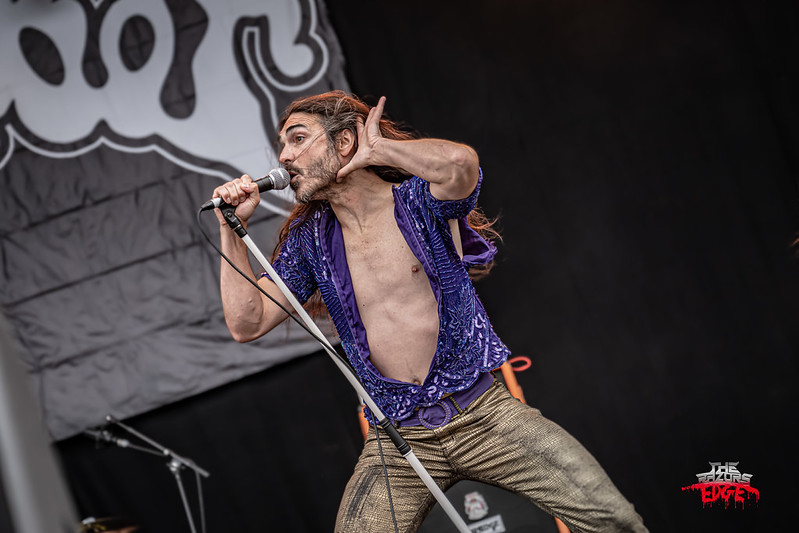
Canadian rockers, The Damn Truth is considered one of the most exciting names in the classic rock scene and on this evidence it’s easy to see why. Although from the chillier climes of North America, the band exude warm vibes from the moment they step out onto Newark’s rain-soaked stage. Be Somebody, is one of four songs from the new and self-titled album; Love Outta Luck, with its searing solo, and the darkly introspective, The Willow, prove the band’s many plaudits reflect the range amply demonstrated today. This is Who We Are Now is underscored with a throbbing bassline, All Night Long is not the Rainbow classic, rather a groove-ridden laidback boogie. Frontwoman, Lee-la Baum makes an engaging focal-point and her casual dismissal of the conditions reminds Stonedead that a little rain shouldn’t dampen the atmosphere. Two from the band’s 2021 record, Now or Nowhere, bring the set to an end: the confrontational country rock of Lonely and a bouncing, whiskey-soaked Tomorrow make us forget the deluge happen all around us. And, if you’re quick enough, part of the previously mentioned Crobot tour is as The Damn Truth’s support, which promises to be a helluva show.
Probably Heavy Metal’s most egregiously over-looked bands, Armoured Saint arrive at Stonedead 2026 in a feisty mood. Nineth full-length, Emotion Factory Reset, has been on the shelves three months now and the band have been road-testing it all summer. New album opener, Close to the Bone, starts the show and it’s clear from the outset that these experienced road-dogs aren’t about to let something as trivial as a few drops of rain knock them out of their stride. Even though the Saint have a consistent back-catalogue it’s the classics most of us of a certain age are here for and Vera, Bush and co don’t leave us hanging for too long before serving up March of the Saint and a heavy hitting Long Before I Die, straight from the debut and sophomore albums. End of the Attention Span is choppy guitars turned into thrashing rage, featuring a ripping solo from Phil Sandoval, his brother, Gonzo, playing merry hell behind the drum kit. Last Train Home and Win Hands Down are separated by nearly quarter of a century but fit seamlessly; the millennial Creepy Feelings oozes and crawls, before a one-two-three combination of the Priest-like Can U Deliver, the destructive riffs of Reign of Fire and the balls-out thrash of Mad House. Hopefully we’ll see Armoured Saint on this tour cycle again soon; in the meantime, Mr Bush has bookings for next summer with his Anthrax back-catalogue. One wonders…

Finland’s heavy metal troupe, Battle Beast bring a sense of theatricality to Stonedead with their unmistakably Scandinavian approach to music; and it’s been a while since I saw a band with a Keytar. That’s a keyboard worn and played like a guitar for those who hadn’t guessed, but Janne Björkroth takes advantage of the freedom of movement around the stage afforded by not being shackled to a static instrument. Bringer of Pain’s Straight to the Heart gets things going and Battle Beast unveil their newest member to the Newark crowd: Brazilian vocalist Marina La Torraca, also of Exit Eden, who replaced Noora Louhimo in 2025, soon after the release of last year’s Steelbound record. Bassist, Eero Sipilä, makes the introductions as a few technical issues brought on by the downpour, briefly interrupt the start of the set; by this time Stonedead has adopted a distinctly British attitude to the weather and have decided to Keep Calm and Get Piss Wet Through.
No shrinking violet, Marina grabs the stage with both hands and it’s like she’s been fronting the band since the beginning. Last Goodbye shows off her considerable vocal ability, Riders of the Storm is anthemic and bold, and The Burning Within is chest-beating, fist-pumping manna. This is the sound the early years of Bloodstock was built upon and I see several faces familiar from repeated years at Catton Park and even earlier here today, revelling in Battle Beast’s uncompromising devotion to all things heavy metal. Master of Illusion and Angel of Midnight are punchy power metal, Steelbound heroic and Eden shows what an engaging choice the band have made with their new singer. Closing number, King for a Day is a high energy finale that dispels the fear that the Finns might struggle to follow Armoured Saint this afternoon.

Over the past couple of years, Stonedead has seen a couple of smash and grab attempts from the band third on the bill. 2024 had Ugly Kid Joe turn up and nearly rob headliner Saxon of best band honours; and last year, anyone witnessing The Sweet would have to admit they were poised to steal the show. This year could well see a hat-trick as British legends and perennial rock survivors, Magnum come to Newark with fifty-plus-years and twenty-three albums behind them, a person would be a fool at bet against it. The tragic passing of Tony Clarkin in 2024 saw Tony’s tech, Brendon Riley step into the breach and, although Bob Catley might be nearing-eighty, he still has a wonderful set of pipes, perfect for Magnum’s lush, melodic tales of fantastical lands.
Days of No Trust takes us back to 1988, before the more up to date Lost on the Road to Eternity album’s title track and a rare airing for When we Were Younger, with Bob living every word. It was the classic eighties tunes from On a Storyteller’s Night and Chase the Dragon that got the biggest reception and songs from the former still manage to bring tears to the eyes after forty years; luckily the rain can mask those this afternoon. How Far Jerusalem, Just Like an Arrow and On a Storyteller’s Night is one of the best openings to any album, with All England’s Eyes being added for good measure. Midnight (You Won’t Be Sleeping) and Vigilante were taken from the 1986 follow up, and a trip back into the early days of Magnum with the always poignant Soldier on the Line and set closer, Sacred Hour, before which comes Kingdom of Madness, still as fresh and exciting a song as it was back in 1978. It’s always great to see Magnum and to hear those songs that carried us though large portions of our (mis-spent) youths.

The rain has abated somewhat for the arrival of German heavy metal legends, Accept, who hit fifty-years of age in 2026. Mark Tornillo has been with the band for seventeen years and the only time the band move away from those classic early eighties records is a couple of visits to Mark’s first outing, Blood of the Nations. In the time since Magnum left the stage, the crew have been hard at work creating a multi-level stage-set, including a wall of speakers and spotlights to sweep the sky. Smoke-pot blast into the evening air as Metal Heart pumps solid heavy metal into the slowly drying crowd. Ever-present guitarist Wolf Hollmann takes centre stage and cuts an imposing figure as he does.
A confetti cannon marks the arrival of Blood of the Nation’s Teutonic Terror, a slower and more menacing delivery, but one that does not deviate from Accept’s primary mission to lay down killer metallic carnage, complete with flames licking the darkening night. A forest of hands greets Restless and Wild and the Breaker duo of Run if You Can and the album’s title-track bookend what must surely be the pay-off for standing – or sitting in my case – out in the rain all day: that being the introduction of John Bush as guest vocalist on Up to the Limit. Worth the admission price alone? I’d say so!
Restless and Wild’s epic Princess of the Dawn finds audience participation in the mid-section, a medley of Demon’s Night, Starlight, Losers and Winners, and Flash Rockin’ Man give Newark more of that classic Accept history, before Pandemic and Fast as a Shark, which really should be heralded as one of Metal’s premier tunes, alongside Paranoid, Ace of Spades, Breaking the Law, et al. Fast guitars and shooting flames accompany this proto-thrash romp as an inflatable shark bounces about the front of the audience. Leaves only Balls to the Wall and Accept’s work is done for the afternoon. Europe are going to have to be on top of their game to wrest the crown from the Germans after that.

Forty years of The Final Countdown and headliners Europe have been both blessed and cursed by that keyboard line and, while it might have made them a house-hold name and given them album sales in the millions, it has no doubt been something of an anchor, shackling the band to their mid-eighties light-and-fluffy take on hard rock. The self-titled debut and its 1984 follow-up, Wings of Tomorrow, are still cracking albums of driving hard rock/ heavy metal and Countdown’s successor, Out of this World from 1988, is the record I reach for most often when I’m in a Europe kinda mood.
One of the things that has perhaps gone under the radar about the band is they are undeniably a killer live outfit and, MTV videos and mainstream success cannot strip Europe of that inherent nature. The rain may well be back but Stonedead isn’t about to be short-changed at this late stage, and the final band hit the stage with On Broken Wings’ big drum sound, courtesy of Ian Haugland and chugging riffs by John Norum. It’s also worth noting that the band’s line-up has been solid since the days before Countdown, and every person on that stage is fully sold into the Europe cause.
Stonedead sings every word of Rock the Night, Mic Michaeli’s keys weave wonderous and fantastical images before the guitar kicks in on Walk the Earth, and Joey attempts an east Midland accent with his “Eh, up, me duck” greeting, before kicking in the pre-Countdown Scream of Anger. While Sign of the Times shows how the band matured between Countdown and Out of this World, it demonstrates how they managed to do so without losing that quintessential sound of the previous album.

Come the Madness duo of One on One and The Cult of Ignorance arrives with an orchestral opening and John Levin funking it up on the bass, giving way to a dirty riff and Joey stepping away from that clean-cut pretty-boy image for a spell. Cult… has JT strapping on a guitar and adding further weight to this darker tune. One cannot help but wonder – as the rain continues to fall – how many forty-year-old mums are called Carrie after The Final Countdown ballad, which is sung back to the stage word-for-word through a forest of swaying arms. Possibly a similar amount as are named Kayleigh.
War of Kings and Stormwind prove there is more to Europe than power ballads as they revel in sweeping grandeur and killer, majestic guitar. Joey goes all acoustic for an impromptu tribute to Stoedead into a stripped-down version of Open Your Heart, ending with the tongue-in-cheek comment that “we finally did a good song, right!”. Last Look at Eden sees the Europe sound updated to a more millennial version, big, bold and with prominent keys; the intro to Ready or Not is bluesy as Joey strums and Mic’s piano gives the early section a distinctly barroom feel. Every time I hear this one it takes me back to Milton Keynes Bowl one Saturday evening in 1989, the ferocious main riff kicking in as Joey and John stand atop one of the risers and indulge themselves in some guitar goddery.
The set ends with Superstitious, which includes a singalong of Whitesnake’s Here I Go Again, and Joey hitting those Coverdale notes to perfection. Encores are Cherokee and the obligatory The Final Countdown, which even the rain comes out in force for, remind us that it’s a forty-year-old classic for a reason.
And, with that, the curtain came down on Stonedead 2026. In what could have been a wash-out, the sheer weight of hard rock n’ roll and the determination of all in attendance not to capitulate to the conditions turned what could have been a chore into a party even the rain wanted to be a part of. Nine great bands, each giving their all and making this eighth edition of Stonedead memorable for all the right reasons.


Photo credits: Tim Finch
For all the latest news, reviews, interviews across the heavy metal spectrum follow THE RAZORS’S EDGE on facebook, twitter and instagram.
The post Live Review: Stonedead Festival 2026 appeared first on The Razor's Edge.
29th August 2025
Photos: Tim Finch


Photo credits: Tim Finch
For all the latest news, reviews, interviews across the heavy metal spectrum follow THE RAZORS’S EDGE on facebook, twitter and instagram.
The post Live Gallery: Stonedead Festival 2026 appeared first on The Razor's Edge.

10 Great Rock Videos Featuring Movie Star Guest Appearances looks at music videos in which well-known actors actually appear in the video rather than simply showing clips from a movie soundtrack. From Chevy Chase lip-syncing Paul Simon to Robert Downey Jr. walking through an empty mansion for Elton John, these videos used movie stars as part of the performance, the story, or sometimes the joke. Rock stars and movie stars have crossed paths on MTV and beyond for decades. These 10 videos are memorable examples of what can happen when those two worlds collide. #10 – Crazy – Aerosmith Aerosmith’s
The post 10 Great Rock Videos Featuring Movie Star Guest Appearances appeared first on ClassicRockHistory.com.

Marianne Gabriel Faithfull was born in Hampstead, London, in 1946. She began her singing career in 1964 as a folk performer. Her first big break came while attending a party in London that year, where The Rolling Stones’ manager, Andrew Loog Oldham, discovered her. Oldham, Mick Jagger, and Keith Richards wrote Faithfull’s first major release, “As Tears Go By,” which became a massive success. After releasing several successful singles, she entered a highly publicized relationship with Mick Jagger. Marianne Faithfull’s life and career worsened after her relationship with Mick Jagger ended in 1970. After losing custody of her son, she
The post Top 10 Marianne Faithfull Songs appeared first on ClassicRockHistory.com.
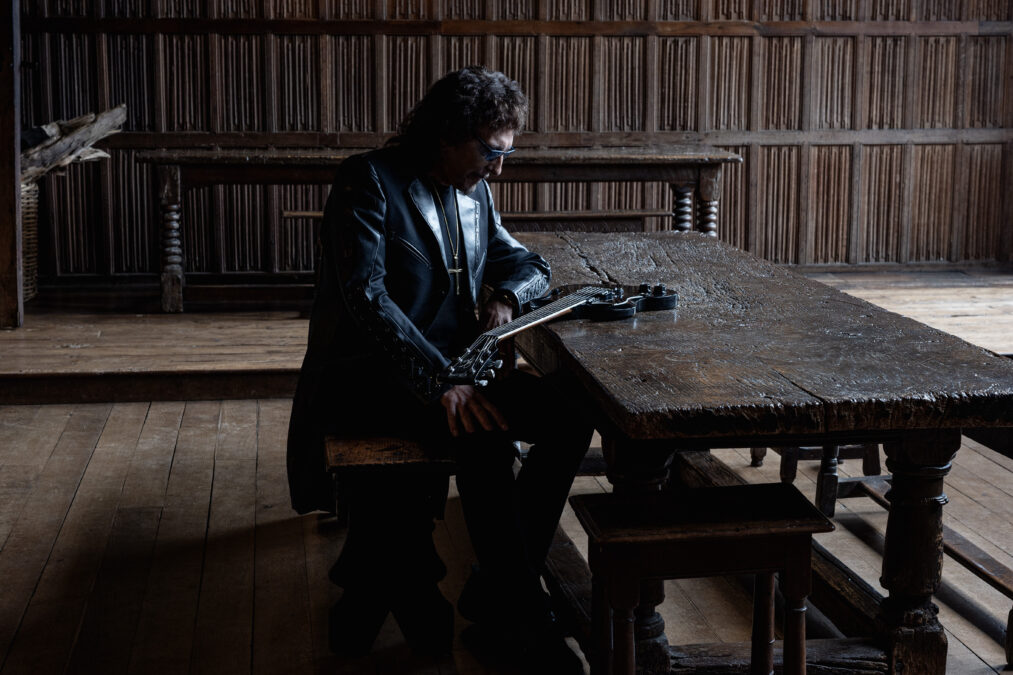 On July 29, founding member of Black Sabbath, Tony Iommi announced his brand-new studio album, From The Dark and premiered the first single from it, World Alone, to critical and fan acclaim. Racking up 2.5 million streams and heavy global radio playlisting since its release, World Alone is a thunderous rock song that speeds along […]