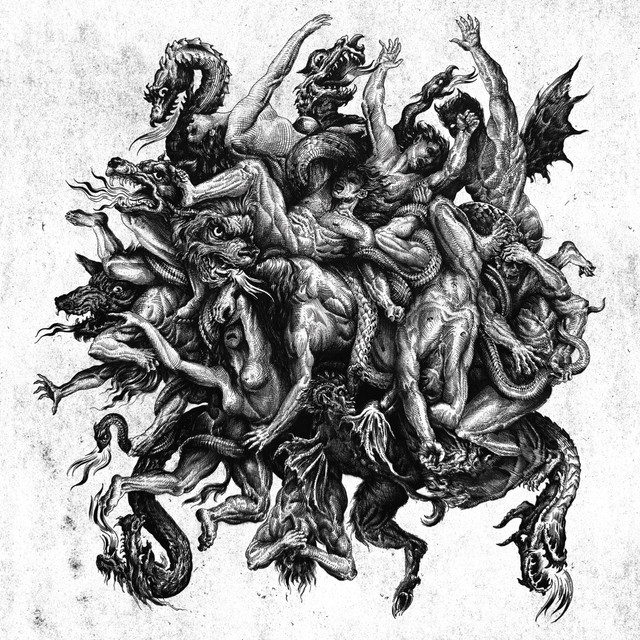
Featuring footage from the song’s recent live debut in Istanbul.
The post Megadeth Launch “Puppet Parade” Performance Video appeared first on Theprp.com.
Featuring footage from the song’s recent live debut in Istanbul.
The post Megadeth Launch “Puppet Parade” Performance Video appeared first on Theprp.com.
When regarding the decidedly colourful back catalogue of the late Lou Reed, the phrase ‘all of human life is here’ springs to mind. Staged against a uniquely urban backdrop, Reed would habitually pick at the persistent scab of human frailty, shine white light upon darkness and generate searing white heat in the process.

In Reed’s world, emotions were raw. His dramatis personae personified facets of his own complex personality. The darkest desires of his darkest characters – from the sexually transgressive (Venus In Furs) to the purely evil (Rock Minuet) – and the simple sentimentality of the unreconstructed romantic (Coney Island Baby, My House) mirrored Reed’s intrinsic duality.
So who was Lou Reed? Many of his songs formed the core of an unwritten autobiography: from idyllic infancy (Egg Cream) to ruined adolescence (Kill Your Sons) and beyond, Reed’s essence endures in his art. With an accumulated writing style that was one part poet (Delmore Schwartz), one part Tin Pan Alley (Doc Pomus) and one part gossip (Andy Warhol), Reed wrote stories so painfully real that rock’n’roll still bears their scars.

Eventually appearing on the Velvet Underground’s second album White Light/White Heat, released in 1968, darkly comedic spoken-word short story The Gift dates from ’64. Reed recalled: “I wrote this [in] my last year at Syracuse University, where I was an English major. John Cale suggested we set it to music. We put the story on stereo left and the music on stereo right so you could listen to one or the other or both.”
As the Velvets jam in support, a deadpan Cale recites the macabre tale of what transpired when lovelorn Waldo Jeffers mailed himself to Marsha Bronson inside a large cardboard box. Part-Hitchcock, part-E.C. Comics, the final grisly denouement involves the fateful plunge of a sheet metal cutter that causes ‘little rhythmic arcs of red to pulsate gently in the morning sun’.
A defining moment in rock’n’roll, Reed’s tale of copping $26 worth of heroin uptown in Harlem on the corner of Lexington Avenue and 125th Street transported the gritty verité style of Nelson Algren and Hubert Selby Jr from the printed page on to vinyl.
The song’s protagonist, most probably Reed himself, feels ‘sick and dirty, more dead than alive’. As he clucks impatiently, conspicuous, out of place, he draws attention (‘Hey white boy, what you doin’ uptown?’), before The Man – his dealer – finally arrives (‘all dressed in black’, with ‘PR shoes and a big straw hat’). So what exactly are ‘PR shoes’? “Puerto Rican fence-climbers” according to Lou. So now you know. And there’s a happy ending. Our hero ultimately gets his fix and we leave him temporarily elated: ‘Feeling good, feeling oh so fine… Until tomorrow, but that’s just some other time.’
Simple, concise, practically perfect in every way. Perfect Day is a succinct précis of idealised love that seasoned Reed-watchers – reluctant to accept that he would ever deliver a romantic ballad without a sneering side of whisky-embittered cynicism – spent decades trying to convince the wider world was actually about heroin use.
“That’s not true,” Lou said unequivocally. “You’re talking to the person who wrote it.” It was actually about the day that Reed proposed to his first wife, Bettye Kronstad, in Central Park, a day which, as Kronstad recalls, was far from perfect. Although Lou had already decided to propose, Bettye had just had a riding accident in the park and was severely traumatised.
Despite this, Lou persisted in delivering his ‘perfect day’, even dragging his fiancée to Tiffany’s to buy a ring against her will. Perfection is clearly in the eye of the beholder. “The key to Perfect Day is the last line,” Lou admitted when we spoke in 2004, “You’re gonna reap what you sow.” The couple divorced in 1973.
When Alice Cooper producer Bob Ezrin met Reed to begin work on his third album, the follow-up to his Bowie-produced breakthrough Transformer, he observed that while Reed’s stories had great beginnings they lacked satisfying conclusions.
Citing the central romantic set-piece of Reed’s self-titled solo debut, Ezrin wanted to know what happened to Berlin’s central protagonists (lovers entwined in its ‘candlelight and Dubonnet on ice’ opening verse, but estranged by its ‘I’m gonna miss you now that you’ve gone’ chorus).
Retrieving Ezrin’s gauntlet, Reed used the ensuing sessions to expand Berlin to a full concept work, a dark song cycle incorporating alcoholism, addiction, spousal abuse, prostitution, depression and, ultimately, suicide. Contemporary US critics railed against Reed’s ‘lousy’ (Creem) ‘disaster’ (Rolling Stone), but subsequent reassessment reveals a uniquely moving collection: a Gothic edifice of exquisite pain and sumptuous misery.
Building through the heartbreaking Caroline Says II (‘You can hit me all you want to, but I don’t love you anymore’), the harrowing The Kids (‘They’re taking her children away’) and the painfully graphic The Bed (‘This is the place where she cut her wrists’) towards Sad Song’sclimactic emotional release, it leaves the listener physically and psychologically drained.
In 2004, Reed likened Berlin to “a Bergman or Kurosawa movie. An intense film noir… Boy meets girl, boy gets girl, boy loses girl.” When I observed that ‘girl slashes wrists’ isn’t normally part of the romantic narrative, he countered simply: “That’s the point.”
Arguably Lou Reed’s magnum opus, Street Hassle combines a pair of monologues over a mesmeric repeated string section figure and an impassioned ‘love has gone away’ coda written in the wake of his tumultuous three-year relationship with trans woman Rachel Humphreys. Street Hassle was the Godfather Of Punk’s first artistic statement subsequent to unintentionally acquiring the title, and he rose to the occasion.
Part one describes Waltzing Matilda’s $80 physical dalliance with a male escort, while part two finds a drug dealer addressing the ‘hassle’ of a particularly incautious client’s girlfriend fatally OD-ing before having the good grace to vacate his premises. ‘When someone turns that blue,’ observes The Man, ‘it’s a universal truth, you just know that bitch will never fuck again.’
“It’s a great monologue,” Reed opined in ’04. “Two monologues, really. The person acting out the first part is one way, the person in part two the polar opposite. They’re not even vaguely of the same species… Based on a real incident, as my things inevitably are.”
Street Hassle channels John Rechy, Tennessee Williams and none-more-noir Raymond Chandler. Its first part echoes Herlihy’s Midnight Cowboy, its second Selby’s Last Exit To Brooklyn and its conclusion (enhanced by an uncredited spoken-word cameo from young pretender Bruce Springsteen) is an uncharacteristically passionate requiem for star-crossed love. Ultimately it’s Reed’s great American novel, condensed to the bone and propelled by a monumental ear-worm riff.
Ever since Reed led us up to Harlem’s ‘Lexington and 125’ to open our eyes to an unseen alternative reality, his narrative has been grounded in New York City. His songs have described characters unsung elsewhere: the transvestites and hustlers of Walk On The Wild Side, the junkies and speed freaks of Heroin and Sister Ray. But with 1989’s New York album Reed – galvanised by the ever-widening divide between the Empire City’s rich and poor – sealed his position as NYC’s poet laureate with a concept work of rare lyrical brilliance.
Here are astute essays on the inner-city ghetto, the environment, and the gay community’s resilience in the face of the AIDS epidemic, along with serial indictments of an oblivious political elite. Literate, poetic, driven and compelling, New York is Lou Reed’s defining achievement as rock’s greatest storyteller.
The original version of this feature appeared in Classic Rock 264, in June 2019
Few writers connected beauty, death, mourning, and memory as obsessively as Edgar Allan Poe. Again and again, women in his fiction appear fragile, dying, resurrected, idealized, mourned, or psychologically transformed into symbols of loss itself.
This recurring image of the “dead beautiful woman” has often generated controversy around Poe’s work. Yet understanding these themes requires looking beyond simple Gothic spectacle toward the emotional reality shaping Poe’s life. Death surrounded him repeatedly from childhood onward, especially through the women closest to him emotionally.

Edgar Allan Poe surrounded by ghostly Victorian women, candlelight, ravens, and Gothic mourning imagery in a dark cinematic atmosphere.
The women appearing throughout Poe’s fiction therefore cannot be separated entirely from grief, emotional idealization, psychological trauma, Romantic aesthetics, and the nineteenth century’s broader fascination with beauty existing beside mortality.
Poe transformed personal mourning into one of Gothic literature’s most psychologically powerful emotional atmospheres.
Edgar Allan Poe’s relationship with death began early.
His mother, the actress Eliza Poe, died from tuberculosis in 1811 when Poe was only two years old. The image of a young dying woman suffering from illness would later appear repeatedly throughout his fiction and poetry.
Tuberculosis itself carried powerful emotional symbolism during the nineteenth century. The disease often appeared associated with beauty, fragility, melancholy, artistic sensitivity, and gradual physical fading.
Many Romantic writers viewed consumption almost aesthetically, transforming physical decline into emotional and poetic imagery.
Poe’s earliest emotional experiences therefore became inseparable from illness, mourning, female fragility, and psychological abandonment.
The repeated appearance of dying women in his work reflects not simply literary convention, but emotional memory transformed into Gothic symbolism.
No relationship shaped Poe’s emotional life more profoundly than his marriage to Virginia Clemm.
Virginia was Poe’s cousin and became his wife in 1836. Their relationship remains controversial historically because of her young age, yet emotionally she appears to have represented stability, affection, intimacy, and emotional refuge within Poe’s otherwise chaotic life.
When Virginia developed tuberculosis, Poe entered a prolonged psychological confrontation with anticipatory grief.
He watched her weaken slowly over several years while simultaneously struggling with poverty, alcoholism, depression, and professional instability.
This emotional experience deeply influenced many of Poe’s most famous female figures.
Women such as Annabel Lee, Lenore, Ligeia, Morella, and Madeline Usher frequently exist suspended between beauty and death, memory and disappearance, spiritual transcendence and physical decay.
The emotional terror in these works often emerges less from death itself than from the unbearable psychological anticipation of losing someone emotionally idealized.
Poe openly discussed this subject in The Philosophy of Composition.
There he famously wrote:
“The death, then, of a beautiful woman is unquestionably the most poetical topic in the world.”
Modern readers often interpret this line as morbid or misogynistic. Yet within Poe’s broader emotional and literary context, the statement reflects Romanticism’s fascination with impermanence, beauty, grief, and idealization.
Poe believed melancholy represented the highest poetic emotional tone because sadness lingered psychologically longer than joy.
The dead woman in his work frequently becomes less a realistic female character and more a symbolic intersection between memory, beauty, mourning, and emotional obsession.
This explains why many of Poe’s female figures appear strangely ethereal, psychologically distant, or spiritually elevated rather than socially realistic.
Poe’s women are often associated not only with death, but with psychological transformation and unstable identity.
In Ligeia, the narrator becomes obsessed with his dead wife so intensely that death itself appears psychologically reversible.
Ligeia’s presence dominates the narrator’s consciousness even after physical death, blurring boundaries between grief, hallucination, spiritual resurrection, and emotional obsession.
Similarly, Morella explores identity, reincarnation, memory, and the terrifying persistence of emotional attachment beyond mortality.
These stories reveal something psychologically important about Poe’s treatment of women.
The women often become emotionally immortal because the narrator cannot psychologically release them.
In Poe’s fiction, death rarely functions as final separation because emotional attachment continues haunting the mind psychologically long afterward.
Annabel Lee remains one of Poe’s clearest examples of grief transformed into lyrical emotional mythology.
The poem does not describe ordinary romantic loss realistically. Instead, it elevates mourning into eternal emotional condition.
The speaker insists that even angels envy the love shared between himself and Annabel Lee:
“But we loved with a love that was more than love.”
The relationship becomes spiritually absolute precisely because it cannot survive physically.
Poe repeatedly transforms dead women into emotionally permanent presences existing beyond ordinary time, reality, and mortality.
This emotional absolutism strongly influenced later Gothic literature, Symbolist poetry, dark Romanticism, Gothic music, and noir emotional aesthetics where memory frequently feels more powerful than reality itself.
Poe’s female characters often function atmospherically as much as narratively.
Madeline Usher in The Fall of the House of Usher barely speaks, yet her presence dominates the emotional structure of the story completely.
She becomes physically connected to the decaying mansion itself, symbolizing emotional collapse, hereditary decline, psychological fragmentation, and the impossibility of escaping death.
This reflects one of Poe’s most important Gothic innovations:
Human beings, architecture, memory, illness, grief, and emotional atmosphere all become psychologically interconnected.
The women in Poe’s fiction therefore frequently operate less as conventional realistic characters and more as emotional manifestations of loss, obsession, memory, beauty, and mortality itself.
Modern readers continue debating Poe’s treatment of women partly because his work exists at the intersection of emotional sincerity and literary idealization.
Some critics interpret his recurring dead women as evidence of unhealthy Romantic obsession or male idealization erasing female individuality.
Others view Poe’s female figures as deeply connected to trauma, grief, emotional memory, and the psychological impossibility of accepting mortality.
Both interpretations reveal important aspects of Poe’s complex relationship with grief, beauty, and emotional idealization.
Poe’s women often feel emotionally symbolic rather than fully realistic because they emerge from psychological mourning transformed into literary atmosphere.
Yet their emotional power remains undeniable precisely because Poe wrote grief with extraordinary psychological intensity.
Long before psychoanalysis, psychological horror, or noir melancholy entered modern culture, Poe was already exploring how memory, beauty, mourning, and emotional obsession continue haunting the human mind long after death itself.
Explore Edgar Allan Poe apparel, Gothic aesthetics, noir-inspired fashion, and psychological darkness inside the official Edgar Allan Poets Noir Store.
Explore Gothic music, cinematic tension, psychological darkness, and immersive noir atmosphere through the official Edgar Allan Poets playlist.
The most important women in Poe’s life included his mother Eliza Poe, his foster mother Frances Allan, and his wife Virginia Clemm, whose illness and death deeply influenced his emotional and literary world.
Poe connected beauty, mourning, memory, and melancholy psychologically and aesthetically. Personal experiences with illness and loss strongly shaped his recurring literary focus on dying or dead women.
Yes. Virginia’s illness and eventual death profoundly influenced Poe’s exploration of grief, emotional idealization, mortality, and psychological mourning in poems and stories such as Annabel Lee.
Poe believed melancholy created the strongest poetic emotion. For him, the death of a beautiful woman symbolized the emotional intersection of beauty, mourning, fragility, memory, and loss.
The post The Women in Poe’s Life and the Dead Women in His Work appeared first on Edgar Allan Poets – Noir Rock Band.
The Holiday Inn in Flint, Michigan was the site of one of the most notorious examples of extreme rock ’n’ roll behaviour in history.
The Who drummer Keith Moon had already left a trail of chaos on the road, diving into swimming pools from hotel rooftops and blowing up toilets with cherry bombs, but it was in Flint where his behaviour reached its peak.
Following a large-scale food fight, the evening’s entertainment reached its climax when Moon steered a Lincoln Continental into the hotel’s swimming pool. Or at least that’s what he claimed he did.

Harvey Lisberg [manager, Herman’s Hermits]: Keith was bonkers. He had two personalities – one was wild and insane, and the other was a superb musician.
Peter Cavanaugh [DJ, WTAC Radio, Flint, Michigan]: I was at the show with a bunch of listeners, some of our DJs and some Detroit radio people who had come up. The Who just destroyed the stage. Everybody was blown away. After the show we went to The Holiday Inn.
Barry Whitwam [drummer, Herman’s Hermits]: It all started very innocently. It was Keith’s birthday party, and one or two birthday cakes had been delivered for him.
Keith Moon [speaking in 1972]: The Premier Drum Company had given me a huge birthday cake with, like, five drums stacked up on top of each other.
Barry Whitwam: The whole tour gathered in the dining room to view all the cakes. Everybody was ready for a party. Keith Moon put his plate down on the table and stuck his finger into the cream on top of one of the cakes and casually flicked it at [Hermits bassist] Karl Green who was standing next to him. The cream hit Karl in the face and everybody laughed – apart from Karl, who stuck his finger into the nearest cake and flicked some back into Keith’s face. Within seconds everybody in the room was throwing cake at each other. It only took five minutes to change the room into what looked like the inside of a cake.

Tom Wright [photographer, road manager]: The manager of the hotel comes up to Keith and tells him that this will just not do: “We’re going to have to stop this, right now”.
Keith Moon: As the party degenerated into a slanging match, I picked up the cake – all five tiers – and hurled it at the throng. People started picking up pieces and hurling it about. Everybody was covered with marzipan and icing sugar and fruit cake.
Tom Wright: I knew that wasn’t going to sit well with anybody. I told him [the manager] we’d wind it down and so on, and he left.
Peppy Castro [guitarist, the Blues Magoos]: The swimming pool had tons of broken glass in it from Keith throwing bottles in the pool. I was pissed off because of the damage he was causing.
Keith Moon: Half-a-dozen cars were parked around this swimming pool. I ran out, jumped into the first car I came to, which was a brand new Lincoln Continental. It was parked on a slight hill, and when I took the handbrake off it started to roll, and it smashed straight through this pool-surround fence, and the whole Lincoln Continental went into the swimming pool – with me in it.
Peter Cavanaugh: I was in a room. I heard the ruckus and I went outside, and the first thing I saw was the vehicle in the pool. We’d all had several beers, and some other stuff too, so things can get a little cloudy, but I clearly remember seeing the vehicle in the pool.
Keith Moon: So there I was, sitting in the driver’s seat of a Lincoln Continental, underwater. And the water was pouring in – coming in through the bloody pedal holes in the floorboard, squirting in through the windows. In a startling moment of logic, I said: “Well, I can’t open the doors until the pressure is the same”. It’s amazing how I remembered those things from my physics class. So I’m sitting there, thinking about me situation, as the water creeps up to me nose. When there’s just enough air in the top of the car to take a gulp, I fill up me lungs, throw open the door and go rising to the top of the pool. So I went back to the party, streaming water.
Barry Whitwam: There was no car in the pool, only all the pool tables and chairs, and Keith never came back dripping water.
Tom Wright: At one minute after 12, the hotel manager comes running back and says: “Goddamn it, this sounds more like a revolution than a birthday party…”, and you can’t do this and you can’t do that. He was just about to go into a big deal when Keith picked up what was left of the five-tiered cake and just shoved it into this guy’s face. Everybody in the room just went silent.
Barry Whitwam: Not satisfied with that, Keith went over to Karl Green, ripped Karl’s trouser leg from the pocket down to the knee, and laughed in his face as if to challenge him. So Karl walked up to Keith and pulled his trousers down so hard that the stitching ripped in every seam, and there Keith stood with no trousers. His underpants had been pulled down with his trousers and, to make it worse, he was only wearing a short T-shirt that didn’t do anything to cover his embarrassment.
Everybody thought this was hilarious, apart from the police officer who, up to this point, was supposed to be guarding us from the outside world. When he saw Keith’s private parts, he pulled out his revolver and walked over to Keith to arrest him for breaking the law in Michigan State. The funny thing was that the officer was still pointing his gun at Keith’s manhood.

Keith Moon: I ran. I started to leg it out the door, and I slipped on a piece of marzipan and fell flat on me face and knocked out me tooth.
John Entwistle: He was so pissed, he tripped and fell over and smashed his teeth.
Nancy Lewis [US publicist]: He was so out of it he wasn’t even aware what happened. He had to be rushed to the dentist.
John Entwistle: They operated on him without any anaesthetics, cos he was drunk.
Keith Moon: So he had to rip out what was left of the tooth and put a false one in.
John Entwistle: While we were at the dentist’s, the rest of the tour got extremely drunk and started spraying the car park with fire extinguishers.
Karl Green: We ended up having fights, raids with fire extinguishers, ripping the railings up around the pool and throwing them in, ripping vending machines off the walls to get crisps.
Barry Whitwam: Peter Noone and I decided to help clean off each other’s cake by using fire extinguishers. Little did we know, but the extinguishers had a chemical in the fluid that would remove the paint off cars.
Peter Noone [singer, Herman’s Hermits]: This fire extinguisher takes all the paint off the cars. So there was a big bill.
Barry Whitwam: Keith Moon was credited with most of the damage to the hotel but, in fact, he had very little to do with it.

Barry Whitwam: We were hit with a $25,000 bill for new carpets, wallpaper and ceilings.
Peppy Castro: The stucco ceiling in the restaurant of the Holiday Inn had to be redone because of all the cake that was thrown on it.
Keith Moon: Six of the cars had to have new paint jobs off. We’d also destroyed a piano. Reduced it to kindling. And don’t forget the carpet. And the Lincoln Continental in the bottom of the pool.
Peter Noone: That never happened. He would tell stories. He just forgot what happened.
Roger Daltrey: I saw it. We paid the bill [for the damages]. It was $50,000. It’s vague now, but I just remember the car in the pool. But then I read in the biography that never happened, so maybe I’ve been living someone else’s life, I don’t know.
Barry Whitwam: There’s no way Keith could have driven a car into the pool that evening without me knowing about it.
Peppy Castro: I personally didn’t witness Keith drive a car in the pool. So if it did happen they must have dragged the car out rather fast. I was there
John Entwistle: He never drove a car into the swimming pool. He couldn’t even drive.
This article was originally published in Classic Rock 175, in September 2012.
In 2024, Closebye caught our attention with their self-released sophomore effort, Hammer Of My Own. The New York indie rockers are back today with their first new music since then, in the form of two tracks called “No Troubles Left At All” and “Ann Arbor.”
The post Closebye – “No Troubles Left At All” & “Ann Arbor” appeared first on Stereogum.
The song opens with a beautiful guitar arpeggio. This instrumental introduction creates an immediate sense of anticipation. Following that, an expressive voice enters, characterized by a unique timbre. This voice evokes a sense of nostalgia, reminiscent of the vocalists from the 1980s, yet it also possesses a deeper unique quality. The slight doubling effect applied to the vocals enhances their richness, occasionally supporting the lead voice.

As the song progresses, it develops well, drawing comparisons to classic rock ballads from the ’80s. The vocal ranges soar, delivering a sense of heightened emotion that suits the song’s themes of profound loss. The lyrics encapsulate feelings of emptiness and sorrow, expressing those experiences that leave one feeling hollow and unable to move forward in life. The song’s harmonic construction is executed flawlessly. The rhythm section, consisting of drums and bass, maintains a steady, solid beat that underlines the entire track.
As the guitar complements the primary melody, it occasionally breaks into notes and small solos, adding an engaging texture. These elements build toward the final guitar solo, which showcases impressive technical skill. The notes extend, echoing profound pain. Moreover, the solo incorporates intricate passages that highlight the musician’s dexterity.
The solo follows a bridge that purposefully lowers the dynamics for a brief moment. This shift creates tension leading into the finale. In this concluding section, the guitar takes center stage, working beautifully under the vocal lines. There is a delicate interplay between the instruments and vocals that carries the listener right to the end. This journey through sound reaches deep within the soul, creating an emotional connection that I highly recommend to everyone.
This song stands as a significant exploration of sorrow. It articulates the complex feelings that accompany loss. The marriage of instrumentation and vocals elevates the overall experience, resulting in something truly special. Indeed, the production choices enhance the depth of the message conveyed.
The haunting voicing intertwines perfectly with the instrumentals, accentuating the lyrical depth. The atmosphere creates a space where vulnerability is not only accepted but also embraced. Each musical layer contributes to understanding grief’s complexity without overwhelming the listener.
This piece pays homage to the emotional ballads of the past while maintaining a fresh perspective. It demonstrates the artist’s ability to connect with an audience through shared human experiences. The effect is soothing and unsettling, a reminder of the fragile nature of existence.
The rich textures and emotional weight linger, inviting repeated listens. In a world where art often battles superficiality, this single remains profoundly relevant.
Deep
If you love this music: Discover MoreThe post D.D.R. Don’t Tell Me How to Grieve Review appeared first on Edgar Allan Poets – Noir Rock Band.
The song opens with a beautiful piano melody. This melody establishes an emotional connection. The vibes reminded me of Oasis in the way the song is interpreted. At around 40 seconds in, the music intensifies as the drums and bass join in, creating a nostalgic ballad. This piece addresses the darker moments in life. Yet somehow, it conveys the strength found in togetherness. It reflects the desire to ease burdens, if only for a day.

The lyrics emphasize the importance of being there for one another. The chorus is quite beautiful, showcasing a natural progression in the music. As it unfolds, the sound expands with the addition of guitars and synthesizer pads. This elevation brings a genuine sense of uplift as the song progresses. The bridge further enhances this feeling of hope that the lyrics explore. After the bridge, the music momentarily quiets, creating a poignant contrast. This section serves to prepare the listener for the song’s compelling conclusion.
The expressiveness of the track is intense and gentle. It encapsulates a yearning for lightness, making it a relatable anthem. The contrasting elements within the song create a dynamic experience. The transition from soft to powerful moments is masterfully executed. Each section builds upon the last, drawing listeners deeper into its emotional core.
The lyrics reveal a narrative about finding solace in companionship. This theme resonates with many people, illustrating the universal struggle with life’s challenges. The intent to offer a brief escape is prevalent throughout. Frederick James skillfully captures this sentiment, making the song feel intimate and personal.
Listeners are encouraged to share these moments of respite. The longing for lightheartedness is palpable, rekindling memories of simpler times. It creates an inviting atmosphere that encourages reflection.
In addition to its lyrical depth, the musical arrangement merits praise. Each instrument has its role, creating a harmonious blend. The piano introduces a gentle foundation that guides the track. The subsequent addition of drums and bass provides depth and rhythm. This fusion is essential in conveying the moods throughout the song.
The overall production quality is solid. The mix balances each element effectively, allowing for clarity and richness.
James’s artistry shines in the way he crafts each moment. There’s a clear understanding of how music can evoke powerful feelings. This skill is particularly evident in the way he transitions sections. The quiet moments bring a poignant serenity, while the crescendos inspire hope and celebration.
The final moments of the track provide a satisfying resolution. With a graceful conclusion, it reflects the bittersweet nature of the journey. The experience leaves listeners yearning for more, yet fulfilled by the moment.
Intense
If you love this music: Discover MoreThe post Frederick James Let Me Give You A Good Day Review appeared first on Edgar Allan Poets – Noir Rock Band.
Andy Cohen is famously a Deadhead — so much so that Dead & Company’s John Mayer once had to clarify that they were not in a romantic relationship — yet somehow he was unaware that a founding member of the beloved band once made a cameo on The Real Housewives Of New York City. It was none other than bassist Phil Lesh, who passed away in 2024. His son Grahame broke the news of the crossover to the Bravo host and went on the show this week to alert the public.
The post Andy Cohen Claims To Be A Deadhead But Only Just Found Out Phil Lesh Was On <em>Real Housewives</em> In 2008 appeared first on Stereogum.
Surgent’s single “Ruthless Logics” strikes with an immediate and unyielding intensity. From the first note, listeners are met with an aggressive energy that is violent and uncompromising. The harsh, acid-like sound elevates high frequencies, making the music feel colder, more frantic, and sharper. The relentless drumming propels the track at incredible speed, while the vocalist places constant strain on his throat to deliver lyrics with fierce aggression.

The guitars accompany this urgency, racing with equal ferocity. It’s clear that the band consists of highly skilled musicians, as executing such precision at breakneck speed is no simple feat. There is an incredible synergy among the members of Surgent. Originally conceived by guitarist Jaan Varts and bassist Jüri Tarkpea, the lineup was completed with the addition of vocalist Mathias-Erik Tempel and drummer Simo Atso, resulting in the dynamic sound we experience today.
The expertise of each member is evident in their professionalism. The attention to detail is remarkable, reflecting a cohesive artistic vision. The vocalist adeptly shifts from high-pitched screams to darker growls. Below this powerful vocal delivery lies a musical framework devoid of flaws, instead showcasing pure brutality. It feels as if the song is a cold, relentless force, striking with the weight of a tank that rolls over you without any regard.
The chaotic energy of “Ruthless Logics” is undeniably captivating. The track thrives on its sheer ferocity and unbridled intensity, resonating with anyone who appreciates the extremes of the heavier music genre. Each element, from the frantic rhythms to the biting guitar riffs, serves to enhance this overall sensation of raw power. This is a clear indication that Surgent is not just a group of musicians; they are a finely tuned unit capable of channeling complex emotions and directing them exclusively towards the listener.
The sharp guitar licks slice through the aural onslaught while the rhythm section provides a solid foundation. The fluid interplay between all members contributes to an overall sense of harmony within the chaos. This alignment enhances the intentionally aggressive nature of the song, immersing the listener in a whirlwind of sound.
The raw energy captured in “Ruthless Logics” positions Surgent as a band that can deliver potent performances while pushing the limits of the genre. They possess a remarkable talent for impacting the audience’s emotions, leaving them breathless and eager for more. This single is a true example of what heavy metal can offer—a visceral experience where each component is precisely engineered to strike hard.
“Ruthless Logics” is a bold statement from Surgent, combining technical skill with relentless energy. The track demands attention from the first note and does not relent until the last chord fades away. It serves as a perfect showcase for the band’s capabilities, offering an exhilarating listening experience and an insight into their artistry. They are certainly a band worth diving into for anyone who appreciates the intricacies and power of heavy music.
Brutal
If you love this music: Discover MoreThe post Surgent Ruthless Logics Review appeared first on Edgar Allan Poets – Noir Rock Band.
This track opens with a beautiful rock riff reminiscent of classic rock, evoking memories of riffs by Hendrix or Led Zeppelin. The sound is direct and intense. In a world filled with artificial intelligence and plastic songs, this track delivers an impressively authentic sound. It is evident that this band has spent significant time rehearsing to achieve this chemistry. The intensity of the sound resonates as the instruments express themselves with fervor. The vocals are imbued with a generous reverb, lending them an oracle-like quality.

The interplay between the drums and bass is tightly locked, creating a steady foundation that propels the song forward relentlessly. The guitars take flight with extraordinary riffs and passages, while the lead vocal performance, marked by a strong personality, interprets the exquisite lyrics. Around the two minutes and forty-five seconds mark, the song creates a brief psychedelic moment where it momentarily thins out, providing a sense of space before launching into a breathtaking solo.
This song is deep and provocative, a testament to the band’s ability to connect with its audience. The musical craftsmanship speaks volumes about their dedication. Every note seems to pulse with energy and emotion, inviting listeners to engage fully with the experience.
Ermyte impressively balances intensity and melody throughout the track. The instrumentation is multi-layered yet cohesive, allowing each component to shine while contributing to the overall feel. The psychedelic break serves as a clever transition, pulling listeners out of the regular rhythmic pulse before ramping up the excitement again, showcasing their range.
The chorus stands out with its contagious energy, inviting sing-along moments that resonate with audiences. By the end of the song, a sense of fulfillment lingers, echoing long after the final chord has been struck.
Ermyte’s single presents a refreshing alternative in today’s music environment, celebrating musicianship over digital production. This track is more than just a listening experience; it evokes a visceral reaction, compelling listeners to dive deeper into its themes.
The instrumental proficiency displayed in the solos demonstrates a mastery of their craft. The vibrant interplay between each musician showcases not just their individual skills but their synergy as a band. The vocal performance is a highlight, rich with emotion that elevates the lyrical content to new heights.
“L’âme vagabonde” stands as a shining example of what modern rock can achieve when rooted in tradition yet unafraid to innovate. This single is a breath of fresh air, reminding us of the raw power of live instrumentation and genuine emotion. I wholeheartedly recommend this track to everyone. It’s a bold statement from Ermyte that showcases their artistic vision and musical integrity.
Pure Rock
If you love this music: Discover MoreFor fans of:
Hendrix • Led Zeppelin
The post Ermyte L’âme vagabonde Review appeared first on Edgar Allan Poets – Noir Rock Band.