Italian melodic metal band FELINE MELINDA have released their new EP, Duets II, via Diotima Records. To celebrate their 40th anniversary, the veteran group has prominently featured guest singer Doris Albenberger across the entire five track collection. Her addition marks a direct continuation of the band’s 2019 Duets EP and brings a different vocal dynamic to the act from South Tyrol. Alongside the new music, the band also introduced an updated logo and a refreshed visual identity.
The release sees Albenberger sharing lead vocal duties with FELINE MELINDA frontman Rob Irbiz on material pulled from several different eras of the band’s catalog. The tracklist includes two newly recorded duet versions along with three reworked songs originally from their Seven era. Guitarists Headmatt and Francesco Pinter return to provide the instrumentation to back up the two singers on the new release.
Duets II is available digitally on all major streaming platforms and as a limited edition CD digipak directly from the band. The project was recorded, edited, mixed, and mastered by Marco Ober and Sascha Paeth, with cover artwork created by Rhett Podersoo. The complete tracklist includes “More Than Ever,” “Seventh Heaven,” “Morning Dew,” “Seven Sins Seven Lies,” and “Before the Dawn.”
FOR IMMEDIATE RELEASE
BORIS BILLING LAUNCHES SOLO CAREER WITH DEBUT SINGLE “I’M COMING HOME”
Australian Heavy Rock & Metal Artist Unveils First Original Solo Single and Official Music Video Through Ribcage Records
October 2, 2026
Australian heavy rock and metal artist Boris Billing officially launches his solo career today with the release of “I’m Coming Home,” his debut solo single and the first original song from his forthcoming debut album, released through Ribcage Records .
Accompanied by an official music video, “I’m Coming Home” introduces Billing’s solo sound with a powerful, riff-driven statement inspired by the country he calls home. Rather than presenting a polished postcard image of Australia, the song embraces the full experience of the continent, from its rugged beauty and ancient landscapes to its unforgiving climate and dangerous wildlife.
Fire, flood, brutal heat and breathtaking scenery all become part of the song’s identity, creating a musical love letter to a land defined as much by its extremes as its beauty.
At the heart of “I’m Coming Home” is a massive rocking chorus built around the mysterious opening riff that first sparked the song’s creation. For Billing, the music itself immediately suggested the story he wanted to tell.
BORIS BILLING ON “I’M COMING HOME”
“The music told me what this song was about before I’d even written the lyrics. That mysterious intro riff opening into this massive rocking chorus just felt like home. I could see the landscape, and I knew immediately this was going to be my love letter to Australia.
I didn’t want the postcard version. I wanted the beauty and the brutality — because that’s Australia to me. For my first original solo single, I’m Coming Home felt like the perfect place to start.”
With “I’m Coming Home,” Billing begins a new chapter focused on his own songwriting, vision and musical identity. The single serves as the first glimpse into a forthcoming debut solo album that promises to expand on the heavy rock and metal foundations established with this opening statement.
The official music video further brings the song’s Australian atmosphere to life, providing a visual counterpart to Billing’s tribute to the land, its extremes and the sense of belonging that inspired the track.
“I’m Coming Home” is more than a song about returning to a familiar place. It is a celebration of Australia in all its contradictions: beautiful and brutal, ancient and alive, welcoming and unforgiving.
For Boris Billing, it is where the solo journey begins.
“I’M COMING HOME”
Boris Billing Ribcage Records Released October 2, 2026 Debut Solo Single + Official Music Video
Listen to “I’m Coming Home” and watch the official music video now.
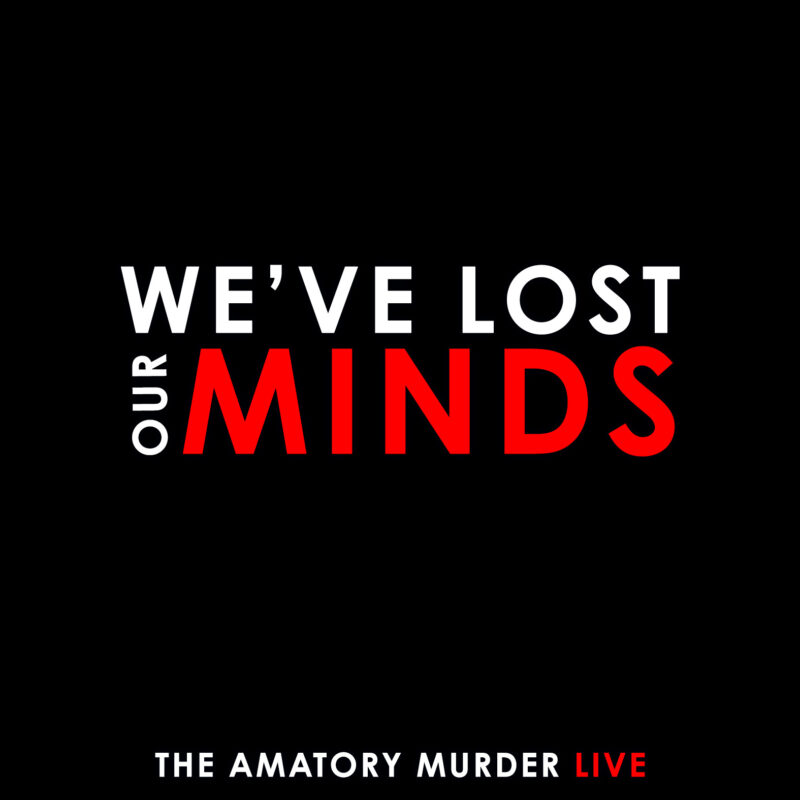
Once a song reaches the stage, its authors have to negotiate with a whole new set of circumstances: the room, the volume, the audience, and whatever mood everyone brought through the door. For Brooklyn alternative rock outfit The Amatory Murder, that unpredictability is part of the appeal. Their new live album, We’ve Lost Our Minds: The Amatory Murder Live, is out today, October 2, bringing twelve performances from Brooklyn’s Lucky 13 Saloon to streaming platforms.
Drawing on songs from across their catalog, the album documents the heavier, more spontaneous side of a group whose music brings together alternative rock, classic rock, and electronics. The familiar melodies and arrangements remain central, while the live setting gives the material room to change its disposition. For a band that has spent years building its audience through club shows, festivals, and independent touring across the United States, these recordings offer a document of the work done face to face.
“There’s something that happens to these songs when we play them live that you can’t completely recreate in the studio,” says Xian Murder. “The energy changes, and sometimes the songs become something different altogether. We wanted to capture that honestly.”
Vocalist, songwriter, producer, and founder Xian Murder leads the band alongside bassist Binx Noir and guitarist Jake Haimowitz. Their influences stretch from the expansive rock of Pink Floyd and Muse to Nine Inch Nails, Depeche Mode, The Cult, Joy Division, and David Bowie, a range that helps account for the combination of heavy guitars, electronic detail, and melodic songwriting at the center of their music.
Alex Reyes recorded the album at Lucky 13 Saloon, with Dan Kramer handling the mix at Brooklyn’s Skillman Labs and Mark Allen Miller mastering. The release turns that local stage into a meeting point for listeners further afield, giving longtime followers another perspective on the songs and newcomers a way into the band’s live repertoire.
We’ve Lost Our Minds is available now on Spotify, Apple Music, and other major streaming platforms. Listen to the album below:
The first performance video from the album, “Say Hey (For Doomsday),” offers a visual introduction to the release. Watch below:
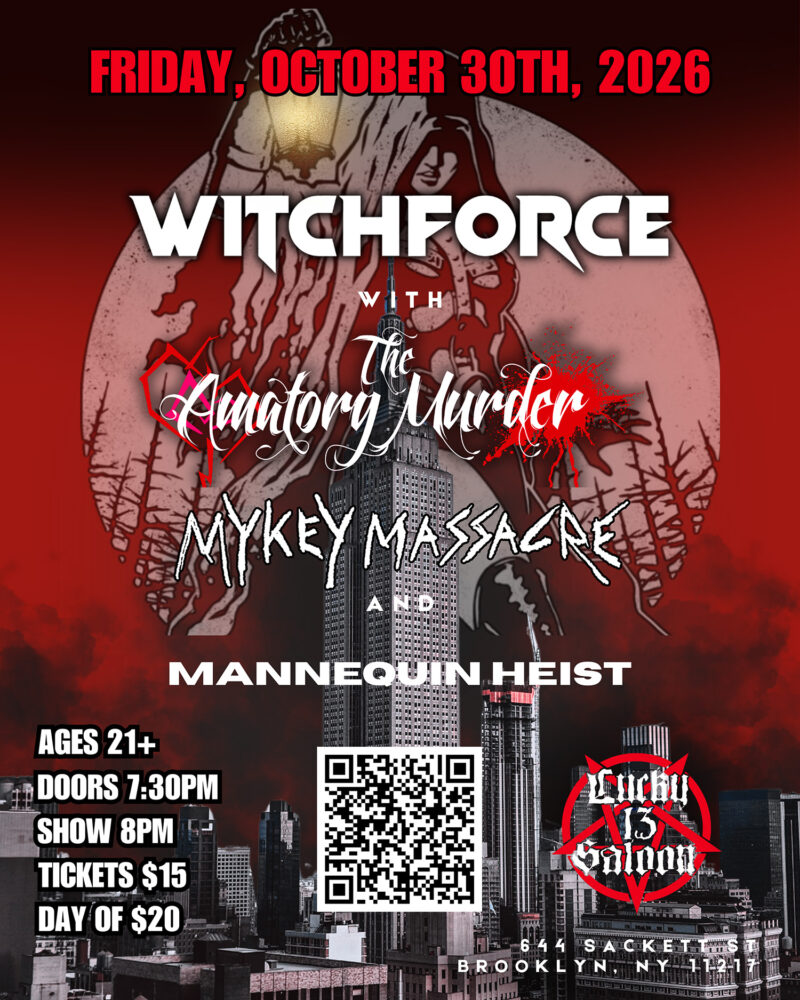
Later this month, The Amatory Murder return to Lucky 13 Saloon for a Halloween Eve show with Witchforce, Mykey Massacre, and Mannequin Heist. It is a fitting place to pick up where the recording leaves off, with another evening in the room that gave the album its setting.
October 30 — Brooklyn, NY — Lucky 13 Saloon, 644 Sackett Street, with Witchforce, Mykey Massacre, and Mannequin Heist. Ages 21+. Doors at 7:30 p.m.; show at 8 p.m. Tickets: $15 in advance, $20 on the day of the show. Tickets here.
Los Angeles artist Madison Violett has dropped a brand new banger titled “Nowhere To Run.” With every single she releases, she continues to show off more of her talent and distinct personality, and this new track is no exception.
Musically, “Nowhere To Run” delivers a heavy metalcore sound that draws direct influence from the classic punk and emo styles of the 2000s. The release proves that the musician is quickly carving out her own unique space in the modern heavy music scene.
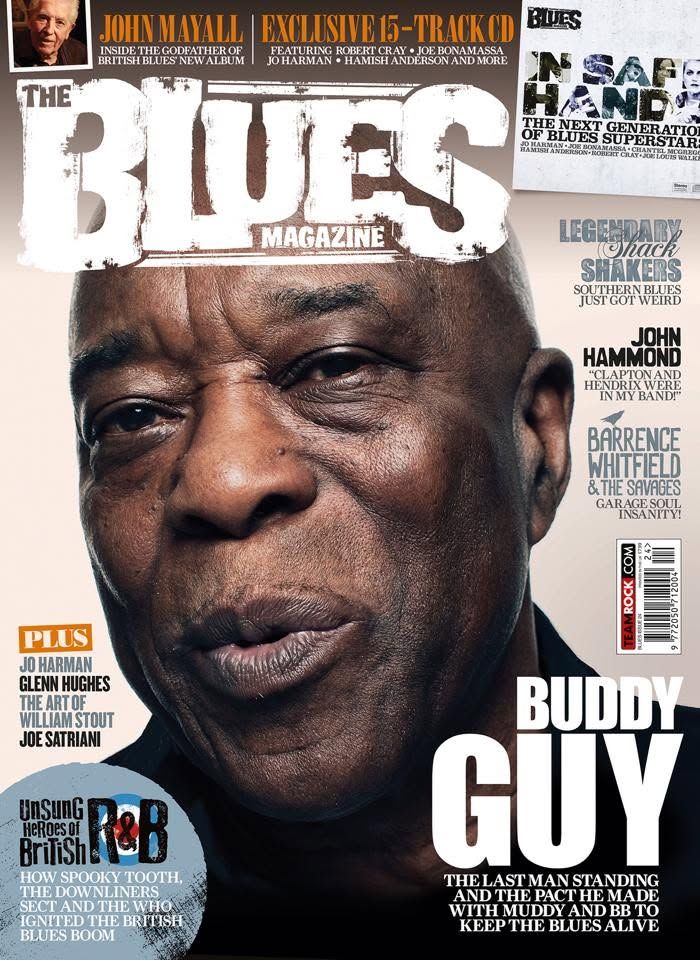
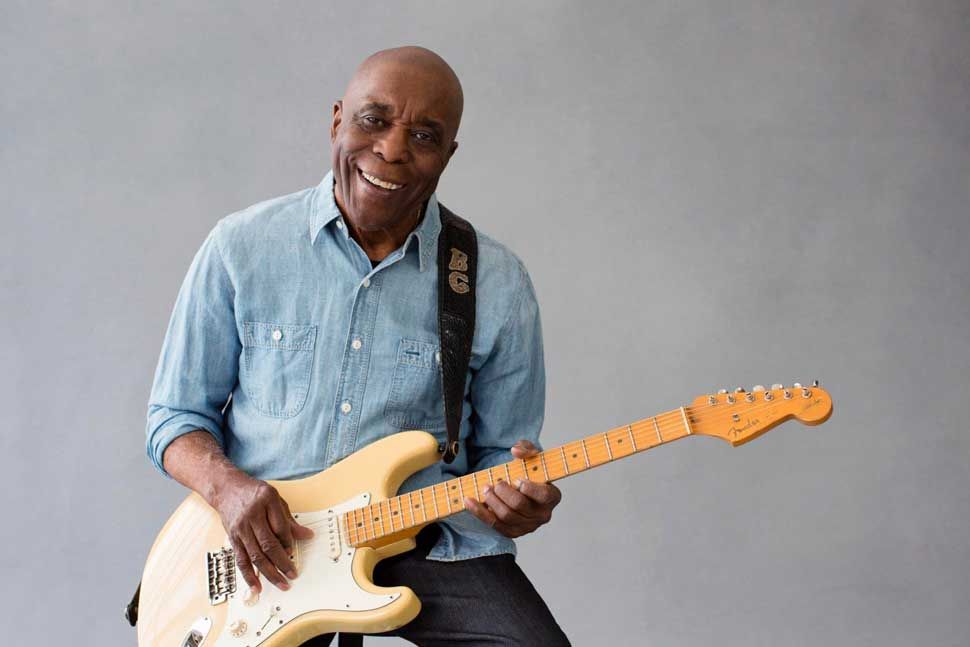
In 2015, blues legend Buddy Guy released Born To Play Guitar, an album that featured guest appearances from Billy Gibbons, Joss Stone and Van Morrison. The album picked up a Grammy Award the following year, but before that, Buddy spoke to The Blues about his career and life, looking back on the extraordinary Chicago blues scene that produced so many great names.
Buddy Guy will never forget how the Chicago blues scene saved him. “I’d not eaten for three days, I was hungry, I was cold. I was carrying my guitar, walking the streets on the South Side, and I was thinking I might have to beg a dime from someone so I could call my mother to ask her to send me my train fare back home,” he tells The Blues in serious tones. “But then this stranger, he took pity on me, he heard me playing some Jimmy Reed, he grabbed my hand and took me along to the 708 Club.
“Man, I couldn’t believe my eyes and ears. I walked in, and the place was jumpin’. The music warmed my soul. I recognised the song that was playing immediately; it was Otis Rush’s I Can’t Quit You Baby. It was no copy though; it was Otis Rush himself. I knew I was in Chicago then, that this is what I’d come for.”
This feature originally appeared in The Blues #24, published in September 2015. (Image credit: Future)
This was winter 1957, and that night at 708 East 47th Street in Bronzeville, Chicago, the 21-year- old, born and raised in Lettsworth, Louisiana, ended up on stage, Gibson Les Paul in hand, peacock-strutting across the boards, playing Bobby Bland’s Further On Up The Road with his guitar behind his back, over his head, played with his teeth.
Otis Rush lapped it up; the audience did too. Word got out, and before the end of the night Muddy Waters had turned up with a salami sandwich to feed him. “I didn’t believe it was him at first, but that was Chicago though; you walked down a street, and you’d come to a corner, and you’d find Muddy, Wolf, Little Walter, Sonny Boy… a blues giant doing his thing.”
That night, Buddy Guy and Muddy Waters struck up a friendship that would last Muddy’s lifetime.
Throughout the fascinating half-hour conversation The Blues has with Buddy Guy, talk time and again finds its way back to Chicago, the city the musician has called home for 58 years.
“It’s where I came of age; it defined me,” he says affectionately.
He arrived in the city on September 25, 1957, the date imprinted indelibly on his memory, looking for work at the university. “I was told I’d make twice as much money there than the Louisiana State University, where I had been working. My mother was sick, she’d had a stroke, I was trying to support her, my plan was to work in the day then spend the evenings watching Muddy Waters play guitar at night.
“I never thought I’d be a professional musician, I didn’t think I was that good. I was shy but after Muddy, Wolf and BB King told me I really was good, I thought I’d better keep on playing.”
It was at the 708 Club that he also made friends with BB King. “I was on stage at the 708, playing his song, I looked out into the audience and there he was. I got stage fright, had to take a break. I went to the bathroom, when I came out, he called me over to him. He said he saw a lot of him in my playing. I couldn’t believe it, not only had he come to hear me play but he liked what he heard. He said: ‘You’re ready to take my place.’ I wasn’t sure about that but it was always an honour to be in his company.”
Another Chicagoan friend of Guy’s, Magic Sam, got him his first record deal. At Eli Toscano’s Cobra Records, under producer, songwriter and bassist Willie Dixon’s supervision, Guy recorded his debut 45 Sit And Cry (The Blues). In 1958, it was released on the Cobra label imprint Artistic.
“After playing the 708 club word got out about me,” explains Guy. “Most guitar players in Chicago at this time were sitting down to play but here was this guy who was wild, crazy, with a 150ft guitar lead, that would start playing from outside the club then come in and jump off the stage and play in the crowd. Of course I’d got that from seeing Guitar Slim and T-Bone Walker back in Louisiana.”
Magic Sam was taking part in Battle Of Guitars talent contests, which took place on a Sunday afternoon at different bars around the city.
“I got playing in them, started winning them, and got to know him, Matt Murphy, Wayne Bennett, all these great guitarists. One afternoon after I’d won again, Sam said he’d take me to his record company, see if they’d record me. We got there; it was a tiny studio. Harold Burrage, the vocalist, was there. I couldn’t believe it; I knew Harold Burrage’s 45s.
“Anyhow, they plugged me in, I played three notes of BB King’s Sweet Sixteen and Harold Burrage’s jaw dropped. Eli Toscano put this contract in front of me and said: ‘Sign this, we’re gonna make a record with you.’ It was a funny set-up. I didn’t get no freedom. Willie Dixon was in charge; he told me what to play and how to play it, and I did as he told me.”
Guy still savoured the experience, though. “It didn’t matter because it was my first time in a proper studio and I was so nervous and so excited. There were two microphones, one for me, one for the band. The band was Willie Dixon on bass, Otis Rush on rhythm guitar, Odie Payne on drums, Harold Burrage on piano and McKinley Eaton on baritone sax. The A-side Sit And Cry – well, that’s just how I felt sitting in the studio that day.”
The B-side, Try To Quit You Baby, was an answer record to Otis Rush’s I Can’t Quit You Baby. “That was Eli Toscano’s idea, and having Otis Rush playing on it too, I couldn’t be happier. It was like I’d gone to heaven.”
Sit And Cry (The Blues) and its follow-up, 1959’s This Is The End – the latter of which was heavily influenced by BB King – flopped, though, and by 1960 Cobra had been declared bankrupt. Guy, undeterred, kept on performing and the following year he ended up at Chess, where he remained for seven years. Chess was located at 2120 South Michigan Avenue, and was at the height of its power.
The first time Buddy Guy went to Chess, he had a demo tape in his hand. No one was interested in the tape, but his Les Paul caught the eye of Wayne Bennett, who asked to borrow it for a session with the doo-wop vocal group The Spaniels. Guy got to watch the recording of the session, left his own tape for Leonard Chess, but heard nothing back. The second time he went to the building, though, it was a different story: he got a record deal.
“Otis Rush took me to Leonard [Chess, co-owner of the label with his brother Phil]. Leonard apparently had asked Otis to bring me over to audition with him. Sam came along too. They didn’t take Sam, but they took me and Otis. I don’t know why they didn’t want Sam.”
The first session he recorded there was with Howlin’ Wolf. “I kept quiet, listened real well, did what I was told and because I did that, then I got the call that I was backing Muddy, Sonny Boy [Williamson], Koko Taylor, Little Walter. That was an education. Little Walter, he put the harmonica on the map. I got to know him real well, I played on two or three of his albums. We bonded because we were both from Louisiana.
“We’re trying to come up with a blues festival in honour of him in Alexandria, Louisiana, at the moment. But before he made Juke, the harmonica, you could buy one for 10, 15 cents, then after that 45, it just exploded, everyone wanted to play the harmonica. It was like after BB King played the guitar on 3 O’Clock, before that you’d go into a little music store, they’d say make me an offer on the guitar. After 3 O’Clock, oh well, that costs such and such now.”
With so many legends living and working such a short distance from one another, ego could have been a problem. “But we were all so in love with the music, there was no rivalry, there was this sense of real camaraderie, we were a family. Everyone was having fun. The rivalry at the Battle Of The Guitars, we played that up, it was just an act, we made the audience think that, but the fact of the matter was, we were all stealing licks from one other, trying to get the best sound and enjoying ourselves.”
But his time at Chess didn’t work out quite as he had expected. “They didn’t go out and explode me and Otis like they had Muddy,” he says. “They gave me a 45 once every two to three years, they really just got me backing everyone else on the label there. They even had me playing on some spiritual recordings. It was only after the musicians in the UK started namechecking me that Leonard got interested in me and came to the studio to see me record. That was the only time. Before that I was working with Willie Dixon and Ralph Bass.”
(Image credit: Josh Cheuse)
Chess really missed a trick with Guy; here was a seditionary who, pre-empting Jimi Hendrix’s onstage theatrics, could ignite a crowd, who in the studio pushed boundaries using feedback, distortion, extended solos, who wanted to record albums like Muddy Waters’ Electric Mud and Howlin’ Wolf’s The Howlin’ Wolf Album before psych blues had even been invented.
Nevertheless, the handful of singles he recorded for the label contained some future classics; his label debut The First Time I Met The Blues in 1960, 1962’s Stone Crazy and 1967’s I Suffer With The Blues are the pick and all ripe for rediscovery, capturing an excitement, enthusiasm and raw energy that trademarked Chess R&B.
It was in February 1965 that he went to the UK for the first time, found out he had an audience and never doubted his talent again. “It was a huge boost to know people were actually listening. There was Jimi Hendrix, Rod Stewart, Jeff Beck… they were all fans.”
Seven months later he visited again as part of the American Folk Blues Festival European tour. It was on that tour that he forged another important relationship, this time with Big Mama Thornton. “That was the first time I met her and I’m playing lead guitar for her. She starts singing Hound Dog – I’m a big fan of the record, her version and Elvis’ – she’s jumping around on stage and with that her bridge falls out of her mouth.
“And without missing a note, she picks it up off the stage floor and puts it straight back in and keeps singing. That summed her up, she didn’t make no fuss, she was no-nonsense and just got on with it. She didn’t bite her tongue about saying nothing either.”
That same year, Guy teamed with harmonica player Junior Wells, guesting on Wells’ terrific Hoodoo Man Blues album for Delmark under the pseudonym Friendly Chap. They’d continue working together up until Wells’ death in 1998.
Like so many of Guy’s close friendships, theirs began at the 708 Club. “He was playing in Muddy’s band. I couldn’t take my eyes off him,” says Guy fondly. The pair clicked immediately, like two peas in a pod. “He approached the blues like me, he was a wild one. We started jamming in the little clubs in Chicago together, I was running around with my 150ft wire, I made him get a wire for his harmonica.
“The first time we played the Newport Jazz Festival in 1960, no one had heard of us, we were blues artists at a jazz festival. In the afternoon they ran these guitar workshops. You’d go to a small stage tucked away in the corner, you’d have a little band behind you and you’d get an audience of 100 to 150 people watching. It was supposed to be intimate. We started warming up – I was on one side of the field, he was on the other. We started playing, and we knew each other so well, knew what the other was going to do, we met each other in the middle and bang!
“Suddenly we had 15,000 people watching us. We had them excited, up on their feet, clapping their hands. George Wein, he’s the man who created the Newport Jazz Festival, he came over and said: ‘Who the hell are you guys? We’ve never had that many people at a workshop before.’ BB King was in the audience and the next thing I know, he and Junior are out gambling dice on the grass at the front of the stage with the fans.”
In 1967, Guy left Chess and signed to Vanguard, expanding his musical palette to include soul and funk on 1968’s A Man And The Blues. He continued playing live, and never strayed far from Chicago during the 70s and 80s; in June 1989 he pledged his allegiance to the city further, opening Legends, his blues club at 700 S Wabash Avenue.
It’s there he played his last show with Junior Wells and he still plays there every January, selling out a 16-date residency. “That sure is fun,” he says. Then in 2012 he brought his love of Chicago full circle by asking US President Obama to sing Robert Johnson’s Sweet Home Chicago with him when he was a visitor at The White House. “And he did,” says Guy. “That was a proud moment.”
This feature originally appeared in The Blues #24, published in September 2015.
(What’s the Story) Morning Glory?, Oasis‘ 1995 follow-up to their debut album Definitely Maybe was recorded in just 12 working days, and went on to sell over 22 million copies, turning the Manchester indie rock band into global superstars.
“We’re not exactly short on self-belief, but it is much better than the last one,” Noel Gallagher promised to NME three months ahead of the album’s October 2, 1995 release. “Everyone who’s heard it says that as well, and I don’t think it’s just arse licking.”
Bigger certainly. Better? Hmmm, that’s a matter of opinion. But here’s Noel Gallagher thoughts on every song on his band’s best-loved record.
Hello
“I’ll be told by someone in the States next year the meaning of the song Hello, which to me hasn’t got no meaning,” Noel Gallagher told Alternative Press magazine ahead of the release of his band’s second album. “It’s just words strung together.”
“The lyrics are ‘We live in the shadows/We had the chance and we threw it away/And it’s never gonna be the same’,” Oasis’ songwriter quoted to Select magazine.“ It’s just saying, Well, it’s never gonna be the same for us anymore, I s’pose. If Definitely Maybe was about dreaming about being in a band, this one’s about actually being in a band. So it’s like, Hello, it’s good to be back – back making records.”
Famously, the opening song on What’s The Story… carries a co-writing credit for glam rock star-turned-convicted paedophile Gary Glitter, as on an early take of the song, Noel Gallagher spontaneously sang a lyric from Glitter’s 1973 single Hello, Hello, I’m Back Again during its outro, which apparently caused much amusement in the studio.
“[Producer] Mark Coyle said, ‘You’re not going to have that bit in the fucking song: it’s Gary Glitter!'” Gallagher recalled on a 2021 episode of the Matt Morgan Podscast. “And I said, No, no, no, I’m gonna write something else, but I’ll put that in for now. And I could never come up with anything for it. And I just went, Fuck it, because we were high in the studio.”
Roll With It
When Noel Gallagher gave NME a song-by-song breakdown of Oasis’ second album ahead of its release he bluntly declared that Roll With It is “about fuck all”.
Gallagher offered a little more insight when talking Select magazine through every song on the record.
“It’s just a typical fuckin’ Oasis thing,” he explained. “Shut up moanin’ and fuckin’ get on with it. You’ve gotta say what you say, and be who you be. It’s the same sentiments as there is in nearly every song we do. Y’know, Supersonic – ‘You’ve gotta be yourself...’ It starts to get a bit boring (laughs), but those are the lyrics I feel comfortable with.
“We got a lot of criticism for putting it out as a single,” he admitted. “It’s not the greatest song in the world, it’s not even the greatest Oasis song.”
Asked by Select if the song was written about his younger brother Liam, Gallagher replied, “Is it fuck!”
Wonderwall
“It’s about my girlfriend, Meg Matthews,” Noel told NME in September’95. “She had a company which folded, and she was feeling a bit sorry for herself. The sentiment is that there was no point in her feeling down, she has to sort my life out for me, because I’m in bits half the time.”
In 2002 however, during an interview for a BBC Radio 2 documentary, the guitarist claimed that the song wasn’t about Matthews at all. That he waited until a year after he and his ex-wife Matthews divorced to share this information may or may not be a coincidence.
“The meaning of that song was taken away from me by the media who jumped on it,” he insisted, as if this misinterpretation had nothing to do with him. “How do you tell your Mrs it’s not about her once she’s read it is? It’s a song about an imaginary friend who’s gonna come and save you from yourself.”
“Its original title was Wishing Stone,” he revealed in another interview. “We played the Cathouse in Glasgow, I met some girl and we went back to my hotel room and she had this stone in her pocket that she insisted I had… I thought it was a great title and the song came out of that. It was called Wishing Stone for ages until we were listening to Wonderwall Music by George Harrison and it was like, Brilliant, I’ve got a Beatles connection.”
“When we were first playing it, our Liam said he thought it was shit,” the guitarist told Select, gleefully mocking his brother. “We were doing the backing track and our Liam goes, ‘I’m not singing on that, it’s fuckin’ stupid, man, it’s fuckin’ reggae music…’ So I said, Why don’t you go off to the chippie then, and we’ll see you in a bit, eh? Now that he’s sang on it, of course, it’s the greatest song ever written.”
Don’t Look Back In Anger
“It’s about not being upset about the things you might have said or done yesterday,” Noel told NME‘s Andy Richardson. “It’s about looking forward rather than looking back. I hate people who look back on the past or talk about what might have been.”
Gallagher performed the song for the first time at Oasis’ first ever arena headline show, at the 12,000-capacity Sheffield Arena (now the Utilita Arena Sheffield) on April 22, 1995, having written the basic chord structure in Paris just 48 hours earlier, ahead of his band’s gig at the Bataclan club. On the afternoon of the gig in Sheffield, the song was still lacking a chorus, but while Noel was strumming the chords during the band’s soundcheck, his younger brother inadvertently inspired what would become its iconic refrain.
“Liam come up and said, ‘Who’s Sally?’ Noel recalled in his commentary for the Oasis videos compilation Oasis: Time Flies 1994-2009. “And I was like, What the fuck are you talking about? And he said, ‘Is that what you’re singing? So Sally can wait?’ And I was like, No, it isn’t. But it fucking is now, nice one.”
“Someone came up to me at an Ian Brown gig once and asked me, ‘Was Sally, the girl in question, actually Sally Cinnamon from the Stone Roses song?’, which I thought was fucking brilliant. She’d obviously sat down and worked this out, and I didn’t want to spoil it for her, so I said, Yes, it is Sally Cinnamon. Which it’s not, really.”
And Noel’s memory of the song’s iconic video?
“Bag of shite. A waste of an afternoon.”
Hey Now!
“One of the best songs I’ve ever written, and one of the simplest,” Gallagher declared in 1995. “It’s a cross between I Wanna Be Adored by The [Stone] Roses and summat Neil Young might’ve done when he was better than he is now.”
The song’s lyrics, he said, are “about being in a group”.
“There’s no regret in there,” he insisted to Select, “definitely no regret. But Definitely Maybe was a very ‘up’ album, because we were dreaming of what was gonna come our way… This is about looking back and going, Well, we’ve got where we wanted to be, but it’s been fucking hard work… it’s not been as big a laugh as we thought it’d be.”
Untitled (aka The Swamp Song)
Originally called The Jam, this short instrumental features Paul Weller on harmonica, and lead guitar. “It’s only about 40-odd seconds, but I think the full version will come out eventually” Gallagher predicted. And it did, on the B-side of the Wonderwall single.
Some Might Say
“We’d just signed and I was living in a bedsit in Manchester,” Gallagher told Uncut in 2006. “[Creation records boss] Alan McGee would phone up on like a Wednesday, ‘Alright, we’re having a party in the office, come down.’ If somebody’s got their own record label and they’re having a party ‘cos its Wednesday, that’s where I fucking need to be. So I come down to London with a guitar, jeans, trainers – not even a toothbrush – and had a fucking brilliant time. The offices were out in Hackney and he sent the staff round the pub to come back with a tray of Jack Daniel’s and cokes, it was like: Fucking hell man, no way am I going back to Manchester, I can’t live there any more. I finished with me bird, moved down, and I remember just writing this song, I think I was off my head on drugs.”
“It’s psychedelia-meets-social comment, man,” he commented in Select magazine. “The verses are quite deep. Some of them are about homeless people, and people who can’t always get what they want, and how people who can get what they want always seem to be moaning more than people who can’t. I wanted something deep and meaningful for the chorus, but, in the end I just gave up and thought, Fuck it, might as well just go stupid and have stuff about fishes and dishes and dogs itchin’ and all that…”
Cast No Shadow
“It was inspired by Richard [Ashcroft] from The Verve,” Gallagher told NME. “I sussed Richard wasn’t very happy for a while so l wrote it for him and about three weeks later he quit. It’s about songwriters in general who are desperately trying to say something. I’d like to be able to write really meaningful lyrics,but I always end up talking about drugs or sex.”
“In my head, I believe I wanted it to sound like Pink Floyd because it’s the same chords as Wish You Were Here, the opening chords are the same,” he added in a 2021 interview, revisiting the album track-by-track at Rockfield studios. “I was listening to it today, and it sounds a bit half baked to me. There’s a country thing going on, and it’s kind of falling in between two stylistic stools, but it’s a fucking great song… some of the best words I ever wrote.”
She’s Electric
In an interview with Select’s Andy Perry, Gallagher cheerfully admitted that he’d ripped off the melody and key lyrics for She’s Electric from a British educational TV series for children called Stop, Look, Listen.
“It’s a very childish song, even more than Digsy’s Dinner,” he acknowledged. “Of course, as soon as our Liam heard it, he goes, ‘That should be the first single!’ I’m goin’, Don’t be so fuckin’ ridiculous! You knob! We had a lot of fun doing that one. Is it a Blur piss-take? You said that, not me, mate.”
Morning Glory
“It’s a cynical song about drugs”, Gallagher told NME in 1995.
“Cocaine and fucking razorblades and mirrors,” he expanded in an interview with Uncut 21 years later. “I’m amazed we got away with it at the time. I love it when we play it live. Somebody said to me on the phone once, it’s an American saying: ‘What’s the story, morning glory’?, like we say, All right, how you doing? And I was like, fuck, hang on a minute, while I write that down, that’s fucking starters, I’ll have that.”
“I do remember writing that fucking line, ‘All your dreams are made when you’re chained to the mirror and the razor blade’ in this room,” he said during an interview filmed at Rockfield. “I sound like I was just in the zone there, where everything that I was writing was meaningful.”
Champagne Supernova
“When I’m out of it on drugs I get a seriously cocky bastard,” Gallagher told the Sunday Times in 1996. “Champagne Supernova – for Christ’s sake, how big is that title? It’s like I’m saying, I am Mr Noel Gallagher. Do you know who I am? I am the greatest. I’m like Muhammad Ali.”
The song, which Gallagher says took influences from Led Zeppelin’s Stairway To Heaven, and The Beatles’ Dear Prudence, features a guitar solo from his hero and friend Paul Weller, who later called Gallagher “a cunt” because he felt the Oasis man had deliberately kept his contribution low in the final mix.
“It was crying out for a guitar solo because mine was a shocker,” Gallagher admitted.
To this day, the songwriter isn’t at all sure what the song’s lyrics are about. However, the world’s most famous Manchester City supporter has become all too familiar with the feeling of “Sham” pain in 2026…
I’m not sure how or why this happened, but the nation of France has developed its own take on oi, the chant-along street-punk style that once seemed definitively British. French bands like Syndrome 81, Prisonnier Du Temps, Oi Boys, and Rancoeur have developed an echo-drenched take on oi that combines the original music with goth and post-punk, creating a dank, mysterious, and incredibly cool sound. Its influence is spreading, as bands like Quebec’s Béton Armé and Edmonton’s Home Front seem to be drawing from some of the same same wells.
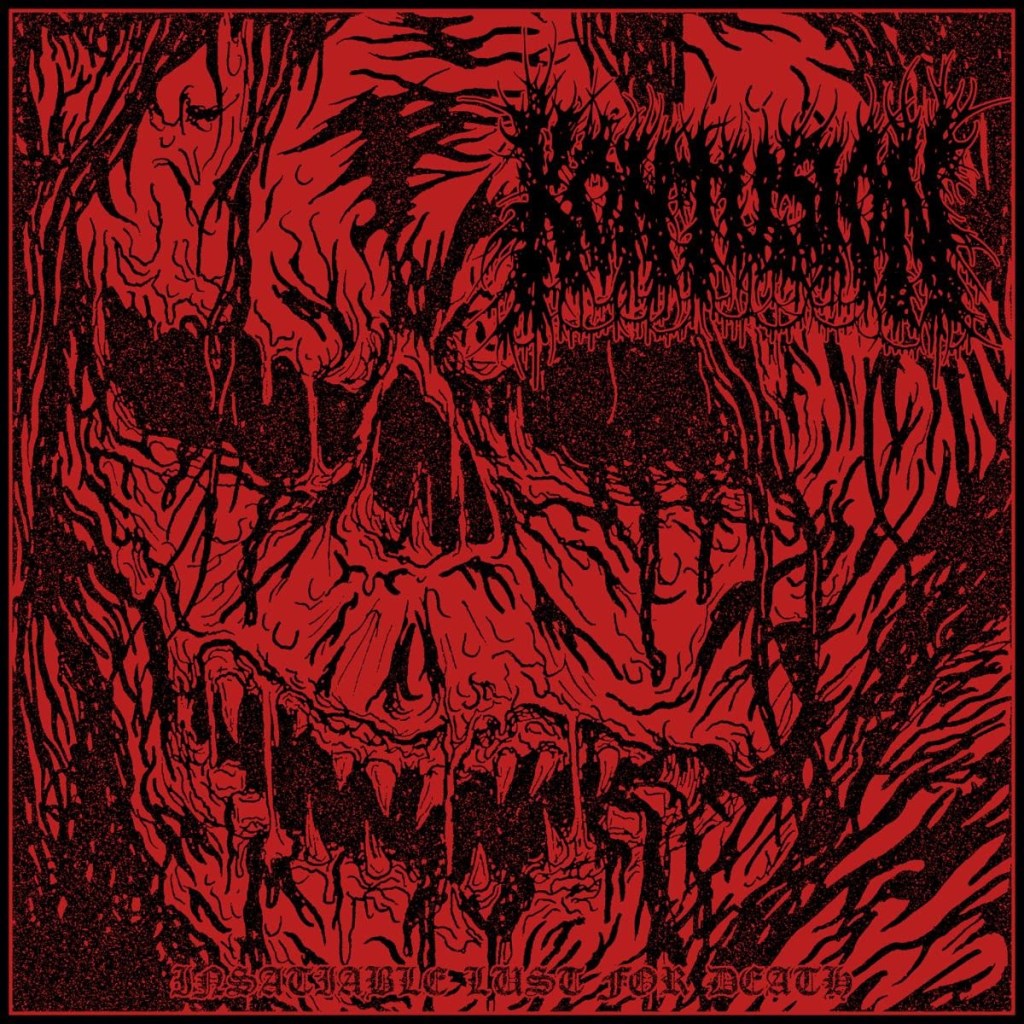
In continued support of their cruel debut album, Insatiable Lust For Death, released through Profound Lore Records in the Summer of 2025, New Jersey/Washington DC-based KONTUSION will again put their dismal death metal on display this Fall.
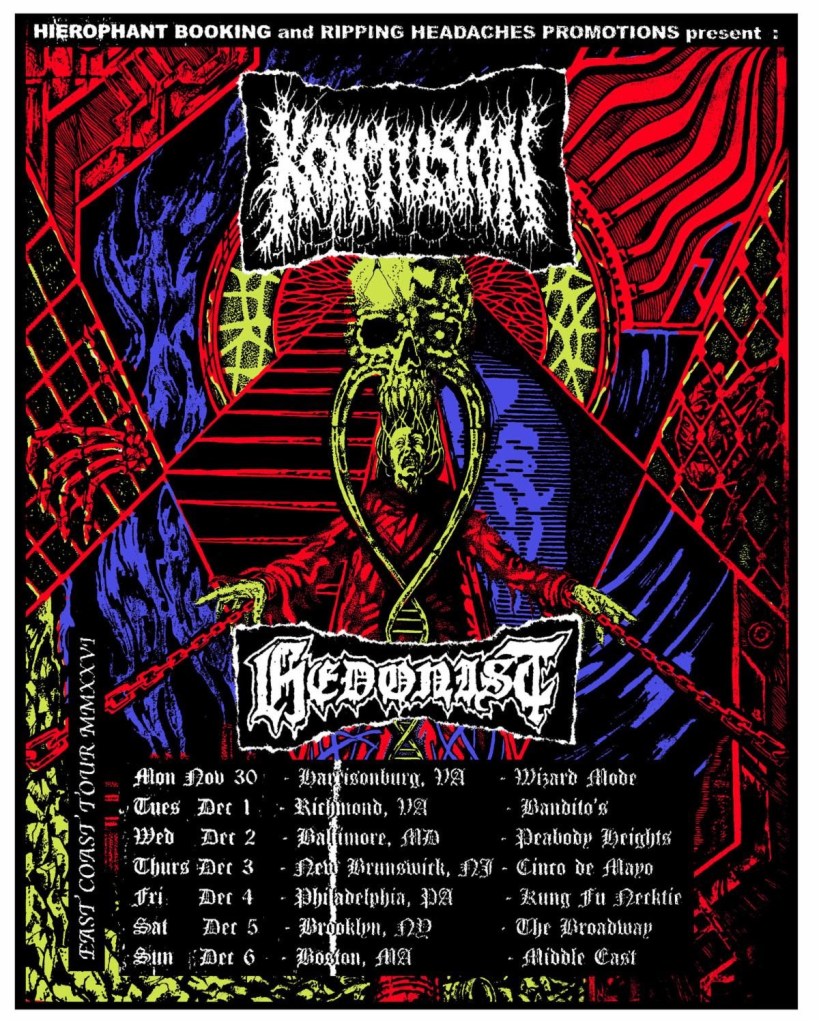
The East Coast Tour MMXXVI will see KONTUSION and their allies in Hedonist hitting the East Coast US for a week of dates, running through Harrisonburg, Richmond, Baltimore, New Brunswick, Philadelphia, Brooklyn, and Boston from November 30th through December 6th.
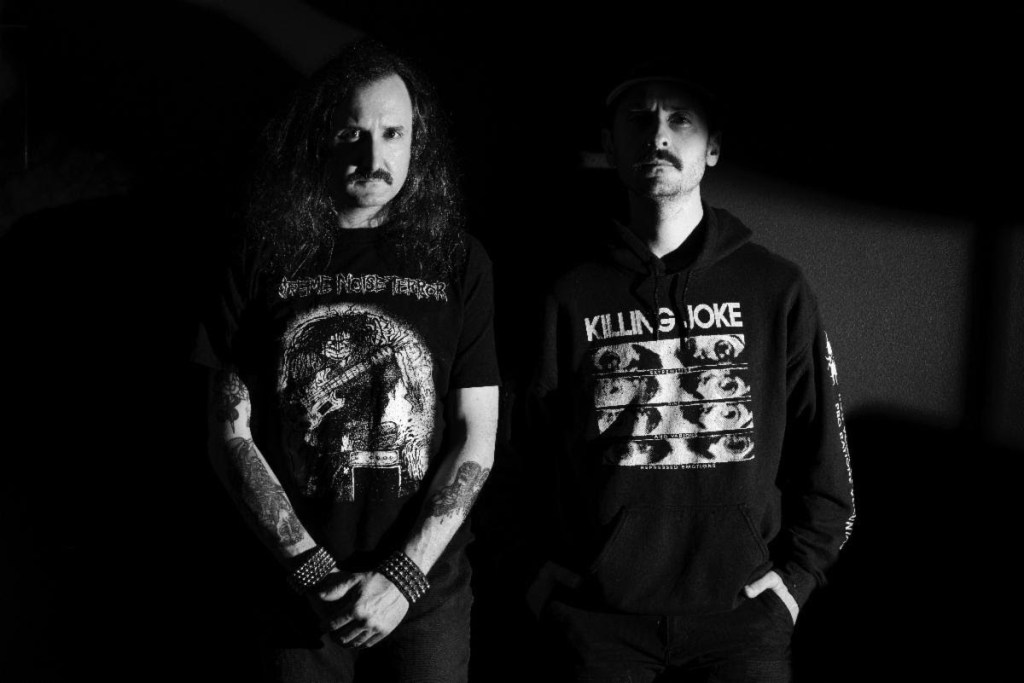
For these shows, the core band duo of drummer Chris Moore and vocalist/guitarist Mark Bronzino will again be joined by Shar Clay on second guitar, and for the first time, by Erika Osterhout on bass.
KONTUSION East Coast Tour MMXXVI w/ Hedonist: 11/30/2026 Wizard Mode – Harrisonburg, VA 12/01/2026 Bandito’s – Richmond, VA 12/02/2026 Peabody Heights – Baltimore, MD 12/03/2026 Cinco de Mayo – New Brunswick, NJ 12/04/2026 Kung Fu Necktie – Philadelphia, PA 12/05/2026 The Broadway – Brooklyn, NY 12/06/2026 Middle East – Boston, MA
KONTUSION’s riffs, blasts, and walls of feedback reflect the darkness of a world marred by chaos, where large scale atrocities run amok. Last year, the band delivered the scathing, decimating, rapid-fire attack of their vile debut LP, Insatiable Lust For Death, its ten tracks immersing the listener in a cavernous, hellish tone, while the relentless riffs and percussion remain impeccably tight.
Recorded by Chris Pierce at Volume IV Studios with additional tracking done at Damaged City Studios, Insatiable Lust For Death was mixed by Kevin Bernsten at Developing Nations, mastered by Nick Townsend at Townsend Mastering, and finished with artwork by Rotting Reign and layout by Aaren Molder.
KONTUSION’s Insatiable Lust For Death is out now on LP, CD, and digitally, streaming and available to purchase where the “Subjugation” video is also streaming at Profound Lore Records HERE.