Category: news

  • The Gothic Novel: From Horace Walpole to Modern Psychological Horror

    The Gothic Novel: From Horace Walpole to Modern Psychological Horror

    The Gothic novel and psychological horror share the same dark literary roots. What began with castles, candlelight, storms, ancient curses, and wandering figures trapped inside decaying architecture eventually evolved into modern psychological terror. Over time, however, Gothic literature evolved into something psychologically deeper. The monsters gradually moved inward.

    What started in the eighteenth century as dark Romantic spectacle eventually transformed into psychological horror exploring guilt, paranoia, obsession, fragmented identity, emotional isolation, trauma, and the terrifying instability of the human mind itself.

    Dark Gothic collage featuring a haunted castle, Victorian figures, mirrors, ravens, skulls, and psychological horror imagery inspired by Gothic literature.

    A cinematic Gothic illustration tracing the evolution of Gothic literature from Horace Walpole’s haunted castles to modern psychological horror and noir darkness.

    Understanding the Gothic novel therefore means tracing one of literature’s most important emotional evolutions: the movement from external terror toward internal psychological darkness.


    Horace Walpole and the Birth of Gothic Fiction

    Most literary historians identify Horace Walpole’s 1764 novel The Castle of Otranto as the beginning of Gothic fiction.

    Walpole combined medieval settings, supernatural events, aristocratic decay, secret passages, prophecies, family curses, and emotional excess into a literary form that felt radically different from Enlightenment rationalism dominating eighteenth-century Europe.

    The Enlightenment emphasized reason, order, science, logic, and intellectual control. Gothic literature emerged partly as a reaction against that emotional restraint.

    Walpole understood that human beings remained deeply fascinated by fear, mystery, irrationality, death, and the emotional atmosphere of darkness itself.

    The Gothic castle became one of the genre’s most enduring symbols because architecture itself reflected psychological tension. Corridors, ruins, hidden chambers, underground passages, and collapsing structures externalized emotional anxiety visually long before cinema existed.


    Ann Radcliffe and Atmospheric Terror

    After Walpole, writers such as Ann Radcliffe refined the Gothic novel by shifting emphasis away from pure supernatural spectacle toward psychological atmosphere and emotional suspense.

    Radcliffe’s novels, including The Mysteries of Udolpho, used isolated castles, sublime landscapes, moonlit ruins, storms, and emotional uncertainty to create sustained psychological tension.

    Importantly, Radcliffe often explained apparently supernatural events rationally by the end of her stories.

    This distinction became crucial in Gothic literature because fear increasingly emerged not merely from monsters themselves, but from anticipation, uncertainty, suggestion, and emotional imagination, forcing readers to participate psychologically in constructing the terror themselves.

    Modern psychological horror still relies heavily upon this principle. Suggestion often produces greater emotional discomfort than explicit violence because the imagination constructs fear internally.


    Mary Shelley and the Human Monster

    Mary Shelley transformed Gothic fiction permanently with Frankenstein in 1818.

    Earlier Gothic novels frequently portrayed monsters as external threats emerging from curses, ghosts, demons, or ancient evil. Shelley instead created horror through human ambition itself.

    Victor Frankenstein becomes terrifying not because he is supernatural, but because he represents scientific obsession detached from emotional responsibility.

    The creature also changed Gothic horror fundamentally. Rather than functioning as simple villain, the monster possesses emotional vulnerability, loneliness, rejection, intelligence, and psychological suffering.

    Shelley therefore introduced one of Gothic literature’s most important transformations: horror rooted in emotional tragedy rather than purely external evil.

    This emotional complexity heavily influenced later psychological horror where the line separating victim and monster becomes increasingly unstable.


    Edgar Allan Poe and Internal Horror

    If Walpole created Gothic architecture and Shelley humanized the monster, Edgar Allan Poe pushed Gothic literature decisively inward toward psychological terror.

    Poe understood that the human mind itself could become the most terrifying environment imaginable.

    Stories such as The Tell-Tale Heart, The Black Cat, and The Fall of the House of Usher transformed guilt, obsession, paranoia, grief, alcoholism, emotional collapse, and unreliable perception into the true engines of horror.

    Rather than relying primarily on castles or supernatural monsters, Poe constructed horror through unstable consciousness itself.

    In The Tell-Tale Heart, the narrator insists repeatedly:

    “Why will you say that I am mad?”

    That defensive question reveals one of psychological horror’s defining mechanisms. The narrator attempts controlling perception while simultaneously exposing mental instability.

    Modern psychological horror inherited this approach directly. Fear increasingly emerged through fractured identity, distorted perception, emotional obsession, hallucination, and the collapse of psychological certainty.


    The Gothic Double and Fragmented Identity

    Nineteenth-century Gothic literature became increasingly fascinated with divided identity and the hidden self.

    Stories such as Robert Louis Stevenson’s Dr. Jekyll and Mr. Hyde explored the terrifying possibility that darkness already existed inside respectable society and proper consciousness.

    The Gothic “double” symbolized psychological fragmentation. Characters confronted hidden desires, suppressed violence, moral hypocrisy, addiction, sexuality, and unconscious impulses they could not fully control.

    This theme later became central to psychoanalysis, noir cinema, and modern horror because it reflected growing awareness that human identity itself remained unstable and psychologically divided.

    By the late nineteenth century, Gothic horror increasingly suggested that the greatest threat no longer came from supernatural creatures alone, but from the hidden psychological darkness already existing within ordinary human beings.


    Dracula, Desire, and Fear of Modernity

    Bram Stoker’s Dracula represented another major evolution in Gothic fiction because it fused supernatural horror with anxieties surrounding sexuality, disease, immigration, modern science, and social transformation during the late Victorian era.

    Count Dracula functions simultaneously as monster, seducer, aristocratic relic, foreign invader, and symbol of forbidden desire.

    One of the novel’s most revealing moments occurs after Lucy Westenra’s transformation into a vampire. Her behavior becomes overtly sensual and predatory in ways Victorian society considered deeply threatening, particularly regarding female sexuality and moral independence.

    The repeated exchange of blood throughout the novel also carries strong undertones of contamination, eroticism, and bodily violation, especially during a historical period increasingly haunted by fears surrounding disease and social degeneration.

    The novel reflects a society experiencing rapid technological and cultural change while still psychologically haunted by ancient fears.

    This tension between modernity and anxiety later became foundational for twentieth-century horror cinema and noir storytelling.

    Even modern psychological horror frequently explores technologically advanced societies psychologically destabilized by ancient emotional fears surrounding death, isolation, violence, identity, and desire.


    From Gothic Horror to Psychological Horror

    By the twentieth century, Gothic fiction increasingly merged with psychological realism, existential anxiety, psychoanalysis, and cinematic noir aesthetics.

    German Expressionist films such as The Cabinet of Dr. Caligari transformed Gothic emotional atmosphere into distorted visual psychology through shadows, angular architecture, fragmented identity, and paranoia.

    Film noir later inherited Gothic emotional structures almost completely. Rain-soaked cities replaced castles. Detectives replaced wandering aristocrats. Urban alienation replaced isolated monasteries. Yet the emotional core remained remarkably similar.

    Noir protagonists frequently resemble Gothic antiheroes psychologically: emotionally isolated, morally conflicted, haunted by guilt, trapped inside unstable environments, and unable to fully escape their own psychological darkness.

    Modern psychological horror continued evolving this internalization of fear through films and literature exploring trauma, madness, grief, memory, addiction, depression, fractured perception, and existential despair.


    Why the Gothic Novel Still Matters

    The Gothic novel continues resonating because it addresses emotional fears remaining deeply human across centuries.

    Fear of death, isolation, madness, guilt, emotional fragmentation, hidden desire, loss of identity, and psychological collapse did not disappear with modernity.

    If anything, modern psychological horror demonstrates how profoundly relevant Gothic literature still remains.

    The genre survived because it evolved continuously. Walpole’s castles eventually became noir cities, psychiatric institutions, unreliable narrators, traumatic memory, and fractured consciousness.

    Yet the central Gothic question remains unchanged:

    What happens when human beings confront the darkness hidden both around them and within themselves?


    Wear the Darkness

    Explore Edgar Allan Poe apparel, Gothic aesthetics, noir-inspired fashion, and psychological darkness inside the official Edgar Allan Poets Noir Store.


    Graphic showcasing Edgar Allan Poe gothic t-shirts and noir apparel from the official store


    Join the Noir Newsletter

    Receive Gothic literature, noir psychology, cinematic darkness, and atmospheric storytelling directly inside your inbox.


    Enter the Noir Atmosphere

    Explore Gothic music, cinematic tension, psychological darkness, and immersive noir atmosphere through the official Edgar Allan Poets playlist.


    Frequently Asked Questions

    Who created the Gothic novel?

    Horace Walpole is generally credited with creating the Gothic novel through his 1764 work The Castle of Otranto.

    What defines Gothic literature?

    Gothic literature combines emotional darkness, psychological tension, mystery, fear, atmospheric settings, isolation, and themes involving death, madness, identity, and the supernatural.

    How did Gothic horror become psychological horror?

    Writers such as Edgar Allan Poe increasingly shifted horror inward toward guilt, paranoia, unstable perception, obsession, trauma, and psychological fragmentation.

    Why is Gothic literature still popular today?

    Gothic literature continues resonating because it explores emotional fears that remain timeless, including loneliness, death, identity, madness, grief, and hidden psychological darkness.


    The post The Gothic Novel: From Horace Walpole to Modern Psychological Horror appeared first on Edgar Allan Poets – Noir Rock Band.


  • Headline Act: CELAVI

    Hot from their Download appearance, and with a new single / video out, here’s more about CELAVI… Simple things first – where are you guys from? Hello! We’re both from Bangor in North Wales – Gwion originally from Blaenau Ffestiniog and Sarah from Bethel. We’re both from, and still live in, rural communities. How did … Continue reading Headline Act: CELAVI
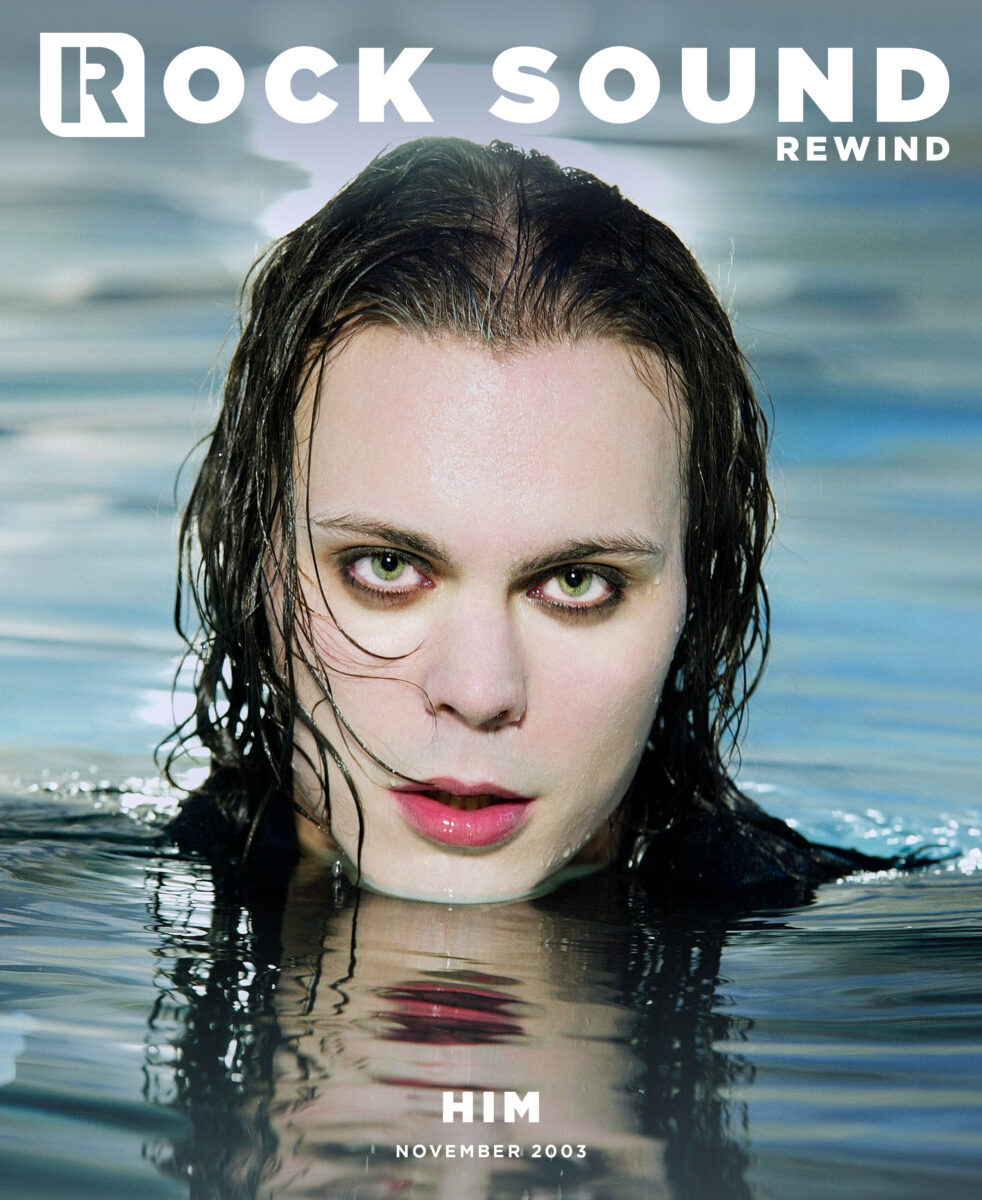
  • Rock Sound Rewind: My Chemical Romance, Blink-182 & HIM

    Rock Sound presents: Rock Sound Rewind, a new mini magazine series diving into our print archive for the very first time.

    As they prepare to release a remastered version of ‘Danger Days: The True Lives Of The Fabulous Killjoys’, we look back on My Chemical Romance’s 2011 cover story, with an extended interview and never before seen photos.

    Blink-182 are celebrating 25 years of ‘Take Off Your Pants And Jacket’, so revisit two interviews with the band from 2001 as the Mark, Tom and Travis show went global.

    HIM released their debut EP 30 years ago and in honour of that anniversary, we are re-releasing a classic 2003 cover story with Ville Valo including previously unpublished photos.

    Get your A5 magazines now, delivered worldwide, only at SHOP.ROCKSOUND.TV

    The post Rock Sound Rewind: My Chemical Romance, Blink-182 & HIM appeared first on Rock Sound.

  • AN NCS PREMIERE: WORMQUIZITOR — “AM I BEAST”

    (written by Islander) Four years after their debut album, Sickness Define: Society, the Belarusian black/thrash band Wormquizitor have completed their second full-length, Esthetic of Fear, which will be released by a trio of labels on July 21st. As we are told, its ten tracks “explore themes of state violence, propaganda, war in all its forms, […]

    The post AN NCS PREMIERE: WORMQUIZITOR — “AM I BEAST” appeared first on NO CLEAN SINGING.

  • PROFANE BURIAL (feat. Borknagar, Trollfest, Khôra) launch new single “Triumph Of Dreadful Aftermath”

    New album “Desolate Echoes of Turmoil” to be released via These Hands Melt Kråkstad, Norway & Rome, Italy; 22 June 2026:  Norwegian symphonic black metal group Profane Burial has unveiled a new single, “Triumph Of Dreadful Aftermath”, as an introduction to the upcoming full-length, “Desolate Echoes of Turmoil”, to be released later this year via These Hands Melt.  […]

    Source

  • End It Vocalist Akil Godsey Breaks His Silence On Banana Man Incident: “We’re A Hardcore Band. We Do Hardcore Things.”

    “I do not need your attention or validation. I’ll be just fine. Hey, if the band got to quit, so be it. I guess I’ll go to work. I’m a fully functioning adult male. I’ll be just fine.”

    The post End It Vocalist Akil Godsey Breaks His Silence On Banana Man Incident: “We’re A Hardcore Band. We Do Hardcore Things.” appeared first on Theprp.com.

  • Album Review: Okay You Win – End of Days

    Album Review: Okay You Win – End of Days

    Reviewed by Matthew Williams

    One of the many highlights of this year’s Desertfest London was being packed into The Black Heart from 4pm on Saturday afternoon, to witness the performance of Londoners Okay You Win. For a band who only formed three years previously, they have come a long way guided by enthusiastic support from the wonderful Psychlona.

    Their musical style draws heavily upon the 90’s grunge and alternative rock scene, and the quartet fuse it with desert rock and class British metal, to deliver an album of eight songs that is extremely impressive and catchy as hell. Straight away, with opening track “Smoke” there’s an energy and swagger to the guitar from Ryan O’Hare before the clean vocals of the infectious David Kirk pierce through. They slow it down midway to allow the rhythm to get inside your mind and then hit you a huge swathe of guitars and bass.

    As the band comment “we really think we’ve captured all of that raw energy and feeling from our first years out on the road” and that’s evident as listening to the songs took me back to that bouncing venue in Camden. “Beat Me Down” sees drummer Antonio Peci and bassist Rodrigo Barradas set a hypnotic rhythm before we get Kirk’s smooth vocals leading you astray. The riffs are on point from O’Hare, and at just over eight minutes long, it’s a song you’ll never tire of listening to, especially the slow, menacing section about two thirds through.

    I remember them playing “The Greatest Lie” and “This Damned Place” back-to-back at Desertfest, and it offers a different perspective on their musicianship. On the former it has a more psychedelic edge with a smoother, yet familiar crushing guitar sound added by Kirk’s soaring vocals. On the latter, there’s a distinctive stoner rock foundation to the composition, with the bass coming to the fore as it comes alive with that raw energy they are now famed for in a live setting.

    This album has been two years in the making, as the band have taken their time to test these songs out on the road, and throughout “End of Days” you can sense that big rock exuberance in the music. One advantage they have, is that Kirk’s vocal range is vast and they use it purposefully to give great variety and presence across the album. He’s very animated on stage, and this comes through on record, but the musicianship is also infectious and as a band they work extremely well together.

    “Red Flag” is a shorter song, with a punky undertone, that exudes confidence and will have you bouncing around the room in no time to the unbelievably catchy riff. Once more the guitar and bass sounds are both punchy and tenacious but there’s time for a further twist with a slower ending that builds into a noisy finish. It leads into the slow and low “Ten Your Trip”, as elements of melancholy and feistiness clash across the soundscape. The tone of the guitar stands out again, driving the song to great heights with another decent solo thrown in for good measure.

    The slower ending paves the way for the final track of their debut album, “Own It” as the drums lead the procession. Kirk displays more of the vocal diversity but what impresses me most is that you can clearly hear each bass note, each snare being hit, each guitar string being plucked and that what’s makes this song and this album one of my favourites of the year so far.

    For all the latest newsreviewsinterviews across the heavy metal spectrum follow THE RAZORS’S EDGE on facebooktwitter and instagram.

    The post Album Review: Okay You Win – End of Days appeared first on The Razor's Edge.

  • Today: New York Comic Con 2026 General Onsale Begins

    The Announcement: Attention everyone who loves this kind of stuff, the Official General On-Sale for the 2026 edition of the New York Comic Con has begun. The organizers of this … Continue reading Today: New York Comic Con 2026 General Onsale Begins
  • 156/Silence share “Proxy Idols” ahead of ‘From A Distance’ release

    The band will also hit the road for an extensive run of tour dates later this year

    Source

  • Liminal Sky – All Tomorrow’s Darkness Review

    Born of the ashes of former project Messenger, UK post-rock duo Liminal Sky, comprised of Jaime Gomez Arellano and Daniel Knight—and featuring Mat McNerney (Hexvessel, ex-Beastmilk), Kristoffer Rygg (Ulver), Anders Møller, Karin Park (Årabrot), Daniel O’Sullivan, Lars Horntveth, Alicia Nurho, Tore Ylwizaker, Ole Alexander Halstensgård, and Matt Rozeik—represents the next chapter in Arellano’s and Knight’s creative vision. Occupying a desolate space in the post realm that I haven’t covered in an official capacity since Latitudes dropped Part Island, upcoming debut All Tomorrow’s Darkness struck me in much the same way. Beautiful, inconsolable, tender, and graceful, Liminal Sky tugged at my heartstrings and called to my spirit.

    An emotional and loving affair, All Tomorrow’s Darkness owes its gravity and poignancy to primary vocalist and lyricist Mat McNerney, impassioned by the recent loss of his mother. While it’s very clearly heard in McNerney’s vocal delivery across the record, Liminal Sky’s songwriting too reflects that heartbreak with crystalline clarity. Especially in their longer form compositions (“In Some Secret Universe,” “Algebra of Unknowing,” “All Tomorrow’s Darkness”), sweeping arcs and delicate plucked melodies inform the shape of mourning, of catharsis, of release, and of loss that All Tomorrow’s Darkness embodies. Its more energetic cuts (“A Solitary Future,” “Forget Me Not”) don’t disturb that shape, but rather recontextualize it as if to emphasize the unpredictable nature of grieving. As a whole, All Tomorrow’s Darkness represents a highly intelligent, deeply thoughtful, and highly resonant experience that offers its heart to those who would hear it, in the hopes that they would hold it with warmth and understanding.

    Nowhere is this intimacy more effectively conjured than in centerpiece “Penance,” featuring Karin Park’s soothing croon. It is a stunning work, reminiscent of White Ward and Latitudes at their softest, but especially sorrowful, almost regretful. There’s a pain to this song which echoes some of the hardest processes that come with mourning the loss of a loved one, and it brings greater substance to its more energetic companion piece, “The Weight of Heaven.” In some strange alchemy, hookiness and subtle bounce fit “The Weight of Heaven” like a glove, almost as if the upshot of weathering the storm is clarity, acceptance, even hope. And yet, existential uncertainty and an ominous foreshadowing persist as undercurrent through songs like “Algebra of Unknowing” and “Oar on the Mooring” to remind the listener that clarity, that acceptance, and that hope is fragile. To further personify this message, All Tomorrow’s Darkness glides gently through all of these movements with a floatiness that belies its forlorn, heavy heart.

    As a result of such fluidity, my perception of All Tomorrow’s Darkness’ hour-long expanse warps and shrinks. This, in turn, makes what should be a difficult, emotionally taxing experience remarkably easy to revisit. Its accessibility granted by direct, uncomplicated songwriting also affords a certain approachability that helps open up a listener not only to receive something so deeply steeped in pain and anguish, but also to respond in sympathetic release. That same simple songwriting, while effective and inviting, also results in some lightly recycled instrumental ideas. Across All Tomorrow’s Darkness, melodies, rhythms, and pacing occasionally reach a level of homogeneity and eerie familiarity such that every now and again I lose my place. I imagine that this might be on purpose, perhaps to reinforce an impression of liminal space and limbo that often manifests in the grieving process. If so, I’m not certain that Liminal Sky’s songwriting scaffolded that concept—outside of standout examples in “In Some Secret Universe” and “Algebra of Unknowing”—well enough to have the desired effect. Instead, and especially after multiple spins, it negatively impacts recall and weakens the album’s memorability.

    Liminal Sky rekindled something inside me that I had forgotten after years apart from this little corner of the post world. In spite of its slow and soft approach, All Tomorrow’s Darkness strikes the spirit with accuracy and emotional heft. What few minor songwriting weaknesses it displays on occasion constitute an easily overcome obstacle to my appreciation of the experience. If anything, those very flaws help showcase how well-conceived and thoughtfully executed Liminal Sky’s debut is everywhere else. Imperfect, but easy to listen to and devastating to hear, All Tomorrow’s Darkness bears the soul of its creators with a candid vulnerability worth taking to heart.


    Rating: Very Good!
    DR: 9 | Format Reviewed: 320 kb/s mp3
    Label: Karisma Records
    Websites: Bandcamp | Facebook
    Releases Worldwide: June 19th, 2026

    The post Liminal Sky – All Tomorrow’s Darkness Review appeared first on Angry Metal Guy.