Category: news

  • Could Seed – Terminal: A Mesmerising Journey From Quiet Beauty To Crushing Heaviness

    Could Seed release Terminal on 23 October 2026 via Klonosphere Records

    The in-box keeps on providing gifts in 2026, and although I am on the fence on this one, Terminal, by Could Seed, is an album too good not to shout about. 

    Could Seed – Terminal

    Release Date: 23 October 2026

    Words: Paul Hutchings

    Described as being inspired by the cinematic sweep of Pink Floyd and the cathartic intensity of modern post-rock, the second album by French instrumental outfit Could Seed features 35 minutes of glorious soundscapes that have me aching to catch them live. 

    Could Seed - Terminal features 35 minutes of glorious soundscapes
    Could Seed – Terminal features 35 minutes of glorious soundscapes

    Although there are no lyrics, there is something magnificently French about Terminal. I think it is the confidence that is shown throughout, with two seven-minute songs sitting comfortably with shorter tracks to make this a compelling listen.

    Yes, it can be the accompaniment to your working day, as it has been for me this week, but I have also been able to sit with headphones and immerse myself in the majestic compositions and excellent musicianship that flow through the seven tracks.

    Opening song Atlas is a sprawling, simmering piece, that ebbs and flows like the sea on the shore. It builds slowly, reaches a magnificent crescendo before regrouping for another burst. Crafted beautifully, each dynamic shift is captured with intricacy and intensity that tell the story.

    Underpinned by deep melodies, each song stands alone but also interlinks with each other. 

    Alongside Atlas, Pangea resonates with sonic soundscapes that build from quiet passages to crushing heaviness. The longest song on Terminal, it is a demonstration of the band’s prowess.

    Shimmering guitar work from Dimitri Even and Jordan Jupin is supported by the bass of Thomas Magloire and drummer Élie Chéron. Definite echoes of Floyd resonate here, but not in any way that is a copycat of the prog masters.

    No, the contemporary feel that is woven around a progressive vibe from halcyon days gone by combines to a mesmerising effect. It is rare that instrumental music can hit the emotions quite as well as this album does. 

    There are other styles on offer here. The psychedelia/stoner vibe of Druids recalls the likes of Kadavar and Graveyard, with some filthy riffs providing the basis for more soaring guitar work that cuts through with razor-sharp clarity.

    Similar emotions emerge on the laid-back closing track, Oracles. A gentle two-minute finale, it eases you to the end of the album with one desire. To play the thing again. 

    Intimate at times, wide-open and sweeping at others, Terminal ticks many of the boxes I want in this style of music. If you have an open mind, then give it a go. With crisp production, this is an album full of warmth, depth and clarity.

    Could Seed release Terminal on 23 October 2026 via Klonosphere Records. For more details, visit linktr.ee/couldseed.

    The post Could Seed – Terminal: A Mesmerising Journey From Quiet Beauty To Crushing Heaviness first appeared on MetalTalk – Heavy Metal News, Reviews and Interviews.
  • IRON MAIDEN’s NICKO MCBRAIN Unboxes His Memoir And Warns Fans: “I’ve got a LOT of stories I want to tell you all!”

    Longtime Iron Maiden drummer Nicko McBrain has posted a video of himself unboxing his autobiography, Hello Boys And Girls!. Harper Nonfiction releases the book Oct. 22 in hardback, ebook and audio.

    McBrain is also taking the material on the road. His spoken-word tour kicks off Oct. 26 in Frankfurt, then plays theaters across Germany, the Netherlands, Scandinavia, Ireland and the U.K. The show is billed as part stand-up and part audience interaction, with stories from behind the kit of one of Britain’s biggest bands, plus lessons from his rowdy youth and his highs and lows. Tickets and details are available here.

    Of the project, McBrain said, “It’s been a real honor to write my very own autobiography and have the chance to walk down memory lane, revisiting all the experiences that have made me who I am and brought me to where I am today.

    “And I’m thrilled and delighted to be taking those stories on the road and share them all with you. I feel truly blessed to be able to say Hello Boys And Girls! to you all in person later this year. We’re going to have a lot of fun together, so come and join me for a great night out. I’ve got a LOT of stories I want to tell you all!”

    Born in Hackney, East London in 1952, Michael “Nicko” McBrain was banging on his mother’s pots and pans until his father bought him a real drum kit at age 11. He started out in school bands covering The Beatles and The Rolling Stones, and by 14 was semi-pro, working wedding gigs around London.

    With jazz in his ears as much as rock, McBrain logged time with Streetwalkers, Pat Travers Band and Trust, and paid his dues as a session player in the studios of Soho. After joining Iron Maiden in 1982, he became one of the most recognizable and influential drummers in the world. Over a 42-year run, he played on 14 studio albums, several live records and dozens of world tours, and helped move more than 100 million records.

    Along the way, McBrain turned up on the U.K. children’s program The Sooty Show in the 1980s, racked up his share of wild escapades, collected classic cars and became a successful restaurateur in Florida. Meanwhile, his cancer battle, his recovery from a stroke that nearly ended his career and his born-again faith stayed mostly out of view. The memoir pulls back that curtain with plenty of humor, backstage tales and candor about staying beloved after decades at the top.

    McBrain, now 74, announced his retirement Dec. 7, 2024 in a statement on Maiden‘s website and social channels. He said that night’s show at Allianz Parque in São Paulo, Brazil would be his last with the band. Simon Dawson, a former session drummer and bandmate of Maiden bassist Steve Harris in British Lion, has since taken over the stool.

    McBrain lives in Florida with his wife, Rebecca, their cat, Lola, and two Yorkshire Terriers, Tigerlily and Tinkerbell.

    He formally joined Iron Maiden in December 1982 for the Piece Of Mind album and tour, taking over from Clive Burr. Trust had supported Iron Maiden on the U.K. leg of the Killers tour in 1981. McBrain brought a polish and technical edge the band’s early records lacked. Burr was praised for a heavy-handed, punk-leaning attack, while McBrain played with finesse and flair that helped primary songwriter Harris steer Maiden toward more adventurous territory. He ended up the third longest-tenured member of Maiden, behind Harris and guitarist Dave Murray.

    The post IRON MAIDEN’s NICKO MCBRAIN Unboxes His Memoir And Warns Fans: “I’ve got a LOT of stories I want to tell you all!” appeared first on Sonic Perspectives.

  • Reviews: RAM, Haunt, Streamer, Callous Master (Matt Bladen)

    RAM – Against (Metal Blade Records)

    Nearly seven years since Oscar Carlquist (vocals), Morgan Pettersson (drums), Harry Granroth (guitar), Martin Jonsson (guitar) and Tobias Petterson (bass), collectively known as RAM dropped an album but now they come back with Against, a heavy metal record built on defiance, more direct tracks with shorter run times that make an impact and follow the recording mantra that was “cut the bullshit.”

    The Swedes in the past have wandered into complexity and showy technicality, but on Against they shun all that to take it right back to the early days with an organic, an analogue sound that is borrowed from the unpolished early heavy metal acts such as Dio and MSG, two bands they state as influences for this album.

    It results in an unfussy heavy metal record, unbothered by genre fragmentation, where attacking the listener with riffs you’ll want to bang your head to is the purpose. From the rampaging Ghost Emperor and the anthemic 1984, to the choppy One Vs All and the aggressive Night Blade alongsidethe speedy Abattoir and the doom-laden Leaving, there’s a lot of classic metal magic on this record.

    While the gestation was long the result is another slab of classic metal from RAM. 7/10

    Haunt – Setting Course (Church Recordings)

    Ah Trevor, you never let me down, constantly and consistently releasing albums that just understand what heavy metal is about. In a world where so many band ride that retro wave of NWOBHM and proto-thrash, Trevor William Church and Haunt always manage to stand above the rest.

    Releasing new music pretty much every year, whether that’s an album or an EP, he’s prolific and whether it’s just him or as they are now a band comprised of Church, Joel Dominguez (guitar), Sammy Harman (bass) and drummer Andy Saldate, though Joel has now been replaced by Fili Bibiano.

    It really isn’t that much of a shift as Haunt for a long time was just Church and he is still the creative brain behind the band no matter who esle is with him and again Setting Course is another high watermark for Haunt.

    Wrapped in brilliant production values that have been a constant evolution from Church, the songs also have the own identity, nothing on the record is similar to anything else, and although that ethos of classic heavy metal is retained and it never recycles ideas from previous records.

    Running across multiple genre tropes from guitar hungry Hear Me Now, through the classically laced Title Track, the frantic Simple Life and to the speedy Spent Sanity, Setting Course is another intrepid journey through classic heavy metal from Trevor William Church and co. 9/10

    Streamer – Into The Void (High Roller Records)

    Catalan metal now from Streamer, who return with their third album Into The Void. Following two previous full lengths, and EP and a Demo, this band now have nearly a decade of experience but don’t wildly vary their style on album three.

    It’s classic metal folks, inspired by the NWOBHM, with some US and European influences as well however there’s a feeling of a ‘lost’ record from that NWOBHM period here, from the production to the riffs, it’s retro as you can get, Streamer part of new wave of Iberian bands who are inspired by Maiden, Priest, Saxon etc.

    Bass led riffs drive a twin axe attack and vocals that have a snarl to them, Streamer are on the darker side of things lyrically but it’s an album traditional heavy metal with a bit of a bite. Youthful, talented and inspired by the greats Into The Void won’t change the world but it’ll get you reaching for the leathers. 7/10

    Callous Master – Callous Master (Invictus Productions)

    We get a bit darker now with the self titled debut from Callous Master.

    Rooted in the beginnings of what we now call ‘extreme metal’ you can hear the likes of Venom, Mercyful Fate and Celtic Frost here from the opening moments of the first song, also titled Callous Master.

    The production is raw, the guitars rawer, the vocals belched from the otherside as they run through 35 minutes of occult, cryptic lyrics inspired by Austin Osman Spare and the Zos Kia Cultus.

    They are obviously anti-religion and dogma in general, and if you like those early days where black metal, thrash and NWOBHM were all interchangeable, then you’ll be putting this on (probably on cassette) and lighting a candle to the dark lord. 6/10
  • Ignea Premiere New Single & Music Video “Harmony Manufactured” – Britta Görtz Of Hiraes Guests

    Ukrainian progressive metal outfit Ignea have joined forces with Britta Görtz of Hiraes for their freshly released single, “Harmony Manufactured.” The track arrives alongside a music video directed by Lame Perfect, just ahead of tomorrow's (October 23rd) release of Ignea’s new album, “Monumental,” via Napalm Records. Ignea vocalist H… Read More/Discuss on Metal Underground.com
  • Murder, obsession and Victorian art: the story of Queen’s The Fairy Feller’s Master-Stroke

    From the very beginning, Queen knew they wanted their second album to be “big”. Both in musical ambition and thematic grandiosity, 1974’s Queen II, as guitarist Brian May noted, enclosed a “whole world”. Though not strictly tied to a concept, it grew from a myriad of influences, from classical literature to chess imagery and Victorian fine art. However, it was frontman Freddie Mercury’s interest in the latter that delivered one of the album’s most outlandish masterpieces, The Fairy Feller’s Master-Stroke.

    The track – derived from the 1864 painting of the same name by English painter Richard Dadd – was Queen’s “biggest stereo experiment”, mirroring the complexity of the original artwork as well as the sense of mania that found its way into the mind of its creator. Though masked by an entrenched whimsy, The Fairy Feller’s Master-Stroke conceals a dark history, one involving mental illness, incarceration and murder.

    The Fairy Feller’s Master-Stroke conceals a dark history, one involving mental illness, incarceration and murder

    Following a brief career in draughtsmanship, Dadd experienced a psychotic breakdown during an expedition through the Middle East in 1842. Undergoing a striking personality change while travelling up the River Nile, he believed himself to be under the direct guidance of the Egyptian god Osiris. Later, upon his journey home through Rome, he became incensed by the desire to kill Pope Gregory XVI, though he abandoned the mission due to the religious leader being “too well guarded”.

    Dadd’s increasingly violent urges soon turned fatal. At the time, the painter was under his family’s care in Kent, following a diagnosis of unsound mind (by today’s medical standards, his illness would be recognised as schizophrenia) which described an “aberration of the intellect” along with the suggestion of confinement within an asylum.

    Uncomfortable with this idea, his father, chemist Robert Dadd, proposed a course of “quiet and retirement” at home. Unfortunately, in the summer of 1843, Dadd – later claiming to have been under the instruction of Osiris – murdered his father by stabbing him and slashing his throat, convinced that the man was possessed by demons.

    Upon fleeing to France, Dadd additionally attacked a fellow traveller before being apprehended by French police. After almost a year’s detainment in the Clermont de L’Oise asylum at Fontainebleau, he was then extracted to England, where he was incarcerated in the State Criminal Lunatic Asylum of Bethlem Royal Hospital.

    Dadd, who had begun creating fairy-inspired pieces long before his mental illness took hold, was encouraged to continue his work by the hospital’s head of staff, George Henry Haydon, who commissioned The Fairy Feller’s Master-Stroke. From 1855, Dadd worked on the piece until 1864, upon which time it remained – according to him – unfinished.

    Meanwhile, Freddie Mercury’s love of art sparked during his formative years at Ealing Art College. In the book A Life In Lyrics, former partner Mary Austin recalls Mercury’s “fascination” with The Fairy Feller’s Master-Stroke. “It began with a story he read in a Sunday supplement. He showed me the clipping and told me we had to go see it, as if it couldn’t wait another day.” Describing the work as small but “so dense”, she continued, “You could stare at it for ages and still miss half of it…it was like a puzzle”.

    Measuring just 21 inches tall, it depicts a busy woodland scene centred by the “fairy-feller”, an axe-wielding man positioned to cut through a nut. Around him are winged fairies, Oberon and Titania (king and queen of the fairies in William Shakespeare’s A Midsummer Night’s Dream), peasants, military, a trumpet-playing crane fly, and even Dadd and his father themselves.

    Many of the characters, lifted from English folklore and Shakespeare, are given purpose in the painting’s companion poem, Elimination of a Picture & Its Subject-Called the Feller’s Master Stroke, and appear again in The Fairy Feller’s Master-Stroke’s lyrics, which portray each scene: ‘The fairy folk have gathered round the new moon shine / To see the feller crack a nut at night’s noon time’.
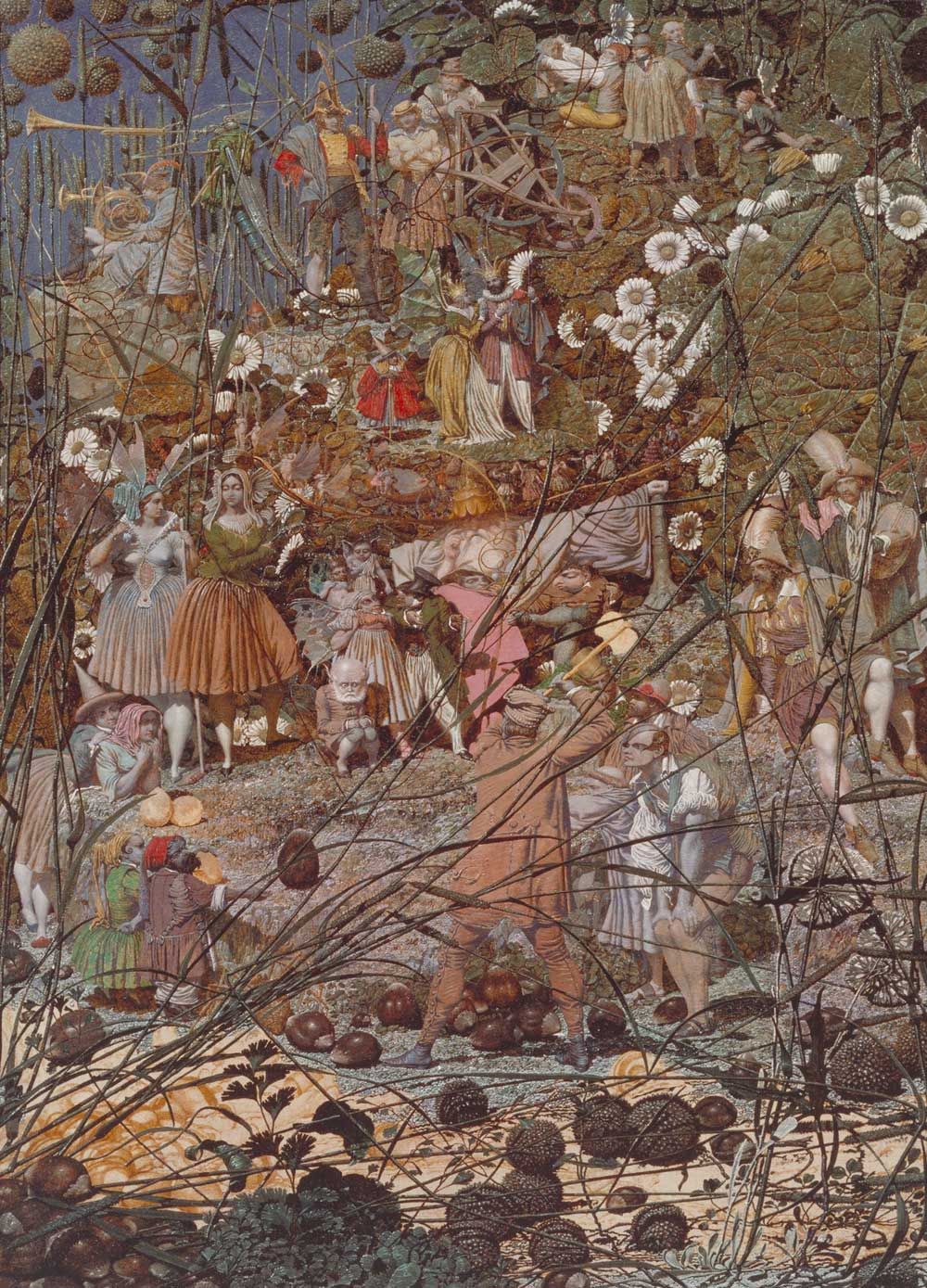
    Richard Dadd's The Fairy Feller's Master-Stroke

    Richard Dadd’s The Fairy Feller’s Master-Stroke, 1855-1864 (Image credit: Richard Dadd/Public Domain)

    That song was totally Freddie’s thing. Full of Olde English vocabulary – tatterdemalion, satyrs, pedagogues, ostlers and junketers. Some really astonishing stuff.

    Roger Taylor

    “That song was totally Freddie’s thing”, said drummer Roger Taylor to Mojo in a 2004 interview. “Full of Olde English vocabulary – tatterdemalion, satyrs, pedagogues, ostlers and junketers. Some really astonishing stuff.”

    According to Austin, Freddie was so “transfixed” by Dadd’s creation that he insisted on viewing it on a weekly basis: “We’d go to the Tate, stand in front of the painting, and then go home again.” In a 2014 conversation with Classic Rock, May described his bandmate as “obsessed”. “He used to take us on the bus to Pimlico to see it at the Tate Gallery”, he said. “If you look at [the painting], it’s so complex, with many layers, which is what Freddie was trying to turn into sound”.

    On what attracted the singer to the work, Austin believed that he “resonated with the madness. He wasn’t afraid of it”. She explained, “Every visit, we’d find something new. It was folklore, it was fantasy, all these tiny figures layered on top of each other. It showed him how far you could push detail, how intricate you could make something.”

    Bustling with energy, The Fairy Feller’s Master-Stroke captures Queen at their most extravagant. Equally as ornate and maximalist as the painting, the track is stuffed full of sound, composed of frantic harpsichord, hopping drums, numerous vocal layers and overdubbed guitar parts.
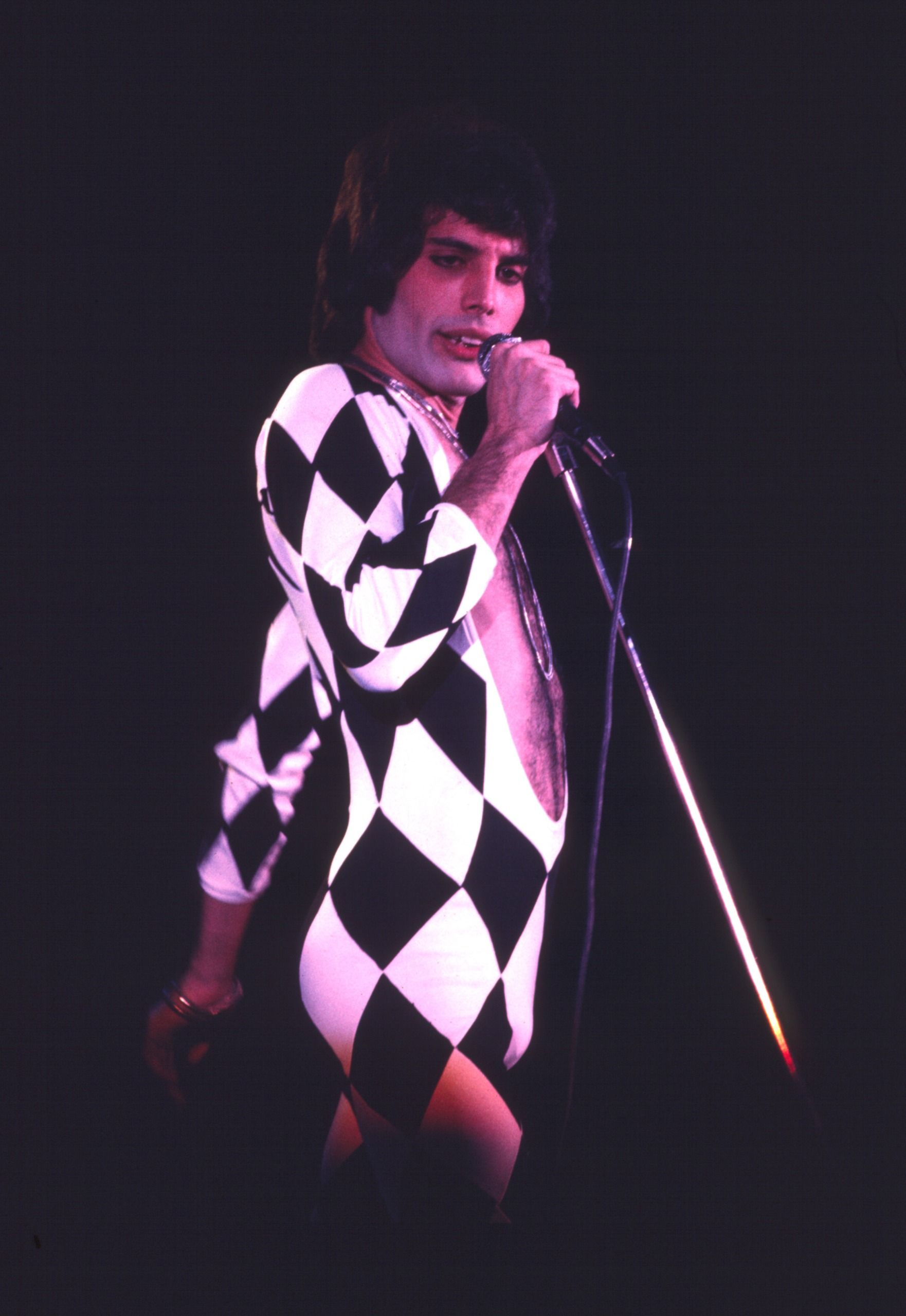
    Queen

    (Image credit: Chris Walter/WireImage)

    We really were consciously trying to break the boundaries of what people thought they could do in the recording studio.

    Roger Taylor

    “Freddie was really coming into his own”, said Taylor. “With this album he had this crazy plan for this vast number of vocal counterpoints – a six-part harmony there, another six-part harmony overlapping. He didn’t seem remotely bothered by the fact that there were only four of us to sing all these parts.

    “It was a massive amount of work. We really were consciously trying to break the boundaries of what people thought they could do in the recording studio.”

    Due to its complexity, which, according to May in a 2019 Mojo interview, saw the band push “everything to its limit”, the track “could only have been a studio creation”, and was therefore only performed a few times during the Queen II album tour in 1974. The first live recording of the song appeared as late as 2014, when it was released on Live At The Rainbow ‘74.

    Though The Fairy Feller’s Master-Stroke was rarely performed, Dadd’s creation found another way to the stage – through Freddie’s costumes. As per a 1975 Sotheby’s listing, the frontman approached designer Wendy de Smet with a costume sketch inspired by a character within the artwork, together creating his white ‘Mercury Wing’ catsuit.

    At this time of writing, the Royal Academy of Arts is displaying Richard Dadd’s The Fairy Feller’s Master-Stroke in London as part of the first major museum exhibition dedicated to the artist in over 50 years.

    However, it’s typically housed at the Tate Britain (formerly known as the Tate Gallery), the place where Freddie Mercury’s enchantment with the artwork originally began, inspiring not only one of Queen’s greatest albums, its formative extravagance a portent to classics such as Bohemian Rhapsody, but numerous other creators, including English comic writer Alan Moore, doom metal pioneers Candlemass and fantasy / science-fiction author Terry Pratchett.

    The Fairy Feller’s Master-Stroke undoubtedly holds a complicated, sad legacy, but just like the Queen song born from it, it continues to unveil something new upon every encounter – a masterstroke of obsessive complexity and dedication.

    The Richard Dadd: Beyond Bedlam exhibition at the Royal Academy of Arts in London runs until October 25, 2026. Read more about Queen and Freddie Mercury’s last stand in Classic Rock’s latest issue, out now.

  • Bernie Taupin Thought It Was Time to Make ‘a Bernie Taupin Record’

    Known for writing the lyrics to Elton John’s melodies, Taupin said creating both — and singing — on his first solo album in nearly 40 years felt “completely selfish in just the right way.”
  • Rehab, religion and slaughtered chickens: an audience with Alice Cooper

    There are two sides to every story, and Alice Cooper just happens to be on both of them. Born Vincent Damon Furnier on February 4, 1948, his creation of Alice Cooper – the larger-than-life villain inspired by 50s horror movies – helped to inject a bit of theatricality into rock’n’roll that has helped inspire everyone from Kiss to Mercyful Fate.

    Cooper has shared parts of his story before – notably in 1976’s Me, Alice and 2007’s Golf Monster – but his latest book, Devil On My Shoulder, is a novel reappraisal of his life through the lens of both Furnier the man and Alice Cooper the character. Hammer caught up with the shock rock legend to talk about his new book and how he feels about his place in the pantheon of rock and metal greats.

    What inspired you to do a book basically cross-examining yourself?

    “I have to deal with both me and Alice! Who are two entirely different people, by the way. So I got to thinking, ‘Hey, that’d be a great idea for a book – the conflict between the two.’ They coexist, and get along quite well even though they’re opposites. I am just the dad, grandad, church-going guy who’s as normal as can be. Alice is just the opposite – he’s the villain of rock! I have to jump between those skins a lot.”

    Rock’n’roll has always had an element of reinvention, but it seems there was always an element of Alice in you even when you were in school?

    “Well, I was certainly the class clown. I went to a lot of different schools and I figured the only real way to get along was to be the funny kid you didn’t want to beat up. I learned how to exist like that and I was always the kid who wanted to go see horror movies, always more on the side of the villain than the good guy. But I could see the humour in those movies too, where the guy would come out of a cave and you could see the zipper on the back of his scary costume. I was way ahead of other kids my age when it came to understanding the absurdity of things. I created Alice to be my favourite rock star – he still is.”

    We’re at a point where theatricality is coming back into rock and metal in a big way. Does it feel like we’ve come full circle?

    “I grew up in Detroit with Motown and stuff. But I really loved Chuck Berry, because he would lead a song off with his guitar. He could tell a story in three minutes and make it syncopated, funny, tragic or whatever. To me, that was so clever. He was the architect for the Rolling Stones and The Beatles – he put the rock into rock’n’roll. So that was my biggest influence at the time, until I was about 15 and then it was the British invasion.”

    There’s a point in the book where you point out all the bands who’ve cited Alice as an influence. Has there ever been anyone who made you go “I’m not sure I see us in that.”

    “Almost all of them. They’d say, ‘We really digested this album’, but it’d always end up being an album where I’d be like, ‘Really?’ The punks kind of liked albums like Zipper Catches Skin, or Special Forces – those really blackout albums I had. Whereas Metallica said they listened to Welcome To My Nightmare. The Sex Pistols said Killer was their favourite album… everybody had a different take.

    I think what it was, is that we went so far against what you were supposed to do and still made hit records that could be played on the radio. Everybody could see that, from KISS to [David] Bowie. It was like, ‘Wow, you can be a character and still get hit records?’ That was what we brought to the table. Without Bob Ezrin we would’ve dissolved, I think. He was our George Martin – he took what was good about us and made it better.”

    You mention being fascinated by horror movies from a young age – when metal came up and was quite explicitly influenced by that stuff, did it feel like a scene that immediately appealed to you?

    “I looked at heavy metal as just being very hard rock – it was still guitar driven rock’n’roll. All it was, was now the frills had been taken out. I found a lot of your metal bands were actually prog bands. Listen to Iron Maiden – they’re metal, but they’re also prog. There’s a 10-minute song that goes through 28 changes, but they keep the attitude. The thing about metal is that it’s all about attitude. How do you want that band to come off? You want the anger and frustration to show, to spit at society. Spit at authority. It kind of got funny to me watching it for a while, because half of these people wanna be Vikings.

    It got humorous, because I’m looking at some of these bands – death metal is still hard rock. It’s still guitar driven hard rock, with a different attitude. Then it got more theatrical. It was really just bands… not necessarily living that lifestyle, but doing what I was doing – playing characters up there. I think that’s healthy, I think that’s great. Being a Christian, people would say, ‘What about these death metal bands who are anti this or that?’ I’d go, ‘Hey, they’re yelling at God. I think he can take it.’”

    What’s your favourite rumour you’ve heard about yourself?

    “Oh my God, I’d hear a new one every day! There was no internet when we started, it was all word of mouth, so stuff like the chicken incident [in 1969 Alice threw a live chicken into an audience thinking it would fly away – the crowd instead tore it apart] started it all. We weren’t the band your parents wanted you to see. The funny thing was, there was nothing in the show that was bannable. It was just so different that nobody knew how to put it in a box.

    We’d get to towns and the ASPCA would turn up like, ‘You cannot see a German Shepherd on fire in this show.’ I’d go, ‘What?! Are you kidding me? Who even thought of that?’ The absurdity of it got so humourous we just had to not deny anything and the notoriety would get bigger and bigger.”

    How mad did it get?

    “The best thing that ever happened to us was when they tried to ban us in Britain – our next record [1989’s Trash] went right up the charts and we sold out Wembley. I’d send David Blunkett gifts – he couldn’t figure out why we were so happy!”

    Devil On My Shoulder is out now via Ebury Spotlight. Alice Cooper is currently on tour in the UK, and tours North America later this month.

  • BEAST IN BLACK revisit a tragic Berserk story on ‘Lost Children’

    Around twenty years after first reading the ‘Lost Children’ chapter of Berserk, Anton Kabanen has returned to its emotional contradictions in a new BEAST IN BLACK song. ‘Lost Children’ is a power ballad from the band’s forthcoming fourth studio album, Fear The Beast, accompanied by a video directed by Katri Ilona Koppanen. The song continues […]

    Source