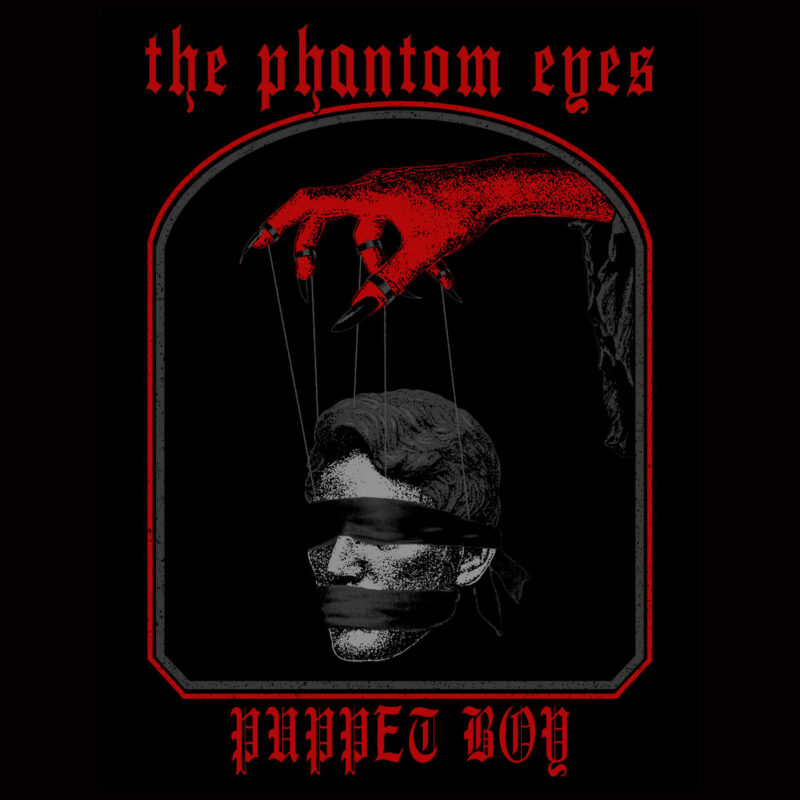
Their first record on BLKIIBLK.
The post To The Grave’s New Album “LIBERATION FRONT” Due In October, “NAIL MARY” Video Debuts appeared first on Theprp.com.
Their first record on BLKIIBLK.
The post To The Grave’s New Album “LIBERATION FRONT” Due In October, “NAIL MARY” Video Debuts appeared first on Theprp.com.
The Title Fight reunion already happened, and you missed it. Title Fight, the Pennsylvania post-hardcore greats, played their last show in 2018. They never announced a breakup or a hiatus, but they’ve also ignored the louder and louder calls to get back together and play some more shows. In the eight years since Title Fight went away, their legend has grown to absurd proportions. They do huge streaming numbers, and bands like Haywire get crazy reactions when they cover Title Fight. Just last week, the metalcore band Static Dress briefly faked out the crowd by teasing a Title Fight reunion at Manchester’s Outbreak Fest. A few days later, the real Title Fight played a little quasi-reunion across the ocean, with nobody but friends and family in attendance.
The post Title Fight Reunite (For Acoustic Wedding Performance) appeared first on Stereogum.
The “Golden Era” of blues rock began with the release of albums like the Paul Butterfield Blues Band’s eponymous debut in 1965 and John Mayall’s Blues Breakers with Eric Clapton, and lasted for about ten years. It emerged as a fiery fusion born from a head-on collision between raw Delta and Chicago blues and the amplification and energetic intensity of rock & roll. Young people in both Great Britain and the United States discovered the rich legacy of American Black blues music that had largely been shunned by white society, with only a few exceptions, up to that point.
Artists like Robert Johnson, Muddy Waters, and Howlin’ Wolf were emulated and, in many cases, exposed to a wider, racially diverse audience. These blues legends reached new listeners by serving as opening acts for the young blues rock musicians who were finding success with thunderous, riff-driven covers of their songs infused with psychedelic swagger and extended jams. The following ten tracks capture the genre at its rawest during its formative years, ranging from incendiary performances to brooding, atmospheric masterpieces that continue to influence every generation.
“Statesboro Blues” was written and recorded in 1928 by Blind Willie McTell in the Piedmont blues style. In 1968, it was recorded by Taj Mahal, whose version inspired the Allman Brothers Band to transform it into an electrifying showcase of raw power and instrumental mastery. Rolling Stone ranked the song No. 9 on its list of the “100 Greatest Guitar Songs of All Time.” The Allman Brothers Band infused the song with their signature blend of blues, rock, and improvisational fire. The band’s performance on October 15, 1971, at Pittsburgh’s Syria Mosque captures the group at its peak intensity, just weeks before Duane Allman’s fatal motorcycle accident.
The Paul Butterfield Blues Band recorded and released their second album, East-West, in 1966. The title track, which runs more than thirteen minutes, fuses the raw fire of Chicago blues with an improvisational jazz style. The dazzling guitar interplay between Michael Bloomfield and Elvin Bishop is hypnotic as they follow Paul Butterfield’s powerful harmonica work. Eastern raga influences combined with psychedelic acid rock create a driving groove with mind-expanding solos. It stands as one of the most transformative tracks of the blues rock Golden Era.
“Crossroads” was originally written and recorded by Robert Johnson “in a hotel room in San Antonio in 1936.” Cream recorded it live on March 10, 1968, at Winterland in San Francisco as an embodiment of blues rock’s explosive potential. It was included on their third album, Wheels of Fire, released in 1968 as the band was in the process of breaking up. The combination of Robert Johnson’s haunting song and the mythology surrounding it was amplified and electrified by Cream’s power-trio chemistry and the band’s blistering interpretation.
Peter Green is credited with writing “Albatross,” but its influences can be traced back to the swing band era. Andy Kirk and His 12 Clouds of Joy released “Floyd’s Guitar Blues” in 1939, which contained an ethereal guitar interlude. In 1957, Chuck Berry released “Deep Feeling,” and in 1959, Santo & Johnny released “Sleep Walk,” both of which featured a similarly ethereal, almost ambient sound. The song later appeared on the Fleetwood Mac compilation albums English Rose in 1968 and The Pious Bird of Good Omen in 1969. It is a hypnotic, guitar-driven track that topped the UK charts, becoming the band’s only No. 1 hit and a defining moment that documented the band’s seminal roots.
Foghat’s genesis came in 1971 when Lonesome Dave Peverett, Tony Stevens, and Roger Earl left Savoy Brown to form the band. They released their self-titled debut album in 1972, but it was their fifth album, Fool for the City, released in 1975, that produced their biggest hit. “Slow Ride” was written by Dave Peverett and was the lead track from the album. The original album version runs more than eight minutes, but it was shortened to just over three minutes for the single and many compilation albums. Live versions have stretched beyond fourteen minutes. It’s a high-octane anthem that epitomizes the good-time, boogie-driven spirit of 1970s blues rock with its extended jam and relentless groove.
“Red House” first appeared on the British edition of Jimi Hendrix’s debut album, Are You Experienced, released in 1967. Hendrix wrote the song before forming the Experience as a conventional twelve-bar blues that pays homage to and connects with the traditional blues performed by masters like Muddy Waters, Albert King, and Elmore James. The lyrics explore heartbreak and longing, while Noel Redding’s bass and Mitch Mitchell’s driving drums provide the song’s powerful groove. The real magic lies in Hendrix’s guitar, which delivers expressive, vocal-like solos packed with bends, glissandos, and emotive phrasing that transform a conventional blues structure into something transcendent. Jimi Hendrix’s performance of “Red House” in Stockholm in 1969 is a prime example of his extraordinary talent, showcasing his nuanced tone, articulation, and phrasing.
“Dazed and Confused” was originally written and recorded by folk singer Jake Holmes in 1967. Jimmy Page heard the song while he was with the Yardbirds and reimagined it as a raw, electrifying blues rock song that was included on Led Zeppelin’s eponymous debut album, released in 1969. The song opens with John Paul Jones’ steady, menacing bass line, leading into Robert Plant’s raw, passionate, blues-infused vocals. Jimmy Page’s masterful guitar work and John Bonham’s thunderous, propulsive drumming complete the alchemy. It remains one of the defining anthems of blues rock, and Led Zeppelin’s live performance of “Dazed and Confused” at Royal Albert Hall on January 9, 1970, attests to that.
Chicago blues guitarist Otis Rush wrote and recorded “All Your Love (I Miss Loving You)” in 1958. John Mayall & the Bluesbreakers, featuring Eric Clapton on guitar, recorded the song in 1966 for the group’s debut album, Blues Breakers with Eric Clapton. It became a cornerstone of the British blues boom by delivering pure, electrified Chicago blues fire that helped ignite the Golden Era of blues rock. The track showcases John Mayall’s steady, heartfelt vocals and harmonica playing while introducing the legendary prowess of Eric Clapton’s guitar work.
The Rolling Stones released Beggars Banquet in 1968, followed by Let It Bleed in 1969, which opens with “Gimme Shelter.” It is a dark, apocalyptic masterpiece that captures the turbulence of the late 1960s. When the Rolling Stones staged a free concert at the Altamont Speedway in December 1969, it was promoted as another Woodstock and featured half a dozen other acts. Security for the concert was provided by the Hells Angels Motorcycle Club, whose members stabbed and beat to death a concertgoer who was brandishing a gun. A total of four people died, and the concert became symbolic of the end of the hippie counterculture’s vision of utopia. “Gimme Shelter” became the anthem for the closing chapter of the turmoil that defined the 1960s.
Kim Simmonds and Savoy Brown recorded their third album, Blue Matter, in 1968 and released it in 1969. One of the most recognizable blues standards on the album is a live recording of “Louisiana Blues,” which is credited to McKinley Morganfield, better known as Muddy Waters, who recorded and released the song in 1950. Waters acknowledged Hambone Willie Newbern, who recorded the original version in 1929, as a key influence on the song. Savoy Brown’s rendition is an extended, high-energy, nine-minute boogie driven by Chris Youlden’s soulful vocals and Kim Simmonds’ stinging guitar work.
These 10 tracks are only the tip of the iceberg and represent the explosive heart of blues rock’s Golden Era, capturing the raw fusion of Delta and Chicago blues traditions. From the slide-drenched fire of the Allman Brothers Band to the relentless groove of Foghat, with the transcendent guitar alchemy of Hendrix and Clapton thrown in for good measure, the genre amplified the urgency, emotion, and improvisational freedom of rock & roll. The Golden Era of blues rock remains the benchmark for authenticity, intensity, and soul in the genre.
The post 10 Songs That Defined Blues Rock’s Golden Era (1960s-1970s) appeared first on Blues Rock Review.

As Bloodstock gets closer, we delve deep into the line up to find out more about some of the bands playing the New Blood and EMP stages at this years event.
Today we chat with Chekhov’s Gun
Please introduce yourselves.
We are Chekhov’s Gun! A six-piece progressive metal band hailing from the recesses of Edinburgh, Scotland. The lineup includes Lithuanian frontman and ballroom dancer Ignas Sakuro, Scottish guitarist Joshua Roberts and bassist James Muir, Geordie drummer Ruben Hope, Polish violinist Kasia Jurek and Cockney geezer … and cellist Lara Andrews. For our unique performance on the Newblood Stage, we shall be joined by ballroom dancer and sword bearer Aimee Brown.
How would you describe your sound?
Our style of metal builds upon the shoulders of the great metal classics, taking inspiration from Black Sabbath, Metallica, Death and Opeth through the lens of progressive rock such as Rush, King Crimson and Yes. Our sound and visual style is transformed by classical and romantic influences creating an enticing amalgamation.
How did you land your spot on the Bloodstock bill?
To achieve our spot on this years Bloodstock bill, we fought our way through the Scottish Metal 2 The Masses competition. We used this opportunity to massively progress our live show with theatrics and a solidified image in mind. We continued to perfect our stage identity throughout the rounds ultimately manifesting in our M2TM final performance, complete with atmospheric interludes, reoccurring themes, dance and swordplay. The outcome being victory at the grand final.
How tough was the competition this year?
It’s always a tough competition, having participated multiple times, this year was no joke. Every band we faced off against gave us a run for our money and gave us motivation to improve. Dread Persephone, Permacrisis, High Noon, Bruxa, Lupine Rain, Late Landing, and the list goes on. Scotland has many talented musicians who all deserve to be heard. We highly recommend popping into one of Edinburgh’s local metal bars to check them out.
What does playing at Bloodstock mean to you?
For us Bloodstock is recognition for all the hard work we’ve put into the band and an opportunity to establish ourselves in the wider metal community. The chance to play alongside the very best of Metal at an independent festival is quite unique in the music world.
For people who’ve never seen you live, what can they expect at Bloodstock?
We bring theatrics, strings and dancing twisted amongst heavy riffs and haunting melodies. We are here to immerse and most importantly entertain.

What day are you performing?
We are performing Sunday the 9th August.
What other bands are you looking forward to watching at Bloodstock this year?
Amongst the giants we can’t wait to see Sepultura, Judas Priest and Party Cannon! Our friends from Edinburgh, Hammer hit the Sophie Lancaster Stage, which is great for the Edinburgh scene. We can’t wait to see Thrasher Wolf, Microtonal and SUNK on the Newblood.
Playing the New Blood Stage is just the first steppingstone in a bands journey. What’s next in your plans for world domination?
We are in the writing stage of our debut concept album. Over the months following Bloodstock we hope to complete writing and recording with a release set for 2027.
Are you camping with the fans? Which campsite are you heading for?
We are going to camp in the artists’ campsite.
You’ve gotta keep hydrated at Bloodstock, what is your drink of choice for the weekend?
Our resident Geordie loves a Newcastle Brown Ale or a coffee. Our guitarist Joshua is also a caffeine fiend and our Scottish bassist loves a tenants! Ignas lives off of Hules and Kasia drinks any kind of herbal tea she can brew. Lara loves the pub.
See you at Bloodstock in a few weeks!
WE CAN’T WAIT!
For all the latest news, reviews, interviews across the heavy metal spectrum follow THE RAZORS’S EDGE on facebook, twitter and instagram.
The post Bloodstock Bound: Chekhov’s Gun appeared first on The Razor's Edge.
Blaze Bayley has looked back on the notorious 1996 gig where Iron Maiden were pelted with spit.
The UK metal legends performed at Teatro Monumental in Santiago, Chile on August 29, 1996 – their first time in the country, due to the Catholic Church previously pressuring the government to stop them playing there.
With Bayley up front during the globe-trotting 1995–96 X Factour, the band were spat on while performing The Trooper, which caused the singer to angrily confront one fan and demand them to “fuck off”.
Bayley reflects on the incident in the new issue of Metal Hammer, saying that six people spat on the band during the show. He also revealed that the gig was filmed for a Chilean TV channel without the members’ consent.
“Maiden had never played there – they’d been banned by the church,” Bayley recalls. “But [in 1996], after Bon Jovi, Metallica, Black Sabbath… all the big bands had come, the greatest metal band of them all was going to Chile. So you can imagine the expectation, and these guys were ruining it for everyone.”
He adds: “But the Chilean equivalent of the BBC set up in the theatre and filmed that whole gig without permission. Because the police there were wearing guns and it was all a bit edgy, nobody felt like we could say, ‘You can’t film this.’ So I think there is one full gig. It went pretty well and I sounded good – meltdown aside!”
Bayley joined Maiden in 1994, replacing longtime singer Bruce Dickinson, and stayed with the band until 1999, when Dickinson returned to the lineup. He appeared on two albums during his tenure: The X Factor (1996) and Virtual XI (1998). Although The X Factor’s lead single Man On The Edge charted at number 10 in the UK, the period was one of commercial and critical disappointment for the band, with Virtual XI being the lowest-charting album of their whole career.
Despite the turmoil of the Bayley era, Maiden have kept some of its material in their setlists. Man On The Edge and Virtual XI cuts Futureal and The Clansman were part of the setlist on Dickinson’s first tour back with the band in 1999. The Clansman and The X Factor’s The Sign Of The Cross were played during the Legacy Of The Beast tour from 2019 to 2022, as well.
This weekend, Maiden will host Eddfest, a two-day festival dedicated to the band, at Knebworth House in Stevenage. They will headline the weekend on Saturday, July 11, with The Darkness, The Hu, The Almighty and Airbourne opening. Bayley and his solo band will play the warm-up day on Friday, July 10.
Bayley is also preparing to be inducted into the Rock And Roll Hall Of Fame later this year alongside his ex-bandmates. Although the current members of Maiden will miss the ceremony in Cleveland, Ohio due to touring commitments, Bayley plans to attend the event.
As well as the interview with Bayley, the new Hammer is a blockbuster Eddfest preview featuring interviews with Dickinson and Harris. Order your copy now, with an exclusive Eddfest water bottle, and get it delivered directly to your door.