Taking place in Garden Grove, CA next month.
The post West Coast Memorial For Andy Williams To Feature The Ghost Inside, Atomic Rule, Beyond Repair, Turmoil, Strife & More appeared first on Theprp.com.
Taking place in Garden Grove, CA next month.
The post West Coast Memorial For Andy Williams To Feature The Ghost Inside, Atomic Rule, Beyond Repair, Turmoil, Strife & More appeared first on Theprp.com.
Alanis Morissette is here to remind you of the Christ-mess that you left when you went away. Look, you try to come up with a better pun. Go ahead. I’ll wait. No? You can’t? You thought of Jingled Little Pill and realized it was hopeless? Yeah, that’s what I thought. My friend, this is what I do. I am a professional. Alanis Morissette announces her first-ever holiday album, and I give you “the Christ-mess that you left when you went away.” That’s not just great music blogging. That’s a Christmas miracle.
The post Alanis Morissette Announces New Christmas Album Feat. Brandi Carlile, Steve Martin, & Martin Short appeared first on Stereogum.
Posted on October 9th 2026, 5:14pm
As Rock Sound releases a tribute to Fall Out Boy in the form of ‘Made In Chicago’, vocalist Patrick Stump has reflected on how it feels to hear their songs presented in a different way.
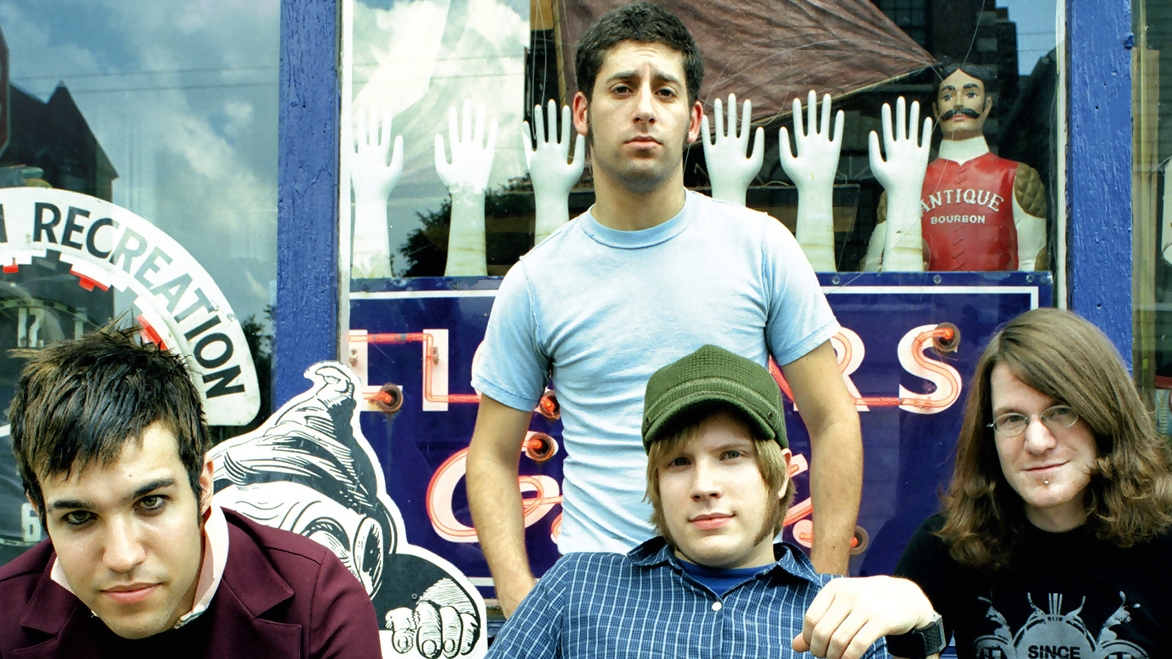
‘Made In Chicago’ brings together contemporaries, friends and bands Fall Out Boy have inspired to put their own spin on classics from across their career.
And after listening to the record himself. Patrick had this to say about what he heard:
“It’s amazing how different some of it is and how close some of it is. It was really a trip hearing Gabe [Cobra Starship]. That was so weird, and Daisy Grenade. Hearing the different voices do the songs, hearing some of the different guitar work choices.
“It’s always neat to hear somebody interpret your song differently. The ‘Takeover…’ one is really interesting. It’s very different, and I thought that was really cool. It’s interesting to hear where someone goes with it.
“A crazy thing that anyone would do that. I’m excited, and it’s all surreal.”
Is there any bigger praise than that?
Here is what the full tracklisting for the album looks like:
1. Cobra Starship – I Don’t Care
2. Emi Grace – Dance Dance
3. nothing,nowhere. – The Patron Saint Of Liars And Fakes
4. Beauty School Dropout – The Takeover, The Break’s Over
5. Pool Kids – This Ain’t A Scene, It’s An Armss Race
6. Vienna Vienna – Chicago Is So Two Years Ago
7. Daisy Grenade – Get Busy Living Or Get Busy Dying
8. Against The Current – Thnks Fr Th Mmrs
You can order your copy now with a special magazine featuring four new career-spanning solo interviews with Patrick, Pete Wentz, Andy Hurley and Joe Trohman, alongside never before seen archive photos from their earliest days together.
Get yours at SHOP.ROCKSOUND.TV

Plus, you can honour this special milestone with our ‘Made In Chicago’ merch capsule collection featuring world exclusive t-shirt, hoodie and cap designs.

The post Patrick Stump On Rock Sound Tribute ‘Made In Chicago’: “It’s Interesting To Hear Where Someone Goes With It” appeared first on Rock Sound.
A replacement has been announced.
The post Ian Hill Retires From Judas Priest appeared first on Theprp.com.
In addition to ‘Made In Chicago’, a Rock Sound tribute to Fall Out Boy, we have worked with the band to put together a merch capsule to celebrate their roots and their legacy.

As well as a magazine, with four new career-spanning solo interviews with Patrick Stump, Pete Wentz, Andy Hurley and Joe Trohman alongside never-before-seen archive photos from their earliest days together, and CD featuring. cover versions performed by their contemporaries, friends and bands they inspired, there is a whole host of merch you can pick up too.
It’s all available now at SHOP.ROCKSOUND.TV







The post Made In Chicago: The Merch Capsule appeared first on Rock Sound.
Greetings, Decibel readers!
We have a lot of great stuff for you this week. A very busy Frenchman is back at it again. A group of Swedish veterans are back with d-beats. A fiery death metal beast has awoken to devour us all. It’s gonna be great!
—
There’s only a few things you can always count on in life: death, taxes, and a new Esoctrilihum album every year. Sometimes you’ll even get two! And you can always count on it being worth listening to and exploring. Of all of Asthâghul’s output, this is probably the most cinematic offering he’s given us. But don’t let that fool you into thinking it’s a smooth ride. No, there’s still plenty of unrelenting brutality and mind-bending musicianship to be found here.
—
Is there a new wave of 1960s rock happening nowadays? At this point, I assume there’s a new wave of all styles happening all at once. But let’s not theorize about stuck culture right now, let’s just rock! Graveyard unearths the classic sounds of The Doors, The MC5 and blends it with the noisy garage-rock bands that were bashing away a few years earlier.
Stream: Apple Music
—
I mean, longtime readers of this column know I’ll always feature anything that sounds like this. If you’ve got a band that takes Incantation, Formulas-era Morbid Angel, and throws in just enough black metal to give it a bestial quality — I’m going to talk about it. So you should go listen to it.
Stream: Apple Music
—
From our full-album stream:
This sludgy offering is performed by a trio of women—Karen Verdier-Désérable (guitar/vocals), Julie Appéré (bass/vocals/synth), Julie Picard (drums/SPD) — who channel the retro doom of female fronted acts like Blood Ceremony, as well as the grungy skronk of Babes in Toyland and early Hole. It’s moody, melancholic and crushing, taking the vibe from haunting to frightening over the course of nearly 40 minutes.
Stream: Apple Music
—
Classic Swedish crust meets classic Swedish death metal. Essential listening for anyone who longs for the d-beat divebombs of bands like Anti-Cimex and Skitsystem but also craves the riffing power of Dismember and Entombed.
Stream: Apple Music
The post Five For Friday: October 9, 2026 appeared first on Decibel Magazine.
In celebration of the band’s 25th anniversary, we have teamed up with Fall Out Boy to deliver a special edition magazine, merch collection and CD tribute album.
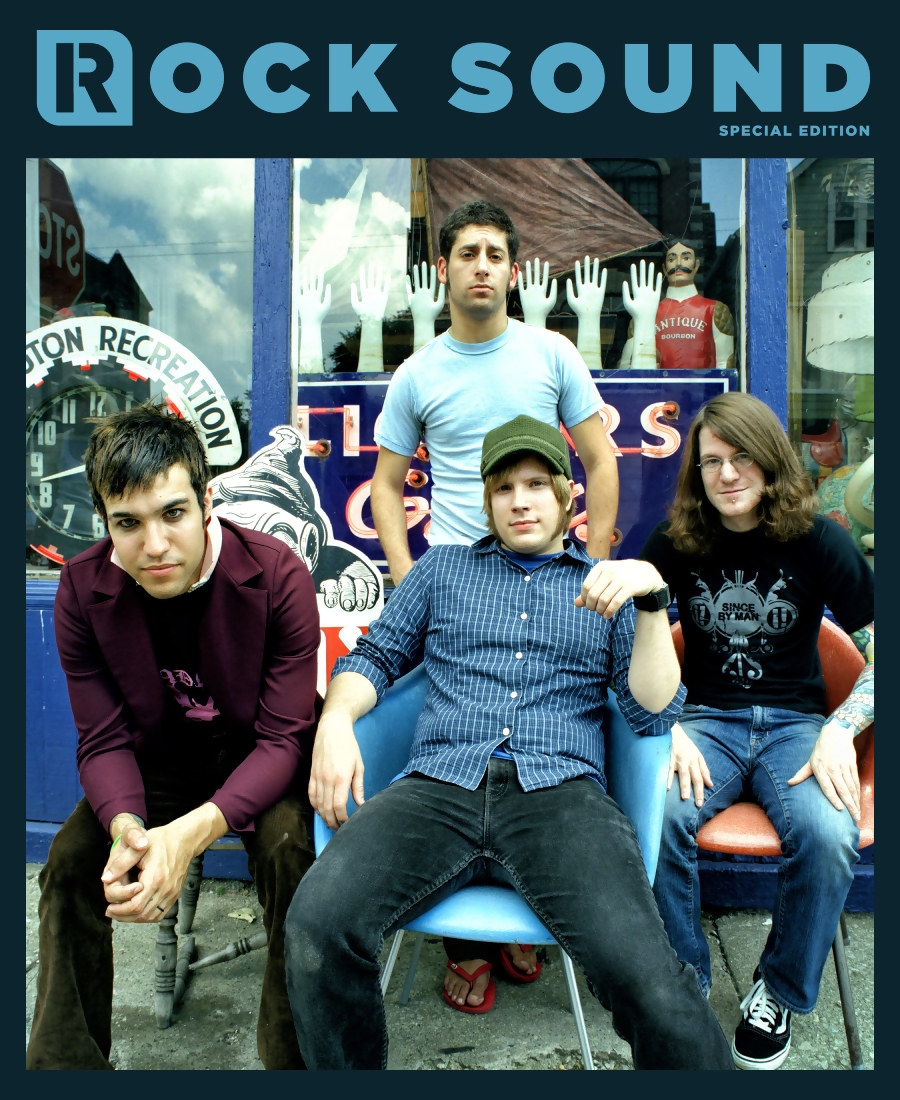
Inside the magazine, read four new career-spanning solo interviews with Patrick Stump, Pete Wentz, Andy Hurley and Joe Trohman alongside never before seen archive photos from their earliest days together.
Plus, the accompanying CD features cover versions performed by their contemporaries, friends and bands they inspired, available only alongside the magazine.
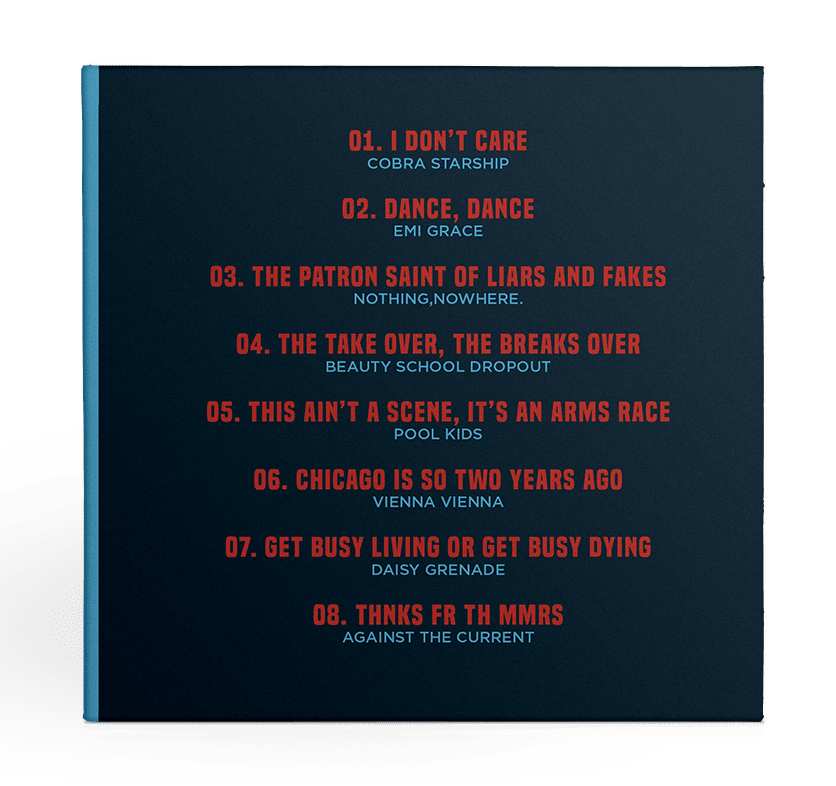
Have a look at the full tracklisting below:
1. Cobra Starship – I Don’t Care
2. Emi Grace – Dance Dance
3. nothing,nowhere. – The Patron Saint Of Liars And Fakes
4. Beauty School Dropout – The Takeover, The Break’s Over
5. Pool Kids – This Ain’t A Scene, It’s An Armss Race
6. Vienna Vienna – Chicago Is So Two Years Ago
7. Daisy Grenade – Get Busy Living Or Get Busy Dying
8. Against The Current – Thnks Fr Th Mmrs
Order yours now at SHOP.ROCKSOUND.TV
Get yours at SHOP.ROCKSOUND.TV
The post Made In Chicago: A Rock Sound Tribute appeared first on Rock Sound.
In 2016 Jean-Michel Jarre released Oxygène 3, marking the end of a journey that had begun with his 1976 debut Oxygène. Regardless of the technological advances that had expanded musical horizons to an almost limitless extent, Jarre told Prog why his first album remained important to him.
These are heady times for Jean-Michel Jarre, even by his own lofty standards. His two Electronica albums – 2015’s The Time Machine and this summer’s The Heart Of Noise, featuring top-notch guests like Tangerine Dream, Massive Attack, Hans Zimmer, Laurie Anderson, The Orb, John Carpenter and many more – were huge hits across Europe, taking him into the UK Top 10 for the first time in 25 years.
Their combined success led to an extensive tour of the continent this autumn, packing out arenas from Cardiff to Copenhagen, Brussels to Budapest. At 68 years of age, and bearing in mind this is a man who’s shifted 80 million albums over his career, Jarre’s commercial and artistic clout is arguably at its peak – or at least on a similar level to 1976, when Oxygène took him from jobbing composer of library music to full-blown international superstar.
Given this evaluative symmetry, it’s entirely fitting that Jarre has now chosen to release a third volume of Oxygène. Not that he deliberately planned it that way. “During the Electronica project, I did a track that wasn’t sitting at all with the other songs,” he tells Prog. “I kept that idea in the back of my mind. When the record company mentioned that they’d like to do something special for the 40th anniversary of Oxygène, I thought it might be good to use it as a deadline pretext.”
Nominally, of course, the new album is a sequel to 1997’s Oxygène 7-13, but Jarre was more interested in following the original as a working model. “I did the first album in six weeks with very limited tools,” he explains, “so I thought it would be fun to go back into the studio with the same minimalist approach, especially after the massive Electronica project, which involved a lot of planning, travelling and heavy production.
“I didn’t go back and listen to the previous work at all. The plan wasn’t to revisit the original Oxygène, or use the same kind of instruments. That would have been pointless. But I kept the same dogma. Oxygène is not so much a series of songs with separate titles – it’s more of an overall concept, like a movie or a series of short stories. I thought, ‘Okay, I’m going to stay with a limited number of elements here, and sometimes just have parts that use only two or three instruments.’ So I did it all in one go, keeping it rough like that, then went on tour and left it behind me.”
A further parallel is provided by artist Michel Granger, whose famous earth-skull design became Oxygène’s visual signifier. Oxygène 3 essentially takes the same image, this time in profile, and deepens its tone in a way that suggests something altogether more ominous.
“I made the first album back in the days of vinyl, when we were always thinking about sides one and two. The other characteristic of Oxygène is that it has sunny melodies but it’s also quite dark, like the cover artwork. I decided it would be fun to take this idea but do it slightly differently. I asked Michel to twist the cover to a certain degree on Oxygène 3. Then I thought, ‘Why not make side one dark, then side two brighter or more melodic?’ It really started from there.”
It should come as no surprise, then, to discover that Oxygène 3 forgoes the thumping techno and dense beats that gave Electronica a pulse. Instead, it’s a thoroughly modish return to the kind of cosmic fantasia that defined the original Oxygène – all radiant melodies and artful layers of synthetic sound.
“I’d already been working on electronic music for 10 years by the time I recorded Oxygène,” says Jarre, reflecting on the genesis of the album, recorded in a makeshift studio at his Paris home. “I was earning a living by doing other things and producing French rock singers. But I was obsessed with this idea of creating a bridge between experimentation and pop melody. I liked this kind of challenge, playing around with sound design and integrating melodies.
“I had no idea that it would be successful. It was rejected by all the record companies I sent it to. In the end, a small label [Les Disques Motors] took it. Then Radio One played the album in its entirety the first week it came out. They did that very rarely.”
The notion of combining experimental music with more accessible textures can be traced back to his teenage years with avant-rockers The Dustbins. By 1968, he’d dispensed with conventional instruments almost completely, playing around with tape loops and other electronic gear.
“The main difference with electronic music is that you create music in terms of sound, not just notes,” he says. “It’s something else entirely. When I was a teenager I always liked processing my guitar or organ or whatever, playing the tape backwards and changing the speed. Then the drummer in my band said, ‘You should meet with these crazy guys who are working in French public radio. They’re doing the same kinds of things as you, and they have labs.’”
We weren’t doing electronic music with synthesisers per se, but with oscillators we stole from radio stations
Intrigued, in 1969 the 21-year-old Jarre joined the Groupe de Recherches Musicales, led by noted composer and musicologist Pierre Schaeffer. Originally founded at the French Radio Institution, GRM had been active since around the early 50s. Schaeffer invented the phrase ‘musique concrète’ and, among other things, helped to pioneer sampling.
“I was immediately seduced by what they were doing,” Jarre recalls. “Electronic music owes a lot to public radio stations – the BBC radiophonic laboratory, the German lab where Stockhausen was working and, of course, the one in Paris. I stayed for three years with Pierre Schaeffer and I also went to Cologne to work with Stockhausen. He was totally crazy, but a real genius. He considered himself to be made of sound, biologically, so he had a kind of surrealistic approach. Crazy, but realistic at the same time. It was very interesting.”
As the 70s dawned, the advent of new technology opened up an index of possibilities for Jarre and other electronic composers. The Moog synth was starting to gain traction in the States, but its hefty price tag meant only a select few could afford one.

“I started with a British-made VCS3 from EMS [Electronic Music Studios, based in London], created by a genius called Peter Zinovieff. It was a kind of poor European version of the Moog. In those days Europe was not as rich as the States, so the sound was drier. In a sense, it was a kind of punk synthesiser – there was something very harsh and rough about it. I loved it; I still take one on stage with me today.
“I started making music at a time when we weren’t doing electronic music with synthesisers per se, but more with a bank of oscillators that we stole from radio station studios. We’d use all the technical filters that they would use to set up their broadcast system, hijacking that equipment to make music. It meant you could create, in a sense, your own instruments. The trick for anyone starting out is to create your own limitations. Then you’ll be better able to express what you have in mind.”
Imposing his own set of restrictions fed directly into the creation of Oxygène. It’s a record on which he’s since built a remarkable legacy, be it through big-selling albums like Equinoxe and Magnetic Fields or enormous spectacles in Moscow, Egypt and – as the first Westerner to play there – China.
Much like Mike Oldfield and Tubular Bells, Oxygène occupies a special place in the Jarre mythology. “When you’ve been lucky enough to have some kind of success with your first project, it will always be part of your DNA, no matter what you do afterwards,” he says. “It’s like the first movie for Tarantino or Kubrick. For me, it’s the same – I love many other things that I’ve done and I’m very proud of them all, but Oxygène is something unique.”
There remains one very obvious question: is Oxygène 3 the final instalment? “I think so. I used to be quite close to Arthur C Clarke and he’d tell me: ‘You know, you should finish Oxygène one day.’ For him it was like a journey into space, except that you could come back to a different earth. He wrote about that kind of thing, so that idea was quite a common one for him. I thought a lot about that when it came to do the final song on the new album.
“Oxygène 20 is a long piece that’s quite harmonious, but with a kind of screaming state that’s not necessarily scary, but very poignant. When you enter the atmosphere of a planet, everything burns and turns to ashes. This was something I wanted to express at the end of Oxygène 3. I think it’s a pretty good way to end it.”